



Treasury Automation For Smes Market Size and Growth Forecast 2026-2030
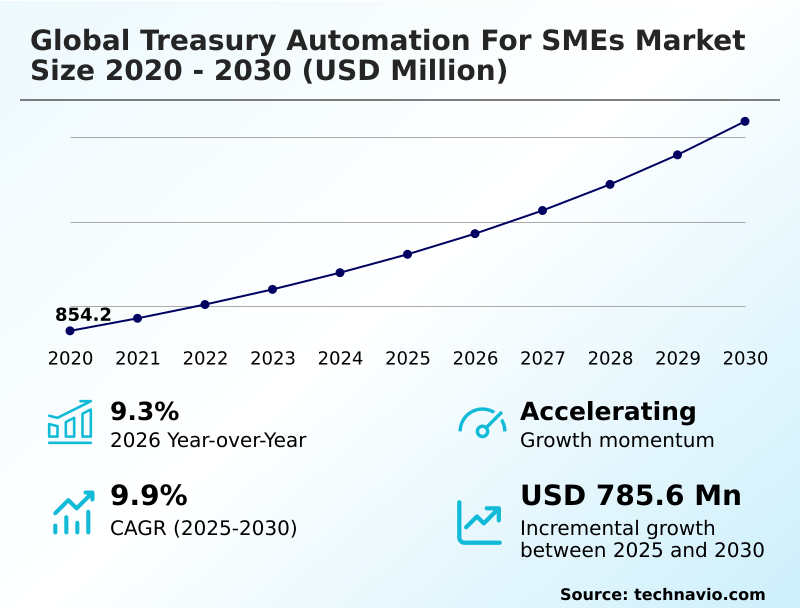
The Treasury Automation For Smes Market size was valued at USD 1.31 billion in 2025 growing at a CAGR of 9.9% during the forecast period 2026-2030.
North America accounts for 39.1% of incremental growth during the forecast period. The Cloud based segment by Deployment was valued at USD 682.2 million in 2024, while the Cash management segment holds the largest revenue share by Application.
The market is projected to grow by USD 1.24 billion from 2020 to 2030, with USD 785.6 million of the growth expected during the forecast period of 2025 to 2030.
Get Key Insights on Market Forecast (PDF) Request Free Sample
Treasury Automation For Smes Market Overview
The treasury automation for smes market is defined by a strategic shift from manual financial processes to integrated digital ecosystems. This transition is driven by the need for enhanced working capital optimization and the complexities of multi-currency management in an interconnected economy. Adherence to evolving financial reporting standards and the necessity for a clear automated audit trail are compelling smaller firms to adopt solutions that provide real-time cash visibility. In a typical scenario, a mid-market manufacturing firm implements an AI-powered treasury module integrated with its enterprise resource planning system. This allows for predictive cash flow forecasting, which anticipates a seasonal 15% dip in liquidity, prompting proactive credit line adjustments and preventing operational disruptions. Despite the efficiency gains from payment automation, significant cybersecurity risks and challenges with legacy system integration persist. With North America representing over 39% of the growth opportunity, the region's focus on digital transformation initiatives shapes vendor innovation in fraud detection modules and API-first architectures.
Drivers, Trends, and Challenges in the Treasury Automation For Smes Market
The strategic imperative for automating treasury for mid-market firms is increasingly clear as they expand into complex global markets. The necessity for treasury automation for international trade, for example, is highlighted when a mid-sized agricultural exporter faces significant foreign exchange exposure.
By leveraging cloud based treasury solutions for smes, this firm can move beyond manual spreadsheets to automate hedging strategies, protecting profit margins against currency fluctuations. The open banking impact on treasury automation has been profound, facilitating the secure, real-time data aggregation required for such strategies.
This connectivity, governed by standards like the UK's Open Banking Implementation Entity, allows platforms to provide a consolidated view of cash across multiple international banks, a task that previously consumed significant administrative resources.
Furthermore, the role of AI in treasury and risk management is pivotal; machine learning algorithms can now analyze transaction patterns to flag potential fraud with an accuracy that is several orders of magnitude greater than manual review.
This is crucial for maintaining compliance with regulations like GDPR, which impose severe penalties for data mismanagement, making robust security a non-negotiable aspect of treasury systems.
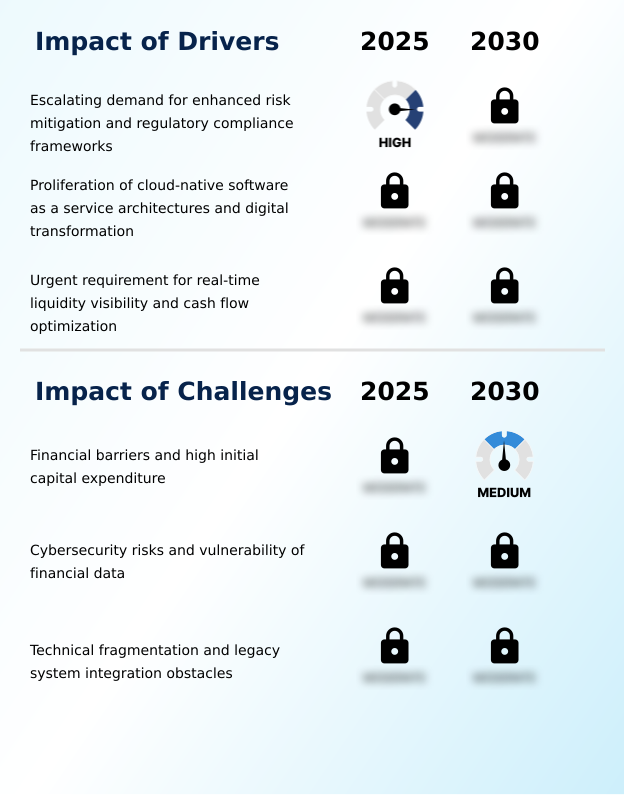
Primary Growth Driver: The escalating demand for enhanced risk mitigation and robust regulatory compliance frameworks is a primary driver compelling small and medium-sized enterprises to adopt automated treasury solutions.
A critical driver for the market is the increasing stringency of regulatory compliance frameworks worldwide, which mandates a level of financial transparency that manual processes cannot provide.
This, coupled with the urgent need for real-time liquidity visibility in a volatile economic climate, is compelling SMEs to adopt automated solutions.
The proliferation of accessible cloud-native SaaS platforms has democratized advanced treasury tools, eliminating the barrier of high initial capital expenditure.
This is particularly evident in the APAC region, which is experiencing growth of 10.6%, fueled by government-backed digital transformation initiatives and a surge in cross-border trade.
These platforms offer the scalability and security necessary for smaller firms to optimize working capital and make data-driven decisions.
Emerging Market Trend: The integration of artificial intelligence and machine learning is shifting treasury functions from descriptive analysis to predictive cash management. This enables finance leaders to anticipate liquidity fluctuations with greater precision.
A primary trend shaping the market is the integration of artificial intelligence, transitioning firms from reactive to predictive cash management. While cash management applications still command the largest market share, AI-driven forecasting tools are enhancing their strategic value.
The proliferation of open banking APIs is another key development, enabling seamless, real-time connectivity between corporate systems and financial institutions, which is critical for accurate liquidity monitoring. This API-first architecture dismantles data silos and reduces reliance on manual processes. Simultaneously, a strategic incorporation of ESG metrics integration is emerging, compelling vendors to develop modules that support sustainable finance initiatives.
This allows treasurers to track the environmental impact of investments and align financial workflows with corporate responsibility goals under frameworks like the TCFD recommendations.
Key Industry Challenge: Significant financial barriers, including high initial capital expenditure for software and implementation, remain a key challenge hindering widespread adoption within the small and medium-sized enterprise sector.
Despite clear benefits, significant financial barriers, including high upfront software and consulting costs, continue to restrain market adoption for many SMEs. Beyond cost, escalating cybersecurity risks present a major deterrent. As firms connect their financial operations to cloud platforms, their digital attack surface expands, creating vulnerabilities that smaller organizations often lack the resources to mitigate effectively.
In Europe, the stringent penalties associated with GDPR for data breaches amplify these concerns. A further obstacle is the technical challenge of legacy system integration. Many SMEs rely on disparate, older accounting systems that were not designed to communicate with modern application programming interfaces, leading to data fragmentation and hampering the full potential of automation.
Explore Full Market Dynamics Analysis Request Free Sample
Treasury Automation For Smes Market Segmentation
The treasury automation for smes industry research report provides comprehensive data including region-wise segment analysis, with forecasts and analysis for the period 2026-2030, as well as historical data from 2020-2024 for the following segments.
Deployment Segment Analysis
The cloud based segment is estimated to witness significant growth during the forecast period.
Cloud-based deployment models are the primary catalyst for adoption, representing a significant portion of the market at approximately 58%.
These cloud-native SaaS platforms democratize access to sophisticated financial tools, enabling small and medium-sized enterprises to achieve real-time cash visibility without prohibitive upfront capital expenditure.
The model's scalability allows for seamless integration with banking partners via standardized application programming interfaces, ensuring direct bank connectivity and enhanced working capital optimization.
By outsourcing infrastructure management, cybersecurity, and software updates to the provider, internal IT resources are freed, allowing financial teams to focus on strategic treasury management.
This agility and remote accessibility are critical for businesses adopting hybrid work models and expanding across multiple geographic regions, making it the dominant deployment choice.
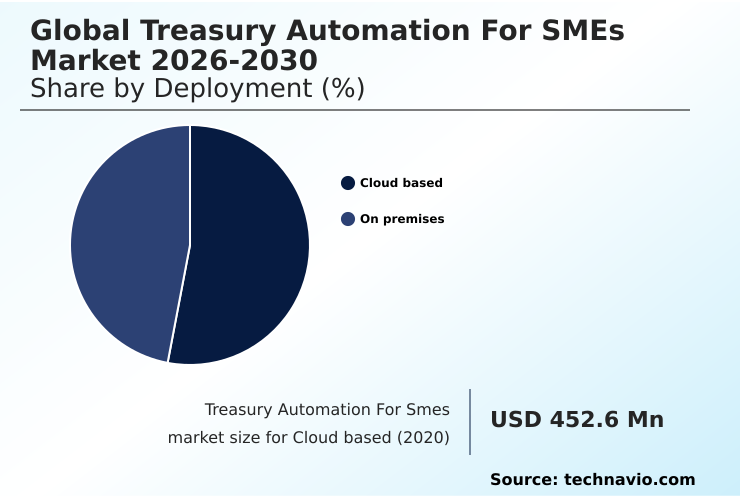
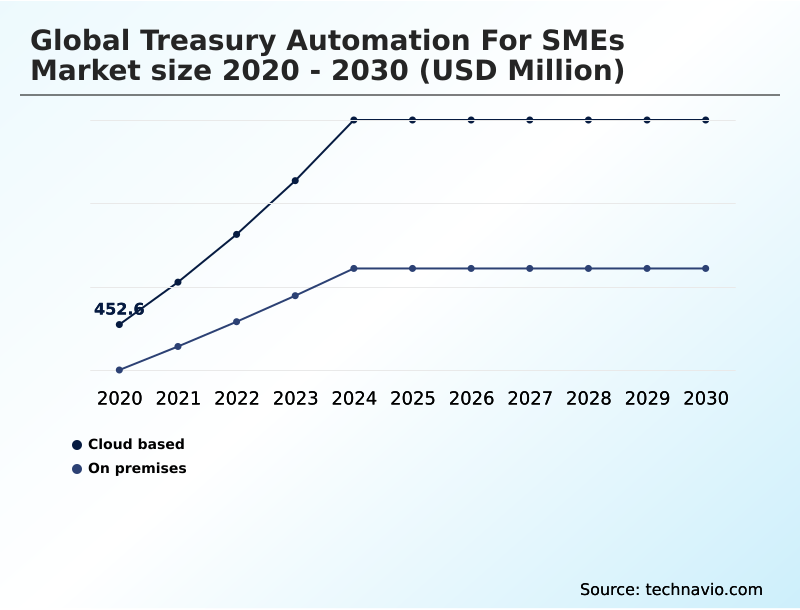
The Cloud based segment was valued at USD 682.2 million in 2024 and showed a gradual increase during the forecast period.
Treasury Automation For Smes Market by Region: North America Leads with 39.1% Growth Share
North America is estimated to contribute 39.1% to the growth of the global market during the forecast period.
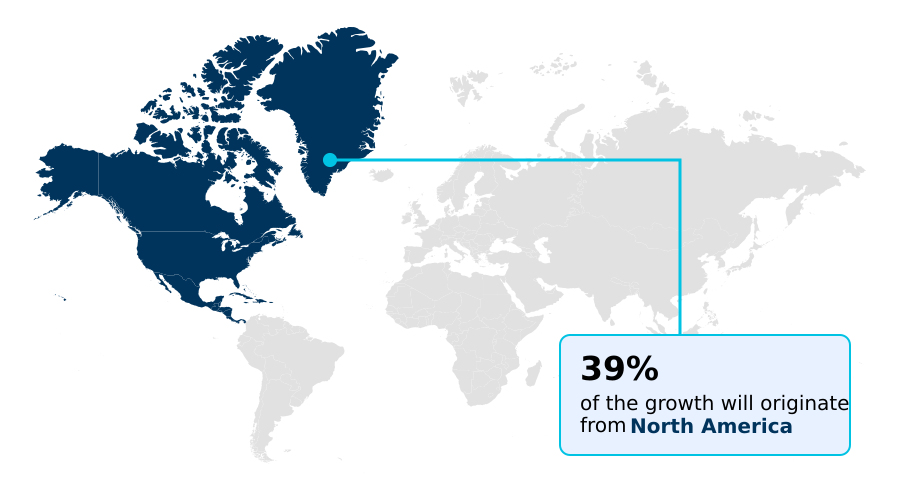
The geographic landscape is led by North America, which accounts for over 39% of the market opportunity, driven by mature financial infrastructure and high adoption of cloud technologies.
In contrast, the APAC region, representing over 26% of the opportunity, is the fastest-growing market, fueled by government-led digital transformation initiatives and the expansion of cross-border payments.
Europe’s market is heavily influenced by stringent regulatory compliance frameworks, such as the Payment Services Directive, which standardizes bank connectivity through open banking APIs. This has spurred innovation in treasury platforms that handle multi-entity and multi-currency configurations.
Meanwhile, markets in South America and the Middle East are accelerating adoption due to mandatory digital tax reporting and the need for agile financial management amid economic volatility.
Customer Landscape Analysis for the Treasury Automation For Smes Market
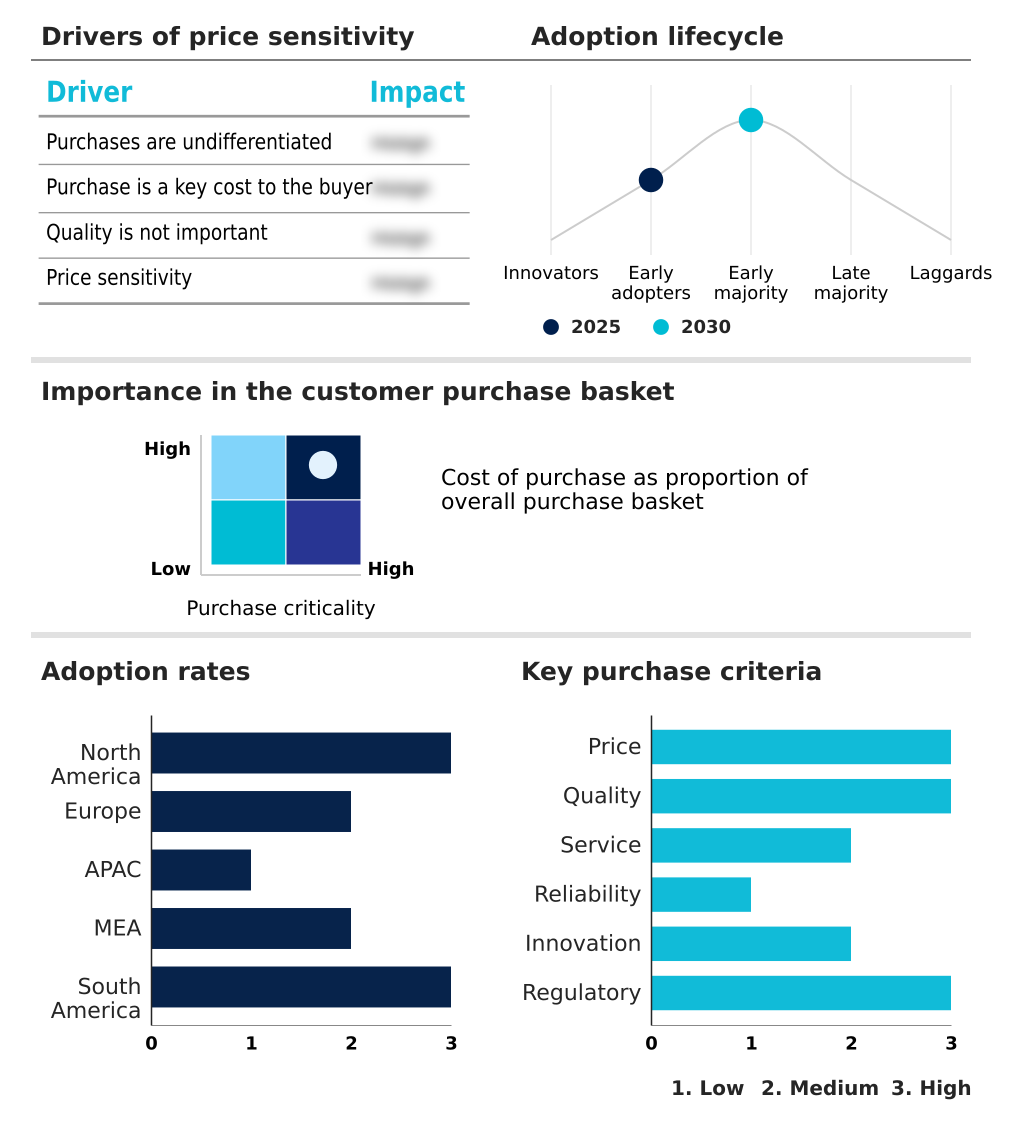
The treasury automation for smes market forecasting report includes the adoption lifecycle of the market, covering from the innovator’s stage to the laggard’s stage. It focuses on adoption rates in different regions based on penetration. Furthermore, the treasury automation for smes market report also includes key purchase criteria and drivers of price sensitivity to help companies evaluate and develop their market growth analysis strategies.
Competitive Landscape of the Treasury Automation For Smes Market
Companies are implementing various strategies, such as strategic alliances, partnerships, mergers and acquisitions, geographical expansion, and product/service launches, to enhance their presence in the treasury automation for smes market industry.
Access Workspace Australia Ltd. - Core offerings center on cloud-based platforms that automate liquidity management, payment execution, and risk mitigation, providing SMEs with tools for comprehensive financial oversight and operational efficiency.
The industry research and growth report includes detailed analyses of the competitive landscape of the market and information about key companies, including:
- Access Workspace Australia Ltd.
- Bottomline Technologies Inc.
- Commitly GmbH
- Coupa Software Inc.
- Fidelity National Information.
- Finastra
- GTreasury
- HazelTree Fund Services Inc.
- HighRadius Corp.
- ION Group.
- Kantox Ltd.
- Kyriba Corp.
- Nomentia Oy.
- Oracle Corp.
- Sage Group Plc
- Salmon Software Ltd.
- Serrala Group GmbH.
- Treasury Systems Sweden AB.
- Trovata Inc.
- ZenTreasury Ltd.
Qualitative and quantitative analysis of companies has been conducted to help clients understand the wider business environment as well as the strengths and weaknesses of key industry players. Data is qualitatively analyzed to categorize companies as pure play, category-focused, industry-focused, and diversified; it is quantitatively analyzed to categorize companies as dominant, leading, strong, tentative, and weak.
Recent Developments in the Treasury Automation For Smes Market
- In May, 2025, HighRadius introduced a suite of autonomous treasury functions that utilize generative AI to deliver predictive cash flow insights for mid-market firms, enhancing liquidity trend identification.
- In September, 2025, a prominent North American financial technology consortium launched the Unified Cloud Treasury Initiative, which provides a standardized set of integration protocols for small enterprises to link cloud-based accounting software with regional banking networks.
- In November, 2025, the Reserve Bank of India expanded its digital payment infrastructure to include a dedicated liquidity sweeping module for small businesses, automating the movement of surplus funds into interest-bearing accounts.
- In March, 2025, a UK-based financial technology group expanded its open banking network to several nations in Southeast Asia, providing direct bank connectivity for mid-market corporate treasurers to automate cross-border transaction reconciliation.
Research Analyst Overview: Treasury Automation For Smes Market
The treasury automation for smes market is expanding at a steady 9.3% year-over-year, driven not by choice but by operational necessity. Boardroom-level decisions are now directly tied to the adoption of these platforms, as the failure to achieve real-time cash visibility presents a material risk in volatile economic conditions.
The strategic focus has shifted from simple payment automation to sophisticated cash flow forecasting and multi-currency management, essential for any SME participating in global trade.
For instance, the integration of automated reconciliation tools is no longer just an efficiency play; it is a core component of maintaining accurate financial records for audits and ensuring adherence to stringent regulatory compliance frameworks, including international Know Your Customer (KYC) protocols.
The decision to invest in a modern treasury management system is now a fundamental aspect of corporate governance, directly impacting a firm’s ability to manage liquidity, mitigate risk, and scale operations securely.
Dive into Technavio’s robust research methodology, blending expert interviews, extensive data synthesis, and validated models for unparalleled Treasury Automation For Smes Market insights. See full methodology.
| Market Scope | |
|---|---|
| Page number | 299 |
| Base year | 2025 |
| Historic period | 2020-2024 |
| Forecast period | 2026-2030 |
| Growth momentum & CAGR | Accelerate at a CAGR of 9.9% |
| Market growth 2026-2030 | USD 785.6 million |
| Market structure | Fragmented |
| YoY growth 2025-2026(%) | 9.3% |
| Key countries | US, Canada, Mexico, Germany, UK, France, Italy, Spain, The Netherlands, China, India, Japan, South Korea, Australia, Indonesia, Saudi Arabia, UAE, South Africa, Israel, Turkey, Brazil, Argentina and Colombia |
| Competitive landscape | Leading Companies, Market Positioning of Companies, Competitive Strategies, and Industry Risks |
Treasury Automation For Smes Market: Key Questions Answered in This Report
-
What is the expected growth of the Treasury Automation For Smes Market between 2026 and 2030?
-
The Treasury Automation For Smes Market is expected to grow by USD 785.6 million during 2026-2030, registering a CAGR of 9.9%. Year-over-year growth in 2026 is estimated at 9.3%%. This acceleration is shaped by escalating demand for enhanced risk mitigation and regulatory compliance frameworks, which is intensifying demand across multiple end-use verticals covered in the report.
-
-
What segmentation does the market report cover?
-
The report is segmented by Deployment (Cloud based, and On premises), Application (Cash management, Liquidity management, Payment processing, Risk management, and Others), Business Segment (Medium enterprises, and Small enterprises) and Geography (North America, Europe, APAC, Middle East and Africa, South America). Among these, the Cloud based segment is estimated to witness significant growth during the forecast period, driven by rising adoption across key application areas. Each segment includes detailed qualitative and quantitative analysis, along with historical data from 2020-2024 and forecasts through 2030 with year-over-year growth rates.
-
-
Which regions are analyzed in the report?
-
The report covers North America, Europe, APAC, Middle East and Africa and South America. North America is estimated to contribute 39.1% to market growth during the forecast period. Country-level analysis includes US, Canada, Mexico, Germany, UK, France, Italy, Spain, The Netherlands, China, India, Japan, South Korea, Australia, Indonesia, Saudi Arabia, UAE, South Africa, Israel, Turkey, Brazil, Argentina and Colombia, with dedicated market size tables and year-over-year growth for each.
-
-
What are the key growth drivers and market challenges?
-
The primary driver is escalating demand for enhanced risk mitigation and regulatory compliance frameworks, which is accelerating investment and industry demand. The main challenge is financial barriers and high initial capital expenditure, creating operational barriers for key market participants. The report quantifies the impact of each driver and challenge across 2026 and 2030 with comparative analysis.
-
-
Who are the major players in the Treasury Automation For Smes Market?
-
Key vendors include Access Workspace Australia Ltd., Bottomline Technologies Inc., Commitly GmbH, Coupa Software Inc., Fidelity National Information., Finastra, GTreasury, HazelTree Fund Services Inc., HighRadius Corp., ION Group., Kantox Ltd., Kyriba Corp., Nomentia Oy., Oracle Corp., Sage Group Plc, Salmon Software Ltd., Serrala Group GmbH., Treasury Systems Sweden AB., Trovata Inc. and ZenTreasury Ltd.. The report provides qualitative and quantitative analysis categorizing companies as dominant, leading, strong, tentative, and weak based on their market positioning. Company profiles include business segment analysis, SWOT assessment, key offerings, and recent strategic developments.
-
Treasury Automation For Smes Market Research Insights
Market dynamics are increasingly shaped by the demand for real-time liquidity visibility, compelling a definitive shift from on-premise systems to more agile cloud-based platforms, which have historically shown a significantly higher adoption rate. This transition is amplified by the rise of AI-powered treasury solutions that offer predictive insights and automate complex workflows.
As open banking protocols mature, the trend toward embedded finance accelerates, integrating treasury functions directly into enterprise workflows. This facilitates more efficient management of cross-border payments and foreign exchange exposure.
Concurrently, a growing focus on sustainable finance is driving the need for ESG metrics integration within treasury platforms, allowing firms to align financial operations with corporate responsibility goals and satisfy investor requirements under frameworks like the EU's SFDR.
We can help! Our analysts can customize this treasury automation for smes market research report to meet your requirements.
 RIA -
RIA - 
