


UAE Lubricants Market Size 2025-2029
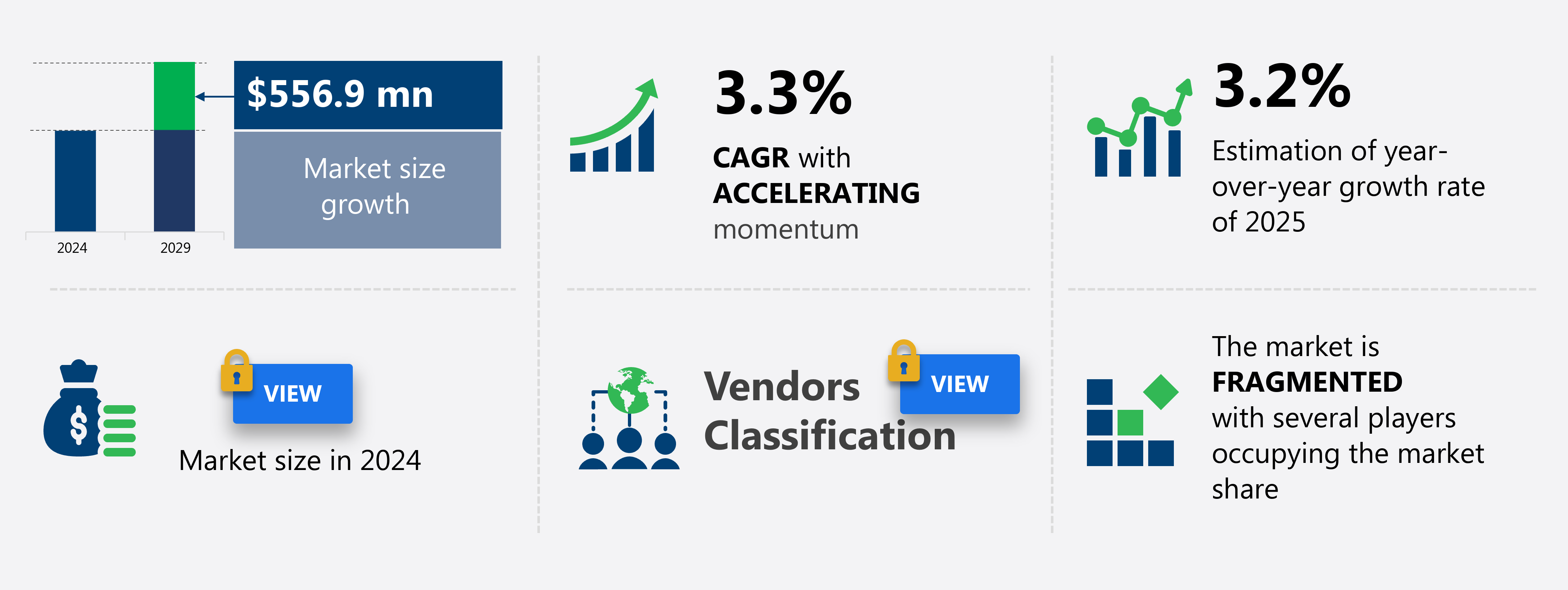
The lubricants market in UAE size is forecast to increase by USD 556.9 million million at a CAGR of 3.3% between 2024 and 2029.
-
The lubricants market is experiencing significant growth due to the increasing demand for high-performance lubricants across various industries. Key applications include grease for industrial machinery, battery lubricants for electric vehicles, compressor oils, and hydraulic fluids for construction equipment and aircraft flight control systems. The emergence of bio-based lubricants derived from renewable sources is another notable trend, driven by the need for sustainable and eco-friendly alternatives. Crude oil price fluctuations also impact the market, as lubricants are primarily derived from petroleum. In addition, the growing adoption of renewable energy sources, such as wind and solar, is increasing the demand for specialized lubricants In the energy sector.
-
The pandemic has also accelerated the shift towards electric buses and the use of lubricants In the production of COVID-19 vaccines. Marine lubricants and transformer oils continue to be crucial In the transportation and power generation sectors, respectively. Overall, the lubricants market is expected to grow steadily, driven by these trends and the ongoing industrialization and urbanization in North America.
What will be the Size of the market During the Forecast Period?
-
The lubricants market encompasses a broad range of products used to reduce friction and wear in various applications, including transport, energy, manufacturing, and marine industries. This market is driven by the need to minimize operational costs, enhance machinery functioning, and meet evolving environmental standards. Key product categories include gear lubricants, hydraulic oils, engine oils, and metalworking fluids. Transport applications, such as transportation & logistics and automotive industries, dominate the market due to the high demand for lubricants in vehicles and machinery. However, the market is also expanding in response to the growing adoption of renewable energy and electric vehicles, which require specialized lubricants.
-
Environmental concerns are driving the demand for biodegradable lubricants and the phase-out of conventional mineral oils. Tougher environmental regulations and increasing awareness of the environmental impact of lubricants are influencing market trends. Lubricant manufacturing is focusing on innovation to address challenges such as gear erosion, churning losses, and thermal stability. The market is witnessing the development of advanced additives, including anti-wear agents, viscosity index improvers, and extreme pressure additives, to improve lubricant performance and reduce wear & tear. In summary, the lubricants market is a dynamic and evolving industry, driven by the need for cost-effective and environmentally sustainable lubricant solutions in various industries. The market is expected to continue growing, driven by technological advancements and changing market demands.
How is this market segmented and which is the largest segment?
The market research report provides comprehensive data (region-wise segment analysis), with forecasts and estimates in "USD million" for the period 2025-2029, as well as historical data from 2019-2023 for the following segments.
- Product
- Mineral oil lubricants
- Synthetic lubricants
- Bio-based lubricants
- Type
- Hydraulic fluid
- Metal working fluid
- Others
- End-user
- Automotive
- Heavy equipment
- Metallurgy and metal working
- Power generation
- Geography
- UAE
By Product Insights
- The mineral oil lubricants segment is estimated to witness significant growth during the forecast period.
The lubricants market encompasses a range of products, including mineral oil, synthetic, and bio-based lubricants, used in various industries and automotive applications. Mineral oil lubricants derived from petroleum offer advantages such as cost-effectiveness, excellent additive solubility, compatibility with seals, high viscosity, and a high flash point. Three types of mineral oil lubricants exist: paraffinic, naphthenic, and aromatic. Synthetic lubricants, on the other hand, provide superior performance in extreme conditions, while bio-based lubricants offer environmental responsibility and sustainability. Lubricant technology advancements include oxidation prevention, friction reduction, wear prevention, and corrosion protection. Renewable energy adoption and sustainable manufacturing have led to the development of circular economy lubricants, eco-friendly lubricants, and energy-efficient lubricants.
Renewable lubricants, such as those derived from bio-based materials, are gaining popularity due to their reduced carbon footprint and alignment with sustainable development goals. Industrial sustainability and energy efficiency are key considerations in lubricant selection, with high-performance lubricants, green lubricants, and innovative products driving market growth. Lubricant testing, analysis, and disposal are essential to ensure optimal performance and minimize environmental impact. The automotive industry trends include the use of low-friction lubricants, premium lubricants, and alternative fuel sources. The aerospace industry relies on specialized lubricants for high-performance engines and equipment lubrication.
Mineral oil lubricants remain popular due to their cost-effectiveness and performance, while synthetic and bio-based lubricants offer advanced properties and environmental benefits. Market trends include renewable energy adoption, circular economy, and sustainable manufacturing, with a focus on lubricant performance, environmental responsibility, and energy efficiency.
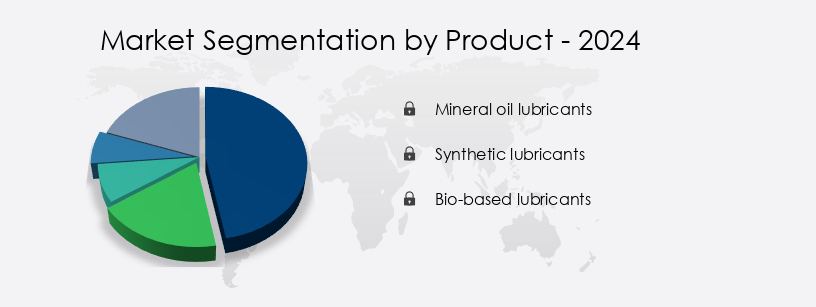
Get a glance at the market report of share of various segments Request Free Sample
Market Dynamics
Our UAE Lubricants Market researchers analyzed the data with 2024 as the base year, along with the key drivers, trends, and challenges. A holistic analysis of drivers will help companies refine their marketing strategies to gain a competitive advantage.
What are the key market drivers leading to the rise in the adoption of UAE Lubricants Market?
- Rising demand for high-performance lubricants is the key driver of the market. The lubricants market In the UAE is experiencing significant growth due to advancements in industrial equipment, automotive applications, and other machinery. Key drivers include increasing vehicle ownership and commercial business expansion, particularly in sectors such as e-commerce and ride-hailing. The hot and arid climate In the region necessitates frequent oil changes and lubrication to prevent engine overheating and minimize operating costs. Additionally, the growing popularity of sports utility vehicles (SUVs) and high-tech cars, trucks, and buses has led to the development of high-performance lubricants. These lubricants offer oxidation prevention, wear prevention, corrosion protection, and friction reduction, contributing to industrial sustainability and circular economy lubricants.
-
Moreover, the shift towards renewable energy and sustainable development has fueled the demand for renewable lubricants and alternative fuel sources. The market also focuses on lubricant testing, lubricant selection, and lubricant development to ensure premium product performance and environmental responsibility. Innovative lubricant technologies, such as low-friction lubricants, synthetic lubricants, and bio-based lubricants, are gaining popularity due to their energy efficiency and carbon footprint reduction properties. The market trends also include the adoption of green technology in electric vehicle maintenance, battery technology advancements, and energy storage solutions. The future of transportation lies in sustainable mobility, renewable energy sources, and climate change mitigation, making the lubricants market an essential component of the next-generation engines and sustainable manufacturing processes.
What are the market trends shaping the UAE Lubricants Market?
- The emergence of bio-based lubricants is the upcoming trend In the market. The lubricants market is witnessing significant growth due to the increasing adoption of bio-based lubricants. Compared to mineral oil-based lubricants, bio-based lubricants offer several advantages, including oxidation prevention, wear prevention, and corrosion protection. These eco-friendly lubricants are derived from renewable resources, making them a more sustainable option for industries focusing on industrial sustainability and environmental responsibility. Bio-based lubricants also provide better friction reduction, enabling improved engine efficiency and optimization. The circular economy trend is driving the demand for circular economy lubricants, which can be recycled and reused, reducing the carbon footprint and promoting sustainable manufacturing. Lubricant testing plays a crucial role in ensuring lubricant performance and selecting the right lubricant for specific applications.
-
Innovative lubricant technology is being developed to cater to various industries, including automotive, aerospace, and industrial sectors. Automotive applications, such as automotive lubrication and vehicle maintenance, are increasingly adopting low-friction lubricants and premium products to enhance engine performance and fuel efficiency. Similarly, industrial lubricants are being used to maintain machinery runtime and improve power generation efficiency. The renewable energy sector is also embracing the use of lubricants, particularly in hydraulic system maintenance and wind energy applications. Renewable energy adoption and battery technology advancements require specialized lubricants to ensure energy efficiency and extend the life of equipment. Lubricant sustainability is a key focus area for manufacturers and end-users, with a shift towards high-performance, green lubricants and biodegradable oils.
-
Lubricant development is ongoing, with the introduction of synthetic lubricants, alternative fuel sources, and innovative products. In summary, the lubricants market is evolving to meet the demands of various industries, with a focus on sustainability, energy efficiency, and environmental responsibility. Bio-based lubricants, lubricant testing, and innovative lubricant technology are driving the growth of this market.
What challenges does the UAE Lubricants Market face during the growth?
- Fluctuations in crude oil prices are a key challenge affecting the market growth. The lubricants market In the UAE primarily relies on the processing of crude oil into base oils for mineral, synthetic, and bio-based lubricants. The oil and gas industry is a significant supplier of these raw materials, yet price instability in crude oil can negatively impact the cost of manufacturing lubricants. The escalating demand for crude oil, coupled with a decreasing supply, has led to an increase in global crude oil prices. This volatility directly influences the revenue and profit margins of lubricant manufacturers In the UAE. In response to environmental concerns, the market is shifting towards renewable energy, industrial sustainability, and circular economy lubricants.
-
Renewable lubricants, such as those derived from bio-based materials, offer oxidation prevention, wear prevention, and corrosion protection. Innovative lubricant technologies, including low-friction and high-performance lubricants, contribute to energy efficiency and sustainability in various industries, including automotive, aerospace, and manufacturing. Lubricant testing, analysis, and selection play crucial roles in ensuring optimal lubricant performance, reducing friction, and minimizing carbon footprint. Premium lubricants, such as those with advanced additives for rust prevention, wear reduction, and fuel efficiency, cater to the growing demand for eco-friendly and sustainable lubrication solutions. The automotive sector, particularly electric vehicles, requires specialized lubricants for maintenance and battery technology advancements.
-
Hydraulic system maintenance, engine efficiency optimization, and engine performance are key areas where lubricants contribute to the adoption of green technology trends. The lubricants market is witnessing significant growth, driven by the demand for high-performance lubricants, alternative fuel sources, and sustainable manufacturing. The future of transportation lies in sustainable energy sources, climate change mitigation, and next-generation engines. Lubricant development and sustainability remain essential for the industry's long-term success.
Exclusive Customer Landscape
The market forecasting report includes the adoption lifecycle of the market, covering from the innovator's stage to the laggard's stage. It focuses on adoption rates in different regions based on penetration. Furthermore, the market report also includes key purchase criteria and drivers of price sensitivity to help companies evaluate and develop their market growth analysis strategies.

Customer Landscape
Key Companies & Market Insights
Companies are implementing various strategies, such as strategic alliances, market forecast , partnerships, mergers and acquisitions, geographical expansion, and product/service launches, to enhance their presence In the market.
Abu Dhabi National Oil Co. - The company offers lubricants such as ADNOC Voyager SJ CP multigrade engine oil, ADNOC G II Turbine Oil for use in water,steam, and gas turbines, and ADNOC Grease MP for lubrication of rolling element and needle bearings.
The market research and growth report includes detailed analyses of the competitive landscape of the market and information about key companies, including:
- Abu Dhabi National Oil Co.
- Amcor Lubricants
- Avana Lubricants
- DANA Lubricants Factory LLC
- Emarat
- Emirates National Oil Co. Ltd. LLC.
- Gandhar Oil Refinery India Ltd.
- German Mirror Lubricants and Greases
- GGICO
- Hindustan Petroleum Corp. Ltd.
- Lubrex FZC
- Oscar Lubricants LLC
- Rida Lubricants LLC
- TotalEnergies SE
- United Grease and Lubricants
Qualitative and quantitative analysis of companies has been conducted to help clients understand the wider business environment as well as the strengths and weaknesses of key market players. Data is qualitatively analyzed to categorize companies as pure play, category-focused, industry-focused, and diversified; it is quantitatively analyzed to categorize companies as dominant, leading, strong, tentative, and weak.
Research Analyst Overview
The lubricants market is experiencing significant growth and innovation as industries prioritize sustainability and environmental responsibility. Renewable energy adoption and industrial sustainability are driving the demand for lubricants that offer oxidation prevention, wear prevention, and corrosion protection. These lubricants are essential for various applications, including automotive, aerospace, and industrial equipment. Lubricant technology continues to evolve, with a focus on low-friction and high-performance formulations. Renewable lubricants derived from bio-based materials are gaining popularity due to their eco-friendliness and reduced carbon footprint. Friction reduction and energy efficiency are also critical considerations, as industries strive for sustainable manufacturing and transportation solutions. The circular economy is another significant trend in the lubricant market.
Circular economy lubricants are designed for reuse, recycling, or biodegradability, reducing the environmental impact of lubricant disposal. Lubricant testing and analysis are crucial for ensuring the performance and sustainability of these innovative products. Lubricant selection is a critical aspect of sustainable development. Premium lubricants, such as synthetic and high-performance formulations, offer superior protection and longer machinery runtime. However, standard lubricants remain essential for various applications, and their disposal must be managed responsibly. Innovative lubricants, such as water-based and rust-prevention additives, are increasingly being used In the automotive industry for vehicle maintenance and trade. Friction modifiers and wear-reduction additives are also essential for optimizing engine performance and reducing wear in high-speed applications.
The future of transportation is sustainable, with a focus on alternative fuel sources and next-generation engines. Renewable energy investment and battery technology advancements are driving the adoption of electric vehicles, requiring specialized lubricants for maintenance and energy storage solutions. The lubricants market is dynamic and diverse, with various applications and product offerings. Lubricant development and sustainability remain key priorities, as industries seek to minimize their environmental impact and improve efficiency. The market trends towards renewable energy, sustainable manufacturing, and circular economy solutions will continue to shape the lubricants industry In the years to come. The Lubricants Market in UAE is witnessing significant growth due to the increasing demand for automotive lubricants, particularly piston engine oils and gear oils, in the automotive industry. With the rise in motor vehicle production, operational downtime due to conventional lubricants not being able to withstand tougher environments has become a major concern. Innovative ideas in lubrication technology are being explored to address this issue, with modern engine designs and advanced vehicles requiring more efficient and long-lasting lubricants.
Energy consumption is another factor driving the market, as the use of energy-efficient lubricants in automotive applications and hydraulic systems can lead to substantial savings. The shift towards electric cars and the growing popularity of lithium batteries have also influenced the market, with the need for specialized lubricants to ensure optimal performance. The traditional lubrication technology used in older generation automobiles and industrial applications is being replaced by more advanced and cost-effective solutions. The UAE's focus on long-term maintenance costs and reducing operational downtime has made it an attractive market for companies offering high-performance lubricants. Hydroelectric plants and other industrial applications also require specialized lubricants to ensure efficient operation and reduce energy consumption. Overall, the Lubricants Market in UAE is expected to continue its growth trajectory, driven by the demand for energy-efficient and long-lasting lubricants in various industries.
|
Market Scope |
|
|
Report Coverage |
Details |
|
Page number |
164 |
|
Base year |
2024 |
|
Historic period |
2019-2023 |
|
Forecast period |
2025-2029 |
|
Growth momentum & CAGR |
Accelerate at a CAGR of 3.3% |
|
Market Growth 2025-2029 |
USD 556.9 million |
|
Market structure |
Fragmented |
|
YoY growth 2024-2025(%) |
3.2 |
|
Key countries |
UAE |
|
Competitive landscape |
Leading Companies, Market Positioning of Companies, Competitive Strategies, and Industry Risks |
What are the Key Data Covered in this Market Research and Growth Report?
- CAGR of the market during the forecast period
- Detailed information on factors that will drive the market growth and forecasting between 2025 and 2029
- Precise estimation of the size of the market and its contribution of the market in focus to the parent market
- Accurate predictions about upcoming market growth and trends and changes in consumer behaviour
- Growth of the market across UAE
- Thorough analysis of the market's competitive landscape and detailed information about companies
- Comprehensive analysis of factors that will challenge the growth of market companies
We can help! Our analysts can customize this market research report to meet your requirements. Get in touch
 RIA -
RIA - 
