

Urethane Adhesives Market Analysis Europe, North America, APAC, Middle East and Africa, South America - US, Germany, France, China, Switzerland - Size and Forecast 2024-2028

Urethane Adhesives Market Analysis Europe, North America, APAC, Middle East and Africa, South America - US, Germany, France, China, Switzerland - Size and Forecast 2024-2028

Published: Oct 2024 150 Pages SKU: IRTNTR71320

Market Overview at a Glance

$1.16 B
Market Opportunity
3%
CAGR
2.9
YoY growth 2023-2024(%)

Urethane Adhesives Market Size 2024-2028

The urethane adhesives market size is forecast to increase by USD 1.16 billion at a CAGR of 3% between 2023 and 2028.

  • The market is experiencing significant growth due to key trends, including the expanding demand from the building and construction industry. Sustainability is a major focus in this sector, leading to the increasing adoption of urethane adhesives as they offer excellent bonding strength and durability, making them an eco-friendly alternative to traditional adhesives. However, the market faces challenges such as the volatile prices of raw materials, which can impact the profitability of manufacturers. Despite this, the future looks promising for the market, with continued innovation and the development of new applications driving growth. This market analysis report provides a comprehensive study of these trends and challenges, offering valuable insights for stakeholders looking to capitalize on the opportunities in this industry.
  • What will be the Size of the Urethane Adhesives Market During the Forecast Period?
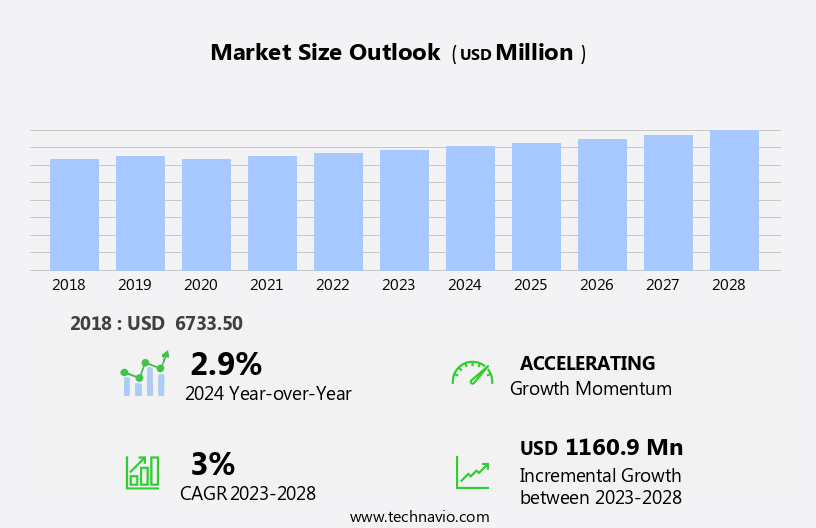
    Urethane Adhesives Market Size

     Request Free Sample

  • Urethane adhesives, also known as polyurethane adhesives, are widely used in various industries due to their exceptional bonding properties. These adhesives are formed through the reaction of isocyanates, such as MDI (methylene diphenyl diisocyanate) and TDI (toluene diisocyanate), with alcohol functionalities. Urethane adhesives offer strong cohesion and elasticity, making them suitable for applications in construction, electronics, footwear, and more. Construction is a significant end-user industry for urethane adhesives, where they are used to bond various materials, including thermoplastics and metals. In the electronics sector, they are utilized In the production of smart devices due to their ability to form functional barrier applications and provide excellent adhesion.
  • The housing market's demand for high-performance adhesives continues to drive growth In the market. However, concerns over VOC (volatile organic compound) emissions and the need for shorter cure times and pot life have led to the development of waterborne and solvent-free urethane adhesives. OEMs (original equipment manufacturers) in industries like building and construction, container packaging, end-of-line packaging, and housing units rely on urethane adhesives for their high cohesive strength and ability to form strong bonds. The market is expected to continue growing, driven by increasing demand from various industries and the development of new, innovative applications.
  • How is this Urethane Adhesives Industry segmented and which is the largest segment?

    The urethane adhesives industry research report provides comprehensive data (region-wise segment analysis), with forecasts and estimates in "USD million" for the period 2024-2028, as well as historical data from 2018-2022 for the following segments.

    • Technology
      • Solvent-based
      • 100 percentage solids
      • Dispersion
      • Others
    • Geography
      • Europe
        • Germany
        • France
      • North America
        • US
      • APAC
        • China
      • Middle East and Africa
        • South America

        By Technology Insights

        • The solvent-based segment is estimated to witness significant growth during the forecast period.

        Urethane adhesives, specifically solvent-based types, exhibit strong bonding capabilities due to their resistance to plasticizers and high adhesion to various materials. These adhesives are manufactured from high-molecular-weight hydroxyl-terminated polyurethane dissolved in a solvent. Isocyanates, such as toluene diisocyanate (TDI) and diphenylmethane isocyanate (MDI), are commonly used In their production. Urethane adhesives are available as one-component and two-component grades, catering to diverse industrial and construction applications. Substrates like rubber, leather, fabrics, metal, paper, wood, and plastics adhere well to these adhesives. Urethane adhesives are integral to industries such as building and construction, leather and footwear, furniture and decoration, electronics, renovation activities, and original equipment manufacturing.

        Their properties include high cohesive strength, elasticity, and resistance to solvents, making them suitable for container packaging, end-of-line packaging, functional barrier applications, metal packaging, smart packaging, and more. Urethane adhesives contribute to various sectors, including housing units, infrastructure development, green buildings, low-carbon energy economy, and urban cities.
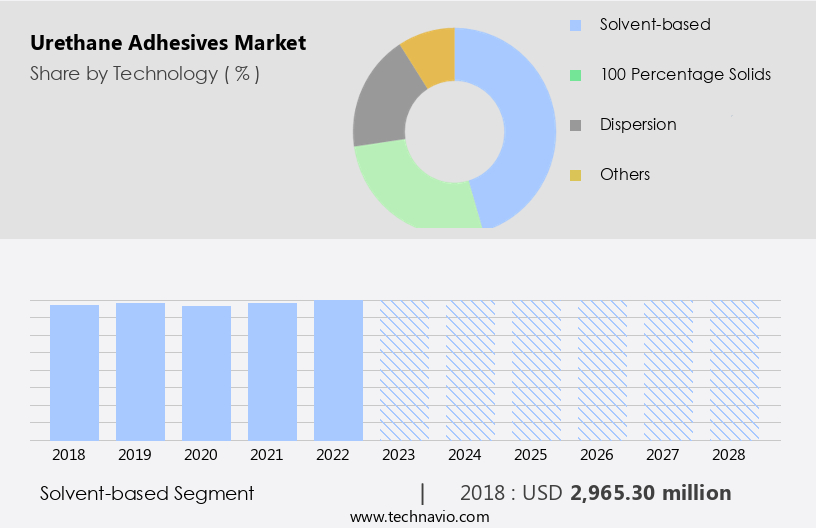
        Urethane Adhesives Market Size

        Get a glance at the  Urethane Adhesives Industry report of share of various segments Request Free Sample

        The Solvent-based segment was valued at USD 2.97 billion in 2018 and showed a gradual increase during the forecast period.

        Regional Analysis

        • APAC is estimated to contribute 33% to the growth of the global market during the forecast period.

        Technavio’s analysts have elaborately explained the regional trends and drivers that shape the market during the forecast period.
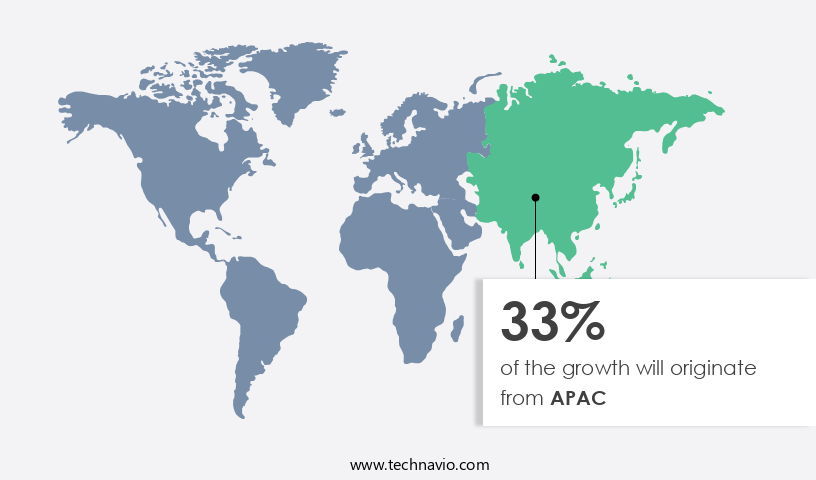
        Urethane Adhesives Market Share by Geography

        For more insights on the market share of various regions, Request Free Sample

        Urethane adhesives, derived from polyurethane (PU) and isocyanates, exhibit superior properties such as high cohesive strength, elasticity, and adhesion. These adhesives are widely used in various industries, including construction, electronics, furniture and decoration, and leather and footwear, due to their functional barrier applications, solvent resistance, and curing capabilities. In Europe, countries like Germany, France, Spain, Russia, and Italy are experiencing growth In the construction sector, driving the demand for urethane adhesives. Germany, in particular, is a significant consumer of these adhesives, with industries such as construction, electrical and electronics, packaging, automotive, and aerospace contributing to the demand. In Germany, the growing economy and urbanization have led to a rise in demand for housing units, especially in non-residential and commercial buildings.

        The high population density in urban areas and limited urban space have created a need for efficient and space-saving packaging solutions, further boosting the demand for urethane adhesives. The use of urethane adhesives also offers environmental benefits, such as low VOC emissions and carbon dioxide foaming, making them an attractive choice for green buildings and the low-carbon energy economy.

        Market Dynamics

        Our  researchers analyzed the data with 2023 as the base year, along with the key drivers, trends, and challenges. A holistic analysis of drivers will help companies refine their marketing strategies to gain a competitive advantage.

        What are the key market drivers leading to the rise In the adoption of Urethane Adhesives Industry?

        Growing demand from building and construction industry is the key driver of the market.

      • Urethane adhesives, also known as Polyurethane adhesives, play a significant role in various industries due to their unique properties. These adhesives are formed through the reaction of isocyanates with alcohol functionalities, resulting in Uretonimine linkages and hydrogen bonding. Methylene diphenyl diisocyanate (MDI) and toluene diisocyanate (TDI) are commonly used isocyanates In the production of urethane adhesives. The versatility of urethane adhesives is evident In their applications, which range from Construction to Leather and Footwear, Furniture and Decoration, Electronics, Renovation activities, and more. In the Construction sector, urethane adhesives offer quick curing and high strength, making them suitable for woodworking and other applications.
      • They can bond various substrates, including plastics, glass, PVFs, aluminum, stainless steel, and other metals, regardless of bond substrate toughness. The growth of infrastructure development in Asia Pacific (APAC) and Central and South America has fueled the demand for construction adhesives, particularly from the commercial sector. The increasing housing demand in countries like India, Thailand, the Philippines, Indonesia, Peru, Colombia, Brazil, Mexico, and Chile has led to a surge in demand for adhesives In the residential and non-residential sectors. Urethane adhesives offer several advantages, such as solvent resistance, long shelf life, and carbon dioxide foaming through solids technology.
      • They are also used In thermoset and Thermoplastic applications, including Footwear, Building and Construction, and Container packaging. End-of-line packaging, Functional barrier applications, Metal packaging, Smart packaging, and Cohesion and Elasticity are other areas where urethane adhesives are gaining popularity due to their high cohesive strength and elasticity. Moreover, urethane adhesives are used in various industries, including Electronics manufacturing, Electrical equipment, Medical devices, Aerospace production, E-commerce, Dissolvable packaging, Space-saving packaging, Edible packaging, Residential development, Infrastructural development, Green buildings, and Low-carbon energy economy. The growing demand for sustainable and eco-friendly products has led to the development of urethane adhesives with low VOC emissions, making them an ideal choice for various applications.
      • In conclusion, the market is expected to grow significantly due to the increasing demand for adhesives in various industries, particularly In the Construction sector. The versatility and unique properties of urethane adhesives make them an ideal choice for various applications, from Construction to Electronics and beyond. The growing trend towards sustainable and eco-friendly products is also driving the demand for urethane adhesives with low VOC emissions.
      • What are the market trends shaping the Urethane Adhesives Industry?

        Increasing adoption of sustainable products is the upcoming market trend.

      • Urethane adhesives, also known as Polyurethane (PU) adhesives, are a type of adhesive formed through the reaction of isocyanates with alcohol functionalities, such as methylene diphenyl diisocyanate (MDI) and toluene diisocyanate (TDI). Urethane adhesives utilize Uretonimine linkages and hydrogen bonding for superior adhesion and cohesion. They offer various benefits, including solvent resistance, long shelf life, and short cure time. The market encompasses diverse segments, including Construction, Leather and Footwear, Furniture and Decoration, Electronics, Renovation activities, and OEMs. In Construction, urethane adhesives are used for container packaging, end-of-line packaging, and functional barrier applications in metal packaging, smart packaging, and space-saving packaging.
      • In Building and Construction, these adhesives provide high cohesive strength, elasticity, and rigidity. The market for Urethane Adhesives is driven by the increasing demand for housing units and construction activities, as well as the growing electronics manufacturing industry. Additionally, the shift towards green buildings and a low-carbon energy economy is expected to fuel the market's growth. Urethane Adhesives offer advantages such as low VOC emissions, solvent resistance, and a long pot life, making them a popular choice for various industries. Carbon dioxide foaming and solids technology are the latest trends In the market. Thermoset and thermoplastic urethane adhesives cater to different industry requirements.
      • The market's growth is also influenced by the increasing demand for mouldable and rigid urethane adhesives in various applications, including housing demand, infrastructure development, and e-commerce. In conclusion, the market is expected to witness significant growth during the forecast period due to its numerous advantages and wide applications across various industries. The market's growth is driven by factors such as the increasing demand for housing units and construction activities, the shift towards green buildings and a low-carbon energy economy, and the growing electronics manufacturing industry. Urethane adhesives offer benefits such as low VOC emissions, solvent resistance, and a long pot life, making them a popular choice for various industries.
      • What challenges does the Urethane Adhesives Industry face during its growth?

        Volatile raw material price is a key challenge affecting the industry growth.

      • Urethane adhesives, also known as Polyurethane (PU) adhesives, play a crucial role in various industries, including Construction, Leather and Footwear, Furniture and Decoration, Electronics, Renovation activities, and more. The market for these adhesives is driven by several factors, including the demand for high cohesive strength, elasticity, and solvent resistance. However, the market faces challenges due to volatile raw material prices, particularly those of isocyanates and polyols. Isocyanates, such as methylene diphenyl diisocyanate (MDI) and toluene diisocyanate (TDI), are essential ingredients In the production of urethane adhesives. Their prices have been influenced by factors like geopolitical tensions, supply chain disruptions, and rising energy prices.
      • For instance, the Russia-Ukraine war has significantly impacted the petrochemical industry, leading to increased raw material prices and supply chain disruptions. The volatility in raw material prices poses a significant challenge for manufacturers, as it increases production costs and can impact profit margins. Companies must balance the need to maintain competitive pricing with the need to cover increased costs. The construction industry, for example, relies on urethane adhesives for applications like container packaging, end-of-line packaging, and functional barrier applications in metal packaging and smart packaging. In this industry, the demand for urethane adhesives is driven by housing demand and infrastructure development, including green buildings and low-carbon energy economy initiatives.
      • Urethane adhesives also find extensive applications In the electronics industry, where they are used In the production of thermoplastics and thermosets for footwear, building and construction, and OEMs. In the electronics industry, urethane adhesives provide advantages like high cohesive strength, elasticity, and solvent resistance, making them ideal for use in various applications, including dissolvable packaging, space-saving packaging, edible packaging, and more. The market for urethane adhesives is expected to continue growing due to the increasing demand for these adhesives in various industries. However, the volatility in raw material prices remains a significant challenge, and manufacturers must find ways to mitigate the impact of these price fluctuations on their operations and profitability.
      • Additionally, advances in solvent technology, such as solids technology and dispersion, are expected to provide opportunities for growth In the market. In conclusion, The market faces challenges due to volatile raw material prices, particularly those of isocyanates and polyols. The impact of these price fluctuations on manufacturers' profitability and their ability to maintain competitive pricing is a significant concern. However, the market is expected to continue growing due to the increasing demand for urethane adhesives in various industries, including construction, electronics, and more. Advances in solvent technology are also expected to provide opportunities for growth In the market.
      • Exclusive Customer Landscape

        The urethane adhesives market forecasting report includes the adoption lifecycle of the market, covering from the innovator’s stage to the laggard’s stage. It focuses on adoption rates in different regions based on penetration. Furthermore, the urethane adhesives market report also includes key purchase criteria and drivers of price sensitivity to help companies evaluate and develop their market growth analysis strategies.
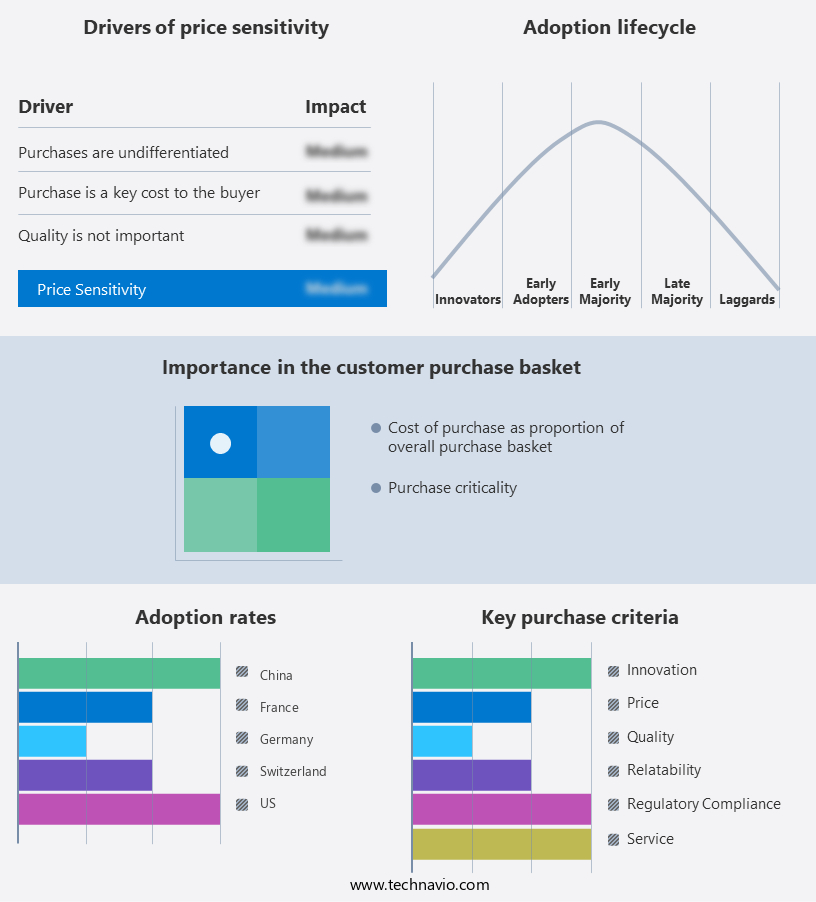
        Urethane Adhesives Market Share by Geography

         Customer Landscape

        Key Companies & Market Insights

        Companies are implementing various strategies, such as strategic alliances, urethane adhesives market forecast, partnerships, mergers and acquisitions, geographical expansion, and product/service launches, to enhance their presence In the industry.

        3M Co. - Urethane adhesives, marketed under the Scotch-Weld brand, represent a significant product category for the company. These high-performance adhesives offer superior bonding capabilities across various industries, including automotive, construction, and electronics. Urethane adhesives are known for their versatility, providing resistance to moisture, heat, and chemicals. The Scotch-Weld brand's commitment to innovation ensures continuous improvement in product offerings, catering to evolving industry requirements. Urethane adhesives' ability to bond dissimilar materials and provide strong, long-lasting bonds makes them an essential component in numerous applications. The company's extensive expertise in adhesive technology and commitment to quality underpIn the success of its urethane adhesive product line.

        The industry research and growth report includes detailed analyses of the competitive landscape of the market and information about key companies, including:

        • 3M Co.
        • Akzo Nobel NV
        • Anabond Ltd.
        • Arkema
        • Ashland Inc.
        • Avery Dennison Corp.
        • DELO Industrie Klebstoffe GmbH and Co. KGaA
        • Dow Inc.
        • H.B. Fuller Co.
        • Henkel AG and Co. KGaA
        • Huntsman Corp.
        • Illinois Tool Works Inc.
        • Jowat SE
        • KLEBCHEMIE MG Becker GmbH and Co. KG
        • Parker Hannifin Corp.
        • Pidilite Industries Ltd
        • Scott Bader Co. Ltd.
        • Sika AG
        • Wacker Chemie AG
        • Yokohama Rubber Co. Ltd.

        Qualitative and quantitative analysis of companies has been conducted to help clients understand the wider business environment as well as the strengths and weaknesses of key industry players. Data is qualitatively analyzed to categorize companies as pure play, category-focused, industry-focused, and diversified; it is quantitatively analyzed to categorize companies as dominant, leading, strong, tentative, and weak.

        Research Analyst Overview

        Urethane adhesives, a type of polyurethane, are widely used in various industries due to their superior bonding properties. These adhesives offer excellent cohesion and elasticity, making them suitable for applications requiring high adhesive strength and flexibility. The market for urethane adhesives is driven by several factors, including the growing demand for construction projects, increasing renovation activities, and the expanding electronics industry. Isocyanates, the primary building blocks of urethane adhesives, undergo a chemical reaction with alcohol functionalities to form uretonimine linkages. This reaction results In the formation of urethane adhesives with desirable properties such as hydrogen bonding, solvent resistance, and long shelf life.

        Urethane adhesives find extensive applications In the building and construction sector, particularly In the production of thermoset and thermoplastic materials. In this industry, they are used to bond various materials, including concrete, wood, and metals, In the construction of housing units and infrastructure. The increasing demand for green buildings and low-carbon energy economies has further boosted the market for urethane adhesives in this sector. The electronics industry is another significant end-user of urethane adhesives. These adhesives are used extensively In the manufacturing of electronic devices, electrical equipment, and medical devices due to their excellent bonding properties and ability to withstand high temperatures and harsh environments.

        The automotive and footwear industries also utilize urethane adhesives due to their high cohesive strength and elasticity. In the automotive industry, they are used for bonding various components, including body panels and glass, while in footwear production, they are used for attaching soles to uppers. Urethane adhesives are also used in various packaging applications, including container packaging, end-of-line packaging, and functional barrier applications. These adhesives offer excellent resistance to solvents and moisture, making them ideal for use in various types of packaging, including metal and smart packaging. The market for urethane adhesives is expected to grow significantly due to the increasing demand for housing units, construction activities, and electronics manufacturing.

        Additionally, the growing trend towards e-commerce and the need for space-saving and dissolvable packaging are also expected to drive the market for urethane adhesives. Urethane adhesives offer several advantages over traditional adhesives, including faster cure times, longer pot life, and lower VOC emissions. These advantages make them a popular choice for various industries, particularly those requiring high-performance adhesives with quick turnaround times. In conclusion, the market for urethane adhesives is driven by several factors, including the growing demand for construction projects, increasing renovation activities, and the expanding electronics industry. These adhesives offer several advantages over traditional adhesives, including excellent bonding properties, fast cure times, and long shelf life.

        The market for urethane adhesives is expected to grow significantly In the coming years due to the increasing demand for housing units, construction activities, and electronics manufacturing.

        Market Scope

        Report Coverage

        Details

        Page number

        150

        Base year

        2023

        Historic period

        2018-2022

        Forecast period

        2024-2028

        Growth momentum & CAGR

        Accelerate at a CAGR of 3%

        Market growth 2024-2028

        USD 1160.9 million

        Market structure

        Fragmented

        YoY growth 2023-2024(%)

        2.9

        Key countries

        US, Germany, France, China, and Switzerland

        Competitive landscape

        Leading Companies, Market Positioning of Companies, Competitive Strategies, and Industry Risks

        Request Free Sample

        What are the Key Data Covered in this Urethane Adhesives Market Research and Growth Report?

        • CAGR of the Urethane Adhesives industry during the forecast period
        • Detailed information on factors that will drive the growth and forecasting between 2024 and 2028
        • Precise estimation of the size of the market and its contribution of the industry in focus to the parent market
        • Accurate predictions about upcoming growth and trends and changes in consumer behaviour
        • Growth of the market across Europe, North America, APAC, Middle East and Africa, and South America
        • Thorough analysis of the market’s competitive landscape and detailed information about companies
        • Comprehensive analysis of factors that will challenge the urethane adhesives market growth of industry companies

        We can help! Our analysts can customize this urethane adhesives market research report to meet your requirements.

        Get in touch


        1 Executive Summary

        • 1.1 Market overview
          • Executive Summary - Chart on Market Overview
          • Executive Summary - Data Table on Market Overview
          • Executive Summary - Chart on Global Market Characteristics
          • Executive Summary - Chart on Market by Geography
          • Executive Summary - Chart on Market Segmentation by Technology
          • Executive Summary - Chart on Incremental Growth
          • Executive Summary - Data Table on Incremental Growth
          • Executive Summary - Chart on Company Market Positioning

        2 Market Landscape

        • 2.1 Market ecosystem
          • Parent Market
          • Data Table on - Parent Market
        • 2.2 Market characteristics
          • Market characteristics analysis
        • 2.3 Value chain analysis
          • Value Chain Analysis

        3 Market Sizing

        • 3.1 Market definition
          • Offerings of companies included in the market definition
        • 3.2 Market segment analysis
          • Market segments
        • 3.3 Market size 2023
          • 3.4 Market outlook: Forecast for 2023-2028
            • Chart on Global - Market size and forecast 2023-2028 ($ million)
            • Data Table on Global - Market size and forecast 2023-2028 ($ million)
            • Chart on Global Market: Year-over-year growth 2023-2028 (%)
            • Data Table on Global Market: Year-over-year growth 2023-2028 (%)

          4 Historic Market Size

          • 4.1 Global Urethane Adhesives Market 2018 - 2022
            • Historic Market Size - Data Table on Global Urethane Adhesives Market 2018 - 2022 ($ million)
          • 4.2 Technology segment analysis 2018 - 2022
            • Historic Market Size - Technology Segment 2018 - 2022 ($ million)
          • 4.3 Geography segment analysis 2018 - 2022
            • Historic Market Size - Geography Segment 2018 - 2022 ($ million)
          • 4.4 Country segment analysis 2018 - 2022
            • Historic Market Size - Country Segment 2018 - 2022 ($ million)

          5 Five Forces Analysis

          • 5.1 Five forces summary
            • Five forces analysis - Comparison between 2023 and 2028
          • 5.2 Bargaining power of buyers
            • Bargaining power of buyers - Impact of key factors 2023 and 2028
          • 5.3 Bargaining power of suppliers
            • Bargaining power of suppliers - Impact of key factors in 2023 and 2028
          • 5.4 Threat of new entrants
            • Threat of new entrants - Impact of key factors in 2023 and 2028
          • 5.5 Threat of substitutes
            • Threat of substitutes - Impact of key factors in 2023 and 2028
          • 5.6 Threat of rivalry
            • Threat of rivalry - Impact of key factors in 2023 and 2028
          • 5.7 Market condition
            • Chart on Market condition - Five forces 2023 and 2028

          6 Market Segmentation by Technology

          • 6.1 Market segments
            • Chart on Technology - Market share 2023-2028 (%)
            • Data Table on Technology - Market share 2023-2028 (%)
          • 6.2 Comparison by Technology
            • Chart on Comparison by Technology
            • Data Table on Comparison by Technology
          • 6.3 Solvent-based - Market size and forecast 2023-2028
            • Chart on Solvent-based - Market size and forecast 2023-2028 ($ million)
            • Data Table on Solvent-based - Market size and forecast 2023-2028 ($ million)
            • Chart on Solvent-based - Year-over-year growth 2023-2028 (%)
            • Data Table on Solvent-based - Year-over-year growth 2023-2028 (%)
          • 100 percentage solids - Market size and forecast 2023-2028
            • Chart on 100 percentage solids - Market size and forecast 2023-2028 ($ million)
            • Data Table on 100 percentage solids - Market size and forecast 2023-2028 ($ million)
            • Chart on 100 percentage solids - Year-over-year growth 2023-2028 (%)
            • Data Table on 100 percentage solids - Year-over-year growth 2023-2028 (%)
          • 6.5 Dispersion - Market size and forecast 2023-2028
            • Chart on Dispersion - Market size and forecast 2023-2028 ($ million)
            • Data Table on Dispersion - Market size and forecast 2023-2028 ($ million)
            • Chart on Dispersion - Year-over-year growth 2023-2028 (%)
            • Data Table on Dispersion - Year-over-year growth 2023-2028 (%)
          • 6.6 Others - Market size and forecast 2023-2028
            • Chart on Others - Market size and forecast 2023-2028 ($ million)
            • Data Table on Others - Market size and forecast 2023-2028 ($ million)
            • Chart on Others - Year-over-year growth 2023-2028 (%)
            • Data Table on Others - Year-over-year growth 2023-2028 (%)
          • 6.7 Market opportunity by Technology
            • Market opportunity by Technology ($ million)
            • Data Table on Market opportunity by Technology ($ million)

          7 Customer Landscape

          • 7.1 Customer landscape overview
            • Analysis of price sensitivity, lifecycle, customer purchase basket, adoption rates, and purchase criteria

          8 Geographic Landscape

          • 8.1 Geographic segmentation
            • Chart on Market share by geography 2023-2028 (%)
            • Data Table on Market share by geography 2023-2028 (%)
          • 8.2 Geographic comparison
            • Chart on Geographic comparison
            • Data Table on Geographic comparison
          • 8.3 Europe - Market size and forecast 2023-2028
            • Chart on Europe - Market size and forecast 2023-2028 ($ million)
            • Data Table on Europe - Market size and forecast 2023-2028 ($ million)
            • Chart on Europe - Year-over-year growth 2023-2028 (%)
            • Data Table on Europe - Year-over-year growth 2023-2028 (%)
          • 8.4 North America - Market size and forecast 2023-2028
            • Chart on North America - Market size and forecast 2023-2028 ($ million)
            • Data Table on North America - Market size and forecast 2023-2028 ($ million)
            • Chart on North America - Year-over-year growth 2023-2028 (%)
            • Data Table on North America - Year-over-year growth 2023-2028 (%)
          • 8.5 APAC - Market size and forecast 2023-2028
            • Chart on APAC - Market size and forecast 2023-2028 ($ million)
            • Data Table on APAC - Market size and forecast 2023-2028 ($ million)
            • Chart on APAC - Year-over-year growth 2023-2028 (%)
            • Data Table on APAC - Year-over-year growth 2023-2028 (%)
          • 8.6 Middle East and Africa - Market size and forecast 2023-2028
            • Chart on Middle East and Africa - Market size and forecast 2023-2028 ($ million)
            • Data Table on Middle East and Africa - Market size and forecast 2023-2028 ($ million)
            • Chart on Middle East and Africa - Year-over-year growth 2023-2028 (%)
            • Data Table on Middle East and Africa - Year-over-year growth 2023-2028 (%)
          • 8.7 South America - Market size and forecast 2023-2028
            • Chart on South America - Market size and forecast 2023-2028 ($ million)
            • Data Table on South America - Market size and forecast 2023-2028 ($ million)
            • Chart on South America - Year-over-year growth 2023-2028 (%)
            • Data Table on South America - Year-over-year growth 2023-2028 (%)
          • 8.8 US - Market size and forecast 2023-2028
            • Chart on US - Market size and forecast 2023-2028 ($ million)
            • Data Table on US - Market size and forecast 2023-2028 ($ million)
            • Chart on US - Year-over-year growth 2023-2028 (%)
            • Data Table on US - Year-over-year growth 2023-2028 (%)
          • 8.9 Germany - Market size and forecast 2023-2028
            • Chart on Germany - Market size and forecast 2023-2028 ($ million)
            • Data Table on Germany - Market size and forecast 2023-2028 ($ million)
            • Chart on Germany - Year-over-year growth 2023-2028 (%)
            • Data Table on Germany - Year-over-year growth 2023-2028 (%)
          • 8.10 France - Market size and forecast 2023-2028
            • Chart on France - Market size and forecast 2023-2028 ($ million)
            • Data Table on France - Market size and forecast 2023-2028 ($ million)
            • Chart on France - Year-over-year growth 2023-2028 (%)
            • Data Table on France - Year-over-year growth 2023-2028 (%)
          • 8.11 China - Market size and forecast 2023-2028
            • Chart on China - Market size and forecast 2023-2028 ($ million)
            • Data Table on China - Market size and forecast 2023-2028 ($ million)
            • Chart on China - Year-over-year growth 2023-2028 (%)
            • Data Table on China - Year-over-year growth 2023-2028 (%)
          • 8.12 Switzerland - Market size and forecast 2023-2028
            • Chart on Switzerland - Market size and forecast 2023-2028 ($ million)
            • Data Table on Switzerland - Market size and forecast 2023-2028 ($ million)
            • Chart on Switzerland - Year-over-year growth 2023-2028 (%)
            • Data Table on Switzerland - Year-over-year growth 2023-2028 (%)
          • 8.13 Market opportunity by geography
            • Market opportunity by geography ($ million)
            • Data Tables on Market opportunity by geography ($ million)

          9 Drivers, Challenges, and Opportunity/Restraints

          • 9.1 Market drivers
            • 9.2 Market challenges
              • 9.3 Impact of drivers and challenges
                • Impact of drivers and challenges in 2023 and 2028
              • 9.4 Market opportunities/restraints

                10 Competitive Landscape

                • 10.1 Overview
                  • 10.2 Competitive Landscape
                    • Overview on criticality of inputs and factors of differentiation
                  • 10.3 Landscape disruption
                    • Overview on factors of disruption
                  • 10.4 Industry risks
                    • Impact of key risks on business

                  11 Competitive Analysis

                  • 11.1 Companies profiled
                    • Companies covered
                  • 11.2 Market positioning of companies
                    • Matrix on companies position and classification
                  • 3M Co.
                    • 3M Co. - Overview
                    • 3M Co. - Business segments
                    • 3M Co. - Key news
                    • 3M Co. - Key offerings
                    • 3M Co. - Segment focus
                  • 11.4 Arkema
                    • Arkema - Overview
                    • Arkema - Business segments
                    • Arkema - Key news
                    • Arkema - Key offerings
                    • Arkema - Segment focus
                  • 11.5 Avery Dennison Corp.
                    • Avery Dennison Corp. - Overview
                    • Avery Dennison Corp. - Business segments
                    • Avery Dennison Corp. - Key news
                    • Avery Dennison Corp. - Key offerings
                    • Avery Dennison Corp. - Segment focus
                  • 11.6 Dow Inc.
                    • Dow Inc. - Overview
                    • Dow Inc. - Business segments
                    • Dow Inc. - Key news
                    • Dow Inc. - Key offerings
                    • Dow Inc. - Segment focus
                  • 11.7 H.B. Fuller Co.
                    • H.B. Fuller Co. - Overview
                    • H.B. Fuller Co. - Business segments
                    • H.B. Fuller Co. - Key news
                    • H.B. Fuller Co. - Key offerings
                    • H.B. Fuller Co. - Segment focus
                  • 11.8 Henkel AG and Co. KGaA
                    • Henkel AG and Co. KGaA - Overview
                    • Henkel AG and Co. KGaA - Business segments
                    • Henkel AG and Co. KGaA - Key offerings
                    • Henkel AG and Co. KGaA - Segment focus
                  • 11.9 Illinois Tool Works Inc.
                    • Illinois Tool Works Inc. - Overview
                    • Illinois Tool Works Inc. - Business segments
                    • Illinois Tool Works Inc. - Key news
                    • Illinois Tool Works Inc. - Key offerings
                    • Illinois Tool Works Inc. - Segment focus
                  • 11.10 Pidilite Industries Ltd
                    • Pidilite Industries Ltd - Overview
                    • Pidilite Industries Ltd - Business segments
                    • Pidilite Industries Ltd - Key news
                    • Pidilite Industries Ltd - Key offerings
                    • Pidilite Industries Ltd - Segment focus
                  • 11.11 Sika AG
                    • Sika AG - Overview
                    • Sika AG - Business segments
                    • Sika AG - Key news
                    • Sika AG - Key offerings
                    • Sika AG - Segment focus
                  • 11.12 Wacker Chemie AG
                    • Wacker Chemie AG - Overview
                    • Wacker Chemie AG - Business segments
                    • Wacker Chemie AG - Key news
                    • Wacker Chemie AG - Key offerings
                    • Wacker Chemie AG - Segment focus

                  12 Appendix

                  • 12.1 Scope of the report
                    • 12.2 Inclusions and exclusions checklist
                      • Inclusions checklist
                      • Exclusions checklist
                    • 12.3 Currency conversion rates for US$
                      • Currency conversion rates for US$
                    • 12.4 Research methodology
                      • Research methodology
                    • 12.5 Data procurement
                      • Information sources
                    • 12.6 Data validation
                      • Data validation
                    • 12.7 Validation techniques employed for market sizing
                      • Validation techniques employed for market sizing
                    • 12.8 Data synthesis
                      • Data synthesis
                    • 12.9 360 degree market analysis
                      • 360 degree market analysis
                    • 12.10 List of abbreviations
                      • List of abbreviations

                    Research Methodology

                    Technavio presents a detailed picture of the market by way of study, synthesis, and summation of data from multiple sources. The analysts have presented the various facets of the market with a particular focus on identifying the key industry influencers. The data thus presented is comprehensive, reliable, and the result of extensive research, both primary and secondary.

                    INFORMATION SOURCES

                    Primary sources

                    • Manufacturers and suppliers
                    • Channel partners
                    • Industry experts
                    • Strategic decision makers

                    Secondary sources

                    • Industry journals and periodicals
                    • Government data
                    • Financial reports of key industry players
                    • Historical data
                    • Press releases

                    DATA ANALYSIS

                    Data Synthesis

                    • Collation of data
                    • Estimation of key figures
                    • Analysis of derived insights

                    Data Validation

                    • Triangulation with data models
                    • Reference against proprietary databases
                    • Corroboration with industry experts

                    REPORT WRITING

                    Qualitative

                    • Market drivers
                    • Market challenges
                    • Market trends
                    • Five forces analysis

                    Quantitative

                    • Market size and forecast
                    • Market segmentation
                    • Geographical insights
                    • Competitive landscape

                    Interested in this report?

                    Get your sample now to see our research methodology and insights!

                    Download Now

                    Frequently Asked Questions

                    Urethane Adhesives market growth will increase by $ 1160.9 mn during 2024-2028 .

                    The Urethane Adhesives market is expected to grow at a CAGR of 3% during 2024-2028 .

                    Urethane Adhesives market is segmented by Technology( Solvent-based, 100 percentage solids, Dispersion, Others) Geographic( Europe, North America, APAC, MEA, South America)

                    3M Co., Akzo Nobel NV, Anabond Ltd., Arkema, Ashland Inc., Avery Dennison Corp., DELO Industrie Klebstoffe GmbH and Co. KGaA, Dow Inc., H.B. Fuller Co., Henkel AG and Co. KGaA, Huntsman Corp., Illinois Tool Works Inc., Jowat SE, KLEBCHEMIE MG Becker GmbH and Co. KG, Parker Hannifin Corp., Pidilite Industries Ltd, Scott Bader Co. Ltd., Sika AG, Wacker Chemie AG, Yokohama Rubber Co. Ltd. are a few of the key vendors in the Urethane Adhesives market.

                    APAC will register the highest growth rate of 33% among the other regions. Therefore, the Urethane Adhesives market in APAC is expected to garner significant business opportunities for the vendors during the forecast period.

                    US, Germany, France, China, Switzerland

                    • Growing demand from building and construction industryUrethane adhesives offer quick curing and high strength qualities in the construction sector is the driving factor this market.
                    • making them a good choice for woodworking and other construction applications. They offer the necessary strength to hold building materials together. Furthermore is the driving factor this market.
                    • because the material is adaptable is the driving factor this market.
                    • it may be utilized on plastics is the driving factor this market.
                    • glass is the driving factor this market.
                    • PVFs is the driving factor this market.
                    • aluminum is the driving factor this market.
                    • stainless steel is the driving factor this market.
                    • and other metals is the driving factor this market.
                    • independent of bond substrate toughness.Increasing investments in the development of infrastructure in APAC and Central and South America have contributed to the demand for construction adhesives is the driving factor this market.
                    • especially from the commercial sector. The growth of the housing market in various countries in APAC and Central and South America is the driving factor this market.
                    • such as India is the driving factor this market.
                    • Thailand is the driving factor this market.
                    • the Philippines is the driving factor this market.
                    • Indonesia is the driving factor this market.
                    • Peru is the driving factor this market.
                    • Colombia is the driving factor this market.
                    • Brazil is the driving factor this market.
                    • Mexico is the driving factor this market.
                    • and Chile is the driving factor this market.
                    • has led to an increase in demand for adhesive from the residential and non-residential sectors. This growth is indicative of the growing investments by consumers in the housing market in these countries. It also signifies that there are many opportunities for growth in the construction end-use segment for the vendors of adhesives during the forecast period. Thus is the driving factor this market.
                    • with the rise in demand for residential and non-residential properties is the driving factor this market.
                    • the demand for urethane adhesives is expected to grow during the forecast period. is the driving factor this market.

                    The Urethane Adhesives market vendors should focus on grabbing business opportunities from the Solvent-based segment as it accounted for the largest market share in the base year.
