
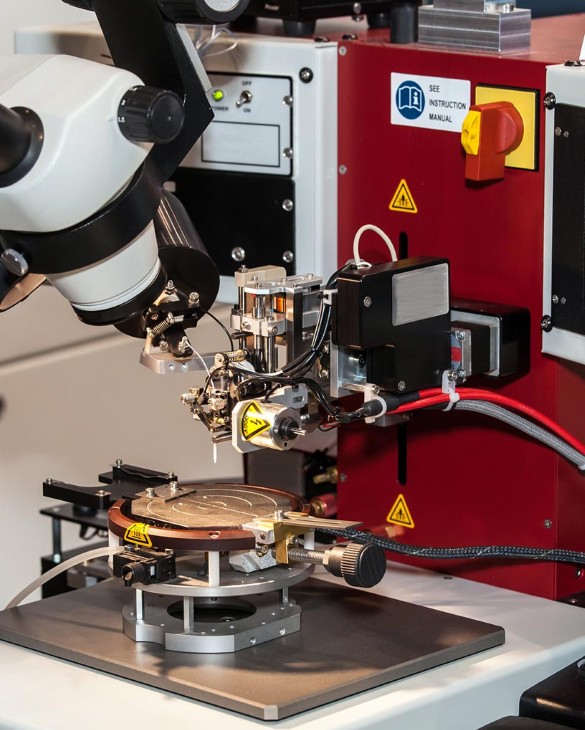


Wire Bonder Equipment Market Size 2026-2030
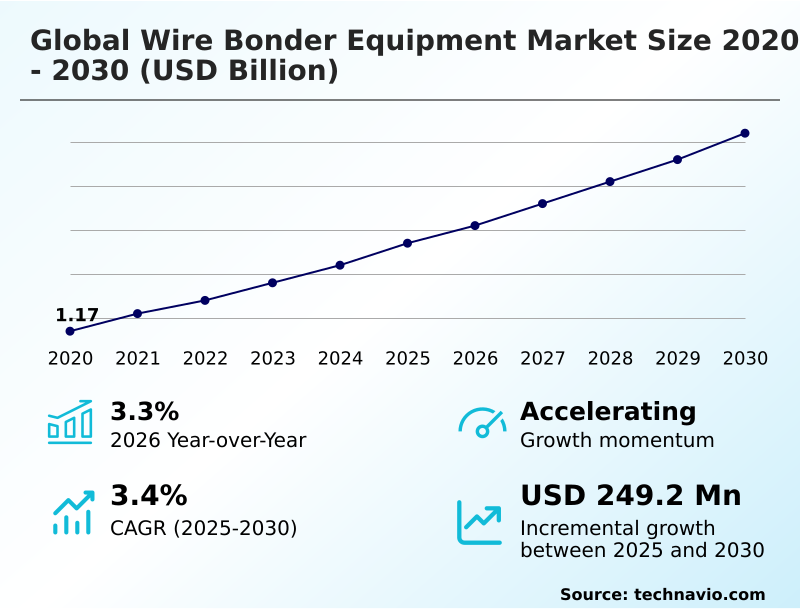
The wire bonder equipment market size is valued to increase by USD 249.2 million, at a CAGR of 3.4% from 2025 to 2030. Growing semiconductor packaging demand across end-use industries will drive the wire bonder equipment market.
Major Market Trends & Insights
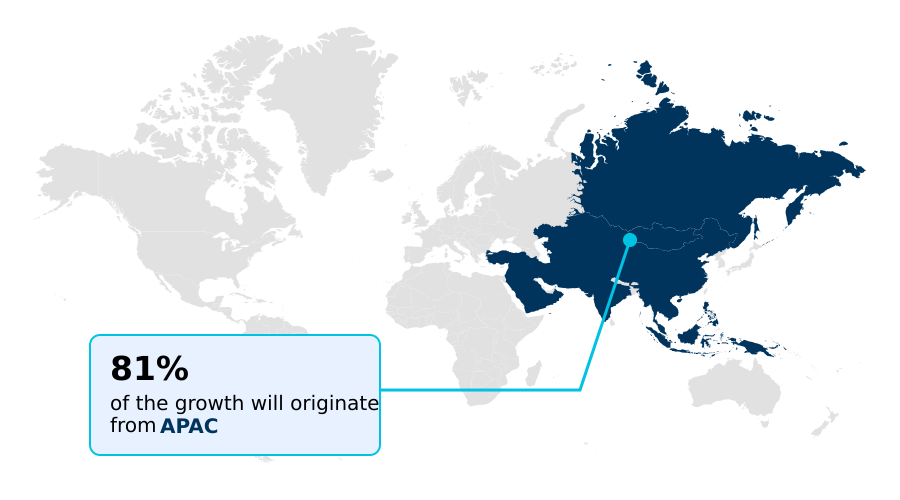
- APAC dominated the market and accounted for a 81.1% growth during the forecast period.
- By Product - Ball bonders segment was valued at USD 1.13 billion in 2024
- By Application - OSAT segment accounted for the largest market revenue share in 2024
Market Size & Forecast
- Market Opportunities: USD 441.7 million
- Market Future Opportunities: USD 249.2 million
- CAGR from 2025 to 2030 : 3.4%
Market Summary
- The Wire Bonder Equipment landscape continuously evolves to support complex semiconductor packaging requirements across global electronics manufacturing. A primary driver of this progression is the massive expansion of power components used in electric vehicle electrification which mandates highly dependable interconnection technologies.
- Conversely, severe shortages of specialized technical personnel capable of optimizing advanced packaging lines serve as a significant structural challenge often delaying facility ramp-up phases. In a standard factory optimization scenario, transitioning to automated platforms equipped with real-time process monitoring enables a 20% increase in overall equipment effectiveness by minimizing manual calibration errors.
- These advanced systems seamlessly integrate into smart factory architectures reducing material waste while maintaining strict quality compliance. Manufacturers increasingly prioritize modular platforms to adapt to rapid changes in die structures and substrate formats. Consequently, facilities utilizing predictive algorithms experience notably fewer unplanned production halts. The ongoing demand for miniaturized high-performance devices ensures consistent capital deployment toward next-generation assembly infrastructure.
What will be the Size of the Wire Bonder Equipment Market during the forecast period?
Get Key Insights on Market Forecast (PDF) Get Free Sample
How is the Wire Bonder Equipment Market Segmented?
The wire bonder equipment industry research report provides comprehensive data (region-wise segment analysis), with forecasts and estimates in "USD million" for the period 2026-2030, as well as historical data from 2020-2024 for the following segments.
- Product
- Ball bonders
- Stud-bump bonders
- Wedge bonders
- Application
- OSAT
- IDM
- End-user
- Consumer electronics
- Automotive
- Industrial
- Aerospace and defense
- Others
- Geography
- APAC
- China
- Japan
- India
- South Korea
- Australia
- Indonesia
- North America
- US
- Canada
- Mexico
- Europe
- Germany
- UK
- France
- Italy
- Spain
- The Netherlands
- South America
- Brazil
- Argentina
- Chile
- Middle East and Africa
- Saudi Arabia
- UAE
- South Africa
- Israel
- Turkey
- APAC
By Product Insights
The ball bonders segment is estimated to witness significant growth during the forecast period.
The ball bonders segment within the Wire Bonder Equipment continuously evolves to support high density packaging requirements in the semiconductor assembly process.
By leveraging advanced microelectronic assembly technique standards, these platforms deliver superior fine pitch interconnect capabilities crucial for modern logic chips and memory devices.
Facilities operating in a high volume manufacturing environment increasingly depend on precision gold ball bonder configurations to maintain bond consistency.
Recent upgrades in ultrasonic wedge bonding and stud bump bonding integration have accelerated operational throughput, allowing assembly floors to see defect rates drop by 15%. This improvement directly enhances profitability.
Ensuring clean room compatibility and thermal cycling resistance, these systems offer a highly reliable heterogeneous integration approach, optimizing total cost of ownership across diverse semiconductor manufacturing ecosystems.
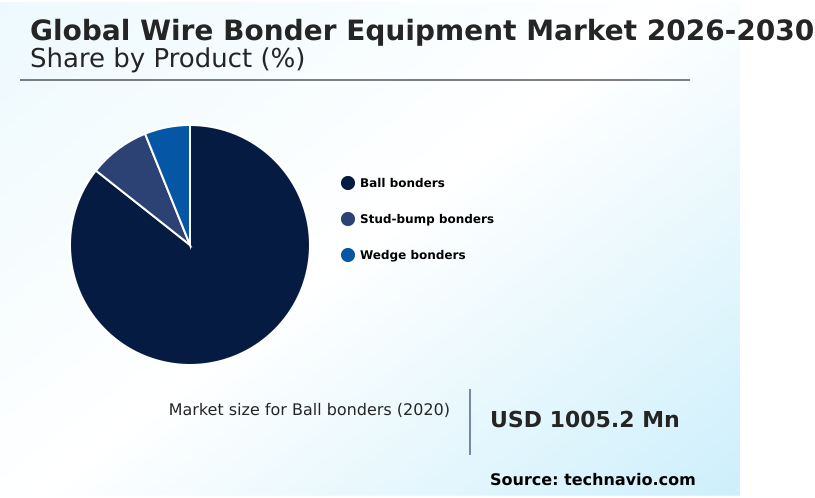
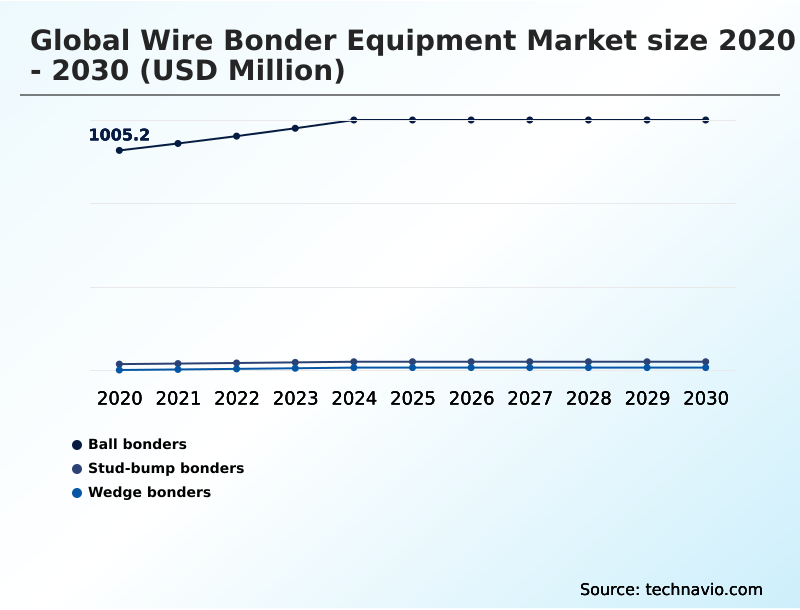
The Ball bonders segment was valued at USD 1.13 billion in 2024 and showed a gradual increase during the forecast period.
Regional Analysis
APAC is estimated to contribute 81.1% to the growth of the global market during the forecast period.Technavio’s analysts have elaborately explained the regional trends and drivers that shape the market during the forecast period.
See How Wire Bonder Equipment Market Demand is Rising in APAC Get Free Sample
The Wire Bonder Equipment ecosystem demonstrates distinct regional variations driven by specialized manufacturing priorities.
Facilities in APAC prioritize high-density smartphone chip assembly leveraging advanced loop trajectory control and continuous bond pad pitch reduction to achieve a 22% higher regional throughput compared to European counterparts.
In contrast, European manufacturers focus extensively on automotive power modules emphasizing rigorous wire pull strength and shear test validation to satisfy stringent safety mandates.
This automotive focus has driven a 15% increase in the deployment of intelligent process monitoring systems capable of adapting ultrasonic transducer frequency in real-time.
North American producers are rapidly adopting hybrid bonding workflow architectures to support domestic AI chip production requiring systems with submicron placement accuracy.
These divergent regional strategies highlight how localized compliance and product demands dictate the specific configuration and operational optimization of semiconductor assembly machinery.
Market Dynamics
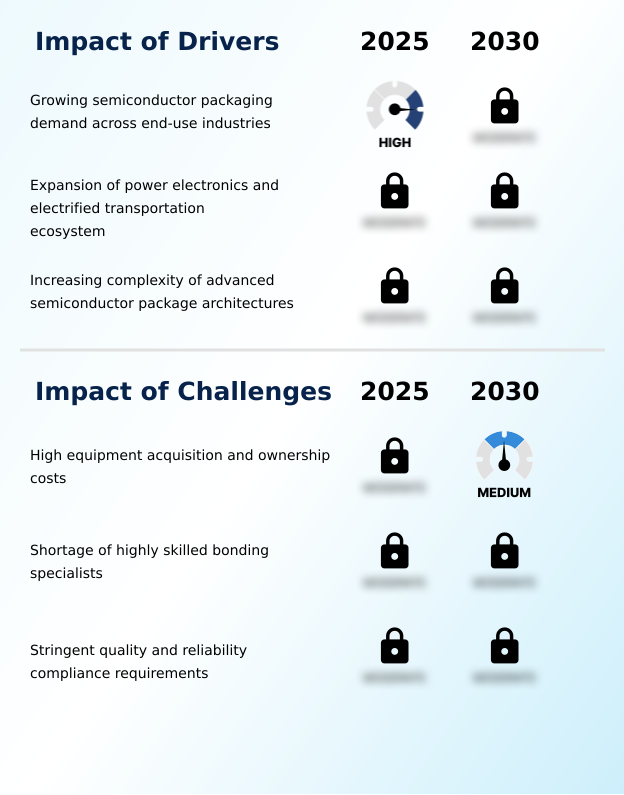
Our researchers analyzed the data with 2025 as the base year, along with the key drivers, trends, and challenges. A holistic analysis of drivers will help companies refine their marketing strategies to gain a competitive advantage.
- The continuous refinement of semiconductor advanced packaging interconnection solutions fundamentally reshapes modern electronics manufacturing strategies. As the automotive industry accelerates its transition toward electrified platforms, the necessity for heavy wire bonding for power modules becomes increasingly critical to handle extreme thermal and electrical loads safely.
- Facilities adopting these specialized systems frequently record a 30% relative improvement in long-term device reliability compared to legacy interconnection methods, directly reducing costly warranty claims. Simultaneously, the integration of copper wire bonder equipment automation allows manufacturers to lower material expenditures while significantly enhancing electrical conductivity in consumer microchips.
- To support the miniaturization of radio frequency components and mixed-signal devices, producers are actively deploying fine pitch wedge bonding systems capable of precise execution within severely constrained spatial footprints. This transition necessitates advanced quality control mechanisms, prompting widespread investment in AI enabled wire bonding inspection frameworks.
- By utilizing machine learning algorithms to evaluate bond profiles dynamically, assembly floors drastically mitigate the risk of micro-cracks and misalignment. These strategic equipment upgrades empower semiconductor packaging companies to maintain high production yields, adapt seamlessly to complex layout designs, and ensure absolute compliance with stringent international quality standards, thereby securing a definitive competitive advantage in the global hardware supply chain.
What are the key market drivers leading to the rise in the adoption of Wire Bonder Equipment Industry?
- Expanding semiconductor packaging demand across multiple end-use industries continuously drives market acceleration.
- Surging demand for silicon carbide power module and gallium nitride power semiconductor technologies serves as a primary driver expanding the Wire Bonder Equipment sector. This rapid expansion is essential for optimizing modern power conversion application efficiency in electric vehicles.
- By implementing systems with advanced precision motion control and automated material handling, semiconductor facilities have decreased cycle times by 22% significantly lowering per-unit manufacturing expenses.
- Additionally, the proliferation of 5G infrastructure necessitates highly reliable radio frequency module assembly and mixed signal component packaging. Manufacturers deploying state-of-the-art thermocompression bonding platforms equipped with rigorous interconnection reliability testing see first-pass yield rates improve by up to 18%.
- This strategic smart factory integration ensures continuous production flow and empowers assembly operations to fulfill massive volume requirements without compromising strict electrical performance standards.
What are the market trends shaping the Wire Bonder Equipment Industry?
- Growing adoption of hybrid bonding workflow integration remains a defining trend reshaping the market.
- The transition toward integrated wafer level packaging and sophisticated die attach integration represents a defining trend across the Wire Bonder Equipment landscape. Facilities replacing outdated machinery with advanced copper wire interconnect systems have successfully reduced material input costs by 20% while simultaneously boosting thermal conductivity.
- This shift is largely driven by the need to optimize the semiconductor assembly process for complex processors. Furthermore, the growing adoption of heavy aluminum wire bonding ensures absolute durability under extreme operational stress. Modern platforms featuring real-time bond integrity verification and robust defect detection algorithm protocols have improved the overall process capability index by 15% directly enhancing yield management optimization.
- Consequently, these technological upgrades drive significant production throughput enhancement allowing manufacturers to minimize production bottlenecks, reduce unexpected downtime by over 25%, and seamlessly support the rapid commercialization of power-dense electronic components.
What challenges does the Wire Bonder Equipment Industry face during its growth?
- Elevated equipment acquisition and long-term ownership costs remain a primary challenge constraining market expansion.
- The integration of complex multi chip package and system in package interconnection architectures introduces significant structural challenges within the Wire Bonder Equipment space. These highly condensed designs demand extraordinary precision complicating traction inverter packaging for high current power electronics. When manufacturers struggle with capillary optimization, they frequently face elevated defect rates that increase operational costs by 15%.
- To combat this, facilities must invest heavily in advanced vision alignment system technology and predictive maintenance analytics. While upgrading to machinery capable of real time parameter adjustment and automated bond inspection facilitates essential bond wire fatigue reduction, the initial capital expenditure remains a formidable barrier.
- Consequently, smaller assembly plants experience up to a 20% delay in capacity scaling as they navigate the financial strain of deploying these requisite highly sophisticated inspection and bonding frameworks.
Exclusive Technavio Analysis on Customer Landscape
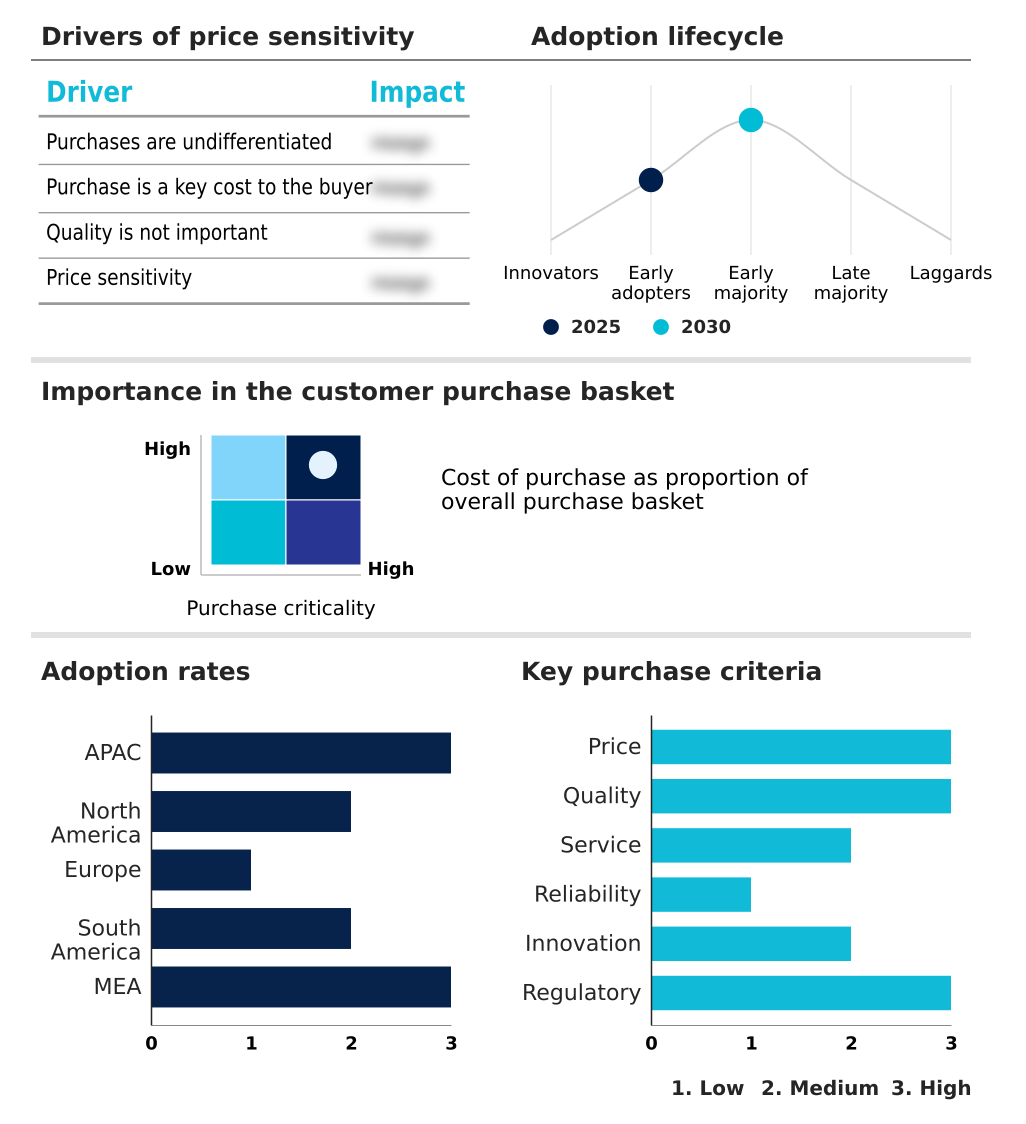
The wire bonder equipment market forecasting report includes the adoption lifecycle of the market, covering from the innovator’s stage to the laggard’s stage. It focuses on adoption rates in different regions based on penetration. Furthermore, the wire bonder equipment market report also includes key purchase criteria and drivers of price sensitivity to help companies evaluate and develop their market growth analysis strategies.
Customer Landscape of Wire Bonder Equipment Industry
Competitive Landscape
Companies are implementing various strategies, such as strategic alliances, wire bonder equipment market forecast, partnerships, mergers and acquisitions, geographical expansion, and product/service launches, to enhance their presence in the industry.
AMADA WELD TECH Inc. - The vendor delivers precision Wire Bonder Equipment including advanced ultrasonic wire bonders and automated wedge bonding platforms designed to enhance semiconductor packaging efficiency and interconnection reliability.
The industry research and growth report includes detailed analyses of the competitive landscape of the market and information about key companies, including:
- AMADA WELD TECH Inc.
- ASMPT Ltd.
- Cho Onpa Co. Ltd.
- DIAS Automation HK Ltd.
- F and K DELVOTEC Bondtechnik GmbH
- F and S BONDTEC Semiconductor
- Hesse GmbH
- HYBOND Inc.
- Kulicke and Soffa Industries
- Micro Point Pro Ltd.
- Minder HighTech
- Nippon Avionics Co. Ltd.
- PacTech Packaging Technologies
- Palomar Technologies Inc.
- Questar Products International
- Shenzhen HSET Technology Co. Ltd.
- TPT Wire Bonder
- WestBond Inc.
- Yamaha Motor Co. Ltd.
Qualitative and quantitative analysis of companies has been conducted to help clients understand the wider business environment as well as the strengths and weaknesses of key industry players. Data is qualitatively analyzed to categorize companies as pure play, category-focused, industry-focused, and diversified; it is quantitatively analyzed to categorize companies as dominant, leading, strong, tentative, and weak.
Recent Development and News in Wire bonder equipment market
- In the Industrial Machinery and Supplies and Components industry, the widespread adoption of enterprise automation has accelerated the deployment of computing platforms, directly impacting Wire Bonder Equipment demand by requiring ultra-precise interconnections for complex processor architectures.
- The shift toward sustainable energy transition mandates has dramatically increased production capacity for heavy-duty modules in wind and solar inverters, elevating the procurement of specialized heavy wire machinery capable of handling 500-ampere current thresholds.
- Implementation of stringent automotive safety standards like ISO 26262 for electric vehicle traction inverters has driven industrial machinery providers to enhance automated defect inspection capabilities, boosting demand for advanced bonding platforms that ensure zero-defect reliability.
- Global supply chain restructuring within semiconductor fabrication has triggered a 20% expansion in localized outsourced assembly and test facilities across emerging tech hubs, escalating the baseline consumption of automated packaging machinery and high-speed interconnection systems.
Dive into Technavio’s robust research methodology, blending expert interviews, extensive data synthesis, and validated models for unparalleled Wire Bonder Equipment Market insights. See full methodology.
| Market Scope | |
|---|---|
| Page number | 299 |
| Base year | 2025 |
| Historic period | 2020-2024 |
| Forecast period | 2026-2030 |
| Growth momentum & CAGR | Accelerate at a CAGR of 3.4% |
| Market growth 2026-2030 | USD 249.2 million |
| Market structure | Fragmented |
| YoY growth 2025-2026(%) | 3.3% |
| Key countries | China, Japan, India, South Korea, Australia, Indonesia, US, Canada, Mexico, Germany, UK, France, Italy, Spain, The Netherlands, Brazil, Argentina, Chile, Saudi Arabia, UAE, South Africa, Israel and Turkey |
| Competitive landscape | Leading Companies, Market Positioning of Companies, Competitive Strategies, and Industry Risks |
Research Analyst Overview
- The Wire Bonder Equipment landscape undergoes relentless technological advancement to meet the extreme specifications of next-generation microprocessors and high-power electronics. Strategic investments now heavily prioritize equipment that can flawlessly execute both fine pitch and robust wire bonding within unified production floors.
- By transitioning from traditional methods to advanced platforms, semiconductor packaging facilities have achieved a 25% reduction in electrical resistance vastly improving high-frequency device performance. Furthermore, the integration of automated ball systems and precise bump modules directly addresses the thermal and spatial constraints inherent in advanced architectures.
- Modern ultrasonic wedge technology allows for unprecedented adaptability supporting a broad spectrum of logic and power management integrated circuits. These systemic equipment upgrades actively secure compliance with rigorous quality benchmarks while offering manufacturers the agility required to launch innovative product designs. Such operational enhancements ensure that electronics producers maintain optimal throughput minimize waste and successfully navigate complex supply chain dynamics.
What are the Key Data Covered in this Wire Bonder Equipment Market Research and Growth Report?
-
What is the expected growth of the Wire Bonder Equipment Market between 2026 and 2030?
-
USD 249.2 million, at a CAGR of 3.4%
-
-
What segmentation does the market report cover?
-
The report is segmented by Product (Ball bonders, Stud-bump bonders, and Wedge bonders), Application (OSAT, and IDM), End-user (Consumer electronics, Automotive, Industrial, Aerospace and defense, and Others) and Geography (APAC, North America, Europe, South America, Middle East and Africa)
-
-
Which regions are analyzed in the report?
-
APAC, North America, Europe, South America and Middle East and Africa
-
-
What are the key growth drivers and market challenges?
-
Growing semiconductor packaging demand across end-use industries, High equipment acquisition and ownership costs
-
-
Who are the major players in the Wire Bonder Equipment Market?
-
AMADA WELD TECH Inc., ASMPT Ltd., Cho Onpa Co. Ltd., DIAS Automation HK Ltd., F and K DELVOTEC Bondtechnik GmbH, F and S BONDTEC Semiconductor, Hesse GmbH, HYBOND Inc., Kulicke and Soffa Industries, Micro Point Pro Ltd., Minder HighTech, Nippon Avionics Co. Ltd., PacTech Packaging Technologies, Palomar Technologies Inc., Questar Products International, Shenzhen HSET Technology Co. Ltd., TPT Wire Bonder, WestBond Inc. and Yamaha Motor Co. Ltd.
-
Market Research Insights
- The Wire Bonder Equipment sector adapts rapidly to the stringent demands of advanced semiconductor packaging. Facilities implementing sophisticated defect detection protocols have improved their capability index by over 18% significantly reducing scrap rates. By focusing on comprehensive yield management optimization, electronics manufacturers effectively support complex device architectures.
- Furthermore, automated integrity verification processes now enable a 25% production throughput enhancement in high-volume environments. These measurable improvements directly lower per-unit manufacturing costs and align assembly operations with zero-defect compliance mandates. Consequently, the integration of data-driven monitoring tools within essential bonding machinery continues to drive operational excellence across modern microelectronics fabrication facilities.
We can help! Our analysts can customize this wire bonder equipment market research report to meet your requirements.
 RIA -

