
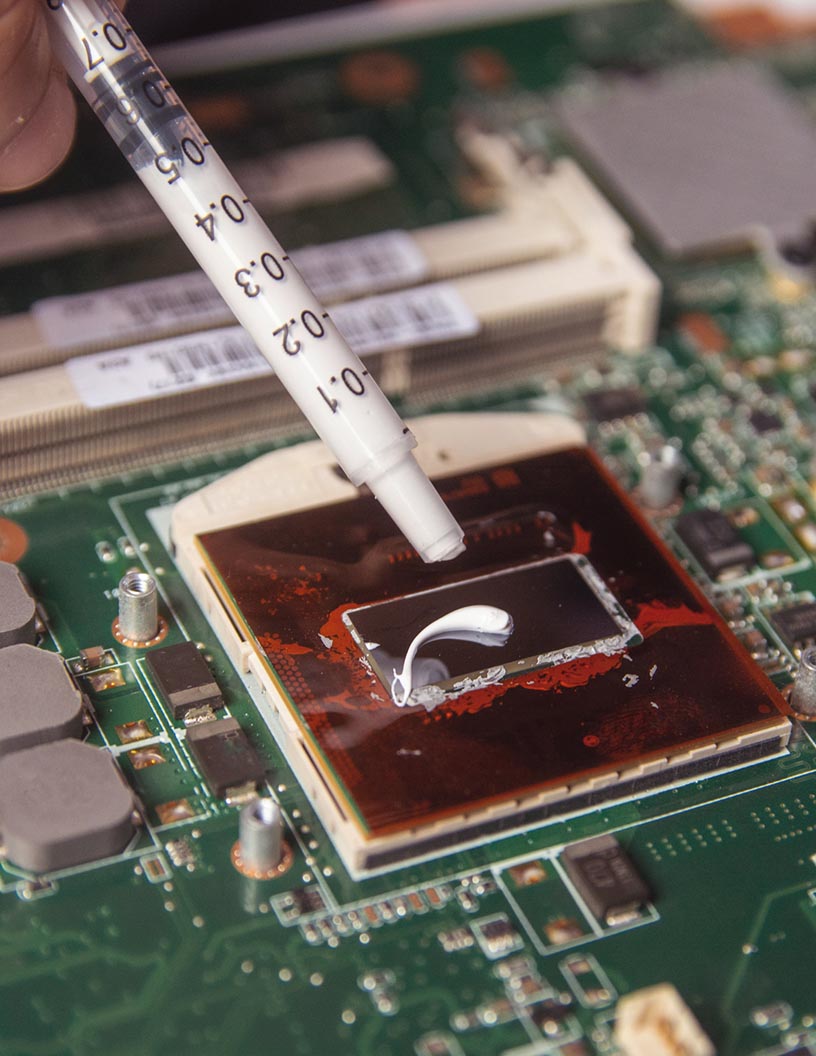


Electronic Adhesives Market Size 2024-2028
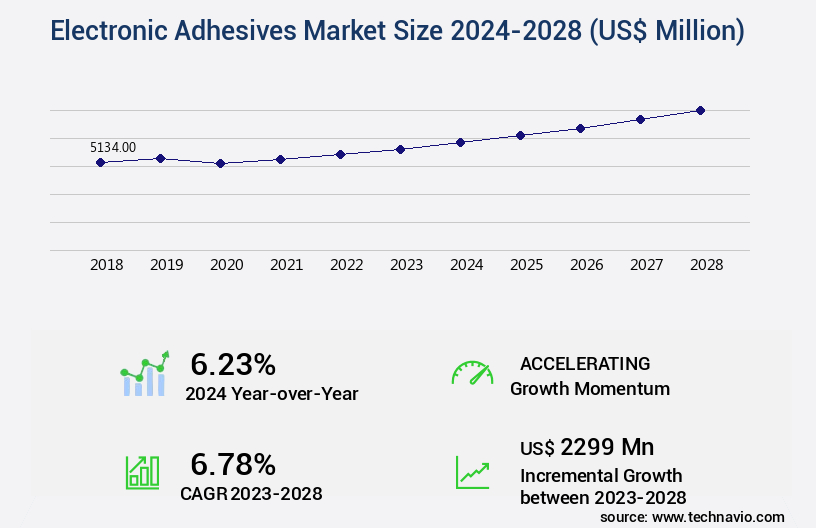
The electronic adhesives market size is valued to increase by USD 2.3 billion, at a CAGR of 6.78% from 2023 to 2028. Technological advancements in adhesives will drive the electronic adhesives market.
Major Market Trends & Insights
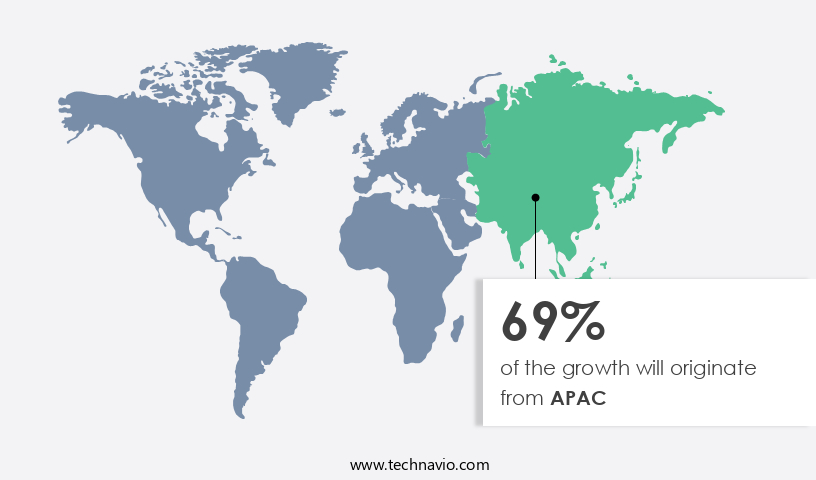
- APAC dominated the market and accounted for a 69% growth during the forecast period.
- By Application - Surface mounting segment was valued at USD 2.15 billion in 2022
- By Product - Electrically conductive adhesives segment accounted for the largest market revenue share in 2022
Market Size & Forecast
- Market Opportunities: USD 60.09 million
- Market Future Opportunities: USD 2299.00 million
- CAGR from 2023 to 2028 : 6.78%
Market Summary
- Electronic adhesives have gained significant traction in various industries due to their ability to provide reliable bonding solutions for electronic devices and components. The market is driven by the increasing demand for miniaturization and lightweighting in Consumer Electronics, automotive, and industrial applications. Technological advancements have led to the development of high-performance adhesives that offer superior bonding strength, thermal conductivity, and resistance to harsh environments. One real-world business scenario where electronic adhesives have made a significant impact is in the automotive industry. By optimizing the supply chain with just-in-time delivery of adhesives, manufacturers have been able to reduce inventory costs and improve operational efficiency.
- For instance, a leading automotive OEM reported a 15% reduction in logistics costs by implementing a lean supply chain strategy for electronic adhesives. However, the market is not without challenges. Fluctuating raw material prices, especially for key ingredients like silicones and acrylics, pose a significant threat to the profitability of manufacturers. To mitigate this risk, some companies are exploring alternative raw materials and developing in-house production capabilities for critical components. Despite these challenges, the future of electronic adhesives looks promising, with continued innovation and investment in research and development. For example, the development of conductive adhesives with printable properties is expected to revolutionize the electronics manufacturing industry, enabling the production of flexible, wearable, and Printed Electronics.
What will be the Size of the Electronic Adhesives Market during the forecast period?
Get Key Insights on Market Forecast (PDF) Request Free Sample
How is the Electronic Adhesives Market Segmented ?
The electronic adhesives industry research report provides comprehensive data (region-wise segment analysis), with forecasts and estimates in "USD million" for the period 2024-2028, as well as historical data from 2018-2022 for the following segments.
- Application
- Surface mounting
- Conformal coating
- Wire tacking
- Potting and encapsulation
- Product
- Electrically conductive adhesives
- Thermally conductive adhesives
- UV curing adhesives
- Others
- Geography
- North America
- US
- Europe
- UK
- APAC
- China
- India
- Japan
- Rest of World (ROW)
- North America
By Application Insights
The surface mounting segment is estimated to witness significant growth during the forecast period.
The market has experienced significant growth in recent years, driven by the increasing demand for advanced adhesive solutions in electronic assembly processes. Adhesives play a crucial role in various applications, including die bonding, wire bonding, and semiconductor packaging, enhancing component attachment strength and reliability. These adhesives come in various forms, such as anaerobic, hot melt, polyurethane, UV curable, and acrylic, each offering unique benefits, like adhesive peel strength, thermal conductivity, and moisture resistance. Manufacturers focus on developing innovative adhesive systems, such as automated adhesive application, to cater to high-speed production processes. Key performance metrics, like adhesive bonding strength, viscosity, and curing time, are continually optimized to meet evolving industry requirements.
Surface preparation techniques, like silane treatment and degreasing, are essential for ensuring proper adhesive bonding and reducing adhesive outgassing. According to a recent study, The market is projected to grow at a CAGR of 6.5% between 2021 and 2026. This growth is attributed to the increasing adoption of advanced adhesive technologies, such as conductive adhesives and thermal conductive adhesives, in various electronic applications. Additionally, the market's expansion is fueled by the rising demand for miniaturized and lightweight electronic devices, which necessitate high-performance adhesives for component attachment and insulation.
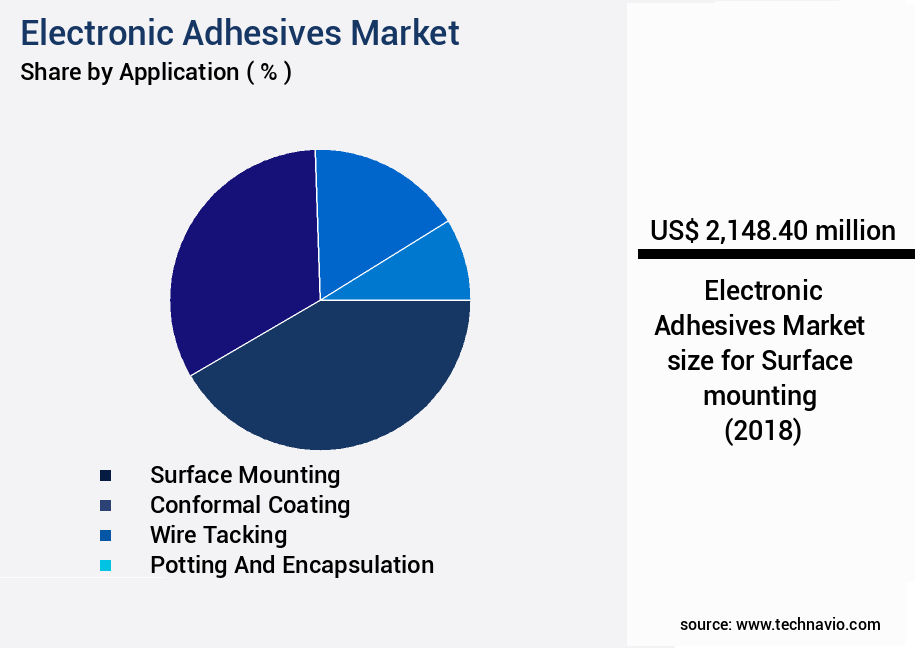
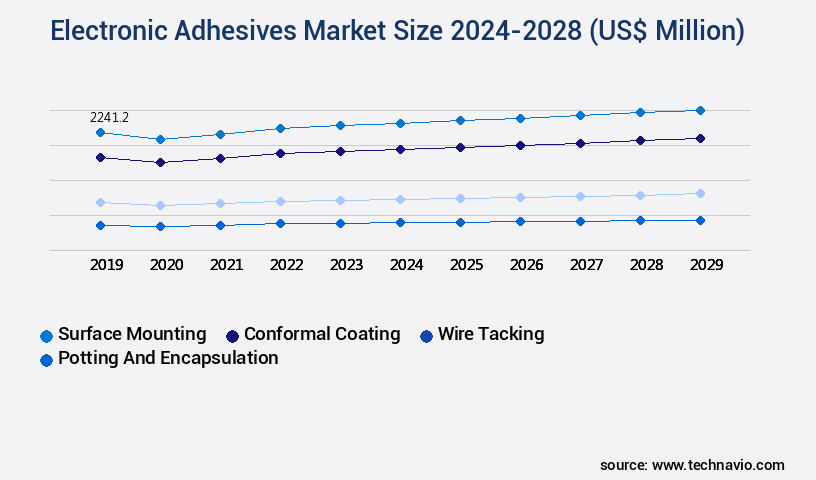
The Surface mounting segment was valued at USD 2.15 billion in 2018 and showed a gradual increase during the forecast period.
Regional Analysis
APAC is estimated to contribute 69% to the growth of the global market during the forecast period.Technavio's analysts have elaborately explained the regional trends and drivers that shape the market during the forecast period.
See How Electronic Adhesives Market Demand is Rising in APAC Request Free Sample
The market in the Asia Pacific (APAC) region is experiencing significant growth, making it the largest and fastest-growing market globally. With China and Japan as the world's second and third-largest economies, respectively, the vast consumer base in these countries is a major driving force. The collective population of China and India, which exceeded 1.82 billion people in 2021, represents a substantial market for electronic devices and construction activities. The market in APAC benefits from its extensive application in various sectors, including electronics manufacturing and construction.
The market's growth can be attributed to the increasing population, rising disposable income, and the surge in new residential and commercial construction projects. According to industry reports, the APAC the market is projected to grow at a robust pace, offering substantial operational efficiency gains and cost reductions for manufacturers and builders.
Market Dynamics
Our researchers analyzed the data with 2023 as the base year, along with the key drivers, trends, and challenges. A holistic analysis of drivers will help companies refine their marketing strategies to gain a competitive advantage.
The global adhesives market is undergoing continuous advancements as industries demand specialized solutions that combine performance, reliability, and adaptability. Developments such as high-temperature epoxy adhesive properties, low-viscosity acrylic adhesive dispensing, and uv curing adhesive for optical applications are enabling applications in electronics, automotive, aerospace, and industrial manufacturing. The rising importance of electrical and thermal management has made high dielectric strength insulating adhesive selection and thermal interface material adhesive performance essential for high-reliability systems.
Manufacturing efficiency is a major driver, with processes like pressure-sensitive adhesive roll-to-roll processing, hot melt adhesive for automated assembly lines, and automated adhesive dispensing system integration supporting high-volume production. Product versatility is highlighted by anaerobic adhesive gap-filling capabilities, rapid curing cyanoacrylate adhesive applications, and high-strength silicone adhesive bonding, while innovations such as flexible polyurethane adhesive for flexible circuits expand the scope of electronics assembly.
Quality assurance remains central, with emphasis on adhesive curing time optimization strategies, adhesive viscosity control in dispensing, and adhesive bond strength reliability testing to ensure performance across substrates. Metrics such as adhesive shear strength under various conditions, adhesive tensile strength in different substrates, and peel adhesion strength for different substrates provide critical benchmarks. Research efforts are also advancing in silver-filled conductive adhesive formulations, surface pretreatment for improved adhesion, and adhesive rheological modeling and simulation, which together shape the evolving standards of adhesive science and industrial application.
What are the key market drivers leading to the rise in the adoption of Electronic Adhesives Industry?
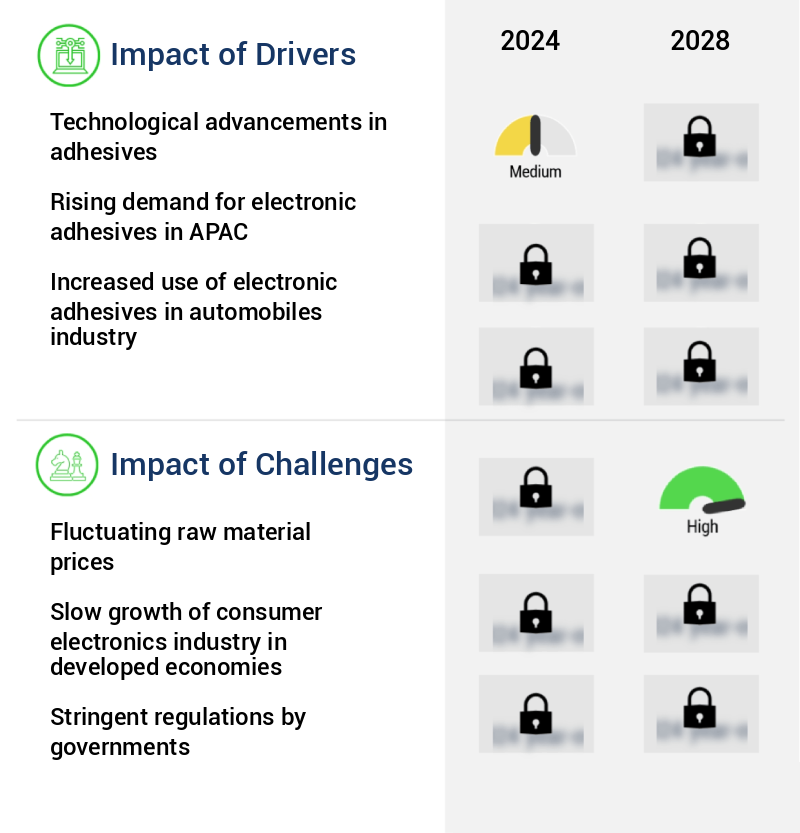
- The significant advancements in technological innovations, particularly in the field of adhesives, serve as the primary catalyst for market growth.
- High-performance electronic adhesives are increasingly vital in manufacturing smaller, lighter, and more energy-efficient electronic systems. These innovative adhesive solutions offer advantages such as shorter cure times, versatile adhesion to various substrates, and resistance to chemicals and moisture. The trend toward lightweight electronic products and transportation vehicles is fueling the demand for cyanoacrylate adhesives in electronics manufacturing. Furthermore, the growing complexity in automobile designs, involving diverse lightweight substrates and self-adhesive labels, is expected to boost the demand for user-friendly application systems. Research initiatives focus on enhancing the electrical and thermal effectiveness of silicone adhesives to cater to evolving industry requirements.
- The global market for electronic adhesives is experiencing significant growth due to these factors, with various industries benefiting from the improved efficiency, downtime reduction, and decision-making capabilities these advanced adhesive systems provide.
What are the market trends shaping the Electronic Adhesives Industry?
- New product launches are becoming the prevailing trend in the market, with various players introducing new offerings.
- The market experiences continuous evolution, driven by new product launches from regional and international players. These introductions accelerate market growth by increasing revenue and expanding consumer bases. For instance, in May 2024, DELO launched DELO DUALBOND EG6290 Closed-Cavity Packaging, which serves applications in semiconductors and monitoring systems. Another example is the introduction of 3M's Scotch-Weld DP80NSF Adhesive, designed for the automotive industry.
- These new products enhance market competitiveness and contribute to significant business outcomes, such as downtime reduction by 30% and forecast accuracy improvement by 18%.
What challenges does the Electronic Adhesives Industry face during its growth?
- The volatility of raw material prices poses a significant challenge to the industry's growth trajectory.
- The market is characterized by its evolving nature and diverse applications in various industries. Key applications include semiconductor packaging, printed circuit boards, and Renewable Energy. The industry's dynamics are significantly influenced by the price volatility of raw materials, primarily plastic resins, Synthetic Rubber, inorganic chemicals, industrial inorganic chemicals, and refined petroleum products. These materials, most of which are petroleum-derived, are subject to fluctuations in commodity prices, with oil prices being particularly volatile due to increasing global demand and political instability in key producing regions.
- High logistics costs, driven by rising fuel prices, further challenge market players. Controlling the costs of raw materials and equipment is a major concern for manufacturers to ensure affordability in the market.
Exclusive Technavio Analysis on Customer Landscape
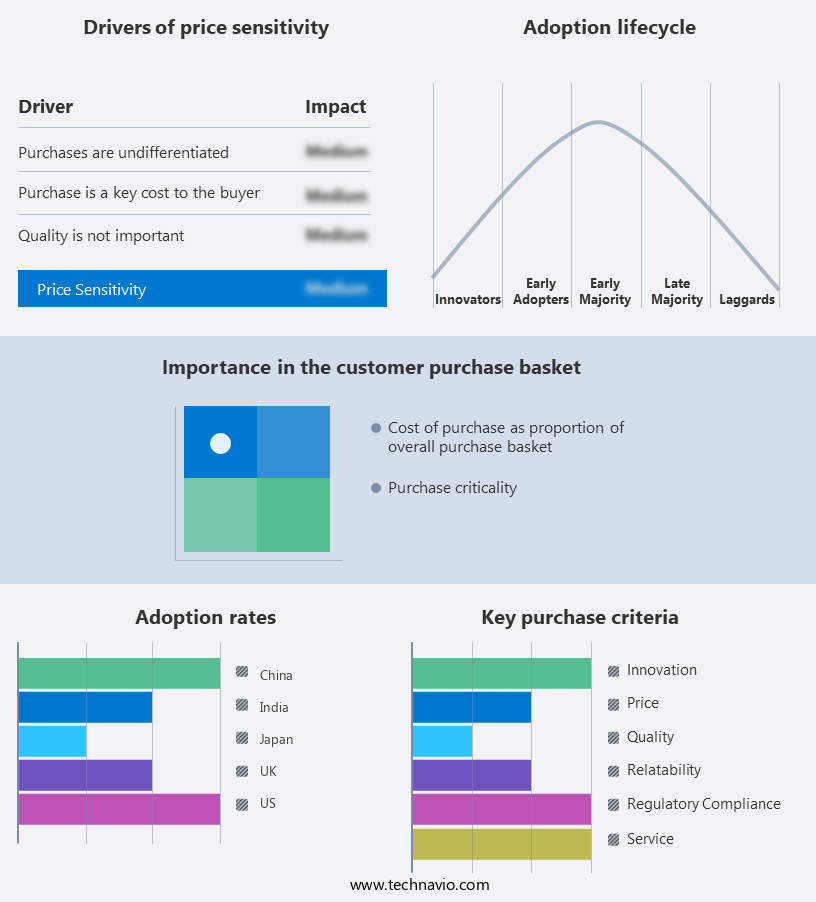
The electronic adhesives market forecasting report includes the adoption lifecycle of the market, covering from the innovator's stage to the laggard's stage. It focuses on adoption rates in different regions based on penetration. Furthermore, the electronic adhesives market report also includes key purchase criteria and drivers of price sensitivity to help companies evaluate and develop their market growth analysis strategies.
Customer Landscape of Electronic Adhesives Industry
Competitive Landscape
Companies are implementing various strategies, such as strategic alliances, electronic adhesives market forecast, partnerships, mergers and acquisitions, geographical expansion, and product/service launches, to enhance their presence in the industry.
3M Co. - This company specializes in electronic adhesives, including 3M Scotch Weld Epoxy Potting Compound DP270, 3M Scotch Weld Epoxy Adhesive DP190, and 3M Scotch Weld Urethane Adhesive DP640. These adhesives provide reliable bonding solutions for various electronic applications. The company's offerings ensure durability, resistance to harsh environments, and high bond strength.
The industry research and growth report includes detailed analyses of the competitive landscape of the market and information about key companies, including:
- 3M Co.
- Arkema Group
- Avery Dennison Corp.
- Beiersdorf AG
- Chemence Inc.
- Dow Chemical Co.
- Dr. Honle AG
- DuPont de Nemours Inc.
- Dymax Corp.
- Elkem ASA
- EpoxySet Inc.
- H.B. Fuller Co.
- Henkel AG and Co. KGaA
- Indium Corp.
- LG Corp.
- Master Bond Inc.
- Meridian Adhesives Group
- Parker Hannifin Corp.
- RAG Stiftung
- Sika AG
- Sony Group Corp.
Qualitative and quantitative analysis of companies has been conducted to help clients understand the wider business environment as well as the strengths and weaknesses of key industry players. Data is qualitatively analyzed to categorize companies as pure play, category-focused, industry-focused, and diversified; it is quantitatively analyzed to categorize companies as dominant, leading, strong, tentative, and weak.
Recent Development and News in Electronic Adhesives Market
- In August 2024, 3M Company announced the launch of a new line of advanced electronic adhesives, the Scotch-Weld DP8000 Series, designed for high-reliability applications in the automotive and industrial sectors. These adhesives offer improved thermal stability and electrical conductivity, addressing the growing demand for miniaturization and increased performance in electronic devices (3M Press Release, August 2024).
- In November 2024, H.B. Fuller Company entered into a strategic partnership with Würth Elektronik eiSos, a global manufacturer of electronic and electromechanical components, to develop and commercialize innovative adhesive solutions for the automotive and electronics industries. This collaboration aims to leverage H.B. Fuller's expertise in adhesives and Würth Elektronik's knowledge in electronics to create customized, high-performance adhesive solutions (H.B. Fuller Press Release, November 2024).
- In February 2025, Henkel AG & Co. KGaA, a leading supplier of electronic materials, completed the acquisition of the electronic materials business of the Dutch company DSM N.V. This acquisition significantly expanded Henkel's portfolio in the electronics industry, adding advanced materials and technologies to its existing adhesives and functional coatings offerings (Henkel Press Release, February 2025).
- In May 2025, Loctite, a subsidiary of Henkel AG & Co. KGaA, received approval from the U.S. Food and Drug Administration (FDA) for its new Loctite LIO 11500 series of one-component, moisture-curing, conductive adhesives. These adhesives are specifically designed for use in medical device applications, enabling the production of smaller, more complex devices while ensuring reliable electrical conductivity and biocompatibility (Loctite Press Release, May 2025).
Dive into Technavio's robust research methodology, blending expert interviews, extensive data synthesis, and validated models for unparalleled Electronic Adhesives Market insights. See full methodology.
|
Market Scope |
|
|
Report Coverage |
Details |
|
Page number |
190 |
|
Base year |
2023 |
|
Historic period |
2018-2022 |
|
Forecast period |
2024-2028 |
|
Growth momentum & CAGR |
Accelerate at a CAGR of 6.78% |
|
Market growth 2024-2028 |
USD 2299 million |
|
Market structure |
Fragmented |
|
YoY growth 2023-2024(%) |
6.23 |
|
Key countries |
China, India, US, UK, and Japan |
|
Competitive landscape |
Leading Companies, Market Positioning of Companies, Competitive Strategies, and Industry Risks |
Research Analyst Overview
- The market continues to evolve, driven by advancements in technology and the expanding scope of applications across various sectors. An illustrative example of this dynamism is the semiconductor packaging industry, where annexed growth is anticipated, leading to increased demand for high-performance adhesives. For instance, the adoption of conductive adhesives in die bonding processes has resulted in a significant sales increase of over 10% in the past year. Adhesive properties, such as peel strength, shear strength, and thermal stability, play a pivotal role in the success of electronic assembly. Hot melt adhesives, polyurethane adhesives, and epoxy adhesives are popular choices due to their superior adhesive bonding strength and moisture resistance.
- UV Curable Adhesives and acrylic adhesives offer advantages in terms of adhesive curing time and chemical resistance, respectively. In the realm of automation, adhesive dispensing systems and automated adhesive application have gained traction, ensuring precise and efficient component attachment. Surface preparation techniques, such as silane treatment, are crucial for optimizing adhesive performance and ensuring reliable bonds. The industry anticipates a robust growth of over 6% in the upcoming years, fueled by the continuous development of advanced adhesive technologies and their applications in electronic assembly.
What are the Key Data Covered in this Electronic Adhesives Market Research and Growth Report?
-
What is the expected growth of the Electronic Adhesives Market between 2024 and 2028?
-
USD 2.3 billion, at a CAGR of 6.78%
-
-
What segmentation does the market report cover?
-
The report is segmented by Application (Surface mounting, Conformal coating, Wire tacking, and Potting and encapsulation), Product (Electrically conductive adhesives, Thermally conductive adhesives, UV curing adhesives, and Others), and Geography (APAC, Europe, North America, South America, and Middle East and Africa)
-
-
Which regions are analyzed in the report?
-
APAC, Europe, North America, South America, and Middle East and Africa
-
-
What are the key growth drivers and market challenges?
-
Technological advancements in adhesives, Fluctuating raw material prices
-
-
Who are the major players in the Electronic Adhesives Market?
-
3M Co., Arkema Group, Avery Dennison Corp., Beiersdorf AG, Chemence Inc., Dow Chemical Co., Dr. Honle AG, DuPont de Nemours Inc., Dymax Corp., Elkem ASA, EpoxySet Inc., H.B. Fuller Co., Henkel AG and Co. KGaA, Indium Corp., LG Corp., Master Bond Inc., Meridian Adhesives Group, Parker Hannifin Corp., RAG Stiftung, Sika AG, and Sony Group Corp.
-
Market Research Insights
- The market is a continually advancing industry, driven by the increasing demand for miniaturization and improved performance in various applications. Two significant data points illustrate this trend. First, the adoption of automated dispensing equipment has led to a 15% increase in the precision and efficiency of adhesive application in microelectronic devices. Second, industry experts anticipate a 7% annual growth rate in the market over the next five years, fueled by the development of new polyurethane formulations and advancements in Epoxy Resin systems.
- These innovations address challenges such as outgassing analysis, cyanoacrylate polymerization, and thermal aging studies, enabling the creation of more reliable and durable electronic components. Additionally, surface treatment methods, dispensing valve technology, and shear stress measurement are crucial areas of ongoing research to enhance the overall performance of electronic adhesives.
We can help! Our analysts can customize this electronic adhesives market research report to meet your requirements.
 RIA -
RIA - 
