



Wood Fuels Market Size 2024-2028
The wood fuels market size is forecast to increase by USD 9.79 billion at a CAGR of 10.27% between 2023 and 2028.
- The market is experiencing significant shifts due to increasing regulations on carbon dioxide emissions and the declining use of coal in the power industry. These factors are driving the demand for renewable and sustainable energy sources, with wood fuels emerging as a viable alternative. The installation requirement for biomass boilers and feedstock storage systems further underscores this trend. However, challenges persist in the form of complex regulatory frameworks and the need for substantial upfront investments in infrastructure. These obstacles necessitate strategic planning and a strong understanding of the market dynamics to effectively capitalize on opportunities and navigate challenges. Companies seeking to enter or expand in the market must stay abreast of regulatory developments and explore innovative financing solutions to mitigate the initial investment burden.
- By doing so, they can position themselves to benefit from the growing demand for sustainable energy sources and contribute to the transition towards a low-carbon economy.
What will be the Size of the Wood Fuels Market during the forecast period?

- The market continues to evolve, driven by various factors including renewable fuel mandates, residential heating needs, and carbon emissions reduction targets. Fuel blending with lignocellulosic biomass, wood pellets, and wood chips is increasingly popular in the energy sector, contributing to electricity generation and industrial heating. Sustainability standards and emission regulations shape market dynamics, influencing biomass certification and combustion efficiency. Energy management and smart grid integration are crucial for optimizing wood fuel usage, while wood processing techniques like pelletizing, wood chipping, and wood waste utilization enhance thermal efficiency. Sustainable energy sources, such as solar thermal and heat pumps, complement wood fuels in meeting energy demands.
- Carbon capture and storage, as well as air pollution control, are essential considerations in the market. Forest residues and agricultural residues offer potential for expanding the biomass supply chain, ensuring a continuous fuel source. Government incentives and Energy Storage solutions further bolster market growth, making wood fuels a vital component of the renewable energy landscape.
How is this Wood Fuels Industry segmented?
The wood fuels industry research report provides comprehensive data (region-wise segment analysis), with forecasts and estimates in "USD billion" for the period 2024-2028, as well as historical data from 2018-2022 for the following segments.
- Type
- Wood pellets
- Wood chips
- Firewood
- Application
- Residential Heating
- Industrial Power Generation
- Commercial
- Source
- Forest Residues
- Recycled Wood
- Sawmill Byproducts
- Distribution Channel
- Direct Sales
- Retail
- Online Platforms
- Geography
- North America
- US
- Canada
- Europe
- France
- Germany
- Italy
- UK
- Middle East and Africa
- Egypt
- KSA
- Oman
- UAE
- APAC
- China
- India
- Japan
- South America
- Argentina
- Brazil
- Rest of World (ROW)
- North America
By Type Insights
The wood pellets segment is estimated to witness significant growth during the forecast period.
The market encompasses various segments, with wood pellets holding the largest share in 2023. Wood pellets, derived from sawdust or other woody biomass, are cylindrical in shape and used extensively in industrial boilers as an eco-friendly alternative to natural gas and coal. They are also employed in thermal and gasification Power Generation. Renewable energy promotion initiatives by governments and the increasing adoption of wood pellets as a fuel source in industries, particularly power, are driving the segment's growth. Sustainability standards and emission standards are crucial factors influencing the market. Lignocellulosic biomass, wood waste, forest residues, and agricultural residues are significant sources of wood fuels.
Wood processing, energy management, and smart grid technologies are essential for optimizing the wood fuels supply chain's efficiency and reducing environmental impact. Biomass certification and energy storage solutions ensure the sustainability of wood fuels and their compatibility with renewable energy systems. Heating systems, including pellet, log, and biomass boilers, as well as heat pumps, contribute to the market's growth. Wood drying, pelletizing, and carbon capture technologies enhance combustion efficiency and minimize air pollution. The energy sector's transition towards renewable energy sources and the increasing focus on sustainability are key trends shaping the market. Wood-fired power plants, biomass gasification, and biomass boilers are integral components of this transition.
Wood briquettes and wood chips are alternative wood fuel forms gaining popularity due to their thermal efficiency. Government incentives and subsidies for renewable energy and sustainable energy solutions further boost the market's growth. The market's future potential lies in the integration of wood fuels with solar thermal and electricity generation, as well as energy storage solutions.
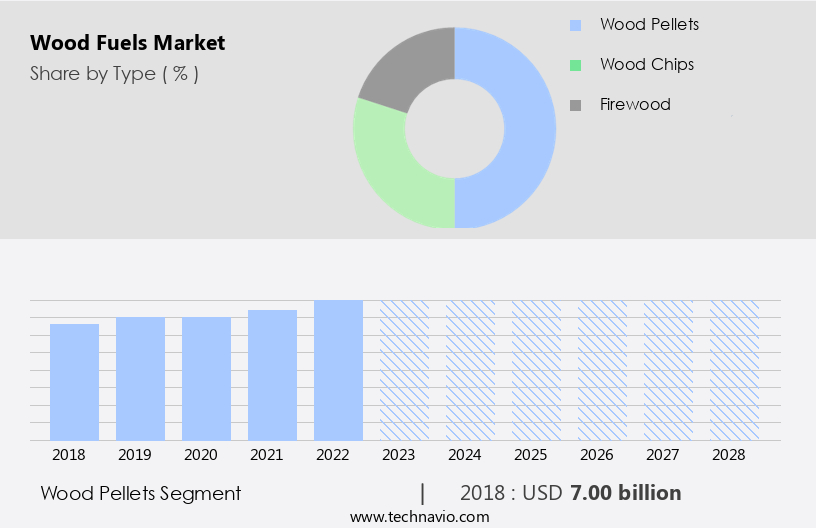
The Wood pellets segment was valued at USD 7.00 billion in 2018 and showed a gradual increase during the forecast period.
Regional Analysis
Europe is estimated to contribute 59% to the growth of the global market during the forecast period.Technavio's analysts have elaborately explained the regional trends and drivers that shape the market during the forecast period.

The market is experiencing significant growth due to renewable fuel mandates and the need to reduce carbon emissions. European countries, in particular, are leading consumers of wood pellets, with the UK, Italy, Germany, Denmark, Sweden, France, and Belgium being the top consumers. Strict policies aimed at increasing the share of renewables in final energy consumption and mitigating climate change are driving this trend. Europe's dependence on fossil fuel imports and the constant fluctuation in oil prices have led to energy security concerns, making locally sourced wood fuels an attractive alternative. Wood processing, energy management, and smart grid technologies are also playing a role in the market's evolution.
Lignocellulosic biomass, wood pellets, and wood chips are popular forms of wood fuel, with thermal efficiency and combustion efficiency being key considerations. Sustainability standards and emission standards are crucial in ensuring the environmental impact of wood fuels is minimized. Biomass certification, energy storage, and heating systems, including wood-fired power plants, pellet boilers, and log boilers, are also important market trends. Industrial heating, forest residues, and agricultural residues are other areas of focus in the biomass supply chain. Government incentives for renewable energy and carbon capture technologies are further boosting the market. Wood drying, wood pelletizing, and carbon capture are essential processes in the production of wood fuels.
The market is also exploring the potential of biomass gasification, biomass boilers, and commercial heating to increase efficiency and reduce air pollution. The market is a dynamic and evolving sector, with various entities working together to promote sustainable energy and address the challenges of energy security and climate change.
Market Dynamics
The Wood Fuels Market is advancing sustainable energy with high-efficiency wood pellets and carbon-neutral wood fuels for residential heating and industrial applications. Innovations like torrefied biomass pellets, next-generation torrefaction, and zero-waste pellet production enhance efficiency, while low-emission biomass burners and automated biomass boilers reduce environmental impact. Smart pellet stoves and portable pellet heaters cater to off-grid heating and camping, supported by AI-optimized wood fuel production processes and smart fuel monitoring systems. Eco-friendly charcoal production and green pellet binders promote sustainability, alongside biomass fuel traceability and sustainable wood sourcing. High-energy-density briquettes and renewable syngas production drive cogeneration, positioning best wood fuel suppliers for renewable energy and green energy solutions.
Our researchers analyzed the data with 2023 as the base year, along with the key drivers, trends, and challenges. A holistic analysis of drivers will help companies refine their marketing strategies to gain a competitive advantage.
What are the key market drivers leading to the rise in the adoption of Wood Fuels Industry?
- Strict regulations mandating carbon dioxide emissions serve as the primary market driver.
- The renewable fuels market is experiencing significant growth due to increasing government mandates to reduce carbon emissions and promote sustainability in the energy sector. Biomass, specifically wood fuels such as wood pellets and lignocellulosic biomass, are gaining popularity as carbon-neutral alternatives to coal-fired power generation. The environmental concerns surrounding coal's large contribution to greenhouse gas (GHG) emissions have led to international agreements, such as the Kyoto Protocol, and national regulations, like the US Environmental Protection Agency's (EPA) targets, pushing for a shift towards renewable energy sources. Moreover, the integration of energy management systems, smart grids, and fuel blending in residential heating applications is further propelling the demand for wood fuels.
- The emphasis on sustainability standards ensures that the production and utilization of wood fuels are done in a harmonious and responsible manner. The energy sector's transition towards renewable fuels not only contributes to the reduction of carbon emissions but also aligns with the global efforts to combat climate change.
What are the market trends shaping the Wood Fuels Industry?
- The decline in coal usage is becoming a prominent trend in the power industry. It is essential for businesses to adapt to this shift towards more sustainable energy sources.
- The global energy landscape is shifting towards renewable and low-emission sources, with coal power gradually being replaced due to its high carbon footprint. Renewable energy, including wood fuels, is becoming increasingly popular as it generates electricity with minimal emissions. In fact, wood fuels, such as wood waste and biomass, are expected to play a significant role in the energy mix, particularly in heating systems and electricity generation. Biomass certification and carbon capture technologies are crucial in mitigating the environmental impact of wood fuel usage. Moreover, energy storage solutions and solar thermal integration can enhance the efficiency and reliability of wood fuel-based power generation.
- Biomass gasification is another promising technology that can improve combustion efficiency and reduce emissions. Recent research indicates that the demand for wood fuels is on the rise due to their environmental benefits and their potential to substitute coal in various applications. For instance, China, the world's largest energy consumer, has pledged to support green and low-carbon energies in developing countries while avoiding new coal power projects. This trend is expected to accelerate the adoption of wood fuels as a viable alternative to coal for power generation and heating systems. In conclusion, the global energy transition towards low-emission sources is creating opportunities for wood fuels to become a significant player in the energy market.
- With advancements in technology and supportive government policies, wood fuels are poised to make a substantial contribution to the global energy mix while minimizing their environmental impact.
What challenges does the Wood Fuels Industry face during its growth?
- The installation requirements for biomass boilers, including feedstock storage, pose a significant challenge and significantly impact the growth of the industry.
- Biomass boilers, fueled by wood, are larger than traditional boilers and necessitate on-site fuel storage solutions, such as wood chips, pellets, or logs. The challenge of fuel storage is particularly pertinent for industries located in densely populated areas due to space constraints. The installation of biomass boilers involves adhering to stringent design, construction, operation, and maintenance standards set by governments, which may differ across regions. Compared to conventional boilers, biomass boilers are relatively novel, leading to technological hurdles in terms of boiler design, emission control, and size.
- Despite these challenges, the shift towards sustainable energy sources, including wood-fired power plants and wood briquettes, is gaining momentum due to their potential to reduce CO2 emissions. Thermal efficiency is a crucial factor in the biomass supply chain, ensuring the optimal use of fuel and minimizing environmental impact.
Exclusive Customer Landscape
The wood fuels market forecasting report includes the adoption lifecycle of the market, covering from the innovator's stage to the laggard's stage. It focuses on adoption rates in different regions based on penetration. Furthermore, the wood fuels market report also includes key purchase criteria and drivers of price sensitivity to help companies evaluate and develop their market growth analysis strategies.

Customer Landscape
Key Companies & Market Insights
Companies are implementing various strategies, such as strategic alliances, wood fuels market forecast, partnerships, mergers and acquisitions, geographical expansion, and product/service launches, to enhance their presence in the industry.
Asia Pulp & Paper Co. Ltd. - Wood pellets, a sustainable alternative to fossil fuels, are gaining prominence in the global energy sector.
The industry research and growth report includes detailed analyses of the competitive landscape of the market and information about key companies, including:
- Asia Pulp & Paper Co. Ltd.
- Biomass Secure Power Inc.
- Drax Group Plc
- Enviva Partners LP
- Fram Renewable Fuels LLC
- Georgia Biomass LLC
- German Pellets GmbH
- Graanul Invest AS
- Highland Pellets LLC
- Holzindustrie Schweighofer GmbH
- Innogy SE
- Pacific BioEnergy Corp.
- Pfeifer Group
- Pinnacle Renewable Energy Inc.
- Rentech Inc.
- Stora Enso Oyj
- Sumitomo Forestry Co. Ltd.
- UPM-Kymmene Corp.
- Vattenfall AB
- Viridis Energy Inc.
Qualitative and quantitative analysis of companies has been conducted to help clients understand the wider business environment as well as the strengths and weaknesses of key industry players. Data is qualitatively analyzed to categorize companies as pure play, category-focused, industry-focused, and diversified; it is quantitatively analyzed to categorize companies as dominant, leading, strong, tentative, and weak.
Recent Development and News in Wood Fuels Market
- In February 2024, Drax Group, a leading wood fuel producer, announced the launch of its innovative biomass pellet production facility in the United States. This new plant, located in Mississippi, is expected to produce 2.6 million metric tons of sustainable biomass pellets annually, making it the largest of its kind in North America (Drax Group, 2024).
- In June 2024, Finnish energy company Fortum and Swedish forest industry giant Södra entered into a strategic partnership to develop a large-scale wood fuel production and logistics network in Sweden. The collaboration aims to increase the use of wood fuels in the Nordic region and reduce greenhouse gas emissions (Fortum, 2025).
- In October 2024, the European Commission approved the â¬1.3 billion funding for the Horizon 2020 BioTWIN project, which focuses on the development and implementation of advanced bio-based technologies, including those for wood fuels. The project is expected to create significant market growth opportunities and contribute to the European Union's goal of achieving climate neutrality by 2050 (European Commission, 2024).
- In March 2025, Lignocellulose Energy, a leading wood fuel technology company, successfully demonstrated its advanced gasification technology, which converts wood waste into syngas with over 90% efficiency. The breakthrough technology has the potential to significantly reduce greenhouse gas emissions and increase the competitiveness of wood fuels in the global energy market (Lignocellulose Energy, 2025).
Research Analyst Overview
The market is experiencing significant activity and trends, driven by the push for energy independence and emission reduction. Biomass Power Generation plays a crucial role in energy diversification and climate change mitigation, contributing to the renewable energy portfolio. The availability of biomass feedstock, such as wood and agricultural residues, is a key factor in the growth of this market. Biomass processing technologies, including gasification and pyrolysis, are advancing to improve energy yield and reduce moisture content. Boiler efficiency and sustainable forestry practices are essential for carbon neutral energy production. Biomass gasification plants employing advanced biofuels and biomass upgrading technologies are increasingly popular.
Circular economy principles are shaping the supply chain logistics of the market, with a focus on carbon sequestration and sustainable development. Renewable energy market policies and renewable fuel standards are promoting the use of biomass as a sustainable alternative to fossil fuels. Biomass gasification technologies and biomass processing technologies are essential for converting biomass into valuable energy sources. Ash content and wood density are critical factors in the production of high-quality biomass fuels. The heating value of biomass fuels is a significant consideration in their adoption as a renewable energy source. In the context of the renewable energy market, biomass utilization is a vital component of a comprehensive energy strategy.
The reduction of greenhouse gas emissions and the promotion of sustainable forestry practices are essential for a carbon-neutral energy future. Bioenergy innovation is driving the development of new technologies and applications for biomass fuels, further expanding their role in the energy landscape.
Dive into Technavio's robust research methodology, blending expert interviews, extensive data synthesis, and validated models for unparalleled Wood Fuels Market insights. See full methodology.
|
Market Scope |
|
|
Report Coverage |
Details |
|
Page number |
149 |
|
Base year |
2023 |
|
Historic period |
2018-2022 |
|
Forecast period |
2024-2028 |
|
Growth momentum & CAGR |
Accelerate at a CAGR of 10.27% |
|
Market growth 2024-2028 |
USD 9.79 billion |
|
Market structure |
Fragmented |
|
YoY growth 2023-2024(%) |
9.53 |
|
Key countries |
US, Canada, Germany, UK, Italy, France, China, India, Japan, Brazil, Egypt, UAE, Oman, Argentina, KSA, UAE, Brazil, and Rest of World (ROW) |
|
Competitive landscape |
Leading Companies, Market Positioning of Companies, Competitive Strategies, and Industry Risks |
What are the Key Data Covered in this Wood Fuels Market Research and Growth Report?
- CAGR of the Wood Fuels industry during the forecast period
- Detailed information on factors that will drive the growth and forecasting between 2024 and 2028
- Precise estimation of the size of the market and its contribution of the industry in focus to the parent market
- Accurate predictions about upcoming growth and trends and changes in consumer behaviour
- Growth of the market across Europe, North America, APAC, Middle East and Africa, and South America
- Thorough analysis of the market's competitive landscape and detailed information about companies
- Comprehensive analysis of factors that will challenge the wood fuels market growth of industry companies
We can help! Our analysts can customize this wood fuels market research report to meet your requirements.
 RIA -
RIA - 
