


Accounting Software Market Size 2026-2030
The accounting software market size is valued to increase by USD 8.12 billion, at a CAGR of 9.6% from 2025 to 2030. Accelerated migration to enterprise cloud environments will drive the accounting software market.
Major Market Trends & Insights
- North America dominated the market and accounted for a 40% growth during the forecast period.
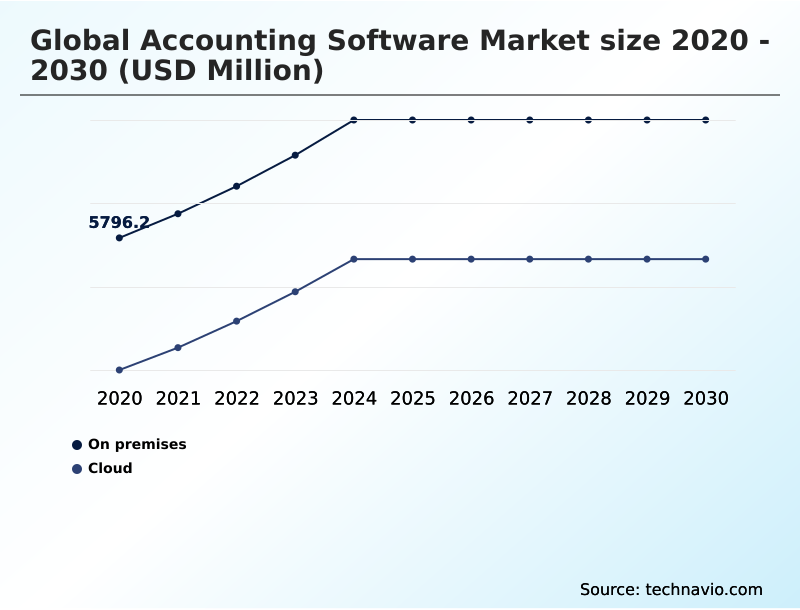
- By Deployment - On premises segment was valued at USD 7.47 billion in 2024
- By Application - Payroll management segment accounted for the largest market revenue share in 2024
Market Size & Forecast
- Market Opportunities: USD 12.45 billion
- Market Future Opportunities: USD 8.12 billion
- CAGR from 2025 to 2030 : 9.6%
Market Summary
- The Accounting Software Market demonstrates rapid structural transformation driven by the essential transition from manual ledgers to automated, cloud-hosted financial ecosystems. Organizations increasingly rely on intelligent digital platforms to synchronize supply chain procurement with instant invoice reconciliation, vastly reducing administrative bottlenecks.
- For example, implementing intelligent classification algorithms enables retail enterprises to cut manual data entry errors by nearly 25%, drastically improving cash flow predictability. The accelerated migration to enterprise cloud environments eliminates hefty upfront capital expenditures, allowing small and mid-sized businesses to scale operations efficiently.
- Conversely, evolving data sovereignty frameworks and strict privacy regulations across geopolitical boundaries present formidable challenges, forcing providers to engineer expensive, localized server architectures. Navigating these regulatory layers increases deployment timelines, yet the demand for robust financial reporting ensures persistent market expansion. Automated tracking capabilities ensure uninterrupted operations, bridging the gap between historical bookkeeping and dynamic corporate strategy.
What will be the Size of the Accounting Software Market during the forecast period?
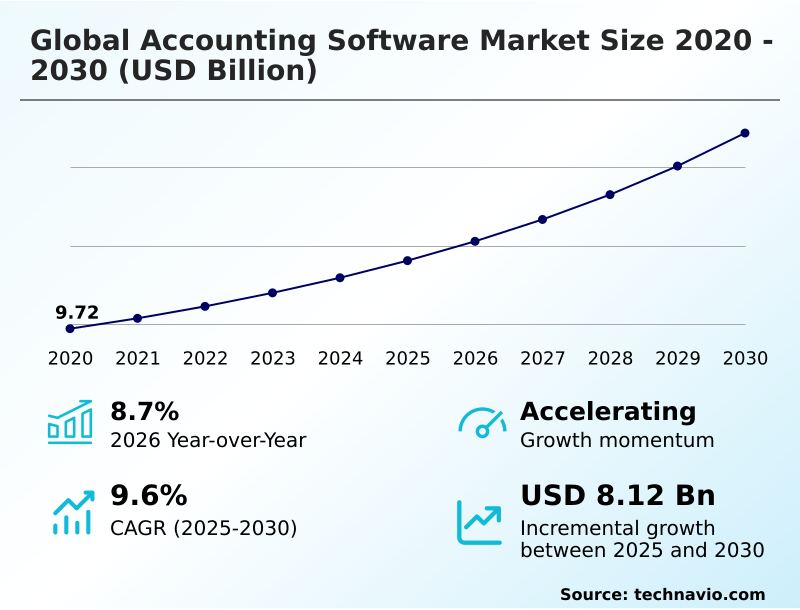
Get Key Insights on Market Forecast (PDF) Get Free Sample
How is the Accounting Software Market Segmented?
The accounting software industry research report provides comprehensive data (region-wise segment analysis), with forecasts and estimates in "USD million" for the period 2026-2030, as well as historical data from 2020-2024 for the following segments.
- Deployment
- On premises
- Cloud
- Application
- Payroll management
- Billing and invoicing
- Expense tracking
- Tax management
- End-user
- Retail and e-commerce
- BFSI
- Manufacturing
- IT and telecom
- Others
- Geography
- North America
- US
- Canada
- Mexico
- Europe
- Germany
- UK
- France
- Italy
- Spain
- The Netherlands
- APAC
- China
- India
- Japan
- South Korea
- Australia
- Indonesia
- Middle East and Africa
- Saudi Arabia
- UAE
- South Africa
- Israel
- Turkey
- South America
- Brazil
- Argentina
- Chile
- North America
By Deployment Insights
The on premises segment is estimated to witness significant growth during the forecast period.
The traditional on-premises deployment model provides complete control over sensitive corporate information, mitigating reliance on external networks. Organizations leverage robust cloud financial infrastructure and enterprise resource integration systems internally to align with stringent compliance mandates, particularly in highly regulated sectors.
Operational control improves data retrieval speeds by nearly 18% during peak auditing periods compared to external servers. Internalized infrastructure minimizes external vulnerabilities while adhering to strict localized data sovereignty rules.
Implementing continuous transaction controls and a dynamic invoicing protocol natively helps organizations manage a multi currency financial ledger securely.
Despite high upfront capital expenditures, these self-hosted environments ensure uninterrupted access to a decentralized financial system and reliable automated reporting mechanism during internet outages.
Transitioning toward hybrid approaches, entities maintain legacy hardware alongside multi tenant cloud architecture to balance security and create a resilient unified digital ecosystem, optimizing hardware lifespan while systematically updating proprietary configurations.
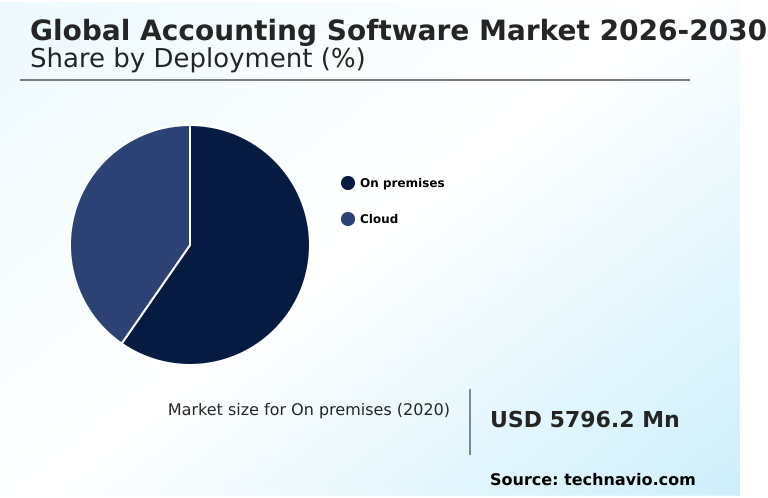
The On premises segment was valued at USD 7.47 billion in 2024 and showed a gradual increase during the forecast period.
Regional Analysis
North America is estimated to contribute 40% to the growth of the global market during the forecast period.Technavio’s analysts have elaborately explained the regional trends and drivers that shape the market during the forecast period.
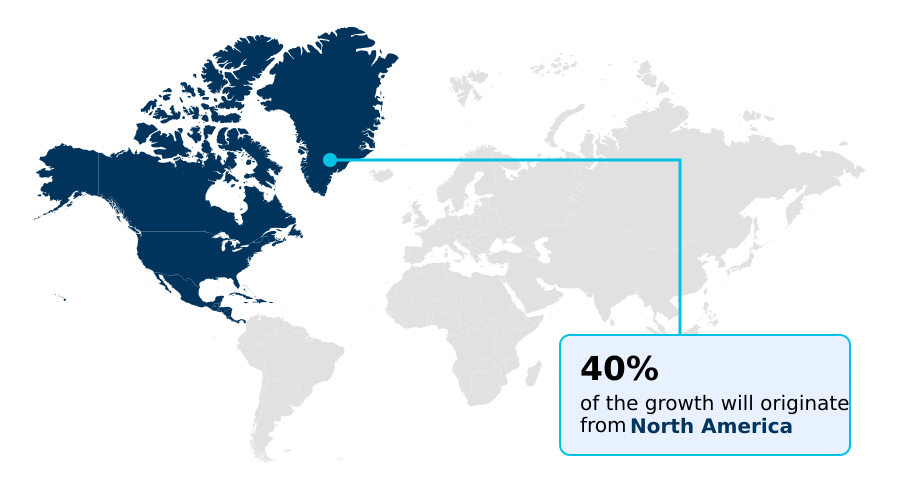
See How Accounting Software Market Demand is Rising in North America Get Free Sample
North America dominates the Accounting Software Market due to widespread adoption of a cloud native corporate architecture among enterprises prioritizing operational efficiency.
Companies in the United States report a 30% reduction in reporting delays after deploying scalable software as a service models compared to legacy systems. Establishing robust audit trail generation remains critical across the region to maintain regulatory adherence.
North American entities aggressively implement automated transaction reconciliation and predictive cash flow modeling to optimize capital allocation, driving substantial operational agility enhancement. Conversely, the APAC region experiences fragmented growth owing to diverse localization mandates that complicate centralized deployment.
APAC businesses focus on overcoming infrastructure hurdles to achieve localized compliance, driving the adoption of automated payroll processing and cross border transaction execution. Implementing predictive analytics implementation and holistic financial tracking allows organizations globally to execute digital transformation strategies effectively.
Market Dynamics
Our researchers analyzed the data with 2025 as the base year, along with the key drivers, trends, and challenges. A holistic analysis of drivers will help companies refine their marketing strategies to gain a competitive advantage.
- The ongoing expansion of the Accounting Software Market reflects a critical shift toward digital transformation. Organizations increasingly rely on automated transaction reconciliation processing to eliminate manual bottlenecks, achieving a nearly 40% reduction in month-end closing times compared to legacy spreadsheet methods. Implementing seamless workflow interoperability systems allows finance departments to integrate supply chain metrics directly into their ledgers.
- Adopting scalable software as a service delivery models eliminates prohibitive upfront hardware costs. Maintaining continuous accounting cycle management ensures that executives have constant visibility into cash flows and revenue projections. The ongoing automated machine learning protocol adoption empowers platforms to predict seasonal demand fluctuations. Leveraging multi tenant cloud architecture deployment allows multinational corporations to standardize operations across distinct geographies.
- Navigating digital tax compliance monitoring ensures that tax calculations remain accurate, mitigating costly audit penalties. Maintaining intelligent invoice classification accuracy optimizes accounts payable workflows, reducing late payment fees. Prioritizing continuous transaction controls implementation helps organizations detect fraudulent activities instantly. Utilizing an enterprise resource integration platform unites human resources, inventory, and payroll into one cohesive digital environment.
- Focusing on automated payroll processing efficiency and real time fiscal visibility tools drives unparalleled strategic alignment. Establishing a robust cloud native corporate architecture setup enhances overall holistic financial tracking capabilities. Finally, executing a secure cross border transaction execution strategy ensures seamless international trade operations.
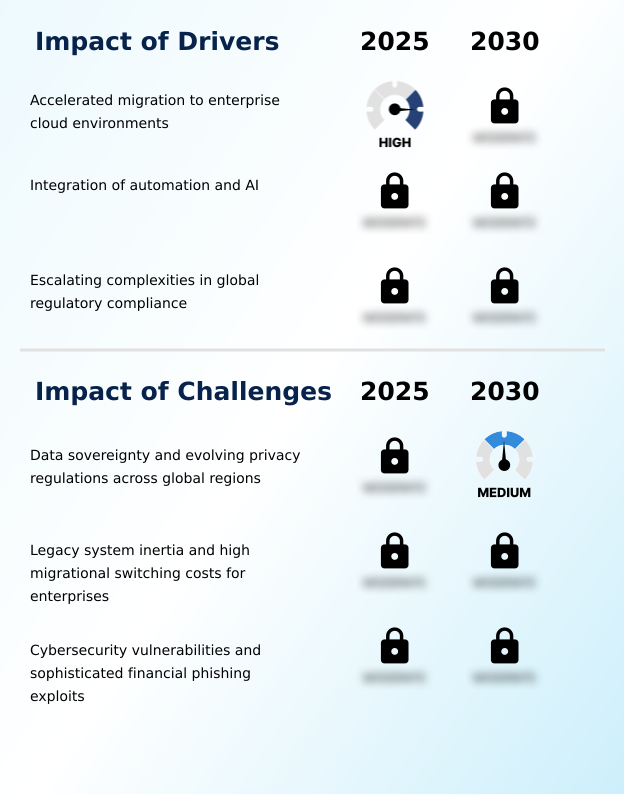
What are the key market drivers leading to the rise in the adoption of Accounting Software Industry?
- Accelerated migration to enterprise cloud environments acts as a foundational driver, eliminating massive upfront capital expenditures while ensuring a seamless, continuous accounting cycle.
- Escalating demands for operational efficiency are propelling the Accounting Software Market forward. Organizations increasingly deploy compliance workflow automation and utilize application programming interface connections to navigate highly complex international tax laws and labor regulations.
- Establishing seamless financial process optimization ensures precise statutory withholding calculation, reducing manual errors by over 20%. Utilizing automated bank reconciliation empowers finance leaders to forecast cash flow shortages before they impact operations.
- Achieving strict regulatory compliance adaptation ensures platforms maintain real time fiscal visibility without debilitative latency. Adhering to continuous software compliance monitoring and securing a reliable subscription based financial platform allows mid-sized businesses to scale their commercial footprint rapidly.
- This technological modernization guarantees accurate regulatory tax table update integration, eliminating massive administrative overhead and enabling firms to redirect resources toward strategic growth initiatives.
What are the market trends shaping the Accounting Software Industry?
- The proliferation of comprehensive environmental sustainability ledgers fundamentally shifts modern financial architectures toward multi-dimensional reporting mechanisms. Global conglomerates increasingly demand precise consolidation of fiscal metrics alongside strict greenhouse gas emission tracking.
- The Accounting Software Market is shifting rapidly toward the integration of the machine learning ledger and open banking interface technologies. Enterprises demand deeper visibility into fiscal health to inform immediate strategic pivots. Integrating a modular carbon accounting framework enables organizations to track greenhouse gas emissions alongside traditional financial metrics.
- Achieving seamless workflow interoperability links inventory management with accounts receivable automatically, cutting manual entry delays by 22%. Utilizing an institutional grade accounting tool with intelligent invoice classification drastically reduces accounts payable bottlenecks. Adopting a mobile accessible financial suite allows field executives to manage expenses remotely.
- Furthermore, organizations are implementing strict biometric access control to protect sensitive data while navigating complex digital tax compliance and electronic invoicing mandate requirements. This fundamental transition transforms corporate finance departments into proactive advisory hubs, fundamentally enhancing enterprise-wide decision-making capabilities.
What challenges does the Accounting Software Industry face during its growth?
- Data sovereignty and evolving privacy regulations across global regions severely restrict scalability, forcing platform providers to navigate rigid geopolitical boundaries.
- Navigating strict data residency laws and sophisticated cyber threats poses a substantial hurdle for the Accounting Software Market. Divergent privacy mandates force software providers to engineer costly, region-specific data centers to ensure strict localized data governance. Ensuring adherence to complex international tax law across highly fragmented geopolitical boundaries increases operational overhead for multinational corporations.
- Implementing a rigorous zero trust framework and cryptographic data encryption is necessary for sophisticated digital threat mitigation, yet it increases server processing latency by roughly 15%. Disruptions to the continuous accounting cycle limit seamless collaboration across geographies. Balancing automated machine learning protocol updates with an expanding distributed workforce financial system stretches engineering resources thin.
- Maintaining these localized compliance layers during enterprise cloud migration diverts capital away from core product innovation, slowing down overall technological advancement.
Exclusive Technavio Analysis on Customer Landscape
The accounting software market forecasting report includes the adoption lifecycle of the market, covering from the innovator’s stage to the laggard’s stage. It focuses on adoption rates in different regions based on penetration. Furthermore, the accounting software market report also includes key purchase criteria and drivers of price sensitivity to help companies evaluate and develop their market growth analysis strategies.
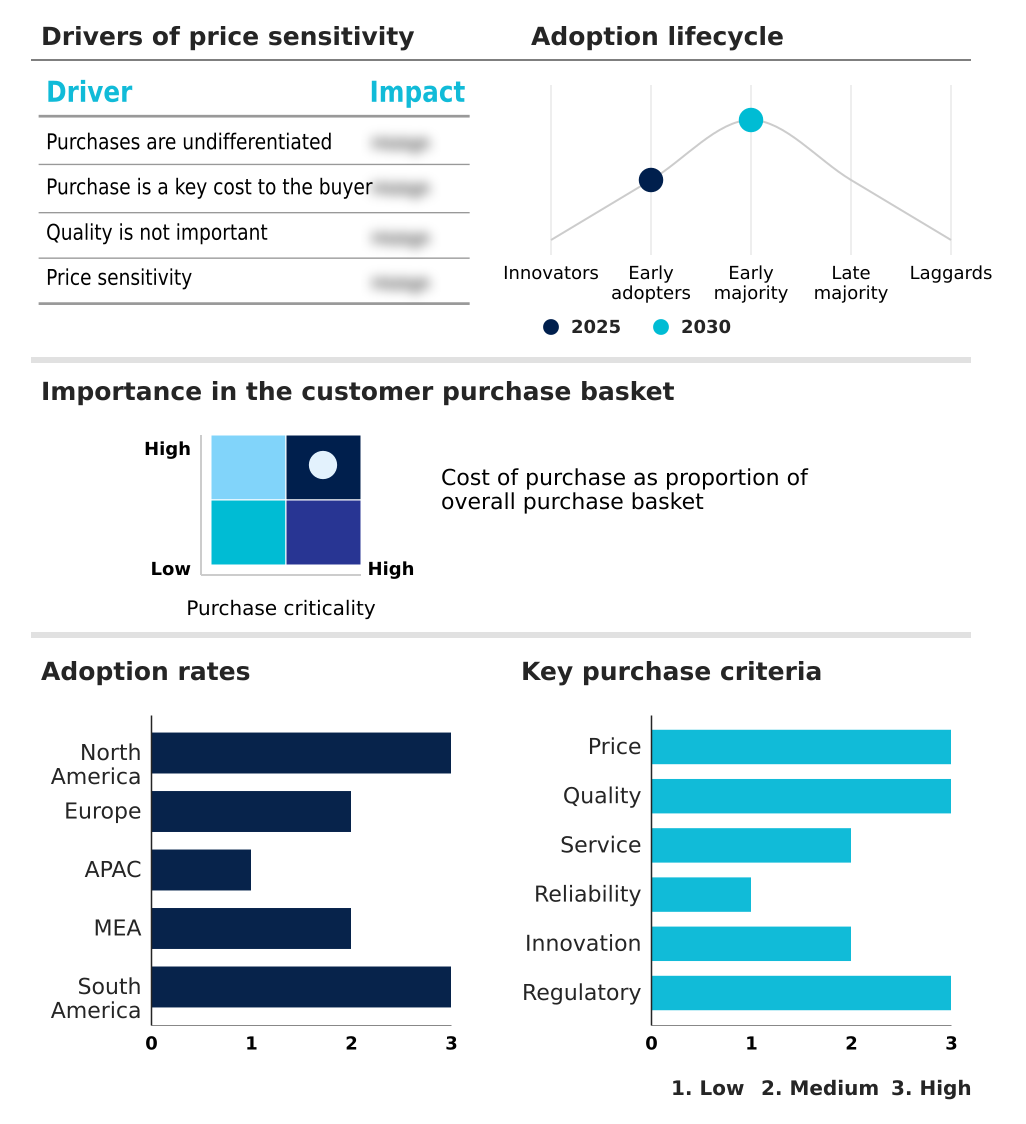
Customer Landscape of Accounting Software Industry
Competitive Landscape
Companies are implementing various strategies, such as strategic alliances, accounting software market forecast, partnerships, mergers and acquisitions, geographical expansion, and product/service launches, to enhance their presence in the industry.
Acumatica Inc. - Acumatica provides unified cloud platforms designed to streamline financial reporting and enterprise resource planning, optimizing project management alongside comprehensive bookkeeping capabilities for mid-sized organizations.
The industry research and growth report includes detailed analyses of the competitive landscape of the market and information about key companies, including:
- Acumatica Inc.
- BlackLine Inc.
- Certinia Inc.
- Deltek Inc.
- Epicor Software Corp.
- Exact Group B.V.
- FreshBooks
- Infor Inc.
- Intuit Inc.
- Microsoft Corp.
- NetSuite Inc.
- Odoo SA
- Sage Group Plc
- SAP SE
- Unit4 Group Holding BV
- Visma Solutions Oy
- Wave Financial Inc
- Workday Inc.
- Xero Ltd.
- Zoho Corp. Pvt. Ltd.
Qualitative and quantitative analysis of companies has been conducted to help clients understand the wider business environment as well as the strengths and weaknesses of key industry players. Data is qualitatively analyzed to categorize companies as pure play, category-focused, industry-focused, and diversified; it is quantitatively analyzed to categorize companies as dominant, leading, strong, tentative, and weak.
Recent Development and News in Accounting software market
- In the Application Software industry, the transition toward modular cloud deployment architectures has accelerated the integration of microservices, directly impacting Accounting Software demand by enabling scalable enterprise systems.
- The enforcement of General Data Protection Regulation and similar privacy mandates has forced platform developers to embed end-to-end encryption protocols, increasing compliance costs within enterprise automation sectors by nearly 20%.
- The widespread integration of artificial intelligence processing engines into workflow management tools has improved task automation capabilities, driving adoption of predictive financial analytics across the enterprise sector.
- The shift toward remote workforce collaboration technologies has necessitated decentralized access controls, leading to a 35% increase in demand for secure enterprise resource integration platforms globally.
Dive into Technavio’s robust research methodology, blending expert interviews, extensive data synthesis, and validated models for unparalleled Accounting Software Market insights. See full methodology.
| Market Scope | |
|---|---|
| Page number | 299 |
| Base year | 2025 |
| Historic period | 2020-2024 |
| Forecast period | 2026-2030 |
| Growth momentum & CAGR | Accelerate at a CAGR of 9.6% |
| Market growth 2026-2030 | USD 8122.0 million |
| Market structure | Fragmented |
| YoY growth 2025-2026(%) | 8.7% |
| Key countries | US, Canada, Mexico, Germany, UK, France, Italy, Spain, The Netherlands, China, India, Japan, South Korea, Australia, Indonesia, Saudi Arabia, UAE, South Africa, Israel, Turkey, Brazil, Argentina and Chile |
| Competitive landscape | Leading Companies, Market Positioning of Companies, Competitive Strategies, and Industry Risks |
Research Analyst Overview
- The Accounting Software Market is undergoing a rapid evolution as enterprises replace outdated, disconnected spreadsheets with highly integrated digital platforms. Companies are increasingly prioritizing intelligent invoice algorithms and dynamic invoicing protocol frameworks to streamline accounts payable and receivable operations. Implementing robust continuous transaction controls allows multinational corporations to monitor compliance simultaneously across diverse jurisdictions.
- Organizations leveraging application programming interface connectors have reduced cross-departmental data siloes by nearly 30%, significantly improving strategic agility and operational alignment. Integrating an electronic invoicing mandate compliance module protects firms from severe regulatory penalties while ensuring frictionless cross border transaction execution.
- The widespread adoption of holistic financial tracking tools provides boardroom executives with unparalleled visibility into operational performance, directly influencing dynamic pricing strategies. Securing sensitive fiscal data via biometric access control further solidifies enterprise resilience against sophisticated digital threats. Real time fiscal visibility is no longer a luxury but an operational necessity for maintaining a competitive edge in volatile economic environments.
What are the Key Data Covered in this Accounting Software Market Research and Growth Report?
-
What is the expected growth of the Accounting Software Market between 2026 and 2030?
-
USD 8.12 billion, at a CAGR of 9.6%
-
-
What segmentation does the market report cover?
-
The report is segmented by Deployment (On premises, and Cloud), Application (Payroll management, Billing and invoicing, Expense tracking, and Tax management), End-user (Retail and e-commerce, BFSI, Manufacturing, IT and telecom, and Others) and Geography (North America, Europe, APAC, Middle East and Africa, South America)
-
-
Which regions are analyzed in the report?
-
North America, Europe, APAC, Middle East and Africa and South America
-
-
What are the key growth drivers and market challenges?
-
Accelerated migration to enterprise cloud environments, Data sovereignty and evolving privacy regulations across global regions
-
-
Who are the major players in the Accounting Software Market?
-
Acumatica Inc., BlackLine Inc., Certinia Inc., Deltek Inc., Epicor Software Corp., Exact Group B.V., FreshBooks, Infor Inc., Intuit Inc., Microsoft Corp., NetSuite Inc., Odoo SA, Sage Group Plc, SAP SE, Unit4 Group Holding BV, Visma Solutions Oy, Wave Financial Inc, Workday Inc., Xero Ltd. and Zoho Corp. Pvt. Ltd.
-
Market Research Insights
- The continuous evolution of the Accounting Software Market is fundamentally reshaping enterprise fiscal operations. Utilizing advanced mobile financial suites allows regional executives to monitor expenses and approve purchase orders instantly. Establishing institutional grade accounting tools optimizes financial process workflows, reducing ledger reconciliation times by approximately 22%.
- Furthermore, the development of a unified digital ecosystem enables organizations to consolidate cross-border transactions and manage multi-currency ledgers effortlessly. Ensuring comprehensive automated reporting mechanism adherence allows global firms to maintain operational agility while satisfying evolving regulatory mandates. Consequently, sophisticated financial platforms are replacing outdated legacy systems across major industries, ensuring persistent modernization and accurate fiscal visibility.
We can help! Our analysts can customize this accounting software market research report to meet your requirements.
 RIA -