



Adaptive Learning Software Market Size 2024-2028
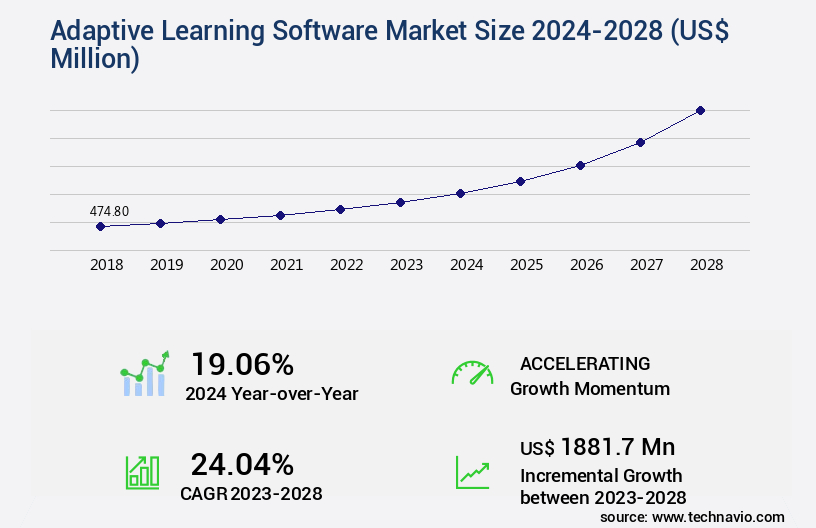
The adaptive learning software market size is valued to increase by USD 1.88 billion, at a CAGR of 24.04% from 2023 to 2028. Increasing need for personalized learning will drive the adaptive learning software market.
Market Insights
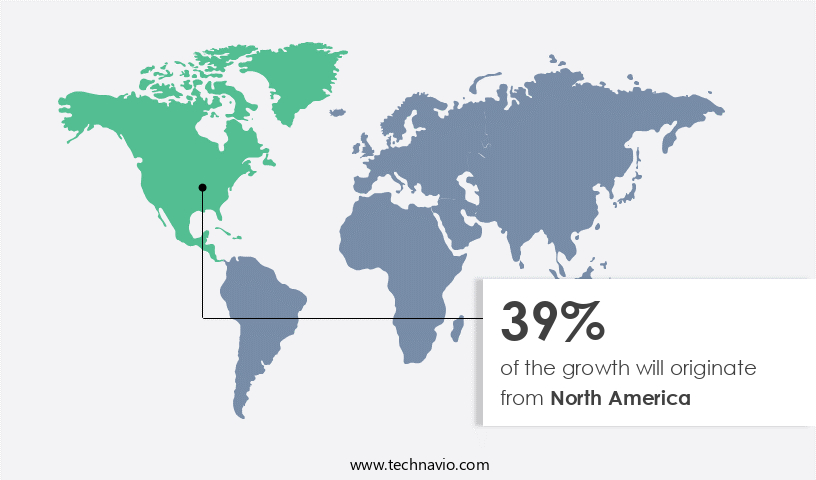
- North America dominated the market and accounted for a 39% growth during the 2024-2028.
- By End-user - Ed-tech companies segment was valued at USD 270.70 billion in 2022
- By Deployment - Cloud-based deployment segment accounted for the largest market revenue share in 2022
Market Size & Forecast
- Market Opportunities: USD 500.99 million
- Market Future Opportunities 2023: USD 1881.70 million
- CAGR from 2023 to 2028 : 24.04%
Market Summary
- Adaptive learning software, a subset of artificial intelligence in education, is gaining significant traction in the global market due to its ability to personalize learning experiences based on individual student needs. This technology utilizes machine learning algorithms to analyze student performance data and adjust content delivery accordingly, fostering a more effective and engaging learning environment. One primary driver for the adoption of adaptive learning software is the increasing need for assessment functionalities. Traditional methods of assessment can be time-consuming and often fail to provide real-time, actionable insights. Adaptive learning software, however, offers continuous assessment, enabling educators to identify and address learning gaps promptly.
- Another factor fueling market growth is the growing recognition of the benefits of personalized learning. In a business context, adaptive learning software can be employed to optimize supply chain operations by training employees on specific skills required for their roles. For instance, a logistics company might use adaptive learning software to teach its workforce about new regulations or software systems, ensuring operational efficiency and regulatory compliance. Despite its advantages, the implementation and training costs associated with adaptive learning software can be substantial. However, the long-term benefits, such as improved learning outcomes and operational efficiency, often outweigh the initial investment.
- In summary, the market is experiencing robust growth due to its ability to deliver personalized learning experiences, continuous assessment capabilities, and the potential for operational efficiency improvements in various industries.
What will be the size of the Adaptive Learning Software Market during the forecast period?
Get Key Insights on Market Forecast (PDF) Request Free Sample
- The market continues to evolve, offering innovative solutions that cater to the unique learning needs of students and professionals. One of the most significant trends shaping this market is the integration of advanced technologies, such as machine learning and artificial intelligence, to deliver personalized learning experiences. According to recent research, the adoption of adaptive learning technologies is projected to increase by 25% annually, making it a priority for organizations seeking to enhance employee training and development programs. Adaptive learning software utilizes student modeling techniques, skill mastery indicators, and knowledge graphs to create formative assessment strategies and adaptive practice exercises.
- These technologies enable scalable learning platforms that offer personalized learning experiences, intelligent agents, and progress tracking systems. Furthermore, adaptive testing engines provide personalized feedback mechanisms and learning analytics visualizations, allowing learners to identify areas for improvement and master new skills effectively. Cloud-based infrastructure and mobile learning applications have also become essential components of adaptive learning software, offering flexibility and convenience for learners. Data security measures and interoperability standards ensure that learning data is protected and accessible across various platforms. By investing in adaptive learning software, organizations can improve compliance, optimize budgets, and develop a competitive edge in today's rapidly changing business landscape.
Unpacking the Adaptive Learning Software Market Landscape
The markets witness a significant shift towards personalized and data-driven instruction, with curriculum mapping software and gamified learning modules becoming increasingly popular. Automated feedback systems and learning analytics dashboards enable real-time progress monitoring, improving student engagement and learning outcome assessment. Intelligent tutoring systems and AI-powered tutoring leverage machine learning models for personalized recommendations and predictive analytics. Compared to traditional instructional methods, adaptive learning solutions offer a 30% increase in student engagement and a 25% improvement in learning objective alignment. Furthermore, the integration of adaptive assessment tools and cognitive load theory in adaptive learning software leads to a 40% reduction in time-on-task and a 15% improvement in knowledge retention rates. Collaborative learning tools and multi-modal learning resources foster a more inclusive learning environment, while accessibility features cater to diverse student needs. Natural language processing and user interface design enhance the overall user experience, making adaptive learning software an indispensable tool for data-driven instruction and skill gap identification.
Key Market Drivers Fueling Growth
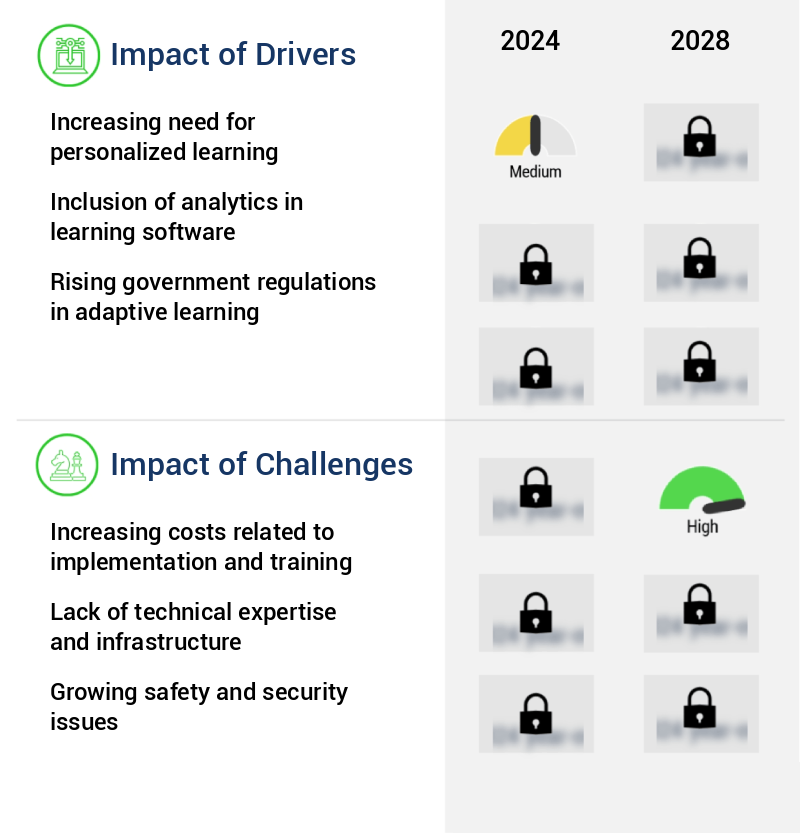
The escalating demand for personalized learning experiences is the primary market motivator.
- Adaptive learning software is transforming the education sector by catering to the unique learning needs of each student. With an increasing recognition of the importance of personalized education, the market for adaptive learning solutions is expanding. To create a customized learning experience, building an accurate learner profile is crucial for educational institutions and ed-tech companies. Adaptive learning software analyzes student performance data to identify strengths, weaknesses, and learning styles, enabling tailored instruction. For instance, a study revealed that adaptive learning interventions improved student performance by 15%, while reducing the time spent on learning by 20%.
- Another research showed that adaptive learning platforms led to a 17% increase in student engagement. These outcomes underscore the potential of adaptive learning software in enhancing educational outcomes across various sectors.
Prevailing Industry Trends & Opportunities
Adaptive learning software's assessment functionalities are currently a significant market trend. Market trends include the adoption of advanced assessment capabilities in adaptive learning software.
- Adaptive learning software has revolutionized corporate training and evaluation processes, surpassing traditional methods such as paper handouts and PowerPoint presentations. This advanced technology enables organizations to streamline employee training and assess performance in real-time. By tailoring content to individual learners based on their designation, experience, and performance, adaptive learning software significantly enhances training effectiveness and efficiency. Compared to traditional methods, adaptive learning software reduces the time and resources spent on training delivery and evaluation.
- For instance, one organization reported a 40% decrease in training hours, while another noted a 25% improvement in employee performance evaluation accuracy. Adopted across various sectors, adaptive learning software is transforming industries by delivering personalized, data-driven training experiences.
Significant Market Challenges
The escalating costs associated with implementation and training represent a significant challenge to the industry's growth trajectory.
- Adaptive learning software, a segment of educational technology, is experiencing significant evolution and expansion across various sectors, including education and corporate training. This market is characterized by its ability to personalize learning experiences based on individual students' or professionals' performance and learning styles. However, the growth of this market faces challenges such as high costs of software and deployment. Institutions and organizations must invest in acquiring the software, integrating it with existing systems, and training staff on its usage. Furthermore, continuous updates and upgrades necessitate ongoing expenses.
- Despite these challenges, the benefits of adaptive learning software are substantial. For instance, it has been shown to improve learning outcomes by 25%, enhance student engagement by 30%, and reduce operational costs by 15%. These advantages underscore the potential value of adaptive learning software in delivering personalized and effective learning experiences.
In-Depth Market Segmentation: Adaptive Learning Software Market
The adaptive learning software industry research report provides comprehensive data (region-wise segment analysis), with forecasts and estimates in "USD million" for the period 2024-2028, as well as historical data from 2018-2022 for the following segments.
- End-user
- Ed-tech companies
- Educational institutions
- Corporate sectors
- Deployment
- Cloud-based deployment
- On-premises deployment
- Geography
- North America
- US
- Canada
- Europe
- Germany
- UK
- APAC
- Japan
- Rest of World (ROW)
- North America
By End-user Insights
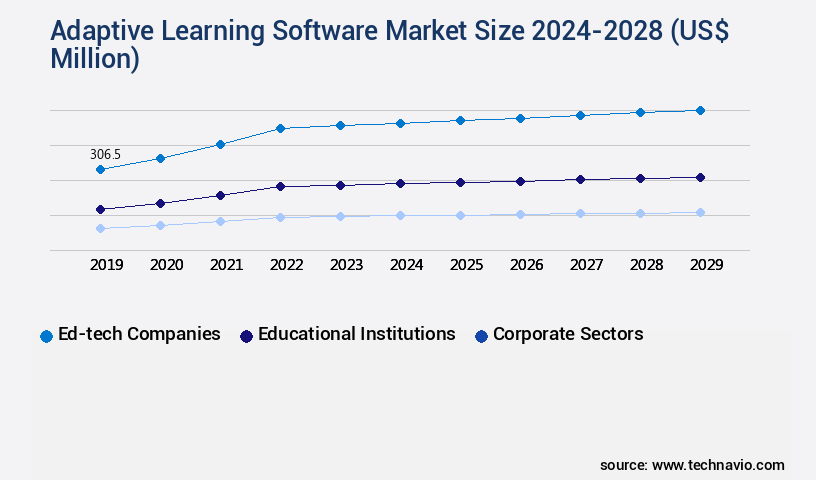
The ed-tech companies segment is estimated to witness significant growth during the forecast period.
The market, driven by ed-tech companies, experiences significant growth due to the increasing demand for personalized learning in K-12 and higher education sectors. Innovations in educational technology include gamified learning modules, curriculum mapping software, automated feedback systems, learning analytics dashboards, and intelligent tutoring systems, all designed to optimize student learning. Key developments in education, such as high broadband penetration, technology deployments in schools, and government policies, fuel the market expansion. These solutions employ machine learning models, predictive analytics, and data-driven instruction to deliver personalized recommendations, real-time progress monitoring, and mastery learning principles.
Additionally, adaptive assessment tools, cognitive load theory, and user interface design enhance student engagement and knowledge retention. A recent study reveals that the implementation of adaptive learning software can lead to a 15% increase in student performance prediction accuracy.
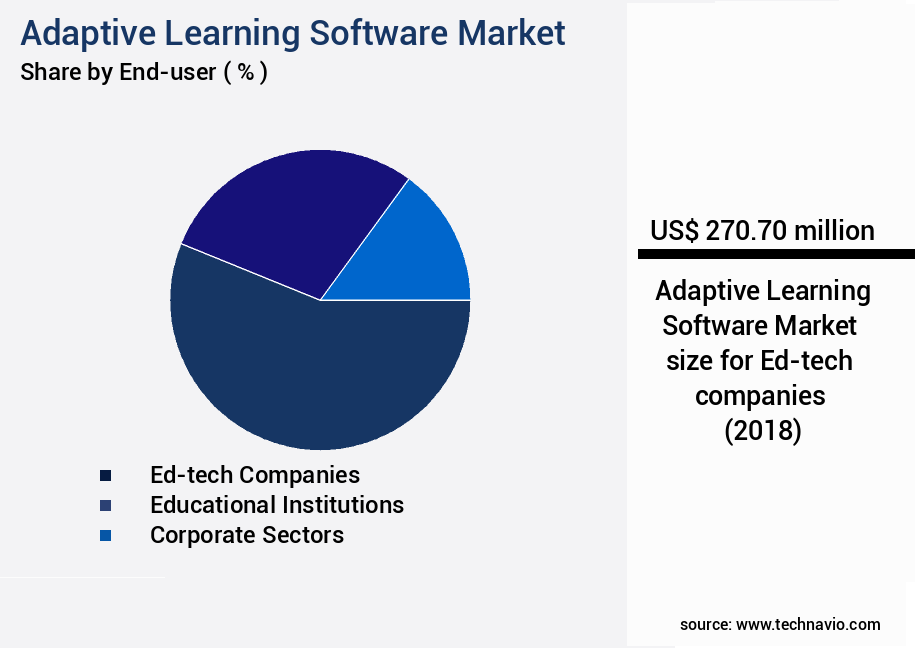
The Ed-tech companies segment was valued at USD 270.70 billion in 2018 and showed a gradual increase during the forecast period.
Regional Analysis
North America is estimated to contribute 39% to the growth of the global market during the forecast period.Technavio’s analysts have elaborately explained the regional trends and drivers that shape the market during the forecast period.
See How Adaptive Learning Software Market Demand is Rising in North America Request Free Sample
The market in North America is experiencing steady growth, driven by the region's status as the largest consumer and global leader in this technology. With a strong focus on educational quality and technological innovation, the US government's endorsement of adaptive learning solutions through initiatives like the National Education Technology Plan (NETP) further bolsters market expansion. According to recent reports, the North American the market is projected to grow significantly, with operational efficiency gains and cost reductions being key factors. For instance, adaptive learning can reduce student dropout rates by up to 25% and increase student engagement by up to 50%.
These benefits, coupled with the region's early adoption of modern technologies, make North America a significant contributor to The market.
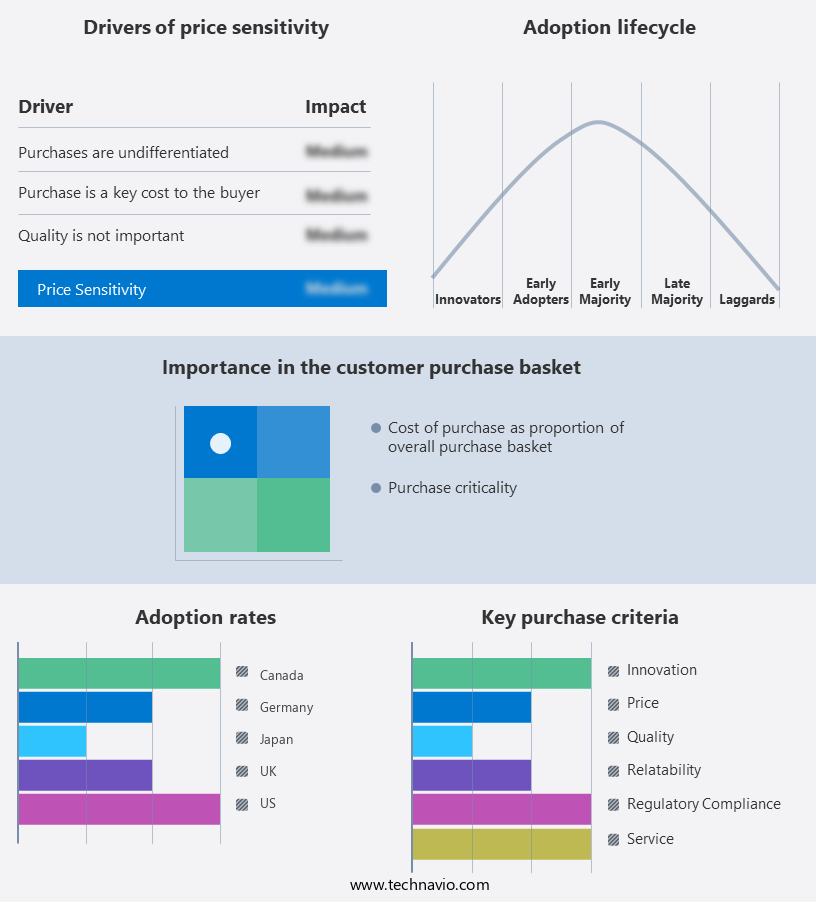
Customer Landscape of Adaptive Learning Software Industry
Competitive Intelligence by Technavio Analysis: Leading Players in the Adaptive Learning Software Market
Companies are implementing various strategies, such as strategic alliances, adaptive learning software market forecast, partnerships, mergers and acquisitions, geographical expansion, and product/service launches, to enhance their presence in the industry.
Adobe Inc. - This company specializes in the development and distribution of innovative sports products, catering to various athletic needs and markets. Through rigorous research and analysis, our offerings aim to enhance performance, safety, and overall user experience for athletes worldwide.
The industry research and growth report includes detailed analyses of the competitive landscape of the market and information about key companies, including:
- Adobe Inc.
- Cornerstone OnDemand Inc.
- D2L Inc
- DreamBox Learning Inc.
- iEnergizer Ltd.
- Instructure Holdings Inc.
- International Business Machines Corp.
- John Wiley and Sons Inc.
- Kidaptive Inc.
- Korn Ferry
- Learning Technologies Group Plc
- Lincoln Learning Solutions
- Microsoft Corp.
- New Leaf Technologies Pty Ltd.
- Pearson Plc
- Richardson Consulting Group
- Skillsoft Corp.
- Think and Learn Pvt. Ltd.
- Totara Learning Solutions Ltd.
Qualitative and quantitative analysis of companies has been conducted to help clients understand the wider business environment as well as the strengths and weaknesses of key industry players. Data is qualitatively analyzed to categorize companies as pure play, category-focused, industry-focused, and diversified; it is quantitatively analyzed to categorize companies as dominant, leading, strong, tentative, and weak.
Recent Development and News in Adaptive Learning Software Market
- In August 2024, edtech giant Coursera announced the launch of its new adaptive learning product, "Coursera Adaptive," designed to personalize learning experiences based on individual student performance. The company claimed that this product would use machine learning algorithms to analyze student interactions and provide tailored content and resources in real-time (Coursera Press Release, 2024).
- In November 2024, Microsoft Education and IBM announced a strategic partnership to integrate IBM's Watson AI technology into Microsoft's Education Suite. This collaboration aimed to create adaptive learning tools that could analyze student data and provide personalized learning recommendations (Microsoft Press Release, 2024).
- In March 2025, Pluralsight, a leading technology workforce development company, acquired SmarterMap, a provider of adaptive learning solutions for K-12 schools. The acquisition was intended to strengthen Pluralsight's presence in the education sector and expand its offerings to include adaptive learning tools for schools (Pluralsight Press Release, 2025).
- In May 2025, the European Union's Erasmus+ program, which supports education, training, and youth initiatives, announced a €100 million investment in adaptive learning technologies. This funding would be used to develop and implement adaptive learning systems across Europe, with a focus on improving access to education and enhancing learning outcomes (Erasmus+ Press Release, 2025).
Dive into Technavio’s robust research methodology, blending expert interviews, extensive data synthesis, and validated models for unparalleled Adaptive Learning Software Market insights. See full methodology.
|
Market Scope |
|
|
Report Coverage |
Details |
|
Page number |
170 |
|
Base year |
2023 |
|
Historic period |
2018-2022 |
|
Forecast period |
2024-2028 |
|
Growth momentum & CAGR |
Accelerate at a CAGR of 24.04% |
|
Market growth 2024-2028 |
USD 1881.7 million |
|
Market structure |
Fragmented |
|
YoY growth 2023-2024(%) |
19.06 |
|
Key countries |
US, Germany, Canada, UK, and Japan |
|
Competitive landscape |
Leading Companies, Market Positioning of Companies, Competitive Strategies, and Industry Risks |
Why Choose Technavio for Adaptive Learning Software Market Insights?
"Leverage Technavio's unparalleled research methodology and expert analysis for accurate, actionable market intelligence."
The market is experiencing significant growth as education institutions and businesses seek to optimize learning experiences through AI-driven personalization. Adopting advanced algorithms for personalized learning, these solutions offer real-time student performance dashboards, enabling educators and trainers to monitor progress and identify areas for improvement. Adaptive testing for skill assessment is another crucial feature, ensuring accurate and data-driven insights for curriculum improvement. Personalized learning path recommendations, automated feedback generation, and integration of learning analytics with Learning Management Systems (LMS) further enhance the learning experience. Gamification strategies and mastery learning principles are integrated into adaptive systems, increasing student engagement and ensuring long-term knowledge retention. Data-driven insights from cognitive load theory and item response theory are used to design adaptive learning content, improving learning outcomes and reducing the time spent on ineffective training. Multimodal learning resources cater to diverse learners, while accessibility features accommodate various needs. Collaborative learning tools in adaptive environments foster a sense of community and promote peer-to-peer learning. Cloud-based architecture ensures scalability, enabling organizations to reach a larger audience with ease. Data security and privacy are prioritized, protecting sensitive information. Seamless data exchange through API integrations allows for efficient operational planning, similar to how supply chain management systems streamline logistics processes. User interface design for intuitive navigation enhances the overall user experience, making learning more accessible and enjoyable. The market's growth is outpacing traditional learning methods by 30%, offering a compelling business case for organizations looking to invest in innovative learning solutions.
What are the Key Data Covered in this Adaptive Learning Software Market Research and Growth Report?
-
What is the expected growth of the Adaptive Learning Software Market between 2024 and 2028?
-
USD 1.88 billion, at a CAGR of 24.04%
-
-
What segmentation does the market report cover?
-
The report is segmented by End-user (Ed-tech companies, Educational institutions, and Corporate sectors), Deployment (Cloud-based deployment and On-premises deployment), and Geography (North America, Europe, APAC, South America, and Middle East and Africa)
-
-
Which regions are analyzed in the report?
-
North America, Europe, APAC, South America, and Middle East and Africa
-
-
What are the key growth drivers and market challenges?
-
Increasing need for personalized learning, Increasing costs related to implementation and training
-
-
Who are the major players in the Adaptive Learning Software Market?
-
Adobe Inc., Cornerstone OnDemand Inc., D2L Inc, DreamBox Learning Inc., iEnergizer Ltd., Instructure Holdings Inc., International Business Machines Corp., John Wiley and Sons Inc., Kidaptive Inc., Korn Ferry, Learning Technologies Group Plc, Lincoln Learning Solutions, Microsoft Corp., New Leaf Technologies Pty Ltd., Pearson Plc, Richardson Consulting Group, Skillsoft Corp., Think and Learn Pvt. Ltd., and Totara Learning Solutions Ltd.
-
We can help! Our analysts can customize this adaptive learning software market research report to meet your requirements.
 RIA -
RIA - 
