



Adaptive Robotics Market Size 2024-2028
The adaptive robotics market size is forecast to increase by USD 12.30 billion at a CAGR of 24.32% between 2023 and 2028.
- The market is experiencing significant growth due to the increasing integration of advanced technologies such as deep learning and human-like knowledge in robotic systems. Collaborative robots, also known as cobots, are gaining popularity in various industries, particularly in packaging and assembly processes, due to their ability to work alongside human workers, reducing operational costs and improving efficiency. The adoption of Internet of Things (IoT) technology in robots is another key trend, enabling seamless communication between robots and other connected devices, leading to optimized logistic processes and inventory management.
- Furthermore, the demand for high-grade sensors in adaptive robots is increasing to enhance their precision and adaptability. Research and development in humanoid robots continues to advance, bringing US closer to robots that can mimic human behavior and cognitive abilities. These factors are driving the growth of the market.
What will be the Size of the Market During the Forecast Period?
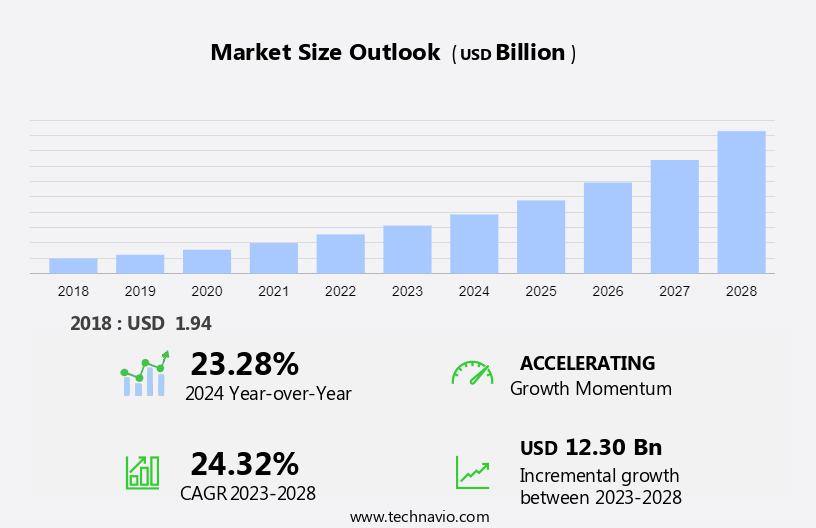
- Adaptive robotics, a subfield of robotics engineering, is revolutionizing industries by integrating artificial intelligence (AI) and advanced sensors to create robotic systems capable of learning, adapting, and responding to their environment. This technology is driving significant market dynamics, particularly in sectors seeking productivity improvement, labor cost reduction, and risk mitigation. The market is witnessing substantial growth as businesses recognize the potential for AI-powered robotics to enhance product quality and safety. Robotics research is focused on developing advanced perception capabilities, enabling robots to understand and interact with their surroundings more effectively.
- Similarly, speech recognition robots are an exciting area of exploration, offering potential applications in various industries, including healthcare and customer service. Safety is a primary concern in many industries, and robotics solutions are increasingly being adopted to address this need. Collaborative robots, or cobots, are designed to work alongside human workers, reducing the risk of accidents and improving overall efficiency. Robotics for healthcare is another burgeoning sector, with applications ranging from patient monitoring to rehabilitation and surgery. Industrial robot applications are vast, with logistics and packaging being significant areas of investment. Sorting robots and packing robots are increasingly being used to streamline operations and reduce labor costs.
-
Moreover, vision sensors are a crucial component of these systems, enabling accurate identification and classification of objects. Robotics engineering is at the forefront of innovation, with trends including robotics for sustainability, robotics for efficiency, and robotics for efficiency. Navigation robots are a prime example of this, as they can be used to optimize transportation systems, reduce energy consumption, and improve overall operational performance. The future of robotics is bright, with continued advancements in technology and applications across various industries. Inspection robots are a promising area, offering cost-effective and accurate solutions for quality control and maintenance. The robotics industry is expected to continue growing, driven by the need for increased productivity, improved safety, and reduced labor costs.
-
Perception robots are another area of focus, as they enable robots to understand their environment and make decisions based on that information. This capability is essential for applications such as autonomous vehicles, drones, and security systems. In conclusion, adaptive robotics is transforming industries by enabling robots to learn, adapt, and respond to their environment. The market is driven by the need for productivity improvement, labor cost reduction, and risk mitigation, with applications ranging from healthcare to industrial automation. The future of robotics is bright, with continued innovation and advancements expected in areas such as perception, navigation, and sustainability.
How is this market segmented and which is the largest segment?
The market research report provides comprehensive data (region-wise segment analysis), with forecasts and estimates in "USD billion" for the period 2024-2028, as well as historical data from 2018-2022 for the following segments.
- Product
- Industrial adaptive robots
- Service adaptive robots
- Type
- Manufacturing
- Automotive
- Logistics
- Healthcare
- Others
- Geography
- North America
- US
- Europe
- Germany
- UK
- APAC
- China
- Japan
- South America
- Middle East and Africa
- North America
By Product Insights
- The industrial adaptive robots segment is estimated to witness significant growth during the forecast period.
Industrial adaptive robots are engineered to manage a range of tasks and production processes, accommodating modifications in product specifications, production volumes, or configurations. These robots can effortlessly transition between various tasks without the need for extensive reprogramming. Furthermore, industrial adaptive robots can modify their inspection techniques to detect defects, inconsistencies, or variations in manufactured goods. They can adjust their inspection standards according to the unique attributes of each product. In the United States, the demand for industrial adaptive robotics has been growing steadily since 2024. Manufacturers are increasingly adopting these systems to enhance operational efficiency, flexibility, and agility in their production processes.
Adaptive robotics technology enables manufacturers to optimize their workflows, adapt to fluctuating production demands, and respond to evolving industry requirements. This technology is particularly relevant to sectors such as defense, travel and transportation, retail, healthcare, and manufacturing. For instance, in the manufacturing industry, adaptive robots can be employed in multi-purpose applications, reducing the need for skilled labor in repetitive tasks. In the healthcare sector, adaptive robots can assist in complex procedures, ensuring precision and consistency. In the retail industry, adaptive robots can be utilized for inventory management and customer service. In the travel and transportation sector, adaptive robots can be employed for maintenance and inspection tasks.
In the defense sector, adaptive robots can be used for surveillance and reconnaissance missions. By implementing adaptive robotics, businesses can streamline their operations, improve productivity, and maintain a competitive edge in their respective industries.
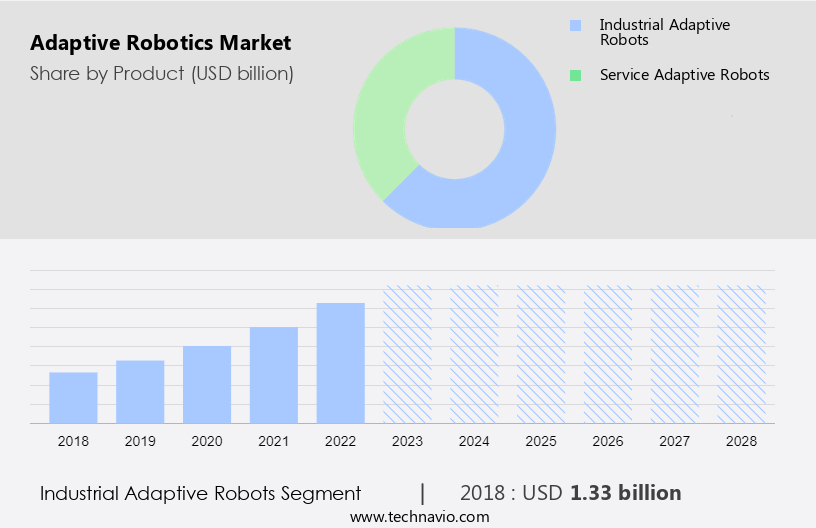
Get a glance at the market report of share of various segments Request Free Sample
The Industrial adaptive robots segment was valued at USD 1.33 billion in 2018 and showed a gradual increase during the forecast period.
Regional Analysis
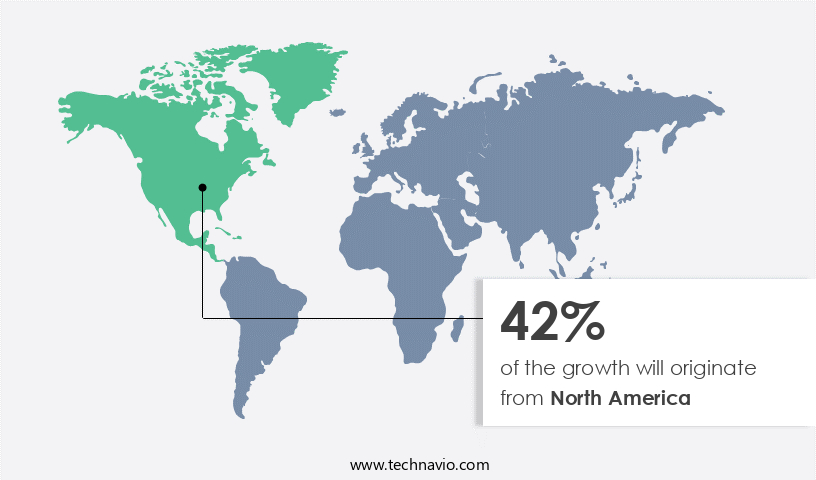
- North America is estimated to contribute 42% to the growth of the global market during the forecast period.
Technavio's analysts have elaborately explained the regional trends and drivers that shape the market during the forecast period.
For more insights on the market share of various regions Request Free Sample
In the market, North America held the largest market share in 2023. This region's dominance can be attributed to its technological advancements and innovation. The North American robotics industry has been actively implementing adaptive robots in manufacturing processes to boost efficiency, reduce human error, and maintain competitiveness in the regional industrial sector. The US, in particular, is a significant contributor to the North American market growth. The market in the US has entered the maturity phase but continues to be a major player in the region. Adaptive robots equipped with cameras and sensors have found extensive applications in various industries such as semiconductor manufacturing, defense, and consumer devices.
The labor costs in these industries are high, making automation an attractive solution to reduce operational expenses. Therefore, the market in North America is expected to continue its growth trajectory in the coming years.
Market Dynamics
Our researchers analyzed the data with 2023 as the base year, along with the key drivers, trends, and challenges. A holistic analysis of drivers will help companies refine their marketing strategies to gain a competitive advantage.
What are the key market drivers leading to the rise in adoption of Adaptive Robotics Market?
The increase in applications of collaborative robots is the key driver of the market.
- Adaptive robotics is a branch of robotics that focuses on creating robots capable of adapting to changing environments and tasks. This technology is increasingly being adopted across various industries, including semiconductor manufacturing, defense, and consumer devices, to enhance productivity, minimize errors, and reduce labor costs. Adaptive robots are equipped with cameras, sensors, and algorithms that enable them to learn and adapt to new situations. In semiconductor manufacturing, for instance, adaptive robots are used for surface mount technology and inspection, ensuring high product quality and operational efficiency. In the healthcare sector, adaptive robots, or cobots, are utilized to assist in risky procedures, such as surgery, by providing human-like knowledge and precision.
- Cobots are also employed in labor-intensive activities, such as patient care and packing, to improve operational cost and productivity. The integration of artificial intelligence and deep learning in adaptive robotics further enhances their capabilities, enabling them to perform complicated activities, such as speech recognition and painting. Moreover, adaptive robots are increasingly being used in the automotive sector for assembly and welding, logistic processes, inventory management, and even in swarm robots for travel and transportation. The retail and manufacturing industries are also benefiting from adaptive robotics, with robots handling and automating repetitive tasks, such as packing and assembly. The adoption of adaptive robotics is expected to continue growing as businesses seek to streamline operations, reduce costs, and improve product quality.
What are the market trends shaping the Adaptive Robotics Market?
Increasing adoption of the Internet of Things (IoT) is the upcoming trend in the market.
- The adaptive robots market is experiencing significant growth due to the integration of Internet of Things (IoT) technologies. IoT-enabled sensors, installed in manufacturing equipment, products, and the environment, transmit real-time data on various parameters such as temperature, humidity, pressure, and machine performance. Adaptive robots utilize this data to modify their actions, behaviors, and parameters, enhancing performance, accuracy, and efficiency. IoT technologies play a crucial role in various industries, including semiconductor manufacturing, defense, consumer devices, healthcare, automotive, and electronics. In semiconductor manufacturing, adaptive robots use IoT sensors to monitor and adjust production processes, reducing human error and increasing productivity. In defense, adaptive robots perform risky tasks, such as bomb disposal and surveillance, utilizing IoT sensors for real-time data analysis.
- In healthcare, adaptive robots employ speech recognition and learning algorithms to assist in patient care, minimizing errors and improving operational cost. In automotive, adaptive robots use IoT sensors for assembly, inventory management, and logistic processes, reducing labor costs and enhancing operational efficiency. The integration of IoT in adaptive robotics also benefits industries such as retail and manufacturing, banking, construction, and research and development. Swarm robots, a type of adaptive robot, can perform complicated activities, such as handling and automation, using IoT sensors for coordinated actions. Deep learning and artificial intelligence algorithms enable adaptive robots to perceive and learn from their environment, further enhancing their capabilities.
- Robot end effectors, such as robot arms and welding robots, can be integrated with IoT sensors for improved precision and accuracy. In conclusion, the market is growing due to the integration of IoT technologies, which provide valuable real-time data and insights, enhancing the capabilities and effectiveness of adaptive robots across various industries.
What challenges does Adaptive Robotics Market face during growth?
Growing demand for high-grade sensors in adaptive robots is a key challenge affecting the market growth.
- Adaptive robotics, a subset of robotics that utilizes sensors and cameras for perception and learning, is experiencing significant growth in various industries, including semiconductor manufacturing, defense, healthcare, and consumer devices. However, the integration of sensors into adaptive robots presents challenges, such as increased power requirements, complex data management, and advanced processing capabilities. These factors can affect operational efficiency, productivity, and overall cost, potentially limiting the adoption of adaptive robots in cost-sensitive industries. High-quality sensors are essential for enabling advanced functionalities, such as speech recognition, painting, and surface mount technology, in adaptive robots. However, managing power requirements is crucial, as increased energy demands can impact the operational time and efficiency of the robots.
- Moreover, the integration of sensors can significantly increase the overall cost of the robotic system, which may be a barrier for some industries. The market is driven by the need for minimum errors and high product quality in industries such as automotive and electronics manufacturing. Robotic systems with adaptive capabilities can improve operational efficiency, reduce labor costs, and enhance operational efficiency in logistic processes, inventory management, and research and development. In healthcare, adaptive robots can provide human-like knowledge and care in patient care, while swarm robots can perform complicated activities in construction and retail and manufacturing. Deep learning algorithms and artificial intelligence are critical components of adaptive robotics, enabling the robots to learn and adapt to new environments and tasks.
- Robot end effectors, such as robot arms, welding systems, and robotics hardware, are essential components of adaptive robotic systems. The integration of IoT into adaptive robotics can further enhance operational efficiency and productivity in various industries. Despite the challenges, the market is expected to grow significantly due to the increasing demand for automation, labor cost savings, and improved product quality. The market is expected to see significant growth in industries such as automotive, healthcare, and electronics manufacturing, among others. The integration of sensors and cameras into adaptive robots is expected to drive innovation and new applications in various industries, leading to new opportunities and growth.
Exclusive Customer Landscape
The market forecasting report includes the adoption lifecycle of the market, covering from the innovator's stage to the laggard's stage. It focuses on adoption rates in different regions based on penetration. Furthermore, the market report also includes key purchase criteria and drivers of price sensitivity to help companies evaluate and develop their market growth analysis strategies.
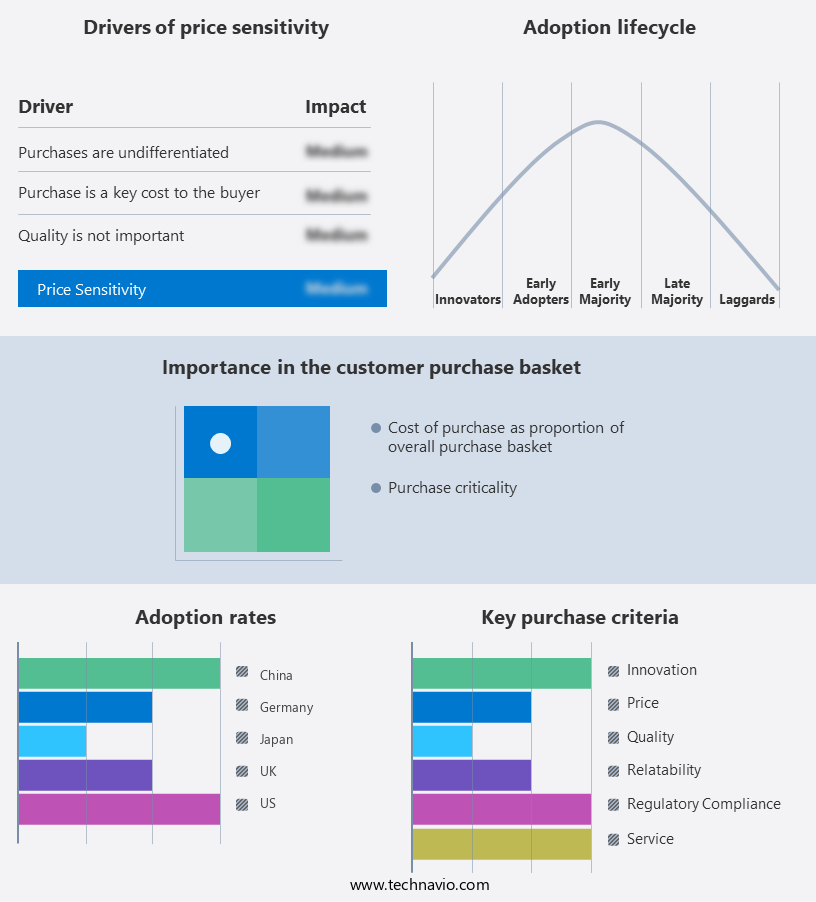
Customer Landscape
Key Companies & Market Insights
Companies are implementing various strategies, such as strategic alliances, market forecast, partnerships, mergers and acquisitions, geographical expansion, and product/service launches, to enhance their presence in the market.
The market research and growth report includes detailed analyses of the competitive landscape of the market and information about key companies, including:
- FANUC Corp.
- Flexiv Robotics Inc.
- MIDEA Group Co. Ltd.
- RAG Stiftung
- Robotnik Automation SLL
- Teradyne Inc.
- Yaskawa Electric Corp.
- J. Schmalz GmbH
- Mujin Corp.
- Soft Robotics Inc.
- WEISS ROBOTICS GMBH and CO. KG
- Robotiq Inc.
Qualitative and quantitative analysis of companies has been conducted to help clients understand the wider business environment as well as the strengths and weaknesses of key market players. Data is qualitatively analyzed to categorize companies as pure play, category-focused, industry-focused, and diversified; it is quantitatively analyzed to categorize companies as dominant, leading, strong, tentative, and weak.
Research Analyst Overview
Adaptive robots are revolutionizing industries by combining advanced sensors and cameras with machine learning algorithms. These robots adapt to their environment, reducing human error in sectors like semiconductor manufacturing, defense, and healthcare. Sensors and cameras provide real-time data, enabling robots to learn and improve product quality. In industries with high labor costs, such as electronics and automotive, adaptive robots increase productivity and minimize errors. Adaptive robots are not limited to manufacturing. They're used in difficult activities like speech recognition for laptop computers, painting, and patient care. In healthcare, they help with inventory management, gradation, and risky procedures, lowering healthcare expenses.
Adaptive robots are also used in logistic processes, supply chain optimization, banking, construction, and even swarm robots for complicated activities. Deep learning and artificial intelligence power adaptive robots, allowing them to learn from their experiences and adapt to new situations. Robot end effectors and robotic systems integrate with IoT, further enhancing their capabilities. Adaptive robots are a cost-effective solution for industries seeking operational efficiency and human-like knowledge. Whether it's assembly, handling, or automation, adaptive robots are transforming the way we work.
|
Market Scope |
|
|
Report Coverage |
Details |
|
Page number |
151 |
|
Base year |
2023 |
|
Historic period |
2018-2022 |
|
Forecast period |
2024-2028 |
|
Growth momentum & CAGR |
Accelerate at a CAGR of 24.32% |
|
Market growth 2024-2028 |
USD 12.30 billion |
|
Market structure |
Concentrated |
|
YoY growth 2023-2024(%) |
23.28 |
|
Key countries |
US, China, Japan, Germany, and UK |
|
Competitive landscape |
Leading Companies, Market Positioning of Companies, Competitive Strategies, and Industry Risks |
What are the Key Data Covered in this Market Research and Growth Report?
- CAGR of the market during the forecast period
- Detailed information on factors that will drive the market growth and forecasting between 2024 and 2028
- Precise estimation of the size of the market and its contribution of the market in focus to the parent market
- Accurate predictions about upcoming market growth and trends and changes in consumer behaviour
- Growth of the market across North America, Europe, APAC, South America, and Middle East and Africa
- Thorough analysis of the market's competitive landscape and detailed information about companies
- Comprehensive analysis of factors that will challenge the growth of market companies
We can help! Our analysts can customize this market research report to meet your requirements. Get in touch
 RIA -
RIA - 
