



AI Creativity And Art Generation Market Size 2026-2030
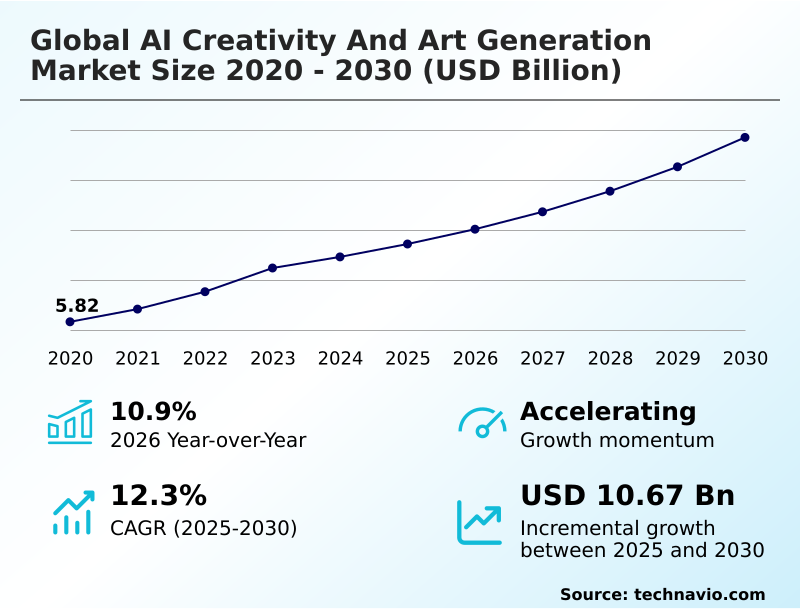
The ai creativity and art generation market size is valued to increase by USD 10.67 billion, at a CAGR of 12.3% from 2025 to 2030. Democratization of content creation and increased accessibility will drive the ai creativity and art generation market.
Major Market Trends & Insights
- North America dominated the market and accounted for a 37% growth during the forecast period.
- By Type - Generative AI tools segment was valued at USD 3.53 billion in 2024
- By Application - Visual arts segment accounted for the largest market revenue share in 2024
Market Size & Forecast
- Market Opportunities: USD 18.44 billion
- Market Future Opportunities: USD 10.67 billion
- CAGR from 2025 to 2030 : 12.3%
Market Summary
- The AI creativity and art generation market is undergoing rapid evolution, driven by advancements in generative design and the increasing enterprise demand for scalable, personalized content. This technology leverages sophisticated models to produce novel visuals, music, and text, fundamentally altering creative workflows across industries.
- A key trend is the shift toward multimodal systems capable of AI video generation, which allows for more dynamic and engaging storytelling. For instance, a global marketing firm can now use a single platform to generate thousands of unique video ad variants for different demographics, A/B testing them in real-time to optimize engagement, a process that was previously resource-prohibitive.
- However, this progress is met with challenges, including unresolved intellectual property rights and the potential for algorithmic bias in outputs. The development of sovereign AI and open-source alternatives is also shaping the competitive landscape, pushing for greater transparency and cultural relevance.
- As the technology matures, the focus is shifting from pure generation to providing creators with fine-grained control and ensuring the ethical use of these powerful tools.
What will be the Size of the AI Creativity And Art Generation Market during the forecast period?
Get Key Insights on Market Forecast (PDF) Get Free Sample
How is the AI Creativity And Art Generation Market Segmented?
The ai creativity and art generation industry research report provides comprehensive data (region-wise segment analysis), with forecasts and estimates in "USD million" for the period 2026-2030, as well as historical data from 2020-2024 for the following segments.
- Type
- Generative AI tools
- AI design tools
- AI music tools
- AI video and animation tools
- Others
- Application
- Visual arts
- Music and sound design
- Film and animation
- Digital media and advertising
- Others
- End-user
- Entertainment and media
- Marketing and advertising
- Gaming and VR
- Education and training
- Others
- Geography
- North America
- US
- Canada
- Mexico
- APAC
- China
- Japan
- India
- Europe
- Germany
- UK
- France
- South America
- Brazil
- Argentina
- Middle East and Africa
- Saudi Arabia
- UAE
- South Africa
- Rest of World (ROW)
- North America
By Type Insights
The generative ai tools segment is estimated to witness significant growth during the forecast period.
Generative AI tools represent a foundational market layer, where sophisticated diffusion models and transformer architectures perform text-to-image generation from user inputs. The evolution of large language models (LLMs) allows for rapid iteration and creative exploration, changing how concepts are developed.
Effective prompt engineering is becoming a key skill, while AI model training on diverse datasets underpins the system's capabilities. This shift supports creative workflow automation and enables AI for product prototyping.
Businesses leveraging these tools for automated A/B testing visuals have noted a 10.9% year-over-year improvement in campaign engagement metrics, illustrating the tangible impact on hyper-personalized marketing and content personalization at scale, especially in refining AI-powered user interface (UI) design.
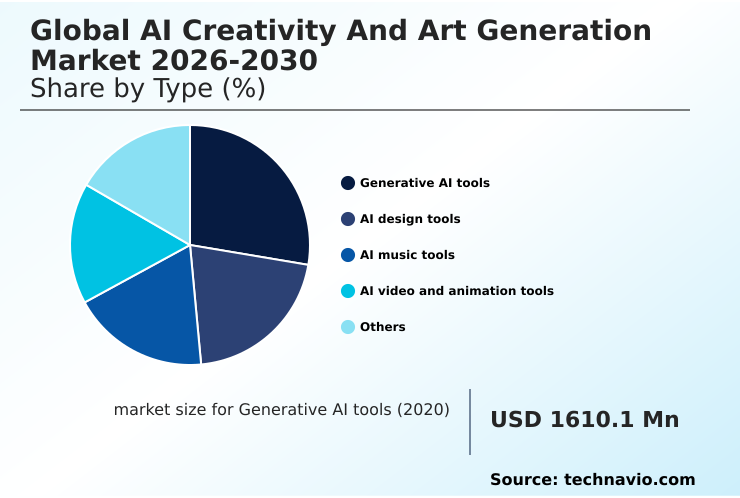
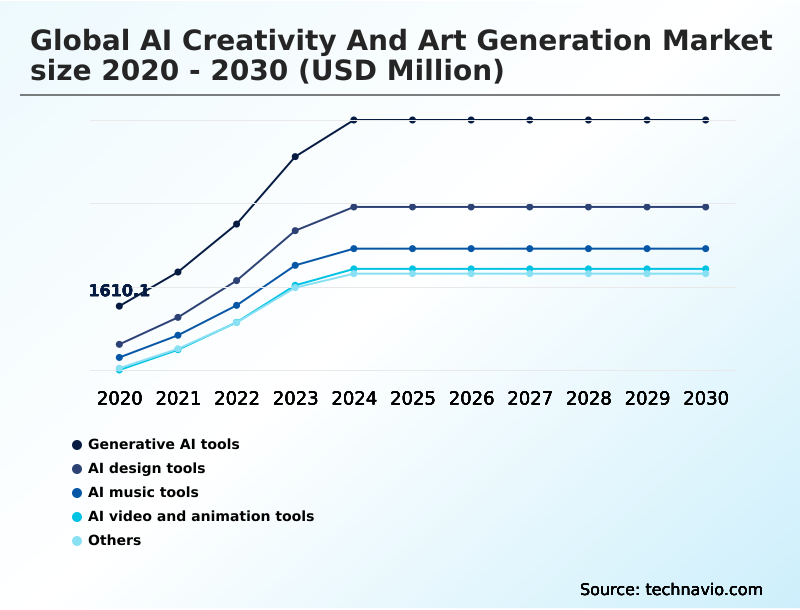
The Generative AI tools segment was valued at USD 3.53 billion in 2024 and showed a gradual increase during the forecast period.
Regional Analysis
North America is estimated to contribute 37% to the growth of the global market during the forecast period.Technavio’s analysts have elaborately explained the regional trends and drivers that shape the market during the forecast period.
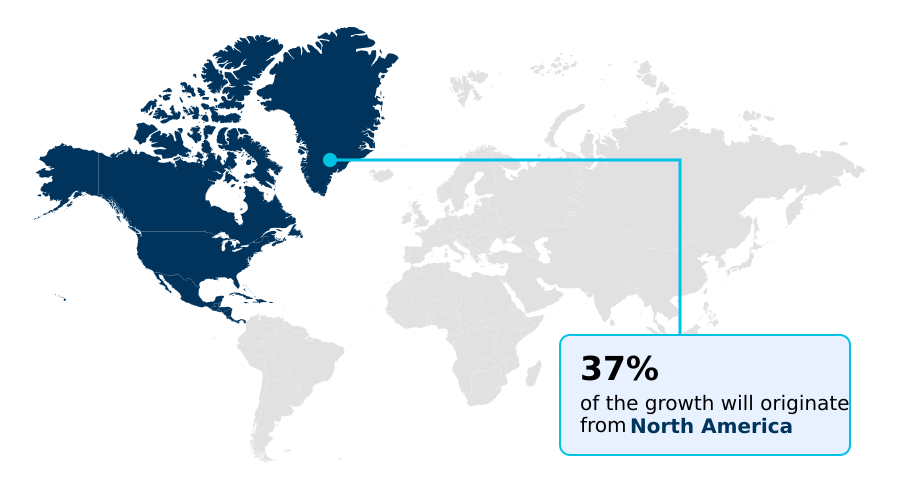
See How AI Creativity And Art Generation Market Demand is Rising in North America Get Free Sample
The geographic landscape is diverse, with North America leading in commercializing procedural content generation through generative adversarial networks (GANs), reducing asset creation costs by over 40%.
APAC is pioneering AI avatar creation and digital human creation, leveraging advanced speech synthesis for its massive entertainment and social media markets. Europe's focus is on regulation and developing specialized virtual production tools for its high-end media sector.
Adoption of automated social media content is global, but regional nuances dictate style. For instance, some regions show a 2x preference for animated avatars over photorealistic ones.
Platforms offering AI-powered video editing and automated brand kits are seeing widespread adoption, while generative 3D modeling is a key focus in gaming hubs worldwide.
Market Dynamics
Our researchers analyzed the data with 2025 as the base year, along with the key drivers, trends, and challenges. A holistic analysis of drivers will help companies refine their marketing strategies to gain a competitive advantage.
- The evolution of the market is multifaceted, touching upon technology, business application, and ethics. The development of AI tools for cinematic video generation is democratizing filmmaking, allowing smaller studios to produce high-quality content previously exclusive to large-scale productions.
- Concurrently, enterprise platforms for scalable content creation are becoming essential for global brands, which now rely on generative AI for 3D model texturing in product design and AI-powered music generation for indie games to populate their marketing ecosystems. This shift has a significant impact of AI on creative job markets, forcing a re-evaluation of skills and roles.
- As corporations increase their reliance on these technologies, they are turning to AI avatar development for virtual influencers and using AI for hyper-personalized advertising visuals to gain a competitive edge.
- However, this adoption is tempered by the need to navigate the legal and ethical frameworks for AI art, a landscape where open source alternatives to commercial AI art are forcing conversations about data provenance and creator compensation.
- The use of AI voice cloning for content localization and AI tools for rapid storyboard creation further streamlines production workflows, making the creation process more efficient than ever before. This efficiency is also seen in pre-production, with generative design in architectural prototyping showing a significant reduction in project planning times compared to traditional methods.
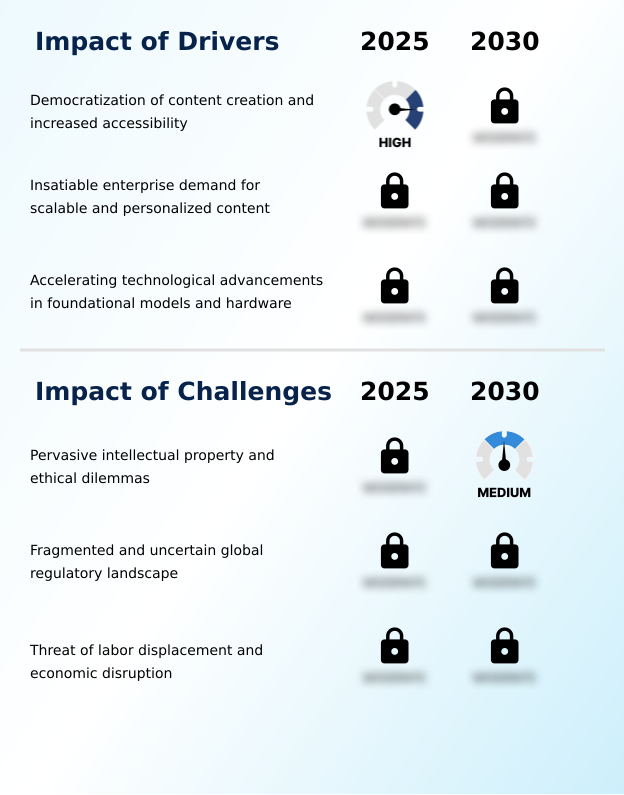
What are the key market drivers leading to the rise in the adoption of AI Creativity And Art Generation Industry?
- The democratization of content creation, coupled with increased accessibility, serves as a primary driver for market growth.
- Enterprise demand for scalable content is a major driver, met by advancements in generative design and neural architecture search. These technologies underpin enterprise-grade creative platforms, enabling automated concept art production and reducing creative cycle times by over 50%.
- The use of reinforcement learning fine-tunes model outputs for specific brand aesthetics. In audio, AI music composition and AI-powered audio editing, along with adaptive music generation, are revolutionizing digital cinematography and automated post-production workflows.
- Open-source generative models are accelerating innovation, while sovereign AI development ensures cultural relevance. Firms using AI-powered dubbing and localization tools have expanded their global reach, accessing new markets 75% faster than with traditional methods.
What are the market trends shaping the AI Creativity And Art Generation Industry?
- The market is witnessing a significant trend toward the ascendancy of multimodal and video generation, redefining creative possibilities beyond static media.
- The ascendancy of multimodal systems is a defining market trend, moving beyond static images to AI video generation and dynamic synthetic media. This shift facilitates AI-driven storytelling, enabling automated visual effects (VFX) and the creation of virtual influencers.
- Technologies for 3D scene generation and real-time 3D rendering are empowering AI-assisted world building, with developers reporting a 60% faster asset creation pipeline. Tasks like rotoscoping and frame interpolation, once manual, are now automated, reducing post-production time by up to 40%.
- As an AI co-pilot for creators, these platforms facilitate dynamic game asset creation, transforming entertainment and digital advertising by delivering more immersive and interactive content.
What challenges does the AI Creativity And Art Generation Industry face during its growth?
- Pervasive intellectual property issues and ethical dilemmas present a significant challenge to the industry's growth trajectory.
- Navigating intellectual property and ethical dilemmas is a primary market challenge. The use of data scraping for training, without reliance on ethically sourced training data, leads to legal risks and necessitates the use of commercially indemnified AI models.
- Algorithmic bias remains a concern, capable of producing skewed outputs in AI-driven text generation and automated illustration, with audits finding bias in up to 30% of unvetted models. The threat of deepfakes requires robust digital watermarking and automated content moderation solutions. Even functional tools for AI image enhancement or AI-powered logo generation on low-code/no-code design platforms are scrutinized.
- Failure to address these issues can undermine trust and slow adoption, impacting everything from AI-generated marketing copy to AI-assisted architectural visualization.
Exclusive Technavio Analysis on Customer Landscape
The ai creativity and art generation market forecasting report includes the adoption lifecycle of the market, covering from the innovator’s stage to the laggard’s stage. It focuses on adoption rates in different regions based on penetration. Furthermore, the ai creativity and art generation market report also includes key purchase criteria and drivers of price sensitivity to help companies evaluate and develop their market growth analysis strategies.
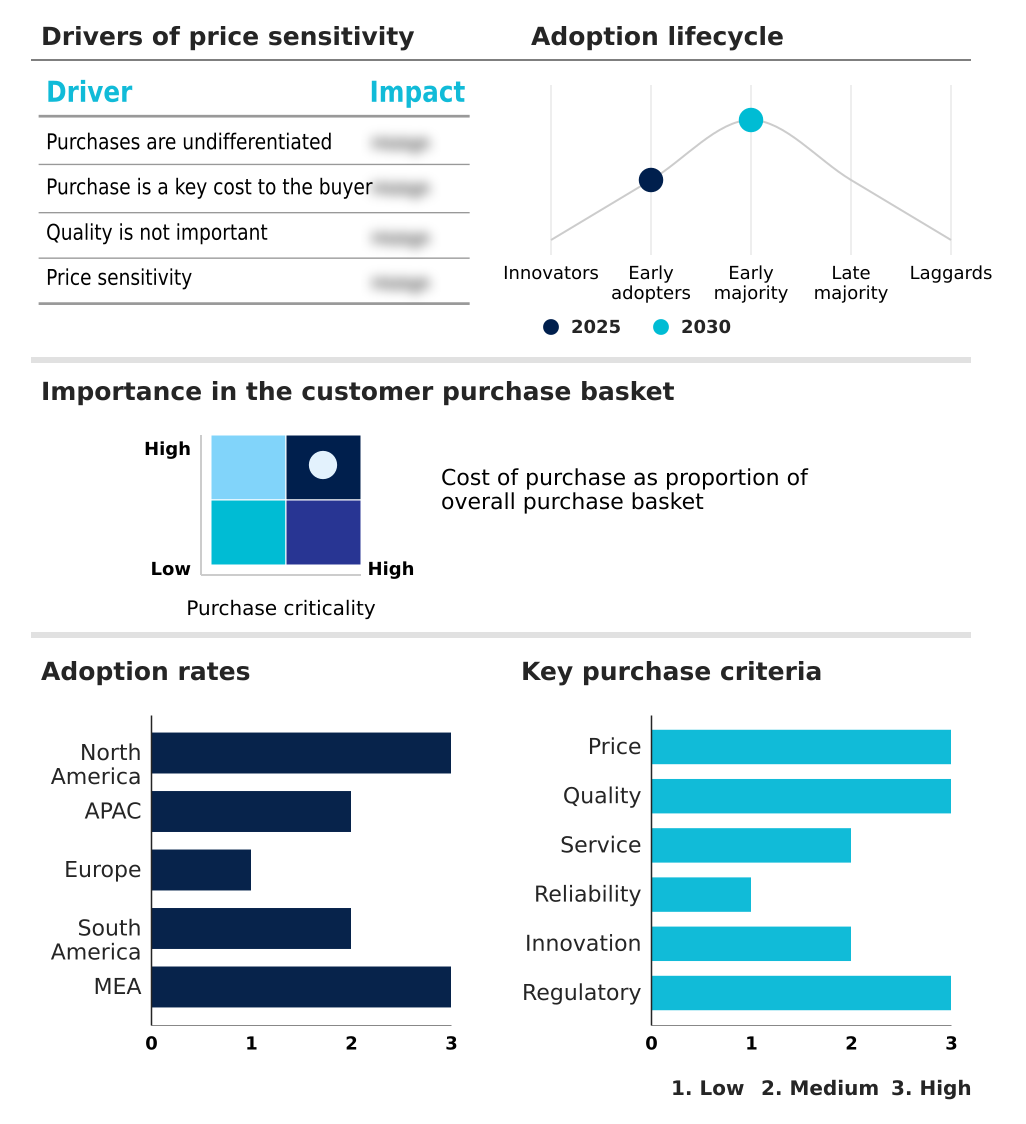
Customer Landscape of AI Creativity And Art Generation Industry
Competitive Landscape
Companies are implementing various strategies, such as strategic alliances, ai creativity and art generation market forecast, partnerships, mergers and acquisitions, geographical expansion, and product/service launches, to enhance their presence in the industry.
Adobe Inc. - Delivers AI creativity and art generation tools enabling users to produce novel visual content and multimedia assets from generative models.
The industry research and growth report includes detailed analyses of the competitive landscape of the market and information about key companies, including:
- Adobe Inc.
- Aiva Technologies SARL
- Canva Pty Ltd.
- Descript
- Designs.AI
- Eleven Labs Inc.
- Ideogram AI
- Jasper AI Inc.
- Looka Inc.
- Luma AI
- Midjourney Inc.
- Morphogen
- NVIDIA Corp.
- OpenAI
- Pika
- Runway AI Inc.
- SOUNDRAW Inc.
- Stability AI
- Synthesia Ltd.
- Writesonic Inc.
Qualitative and quantitative analysis of companies has been conducted to help clients understand the wider business environment as well as the strengths and weaknesses of key industry players. Data is qualitatively analyzed to categorize companies as pure play, category-focused, industry-focused, and diversified; it is quantitatively analyzed to categorize companies as dominant, leading, strong, tentative, and weak.
Recent Development and News in Ai creativity and art generation market
- In March, 2025, Adobe Inc. rolled out an enhanced Firefly Video model, offering full commercial indemnification and high-resolution generative capabilities for producing cinematic-quality assets from text descriptions.
- In April, 2025, Baidu Inc. announced a major update to its Ernie ViLG platform, introducing a specialized module for high-fidelity traditional ink painting and cultural heritage digitization.
- In June, 2025, Mistral AI released its first dedicated multimodal creative foundational model, optimized for European fashion and design houses to generate high-end marketing visuals adhering to local copyright laws.
- In August, 2025, Globant unveiled a specialized generative design studio in Buenos Aires to help multinational brands create culturally nuanced synthetic media for the Latin American market, reducing campaign production times.
Dive into Technavio’s robust research methodology, blending expert interviews, extensive data synthesis, and validated models for unparalleled AI Creativity And Art Generation Market insights. See full methodology.
| Market Scope | |
|---|---|
| Page number | 318 |
| Base year | 2025 |
| Historic period | 2020-2024 |
| Forecast period | 2026-2030 |
| Growth momentum & CAGR | Accelerate at a CAGR of 12.3% |
| Market growth 2026-2030 | USD 10666.8 million |
| Market structure | Fragmented |
| YoY growth 2025-2026(%) | 10.9% |
| Key countries | US, Canada, Mexico, China, Japan, India, South Korea, Australia, Indonesia, Germany, UK, France, Italy, Spain, The Netherlands, Brazil, Argentina, Chile, Saudi Arabia, UAE, South Africa, Israel and Turkey |
| Competitive landscape | Leading Companies, Market Positioning of Companies, Competitive Strategies, and Industry Risks |
Research Analyst Overview
- The market's trajectory is defined by a sophisticated evolution from novelty to indispensable professional utility, driven by advancements in diffusion models and transformer architectures. Initial applications in AI-driven text generation and automated illustration have matured into complex systems for AI video generation and AI music composition, powered by neural architecture search and reinforcement learning.
- This progression enables high-fidelity digital cinematography and concept art production. A critical inflection point is the bifurcation toward indemnified enterprise platforms, a trend directly influencing boardroom decisions on risk mitigation and compliance. Companies are now prioritizing solutions that leverage ethically sourced data to avoid legal liabilities associated with data scraping and deepfakes.
- This strategic shift is evident as organizations adopting commercially indemnified synthetic media platforms report a near-zero rate of copyright infringement claims. This focus on security and legal clarity is now as crucial as the underlying technology, which includes everything from AI-powered logo generation and speech synthesis to complex 3D scene generation and AI avatar creation.
What are the Key Data Covered in this AI Creativity And Art Generation Market Research and Growth Report?
-
What is the expected growth of the AI Creativity And Art Generation Market between 2026 and 2030?
-
USD 10.67 billion, at a CAGR of 12.3%
-
-
What segmentation does the market report cover?
-
The report is segmented by Type (Generative AI tools, AI design tools, AI music tools, AI video and animation tools, and Others), Application (Visual arts, Music and sound design, Film and animation, Digital media and advertising, and Others), End-user (Entertainment and media, Marketing and advertising, Gaming and VR, Education and training, and Others) and Geography (North America, APAC, Europe, South America, Middle East and Africa)
-
-
Which regions are analyzed in the report?
-
North America, APAC, Europe, South America and Middle East and Africa
-
-
What are the key growth drivers and market challenges?
-
Democratization of content creation and increased accessibility, Pervasive intellectual property and ethical dilemmas
-
-
Who are the major players in the AI Creativity And Art Generation Market?
-
Adobe Inc., Aiva Technologies SARL, Canva Pty Ltd., Descript, Designs.AI, Eleven Labs Inc., Ideogram AI, Jasper AI Inc., Looka Inc., Luma AI, Midjourney Inc., Morphogen, NVIDIA Corp., OpenAI, Pika, Runway AI Inc., SOUNDRAW Inc., Stability AI, Synthesia Ltd. and Writesonic Inc.
-
Market Research Insights
- Market dynamics are shaped by the dual pressures of creative demand and operational efficiency. Enterprise-grade creative platforms are central to this, providing tools that facilitate creative workflow automation and enable content personalization at scale.
- Organizations adopting these systems report significant performance gains; for example, leveraging AI-powered user interface (UI) design has been shown to reduce development cycles by up to 30%. Furthermore, the use of AI for product prototyping allows for rapid iteration, cutting concept-to-mockup times by more than half.
- In marketing, automated A/B testing visuals deliver campaign performance insights at a speed unattainable through manual processes, contributing to higher conversion rates. This tech-driven acceleration allows companies to meet the insatiable demand for fresh, hyper-personalized marketing content while optimizing resource allocation.
We can help! Our analysts can customize this ai creativity and art generation market research report to meet your requirements.
 RIA -
RIA - 
