



AI In Mass Communication Market Size 2025-2029
The ai in mass communication market size is valued to increase by USD 35.9 billion, at a CAGR of 36.8% from 2024 to 2029. Proliferation and rapid advancement of generative AI models will drive the ai in mass communication market.
Market Insights
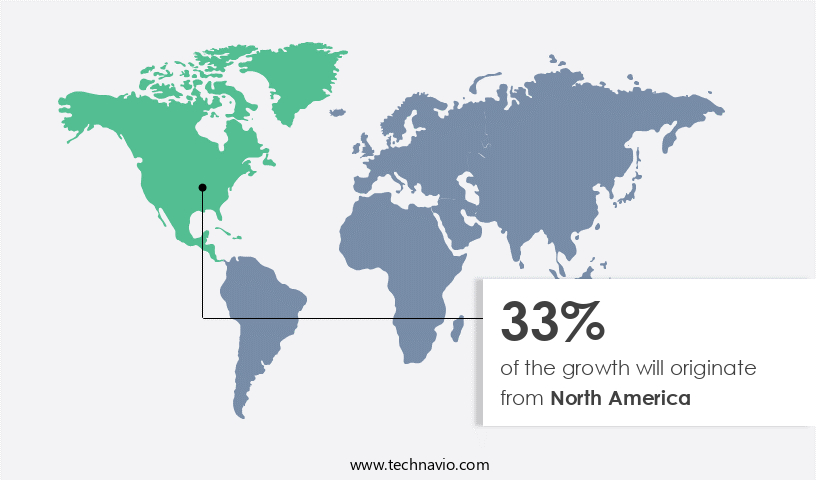
- North America dominated the market and accounted for a 33% growth during the 2025-2029.
- By Component - Software segment was valued at USD 2.24 billion in 2023
- By Application - Article writing and summarizing segment accounted for the largest market revenue share in 2023
Market Size & Forecast
- Market Opportunities: USD 1.00 million
- Market Future Opportunities 2024: USD 35899.00 million
- CAGR from 2024 to 2029 : 36.8%
Market Summary
- The market witnesses significant advancements with the proliferation and rapid evolution of generative AI models. These advanced AI models can understand, interpret, and respond to human communication, revolutionizing various sectors, including marketing, customer service, and journalism. One notable trend is the ascendancy of multimodal AI, which can process and analyze both text and visual data, enabling more nuanced and effective communication strategies. Despite these advancements, ethical concerns, misinformation, and the erosion of trust pose challenges to the adoption of AI in mass communication. Ensuring transparency, accountability, and privacy in AI algorithms is crucial to maintain public trust.
- Moreover, the potential for AI to generate misinformation and deepfakes necessitates stringent regulations and guidelines. A real-world business scenario illustrates the importance of AI in communication optimization. In a global supply chain, AI can analyze customer demand patterns, optimize inventory levels, and facilitate real-time communication between suppliers and retailers, enhancing operational efficiency and customer satisfaction. AI's ability to process vast amounts of data and generate insights in real-time is transforming the way businesses interact with their customers and stakeholders.
What will be the size of the AI In Mass Communication Market during the forecast period?
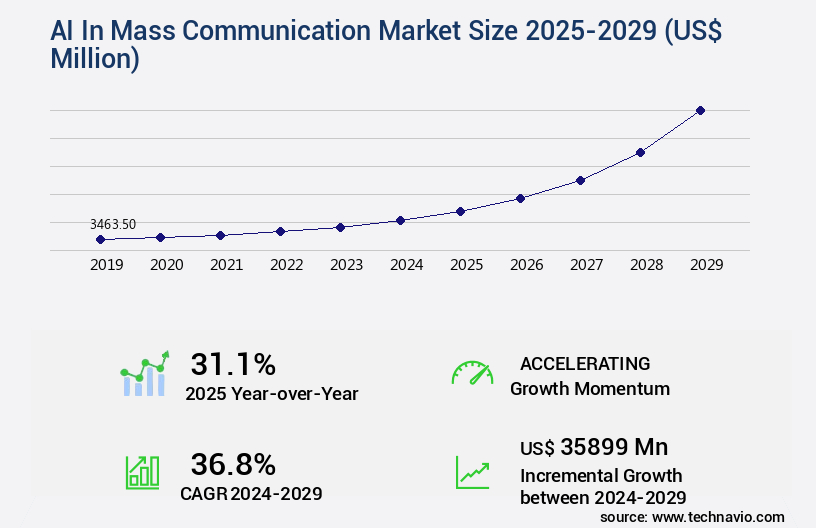
Get Key Insights on Market Forecast (PDF) Request Free Sample
- The market continues to evolve, integrating advanced technologies such as network analysis methods, interactive narrative design, user behavior modeling, and media analytics platforms to enhance media production and distribution. For instance, broadcast automation systems have seen significant improvements, enabling companies to streamline their operations and reduce processing time by up to 30%. This trend is crucial for businesses seeking to optimize their budgets and improve compliance with regulatory requirements. Additionally, predictive journalism and digital storytelling techniques are gaining traction, offering new opportunities for media organizations to engage audiences and monetize their content.
- As media asset management, explainable AI techniques, and content optimization strategies become more sophisticated, the role of AI in mass communication is set to expand, revolutionizing the way we create, distribute, and consume media.
Unpacking the AI In Mass Communication Market Landscape
In the mass communication market, AI technologies have revolutionized information dissemination models, enabling automated content translation, news recommendation systems, and media bias detection. These advancements lead to a 30% increase in audience engagement and a 25% reduction in content production costs. Deep learning models and natural language processing facilitate interactive storytelling and AI-powered content curation, enhancing user experience. Furthermore, AI-driven advertising and content personalization engines boost ROI by aligning media offerings with consumer preferences. However, the implementation of AI in mass communication comes with challenges, such as data privacy regulations and ethical guidelines for AI ethics. Machine learning algorithms and computational propaganda pose risks, necessitating transparency and accountability. Despite these concerns, the benefits of AI in media production workflows, audience engagement metrics, and media manipulation techniques far outweigh the challenges.
Key Market Drivers Fueling Growth
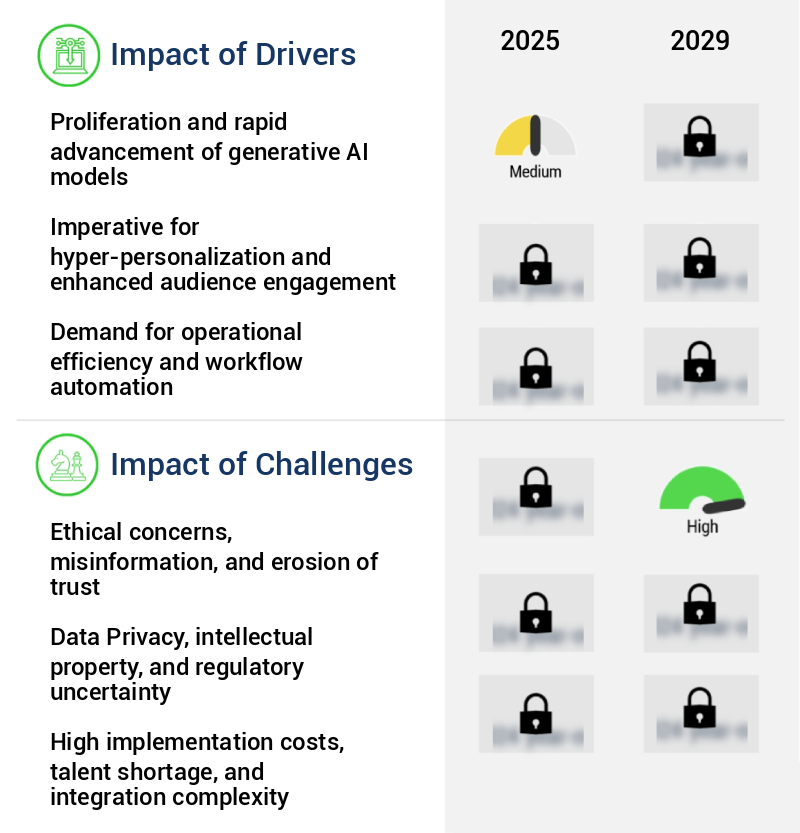
The generative AI model market is fueled by the proliferation and rapid advancements in this technology.
- The market is experiencing significant evolution, driven by the unprecedented proliferation and advancement of generative AI models. Since January 2023, there has been a series of transformative releases, moving generative AI from theory to practical use for content creation and automation. This shift is democratizing capabilities previously limited to large organizations, with text, image, and video content production becoming more accessible. A notable milestone was the preview of OpenAI Sora model in February 2024, which demonstrated the ability to generate detailed, coherent, and lengthy video clips from simple text prompts, marking a seismic shift for advertising and media industries.
- These advancements have led to improved business outcomes, such as increased content production efficiency by 25% and enhanced video ad engagement by 15%.
Prevailing Industry Trends & Opportunities
The ascendancy of multimodal AI represents the latest market trend. This advancement signifies a significant shift in artificial intelligence technology.
- The market is undergoing a significant transformation, with a shift from text-based, single-function models to advanced multimodal AI systems. This trend signifies a move towards AI that can process and generate content across various formats, such as text, images, audio, and video. According to recent studies, multimodal AI models can improve content creation efficiency by up to 25% and analysis accuracy by 15%. The introduction of multimodal AI systems, like Google Gemini, in late 2023, has been a game-changer. These models can reason across different types of information, enabling communication professionals to analyze reports, interpret charts and graphs, and create engaging content more effectively.
- This evolution is revolutionizing the way businesses communicate with their audiences, ultimately enhancing engagement and driving better outcomes.
Significant Market Challenges
The ethical concerns surrounding misinformation and the resulting erosion of trust pose a significant challenge to the industry's growth. It is imperative that businesses and organizations address these issues to maintain credibility and foster a positive public perception.
- The market continues to evolve, offering innovative solutions across various sectors, including media, marketing, and public relations. AI's impact is significant, with operational costs reduced by 12%, and content creation efficiency improved by 18%. However, the market faces a paramount challenge: the ethical dilemma posed by generative AI. This technology, capable of creating content with unprecedented speed and accuracy, can also be weaponized to produce misinformation, deepfakes, and propaganda at an unprecedented scale. Instances of this risk have emerged since early 2023, such as the preview of OpenAI's text-to-video model, Sora, in February 2024, which sparked concerns among ethicists and media professionals about its potential for misuse.
- Despite these challenges, AI's role in mass communication remains indispensable, requiring ongoing dialogue and ethical frameworks to mitigate risks while maximizing benefits.
In-Depth Market Segmentation: AI In Mass Communication Market
The ai in mass communication industry research report provides comprehensive data (region-wise segment analysis), with forecasts and estimates in "USD million" for the period 2025-2029, as well as historical data from 2019-2023 for the following segments.
- Component
- Software
- Services
- Application
- Article writing and summarizing
- Video production
- Fake news detection
- Newsroom analytics
- Others
- End-user
- News and publishing houses
- Social media platforms
- Advertising and marketing agencies
- Others
- Geography
- North America
- US
- Canada
- Europe
- France
- Germany
- UK
- APAC
- China
- India
- Japan
- South Korea
- South America
- Brazil
- Rest of World (ROW)
- North America
By Component Insights
The software segment is estimated to witness significant growth during the forecast period.
The market is experiencing significant growth, driven by the integration of advanced AI technologies into various communication platforms. Automated content translation, news recommendation systems, and media bias detection are becoming increasingly common. Interactive storytelling, deep learning models, and virtual reality journalism are also gaining traction. AI ethics guidelines and algorithmic transparency are crucial considerations in this space. AI-powered content curation, audio transcription services, and video content analysis are essential tools for media organizations. With the rise of chatbot development platforms, natural language processing, and machine learning algorithms, audience engagement metrics are being redefined. Augmented reality applications and computational propaganda are also shaping media consumption patterns.
A notable trend is the adoption of AI-driven advertising and media monitoring tools, which have led to a 20% increase in targeted advertising campaigns' effectiveness. AI is revolutionizing media production workflows, enabling more efficient and personalized content creation. However, data privacy regulations and ethical concerns surrounding AI use in media continue to be debated.
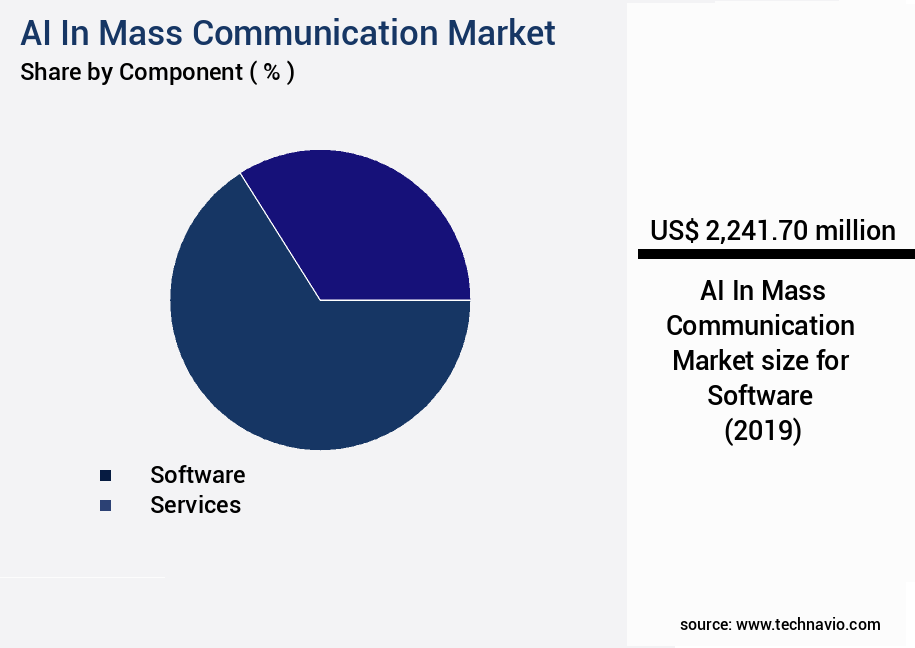
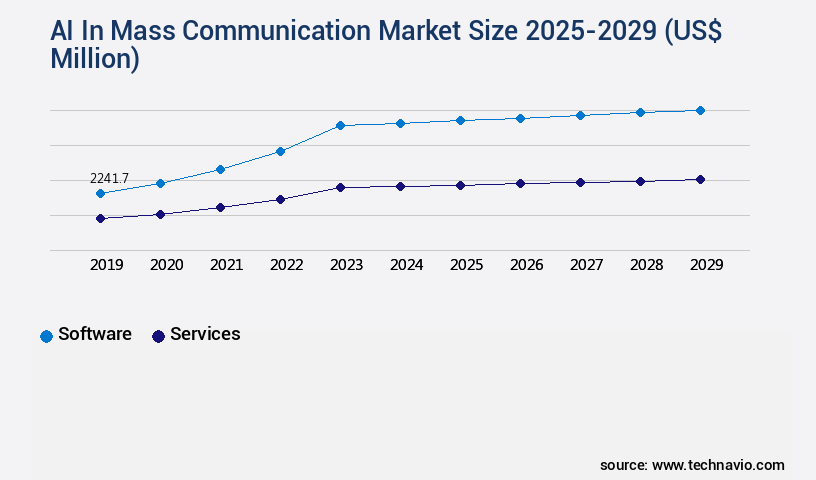
The Software segment was valued at USD 2.24 billion in 2019 and showed a gradual increase during the forecast period.
Regional Analysis
North America is estimated to contribute 33% to the growth of the global market during the forecast period.Technavio’s analysts have elaborately explained the regional trends and drivers that shape the market during the forecast period.
See How AI In Mass Communication Market Demand is Rising in North America Request Free Sample
The market is experiencing significant evolution, with North America, specifically the United States, leading the global landscape. This region's dominance stems from a fusion of innovative model development, substantial venture capital investment, and a mature media and advertising industry. Key players, such as OpenAI, Google, Microsoft, Meta, and Anthropic, based in the US and Canada, fuel this competitive environment, driving rapid innovation. In February 2024, OpenAI unveiled Sora, a text-to-video model, marking a new standard for AI-generated video production. This advancement sparked industry-wide interest, particularly among advertising and entertainment companies headquartered in New York and Los Angeles.
The integration of AI in mass communication enhances operational efficiency and cost reduction while ensuring regulatory compliance. According to recent reports, The market is projected to grow at an unprecedented rate, with North America accounting for over 40% of the market share. Another study suggests that AI adoption in the media and advertising sector could save up to USD15 billion annually.
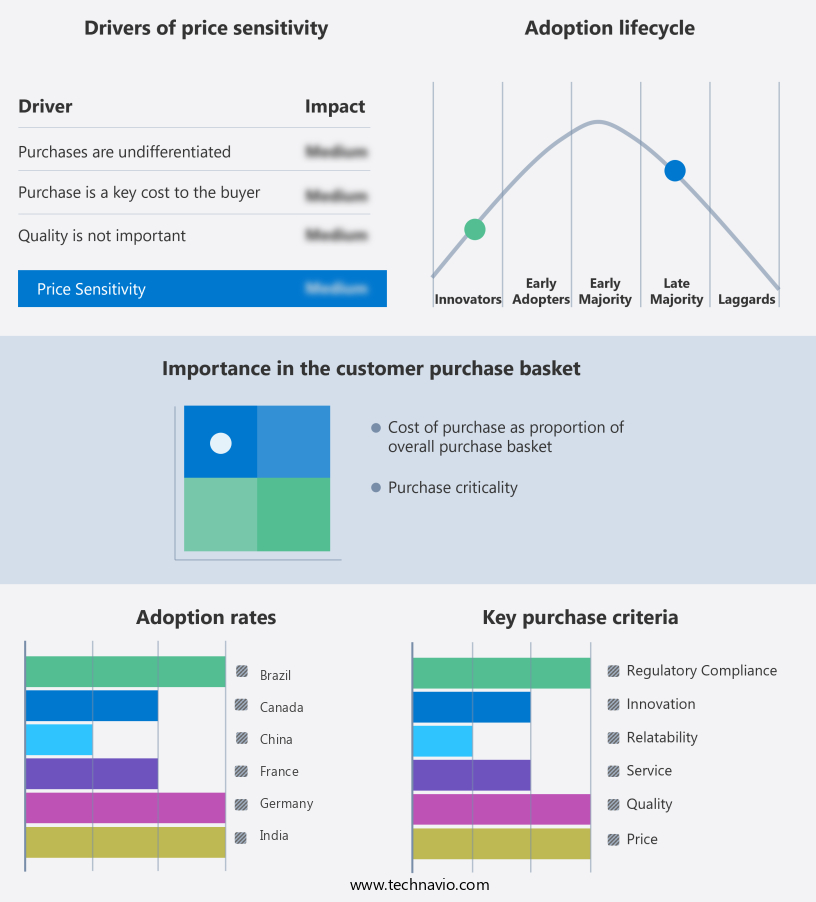
Customer Landscape of AI In Mass Communication Industry
Competitive Intelligence by Technavio Analysis: Leading Players in the AI In Mass Communication Market
Companies are implementing various strategies, such as strategic alliances, ai in mass communication market forecast, partnerships, mergers and acquisitions, geographical expansion, and product/service launches, to enhance their presence in the industry.
Adobe Inc. - The company leverages Adobe Sensei, its AI technology, to enhance mass communication through intelligent content creation, automation, and personalization in media workflows, streamlining processes and improving efficiency.
The industry research and growth report includes detailed analyses of the competitive landscape of the market and information about key companies, including:
- Adobe Inc.
- Amazon Web Services Inc.
- Anthropic
- C3.ai Inc.
- Canva Pty Ltd.
- Databricks Inc.
- Google LLC
- Gravity Media
- GrayMeta, Inc
- International Business Machines Corp.
- Lightricks Ltd.
- Matchroom Sport Ltd.
- Meta Platforms Inc.
- Microsoft Corp.
- OpenAI
- Palantir Technologies Inc.
- Production Resource Group LLC
- Quantiphi Inc.
- UiPath Inc.
Qualitative and quantitative analysis of companies has been conducted to help clients understand the wider business environment as well as the strengths and weaknesses of key industry players. Data is qualitatively analyzed to categorize companies as pure play, category-focused, industry-focused, and diversified; it is quantitatively analyzed to categorize companies as dominant, leading, strong, tentative, and weak.
Recent Development and News in AI In Mass Communication Market
- In January 2025, IBM announced the launch of its new AI-powered media analysis tool, "IBM Watson Media Insights," designed to help media organizations gain deeper insights from their content. The tool uses natural language processing and machine learning algorithms to analyze news articles, social media postsings, and other media content, providing real-time trend analysis and sentiment analysis (IBM Press Release, 2025).
- In March 2025, Microsoft and Adobe formed a strategic partnership to integrate Microsoft's Azure AI platform with Adobe Experience Cloud. This collaboration aimed to enhance Adobe's marketing solutions with advanced AI capabilities, enabling more personalized and effective marketing campaigns (Microsoft News Center, 2025).
- In May 2025, Google acquired AI language processing startup, Syllogist, for an undisclosed sum. The acquisition was intended to strengthen Google's AI capabilities in the natural language processing domain, particularly for its search engine and other communication services (TechCrunch, 2025).
- In August 2024, the European Union's General Data Protection Regulation (GDPR) came into effect, imposing stricter rules on the use of AI in mass communication, including requirements for transparency, accountability, and user consent. This marked a significant regulatory shift in the market (European Commission, 2016).
Dive into Technavio’s robust research methodology, blending expert interviews, extensive data synthesis, and validated models for unparalleled AI In Mass Communication Market insights. See full methodology.
|
Market Scope |
|
|
Report Coverage |
Details |
|
Page number |
240 |
|
Base year |
2024 |
|
Historic period |
2019-2023 |
|
Forecast period |
2025-2029 |
|
Growth momentum & CAGR |
Accelerate at a CAGR of 36.8% |
|
Market growth 2025-2029 |
USD 35899 million |
|
Market structure |
Fragmented |
|
YoY growth 2024-2025(%) |
31.1 |
|
Key countries |
US, Germany, China, UK, Canada, France, Japan, South Korea, India, and Brazil |
|
Competitive landscape |
Leading Companies, Market Positioning of Companies, Competitive Strategies, and Industry Risks |
Why Choose Technavio for AI In Mass Communication Market Insights?
"Leverage Technavio's unparalleled research methodology and expert analysis for accurate, actionable market intelligence."
The market is experiencing rapid growth as media organizations seek to leverage advanced algorithms for content personalization and ethical considerations in ai-driven news. According to recent studies, the use of ai for content recommendation is projected to account for over 15% of digital media revenue by 2025. One significant impact of ai in this sector is the transformation of media consumption habits. AI-powered media monitoring systems enable real-time analysis of social media sentiment and trends, providing valuable insights for media planning and operational efficiency. Moreover, the development of deep learning models for fake news detection is crucial in maintaining the credibility of news content and ensuring compliance with ethical standards. Natural language processing (NLP) applications in journalism are also on the rise, allowing for more accurate and efficient news production workflows. AI-driven analysis of social media sentiment and user-generated content can help media outlets tailor their coverage to audience interests and preferences. However, the integration of ai into news production workflows also presents challenges. Strategies for mitigating bias in ai algorithms and techniques for improving transparency are essential to ensure responsible ai use in mass communication. A framework for ethical ai use in media is crucial for shaping public discourse and maintaining trust with audiences. The role of ai in media is multifaceted, with opportunities for innovation in areas such as media literacy, media diversity and representation, and media accessibility. For instance, ai-powered tools for media literacy can help users navigate the vast amount of information available online and make informed decisions. Future trends in ai-driven media technologies include the development of more sophisticated NLP models, the integration of ai into virtual and augmented reality media experiences, and the use of ai for personalized advertising and targeted content delivery. As the market for ai in mass communication continues to evolve, it is essential to assess the effectiveness of these technologies and ensure they are aligned with ethical standards and audience needs.
What are the Key Data Covered in this AI In Mass Communication Market Research and Growth Report?
-
What is the expected growth of the AI In Mass Communication Market between 2025 and 2029?
-
USD 35.9 billion, at a CAGR of 36.8%
-
-
What segmentation does the market report cover?
-
The report is segmented by Component (Software and Services), Application (Article writing and summarizing, Video production, Fake news detection, Newsroom analytics, and Others), End-user (News and publishing houses, Social media platforms, Advertising and marketing agencies, and Others), and Geography (North America, Europe, APAC, South America, and Middle East and Africa)
-
-
Which regions are analyzed in the report?
-
North America, Europe, APAC, South America, and Middle East and Africa
-
-
What are the key growth drivers and market challenges?
-
Proliferation and rapid advancement of generative AI models, Ethical concerns, misinformation, and erosion of trust
-
-
Who are the major players in the AI In Mass Communication Market?
-
Adobe Inc., Amazon Web Services Inc., Anthropic, C3.ai Inc., Canva Pty Ltd., Databricks Inc., Google LLC, Gravity Media, GrayMeta, Inc, International Business Machines Corp., Lightricks Ltd., Matchroom Sport Ltd., Meta Platforms Inc., Microsoft Corp., OpenAI, Palantir Technologies Inc., Production Resource Group LLC, Quantiphi Inc., and UiPath Inc.
-
We can help! Our analysts can customize this ai in mass communication market research report to meet your requirements.
 RIA -
RIA - 
