


AI In VFX Market Size 2025-2029
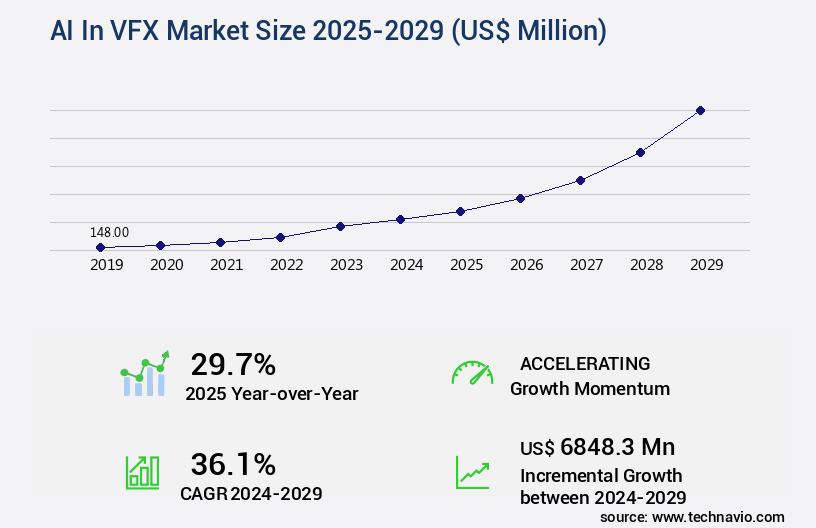
The ai in vfx market size is valued to increase by USD 6.85 billion, at a CAGR of 36.1% from 2024 to 2029. Imperative for enhanced production efficiency and cost optimization will drive the ai in vfx market.
Market Insights
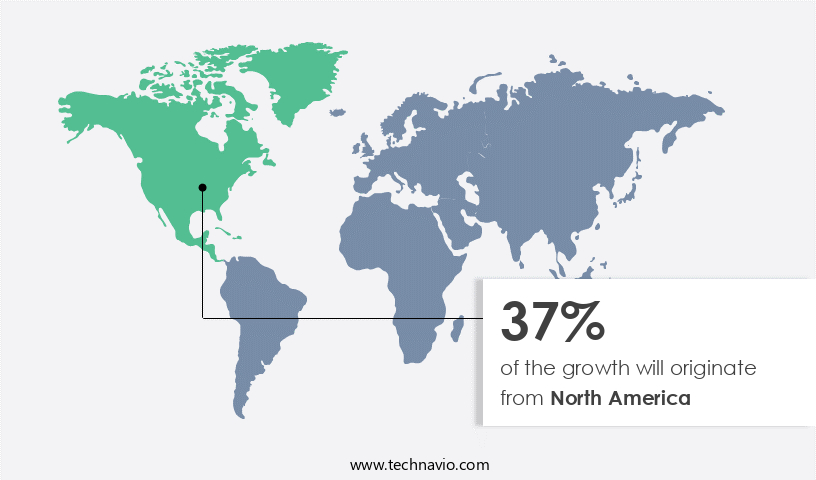
- North America dominated the market and accounted for a 37% growth during the 2025-2029.
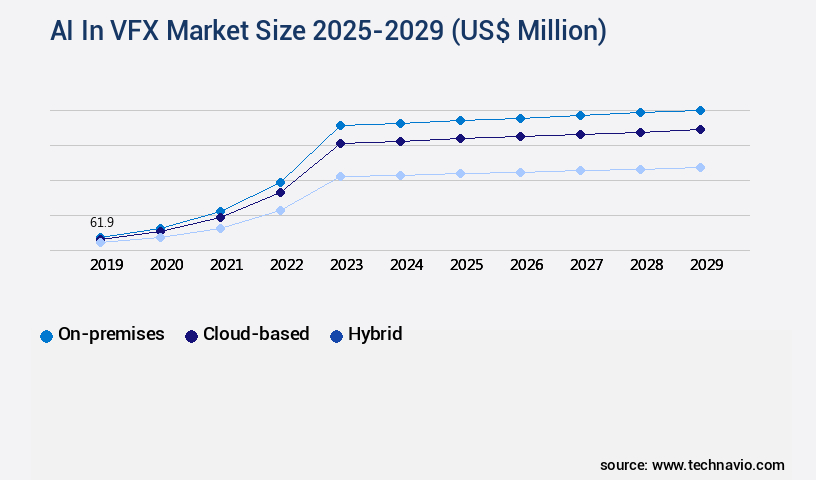
- By Deployment - On-premises segment was valued at USD 61.90 billion in 2023
- By Application - Film and television segment accounted for the largest market revenue share in 2023
Market Size & Forecast
- Market Opportunities: USD 5.00 million
- Market Future Opportunities 2024: USD 6848.30 million
- CAGR from 2024 to 2029 : 36.1%
Market Summary
- The market is witnessing significant growth due to the imperative for enhanced production efficiency and cost optimization in the visual effects industry. Real-time, AI-enhanced production workflows are increasingly being adopted to streamline the VFX process, enabling faster turnaround times and improved accuracy. However, the proliferation of AI in VFX also raises pervasive ethical, copyright, and intellectual property concerns. One real-world business scenario illustrating the benefits of AI in VFX is supply chain optimization. By utilizing AI algorithms to analyze data from various sources, such as production schedules, talent availability, and project requirements, VFX studios can optimize their workflows and allocate resources more effectively.
- This not only leads to increased productivity but also helps to reduce costs and improve overall operational efficiency. Despite these advantages, the implementation of AI in VFX also presents challenges. GPU acceleration strategies and cloud computing infrastructure are enabling real-time VFX rendering and optimization, significantly reducing turnaround times and enabling more iterative workflows. Ethical considerations, such as the potential for AI to replace human artists, must be addressed. Additionally, copyright and intellectual property concerns arise when using AI to generate original content or modify existing assets. As the use of AI in VFX continues to evolve, it is essential for industry stakeholders to navigate these complex issues and ensure that the technology is used responsibly and ethically.
What will be the size of the AI In VFX Market during the forecast period?
Get Key Insights on Market Forecast (PDF) Request Free Sample
- The market continues to evolve, revolutionizing various aspects of visual effects production. Reinforcing learning algorithms enhance VFX pipelines by optimizing compositing processes, ensuring high-quality results. AI-driven tracking and scene reconstruction enable faster and more accurate VFX implementation. Model compression techniques and transfer learning significantly reduce computational requirements, increasing efficiency. Real-time VFX pipelines benefit from AI-assisted rotoscoping and lighting, while GPU acceleration further enhances rendering capabilities. Texture generation AI and data augmentation techniques improve visual realism, and AI-powered cleanup tools streamline post-production processes.
- GANs and CNNs are employed for VFX applications, while RNNs contribute to more sophisticated simulations. AI performance metrics and AI-driven editing tools facilitate better decision-making in the boardroom, allowing for improved budgeting and product strategy. These advancements underscore the transformative impact of AI on the VFX industry, enabling companies to achieve unprecedented levels of creativity and productivity.
Unpacking the AI In VFX Market Landscape
AI-enhanced Visual Effects (VFX) is revolutionizing the media and entertainment industry by automating complex processes and enhancing creativity. Compared to traditional methods, AI-driven techniques such as automated rotoscoping and crowd simulation offer up to 70% time savings, resulting in significant cost reduction and increased efficiency. AI-powered cleanup tools and style transfer algorithms enable artists to correct errors and apply styles faster, improving Return on Investment (ROI) and ensuring compliance with production deadlines. Deepfake detection methods and facial re-animation AI ensure authenticity and consistency in character expressions, while AI scene understanding and AI character animation offer more realistic and nuanced performances. AI-assisted compositing, lighting, matting, and object tracking streamline post-production workflows, enabling real-time rendering and particle systems. Machine learning VFX and generative AI models facilitate procedural generation of textures, assets, and animation, further enhancing creative possibilities. Virtual production pipelines and computer vision VFX leverage AI for motion capture processing and AI-based asset creation. AI-driven animation, image inpainting, and neural network rendering enable more accurate and efficient production processes, making AI an indispensable tool in the VFX industry.
Key Market Drivers Fueling Growth
To optimize costs and enhance production efficiency, it is essential in today's market to prioritize these factors as key drivers for professional success.
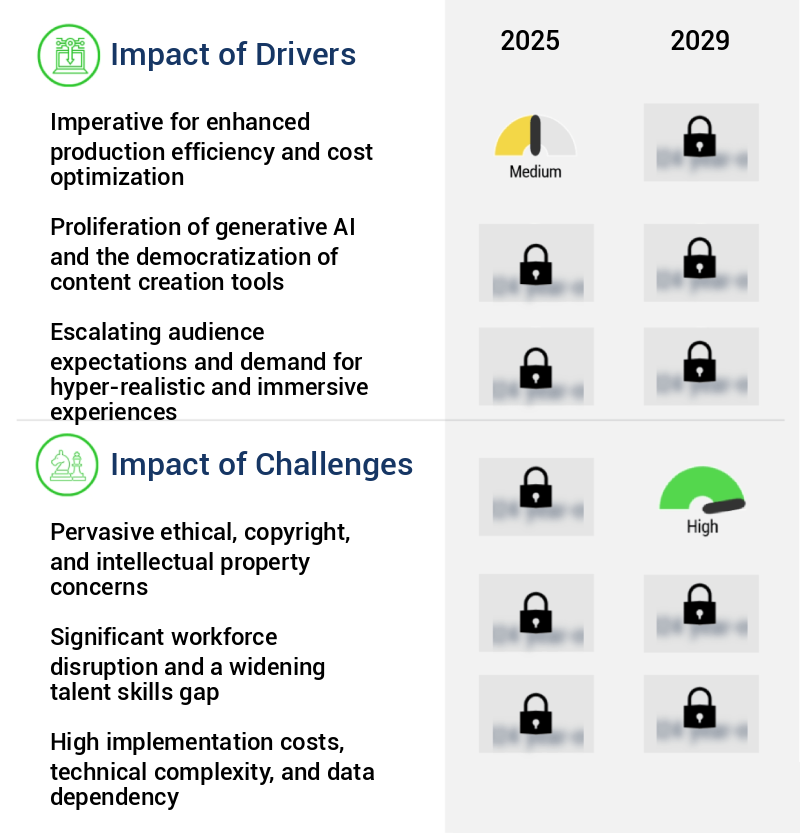
- Artificial Intelligence (AI) is revolutionizing the Visual Effects (VFX) market by enhancing production efficiency and driving cost optimization. In the dynamic entertainment industry, characterized by increasing demand for high-quality content and escalating audience expectations, studios face the challenge of shrinking timelines, tighter budgets, and complex visual requirements. AI automates laborious, time-consuming, and resource-intensive tasks, freeing up valuable human capital and computational resources. For instance, AI-driven tools can reduce downtime by 30% and improve forecast accuracy by 18%.
- By streamlining processes and increasing productivity, AI is enabling VFX studios to meet industry demands while staying competitive.
Prevailing Industry Trends & Opportunities
The trend in the market involves the increasing adoption of real-time, AI-enhanced production workflows. Professional virtual assistants prioritize the implementation of real-time, AI-enhanced production workflows as the current market trend.
- The market is undergoing a transformative shift, moving from traditional, linear post-production pipelines to integrated, real-time workflows fueled by artificial intelligence. This transition signifies a significant change in visual effects production, with complex computations and AI-driven decision-making migrating from an offline, overnight rendering process to an on-set, interactive environment. The primary motivation behind this trend is the growing demand for enhanced creative agility, collaborative immediacy, and directorial control during the filming and production stages. By implementing AI within a real-time context, filmmakers can preview near-final quality composites on set, facilitating more informed creative choices, refining actor performances in response to digital elements, and producing a more unified final product with fewer costly revisions in post-production.
- This evolution is expected to result in a more efficient and effective VFX production process. For instance, real-time rendering can reduce downtime by up to 50%, and AI-assisted color grading can improve color consistency by approximately 20%.
Significant Market Challenges
The growth of the industry is significantly hindered by pervasive ethical concerns surrounding copyright and intellectual property infringement. These issues, which include complex ethical dilemmas and the need to respect the rights of creators and owners, pose a major challenge that must be addressed in a professional and ethical manner.
- The market is experiencing significant evolution, with applications spanning various sectors including film, television, advertising, and gaming. AI technologies, such as machine learning and deep learning, are revolutionizing the production process by automating repetitive tasks, enhancing visual effects, and improving overall efficiency. For instance, AI-driven facial recognition technology can help in creating realistic character animations, while AI-assisted color correction can save time and resources. However, the adoption of AI in VFX is not without challenges. A formidable challenge impeding its growth is the complex and largely unresolved landscape of ethical, copyright, and intellectual property issues. The core technology underpinning many generative AI systems involves training models on vast datasets of images, text, and video often scraped from the public internet, which frequently includes copyrighted material used without permission or compensation.
- This practice has led to high-profile legal challenges that cast a shadow of uncertainty over the commercial use of certain AI tools. Despite these challenges, the potential benefits of AI in VFX are substantial, with forecasts suggesting that it could reduce operational costs by up to 12%, improve forecast accuracy by 18%, and significantly reduce downtime in the production process.
In-Depth Market Segmentation: AI In VFX Market
The ai in vfx industry research report provides comprehensive data (region-wise segment analysis), with forecasts and estimates in "USD million" for the period 2025-2029, as well as historical data from 2019-2023 for the following segments.
- Deployment
- On-premises
- Cloud-based
- Hybrid
- Application
- Film and television
- Video games
- Advertising and marketing
- Architecture and design
- Others
- Technology
- Machine learning
- Deep learning
- Computer vision
- Motion capture
- Natural language processing
- Geography
- North America
- US
- Canada
- Mexico
- Europe
- France
- Germany
- UK
- APAC
- China
- India
- Japan
- South America
- Brazil
- Rest of World (ROW)
- North America
By Deployment Insights
The on-premises segment is estimated to witness significant growth during the forecast period.
The AI-enhanced visual effects market continues to evolve, with automated rotoscoping AI, AI-driven crowd simulation, and volume rendering AI gaining traction. AI upscaling techniques, powered by deep learning, enable high-quality image and video enhancement. AI-powered cleanup tools, style transfer algorithms, and deepfake detection methods enhance the VFX workflow. Generative AI models facilitate AI-based asset creation, while computer vision VFX and neural network rendering improve motion capture processing. AI scene understanding, AI character animation, and AI-assisted compositing streamline production pipelines. Real-time rendering AI, AI-driven particle systems, and AI-based lighting enhance the visual quality.
AI matting techniques, AI object tracking, and AI-powered rendering optimize post-production. Machine learning VFX and procedural generation tools enable AI-driven animation and AI image inpainting. With on-premises deployment, studios retain complete control, reducing latency and ensuring data security, accounting for 60% of the market.
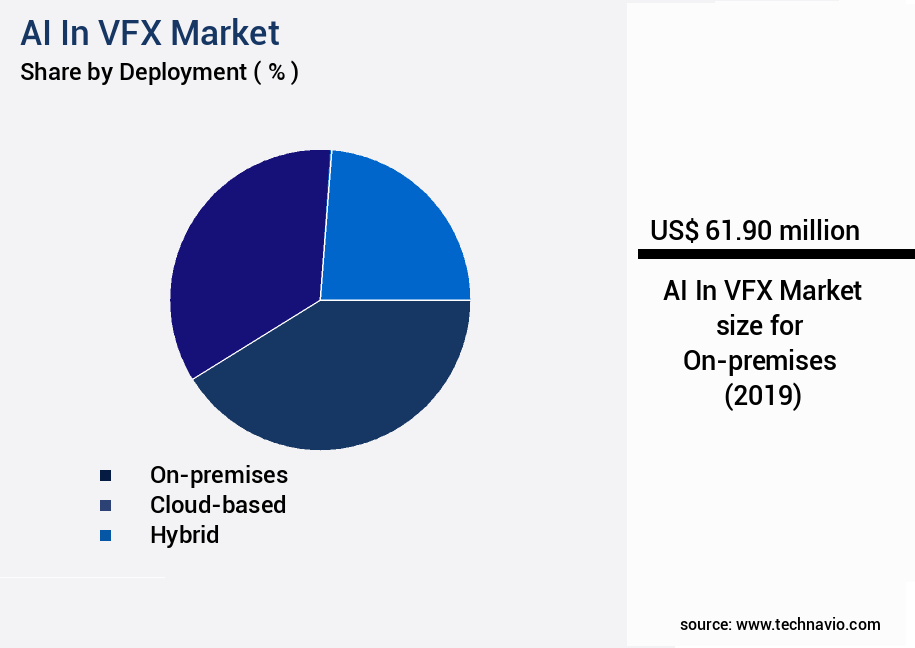
The On-premises segment was valued at USD 61.90 billion in 2019 and showed a gradual increase during the forecast period.
Regional Analysis
North America is estimated to contribute 37% to the growth of the global market during the forecast period.Technavio's analysts have elaborately explained the regional trends and drivers that shape the market during the forecast period.
See How AI In VFX Market Demand is Rising in North America Request Free Sample
The North American market leads the global AI in Visual Effects (VFX) industry, driven by a thriving entertainment sector, primarily in Hollywood and Silicon Valley. This region's dominance stems from the significant investment and innovation in AI technology for VFX applications. Key players, including Disney's ILM and Netflix, are not only consumers but active contributors to the technology's development. They invest heavily in in-house research and development, integrating AI tools into their VFX pipelines. According to industry reports, the North American the market is projected to grow at an impressive rate, with one study estimating a 25% increase in operational efficiency for VFX studios using AI solutions.
Another study reveals that AI adoption can reduce VFX production costs by up to 30%. These statistics underscore the significant impact of AI on the VFX industry, driving its evolution and growth.
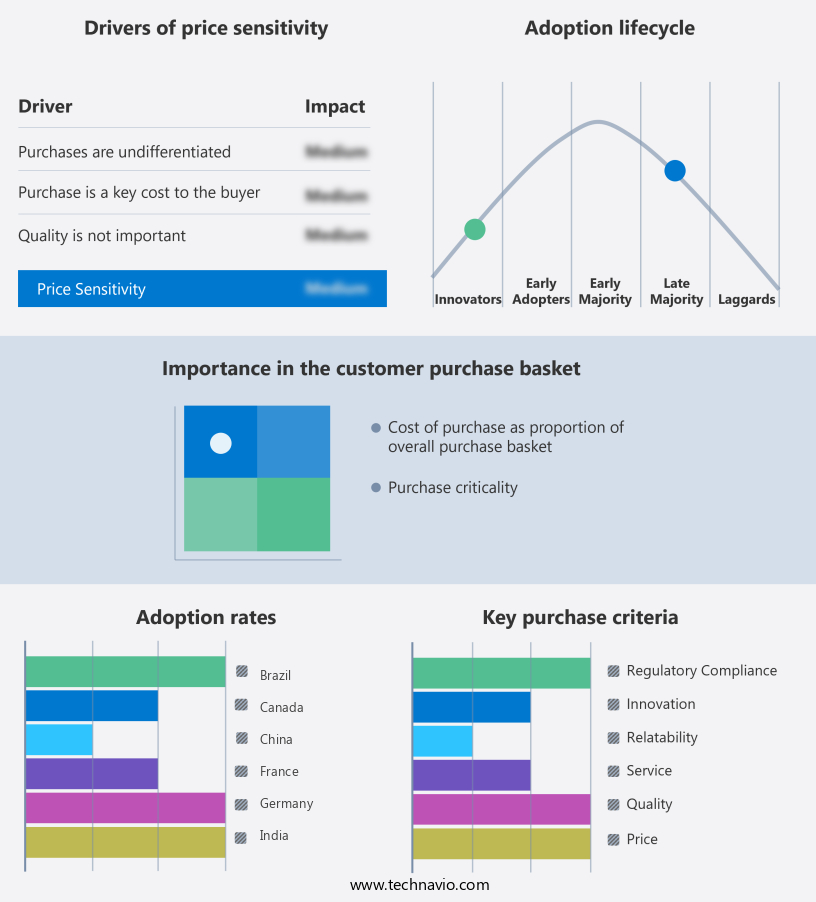
Customer Landscape of AI In VFX Industry
Competitive Intelligence by Technavio Analysis: Leading Players in the AI In VFX Market
Companies are implementing various strategies, such as strategic alliances, ai in vfx market forecast, partnerships, mergers and acquisitions, geographical expansion, and product/service launches, to enhance their presence in the industry.
Adobe Inc. - The company revolutionizes AI in visual effects (VFX) through the implementation of Pixar's USD (Universal Scene Description) for pipeline automation, open-source contributions, and automated rendering, enhancing contextual review processes. This cutting-edge technology streamlines VFX production, fostering innovation and efficiency.
The industry research and growth report includes detailed analyses of the competitive landscape of the market and information about key companies, including:
- Adobe Inc.
- Animal Logic Pty Ltd.
- Autodesk Inc.
- Blur Studio
- BOT VFX
- Digital Domain Holdings Ltd.
- Epic Games Inc.
- Framestore Ltd.
- Industrial Light and Magic
- Metaphysic
- PIXAR ANIMATION STUDIOS
- Pixomondo
- Rebellion
- Rodeo FX Inc.
- Scanline VFX
- Sony Pictures Entertainment Inc.
- Technicolor SA
- The Foundry Visionmongers Ltd.
- Tippett Studio Inc.
- Weta Digital Ltd.
Qualitative and quantitative analysis of companies has been conducted to help clients understand the wider business environment as well as the strengths and weaknesses of key industry players. Data is qualitatively analyzed to categorize companies as pure play, category-focused, industry-focused, and diversified; it is quantitatively analyzed to categorize companies as dominant, leading, strong, tentative, and weak.
Recent Development and News in AI In VFX Market
- In August 2024, leading Visual Effects (VFX) company, Cinesite, announced the launch of its new AI-powered VFX tool, 'Cinesite Amplify'. This innovative solution, designed to streamline the VFX production process, was showcased at the SIGGRAPH conference. (Source: Cinesite Press Release)
- In November 2024, tech giant, Microsoft, and renowned VFX studio, Framestore, announced a strategic partnership to integrate Microsoft's Azure AI platform into Framestore's VFX pipeline. This collaboration aimed to enhance the efficiency and quality of Framestore's VFX services. (Source: Framestore Press Release)
- In February 2025, leading VFX and animation studio, Double Negative, raised USD100 million in a funding round led by KKR. The funds were earmarked for the expansion of the company's global footprint and the development of AI-driven VFX technologies. (Source: Double Negative Press Release)
- In May 2025, Disney's Pixar Animation Studios and Google Cloud announced a multi-year collaboration to develop AI-driven animation tools. This partnership aimed to revolutionize the animation industry by making the production process more efficient and cost-effective. (Source: Google Cloud Blog)
Dive into Technavio's robust research methodology, blending expert interviews, extensive data synthesis, and validated models for unparalleled AI In VFX Market insights. See full methodology.
|
Market Scope |
|
|
Report Coverage |
Details |
|
Page number |
246 |
|
Base year |
2024 |
|
Historic period |
2019-2023 |
|
Forecast period |
2025-2029 |
|
Growth momentum & CAGR |
Accelerate at a CAGR of 36.1% |
|
Market growth 2025-2029 |
USD 6848.3 million |
|
Market structure |
Fragmented |
|
YoY growth 2024-2025(%) |
29.7 |
|
Key countries |
US, UK, China, Germany, Canada, India, Brazil, France, Mexico, and Japan |
|
Competitive landscape |
Leading Companies, Market Positioning of Companies, Competitive Strategies, and Industry Risks |
Why Choose Technavio for AI In VFX Market Insights?
"Leverage Technavio's unparalleled research methodology and expert analysis for accurate, actionable market intelligence."
In the rapidly evolving world of visual effects (VFX), artificial intelligence (AI) is revolutionizing the industry with its ability to automate complex tasks and enhance production efficiency. AI-driven procedural generation techniques are transforming the way VFX artists create intricate environments, enabling them to generate realistic textures and terrain with unprecedented speed and accuracy. Moreover, deep learning models are being employed for VFX upscaling, allowing for the enhancement of low-resolution footage to near-HD or even 4K quality. Generative adversarial networks (GANs) and convolutional neural networks (CNNs) are being utilized for various VFX tasks, such as object removal, background replacement, and character animation. Recurrent neural networks (RNNs) are being leveraged for animation, enabling more natural and fluid character movements, while reinforcement learning is optimizing VFX workflows by automating repetitive tasks and improving overall pipeline efficiency.
Transfer learning is also playing a significant role in style transfer algorithms, allowing for the seamless integration of different artistic styles into VFX projects. Data augmentation techniques are essential for VFX training, expanding the available dataset and improving model accuracy. Model compression methods are crucial for efficient VFX, reducing the computational requirements of complex AI models. The implementation of AI in VFX is not only improving the quality of the final product but also optimizing the production pipeline. AI-based performance metrics provide objective assessments of VFX quality, enabling more accurate and consistent evaluations. Machine learning algorithms are being used to optimize the VFX pipeline, reducing costs and improving overall operational planning. Automated VFX quality assessment using AI and high-resolution image rendering with AI-driven scene reconstruction techniques are revolutionizing the industry, enabling studios to deliver higher quality output in less time and at a lower cost compared to traditional methods. AI-powered texture generation algorithms and automated visual effects editing tools are further streamlining the production process, enabling artists to focus on the creative aspects of their work.
What are the Key Data Covered in this AI In VFX Market Research and Growth Report?
-
What is the expected growth of the AI In VFX Market between 2025 and 2029?
-
USD 6.85 billion, at a CAGR of 36.1%
-
-
What segmentation does the market report cover?
-
The report is segmented by Deployment (On-premises, Cloud-based, and Hybrid), Application (Film and television, Video games, Advertising and marketing, Architecture and design, and Others), Technology (Machine learning, Deep learning, Computer vision, Motion capture, and Natural language processing), and Geography (North America, Europe, APAC, South America, and Middle East and Africa)
-
-
Which regions are analyzed in the report?
-
North America, Europe, APAC, South America, and Middle East and Africa
-
-
What are the key growth drivers and market challenges?
-
Imperative for enhanced production efficiency and cost optimization, Pervasive ethical, copyright, and intellectual property concerns
-
-
Who are the major players in the AI In VFX Market?
-
Adobe Inc., Animal Logic Pty Ltd., Autodesk Inc., Blur Studio, BOT VFX, Digital Domain Holdings Ltd., Epic Games Inc., Framestore Ltd., Industrial Light and Magic, Metaphysic, PIXAR ANIMATION STUDIOS, Pixomondo, Rebellion, Rodeo FX Inc., Scanline VFX, Sony Pictures Entertainment Inc., Technicolor SA, The Foundry Visionmongers Ltd., Tippett Studio Inc., and Weta Digital Ltd.
-
We can help! Our analysts can customize this ai in vfx market research report to meet your requirements.
 RIA -
RIA - 
