


Ai Pet Health Wearables Market Size and Growth Forecast 2026-2030
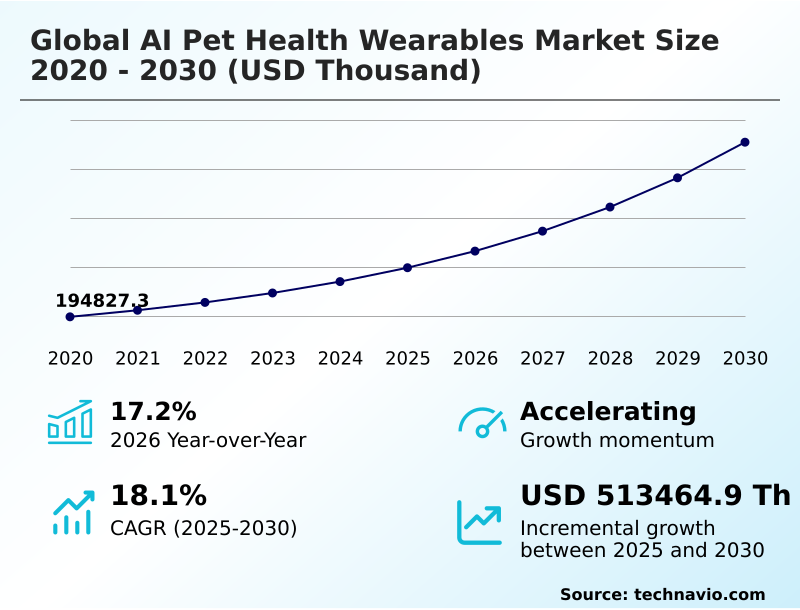
The Ai Pet Health Wearables Market size was valued at USD 395.70 million in 2025 growing at a CAGR of 18.1% during the forecast period 2026-2030.
North America accounts for 40.9% of incremental growth during the forecast period. The Smart collars segment by Product was valued at USD 188.78 million in 2024, while the Dogs segment holds the largest revenue share by End-user.
The market is projected to grow by from 2020 to 2030, with USD 513.46 million of the growth expected during the forecast period of 2025 to 2030.
Get Key Insights on Market Forecast (PDF) Request Free Sample
Ai Pet Health Wearables Market Overview
The AI pet health wearables market is defined by a shift toward proactive animal wellness, driven by advancements in sensor technology and predictive analytics. This sector's 17.2% year-over-year growth is supported by consumer demand for continuous physiological monitoring and real-time health alerts. Wearable ECG for canine arrhythmia detection and advanced sleep quality analysis are becoming standard, enabling early intervention. For instance, specialized veterinary clinics are now using data from devices offering continuous glucose monitoring for diabetic cats to remotely fine-tune insulin protocols, significantly improving patient outcomes and reducing the frequency of stressful clinical visits. This integration of biometric data into daily pet care is fundamentally changing veterinary medicine, allowing for more personalized and effective treatment plans. The market is moving toward a model where data-driven pet care, supported by sophisticated machine learning algorithms and robust biometric sensors, is the norm for responsible pet ownership.
Drivers, Trends, and Challenges in the Ai Pet Health Wearables Market
The evolution of the global AI pet health wearables market 2026-2030 is increasingly shaped by the deployment of highly specialized, data-intensive solutions. AI-powered pet health monitoring systems are becoming foundational to modern veterinary practice, moving beyond simple activity logging to sophisticated diagnostics.
For instance, specialty clinics now use wearable ECG for canine arrhythmia to monitor post-operative cardiac patients remotely, a process governed by stringent data integrity standards similar to those in human telehealth. This allows for proactive adjustments to care plans based on continuous biometric data streams.
The development of continuous glucose monitoring for diabetic cats provides another example of how targeted technologies address chronic conditions, reducing the need for frequent, stressful clinic visits by over 25% in some documented cases, which directly impacts operational planning for veterinary hospitals.
The integration of GPS virtual fencing for dogs further enhances safety, creating a comprehensive ecosystem where pet wellness is managed through a network of interconnected, AI-driven devices. This shift necessitates adherence to electronic component regulations like RoHS to ensure device safety and environmental compliance.
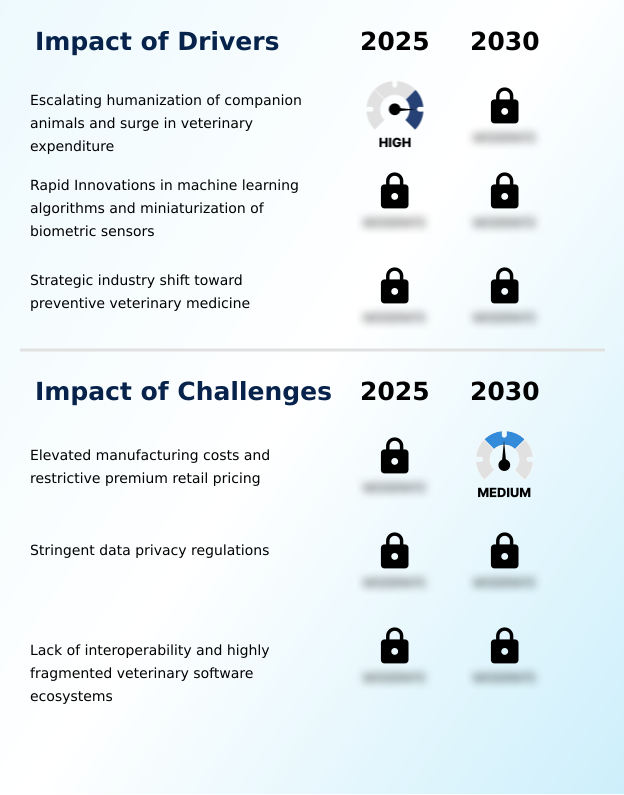
Primary Growth Driver: The escalating humanization of companion animals, coupled with a surge in veterinary expenditure, serves as a key driver for the market's growth.
The market's expansion, marked by a year-over-year growth of 17.2%, is primarily fueled by the escalating humanization of companion animals. Pet owners now seek sophisticated tools for continuous health monitoring, driving demand for devices that leverage predictive veterinary analytics.
This trend is amplified by rapid innovations in the miniaturization of sensors and the refinement of machine learning algorithms, which transform raw biometric data into actionable health insights.
A strategic industry shift toward preventive veterinary medicine further propels growth, positioning these wearables as indispensable medical tools rather than mere consumer gadgets.
The ability of these devices to provide objective, continuous biometric records circumvents an animal's instinct to mask illness, enabling early diagnosis and personalized medical interventions.
Emerging Market Trend: A key market trend is the integration of cross-species behavioral analytics, which expands monitoring capabilities beyond single-species data models to offer deeper, comparative insights.
A dominant trend is the shift from one-time hardware sales to subscription-based data ecosystems, where premium features like advanced historical data visualization and personalized nutritional recommendations are unlocked. This software-as-a-service model, which fosters continuous user engagement through gamification and community leaderboards, is expanding the value chain. Another key development is the interoperability and synergy with smart home IoT environments.
Smart collars are evolving into communicative nodes that can interact with automated pet doors, smart feeders, and even climate control systems, creating a connected domestic ecosystem that enhances both convenience and animal safety. This push toward holistic platforms, requiring adherence to communication protocols like Zigbee or Matter, is a primary objective for industry leaders.
The integration of cross-species behavioral analytics is also advancing, offering deeper insights into pet wellbeing.
Key Industry Challenge: Elevated manufacturing costs and restrictive premium retail pricing present a key challenge, limiting widespread consumer adoption and affecting overall industry growth.
A formidable challenge is the profound lack of interoperability and the existence of highly fragmented veterinary software ecosystems. The absence of a universal data standardization protocol hinders the seamless integration of wearable data into clinic management systems, creating workflow disruptions for veterinarians. This issue of isolated data silos severely limits the clinical efficacy of continuous biometric monitoring.
Furthermore, as devices collect vast amounts of precise biometric and geospatial data, stringent data privacy regulations like GDPR in Europe and CCPA in California present significant compliance hurdles. The high cost of sourcing medical-grade components and the resulting premium retail pricing also create a substantial barrier to widespread consumer adoption, particularly in middle-income households, thereby constraining mass-market expansion.
Explore Full Market Dynamics Analysis Request Free Sample
Ai Pet Health Wearables Market Segmentation
The ai pet health wearables industry research report provides comprehensive data including region-wise segment analysis, with forecasts and analysis for the period 2026-2030, as well as historical data from 2020-2024 for the following segments.
Product Segment Analysis
The smart collars segment is estimated to witness significant growth during the forecast period.
Smart collars represent the vanguard of the global AI pet health wearables market, driven by their all-in-one design that combines physiological monitoring with GPS tracking.
These devices leverage an array of biometric sensors and machine learning algorithms to provide continuous health insights. The rigid chassis is ideal for housing robust cellular antennas and larger batteries, supporting real-time location tracking and data transmission.
Procurement decisions are influenced by the device's ability to perform behavioral pattern analysis, such as identifying early signs of distress through gait analysis.
Representing a significant portion of the product segment, the adoption of smart collars is fueled by their effectiveness in chronic disease management and the growing demand for comprehensive pet wellness ecosystems and data-driven pet care.
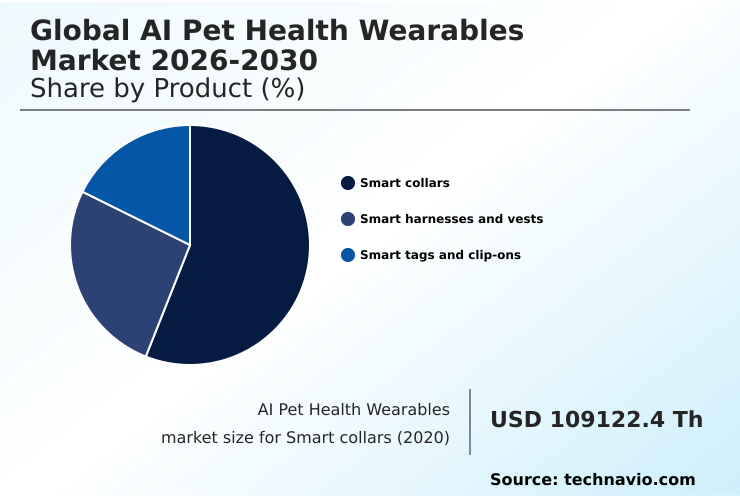
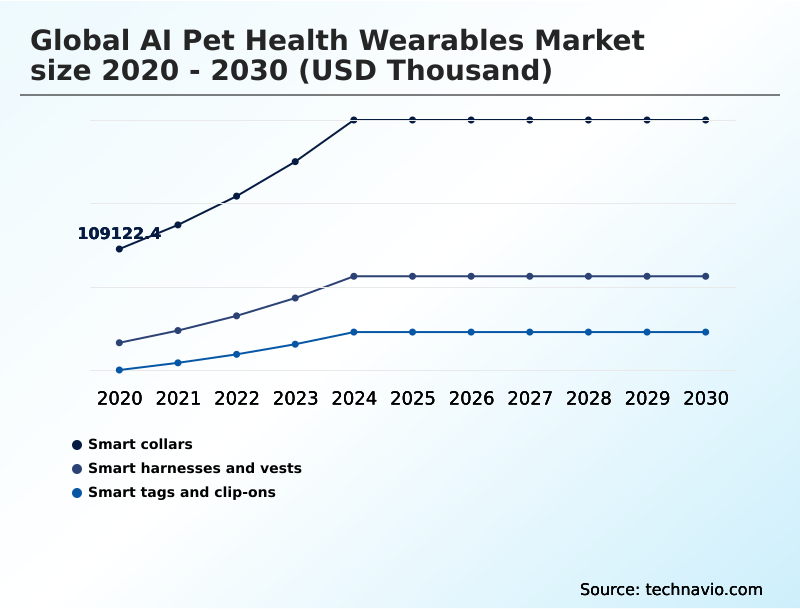
The Smart collars segment was valued at USD 188.78 million in 2024 and showed a gradual increase during the forecast period.
Ai Pet Health Wearables Market by Region: North America Leads with 40.9% Growth Share
North America is estimated to contribute 40.9% to the growth of the global market during the forecast period.
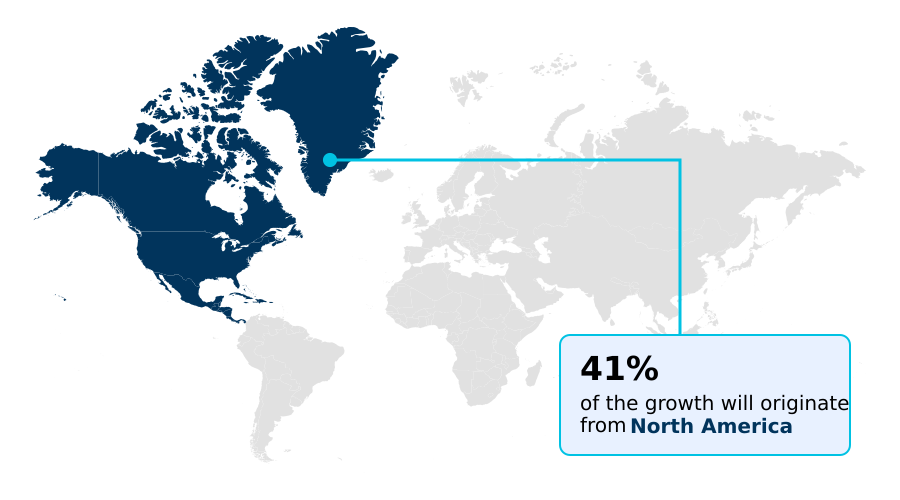
The global AI pet health wearables market's geographic landscape is led by North America, which accounts for over 40% of the market opportunity, driven by high disposable income and a strong pet humanization culture in the US and Canada.
In contrast, the APAC region is projected to be the fastest-growing market, with a CAGR of 18.8%, fueled by rapid urbanization and a burgeoning middle class in countries like China and India demanding advanced pet care solutions.
European markets such as Germany and the UK emphasize data privacy and device durability, with a focus on real-time location tracking for roaming pets.
This regional differentiation requires manufacturers to tailor not only their hardware, like offering robust GPS virtual fencing for dogs in suburban North America, but also their data policies to comply with regulations like GDPR.
Customer Landscape Analysis for the Ai Pet Health Wearables Market
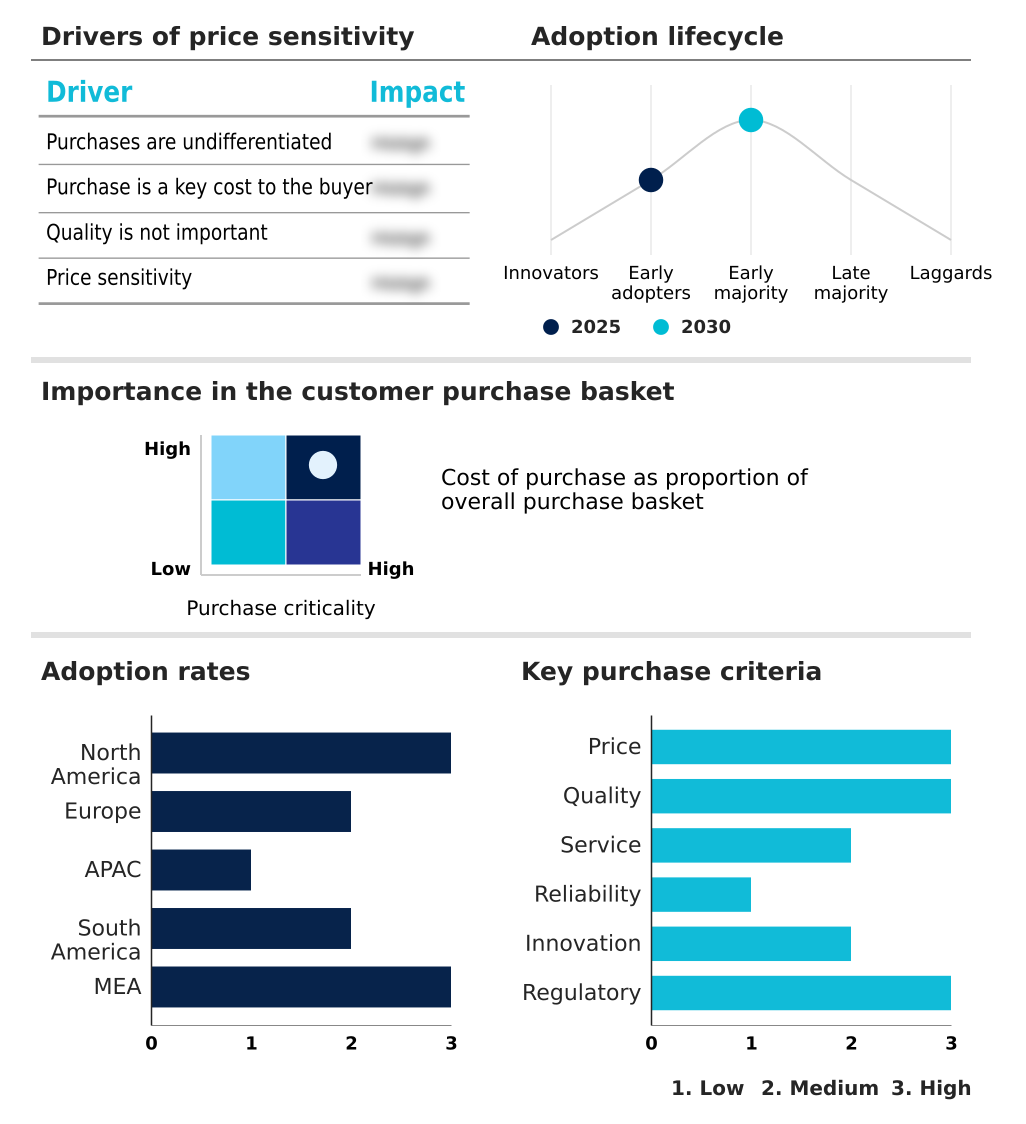
The ai pet health wearables market forecasting report includes the adoption lifecycle of the market, covering from the innovator’s stage to the laggard’s stage. It focuses on adoption rates in different regions based on penetration. Furthermore, the ai pet health wearables market report also includes key purchase criteria and drivers of price sensitivity to help companies evaluate and develop their market growth analysis strategies.
Competitive Landscape of the Ai Pet Health Wearables Market
Companies are implementing various strategies, such as strategic alliances, partnerships, mergers and acquisitions, geographical expansion, and product/service launches, to enhance their presence in the ai pet health wearables market industry.
Central Garden and Pet Co. - Offerings include AI-powered smart collars and harnesses featuring advanced biometric sensors, real-time GPS tracking, and predictive health analytics for comprehensive companion animal wellness management.
The industry research and growth report includes detailed analyses of the competitive landscape of the market and information about key companies, including:
- Central Garden and Pet Co.
- Dinbeat
- Embark Veterinary Inc
- FI
- FitBark Inc.
- Furbo
- Garmin Ltd.
- Halo Collar
- Invoxia
- Link My Pet
- Maven
- Petcube Inc.
- PETKIT Ltd.
- PetPace
- PitPat
- Radio Systems Corp
- SpotOn
- Sure Petcare
- Tractive GmbH
- Whisker
Qualitative and quantitative analysis of companies has been conducted to help clients understand the wider business environment as well as the strengths and weaknesses of key industry players. Data is qualitatively analyzed to categorize companies as pure play, category-focused, industry-focused, and diversified; it is quantitatively analyzed to categorize companies as dominant, leading, strong, tentative, and weak.
Recent Developments in the Ai Pet Health Wearables Market
- In March, 2025, SATELLAI entered the European market at Mobile World Congress by introducing the SATELLAI Tracker, a pet tracker offering continuous connectivity through satellite-powered technology.
- In March, 2025, Fi launched its Series 3 Plus smart collar, incorporating enhanced AI-based monitoring to track activity, sleep, barking, and scratching behaviors.
- In December, 2024, Fredun Pharmaceuticals, an India-based company, acquired Wagr.ai, an AI-powered pet care platform, to bolster its digital pet healthcare services with AI advisory tools.
- In September, 2024, Tractive, an Austrian pet tech company, completed its acquisition of the Whistle connected pet wearable brand from Mars Petcare, consolidating its position in the market.
Research Analyst Overview: Ai Pet Health Wearables Market
The AI pet health wearables market's advancement is predicated on the fusion of miniaturized hardware and sophisticated software. The accuracy of core components, such as optical heart rate monitors and other biometric sensors, is a primary vendor qualification criterion for veterinary professionals.
The integration of machine learning algorithms for predictive analytics allows these devices to offer early warnings for potential health issues, transforming reactive vet visits into proactive wellness management.
Boardroom decisions on R&D budgets are heavily influenced by the need to comply with radio-frequency regulations, such as FCC Part 15 in the US, which governs emissions from wireless devices and can impact product design and time-to-market.
Consequently, the focus is not just on physiological monitoring and GPS tracking but on creating a compliant, reliable ecosystem that provides actionable behavioral pattern analysis and supports a holistic approach to animal health.
Dive into Technavio’s robust research methodology, blending expert interviews, extensive data synthesis, and validated models for unparalleled Ai Pet Health Wearables Market insights. See full methodology.
| Market Scope | |
|---|---|
| Page number | 278 |
| Base year | 2025 |
| Historic period | 2020-2024 |
| Forecast period | 2026-2030 |
| Growth momentum & CAGR | Accelerate at a CAGR of 18.1% |
| Market growth 2026-2030 | USD 513464.9 thousand |
| Market structure | Fragmented |
| YoY growth 2025-2026(%) | 17.2% |
| Key countries | US, Canada, Mexico, Germany, UK, France, Italy, Spain, The Netherlands, China, Japan, India, South Korea, Australia, Indonesia, Brazil, Argentina, Colombia, Israel, South Africa, Saudi Arabia, UAE and Turkey |
| Competitive landscape | Leading Companies, Market Positioning of Companies, Competitive Strategies, and Industry Risks |
Ai Pet Health Wearables Market: Key Questions Answered in This Report
-
What is the expected growth of the Ai Pet Health Wearables Market between 2026 and 2030?
-
The Ai Pet Health Wearables Market is expected to grow by USD 513.46 million during 2026-2030, registering a CAGR of 18.1%. Year-over-year growth in 2026 is estimated at 17.2%%. This acceleration is shaped by escalating humanization of companion animals and surge in veterinary expenditure, which is intensifying demand across multiple end-use verticals covered in the report.
-
-
What segmentation does the market report cover?
-
The report is segmented by Product (Smart collars, Smart harnesses and vests, and Smart tags and clip-ons), End-user (Dogs, Cats, and Others), Distribution Channel (Online, and Offline) and Geography (North America, Europe, APAC, South America, Middle East and Africa). Among these, the Smart collars segment is estimated to witness significant growth during the forecast period, driven by rising adoption across key application areas. Each segment includes detailed qualitative and quantitative analysis, along with historical data from 2020-2024 and forecasts through 2030 with year-over-year growth rates.
-
-
Which regions are analyzed in the report?
-
The report covers North America, Europe, APAC, South America and Middle East and Africa. North America is estimated to contribute 40.9% to market growth during the forecast period. Country-level analysis includes US, Canada, Mexico, Germany, UK, France, Italy, Spain, The Netherlands, China, Japan, India, South Korea, Australia, Indonesia, Brazil, Argentina, Colombia, Israel, South Africa, Saudi Arabia, UAE and Turkey, with dedicated market size tables and year-over-year growth for each.
-
-
What are the key growth drivers and market challenges?
-
The primary driver is escalating humanization of companion animals and surge in veterinary expenditure, which is accelerating investment and industry demand. The main challenge is elevated manufacturing costs and restrictive premium retail pricing, creating operational barriers for key market participants. The report quantifies the impact of each driver and challenge across 2026 and 2030 with comparative analysis.
-
-
Who are the major players in the Ai Pet Health Wearables Market?
-
Key vendors include Central Garden and Pet Co., Dinbeat, Embark Veterinary Inc, FI, FitBark Inc., Furbo, Garmin Ltd., Halo Collar, Invoxia, Link My Pet, Maven, Petcube Inc., PETKIT Ltd., PetPace, PitPat, Radio Systems Corp, SpotOn, Sure Petcare, Tractive GmbH and Whisker. The report provides qualitative and quantitative analysis categorizing companies as dominant, leading, strong, tentative, and weak based on their market positioning. Company profiles include business segment analysis, SWOT assessment, key offerings, and recent strategic developments.
-
Ai Pet Health Wearables Market Research Insights
Market dynamics are increasingly shaped by the demand for sophisticated canine activity tracking and dedicated feline health monitors. The push for longer smart collar battery life is a critical factor influencing purchasing decisions, while vendors focus on refining predictive veterinary analytics.
As this technology becomes more integrated into veterinary practice, adherence to data handling standards like the VICH (International Cooperation on Harmonisation of Technical Requirements for Registration of Veterinary Medicinal Products) guidelines becomes paramount for ensuring data integrity and interoperability.
The dog segment remains larger than the cat segment, but the latter is growing faster, reflecting a focused effort to address the unique physiological and behavioral nuances of feline companions with specialized, lightweight hardware and tailored analytical models.
We can help! Our analysts can customize this ai pet health wearables market research report to meet your requirements.
 RIA -
RIA - 
