



Alpha Glucosidase Inhibitors Market Size 2024-2028
The alpha glucosidase inhibitors market size is forecast to increase by USD 476.8 million at a CAGR of 2.12% between 2023 and 2028.
- The market is experiencing significant growth due to the rising prevalence of impaired glucose tolerance and obesity. The increasing awareness of diabetes and initiatives to improve quality healthcare services are key drivers for market expansion. Additionally, the aging population is a significant factor, as older adults are more susceptible to diabetes. Home healthcare services may also provide these medications for patients requiring long-term care. However, price pressure and the availability of counterfeit drugs pose challenges to market growth. To address these challenges, market players are focusing on developing effective strategies to ensure the availability of authentic and affordable drugs. The market is expected to continue its growth trajectory, providing opportunities for stakeholders to capitalize on this trend.
What will be the Size of the Alpha Glucosidase Inhibitors Market During the Forecast Period?
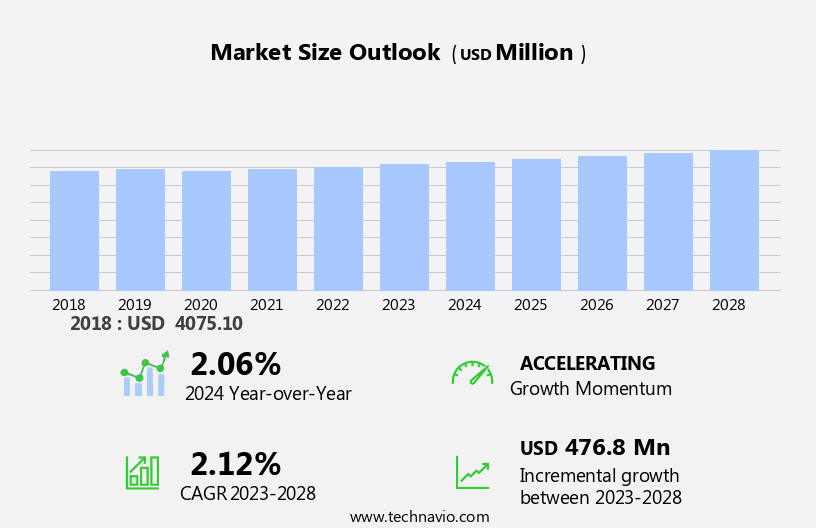
- Alpha-glucosidase inhibitors are a class of medications used in the management of type 2 diabetes mellitus. These drugs help control postprandial hyperglycemia, or high blood sugar levels after meals, by inhibiting the digestive enzyme alpha-glucosidase. This, in turn, slows down the absorption of carbohydrates in the small intestine, thereby reducing the rise in blood glucose levels. Diabetes mellitus type 2, a chronic condition characterized by high blood sugar levels, affects millions of individuals in the US. The condition is often associated with complications such as renal damage, nerve damage, and ocular damage.
- Impaired glucose tolerance and obesity are common risk factors for type 2 diabetes. Alpha-glucosidase inhibitors are used to manage diabetes-related complications by maintaining optimal blood sugar levels. These medications have been shown to help prevent or delay the onset of complications associated with diabetes. They are also effective in managing dumping syndrome, a condition characterized by rapid emptying of the stomach after meals, which can lead to hypoglycemia and other complications. However, the use of alpha-glucosidase inhibitors is not without risks. Hypoglycemia, or low blood sugar levels, can occur as a side effect of these medications. Lactic acidosis, a rare but serious condition, has also been reported in some cases.
How is this Alpha Glucosidase Inhibitors Industry segmented and which is the largest segment?
The industry research report provides comprehensive data (region-wise segment analysis), with forecasts and estimates in "USD million" for the period 2024-2028, as well as historical data from 2018-2022 for the following segments.
- Disease Type
- Type 2 diabetes
- Dumping syndrome
- Geography
- North America
- US
- Europe
- Germany
- UK
- Asia
- China
- Japan
- Rest of World (ROW)
- North America
By Disease Type Insights
- The type 2 diabetes segment is estimated to witness significant growth during the forecast period.
Type 2 diabetes, the most prevalent form of diabetes, arises when the body fails to effectively utilize insulin. This condition affects millions worldwide, with obesity and inactivity identified as primary risk factors. The onset of type 2 diabetes is often difficult to detect due to its subtle symptoms. Once diagnosed, however, proper management is crucial to prevent complications. Alpha glucosidase inhibitors, a type of advanced medication, play a significant role in managing type 2 diabetes. These inhibitors help regulate post-meal blood sugar levels by slowing down the digestion of carbohydrates in the small intestine. Three common alpha glucosidase inhibitors are Acarbose, Voglibose, and Miglitol.
In the context of the aging population and the increasing prevalence of impaired glucose tolerance, the demand for quality healthcare services offering these medications is on the rise. Alpha glucosidase inhibitors contribute to improving overall diabetes management, ensuring better health outcomes for patients.
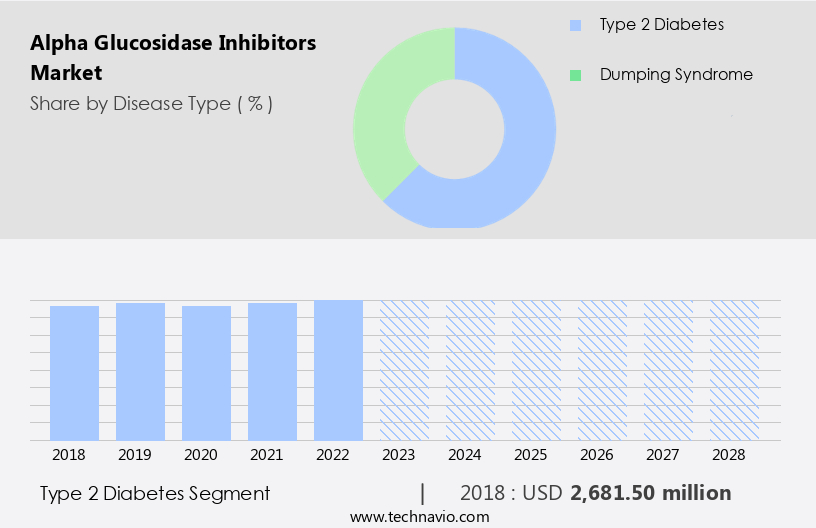
Get a glance at the market report of share of various segments Request Free Sample
The Type 2 diabetes segment was valued at USD 2.68 billion in 2018 and showed a gradual increase during the forecast period.
Regional Analysis
- North America is estimated to contribute 45% to the growth of the global market during the forecast period.
Technavio's analysts have elaborately explained the regional trends and drivers that shape the market during the forecast period.
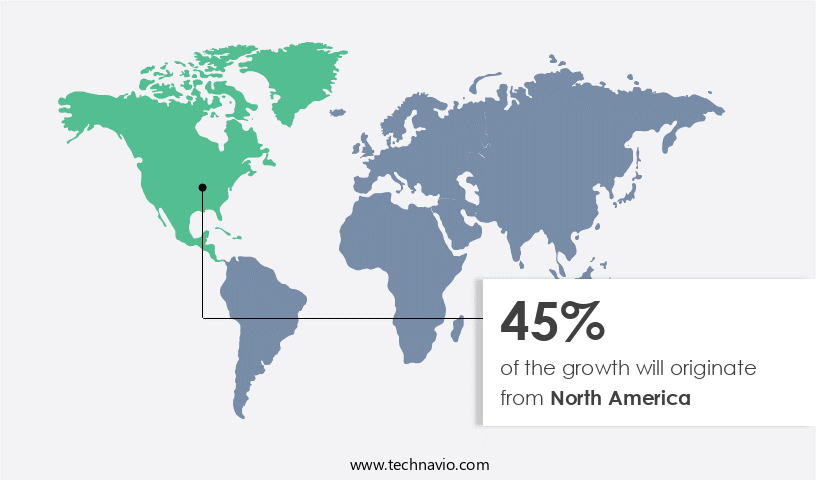
For more insights on the market size of various regions, Request Free Sample
The market in North America experiences growth due to the rising incidence of type 2 diabetes and dumping syndrome in the region. Type 2 diabetes affects a significant population in the US, Canada, and Mexico, with the CDC reporting that approximately 90%-95% of the US population with diabetes has this type. Dumping syndrome, a complication after gastric surgical procedures, also affects up to 20%-50% of patients. Unhealthy eating habits and sedentary lifestyles are contributing factors to these conditions. Alpha glucosidase inhibitors are essential antidiabetic drugs used in monotherapy and combination therapy for managing type 2 diabetes. They work by inhibiting the digestive enzyme alpha-glucosidase, thereby reducing the absorption of carbohydrates from food and helping maintain normal blood sugar levels. These drugs also provide relief from the symptoms of dumping syndrome by slowing down the emptying of the stomach and reducing the rapid rise in blood sugar levels after meals.
Market Dynamics
Our researchers analyzed the data with 2023 as the base year, along with the key drivers, trends, and challenges. A holistic analysis of drivers will help companies refine their marketing strategies to gain a competitive advantage.
What are the key market drivers leading to the rise in the adoption of Alpha Glucosidase Inhibitors Industry?
Increase in awareness of diabetes and growing initiatives is the key driver of the market.
- The prevalence of diabetes continues to rise, leading to a growing demand for treatments, including Alpha-Glucosidase Inhibitors. These medications are essential for managing conditions like Type 2 diabetes and Late-Onset Pompe Disease. Various organizations, such as the Interaction Design Foundation (IDF), are actively working to increase access to diabetes treatments. In April 2021, IDF and Direct Relief announced an initiative to distribute diabetes supplies to underserved populations worldwide. This partnership expansion aims to provide essential diabetes medicines and related supplies to individuals in countries with disrupted healthcare systems due to natural disasters or crises. In the US, Alpha-Glucosidase Inhibitors are available through multiple channels, including hospital pharmacies, retail pharmacies, and online pharmacies.
What are the market trends shaping the Alpha Glucosidase Inhibitors Industry?
The growing geriatric population is the upcoming market trend.
- The aging population is a significant factor contributing to increased healthcare expenditures, particularly in the context of diabetes mellitus type 2. According to the American Diabetes Association, older adults are at a higher risk for developing type 2 diabetes due to insulin resistance and impaired pancreatic islet function. The global population growth will further impact the potential expansion of the market for alpha glucosidase inhibitors.
- These medications are essential in managing diabetes by inhibiting the enzyme responsible for breaking down carbohydrates in the digestive system, thereby reducing the rate of glucose absorption. Delaying the absorption of carbohydrates helps maintain normal blood sugar levels and alleviates the risk of complications such as renal damage, nerve damage, and ocular damage. The increasing prevalence of diabetes in older adults and the need for effective management strategies make alphaglucosidase inhibitors a vital component of diabetes care.
What challenges does the Alpha Glucosidase Inhibitors Industry face during its growth?
Price pressure and the availability of counterfeit drugs is a key challenge affecting the industry growth.
- The market is experiencing significant competition among various global and regional players, supplying diabetes medications in hospitals, clinics, and specialty diabetes centers. Both large multinational corporations and regional manufacturers offer a diverse selection of diuretic drugs for managing Type 1 and Type 2 diabetes in the geriatric population. To increase their market share, these companies invest heavily in marketing, product development, and brand promotion.
- However, the intense competition among these entities results in price wars, forcing companies to lower their product costs to boost sales and secure low-cost agreements. Additionally, they offer discounts to further intensify competition in the market. The market is a crucial segment within the healthcare industry, catering to the growing demand for effective diabetes treatments.
Exclusive Customer Landscape
The market forecasting report includes the adoption lifecycle of the market, covering from the innovator's stage to the laggard's stage. It focuses on adoption rates in different regions based on penetration. Furthermore, the market report also includes key purchase criteria and drivers of price sensitivity to help companies evaluate and develop their market growth analysis strategies.
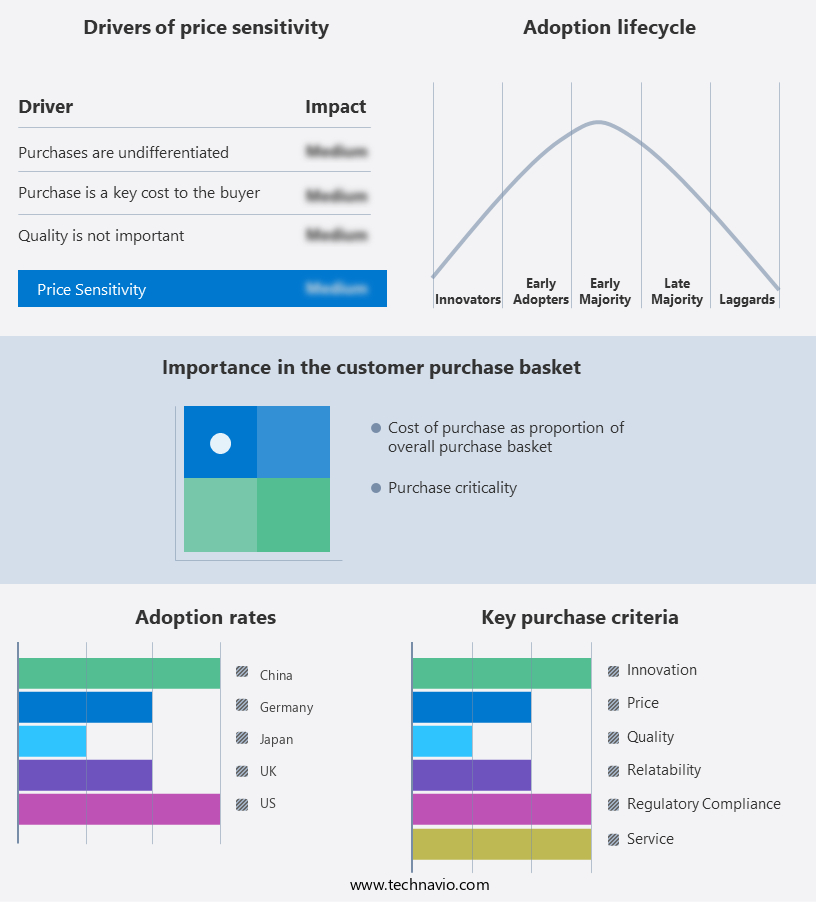
Customer Landscape
Key Companies & Market Insights
Companies are implementing various strategies, such as strategic alliances, alpha glucosidase inhibitors market forecast, partnerships, mergers and acquisitions, geographical expansion, and product/service launches, to enhance their presence in the industry.
The industry research and growth report includes detailed analyses of the competitive landscape of the market and information about key companies, including:
- Anderson Hay and Grain Co. Inc.
- AstraZeneca Plc
- Bayer AG
- BioVision Inc.
- Boehringer Ingelheim International GmbH
- Border Valley Trading
- Bristol Myers Squibb Co.
- Eli Lilly and Co.
- GlaxoSmithKline Plc
- Glenmark Pharmaceuticals Ltd.
- Merck KGaA
- Novartis AG
- Novo Nordisk AS
- Pfizer Inc.
- Sanofi SA
- Straight Healthcare
- Sun Pharmaceutical Industries Ltd.
- Takeda Pharmaceutical Co. Ltd.
Qualitative and quantitative analysis of companies has been conducted to help clients understand the wider business environment as well as the strengths and weaknesses of key industry players. Data is qualitatively analyzed to categorize companies as pure play, category-focused, industry-focused, and diversified; it is quantitatively analyzed to categorize companies as dominant, leading, strong, tentative, and weak.
Research Analyst Overview
Alpha-glucosidase inhibitors are a class of antidiabetic drugs that help manage postprandial hyperglycemia, or high blood sugar levels after meals, in individuals with diabetes mellitus type 2. These medications work by inhibiting the enzymes responsible for breaking down carbohydrates in the digestive system, thereby reducing the rate of carbohydrate absorption and subsequent rise in blood sugar levels. Diabetes mellitus type 2 is a chronic condition characterized by impaired glucose tolerance, high blood sugar levels, and insulin resistance. Over time, untreated or poorly managed diabetes can lead to complications such as renal damage, nerve damage, and ocular damage. The aging population and the increasing prevalence of lifestyle diseases, including obesity, are driving the demand for quality healthcare services and effective antidiabetic drugs.
Furthermore, alpha-glucosidase inhibitors, such as acarbose, voglibose, and miglitol, are commonly used as monotherapy or in combination therapy to manage type 2 diabetes. These medications can help reduce postprandial insulin concentration and glycosylated hemoglobin levels, improving overall diabetes management. However, they may cause side effects such as dumping syndrome, hypoglycemia, and lactic acidosis in some individuals. Alpha-glucosidase inhibitors are available at hospital pharmacies, retail pharmacies, online pharmacies, home healthcare, hospitals & clinics, and specialty diabetes centers. Insurance coverage and digital healthcare solutions are also playing an increasingly important role in making these medications more accessible to patients. While alpha-glucosidase inhibitors are primarily used for type 2 diabetes, they may also be used in the treatment of late-onset Pompe disease with the brand name NexviaDyme.
|
Market Scope |
|
|
Report Coverage |
Details |
|
Page number |
135 |
|
Base year |
2023 |
|
Historic period |
2018-2022 |
|
Forecast period |
2024-2028 |
|
Growth momentum & CAGR |
Accelerate at a CAGR of 2.12% |
|
Market growth 2024-2028 |
USD 476.8 million |
|
Market structure |
Fragmented |
|
YoY growth 2023-2024(%) |
2.06 |
|
Key countries |
US, Germany, UK, China, and Japan |
|
Competitive landscape |
Leading Companies, Market Positioning of Companies, Competitive Strategies, and Industry Risks |
What are the Key Data Covered in this Alpha Glucosidase Inhibitors Market Research and Growth Report?
- CAGR of the Alpha Glucosidase Inhibitors industry during the forecast period
- Detailed information on factors that will drive the market growth and forecasting between 2024 and 2028
- Precise estimation of the size of the market and its contribution of the industry in focus to the parent market
- Accurate predictions about upcoming growth and trends and changes in consumer behaviour
- Growth of the market across North America, Europe, Asia, and Rest of World (ROW)
- Thorough analysis of the market's competitive landscape and detailed information about companies
- Comprehensive analysis of factors that will challenge the alpha glucosidase inhibitors market growth of industry companies
We can help! Our analysts can customize this alpha glucosidase inhibitors market research report to meet your requirements.
 RIA -
RIA - 
