



Artificial Intelligence (AI) In Healthcare Market Size 2026-2030
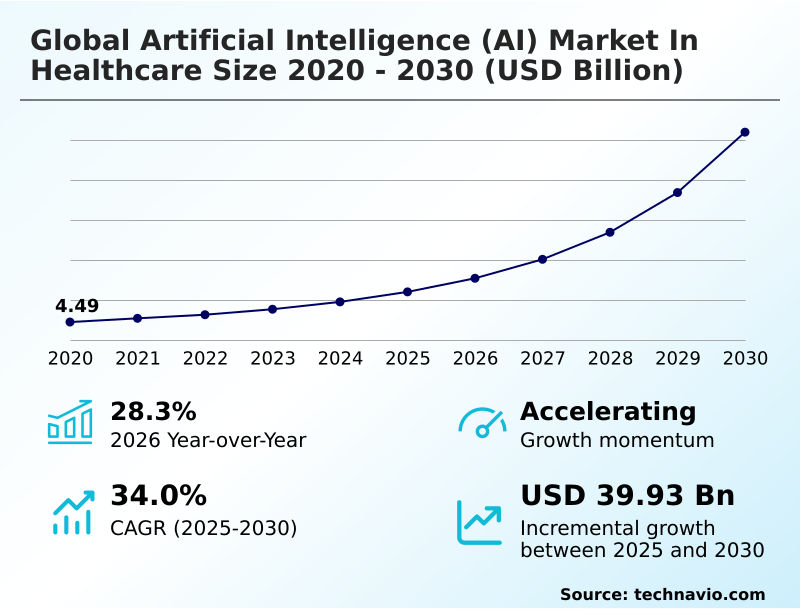
The artificial intelligence (ai) in healthcare market size is valued to increase by USD 39.93 billion, at a CAGR of 34% from 2025 to 2030. Proliferation of big data and growing complexity of healthcare datasets will drive the artificial intelligence (ai) in healthcare market.
Major Market Trends & Insights
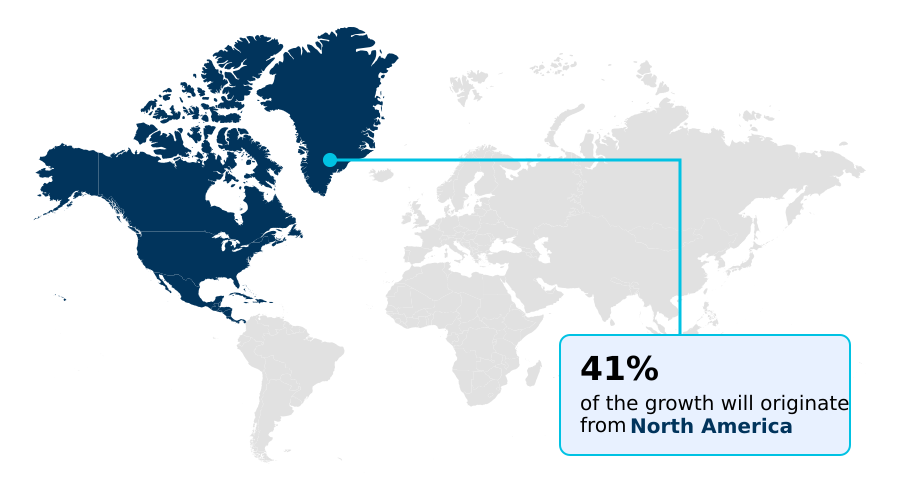
- North America dominated the market and accounted for a 40.6% growth during the forecast period.
- By Application - Medical imaging and diagnostics segment was valued at USD 3.80 billion in 2024
- By Component - Software segment accounted for the largest market revenue share in 2024
Market Size & Forecast
- Market Opportunities: USD 47.47 billion
- Market Future Opportunities: USD 39.93 billion
- CAGR from 2025 to 2030 : 34%
Market Summary
- The artificial intelligence (AI) in healthcare market is defined by a fundamental realignment of clinical and operational paradigms. Fueled by the immense growth of complex health data, the industry is increasingly adopting AI to enhance decision-making and efficiency.
- A key application is the integration of predictive analytics into hospital management, where AI models forecast patient admission rates, allowing for optimized staff scheduling and resource allocation, thereby reducing wait times and improving patient flow. This shift is driven by the urgent need to control costs while improving outcomes.
- Advanced algorithms for medical imaging analysis and drug discovery are accelerating diagnostic timelines and therapeutic innovation. However, the path to full integration is moderated by significant challenges, including the need for robust data governance frameworks to ensure patient privacy, the high costs of implementation, and the technical hurdles of achieving interoperability between disparate health IT systems.
- Addressing algorithmic bias and establishing clear regulatory pathways for AI-powered medical devices remain critical for ensuring equitable and safe deployment across the healthcare ecosystem, ultimately driving the evolution toward more personalized and preventative care models.
What will be the Size of the Artificial Intelligence (AI) In Healthcare Market during the forecast period?
Get Key Insights on Market Forecast (PDF) Get Free Sample
How is the Artificial Intelligence (AI) In Healthcare Market Segmented?
The artificial intelligence (ai) in healthcare industry research report provides comprehensive data (region-wise segment analysis), with forecasts and estimates in "USD million" for the period 2026-2030, as well as historical data from 2020-2024 for the following segments.
- Application
- Medical imaging and diagnostics
- Drug discovery
- Virtual assistants
- Operations management
- Others
- Component
- Software
- Hardware
- Services
- End-user
- Hospitals and clinics
- Research institutes and academies
- Geography
- North America
- US
- Canada
- Mexico
- Europe
- Germany
- UK
- France
- APAC
- China
- Japan
- India
- South America
- Brazil
- Argentina
- Colombia
- Middle East and Africa
- Saudi Arabia
- UAE
- South Africa
- Rest of World (ROW)
- North America
By Application Insights
The medical imaging and diagnostics segment is estimated to witness significant growth during the forecast period.
The medical imaging and diagnostics segment is central to the adoption of artificial intelligence in healthcare. This domain leverages machine learning for genomics and AI-powered diagnostics to augment the capabilities of clinicians.
Advanced computer vision algorithms process radiological and pathological images, enabling superior image segmentation and anomaly detection that can improve detection rates by up to 15%. The integration of deep learning in radiology and AI in pathology is transforming clinical workflows.
These AI diagnostic support tools are critical for managing the increasing volume of imaging studies, using AI for personalized medicine by providing more precise and timely results. This shift helps reduce diagnostic errors and enhances the efficiency of healthcare delivery.
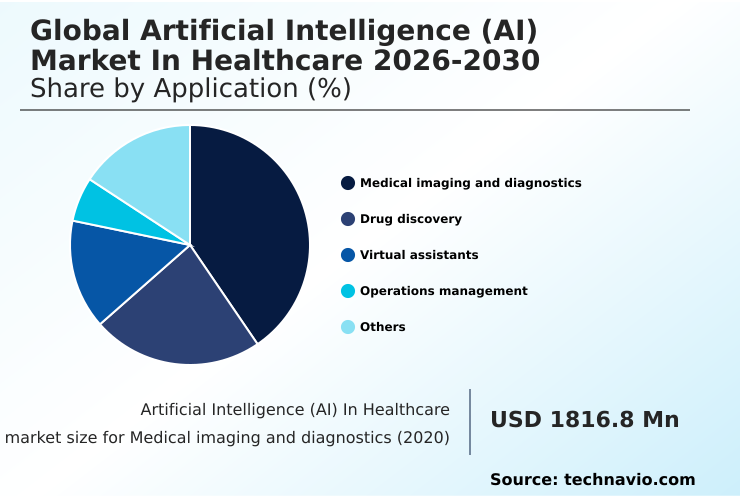
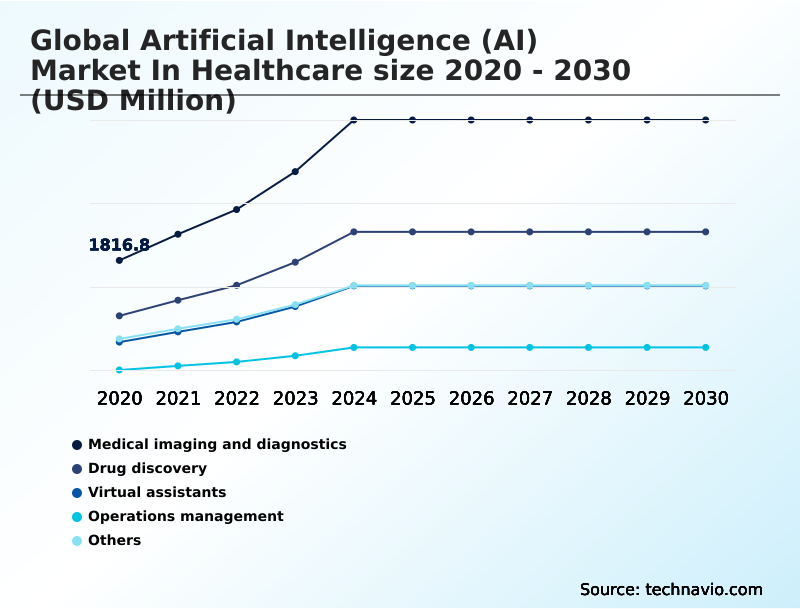
The Medical imaging and diagnostics segment was valued at USD 3.80 billion in 2024 and showed a gradual increase during the forecast period.
Regional Analysis
North America is estimated to contribute 40.6% to the growth of the global market during the forecast period.Technavio’s analysts have elaborately explained the regional trends and drivers that shape the market during the forecast period.
See How Artificial Intelligence (AI) In Healthcare Market Demand is Rising in North America Get Free Sample
The global landscape is led by North America, which benefits from high R&D investment and a mature technology infrastructure enabling sophisticated applications like AI for drug development and AI-driven hospital management.
However, the APAC region is the fastest-growing market, with its growth rate outpacing Europe by nearly 2%. This expansion is driven by government initiatives promoting digital health and a surge in venture capital for health-tech startups.
Europe’s market is characterized by a strong focus on ethical AI in medicine and navigating the regulatory approval for AI medical devices under frameworks like the GDPR.
While North America sets the pace, the diverse needs and rapid mobile adoption in APAC and the structured regulatory approach in Europe are creating distinct regional opportunities and influencing global competitive strategies for AI in medical imaging.
Market Dynamics
Our researchers analyzed the data with 2025 as the base year, along with the key drivers, trends, and challenges. A holistic analysis of drivers will help companies refine their marketing strategies to gain a competitive advantage.
- The successful integration of AI into the healthcare ecosystem involves navigating a complex series of strategic considerations, beginning with the foundational role of AI in clinical trials and its applications in pharmaceutical R&D.
- The journey from lab to clinic highlights the profound impact of AI on healthcare costs, where machine learning for proteomic data analysis and AI platforms for genomic data interpretation are streamlining research phases.
- The ultimate goal is to improve patient care, which involves using AI to reduce physician burnout by automating administrative tasks through natural language processing for clinical documentation and generative AI for summarizing patient histories. In clinical settings, AI models for analyzing medical scans and AI-powered tools for surgical planning are becoming standard.
- This transition is not without obstacles, as the challenges of AI implementation in hospitals, including interoperability and training, are significant. The ROI of AI in healthcare operations is closely scrutinized, with a focus on areas like AI for managing healthcare supply chains and medical billing automation.
- Firms deploying such systems report operational efficiency gains nearly double those of competitors relying on manual processes. As the industry matures, the ethical considerations of AI in diagnostics and the need to improve medication adherence will continue to shape deployment strategies, reinforcing AI's transformative potential.
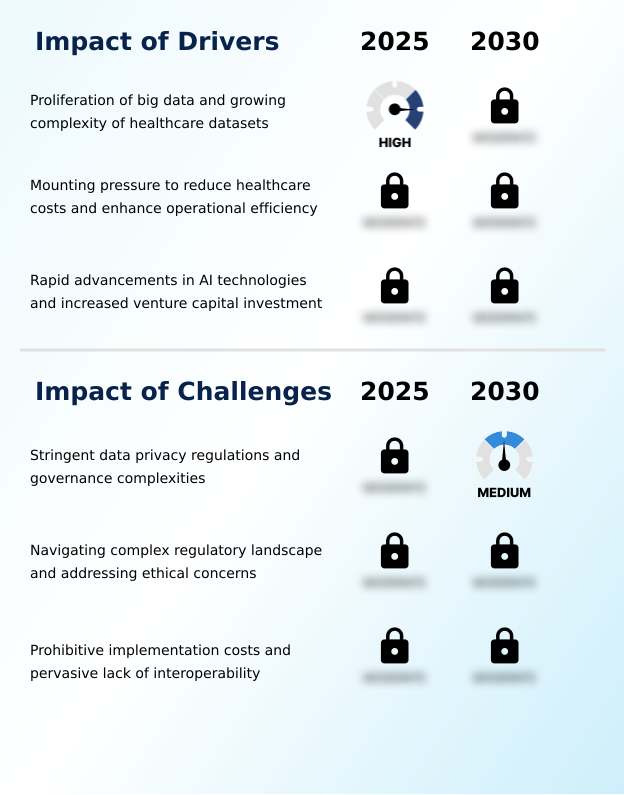
What are the key market drivers leading to the rise in the adoption of Artificial Intelligence (AI) In Healthcare Industry?
- The proliferation of big data, coupled with the growing complexity of healthcare datasets, serves as a primary driver for market growth.
- The market's expansion is propelled by the imperative to derive actionable insights from massive datasets. The proliferation of information from electronic health records (EHR) and connected medical devices necessitates advanced analytical tools.
- AI infrastructure for hospitals, including cloud computing infrastructure and high-performance computing, provides the backbone for processing this data. This enables powerful applications such as predictive analytics for patient outcomes, which helps providers anticipate health events and intervene earlier.
- The intense pressure to improve operational efficiency and reduce costs is another major driver, pushing organizations to adopt robotic process automation and AI for revenue cycle management.
- These systems automate administrative tasks, reducing overhead and improving financial performance, with some systems improving billing accuracy by over 25%.
What are the market trends shaping the Artificial Intelligence (AI) In Healthcare Industry?
- The market is witnessing a pronounced shift toward AI-driven precision medicine. This trend emphasizes personalized therapeutic strategies tailored to individual patient profiles.
- Key trends are reshaping the market, driven by the shift toward proactive and personalized care. The ascendancy of precision medicine, powered by AI-driven risk modeling and genomic analysis, is moving treatment from a generalized to an individualized approach.
- This is complemented by the deepening integration of AI in clinical workflows, particularly through computer vision in digital pathology and other diagnostic fields. Another transformative trend is the emergence of generative AI for clinical notes. This technology, along with advanced natural language processing in EHR, is addressing physician burnout by automating documentation through ambient clinical intelligence.
- This not only enhances efficiency but also allows clinicians to focus more on patient interaction, representing a significant evolution in care delivery models. This trend is a primary catalyst for expansion.
What challenges does the Artificial Intelligence (AI) In Healthcare Industry face during its growth?
- Stringent data privacy regulations and complex governance requirements present a significant challenge to the industry's growth trajectory.
- Significant challenges constrain the market, primarily revolving around data, regulation, and cost. Navigating complex patient data privacy rules and ensuring robust data anonymization are critical yet difficult tasks. The 'black box' nature of some deep learning algorithms creates hurdles for regulatory approval for AI medical devices, as transparency and interpretability are paramount.
- Algorithmic bias remains a persistent ethical concern, requiring sophisticated mitigation strategies to prevent the amplification of health disparities. Furthermore, the prohibitive cost of implementation and a pervasive lack of interoperability between different IT systems create major barriers.
- The difficulty in integrating AI with legacy picture archiving and communication systems (PACS) and other platforms limits scalability and inflates costs, hindering widespread adoption.
Exclusive Technavio Analysis on Customer Landscape
The artificial intelligence (ai) in healthcare market forecasting report includes the adoption lifecycle of the market, covering from the innovator’s stage to the laggard’s stage. It focuses on adoption rates in different regions based on penetration. Furthermore, the artificial intelligence (ai) in healthcare market report also includes key purchase criteria and drivers of price sensitivity to help companies evaluate and develop their market growth analysis strategies.
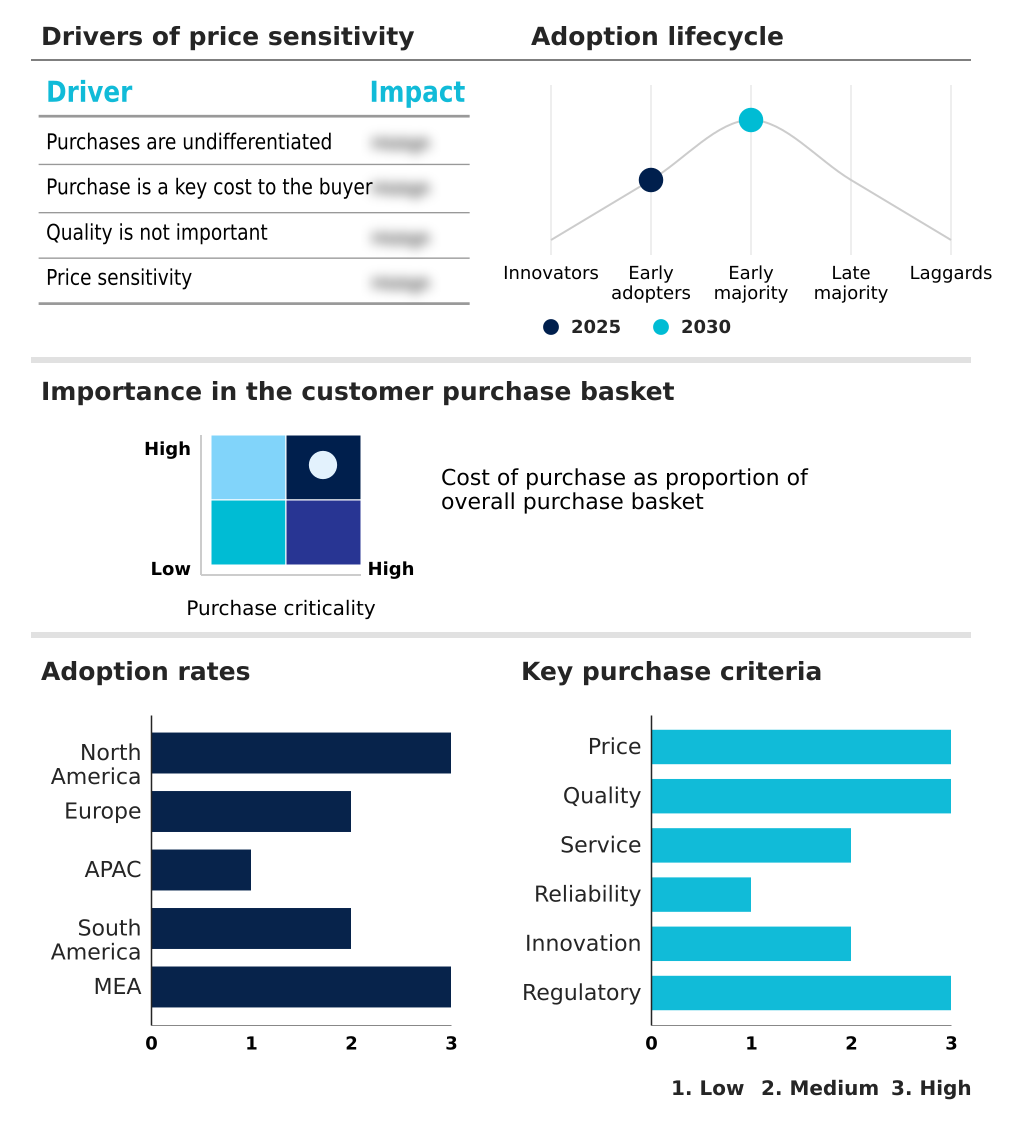
Customer Landscape of Artificial Intelligence (AI) In Healthcare Industry
Competitive Landscape
Companies are implementing various strategies, such as strategic alliances, artificial intelligence (ai) in healthcare market forecast, partnerships, mergers and acquisitions, geographical expansion, and product/service launches, to enhance their presence in the industry.
Ada Health GmbH - Delivers AI-powered digital health diagnostics, providing advanced symptom assessment and critical patient insights to enhance care delivery.
The industry research and growth report includes detailed analyses of the competitive landscape of the market and information about key companies, including:
- Ada Health GmbH
- Aidoc Medical Ltd.
- Aiforia Technologies PLC
- Amazon Web Services Inc.
- BenchSci Analytics Inc.
- CarePredict Inc.
- CaryHealth
- Deep Genomics Inc.
- GE HealthCare Technologies
- Google LLC
- Hippocratic AI Inc.
- IBM Corp.
- Intel Corp.
- Koninklijke Philips NV
- Medtronic Plc
- Microsoft Corp.
- Numerion Labs
- NVIDIA Corp.
- Recursion Pharmaceuticals Inc.
- Siemens Healthineers AG
Qualitative and quantitative analysis of companies has been conducted to help clients understand the wider business environment as well as the strengths and weaknesses of key industry players. Data is qualitatively analyzed to categorize companies as pure play, category-focused, industry-focused, and diversified; it is quantitatively analyzed to categorize companies as dominant, leading, strong, tentative, and weak.
Recent Development and News in Artificial intelligence (ai) in healthcare market
- In April 2025, NVIDIA announced the launch of Clara Holoscan MGX for Medical Instruments, a new platform designed to accelerate the development of AI-powered medical devices, enabling real-time insights for surgical and diagnostic systems.
- In March 2025, Hippocratic AI Inc. announced a USD 120 million Series B funding round to scale its patient-facing generative AI assistants, aiming to reduce administrative workloads in hospitals.
- In January 2025, Microsoft Corp. expanded its partnership with Apollo Hospitals to integrate Azure OpenAI Service into Apollo's clinical intelligence engine, aiming to accelerate diagnostic workflows and personalize patient care plans.
- In October 2024, Aidoc Medical Ltd. received FDA clearance for its AI algorithm for the early detection of pancreatic cancer on CT scans, expanding its suite of diagnostic AI solutions.
Dive into Technavio’s robust research methodology, blending expert interviews, extensive data synthesis, and validated models for unparalleled Artificial Intelligence (AI) In Healthcare Market insights. See full methodology.
| Market Scope | |
|---|---|
| Page number | 309 |
| Base year | 2025 |
| Historic period | 2020-2024 |
| Forecast period | 2026-2030 |
| Growth momentum & CAGR | Accelerate at a CAGR of 34% |
| Market growth 2026-2030 | USD 39933.7 million |
| Market structure | Fragmented |
| YoY growth 2025-2026(%) | 28.3% |
| Key countries | US, Canada, Mexico, Germany, UK, France, Italy, Spain, The Netherlands, China, Japan, India, South Korea, Australia, Indonesia, Brazil, Argentina, Colombia, Saudi Arabia, UAE, South Africa, Egypt and Israel |
| Competitive landscape | Leading Companies, Market Positioning of Companies, Competitive Strategies, and Industry Risks |
Research Analyst Overview
- The artificial intelligence (AI) in healthcare market is advancing beyond nascent applications into core clinical and operational functions. The integration of high-performance computing, including GPUs and FPGAs, has enabled the deployment of sophisticated deep learning and machine learning algorithms.
- In practice, this translates to tangible outcomes, such as a 30% reduction in diagnostic turnaround times in radiology departments utilizing AI-powered diagnostics. Key applications like medical imaging and diagnostics, drug discovery, and operations management are being transformed. Boardroom discussions are now centered on leveraging generative AI and ambient clinical intelligence to address workforce shortages and improve efficiency.
- However, strategic implementation requires careful navigation of significant challenges, including ensuring interoperability with existing electronic health records (EHR) and picture archiving and communication systems (PACS). Furthermore, addressing algorithmic bias and adhering to stringent data anonymization protocols are critical for regulatory compliance and building patient trust, making these factors pivotal for any successful deployment strategy.
What are the Key Data Covered in this Artificial Intelligence (AI) In Healthcare Market Research and Growth Report?
-
What is the expected growth of the Artificial Intelligence (AI) In Healthcare Market between 2026 and 2030?
-
USD 39.93 billion, at a CAGR of 34%
-
-
What segmentation does the market report cover?
-
The report is segmented by Application (Medical imaging and diagnostics, Drug discovery, Virtual assistants, Operations management, and Others), Component (Software, Hardware, and Services), End-user (Hospitals and clinics, and Research institutes and academies) and Geography (North America, Europe, APAC, South America, Middle East and Africa)
-
-
Which regions are analyzed in the report?
-
North America, Europe, APAC, South America and Middle East and Africa
-
-
What are the key growth drivers and market challenges?
-
Proliferation of big data and growing complexity of healthcare datasets, Stringent data privacy regulations and governance complexities
-
-
Who are the major players in the Artificial Intelligence (AI) In Healthcare Market?
-
Ada Health GmbH, Aidoc Medical Ltd., Aiforia Technologies PLC, Amazon Web Services Inc., BenchSci Analytics Inc., CarePredict Inc., CaryHealth, Deep Genomics Inc., GE HealthCare Technologies, Google LLC, Hippocratic AI Inc., IBM Corp., Intel Corp., Koninklijke Philips NV, Medtronic Plc, Microsoft Corp., Numerion Labs, NVIDIA Corp., Recursion Pharmaceuticals Inc. and Siemens Healthineers AG
-
Market Research Insights
- Market dynamics are shaped by a strong push toward value-based care, compelling providers to adopt technologies that deliver measurable improvements. AI-driven diagnostic support tools are enhancing accuracy by over 15% in complex imaging modalities, directly impacting patient outcomes.
- Concurrently, AI for healthcare efficiency is becoming a boardroom priority, with institutions leveraging AI for revenue cycle management reporting up to a 10% reduction in claim denials. This focus on tangible ROI is accelerating the integration of AI in clinical workflows.
- The adoption of AI-powered virtual assistants is also streamlining patient communication and administrative tasks, contributing to improved operational performance and patient satisfaction.
We can help! Our analysts can customize this artificial intelligence (ai) in healthcare market research report to meet your requirements.
 RIA -
RIA - 
