



Automotive Batteries Market Size 2024-2028
The automotive batteries market size is forecast to increase by USD 119.8 billion at a CAGR of 19.75% between 2023 and 2028.
- The market is experiencing significant growth, driven primarily by the rising sales of passenger cars. In the coming years, leading to an increased demand for reliable and high-performing batteries. One of the key trends shaping this market is the growing preference for Absorbed Glass Mat (AGM) batteries and lithium-ion batteries. These batteries offer several advantages over traditional lead-acid batteries, including a longer life cycle, improved performance in extreme temperatures, and reduced maintenance requirements. However, the market also faces several challenges. One of the most significant limitations of lead-acid batteries is their relatively short life cycle.
- This issue is becoming increasingly problematic as consumers demand longer-lasting solutions. Additionally, the growing adoption of electric and hybrid vehicles is expected to disrupt the traditional market, as these vehicles rely on different types of batteries for power. Companies seeking to capitalize on market opportunities and navigate these challenges effectively must focus on developing innovative battery technologies with longer life cycles and improved performance. By doing so, they can differentiate themselves from competitors and meet the evolving demands of consumers.
What will be the Size of the Automotive Batteries Market during the forecast period?
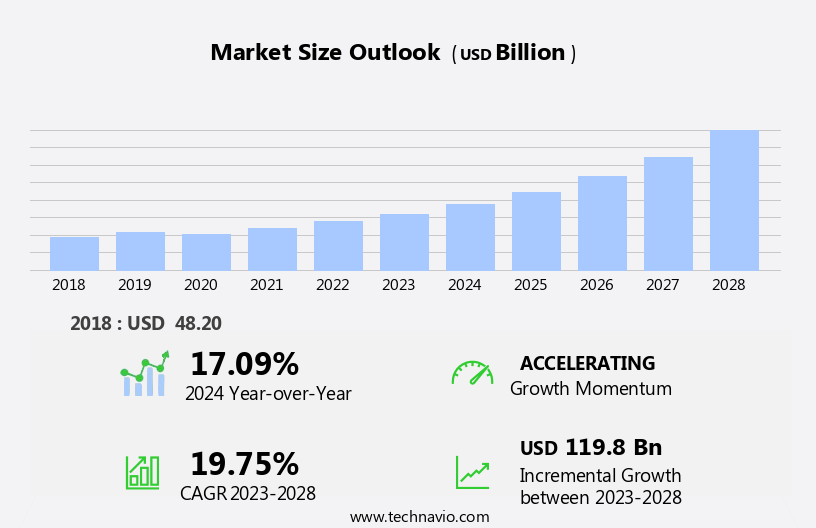
- The market encompasses the production and sale of electrochemical devices that provide electrical energy to power various automotive applications, including starting motors, ignition systems, alternators, voltage stabilizers, lights, radio, and electrical accessories in both conventional internal combustion engine vehicles and emerging electric vehicles. With the increasing demand for sustainable transportation, the market for automotive batteries is experiencing significant growth, driven by the proliferation of battery electric vehicles (BEVs) and hybrid electric vehicles (HEVs). Consumer preferences for longer driving ranges, shorter charging times, and improved performance are leading to the adoption of high-energy density lithium-ion batteries in both passenger vehicles and commercial fleets.
- The market's size is influenced by factors such as population growth, urbanization, and the durability and maintenance requirements of different battery types, including SLI (Starting, Lighting, Ignition) batteries and lithium-ion batteries. The automotive battery market is expected to continue its upward trajectory as the shift toward electric vehicles gains momentum, with the reduction of greenhouse gas emissions being a key driver. The market is expanding as renewable energy solutions drive the demand for more efficient battery technologies, with fiberglass mat components improving the durability and performance of these batteries.
How is the Automotive Batteries Industry segmented?
The industry research report provides comprehensive data (region-wise segment analysis), with forecasts and estimates in "USD billion" for the period 2024-2028, as well as historical data from 2018-2022 for the following segments.
- Vehicle Type
- Passenger cars
- Commercial vehicles
- Channel
- OEM
- Aftermarket
- Geography
- APAC
- China
- India
- North America
- US
- Europe
- Germany
- South America
- Middle East and Africa
- APAC
By Vehicle Type Insights
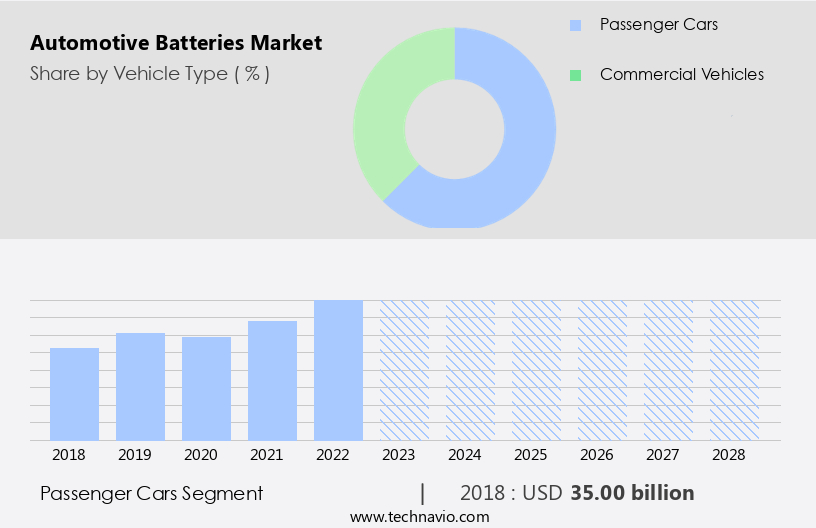
The passenger cars segment is estimated to witness significant growth during the forecast period. The market is experiencing continuous advancements due to stringent emission regulations, fuel efficiency standards, and safety requirements. Passenger cars incorporate numerous interior electronics for comfort features, including lighting, heating, air conditioning, and audio systems, which necessitate a reliable power source. The battery serves this purpose, powering both conventional internal combustion engine vehicles and electric vehicles. In the realm of electric vehicles, there is a growing emphasis on sustainable transportation and reducing greenhouse gas emissions. Lithium-ion batteries, known for their high energy density and long charge time, are increasingly popular due to their superior performance. Automobile manufacturers are collaborating and merging to optimize the battery supply chain and improve battery chemistry and materials.
Furthermore, the aftermarket segment, which includes battery replacements, is also significant, with factors such as durability, maintenance requirements, and charge-discharge cycles influencing consumer decisions. The market encompasses various segments, including passenger vehicles, commercial vehicles, motorcycles, and micro hybrid vehicles, among others. The industry's future growth is driven by factors such as population growth, urbanization, and industrialization.
Get a glance at the market report of share of various segments Request Free Sample
The Passenger cars segment was valued at USD 35.00 billion in 2018 and showed a gradual increase during the forecast period.
Regional Analysis
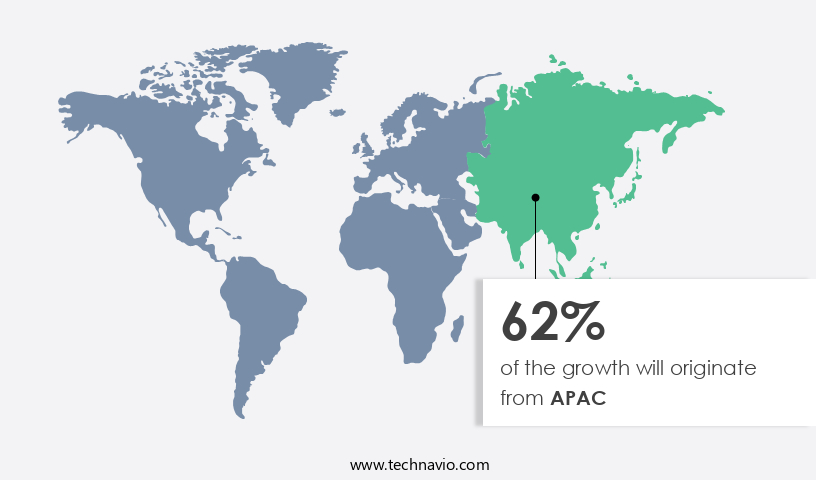
APAC is estimated to contribute 62% to the growth of the global market during the forecast period. Technavio's analysts have elaborately explained the regional trends and drivers that shape the market during the forecast period.
For more insights on the market size of various regions, Request Free Sample
The market in Asia Pacific (APAC) is experiencing significant growth due to increasing vehicle sales, particularly in China, India, and Japan. Driving factors include rising disposable income, new car model launches by automobile manufacturers, and the desire for social status. APAC's large population and urbanization trends present a vast consumer base for passenger cars, contributing to the market's expansion. The market's development is also fueled by technological advancements, such as electric and hybrid vehicles, and the adoption of energy-efficient batteries like lithium-ion. Consumer constraints, including affordability and maintenance requirements, influence market trends. The market encompasses various battery types, including SLI (Starting, Lighting, Ignition) for internal combustion engines and VRLA (Valve Regulated Lead Acid) for electric and hybrid vehicles.
Market growth is further driven by the increasing popularity of micro hybrid vehicles, start-stop systems, regenerative braking, and energy recuperation. The aftermarket segment for battery replacements is also a significant contributor to the market's growth. The market's future outlook is promising, with advancements in battery chemistry, materials, and designs, as well as the increasing demand for sustainable transportation and the reduction of greenhouse gas emissions.
Market Dynamics
Our researchers analyzed the data with 2023 as the base year, along with the key drivers, trends, and challenges. A holistic analysis of drivers will help companies refine their marketing strategies to gain a competitive advantage.
What are the key market drivers leading to the rise in the adoption of Automotive Batteries Industry?
- Rise in sales of passenger cars is the key driver of the market. The market experiences growth due to the increasing sales of passenger cars, with this segment accounting for a significant market share. In the US, the preference for larger vehicles such as SUVs and crossovers is on the rise. While both types of vehicles share similarities, they differ in fuel efficiency and usability.
- SUVs, built on truck frames, are less fuel-efficient compared to crossovers, which are constructed on car frames and are lighter. The reduction of interest rates on car loans in the US has facilitated the purchase of larger and more expensive vehicles for consumers. The market is influenced by these trends, as the demand for fuel-efficient vehicles and the growing popularity of larger vehicles contribute to the market's expansion.
What are the market trends shaping the Automotive Batteries Industry?
- Growing demand for AGM batteries is the upcoming market trend. AGM batteries, which were initially used in aircraft during the 1980s, have gained popularity in the automotive industry due to the increasing trend of electrical accessories in vehicles. These batteries are ideal for heavily equipped vehicles with electrical components such as navigation systems, touchscreen infotainment systems, electric parking brakes, and start-stop technologies. The reason behind their growing preference is the fiberglass mat separators used in their manufacturing process. These separators restrict the free flow of electrolytes, ensuring even distribution across the battery plates and providing better resistance during vibration.
- The compression of the fiberglass separator and plates further enhances the battery's performance and longevity. With the continuous advancement in automotive technology, the demand for AGM batteries is expected to continue growing.
What challenges does the Automotive Batteries Industry face during its growth?
- Multiple limitations and the short life cycle of lead-acid batteries is a key challenge affecting the industry growth. The lead-acid battery, an early rechargeable battery solution for commercial applications, remains a preferred choice due to its affordability and reliability. Despite its advantages, lead-acid batteries have limitations, including their weight and reduced durability compared to nickel and lithium-based systems.
- A full discharge can lead to a permanent loss of a small portion of the battery's capacity, which may not significantly impact performance when the battery is in good condition but can have a significant effect once its capacity drops below half of the nominal value. This loss of capacity does not significantly impact vehicle operation in optimal conditions, but can significantly impact performance as the battery ages.
Exclusive Customer Landscape
The market forecasting report includes the adoption lifecycle of the market, covering the innovator's stage to the laggard's stage. It focuses on adoption rates in different regions based on penetration. Furthermore, the market report also includes key purchase criteria and drivers of price sensitivity to help companies evaluate and develop their market growth analysis strategies.
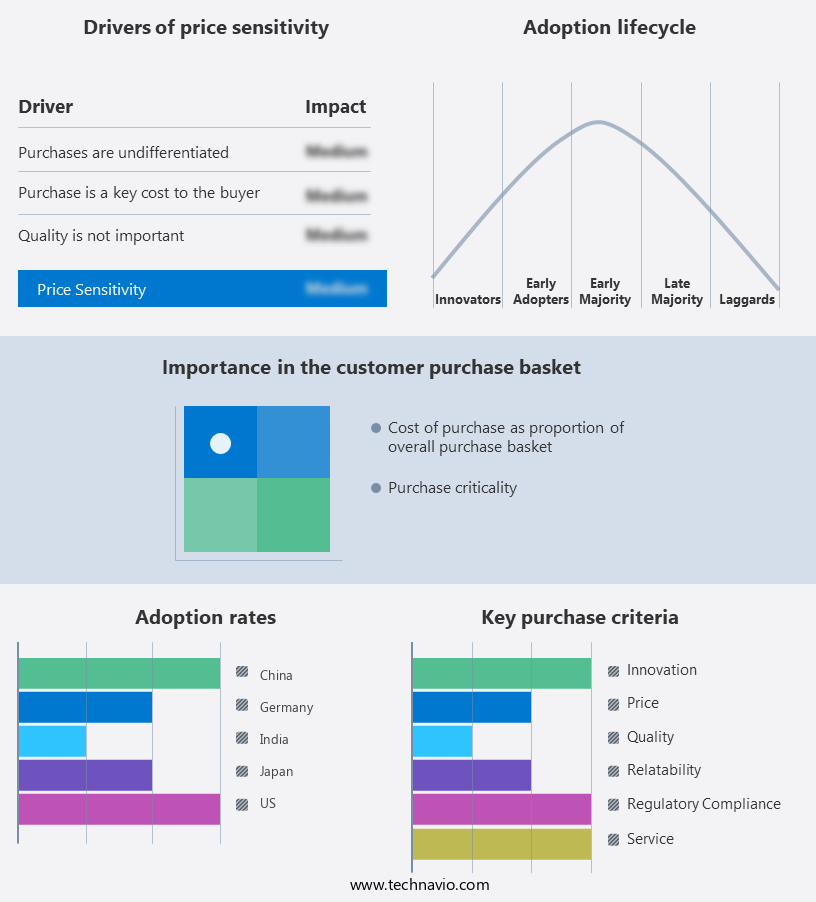
Customer Landscape
Key Companies & Market Insights
Companies are implementing various strategies, such as strategic alliances, market forecast, partnerships, mergers and acquisitions, geographical expansion, and product/service launches, to enhance their presence in the industry.
The industry research and growth report includes detailed analyses of the competitive landscape of the market and information about key companies, including:
- A123 Systems LLC
- Amara Raja Group
- CLARIOS LLC
- Crown Battery Manufacturing Co.
- East Penn Manufacturing Co. Inc.
- EnerSys
- Exide Industries Ltd.
- Furukawa Electric Co. Ltd.
- GS Yuasa International Ltd.
- HBL Power Systems Ltd.
- Hitachi Ltd.
- Leoch International Technology Ltd.
- LG Corp.
- Montana Tech Components AG
- Panasonic Holdings Corp.
- Robert Bosch GmbH
- Samsung SDI Co. Ltd.
- Shandong Sacred Sun Power Sources Co. Ltd.
- Toshiba Corp.
- TotalEnergies SE
Qualitative and quantitative analysis of companies has been conducted to help clients understand the wider business environment as well as the strengths and weaknesses of key industry players. Data is qualitatively analyzed to categorize companies as pure play, category-focused, industry-focused, and diversified; it is quantitatively analyzed to categorize companies as dominant, leading, strong, tentative, and weak.
Research Analyst Overview
The market encompasses a vital segment of the electrochemical device industry, supplying electrical energy to various automotive applications. These batteries play a crucial role in powering the starting motor, ignition system, and electrical accessories in vehicles, including lights and radios. In contemporary automobiles, batteries also support sustainable transportation solutions, such as electric and hybrid vehicles. The integration of electrochemical devices in automobiles is a response to the increasing demand for cleaner and more efficient transportation. The proliferation of electric vehicles (EVs) and battery electric vehicles (BEVs) has been a significant driver in the market's growth. However, consumer constraints, such as affordability and charging infrastructure, remain challenges to the widespread adoption of these vehicles.
Moreover, the automotive battery market is influenced by various factors, including the development of advanced battery chemistries and materials. Lithium-ion batteries have gained significant attention due to their high energy density, shorter charging times, and superior performance. The battery chemistry and materials used in battery production are essential factors affecting battery lifespan, durability, and maintenance requirements. Automobile manufacturers continue to invest in the battery supply chain, collaborating with battery producers and material suppliers to optimize battery performance and reduce costs. The market is witnessing an increasing trend towards mergers and collaborations to enhance production capabilities and improve economies of scale. The demand for automotive batteries is influenced by population growth, urbanization, and the increasing popularity of electric and hybrid vehicles.
Furthermore, the market is segmented into various applications, including passenger vehicles, commercial vehicles, motorcycles, and micro-hybrid vehicles. Each segment has unique requirements, and the market dynamics vary depending on the specific application. Passenger cars and commercial vehicles are significant contributors to the market's growth, driven by the increasing adoption of electric and hybrid vehicles. The aftermarket segment, which includes battery replacements and backup power applications, is also a significant contributor to the market's growth. The market's growth is influenced by various factors, including the increasing demand for sustainable transportation, the development of advanced battery designs, and the growing popularity of electric starting motors and electric vehicle motors.
|
Market Scope |
|
|
Report Coverage |
Details |
|
Page number |
175 |
|
Base year |
2023 |
|
Historic period |
2018-2022 |
|
Forecast period |
2024-2028 |
|
Growth momentum & CAGR |
Accelerate at a CAGR of 19.75% |
|
Market growth 2024-2028 |
USD 119.8 billion |
|
Market structure |
Fragmented |
|
YoY growth 2023-2024(%) |
17.09 |
|
Key countries |
China, US, Germany, India, |
|
Competitive landscape |
Leading Companies, Market Positioning of Companies, Competitive Strategies, and Industry Risks |
What are the Key Data Covered in this Automotive Batteries Market Research and Growth Report?
- CAGR of the Automotive Batteries industry during the forecast period
- Detailed information on factors that will drive the market growth and forecasting between 2024 and 2028
- Precise estimation of the size of the market and its contribution of the industry in focus to the parent market
- Accurate predictions about upcoming growth and trends and changes in consumer behaviour
- Growth of the market across APAC, North America, Europe, South America, Middle East and Africa,
- Thorough analysis of the market's competitive landscape and detailed information about companies
- Comprehensive analysis of factors that will challenge the automotive batteries market growth of industry companies
We can help! Our analysts can customize this automotive batteries market research report to meet your requirements.
 RIA -
RIA - 
