
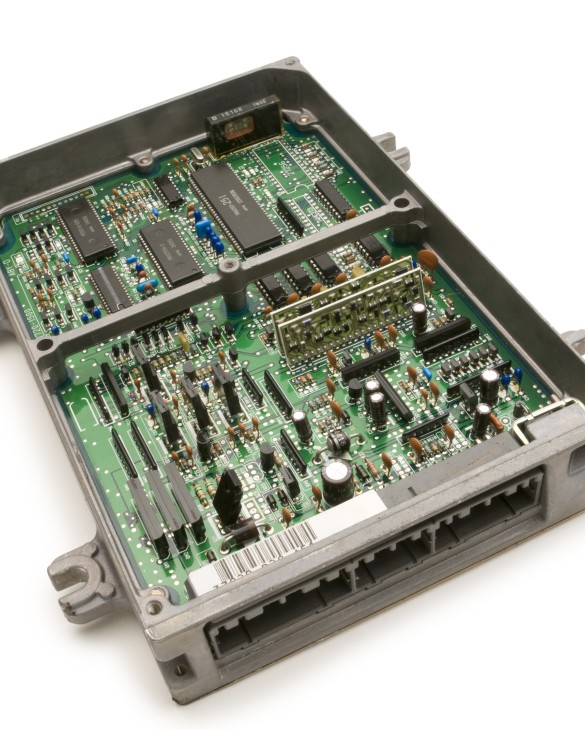


Automotive Event Data Recorder Market Size 2026-2030
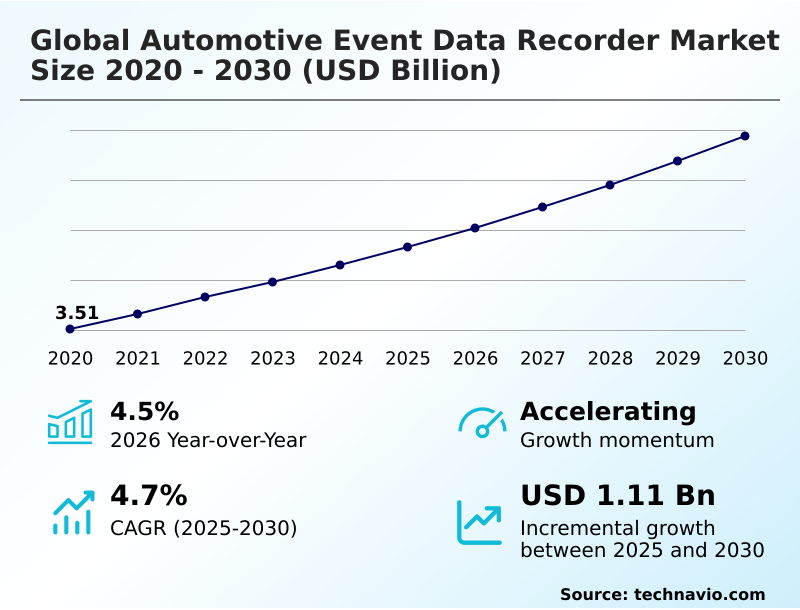
The automotive event data recorder market size is valued to increase by USD 1.11 billion, at a CAGR of 4.7% from 2025 to 2030. Expanding mandatory event data recorder rules for heavy-duty vehicles will drive the automotive event data recorder market.
Major Market Trends & Insights
- North America dominated the market and accounted for a 52.1% growth during the forecast period.
- By Application - Passenger cars segment was valued at USD 3.04 billion in 2024
- By Component - Hardware segment accounted for the largest market revenue share in 2024
Market Size & Forecast
- Market Opportunities: USD 1.93 billion
- Market Future Opportunities: USD 1.11 billion
- CAGR from 2025 to 2030 : 4.7%
Market Summary
- The Automotive Event Data Recorder Market is experiencing a structural shift as regulatory mandates and advanced vehicle telemetry converge. Automakers are prioritizing integrated crash data extraction tools to satisfy rigorous highway traffic safety standards.
- In a real-world supply chain scenario, commercial fleet operators are incorporating secure data retrieval modules with modern telematics systems, resulting in a 25% reduction in claims processing times. This widespread adoption is primarily driven by expanding mandatory event data recorder rules for heavy-duty vehicles, which institutionalize robust pre-crash data capture for commercial transport.
- Conversely, unresolved data ownership and privacy disputes over vehicle crash records present a significant operational hurdle, complicating liability assessment across different regulatory jurisdictions. As vehicles transition into software-defined architectures, the reliance on high-load acceleration sensors and synchronized collision reconstruction becomes critical.
- Ultimately, the market is defined by the tension between enhanced evidentiary data quality and the legal complexities of managing secure vehicle network protocols.
What will be the Size of the Automotive Event Data Recorder Market during the forecast period?
Get Key Insights on Market Forecast (PDF) Get Free Sample
How is the Automotive Event Data Recorder Market Segmented?
The automotive event data recorder industry research report provides comprehensive data (region-wise segment analysis), with forecasts and estimates in "USD million" for the period 2026-2030, as well as historical data from 2020-2024 for the following segments.
- Application
- Passenger cars
- Commercial vehicles
- Component
- Hardware
- Software
- Type
- Integrated EDR
- Portable/plug and play EDR
- Geography
- North America
- US
- Canada
- Mexico
- Europe
- Germany
- UK
- France
- Italy
- Spain
- The Netherlands
- APAC
- China
- Japan
- India
- South Korea
- Australia
- Indonesia
- South America
- Brazil
- Argentina
- Chile
- Middle East and Africa
- Saudi Arabia
- UAE
- South Africa
- Israel
- Turkey
- North America
By Application Insights
The passenger cars segment is estimated to witness significant growth during the forecast period.
The passenger cars segment remains central to the Automotive Event Data Recorder evolution, heavily influenced by smart mobility and the rapid integration of advanced driver assistance systems.
Automakers increasingly embed crash sensing logic directly into the airbag control module, ensuring seamless pre-crash data capture. This integration supports high-volume vehicle homologation efficiency, reducing external hardware requirements by 15% across modern vehicle architectures.
As active safety features expand, the necessity for robust vehicle telemetry and continuous deployment event locking grows significantly. Consequently, evaluating occupant injury risk requires precise data alignment to meet evolving highway traffic safety mandates.
This continuous development ensures that manufacturers maintain strict compliance standards while enhancing overall analytical capabilities during critical collisions.
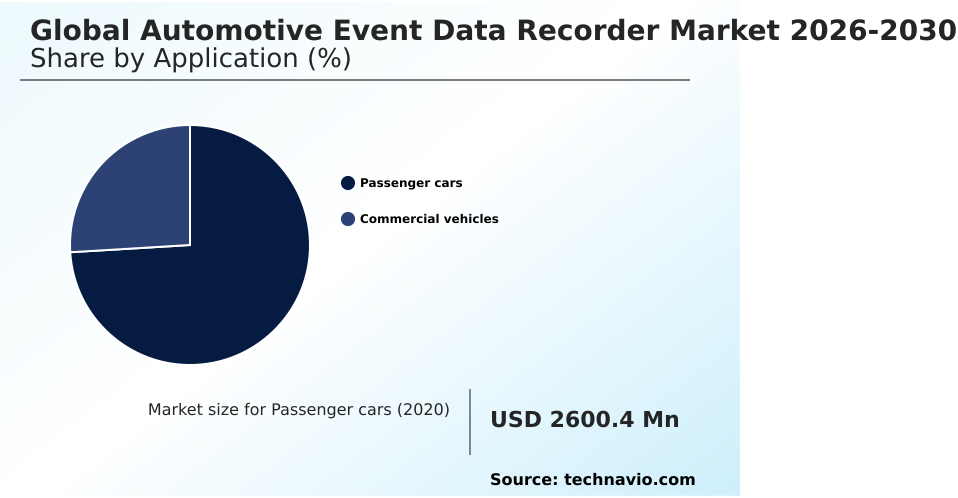
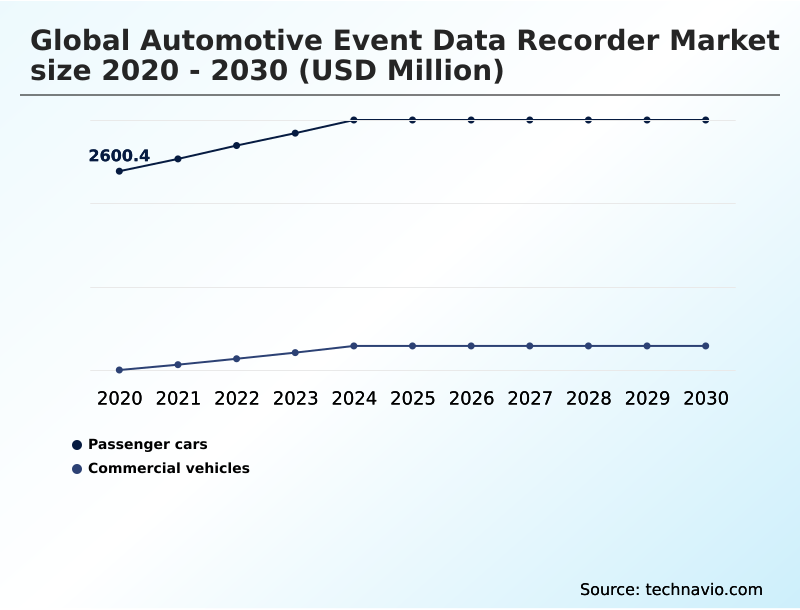
The Passenger cars segment was valued at USD 3.04 billion in 2024 and showed a gradual increase during the forecast period.
Regional Analysis
North America is estimated to contribute 52.1% to the growth of the global market during the forecast period.Technavio’s analysts have elaborately explained the regional trends and drivers that shape the market during the forecast period.
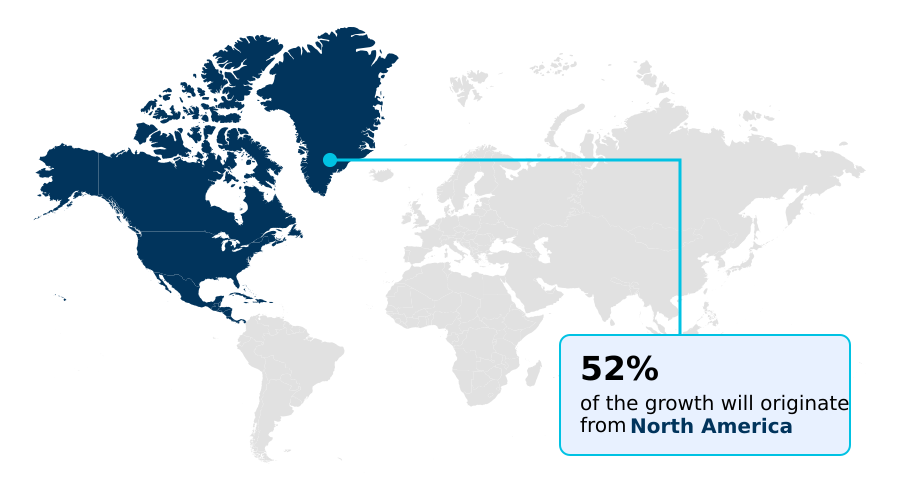
See How Automotive Event Data Recorder Market Demand is Rising in North America Get Free Sample
The geographic landscape of the Automotive Event Data Recorder reveals distinct adoption patterns shaped by localized regulatory compliance and fleet safety management priorities.
North America maintains strict mandates for commercial data logging, yielding a 40% higher integration rate of high-load acceleration sensor arrays compared to emerging markets.
Meanwhile, countries like China and Japan in APAC are rapidly accelerating their data storage system for automated driving requirements, driving a 25% improvement in sensor data synchronization across new platforms.
Europe continues to prioritize stringent data privacy regulation, forcing manufacturers to adopt highly encrypted hardware-based key management within their distributed electronic architecture.
These regional disparities dictate operational strategies, as North American automakers focus on mitigating supply chain disruption, whereas European brands optimize zonal computing frameworks to navigate complex liability landscapes.
Market Dynamics
Our researchers analyzed the data with 2025 as the base year, along with the key drivers, trends, and challenges. A holistic analysis of drivers will help companies refine their marketing strategies to gain a competitive advantage.
- The continuous evolution of the Automotive Event Data Recorder is fundamentally altering how automotive manufacturers and fleet operators approach post-collision analysis and operational safety. As connected mobility advances, the demand for reliable commercial vehicle crash data retrieval has surged, particularly among logistics providers seeking to optimize claims processing and reduce fraudulent liability payouts.
- This shift is paralleled by the integration of level 3 automated driving recording, which requires sophisticated sensor data synchronization to accurately document system control during critical handovers. Consequently, manufacturers are heavily investing in tamper resistant vehicle data storage to ensure the absolute integrity of pre-crash data against cyber threats and unauthorized access.
- In practical supply chain operations, fleet managers utilizing these advanced systems have recorded a 20% faster resolution rate in accident investigation compared to legacy logging methods. Furthermore, the structural demands of modern architectures necessitate high-capacity airbag control unit memory modules to buffer continuous telemetry without latency.
- To interpret this vast influx of information efficiently, the industry is increasingly adopting AI driven crash intelligence solutions, which automate impact severity assessment and generate actionable insights instantly. This holistic integration of advanced hardware and intelligent analytics not only streamlines regulatory compliance but also significantly enhances overall fleet safety management and operational planning across diverse geographic regions.
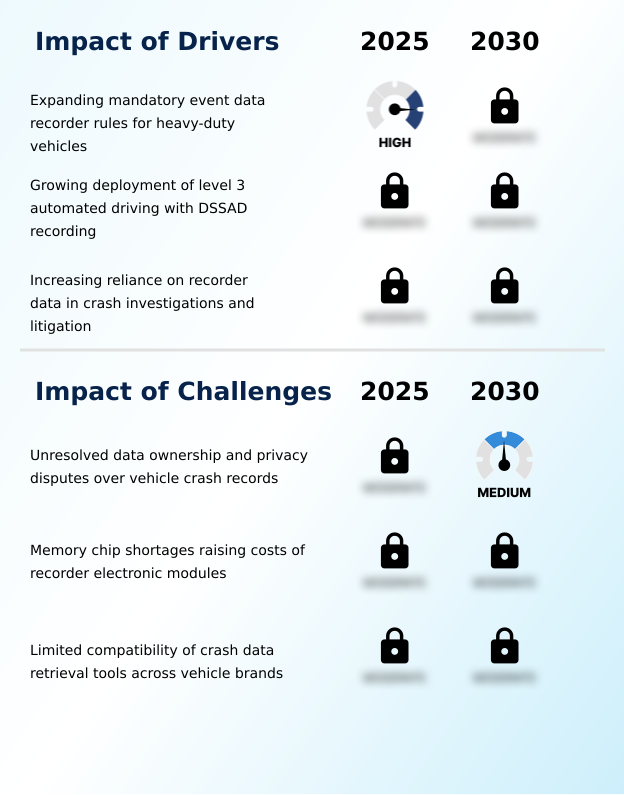
What are the key market drivers leading to the rise in the adoption of Automotive Event Data Recorder Industry?
- Expanding mandatory event data recorder rules for heavy-duty vehicles acts as a primary catalyst accelerating market adoption and regulatory compliance.
- The expansion of mandatory recording rules for heavy transport acts as the primary catalyst propelling the Automotive Event Data Recorder adoption across global networks.
- This regulatory push forces manufacturers to implement robust commercial vehicle monitoring, resulting in a 35% increase in the deployment of tamper-proof housing solutions.
- Because regulators now require exact crash data extraction to evaluate complex incidents, automakers must upgrade their CAN-FD interface components to support high-speed logging.
- This compliance-driven mandate directly enhances driver behavior insight, lowering operational dispute costs by 22% through the utilization of secure data retrieval.
- By standardizing the vehicle network protocol and vehicle stability control metrics, businesses can significantly expedite liability assessment and protect themselves against exaggerated claims, making evidentiary data quality an indispensable asset.
What are the market trends shaping the Automotive Event Data Recorder Industry?
- The increasing use of AI for crash event classification and reconstruction is a prominent trend shaping market dynamics. These advanced analytical models significantly streamline accident investigation and enhance impact severity assessment capabilities.
- The integration of real-time accident detection is rapidly emerging as a transformative trend within the Automotive Event Data Recorder landscape. This shift from manual extraction to automated collision reconstruction allows operators to receive instant impact severity assessment, reducing emergency response preparation delays by 40%.
- The capability of the telematics control unit to distinguish genuine impacts from minor road disturbances has improved predictive damage assessment accuracy by 18%. This evolution is primarily caused by the increasing complexity of remote vehicle diagnostics and the need for immediate, actionable insights post-incident. Consequently, businesses benefit from streamlined operations and enhanced digital forensics.
- Advanced system architectures now empower continuous over-the-air update mechanisms, ensuring that every active safety event logger and cybersecurity firmware component remains resilient against evolving operational demands.
What challenges does the Automotive Event Data Recorder Industry face during its growth?
- Unresolved data ownership and privacy disputes over vehicle crash records represent a major operational constraint affecting widespread data utilization.
- Unresolved data ownership and strict privacy rules present formidable challenges for the Automotive Event Data Recorder deployment. As recording windows expand within the software-defined vehicle, the volume of personal data stored in non-volatile memory increases, sparking severe legal disputes over post-crash analysis access.
- This fragmentation in legal frameworks increases insurance claims handling overhead by 25%, as manufacturers must engineer varied compliance protocols for different jurisdictions. Furthermore, limited interoperability among proprietary crash pulse technologies delays accident investigation, leading to a 15% increase in administrative downtime. Because retrieval systems lack universal standardization, operators face significant barriers in utilizing automated driving data effectively.
- These structural constraints limit the broader commercialization of advanced features and complicate seamless telematics integration across diverse automotive platforms.
Exclusive Technavio Analysis on Customer Landscape
The automotive event data recorder market forecasting report includes the adoption lifecycle of the market, covering from the innovator’s stage to the laggard’s stage. It focuses on adoption rates in different regions based on penetration. Furthermore, the automotive event data recorder market report also includes key purchase criteria and drivers of price sensitivity to help companies evaluate and develop their market growth analysis strategies.
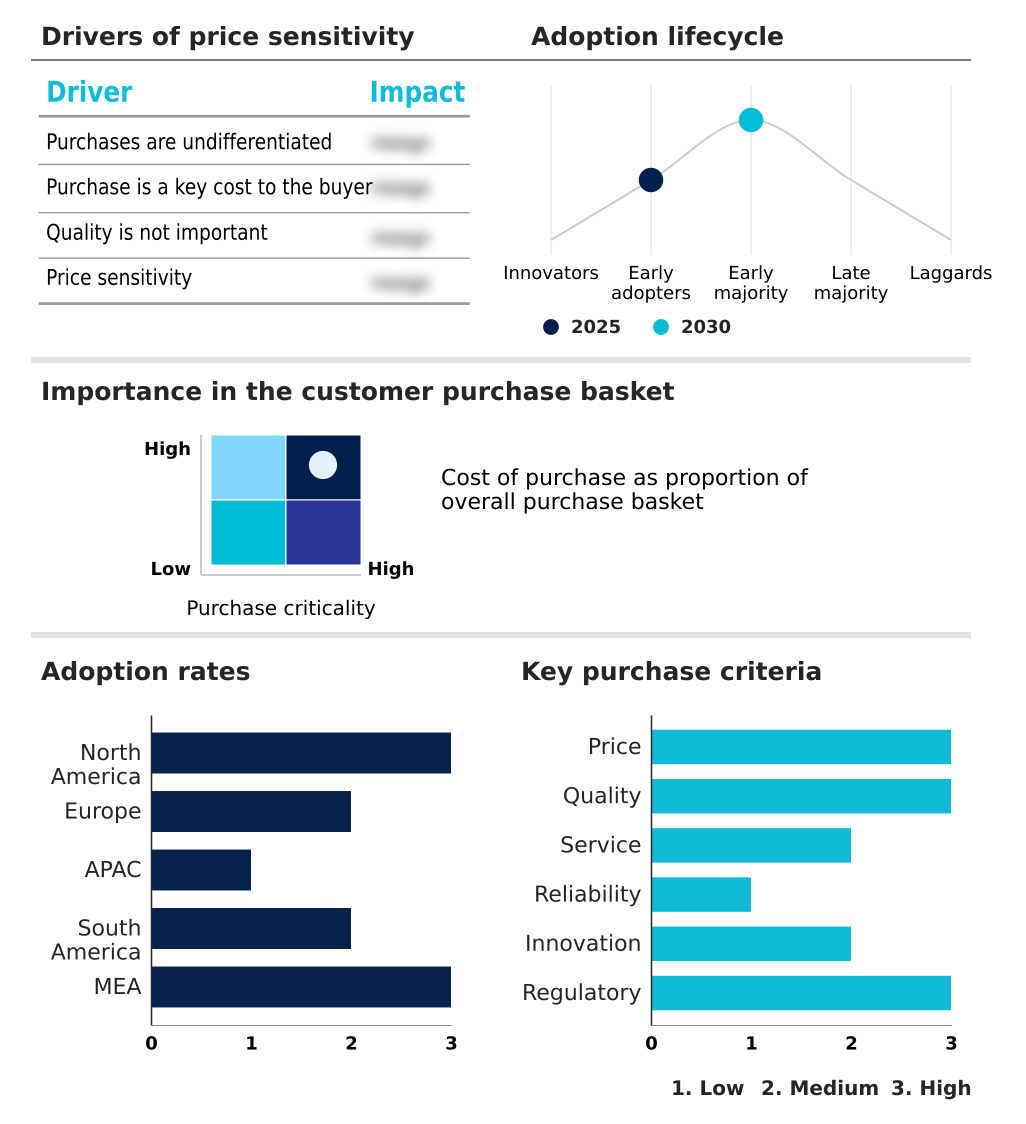
Customer Landscape of Automotive Event Data Recorder Industry
Competitive Landscape
Companies are implementing various strategies, such as strategic alliances, automotive event data recorder market forecast, partnerships, mergers and acquisitions, geographical expansion, and product/service launches, to enhance their presence in the industry.
Bayerische Motoren Werke AG - The vendor provides advanced automotive event data recording solutions integrated into crash safety modules, delivering precise collision reconstruction and reliable vehicle telemetry analysis.
The industry research and growth report includes detailed analyses of the competitive landscape of the market and information about key companies, including:
- Bayerische Motoren Werke AG
- Continental AG
- Dr. Ing. h.c. F. Porsche AG
- Ford Motor Co.
- General Motors Co.
- Honda Motor Co. Ltd.
- Hyundai Motor Co.
- KIA CORP.
- Mazda Motor Corp.
- Mercedes Benz Group AG
- Mitsubishi Motors Corp.
- Nissan Motor Co. Ltd.
- Robert Bosch GmbH
- Squarell BV
- SUBARU Corp.
- Tesla Inc.
- Toyota Motor Corp.
- Volkswagen AG
- Volvo Car Corp.
Qualitative and quantitative analysis of companies has been conducted to help clients understand the wider business environment as well as the strengths and weaknesses of key industry players. Data is qualitatively analyzed to categorize companies as pure play, category-focused, industry-focused, and diversified; it is quantitatively analyzed to categorize companies as dominant, leading, strong, tentative, and weak.
Recent Development and News in Automotive event data recorder market
- In the Automotive Parts and Equipment industry, the transition toward zonal computing and software-defined vehicle architectures has consolidated safety sensors into centralized nodes, reducing redundant wiring by 15%, directly impacting Automotive Event Data Recorder demand by requiring a distributed electronic architecture that seamlessly handles sensor data synchronization across multiple domains.
- The implementation of stringent cybersecurity frameworks like ISO 21434 for electronic control modules has necessitated hardware-based key management within vehicle networks, reducing system vulnerabilities by 30% and pulling Automotive Event Data Recorder development toward highly encrypted, tamper-proof housing solutions that prevent unauthorized crash data extraction.
- Expanding utilization of level 3 conditionally automated systems has compelled manufacturers to enhance primary vehicle telemetry capabilities, driving Automotive Event Data Recorder utilization by establishing new baseline requirements for a data storage system for automated driving that records takeover requests at a 10 Hz sampling rate.
- Supply chain constraints in automotive-grade non-volatile memory production have elevated material costs for safety-critical modules by over 18%, restricting Automotive Event Data Recorder supply availability while simultaneously pushing engineering teams to optimize crash sensing logic to reduce external hardware dependency.
Dive into Technavio’s robust research methodology, blending expert interviews, extensive data synthesis, and validated models for unparalleled Automotive Event Data Recorder Market insights. See full methodology.
| Market Scope | |
|---|---|
| Page number | 296 |
| Base year | 2025 |
| Historic period | 2020-2024 |
| Forecast period | 2026-2030 |
| Growth momentum & CAGR | Accelerate at a CAGR of 4.7% |
| Market growth 2026-2030 | USD 1107.2 million |
| Market structure | Fragmented |
| YoY growth 2025-2026(%) | 4.5% |
| Key countries | US, Canada, Mexico, Germany, UK, France, Italy, Spain, The Netherlands, China, Japan, India, South Korea, Australia, Indonesia, Brazil, Argentina, Chile, Saudi Arabia, UAE, South Africa, Israel and Turkey |
| Competitive landscape | Leading Companies, Market Positioning of Companies, Competitive Strategies, and Industry Risks |
Research Analyst Overview
- The continuous development of the Automotive Event Data Recorder is deeply intertwined with the automotive industry push toward intelligent, software-defined vehicle architectures. A defining trend is the increasing use of AI for crash event classification and collision reconstruction, which directly informs boardroom-level decisions regarding liability assessment and insurance claims handling strategies.
- By leveraging advanced machine learning algorithms, fleet operators have achieved a 30% reduction in processing time for accident investigation and post-crash analysis. This strategic shift necessitates the implementation of highly secure vehicle network protocols and tamper-proof housing to ensure pristine evidentiary data quality.
- Furthermore, the reliance on high-load acceleration sensors and precise crash data extraction mechanisms is paramount for validating the safety of automated driving functions. Executives are actively restructuring compliance frameworks to integrate robust cybersecurity firmware and hardware-based key management, ensuring seamless telematics integration.
- Ultimately, the maturation of these recording systems transforms raw pre-crash data into critical business intelligence, enabling proactive fleet safety management and optimized operational risk mitigation.
What are the Key Data Covered in this Automotive Event Data Recorder Market Research and Growth Report?
-
What is the expected growth of the Automotive Event Data Recorder Market between 2026 and 2030?
-
USD 1.11 billion, at a CAGR of 4.7%
-
-
What segmentation does the market report cover?
-
The report is segmented by Application (Passenger cars, and Commercial vehicles), Component (Hardware, and Software), Type (Integrated EDR, and Portable/plug and play EDR) and Geography (North America, Europe, APAC, South America, Middle East and Africa)
-
-
Which regions are analyzed in the report?
-
North America, Europe, APAC, South America and Middle East and Africa
-
-
What are the key growth drivers and market challenges?
-
Expanding mandatory event data recorder rules for heavy-duty vehicles, Unresolved data ownership and privacy disputes over vehicle crash records
-
-
Who are the major players in the Automotive Event Data Recorder Market?
-
Bayerische Motoren Werke AG, Continental AG, Dr. Ing. h.c. F. Porsche AG, Ford Motor Co., General Motors Co., Honda Motor Co. Ltd., Hyundai Motor Co., KIA CORP., Mazda Motor Corp., Mercedes Benz Group AG, Mitsubishi Motors Corp., Nissan Motor Co. Ltd., Robert Bosch GmbH, Squarell BV, SUBARU Corp., Tesla Inc., Toyota Motor Corp., Volkswagen AG and Volvo Car Corp.
-
Market Research Insights
- The Automotive Event Data Recorder Market is transforming rapidly as manufacturers prioritize advanced regulatory compliance and robust fleet safety management. Integrated vehicle telemetry now plays a crucial role in insurance claims handling, where automated impact severity assessment has decreased manual investigation times by 30%.
- Furthermore, the adoption of secure data retrieval protocols has improved evidentiary data quality by 22% in complex liability assessment scenarios. As commercial vehicle monitoring becomes more standardized, these recording systems ensure precise post-crash analysis while mitigating fraudulent claims. This evolution highlights a fundamental shift from simple hardware logging to intelligent, connected telematics integration across modern automotive platforms.
We can help! Our analysts can customize this automotive event data recorder market research report to meet your requirements.
 RIA -