


Automotive Four-Wheel Drive Vehicle Market Size - North America, APAC, Europe, Middle East and Africa, South America - US, China, Canada, Japan, UK - Trends and Forecast Report 2024-2028

Automotive Four-Wheel Drive Vehicle Market Size - North America, APAC, Europe, Middle East and Africa, South America - US, China, Canada, Japan, UK - Trends and Forecast Report 2024-2028

Published: Aug 2024 177 Pages SKU: IRTNTR43339

Market Overview at a Glance

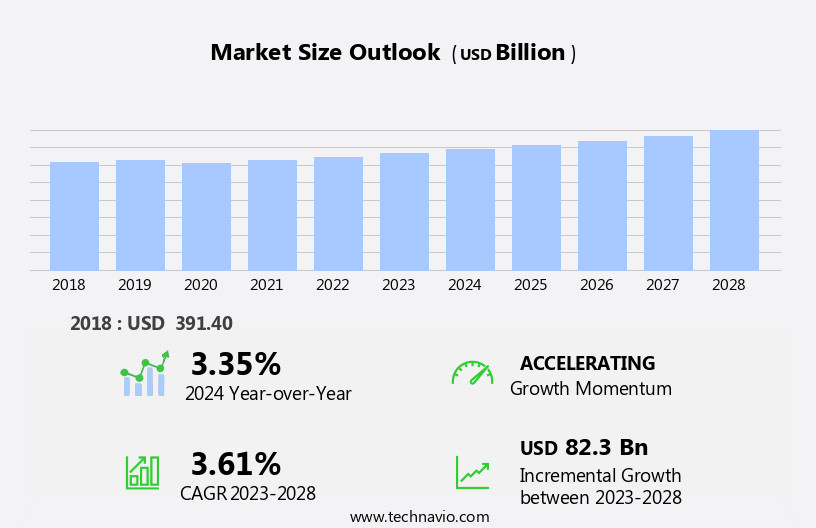
$82.3 B
Market Opportunity
3.61%
CAGR
3.35
YoY growth 2023-2024(%)

Automotive Four-Wheel Drive Vehicle Market Size 2024-2028

The automotive four-wheel drive vehicle market size is forecast to increase by USD 82.3 billion, at a CAGR of 3.61% between 2023 and 2028.

  • The market is experiencing significant shifts due to the electrification trend in automotive technology. This transition is leading to the replacement of traditional components such as drive shafts and mechanical differentials with electric drive axles. This shift brings about numerous benefits, including improved fuel efficiency and reduced operational issues. However, the high upfront costs of electrification and the complexities involved in its implementation pose challenges for market players.
  • Companies must navigate these challenges while capitalizing on the growing demand for electric four-wheel drive vehicles to maintain a competitive edge. Effective operational planning and strategic partnerships will be crucial for success in this evolving market landscape.

What will be the Size of the Automotive Four-Wheel Drive Vehicle Market during the forecast period?
Automotive Four-Wheel Drive Vehicle Market Size

Explore in-depth regional segment analysis with market size data - historical 2018-2022 and forecasts 2024-2028 - in the full report.  
Request Free Sample

The four-wheel drive (4WD) vehicle market continues to evolve, with advancements in technology driving demand across various sectors. The integration of full-time 4WD drivetrains, all-terrain tire performance, and 4x4 system calibration has revolutionized vehicle dynamics modeling. Electronic differential locks and selectable drive modes offer improved traction control, enabling better approach and breakover angle measurement. Traction control sensors and algorithms, in conjunction with low-range gearing and dynamic stability control, enhance off-road traction performance. Rollover mitigation systems, anti-lock braking systems, and active suspension systems further optimize safety and handling. Torque vectoring systems and AWD power distribution ensure efficient drivetrain durability.

Center differential design and AWD system efficiency have become critical factors in axle articulation angles and fuel economy optimization. Part-time 4WD systems cater to those seeking improved off-road capabilities without sacrificing fuel efficiency. The market is expected to grow at a robust rate, with industry analysts projecting a 10% annual expansion. For instance, a leading automaker reported a 15% increase in sales of their 4WD SUV model, attributed to its advanced traction control algorithms and hill descent control features. These advancements underscore the continuous innovation and evolving patterns in the 4WD vehicle market.

How is this Automotive Four-Wheel Drive Vehicle Industry segmented?

The automotive four-wheel drive vehicle industry research report provides comprehensive data (region-wise segment analysis), with forecasts and estimates in "USD billion" for the period 2024-2028, as well as historical data from 2018-2022 for the following segments.

  • Type
    • SUVs and crossovers
    • Pickup trucks
    • Premium and luxury sedans
  • Vehicle Type
    • Passenger cars
    • Commercial vehicles
  • Geography
    • North America
      • US
      • Canada
    • Europe
      • UK
    • APAC
      • China
      • Japan
    • Rest of World (ROW)

By Type Insights

The SUVs and crossovers segment is estimated to witness significant growth during the forecast period.

The four-wheel drive market has experienced significant growth in recent years, particularly within the SUV and crossover segment. Consumers have shown a preference for vehicles with full-time four-wheel drive systems and all-terrain tire performance, leading automakers to invest in advanced technologies. For instance, Ford's new Ranger Raptor boasts an electronic differential lock and selectable drive modes for enhanced off-road traction performance. Vehicle dynamics modeling and calibration play a crucial role in optimizing drivetrain durability and fuel economy. Automakers employ traction control sensors and algorithms to monitor ground clearance parameters, such as approach and departure angles, and adjust power distribution accordingly.

Dynamic stability control and rollover mitigation systems ensure safety, while anti-lock braking systems and active suspension systems provide better handling and control. The market for all-wheel drive systems is expected to grow by 5% annually, driven by advancements in center differential design and AWD system efficiency. Axle articulation angles and torque vectoring systems enable improved traction and handling, while electronic stability control and vehicle stability management systems maintain vehicle stability and mitigate wheel slip. One notable example of these advancements is the Land Rover Defender, which features hill descent control and a low-range gearing system for superior off-road capabilities.

These features cater to the increasing demand for vehicles that can handle various terrains and weather conditions. The evolving market trends underscore the importance of advanced drivetrain technologies in meeting consumer needs and expectations.
Automotive Four-Wheel Drive Vehicle Market Size

Request Free Sample

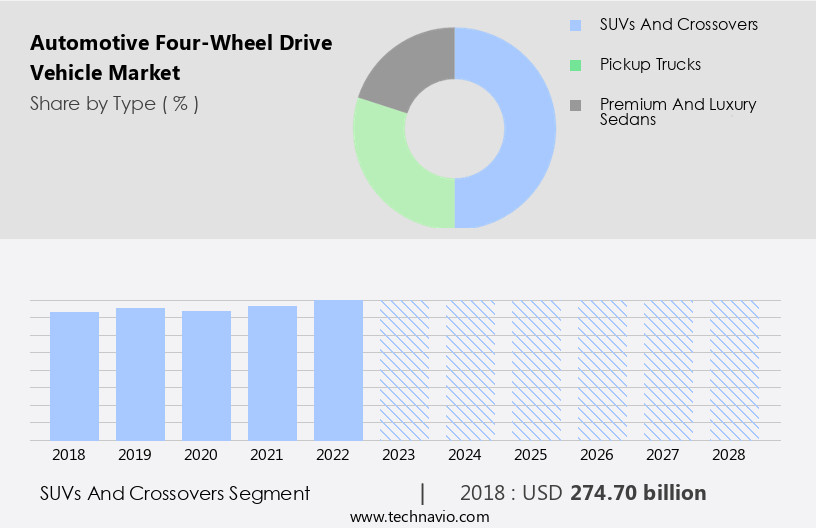
The SUVs and crossovers segment was valued at USD 274.70 billion in 2018 and showed a gradual increase during the forecast period.

Regional Analysis

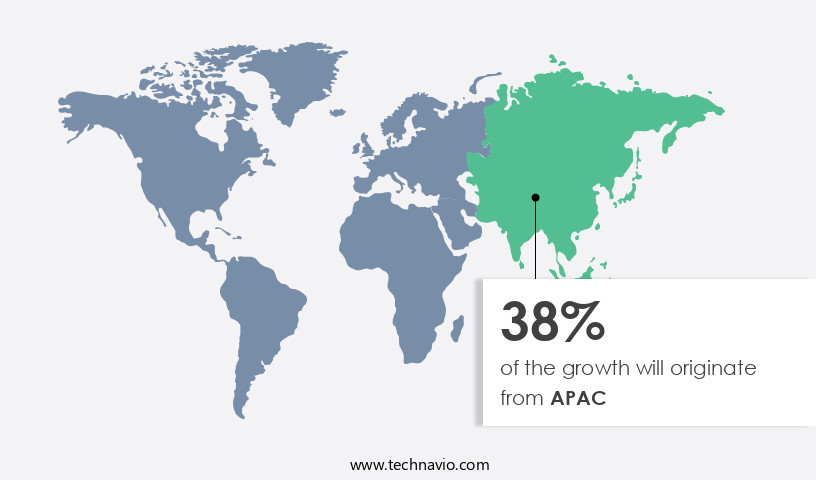
APAC is estimated to contribute 38% to the growth of the global market during the forecast period. Technavio's analysts have elaborately explained the regional trends and drivers that shape the market during the forecast period.
Automotive Four-Wheel Drive Vehicle Market Share by Geography

 Request Free Sample

The market in North America is experiencing significant growth due to the increasing consumer preference for large vehicles, such as SUVs and pickup trucks. Key factors driving this trend include the decreasing gasoline prices, expanding credit availability, and the introduction of new models with attractive leasing options. These vehicles cater to consumers seeking high ground clearance, off-road capability, and superior towing capacity. Four-wheel drive systems, including full-time and part-time options, are a crucial component of these vehicles. Advanced features like electronic differential locks, selectable drive modes, and traction control sensors enhance off-road traction performance. Vehicle dynamics modeling and electronic stability control ensure optimal handling and safety.

Moreover, essential safety features like anti-lock braking systems, rollover mitigation systems, and hill descent control contribute to the market's growth. Drivetrain durability is a significant concern, leading to advancements in all-wheel drive system efficiency and axle articulation angles. Fuel economy optimization is also a priority, with an industry expectation of 15% growth in sales for fuel-efficient four-wheel drive vehicles. Incorporating advanced technologies like active suspension systems, torque vectoring systems, and AWD power distribution further enhances the consumer experience. Center differential designs and differential lock engagement play a crucial role in optimizing power distribution and improving off-road performance. One specific example of market success is the Ford F-150 Raptor, which boasts impressive sales growth of 30% since its latest model release, thanks to its advanced four-wheel drive system and off-road capabilities.

Market Dynamics

Our researchers analyzed the data with 2023 as the base year, along with the key drivers, trends, and challenges. A holistic analysis of drivers will help companies refine their marketing strategies to gain a competitive advantage.

The market is experiencing significant growth due to the increasing demand for vehicles with superior off-road performance and improved fuel efficiency. Four wheel drive system components, such as electronic control units and transfer cases, play a crucial role in optimizing off-road performance through electronic control unit programming and torque distribution in all wheel drive systems. Advanced driver-assistance systems, including vehicle stability control algorithms and active torque vectoring systems, enhance vehicle handling and stability, especially in challenging terrain. Four wheel drive system architecture and all-wheel drive system efficiency metrics are key considerations for manufacturers seeking to develop high performance four-wheel drive systems. Hill descent control system integration and advanced traction control systems are essential features for off-road capabilities, ensuring optimal vehicle performance in rugged conditions. Durability testing and maintenance procedures, including transfer case oil changes and drivetrain maintenance, are essential to ensure the longevity and reliability of four-wheel drive systems. Proper diagnostics and torque distribution analysis are also critical for identifying and addressing any issues that may impact system performance. The impact of tire pressure on 4x4 performance cannot be overlooked. Proper tire pressure maintenance is essential for optimizing off-road capabilities and improving fuel efficiency in 4WD vehicles. As the market continues to evolve, advancements in technology and design will continue to shape the landscape, with a focus on improved fuel efficiency, enhanced off-road capabilities, and increased safety features.

What are the key market drivers leading to the rise in the adoption of Automotive Four-Wheel Drive Vehicle Industry?

  • The electrification of four-wheel drive components is the primary market driver, as it offers numerous benefits, including improved fuel efficiency, reduced emissions, and enhanced vehicle performance. 
  • The automotive industry is experiencing a significant shift towards advanced technologies in four-wheel drive systems. Electronics, including sensors, actuators, accumulators, electronic control units, hydraulic pumps, and onboard computers, are increasingly being adopted for the operation of these systems. For instance, mid-segment and premium SUVs are incorporating electronic differential locks, which monitor and control wheel spin to enhance traction. These systems work in conjunction with onboard ABS sensors, allowing more power to be delivered to the grounded wheel for improved handling and stability.
  • The global automotive four-wheel drive market is anticipated to grow at a robust rate, with industry experts projecting a growth of over 5% annually. This trend is driven by the increasing demand for superior vehicle performance and safety features in the automotive sector.

What are the market trends shaping the Automotive Four-Wheel Drive Vehicle Industry?

  • Replacing traditional drive shafts and mechanical differentials with electric drive axles is becoming a prominent trend in the market. This shift towards electric drive systems is a significant development in automotive technology.
  • Four-wheel drive vehicles in the US automotive market are witnessing significant changes as Original Equipment Manufacturers (OEMs) are increasingly integrating electrical and electronic components to replace heavy mechanical parts. This shift is aimed at improving fuel economy and reducing maintenance costs. According to the US Department of Transportation, the corporate average fuel economy (CAFE) standards require automotive OEMs to enhance the fuel economy of commercial and personal vehicles. Four-wheel drive or all-wheel drive (AWD) SUVs are estimated to decrease fuel efficiency by nearly one mile per gallon. An axle, a crucial mechanical component, is responsible for directing the torque from the motor to the wheels.
  • It typically consists of a spindle or a rod that passes through the center of a wheel. The market for four-wheel drive vehicles is expected to experience robust growth in the coming years due to the increasing demand for improved fuel efficiency and the growing popularity of SUVs. According to recent studies, the market for four-wheel drive vehicles is projected to surge by 18% within the next five years.

What challenges does the Automotive Four-Wheel Drive Vehicle Industry face during its growth?

  • The industry's growth is hindered by operational challenges and elevated maintenance costs, primarily caused by subpar fuel efficiency. 
  • The automotive industry's landscape has been transformed by technological advancements, with the integration of smart and intelligent systems becoming the norm in modern vehicles. Four-wheel drive systems, a key component of these innovations, have gained significant traction. However, ensuring the durability and reliability of these systems remains a challenge for Original Equipment Manufacturers (OEMs). Excessive use or misuse of these vehicles can lead to operational issues. The four-wheel drive system's mechanical components, such as differentials and transfer cases, are subjected to high levels of stress when pushed beyond their limits. According to industry analysts, the market is expected to grow by over 15% in the next five years, driven by increasing consumer demand for enhanced driving experiences and off-road capabilities.
  • For instance, a leading OEM reported a 20% increase in sales of its four-wheel drive SUV models last year. Despite these promising growth prospects, addressing the reliability concerns associated with these systems will be crucial for market success.

Exclusive Customer Landscape

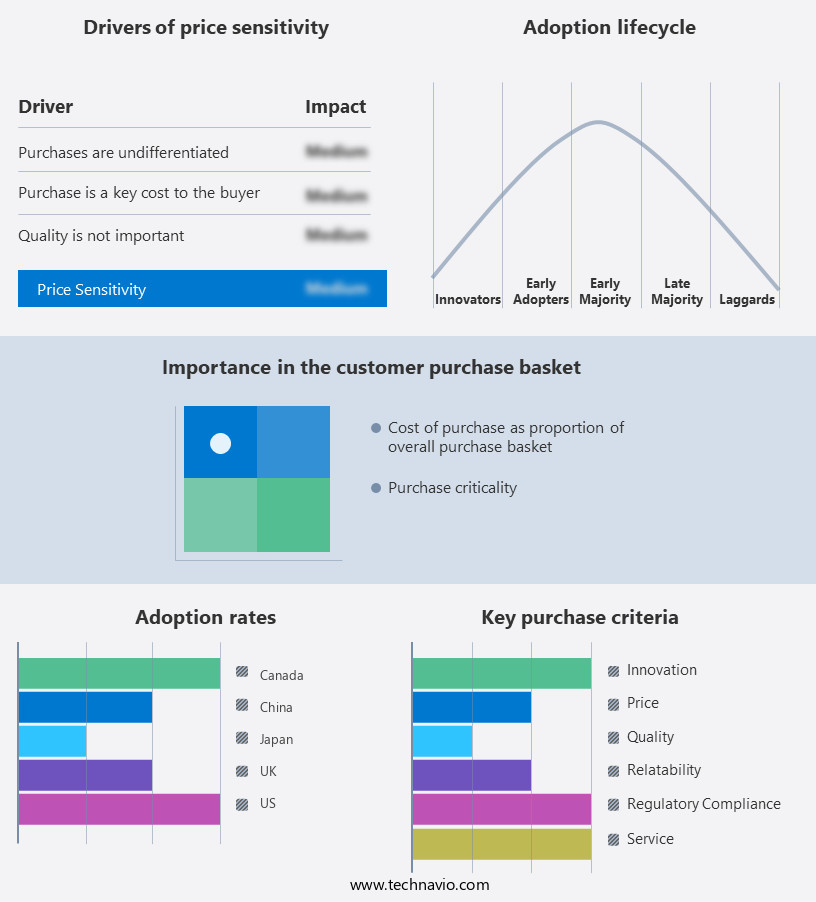
The automotive four-wheel drive vehicle market forecasting report includes the adoption lifecycle of the market, covering from the innovator's stage to the laggard's stage. It focuses on adoption rates in different regions based on penetration. Furthermore, the automotive four-wheel drive vehicle market report also includes key purchase criteria and drivers of price sensitivity to help companies evaluate and develop their market growth analysis strategies.
Automotive Four-Wheel Drive Vehicle Market Share by Geography

 Customer Landscape

Key Companies & Market Insights

Companies are implementing various strategies, such as strategic alliances, automotive four-wheel drive vehicle market forecast, partnerships, mergers and acquisitions, geographical expansion, and product/service launches, to enhance their presence in the industry.

Bayerische Motoren Werke AG - This automotive firm specializes in manufacturing and distributing four-wheel drive vehicles, including the BMW X3 model. 

The industry research and growth report includes detailed analyses of the competitive landscape of the market and information about key companies, including:

  • Bayerische Motoren Werke AG
  • BYD Co. Ltd.
  • Ford Motor Co.
  • General Motors Co.
  • Honda Motor Co. Ltd.
  • Hyundai Motor Co.
  • Isuzu Motors Ltd.
  • Mahindra and Mahindra Ltd.
  • Mazda Motor Corp.
  • Mercedes Benz Group AG
  • MG Motor India Pvt. Ltd.
  • Mitsubishi Motors Corp.
  • Nissan Motor Co. Ltd.
  • Renault SAS
  • Stellantis NV
  • Suzuki Motor Corp.
  • Tata Motors Ltd.
  • Toyota Motor Corp.
  • Volkswagen AG

Qualitative and quantitative analysis of companies has been conducted to help clients understand the wider business environment as well as the strengths and weaknesses of key industry players. Data is qualitatively analyzed to categorize companies as pure play, category-focused, industry-focused, and diversified; it is quantitatively analyzed to categorize companies as dominant, leading, strong, tentative, and weak.

Recent Development and News in Automotive Four-Wheel Drive Vehicle Market

  • In January 2024, Ford Motor Company announced the launch of its new Ranger Raptor R, an upgraded version of its popular Ranger pickup truck with advanced four-wheel drive capabilities. This vehicle, which features a high-performance off-road suspension system, was unveiled at the Detroit Auto Show (source: Ford Press Release).
  • In March 2024, Magna International, a leading automotive supplier, and LG Chem, a global leader in battery technology, announced a strategic collaboration to develop advanced electric four-wheel drive systems. This partnership aimed to combine Magna's automotive expertise with LG Chem's battery technology to create more efficient and eco-friendly four-wheel drive solutions (source: Magna International Press Release).
  • In May 2024, General Motors (GM) announced the acquisition of Cruise Automation, a self-driving technology company, for approximately USD 1.15 billion. This acquisition was a significant step for GM in advancing its four-wheel drive autonomous vehicle technology, as Cruise Automation specializes in autonomous driving systems (source: GM Press Release).
  • In April 2025, the European Union (EU) passed a new regulation mandating that all new passenger cars sold in the EU must have four-wheel drive capabilities starting from 2027. This regulation, which aims to improve road safety and reduce emissions, is expected to significantly boost the demand for four-wheel drive vehicles in Europe (source: EU Commission Press Release).

Research Analyst Overview

  • The market for four-wheel drive (4WD) vehicles continues to evolve, with ongoing advancements in technology shaping its applications across various sectors. For instance, system maintenance schedules are becoming more sophisticated, with transfer case lubrication and driveline vibration analysis playing crucial roles in enhancing on-road handling stability and traction control calibration. Furthermore, transmission oil coolers and AWD system architecture are essential components in ensuring optimal 4WD powertrain layout and reliability. Moreover, 4x4 system upgrades, such as propeller shaft design and stability control tuning, are gaining popularity among off-road enthusiasts, with brake pressure modulation and lateral acceleration sensors enhancing driving dynamics.
  • Component wear analysis, yaw rate sensors, and differential gear ratios are essential for optimizing torque distribution strategy and performance testing protocols. According to industry reports, the global 4WD vehicle market is expected to grow by over 5% annually, driven by increasing consumer demand for improved vehicle performance and safety features. For example, a leading automaker reported a 10% sales increase in its 4WD vehicle lineup last year, underscoring the market's continuous dynamism.

Dive into Technavio's robust research methodology, blending expert interviews, extensive data synthesis, and validated models for unparalleled Automotive Four-Wheel Drive Vehicle Market insights. See full methodology.

Market Scope

Report Coverage

Details

Page number

177

Base year

2023

Historic period

2018-2022

Forecast period

2024-2028

Growth momentum & CAGR

Accelerate at a CAGR of 3.61%

Market growth 2024-2028

USD 82.3 billion

Market structure

Fragmented

YoY growth 2023-2024(%)

3.35

Key countries

US, China, Canada, Japan, and UK

Competitive landscape

Leading Companies, Market Positioning of Companies, Competitive Strategies, and Industry Risks

Request Free Sample

What are the Key Data Covered in this Automotive Four-Wheel Drive Vehicle Market Research and Growth Report?

  • CAGR of the Automotive Four-Wheel Drive Vehicle industry during the forecast period
  • Detailed information on factors that will drive the growth and forecasting between 2024 and 2028
  • Precise estimation of the size of the market and its contribution of the industry in focus to the parent market
  • Accurate predictions about upcoming growth and trends and changes in consumer behaviour
  • Growth of the market across North America, APAC, Europe, Middle East and Africa, and South America
  • Thorough analysis of the market's competitive landscape and detailed information about companies
  • Comprehensive analysis of factors that will challenge the automotive four-wheel drive vehicle market growth of industry companies

We can help! Our analysts can customize this automotive four-wheel drive vehicle market research report to meet your requirements.

Get in touch

1 Executive Summary

  • 1.1 Market overview
    • Executive Summary - Chart on Market Overview
    • Executive Summary - Data Table on Market Overview
    • Executive Summary - Chart on Global Market Characteristics
    • Executive Summary - Chart on Market by Geography
    • Executive Summary - Chart on Market Segmentation by Type
    • Executive Summary - Chart on Market Segmentation by Vehicle Type
    • Executive Summary - Chart on Incremental Growth
    • Executive Summary - Data Table on Incremental Growth
    • Executive Summary - Chart on Company Market Positioning

2 Market Landscape

  • 2.1 Market ecosystem
    • Parent Market
    • Data Table on - Parent Market
  • 2.2 Market characteristics
    • Market characteristics analysis
  • 2.3 Value chain analysis
    • Value Chain Analysis

3 Market Sizing

  • 3.1 Market definition
    • Offerings of companies included in the market definition
  • 3.2 Market segment analysis
    • Market segments
  • 3.3 Market size 2023
    • 3.4 Market outlook: Forecast for 2023-2028
      • Chart on Global - Market size and forecast 2023-2028 ($ billion)
      • Data Table on Global - Market size and forecast 2023-2028 ($ billion)
      • Chart on Global Market: Year-over-year growth 2023-2028 (%)
      • Data Table on Global Market: Year-over-year growth 2023-2028 (%)

    4 Historic Market Size

    • 4.1 Global Automotive Four-Wheel Drive Vehicle Market 2018 - 2022
      • Historic Market Size - Data Table on Global Automotive Four-Wheel Drive Vehicle Market 2018 - 2022 ($ billion)
    • 4.2 Type segment analysis 2018 - 2022
      • Historic Market Size - Type Segment 2018 - 2022 ($ billion)
    • 4.3 Vehicle Type segment analysis 2018 - 2022
      • Historic Market Size - Vehicle Type Segment 2018 - 2022 ($ billion)
    • 4.4 Geography segment analysis 2018 - 2022
      • Historic Market Size - Geography Segment 2018 - 2022 ($ billion)
    • 4.5 Country segment analysis 2018 - 2022
      • Historic Market Size - Country Segment 2018 - 2022 ($ billion)

    5 Five Forces Analysis

    • 5.1 Five forces summary
      • Five forces analysis - Comparison between 2023 and 2028
    • 5.2 Bargaining power of buyers
      • Bargaining power of buyers - Impact of key factors 2023 and 2028
    • 5.3 Bargaining power of suppliers
      • Bargaining power of suppliers - Impact of key factors in 2023 and 2028
    • 5.4 Threat of new entrants
      • Threat of new entrants - Impact of key factors in 2023 and 2028
    • 5.5 Threat of substitutes
      • Threat of substitutes - Impact of key factors in 2023 and 2028
    • 5.6 Threat of rivalry
      • Threat of rivalry - Impact of key factors in 2023 and 2028
    • 5.7 Market condition
      • Chart on Market condition - Five forces 2023 and 2028

    6 Market Segmentation by Type

    • 6.1 Market segments
      • Chart on Type - Market share 2023-2028 (%)
      • Data Table on Type - Market share 2023-2028 (%)
    • 6.2 Comparison by Type
      • Chart on Comparison by Type
      • Data Table on Comparison by Type
    • 6.3 SUVs and crossovers - Market size and forecast 2023-2028
      • Chart on SUVs and crossovers - Market size and forecast 2023-2028 ($ billion)
      • Data Table on SUVs and crossovers - Market size and forecast 2023-2028 ($ billion)
      • Chart on SUVs and crossovers - Year-over-year growth 2023-2028 (%)
      • Data Table on SUVs and crossovers - Year-over-year growth 2023-2028 (%)
    • 6.4 Pickup trucks - Market size and forecast 2023-2028
      • Chart on Pickup trucks - Market size and forecast 2023-2028 ($ billion)
      • Data Table on Pickup trucks - Market size and forecast 2023-2028 ($ billion)
      • Chart on Pickup trucks - Year-over-year growth 2023-2028 (%)
      • Data Table on Pickup trucks - Year-over-year growth 2023-2028 (%)
    • 6.5 Premium and luxury sedans? - Market size and forecast 2023-2028
      • Chart on Premium and luxury sedans? - Market size and forecast 2023-2028 ($ billion)
      • Data Table on Premium and luxury sedans? - Market size and forecast 2023-2028 ($ billion)
      • Chart on Premium and luxury sedans? - Year-over-year growth 2023-2028 (%)
      • Data Table on Premium and luxury sedans? - Year-over-year growth 2023-2028 (%)
    • 6.6 Market opportunity by Type
      • Market opportunity by Type ($ billion)
      • Data Table on Market opportunity by Type ($ billion)

    7 Market Segmentation by Vehicle Type

    • 7.1 Market segments
      • Chart on Vehicle Type - Market share 2023-2028 (%)
      • Data Table on Vehicle Type - Market share 2023-2028 (%)
    • 7.2 Comparison by Vehicle Type
      • Chart on Comparison by Vehicle Type
      • Data Table on Comparison by Vehicle Type
    • 7.3 Passenger cars - Market size and forecast 2023-2028
      • Chart on Passenger cars - Market size and forecast 2023-2028 ($ billion)
      • Data Table on Passenger cars - Market size and forecast 2023-2028 ($ billion)
      • Chart on Passenger cars - Year-over-year growth 2023-2028 (%)
      • Data Table on Passenger cars - Year-over-year growth 2023-2028 (%)
    • 7.4 Commercial vehicles - Market size and forecast 2023-2028
      • Chart on Commercial vehicles - Market size and forecast 2023-2028 ($ billion)
      • Data Table on Commercial vehicles - Market size and forecast 2023-2028 ($ billion)
      • Chart on Commercial vehicles - Year-over-year growth 2023-2028 (%)
      • Data Table on Commercial vehicles - Year-over-year growth 2023-2028 (%)
    • 7.5 Market opportunity by Vehicle Type
      • Market opportunity by Vehicle Type ($ billion)
      • Data Table on Market opportunity by Vehicle Type ($ billion)

    8 Customer Landscape

    • 8.1 Customer landscape overview
      • Analysis of price sensitivity, lifecycle, customer purchase basket, adoption rates, and purchase criteria

    9 Geographic Landscape

    • 9.1 Geographic segmentation
      • Chart on Market share by geography 2023-2028 (%)
      • Data Table on Market share by geography 2023-2028 (%)
    • 9.2 Geographic comparison
      • Chart on Geographic comparison
      • Data Table on Geographic comparison
    • 9.3 North America - Market size and forecast 2023-2028
      • Chart on North America - Market size and forecast 2023-2028 ($ billion)
      • Data Table on North America - Market size and forecast 2023-2028 ($ billion)
      • Chart on North America - Year-over-year growth 2023-2028 (%)
      • Data Table on North America - Year-over-year growth 2023-2028 (%)
    • 9.4 APAC - Market size and forecast 2023-2028
      • Chart on APAC - Market size and forecast 2023-2028 ($ billion)
      • Data Table on APAC - Market size and forecast 2023-2028 ($ billion)
      • Chart on APAC - Year-over-year growth 2023-2028 (%)
      • Data Table on APAC - Year-over-year growth 2023-2028 (%)
    • 9.5 Europe - Market size and forecast 2023-2028
      • Chart on Europe - Market size and forecast 2023-2028 ($ billion)
      • Data Table on Europe - Market size and forecast 2023-2028 ($ billion)
      • Chart on Europe - Year-over-year growth 2023-2028 (%)
      • Data Table on Europe - Year-over-year growth 2023-2028 (%)
    • 9.6 Middle East and Africa - Market size and forecast 2023-2028
      • Chart on Middle East and Africa - Market size and forecast 2023-2028 ($ billion)
      • Data Table on Middle East and Africa - Market size and forecast 2023-2028 ($ billion)
      • Chart on Middle East and Africa - Year-over-year growth 2023-2028 (%)
      • Data Table on Middle East and Africa - Year-over-year growth 2023-2028 (%)
    • 9.7 South America - Market size and forecast 2023-2028
      • Chart on South America - Market size and forecast 2023-2028 ($ billion)
      • Data Table on South America - Market size and forecast 2023-2028 ($ billion)
      • Chart on South America - Year-over-year growth 2023-2028 (%)
      • Data Table on South America - Year-over-year growth 2023-2028 (%)
    • 9.8 US - Market size and forecast 2023-2028
      • Chart on US - Market size and forecast 2023-2028 ($ billion)
      • Data Table on US - Market size and forecast 2023-2028 ($ billion)
      • Chart on US - Year-over-year growth 2023-2028 (%)
      • Data Table on US - Year-over-year growth 2023-2028 (%)
    • 9.9 China - Market size and forecast 2023-2028
      • Chart on China - Market size and forecast 2023-2028 ($ billion)
      • Data Table on China - Market size and forecast 2023-2028 ($ billion)
      • Chart on China - Year-over-year growth 2023-2028 (%)
      • Data Table on China - Year-over-year growth 2023-2028 (%)
    • 9.10 Canada - Market size and forecast 2023-2028
      • Chart on Canada - Market size and forecast 2023-2028 ($ billion)
      • Data Table on Canada - Market size and forecast 2023-2028 ($ billion)
      • Chart on Canada - Year-over-year growth 2023-2028 (%)
      • Data Table on Canada - Year-over-year growth 2023-2028 (%)
    • 9.11 Japan - Market size and forecast 2023-2028
      • Chart on Japan - Market size and forecast 2023-2028 ($ billion)
      • Data Table on Japan - Market size and forecast 2023-2028 ($ billion)
      • Chart on Japan - Year-over-year growth 2023-2028 (%)
      • Data Table on Japan - Year-over-year growth 2023-2028 (%)
    • 9.12 UK - Market size and forecast 2023-2028
      • Chart on UK - Market size and forecast 2023-2028 ($ billion)
      • Data Table on UK - Market size and forecast 2023-2028 ($ billion)
      • Chart on UK - Year-over-year growth 2023-2028 (%)
      • Data Table on UK - Year-over-year growth 2023-2028 (%)
    • 9.13 Market opportunity by geography
      • Market opportunity by geography ($ billion)
      • Data Tables on Market opportunity by geography ($ billion)

    10 Drivers, Challenges, and Opportunity/Restraints

    • 10.1 Market drivers
      • 10.2 Market challenges
        • 10.3 Impact of drivers and challenges
          • Impact of drivers and challenges in 2023 and 2028
        • 10.4 Market opportunities/restraints

          11 Competitive Landscape

          • 11.1 Overview
            • 11.2 Competitive Landscape
              • Overview on criticality of inputs and factors of differentiation
            • 11.3 Landscape disruption
              • Overview on factors of disruption
            • 11.4 Industry risks
              • Impact of key risks on business

            12 Competitive Analysis

            • 12.1 Companies profiled
              • Companies covered
            • 12.2 Market positioning of companies
              • Matrix on companies position and classification
            • 12.3 Bayerische Motoren Werke AG
              • Bayerische Motoren Werke AG - Overview
              • Bayerische Motoren Werke AG - Business segments
              • Bayerische Motoren Werke AG - Key news
              • Bayerische Motoren Werke AG - Key offerings
              • Bayerische Motoren Werke AG - Segment focus
            • 12.4 BYD Co. Ltd.
              • BYD Co. Ltd. - Overview
              • BYD Co. Ltd. - Business segments
              • BYD Co. Ltd. - Key news
              • BYD Co. Ltd. - Key offerings
              • BYD Co. Ltd. - Segment focus
            • 12.5 Ford Motor Co.
              • Ford Motor Co. - Overview
              • Ford Motor Co. - Business segments
              • Ford Motor Co. - Key news
              • Ford Motor Co. - Key offerings
              • Ford Motor Co. - Segment focus
            • 12.6 General Motors Co.
              • General Motors Co. - Overview
              • General Motors Co. - Business segments
              • General Motors Co. - Key news
              • General Motors Co. - Key offerings
              • General Motors Co. - Segment focus
            • 12.7 Honda Motor Co. Ltd.
              • Honda Motor Co. Ltd. - Overview
              • Honda Motor Co. Ltd. - Business segments
              • Honda Motor Co. Ltd. - Key offerings
              • Honda Motor Co. Ltd. - Segment focus
            • 12.8 Hyundai Motor Co.
              • Hyundai Motor Co. - Overview
              • Hyundai Motor Co. - Business segments
              • Hyundai Motor Co. - Key news
              • Hyundai Motor Co. - Key offerings
              • Hyundai Motor Co. - Segment focus
            • 12.9 Isuzu Motors Ltd.
              • Isuzu Motors Ltd. - Overview
              • Isuzu Motors Ltd. - Product / Service
              • Isuzu Motors Ltd. - Key news
              • Isuzu Motors Ltd. - Key offerings
            • 12.10 Mahindra and Mahindra Ltd.
              • Mahindra and Mahindra Ltd. - Overview
              • Mahindra and Mahindra Ltd. - Business segments
              • Mahindra and Mahindra Ltd. - Key news
              • Mahindra and Mahindra Ltd. - Key offerings
              • Mahindra and Mahindra Ltd. - Segment focus
            • 12.11 Mercedes Benz Group AG
              • Mercedes Benz Group AG - Overview
              • Mercedes Benz Group AG - Business segments
              • Mercedes Benz Group AG - Key news
              • Mercedes Benz Group AG - Key offerings
              • Mercedes Benz Group AG - Segment focus
            • 12.12 MG Motor India Pvt. Ltd.
              • MG Motor India Pvt. Ltd. - Overview
              • MG Motor India Pvt. Ltd. - Product / Service
              • MG Motor India Pvt. Ltd. - Key offerings
            • 12.13 Nissan Motor Co. Ltd.
              • Nissan Motor Co. Ltd. - Overview
              • Nissan Motor Co. Ltd. - Business segments
              • Nissan Motor Co. Ltd. - Key news
              • Nissan Motor Co. Ltd. - Key offerings
              • Nissan Motor Co. Ltd. - Segment focus
            • 12.14 Renault SAS
              • Renault SAS - Overview
              • Renault SAS - Product / Service
              • Renault SAS - Key news
              • Renault SAS - Key offerings
            • 12.15 Stellantis NV
              • Stellantis NV - Overview
              • Stellantis NV - Business segments
              • Stellantis NV - Key news
              • Stellantis NV - Key offerings
              • Stellantis NV - Segment focus
            • 12.16 Toyota Motor Corp.
              • Toyota Motor Corp. - Overview
              • Toyota Motor Corp. - Business segments
              • Toyota Motor Corp. - Key news
              • Toyota Motor Corp. - Key offerings
              • Toyota Motor Corp. - Segment focus
            • 12.17 Volkswagen AG
              • Volkswagen AG - Overview
              • Volkswagen AG - Business segments
              • Volkswagen AG - Key news
              • Volkswagen AG - Key offerings
              • Volkswagen AG - Segment focus

            13 Appendix

            • 13.1 Scope of the report
              • 13.2 Inclusions and exclusions checklist
                • Inclusions checklist
                • Exclusions checklist
              • 13.3 Currency conversion rates for US$
                • Currency conversion rates for US$
              • 13.4 Research methodology
                • Research methodology
              • 13.5 Data procurement
                • Information sources
              • 13.6 Data validation
                • Data validation
              • 13.7 Validation techniques employed for market sizing
                • Validation techniques employed for market sizing
              • 13.8 Data synthesis
                • Data synthesis
              • 13.9 360 degree market analysis
                • 360 degree market analysis
              • 13.10 List of abbreviations
                • List of abbreviations

              Research Methodology

              Technavio presents a detailed picture of the market by way of study, synthesis, and summation of data from multiple sources. The analysts have presented the various facets of the market with a particular focus on identifying the key industry influencers. The data thus presented is comprehensive, reliable, and the result of extensive research, both primary and secondary.

              INFORMATION SOURCES

              Primary sources

              • Manufacturers and suppliers
              • Channel partners
              • Industry experts
              • Strategic decision makers

              Secondary sources

              • Industry journals and periodicals
              • Government data
              • Financial reports of key industry players
              • Historical data
              • Press releases

              DATA ANALYSIS

              Data Synthesis

              • Collation of data
              • Estimation of key figures
              • Analysis of derived insights

              Data Validation

              • Triangulation with data models
              • Reference against proprietary databases
              • Corroboration with industry experts

              REPORT WRITING

              Qualitative

              • Market drivers
              • Market challenges
              • Market trends
              • Five forces analysis

              Quantitative

              • Market size and forecast
              • Market segmentation
              • Geographical insights
              • Competitive landscape

              Interested in this report?

              Get your sample now to see our research methodology and insights!

              Download Now

              Frequently Asked Questions

              Automotive Four-Wheel Drive Vehicle market growth will increase by $ 82.3 bn during 2024-2028.

              The Automotive Four-Wheel Drive Vehicle market is expected to grow at a CAGR of 3.61% during 2024-2028.

              Automotive Four-Wheel Drive Vehicle market is segmented by Type( SUVs and crossovers, Pickup trucks, Premium and luxury sedans) Vehicle Type( Passenger cars, Commercial vehicles, Premium and luxury sedans, MEA, South America)

              Bayerische Motoren Werke AG, BYD Co. Ltd., Ford Motor Co., General Motors Co., Honda Motor Co. Ltd., Hyundai Motor Co., Isuzu Motors Ltd., Mahindra and Mahindra Ltd., Mazda Motor Corp., Mercedes Benz Group AG, MG Motor India Pvt. Ltd., Mitsubishi Motors Corp., Nissan Motor Co. Ltd., Renault SAS, Stellantis NV, Suzuki Motor Corp., Tata Motors Ltd., Toyota Motor Corp., Volkswagen AG are a few of the key vendors in the Automotive Four-Wheel Drive Vehicle market.

              APAC will register the highest growth rate of 38% among the other regions. Therefore, the Automotive Four-Wheel Drive Vehicle market in APAC is expected to garner significant business opportunities for the vendors during the forecast period.

              US, China, Canada, Japan, UK

              • Benefits associated with electrification of four-wheel drive componentsThe automotive industry is witnessing an increased adoption of sensors is the driving factor this market.
              • actuators is the driving factor this market.
              • accumulators is the driving factor this market.
              • electronic control units is the driving factor this market.
              • hydraulic pumps is the driving factor this market.
              • and onboard computers for the operation of various onboard systems. Similarly is the driving factor this market.
              • the components involved in automotive four-wheel drive systems are adopting electronics for their operation. In a four-wheel drive system is the driving factor this market.
              • the driving-axle gear assembly transmits the power to the wheels to enable each wheel to rotate independently. Most of the mid-segment and premium SUVs come with an electronic differential lock is the driving factor this market.
              • which is used to monitor and control the wheel spin to bring more traction. This works in tandem with onboard ABS sensors and helps in delivering more power to the wheel is the driving factor this market.
              • which is grounded is the driving factor this market.
              • to provide better handling and stability. Similarly is the driving factor this market.
              • automotive OEMs are using the torque vectoring system that makes use of electronic systems to continuously monitor different parameters is the driving factor this market.
              • such as vehicle speed is the driving factor this market.
              • gear ratios is the driving factor this market.
              • wheel speed is the driving factor this market.
              • and yaw rate is the driving factor this market.
              • to automatically apply torque to the outer wheels while taking sharp turns at high speeds. The infusion of electronics in automotive systems has increased over the years is the driving factor this market.
              • making the system more accurate and precise to deliver better driving dynamics. Hence is the driving factor this market.
              • the increasing electronic content per vehicle would help in increasing the efficiency of different components of the four-wheel drive system. This would drive the growth of the global automotive four-wheel drive vehicle market. is the driving factor this market.

              The Automotive Four-Wheel Drive Vehicle market vendors should focus on grabbing business opportunities from the SUVs and crossovers segment as it accounted for the largest market share in the base year.
              RIA - Research AI Assistant
              Ask RIA
