
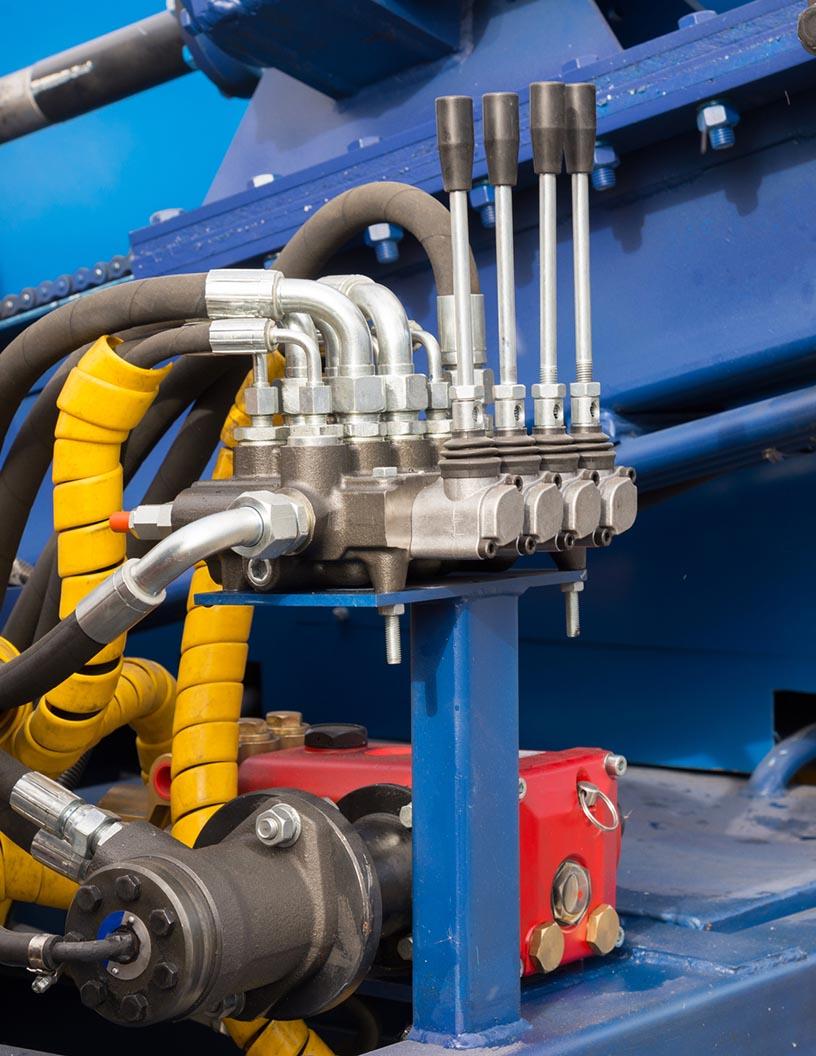


Automotive Hydraulics System Market Size 2024-2028
The automotive hydraulics system market size is forecast to increase by USD 5.45 billion at a CAGR of 2.8% between 2023 and 2028.
- The market is experiencing significant growth due to several key trends. The increasing emphasis on advanced hydraulic equipment, such as smart hydraulic systems, is driving market expansion. Additionally, the electrification of mechanical components is gaining traction, leading to the development of more efficient pumps and motors. However, the high manufacturing and maintenance costs associated with hydraulic components and equipment pose a challenge to market growth. In the waste management industry, hydraulic systems are crucial for rubbish compactors and concrete pumping applications. Similarly, in agriculture, hydraulic systems design plays a vital role in the operation of agricultural machinery. Motion pictures also utilize hydraulic equipment for various effects. In the energy sector, hydraulics are utilized in oil and gas exploration and production. In the aerospace industry, hydraulic systems are essential for aircraft control systems and landing gear.
What will the size of the market be during the forecast period?

How is this market segmented and which is the largest segment?
The market research report provides comprehensive data (region-wise segment analysis), with forecasts and estimates in "USD million" for the period 2024-2028, as well as historical data from 2018-2022 for the following segments.
- Application
- Passenger cars
- Commercial vehicles
- Geography
- APAC
- China
- Japan
- South Korea
- North America
- US
- Europe
- Germany
- South America
- Middle East and Africa
- APAC
By Application Insights
- The passenger cars segment is estimated to witness significant growth during the forecast period.
The market in the United States is witnessing significant growth due to the increasing integration of advanced features and enhanced safety standards in passenger vehicles. Hydraulic systems are essential components in various applications, such as braking, steering, and suspension, to improve vehicle performance and driving comfort. Strict safety regulations, including the requirement for Anti-Lock Braking Systems (ABS) and Electronic Stability Control (ESC), are driving the adoption of hydraulic systems in the passenger cars segment. Technological innovations are playing a crucial role in the growth of the market. For instance, adaptive suspension systems and precision braking mechanisms are becoming standard features in modern passenger vehicles, catering to consumer demand for smoother rides and superior handling.
In addition, the waste management industry in the US also relies heavily on hydraulic equipment, such as hydraulic pumps and hydraulic motors, for rubbish collection and concrete pumping in construction sites. Furthermore, technological advancements are a significant catalyst for market growth. Hydraulic systems design focuses on efficient fluid movement and maintaining hydraulic pressure to ensure optimal performance. Hydraulic components, including hydraulic pumps, hydraulic motors, and hydraulic valves, are crucial in maintaining the hydraulic pressure required for various applications. The hydraulic systems market in the US is expected to continue its growth trajectory due to the increasing demand for hydraulic equipment in various industries, including automotive, waste management, agriculture, and construction.
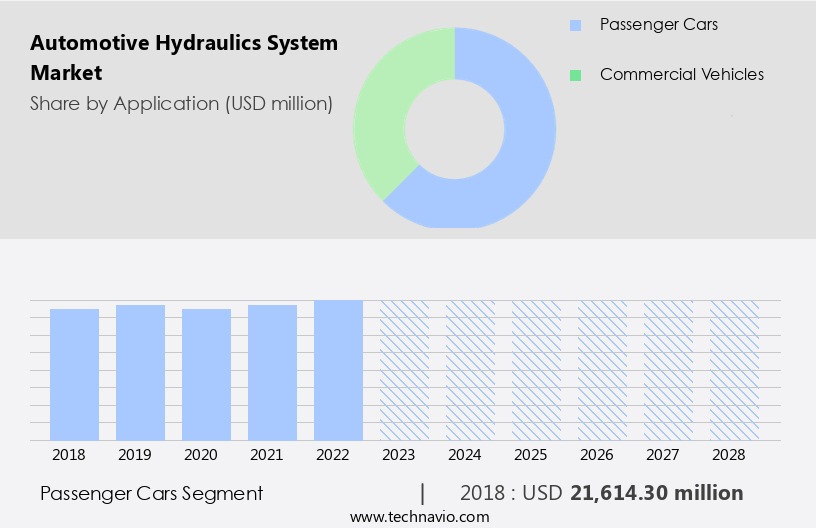
Get a glance at the market report of share of various segments Request Free Sample
The Passenger cars segment was valued at USD 21.61 billion in 2018 and showed a gradual increase during the forecast period.
Regional Analysis
- APAC is estimated to contribute 40% to the growth of the global market during the forecast period.
Technavio's analysts have elaborately explained the regional trends and drivers that shape the market during the forecast period.
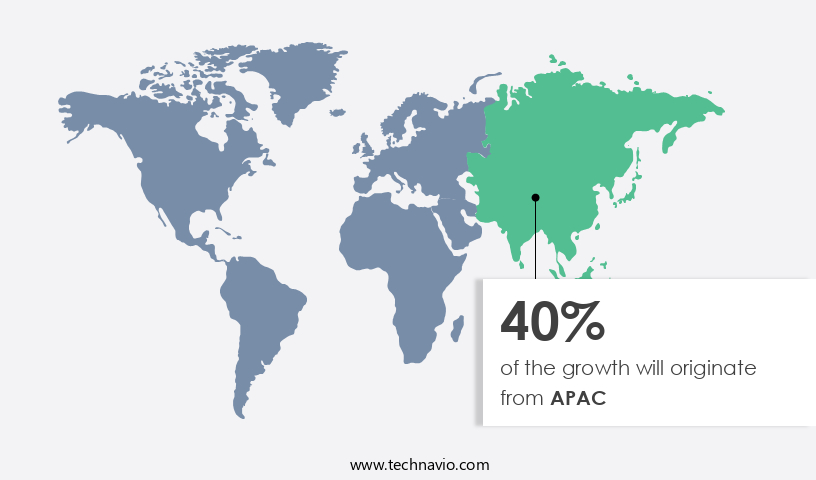
For more insights on the market share of various regions Request Free Sample
In the market, countries in the Asia Pacific region, specifically China, India, and Japan, hold a significant share of the revenue. The high adoption rate of vehicles in these nations, driven by increasing disposable incomes, is a primary factor fueling market growth. For instance, China and India's economies have seen substantial growth, leading to an increase in the number of consumers purchasing vehicles. In Singapore, the GDP per capita rose from USD 47,236.96 in 2010 to USD 59,797 in 2021. This economic expansion has resulted in a wave in sales of luxury cars. The automotive industry in the region is a substantial contributor to the demand for automotive aftermarket services due to the high volume of vehicle sales.
Furthermore, industries such as construction equipment, Paper mills, Logging, Manufacturing, robotics, and Steel processing rely on hydraulic systems for movement and repetition in their basic designs. The components of these systems utilize pressurized fluids to function effectively. Overall, the market is experiencing steady growth due to the increasing demand for efficient and reliable hydraulic systems in various industries.
Market Dynamics
Our researchers analyzed the data with 2023 as the base year, along with the key drivers, trends, and challenges. A holistic analysis of drivers will help companies refine their marketing strategies to gain a competitive advantage.
What are the key market drivers leading to the rise in adoption of Automotive Hydraulics System Market?
Growing focus on smart hydraulic equipment is the key driver of the market.
- In the realm of heavy equipment, the application of hydraulic systems utilizing liquid fuel continues to gain traction. The hydraulic market is witnessing significant advancements, with key players investing in research and development to enhance the functionality and efficiency of these systems. An illustrative instance is ZF Group's introduction of the integrated brake control (IBC) system in 2018.
- This innovative electro-hydraulic braking solution integrates the control unit, replacing traditional components such as electronic stability control, vacuum booster, vacuum pump, cables, sensors, switches, and controllers. The IBC unit provides regenerative braking, offering a single integrated unit that caters to fuel-efficient powertrains without the need for a vacuum pump supplement. The development of intelligent hydraulic equipment units is one of the primary drivers propelling market expansion. These units employ advanced fluid flow and pressure control mechanisms, acting as hydraulic amplifiers, and adhere to electric circuit theory principles.
What are the market trends shaping the Automotive Hydraulics System Market?
The rise in electrification of mechanical components is the upcoming trend in the market.
- Hydraulic systems play a crucial role in various industries, including Agriculture, Entertainment, Energy, Aerospace, Landscaping, and Marine, by providing power and precision to hydraulic machinery. The principles of hydraulics involve the use of hydraulic fluid to transmit power from one point to another through the movement of a hydraulic cylinder. The primary advantage of hydraulic systems is their ability to generate significant force with minimal effort, making them ideal for heavy-duty applications. One of the significant trends in the hydraulics market is the electrification of mechanical components. This shift is driven by the need to improve fuel economy and reduce engine load.
- By removing ancillary systems from the engine, hydraulic systems can be electrified, increasing engine efficiency. For instance, Electric Power Steering (EPS) systems respond more quickly and efficiently than traditional hydraulic systems. In an EPS, steering wheel movements are converted into electronic signals that control electric motors responsible for moving the wheels. Additionally, electric coolant pumps proactively manage internal combustion engines by ensuring optimal coolant supply. Overall, the electrification of hydraulic systems is a key trend that is transforming the industry.
What challenges does the Automotive Hydraulics System Market face during its growth?
High manufacturing and maintenance costs is a key challenge affecting the market growth.
- In the automotive industry, hydraulic systems play a crucial role in converting mechanical power into hydraulic energy for various applications such as chemical processing. These systems utilize a reservoir to store hydraulic fluid, which is pumped from the inlet to the outlet for use by mechanical actuators. Proper maintenance is essential to ensure the efficient operation of hydraulic systems. Regular monitoring and timely replacement of worn-out components are necessary to prevent equipment failure. However, implementing maintenance strategies comes with its challenges. For instance, the use of advanced diagnostic tools can be costly. Two common issues with hydraulic systems are the generation of noise and equipment failure due to high fluid temperatures.
- Excessive noise can result from hydraulic fluid contamination by air, which enters through inadequate seals or leaks. To prevent this, it is essential to ensure that all clamps and fittings are properly sealed. Moreover, hydraulic systems can fail when operating above 180 degrees Fahrenheit. This temperature can cause seal destruction and fluid degradation. Therefore, it is essential to maintain optimal fluid temperatures to prolong the system's lifespan and ensure optimal performance. By addressing these challenges, automotive manufacturers and maintenance providers can ensure the reliable operation of hydraulic systems in their operations.
Exclusive Customer Landscape
The market forecasting report includes the adoption lifecycle of the market, covering from the innovator's stage to the laggard's stage. It focuses on adoption rates in different regions based on penetration. Furthermore, the market report also includes key purchase criteria and drivers of price sensitivity to help companies evaluate and develop their market growth analysis strategies.
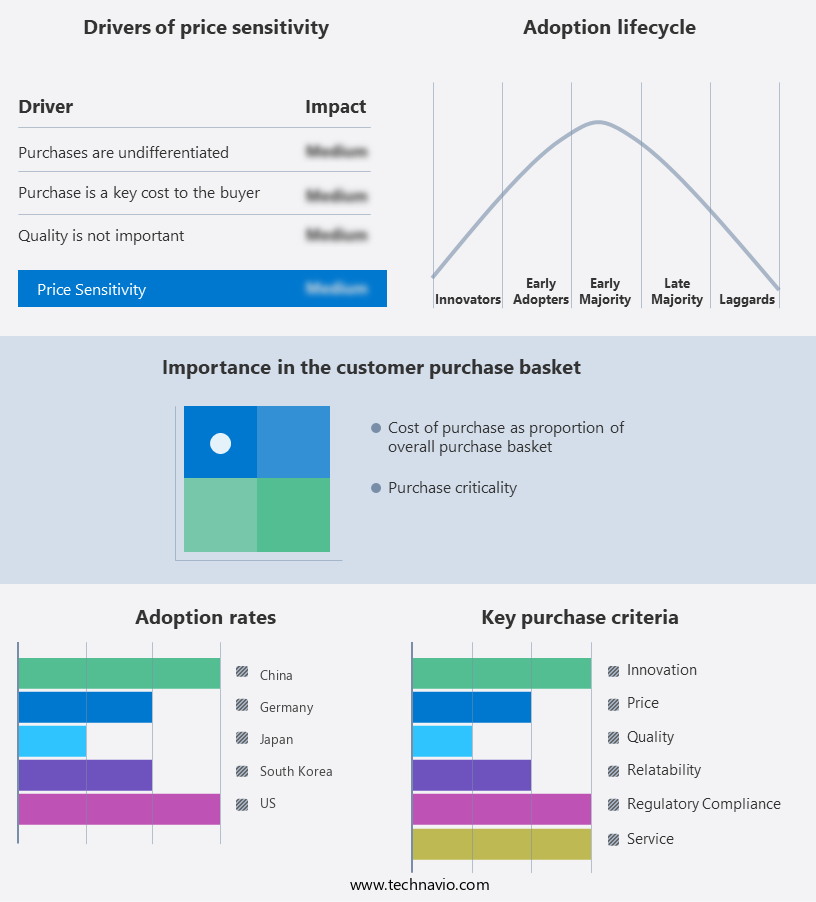
Customer Landscape
Key Companies & Market Insights
Companies are implementing various strategies, such as strategic alliances, market forecast, partnerships, mergers and acquisitions, geographical expansion, and product/service launches, to enhance their presence in the market. The market research and growth report includes detailed analyses of the competitive landscape of the market and information about key companies, including:
- AISIN CORP.
- Altra Industrial Motion Corp.
- BorgWarner Inc.
- Continental AG
- Cool Cars Engineering
- DANA TM4 INC.
- Dantal Hydraulics Pvt Ltd.
- ElringKlinger AG
- FTE automotive GmbH
- JTEKT Corp.
- Lalit Hydraulics Systems
- NSK Ltd.
- Patson Hydrotech
- Robert Bosch GmbH
- RR Parkon
- Schaeffler AG
- ZF Friedrichshafen AG
Qualitative and quantitative analysis of companies has been conducted to help clients understand the wider business environment as well as the strengths and weaknesses of key market players. Data is qualitatively analyzed to categorize companies as pure play, category-focused, industry-focused, and diversified; it is quantitatively analyzed to categorize companies as dominant, leading, strong, tentative, and weak.
Research Analyst Overview
Hydraulics, a vital branch of fluid power technology, plays a significant role in various industries such as agriculture, entertainment, energy, aerospace, landscaping, marine, waste management, and more. Hydraulic systems design relies on the principles of fluid movement and pressure to generate mechanical power. The core components of these systems include hydraulic pumps, hydraulic motors, hydraulic cylinders, and hydraulic components. Hydraulic fluids, a crucial element, ensure the smooth functioning of these systems. Applications span from agricultural machinery, motion pictures, theme parks, and special effects to braking systems, steering systems, clutches, safety systems, transmissions, water treatment, electricity production, and industrial settings.
Furthermore, hydraulic principles enable heavy equipment like concrete pumping machinery and cranes to perform repetitive tasks with basic designs, amplifying force and power through hydraulic circuits made up of interconnected components. Pressurized fluid, a liquid fuel, moves through hydraulic pumps and motors, creating motion and rotation. Hydraulic energy is harnessed in various industries, including vacuum systems, dams, and paper mills, while hydraulic amplifiers apply electrical circuit theory to enhance fluid pressure. Chemical processing, logging, manufacturing, robotics, steel processing, and other sectors benefit from this versatile technology.
|
Market Scope |
|
|
Report Coverage |
Details |
|
Page number |
139 |
|
Base year |
2023 |
|
Historic period |
2018-2022 |
|
Forecast period |
2024-2028 |
|
Growth momentum & CAGR |
Accelerate at a CAGR of 2.8% |
|
Market Growth 2024-2028 |
USD 5.45 billion |
|
Market structure |
Fragmented |
|
YoY growth 2023-2024(%) |
2.7 |
|
Key countries |
US, China, Germany, Japan, and South Korea |
|
Competitive landscape |
Leading Companies, Market Positioning of Companies, Competitive Strategies, and Industry Risks |
What are the Key Data Covered in this Market Research and Growth Report?
- CAGR of the market during the forecast period
- Detailed information on factors that will drive the market growth and forecasting between 2024 and 2028
- Precise estimation of the size of the market and its contribution of the market in focus to the parent market
- Accurate predictions about upcoming market growth and trends and changes in consumer behaviour
- Growth of the market across APAC, North America, Europe, South America, and Middle East and Africa
- Thorough analysis of the market's competitive landscape and detailed information about companies
- Comprehensive analysis of factors that will challenge the growth of market companies
We can help! Our analysts can customize this market research report to meet your requirements. Get in touch
 RIA -
RIA - 
