


Automotive Intelligent Rearview Mirror Market Analysis, Size, and Forecast 2026-2030: APAC (China, Japan, and India), North America (US, Canada, and Mexico), Europe (Germany, UK, and France), Middle East and Africa (Saudi Arabia, South Africa, and UAE), South America (Brazil and Argentina), and Rest of World (ROW)

Automotive Intelligent Rearview Mirror Market Analysis, Size, and Forecast 2026-2030:
APAC (China, Japan, and India), North America (US, Canada, and Mexico), Europe (Germany, UK, and France), Middle East and Africa (Saudi Arabia, South Africa, and UAE), South America (Brazil and Argentina), and Rest of World (ROW)

Published: Dec 2025 295 Pages SKU: IRTNTR74517

Market Overview at a Glance

$2.30 B
Market Opportunity
21%
CAGR 2025 - 2030
33.8%
APAC Growth
$801.9 Mn
Passenger car segment 2024

Automotive Intelligent Rearview Mirror Market Size 2026-2030

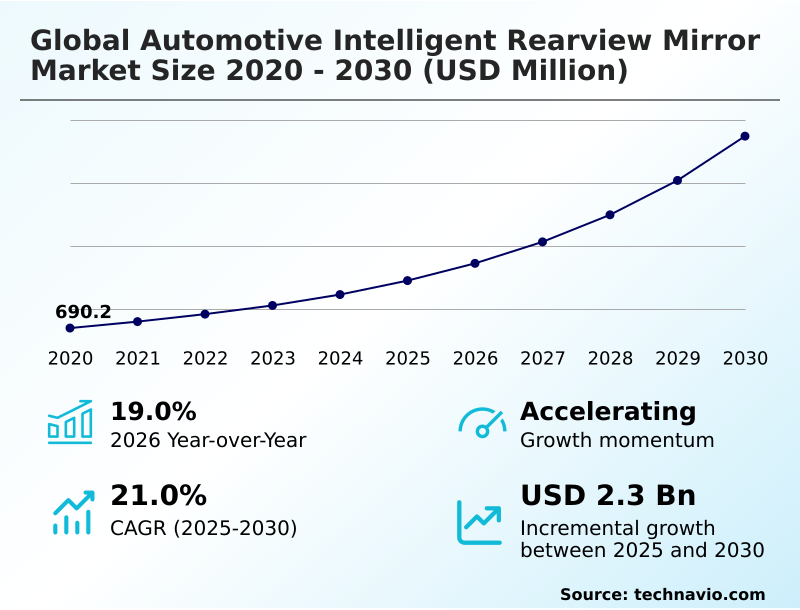
The automotive intelligent rearview mirror market size is valued to increase by USD 2.30 billion, at a CAGR of 21% from 2025 to 2030. Growing popularity of luxury vehicles will drive the automotive intelligent rearview mirror market.

Major Market Trends & Insights

  • APAC dominated the market and accounted for a 33.8% growth during the forecast period.
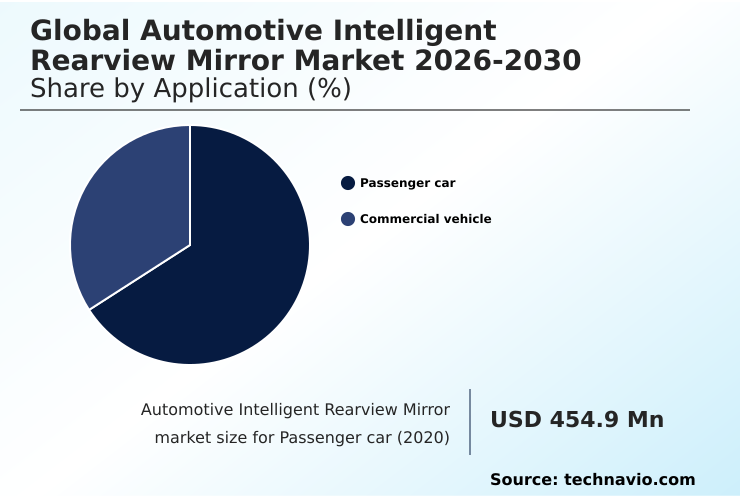
  • By Application - Passenger car segment was valued at USD 801.9 million in 2024
  • By Channel - OEM segment accounted for the largest market revenue share in 2024

Market Size & Forecast

  • Market Opportunities: USD 3.05 billion
  • Market Future Opportunities: USD 2.30 billion
  • CAGR from 2025 to 2030 : 21%

Market Summary

  • The automotive intelligent rearview mirror market is rapidly evolving from a simple reflective surface into a sophisticated hub for vehicle data and driver assistance. This transformation is propelled by the integration of advanced driver-assistance systems (ADAS), where the mirror housing becomes a prime location for sensor fusion, incorporating cameras and processors for features like blind-spot monitoring and lane departure warnings.
  • The imperative for aerodynamic efficiency in electric vehicles is also a significant driver, with camera monitor systems replacing traditional side mirrors to extend range. For instance, some platforms now eliminate the rear window entirely, relying on a high-definition digital video feed to provide a panoramic view, a design choice that improves both aerodynamics and interior space.
  • Concurrently, trends such as biometric authentication, over-the-air (OTA) updates, and augmented reality overlays are turning the mirror into a connected, updatable component of the software-defined vehicle. However, the industry grapples with challenges including complex global supply chains for electronic components and a fragmented regulatory landscape that requires costly, region-specific homologation processes.

What will be the Size of the Automotive Intelligent Rearview Mirror Market during the forecast period?
Get Key Insights on Market Forecast (PDF) Request Free Sample

How is the Automotive Intelligent Rearview Mirror Market Segmented?

The automotive intelligent rearview mirror industry research report provides comprehensive data (region-wise segment analysis), with forecasts and estimates in "USD million" for the period 2026-2030, as well as historical data from 2020-2024 for the following segments.

  • Application
    • Passenger car
    • Commercial vehicle
  • Channel
    • OEM
    • Aftermarket
  • Powertrain type
    • ICE
    • Electric
  • Geography
    • APAC
      • China
      • Japan
      • India
    • North America
      • US
      • Canada
      • Mexico
    • Europe
      • Germany
      • UK
      • France
    • Middle East and Africa
      • Saudi Arabia
      • South Africa
      • UAE
    • South America
      • Brazil
      • Argentina
    • Rest of World (ROW)

By Application Insights

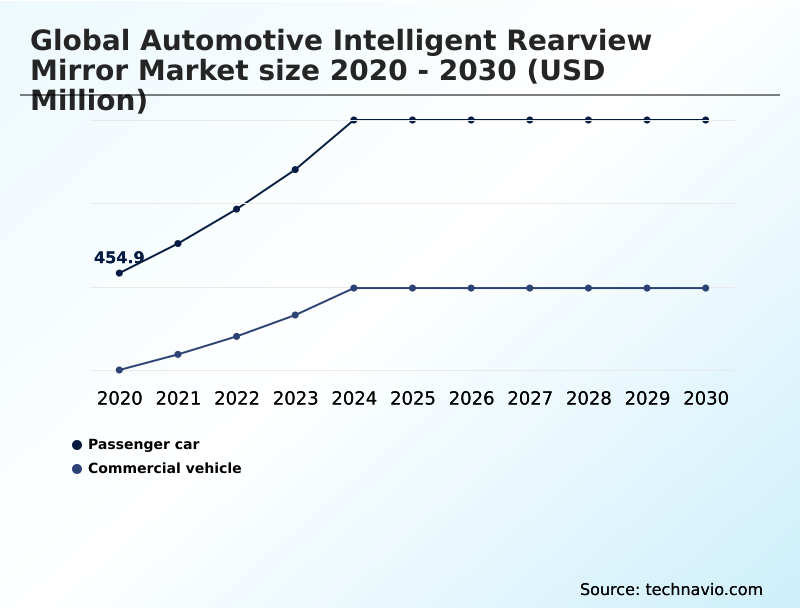
The passenger car segment is estimated to witness significant growth during the forecast period.

The passenger car segment is experiencing a significant design evolution, driven by the integration of intelligent vision systems that replace traditional optical glass.

This transition enables new vehicle architectures, such as designs without rear windows, which rely on a high-definition digital video feed for a complete panoramic view.

The adoption of a full display mirror within the digital cockpit is not just an aesthetic upgrade; it is a functional necessity that eliminates blind spots from pillars and cargo.

These camera-based monitoring systems are central to enhancing aerodynamic profiles, particularly in electric vehicles, where a reduction in drag coefficient of just 2.5% can extend operational range.

As high-definition displays become standard, the digital rear view is established as a primary source of situational awareness, fundamentally altering the human-machine interface for drivers.
Request Free Sample

The Passenger car segment was valued at USD 801.9 million in 2024 and showed a gradual increase during the forecast period.
Request Free Sample

Regional Analysis

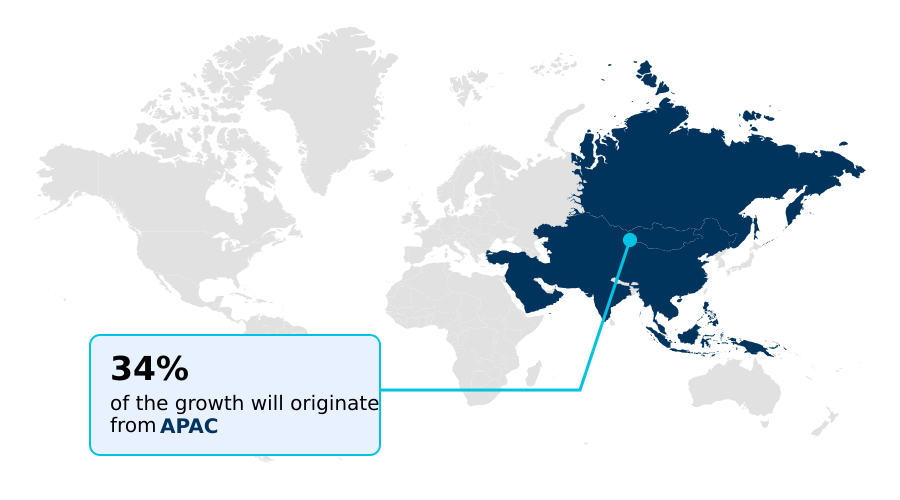
APAC is estimated to contribute 33.8% to the growth of the global market during the forecast period.Technavio’s analysts have elaborately explained the regional trends and drivers that shape the market during the forecast period.
See How Automotive Intelligent Rearview Mirror Market Demand is Rising in APAC Request Free Sample

The geographic landscape of the market is characterized by distinct regional drivers and adoption rates.

APAC is the largest contributor to incremental growth, accounting for over 33% of the market expansion, fueled by high-tech consumer demand and a robust manufacturing ecosystem for advanced vision products.

In Europe, which is forecast to expand at a rate of 21.9%, strict regulatory mandates for driver state monitoring and ADAS-enabled smart vision are compelling the integration of in-cabin monitoring.

North America follows closely with a projected growth rate of 21.5%, where demand is driven by the utility of smart vision systems in large SUVs and commercial trucks.

The deployment of 5G connectivity is enabling the development of an intelligent transportation network, where connected mobility and camera-integrated digital rearview mirror systems share data to improve overall road safety across these key regions.

Market Dynamics

Our researchers analyzed the data with 2025 as the base year, along with the key drivers, trends, and challenges. A holistic analysis of drivers will help companies refine their marketing strategies to gain a competitive advantage.

  • The application of intelligent rearview mirrors is diversifying to address specific operational needs and deliver measurable returns. For commercial vehicles, the adoption of camera monitor systems is a strategic decision rooted in efficiency.
  • The debate over digital mirror vs traditional mirror is often settled by performance data; fleets utilizing camera-based systems report a nearly 3% improvement in fuel economy compared to those with traditional mirrors, directly impacting operational costs. For drivers of large SUVs, an intelligent rearview mirror for towing provides an unobstructed view, a critical safety benefit that optical mirrors cannot offer.
  • In the aftermarket, smart mirror installation allows owners of older vehicles to access modern ADAS integration in rearview mirror functions. The benefits of camera monitor systems extend beyond fuel savings to include enhanced safety, a key consideration for intelligent mirror for fleet management.
  • As driver monitoring system regulations become stricter, the inclusion of biometric authentication in vehicle mirrors is transitioning from a luxury feature to a compliance tool. The legal requirements for digital mirrors are solidifying, ensuring that systems replacing side mirrors with cameras provide fail-safe performance.
  • This evolution is also driving innovation in the intelligent mirror human-machine interface design, with features like augmented reality mirror navigation becoming more common. OEMs and aftermarket suppliers must now weigh the different value propositions, as oem vs aftermarket intelligent mirrors offer distinct levels of vehicle integration.
  • For instance, intelligent mirrors with 5g connectivity and cloud storage offer advanced data capabilities, while thermal imaging rearview mirror benefits provide unparalleled night vision. This is particularly relevant for the intelligent mirror for electric vehicles, where every component must contribute to both safety and efficiency.
  • Finally, ensuring cybersecurity for connected car mirrors is a paramount challenge as these devices become more integrated.
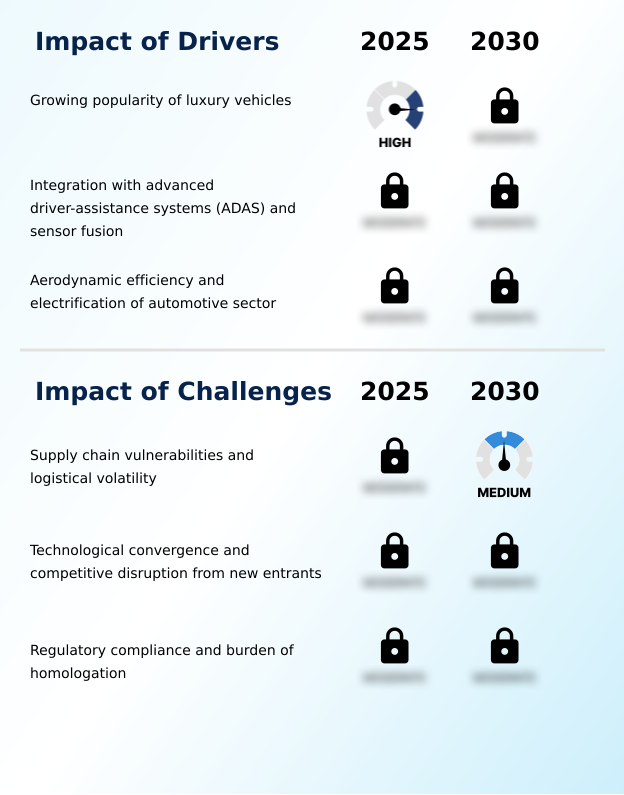
What are the key market drivers leading to the rise in the adoption of Automotive Intelligent Rearview Mirror Industry?

  • The growing popularity of luxury vehicles, which increasingly feature advanced technologies, serves as a key driver for the market.

  • Market growth is fundamentally driven by the mirror's evolving role as a centralized hub for the ADAS suite and the broader smart cockpit ecosystem.
  • The integration of driver monitoring systems and advanced driver-assistance systems (ADAS) within a single unit streamlines vehicle architecture and enhances the human-machine interface (HMI).
  • This sensor fusion creates a robust platform for vision assistance systems, which have been shown to reduce accident rates in equipped vehicles by up to 15%.
  • The demand for a seamless smart mirror and driver vision solution is also propelled by the electrification trend, where replacing traditional mirrors with camera monitor systems can improve aerodynamic efficiency by 2-3%.
  • This enhancement directly translates to extended battery range, a critical selling point in the competitive EV space.

What are the market trends shaping the Automotive Intelligent Rearview Mirror Industry?

  • A key market trend is the integration of biometric authentication with driver monitoring systems. This convergence is reshaping in-cabin safety and personalization.

  • Key market trends are centered on transforming the rearview mirror into a multi-functional, connected device. The integration of rear-vision technology with interior sensing capabilities is paramount, with new systems capable of processing biometric data up to 40% faster than previous generations. This enables seamless driver identification and personalization.
  • Augmented reality overlays are moving beyond navigation to include active visual assistance, projecting real-time safety alerts directly onto the digital display. Furthermore, the connected cockpit concept is being realized through cloud connectivity and over-the-air (OTA) updates, allowing for new features and security patches to be deployed remotely.
  • The adoption rate for mirrors with these integrated features is growing by more than 25% annually in premium vehicle segments, highlighting a clear consumer demand for a more interactive and secure in-vehicle experience.

What challenges does the Automotive Intelligent Rearview Mirror Industry face during its growth?

  • Supply chain vulnerabilities and logistical volatility present a key challenge affecting industry growth.

  • The market faces significant hurdles related to technological convergence and regulatory complexity. As camera-supported smart mirror systems become standard, manufacturers must navigate a fragmented global landscape of safety standards, which can increase compliance costs by as much as 30%. The transition to the software-defined vehicle (SDV) introduces challenges in ensuring robust cybersecurity solutions and reliable electromechanical redundancy.
  • Supply chain volatility for high-performance components like digital display-based intelligent mirror panels remains a primary concern, with disruptions leading to production delays and increased costs.
  • Furthermore, the need for adas-enabled smart vision and digital mirror replacement systems to offer flawless performance in all weather conditions requires significant R&D investment, particularly in areas like advanced hydrophobic coatings and thermal management for electronics.

Exclusive Technavio Analysis on Customer Landscape

The automotive intelligent rearview mirror market forecasting report includes the adoption lifecycle of the market, covering from the innovator’s stage to the laggard’s stage. It focuses on adoption rates in different regions based on penetration. Furthermore, the automotive intelligent rearview mirror market report also includes key purchase criteria and drivers of price sensitivity to help companies evaluate and develop their market growth analysis strategies.
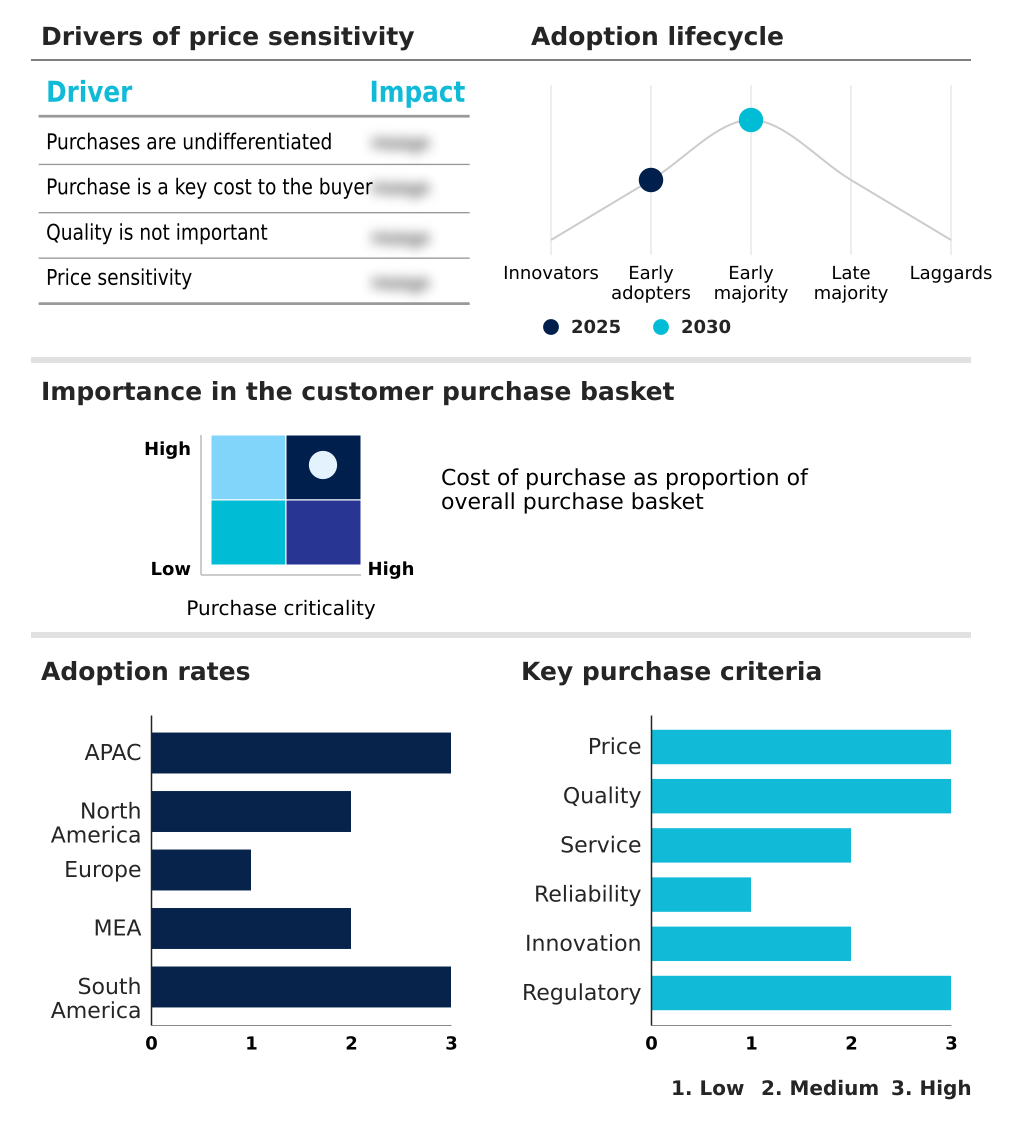
Customer Landscape of Automotive Intelligent Rearview Mirror Industry

Competitive Landscape

Companies are implementing various strategies, such as strategic alliances, automotive intelligent rearview mirror market forecast, partnerships, mergers and acquisitions, geographical expansion, and product/service launches, to enhance their presence in the industry.

Continental AG - Offerings include advanced camera-integrated digital rearview mirror systems that enhance driver visibility and safety through innovative vision and sensor technologies.

The industry research and growth report includes detailed analyses of the competitive landscape of the market and information about key companies, including:

  • Continental AG
  • FLABEG Automotive Glass
  • Ford Motor Co.
  • Gentex Corp.
  • KDC Auto Industry Co.
  • Kocchi Technology Ltd.
  • Magna International Inc.
  • MEKRA Lang GmbH and Co. KG
  • Murakami Corp.
  • Nissan Motor Co. Ltd.
  • Panasonic Holdings Corp.
  • Pioneer Corp.
  • Robert Bosch GmbH
  • Samsung Electronics Co. Ltd.
  • Shenzhen Jimi IoT Co. Ltd.
  • SUBARU Corp.
  • Valeo SA
  • Varroc Engineering Ltd.
  • VOXX International Corp.
  • Xiaomi Inc.

Qualitative and quantitative analysis of companies has been conducted to help clients understand the wider business environment as well as the strengths and weaknesses of key industry players. Data is qualitatively analyzed to categorize companies as pure play, category-focused, industry-focused, and diversified; it is quantitatively analyzed to categorize companies as dominant, leading, strong, tentative, and weak.

Recent Development and News in Automotive intelligent rearview mirror market

  • In August, 2024, Mazda Australia introduced a digital rearview mirror as a genuine accessory for its CX-90 and CX-60 models, targeting consumers who need unobstructed visibility while towing or carrying cargo.
  • In September, 2024, Stoneridge Inc. showcased its latest MirrorEye Camera Monitor System at the IAA Transportation exhibition, releasing field test data showing a 2.5% fuel economy improvement for fleets using the system.
  • In November, 2024, Qualcomm Technologies collaborated with a Tier 1 supplier to demonstrate a Snapdragon-powered smart mirror architecture featuring integrated 5G connectivity and a community safety mode for sharing road hazard data.
  • In January, 2025, Gentex Corporation unveiled a new Full Display Mirror at CES, which integrated a comprehensive biometrics suite for driver identification and V2H connectivity for smart home control.

Dive into Technavio’s robust research methodology, blending expert interviews, extensive data synthesis, and validated models for unparalleled Automotive Intelligent Rearview Mirror Market insights. See full methodology.

Market Scope
Page number 295
Base year 2025
Historic period 2020-2024
Forecast period 2026-2030
Growth momentum & CAGR Accelerate at a CAGR of 21%
Market growth 2026-2030 USD 2298.1 million
Market structure Fragmented
YoY growth 2025-2026(%) 19.0%
Key countries China, Japan, India, South Korea, Australia, Indonesia, US, Canada, Mexico, Germany, UK, France, Italy, Spain, The Netherlands, Saudi Arabia, South Africa, UAE, Turkey, Egypt, Brazil, Argentina and Chile
Competitive landscape Leading Companies, Market Positioning of Companies, Competitive Strategies, and Industry Risks

Request Free Sample

Research Analyst Overview

  • The market is undergoing a profound technological shift, where the rearview mirror is being reimagined as a central node for the digital cockpit. This evolution is driven by the convergence of full display mirror technology with advanced driver-assistance systems (ADAS) and in-cabin monitoring capabilities.
  • The integration of driver monitoring systems, including eye tracking and head position detection, is no longer a novelty but a critical component for meeting global safety regulations, directly influencing boardroom decisions on compliance and risk management.
  • Systems now achieve sensor fusion by combining data from multiple inputs to provide unparalleled situational awareness, reducing blind spots by over 50% compared to traditional mirrors. Innovations such as biometric authentication through iris scanning and facial recognition are enabling enhanced vehicle security and personalization.
  • The move toward the software-defined vehicle (SDV) is further accelerating this trend, with over-the-air (OTA) updates, cloud connectivity, and edge computing capabilities transforming static hardware into evolving platforms. Features like augmented reality overlays, 5g connectivity, and night vision enhancement are becoming key differentiators, while electrowetting technology and hydrophobic coatings address practical performance challenges.

What are the Key Data Covered in this Automotive Intelligent Rearview Mirror Market Research and Growth Report?

  • What is the expected growth of the Automotive Intelligent Rearview Mirror Market between 2026 and 2030?

    • USD 2.30 billion, at a CAGR of 21%

  • What segmentation does the market report cover?

    • The report is segmented by Application (Passenger car, and Commercial vehicle), Channel (OEM, and Aftermarket), Powertrain Type (ICE, and Electric) and Geography (APAC, North America, Europe, Middle East and Africa, South America)

  • Which regions are analyzed in the report?

    • APAC, North America, Europe, Middle East and Africa and South America

  • What are the key growth drivers and market challenges?

    • Growing popularity of luxury vehicles, Supply chain vulnerabilities and logistical volatility

  • Who are the major players in the Automotive Intelligent Rearview Mirror Market?

    • Continental AG, FLABEG Automotive Glass, Ford Motor Co., Gentex Corp., KDC Auto Industry Co., Kocchi Technology Ltd., Magna International Inc., MEKRA Lang GmbH and Co. KG, Murakami Corp., Nissan Motor Co. Ltd., Panasonic Holdings Corp., Pioneer Corp., Robert Bosch GmbH, Samsung Electronics Co. Ltd., Shenzhen Jimi IoT Co. Ltd., SUBARU Corp., Valeo SA, Varroc Engineering Ltd., VOXX International Corp. and Xiaomi Inc.

Market Research Insights

  • The market's dynamism is rooted in the shift toward the connected cockpit, where intelligent vision systems are pivotal. Advanced rear-vision technology offers more than just a clearer view; it integrates interior sensing capabilities to enhance safety, with some systems reducing driver distraction events by up to 20%.
  • The adoption of plug-and-play solutions in the aftermarket brings modern vision assistance systems to a wider range of vehicles, expanding market reach. This evolution is transforming the mirror into a secondary infotainment hub, with adoption rates in mid-tier vehicles increasing by over 15% in recent years.
  • The focus on hands-free voice control and panoramic lens configurations in newer models underscores the consumer demand for both convenience and comprehensive situational awareness, redefining the role of the rearview display.

We can help! Our analysts can customize this automotive intelligent rearview mirror market research report to meet your requirements.

Get in touch

1. Executive Summary

1.1 Market overview

Executive Summary - Chart on Market Overview
Executive Summary - Data Table on Market Overview
Executive Summary - Chart on Global Market Characteristics
Executive Summary - Chart on Market by Geography
Executive Summary - Chart on Market Segmentation by Application
Executive Summary - Chart on Market Segmentation by Channel
Executive Summary - Chart on Market Segmentation by Powertrain Type
Executive Summary - Chart on Incremental Growth
Executive Summary - Data Table on Incremental Growth
Executive Summary - Chart on Company Market Positioning

2. Technavio Analysis

2.1 Analysis of price sensitivity, lifecycle, customer purchase basket, adoption rates, and purchase criteria

2.2 Criticality of inputs and Factors of differentiation

Chart on Overview on criticality of inputs and factors of differentiation

2.3 Factors of disruption

Chart on Overview on factors of disruption

2.4 Impact of drivers and challenges

Chart on Impact of drivers and challenges in 2025 and 2030

3. Market Landscape

3.1 Market ecosystem

Chart on Parent Market
Data Table on - Parent Market

3.2 Market characteristics

Chart on Market characteristics analysis

3.3 Value chain analysis

Chart on Value chain analysis

4. Market Sizing

4.1 Market definition

Data Table on Offerings of companies included in the market definition

4.2 Market segment analysis

Market segments

4.3 Market size 2025

4.4 Market outlook: Forecast for 2025-2030

Chart on Global - Market size and forecast 2025-2030 ($ million)
Data Table on Global - Market size and forecast 2025-2030 ($ million)
Chart on Global Market: Year-over-year growth 2025-2030 (%)
Data Table on Global Market: Year-over-year growth 2025-2030 (%)

5. Historic Market Size

5.1 Global Automotive Intelligent Rearview Mirror Market 2020 - 2024

Historic Market Size - Data Table on Global Automotive Intelligent Rearview Mirror Market 2020 - 2024 ($ million)

5.2 Application segment analysis 2020 - 2024

Historic Market Size - Application Segment 2020 - 2024 ($ million)

5.3 Channel segment analysis 2020 - 2024

Historic Market Size - Channel Segment 2020 - 2024 ($ million)

5.4 Powertrain Type segment analysis 2020 - 2024

Historic Market Size - Powertrain Type Segment 2020 - 2024 ($ million)

5.5 Geography segment analysis 2020 - 2024

Historic Market Size - Geography Segment 2020 - 2024 ($ million)

5.6 Country segment analysis 2020 - 2024

Historic Market Size - Country Segment 2020 - 2024 ($ million)

6. Qualitative Analysis

6.1 Impact of AI in the Global Automotive Intelligent Rearview Mirror Market

7. Five Forces Analysis

7.1 Five forces summary

Five forces analysis - Comparison between 2025 and 2030

7.2 Bargaining power of buyers

Bargaining power of buyers - Impact of key factors 2025 and 2030

7.3 Bargaining power of suppliers

Bargaining power of suppliers - Impact of key factors in 2025 and 2030

7.4 Threat of new entrants

Threat of new entrants - Impact of key factors in 2025 and 2030

7.5 Threat of substitutes

Threat of substitutes - Impact of key factors in 2025 and 2030

7.6 Threat of rivalry

Threat of rivalry - Impact of key factors in 2025 and 2030

7.7 Market condition

Chart on Market condition - Five forces 2025 and 2030

8. Market Segmentation by Application

8.1 Market segments

Chart on Application - Market share 2025-2030 (%)
Data Table on Application - Market share 2025-2030 (%)

8.2 Comparison by Application

Chart on Comparison by Application
Data Table on Comparison by Application

8.3 Passenger car - Market size and forecast 2025-2030

Chart on Passenger car - Market size and forecast 2025-2030 ($ million)
Data Table on Passenger car - Market size and forecast 2025-2030 ($ million)
Chart on Passenger car - Year-over-year growth 2025-2030 (%)
Data Table on Passenger car - Year-over-year growth 2025-2030 (%)

8.4 Commercial vehicle - Market size and forecast 2025-2030

Chart on Commercial vehicle - Market size and forecast 2025-2030 ($ million)
Data Table on Commercial vehicle - Market size and forecast 2025-2030 ($ million)
Chart on Commercial vehicle - Year-over-year growth 2025-2030 (%)
Data Table on Commercial vehicle - Year-over-year growth 2025-2030 (%)

8.5 Market opportunity by Application

Market opportunity by Application ($ million)
Data Table on Market opportunity by Application ($ million)

9. Market Segmentation by Channel

9.1 Market segments

Chart on Channel - Market share 2025-2030 (%)
Data Table on Channel - Market share 2025-2030 (%)

9.2 Comparison by Channel

Chart on Comparison by Channel
Data Table on Comparison by Channel

9.3 OEM - Market size and forecast 2025-2030

Chart on OEM - Market size and forecast 2025-2030 ($ million)
Data Table on OEM - Market size and forecast 2025-2030 ($ million)
Chart on OEM - Year-over-year growth 2025-2030 (%)
Data Table on OEM - Year-over-year growth 2025-2030 (%)

9.4 Aftermarket - Market size and forecast 2025-2030

Chart on Aftermarket - Market size and forecast 2025-2030 ($ million)
Data Table on Aftermarket - Market size and forecast 2025-2030 ($ million)
Chart on Aftermarket - Year-over-year growth 2025-2030 (%)
Data Table on Aftermarket - Year-over-year growth 2025-2030 (%)

9.5 Market opportunity by Channel

Market opportunity by Channel ($ million)
Data Table on Market opportunity by Channel ($ million)

10. Market Segmentation by Powertrain Type

10.1 Market segments

Chart on Powertrain Type - Market share 2025-2030 (%)
Data Table on Powertrain Type - Market share 2025-2030 (%)

10.2 Comparison by Powertrain Type

Chart on Comparison by Powertrain Type
Data Table on Comparison by Powertrain Type

10.3 ICE - Market size and forecast 2025-2030

Chart on ICE - Market size and forecast 2025-2030 ($ million)
Data Table on ICE - Market size and forecast 2025-2030 ($ million)
Chart on ICE - Year-over-year growth 2025-2030 (%)
Data Table on ICE - Year-over-year growth 2025-2030 (%)

10.4 Electric - Market size and forecast 2025-2030

Chart on Electric - Market size and forecast 2025-2030 ($ million)
Data Table on Electric - Market size and forecast 2025-2030 ($ million)
Chart on Electric - Year-over-year growth 2025-2030 (%)
Data Table on Electric - Year-over-year growth 2025-2030 (%)

10.5 Market opportunity by Powertrain Type

Market opportunity by Powertrain Type ($ million)
Data Table on Market opportunity by Powertrain Type ($ million)

11. Customer Landscape

11.1 Customer landscape overview

Analysis of price sensitivity, lifecycle, customer purchase basket, adoption rates, and purchase criteria

12. Geographic Landscape

12.1 Geographic segmentation

Chart on Market share by geography 2025-2030 (%)
Data Table on Market share by geography 2025-2030 (%)

12.2 Geographic comparison

Chart on Geographic comparison
Data Table on Geographic comparison

12.3 APAC - Market size and forecast 2025-2030

Chart on APAC - Market size and forecast 2025-2030 ($ million)
Data Table on APAC - Market size and forecast 2025-2030 ($ million)
Chart on APAC - Year-over-year growth 2025-2030 (%)
Data Table on APAC - Year-over-year growth 2025-2030 (%)
Chart on Regional Comparison - APAC
Data Table on Regional Comparison - APAC

12.3.1 China - Market size and forecast 2025-2030

Chart on China - Market size and forecast 2025-2030 ($ million)
Data Table on China - Market size and forecast 2025-2030 ($ million)
Chart on China - Year-over-year growth 2025-2030 (%)
Data Table on China - Year-over-year growth 2025-2030 (%)

12.3.2 Japan - Market size and forecast 2025-2030

Chart on Japan - Market size and forecast 2025-2030 ($ million)
Data Table on Japan - Market size and forecast 2025-2030 ($ million)
Chart on Japan - Year-over-year growth 2025-2030 (%)
Data Table on Japan - Year-over-year growth 2025-2030 (%)

12.3.3 India - Market size and forecast 2025-2030

Chart on India - Market size and forecast 2025-2030 ($ million)
Data Table on India - Market size and forecast 2025-2030 ($ million)
Chart on India - Year-over-year growth 2025-2030 (%)
Data Table on India - Year-over-year growth 2025-2030 (%)

12.3.4 South Korea - Market size and forecast 2025-2030

Chart on South Korea - Market size and forecast 2025-2030 ($ million)
Data Table on South Korea - Market size and forecast 2025-2030 ($ million)
Chart on South Korea - Year-over-year growth 2025-2030 (%)
Data Table on South Korea - Year-over-year growth 2025-2030 (%)

12.3.5 Australia - Market size and forecast 2025-2030

Chart on Australia - Market size and forecast 2025-2030 ($ million)
Data Table on Australia - Market size and forecast 2025-2030 ($ million)
Chart on Australia - Year-over-year growth 2025-2030 (%)
Data Table on Australia - Year-over-year growth 2025-2030 (%)

12.3.6 Indonesia - Market size and forecast 2025-2030

Chart on Indonesia - Market size and forecast 2025-2030 ($ million)
Data Table on Indonesia - Market size and forecast 2025-2030 ($ million)
Chart on Indonesia - Year-over-year growth 2025-2030 (%)
Data Table on Indonesia - Year-over-year growth 2025-2030 (%)

12.4 North America - Market size and forecast 2025-2030

Chart on North America - Market size and forecast 2025-2030 ($ million)
Data Table on North America - Market size and forecast 2025-2030 ($ million)
Chart on North America - Year-over-year growth 2025-2030 (%)
Data Table on North America - Year-over-year growth 2025-2030 (%)
Chart on Regional Comparison - North America
Data Table on Regional Comparison - North America

12.4.1 US - Market size and forecast 2025-2030

Chart on US - Market size and forecast 2025-2030 ($ million)
Data Table on US - Market size and forecast 2025-2030 ($ million)
Chart on US - Year-over-year growth 2025-2030 (%)
Data Table on US - Year-over-year growth 2025-2030 (%)

12.4.2 Canada - Market size and forecast 2025-2030

Chart on Canada - Market size and forecast 2025-2030 ($ million)
Data Table on Canada - Market size and forecast 2025-2030 ($ million)
Chart on Canada - Year-over-year growth 2025-2030 (%)
Data Table on Canada - Year-over-year growth 2025-2030 (%)

12.4.3 Mexico - Market size and forecast 2025-2030

Chart on Mexico - Market size and forecast 2025-2030 ($ million)
Data Table on Mexico - Market size and forecast 2025-2030 ($ million)
Chart on Mexico - Year-over-year growth 2025-2030 (%)
Data Table on Mexico - Year-over-year growth 2025-2030 (%)

12.5 Europe - Market size and forecast 2025-2030

Chart on Europe - Market size and forecast 2025-2030 ($ million)
Data Table on Europe - Market size and forecast 2025-2030 ($ million)
Chart on Europe - Year-over-year growth 2025-2030 (%)
Data Table on Europe - Year-over-year growth 2025-2030 (%)
Chart on Regional Comparison - Europe
Data Table on Regional Comparison - Europe

12.5.1 Germany - Market size and forecast 2025-2030

Chart on Germany - Market size and forecast 2025-2030 ($ million)
Data Table on Germany - Market size and forecast 2025-2030 ($ million)
Chart on Germany - Year-over-year growth 2025-2030 (%)
Data Table on Germany - Year-over-year growth 2025-2030 (%)

12.5.2 UK - Market size and forecast 2025-2030

Chart on UK - Market size and forecast 2025-2030 ($ million)
Data Table on UK - Market size and forecast 2025-2030 ($ million)
Chart on UK - Year-over-year growth 2025-2030 (%)
Data Table on UK - Year-over-year growth 2025-2030 (%)

12.5.3 France - Market size and forecast 2025-2030

Chart on France - Market size and forecast 2025-2030 ($ million)
Data Table on France - Market size and forecast 2025-2030 ($ million)
Chart on France - Year-over-year growth 2025-2030 (%)
Data Table on France - Year-over-year growth 2025-2030 (%)

12.5.4 Italy - Market size and forecast 2025-2030

Chart on Italy - Market size and forecast 2025-2030 ($ million)
Data Table on Italy - Market size and forecast 2025-2030 ($ million)
Chart on Italy - Year-over-year growth 2025-2030 (%)
Data Table on Italy - Year-over-year growth 2025-2030 (%)

12.5.5 Spain - Market size and forecast 2025-2030

Chart on Spain - Market size and forecast 2025-2030 ($ million)
Data Table on Spain - Market size and forecast 2025-2030 ($ million)
Chart on Spain - Year-over-year growth 2025-2030 (%)
Data Table on Spain - Year-over-year growth 2025-2030 (%)

12.5.6 The Netherlands - Market size and forecast 2025-2030

Chart on The Netherlands - Market size and forecast 2025-2030 ($ million)
Data Table on The Netherlands - Market size and forecast 2025-2030 ($ million)
Chart on The Netherlands - Year-over-year growth 2025-2030 (%)
Data Table on The Netherlands - Year-over-year growth 2025-2030 (%)

12.6 Middle East and Africa - Market size and forecast 2025-2030

Chart on Middle East and Africa - Market size and forecast 2025-2030 ($ million)
Data Table on Middle East and Africa - Market size and forecast 2025-2030 ($ million)
Chart on Middle East and Africa - Year-over-year growth 2025-2030 (%)
Data Table on Middle East and Africa - Year-over-year growth 2025-2030 (%)
Chart on Regional Comparison - Middle East and Africa
Data Table on Regional Comparison - Middle East and Africa

12.6.1 Saudi Arabia - Market size and forecast 2025-2030

Chart on Saudi Arabia - Market size and forecast 2025-2030 ($ million)
Data Table on Saudi Arabia - Market size and forecast 2025-2030 ($ million)
Chart on Saudi Arabia - Year-over-year growth 2025-2030 (%)
Data Table on Saudi Arabia - Year-over-year growth 2025-2030 (%)

12.6.2 South Africa - Market size and forecast 2025-2030

Chart on South Africa - Market size and forecast 2025-2030 ($ million)
Data Table on South Africa - Market size and forecast 2025-2030 ($ million)
Chart on South Africa - Year-over-year growth 2025-2030 (%)
Data Table on South Africa - Year-over-year growth 2025-2030 (%)

12.6.3 UAE - Market size and forecast 2025-2030

Chart on UAE - Market size and forecast 2025-2030 ($ million)
Data Table on UAE - Market size and forecast 2025-2030 ($ million)
Chart on UAE - Year-over-year growth 2025-2030 (%)
Data Table on UAE - Year-over-year growth 2025-2030 (%)

12.6.4 Turkey - Market size and forecast 2025-2030

Chart on Turkey - Market size and forecast 2025-2030 ($ million)
Data Table on Turkey - Market size and forecast 2025-2030 ($ million)
Chart on Turkey - Year-over-year growth 2025-2030 (%)
Data Table on Turkey - Year-over-year growth 2025-2030 (%)

12.6.5 Egypt - Market size and forecast 2025-2030

Chart on Egypt - Market size and forecast 2025-2030 ($ million)
Data Table on Egypt - Market size and forecast 2025-2030 ($ million)
Chart on Egypt - Year-over-year growth 2025-2030 (%)
Data Table on Egypt - Year-over-year growth 2025-2030 (%)

12.7 South America - Market size and forecast 2025-2030

Chart on South America - Market size and forecast 2025-2030 ($ million)
Data Table on South America - Market size and forecast 2025-2030 ($ million)
Chart on South America - Year-over-year growth 2025-2030 (%)
Data Table on South America - Year-over-year growth 2025-2030 (%)
Chart on Regional Comparison - South America
Data Table on Regional Comparison - South America

12.7.1 Brazil - Market size and forecast 2025-2030

Chart on Brazil - Market size and forecast 2025-2030 ($ million)
Data Table on Brazil - Market size and forecast 2025-2030 ($ million)
Chart on Brazil - Year-over-year growth 2025-2030 (%)
Data Table on Brazil - Year-over-year growth 2025-2030 (%)

12.7.2 Argentina - Market size and forecast 2025-2030

Chart on Argentina - Market size and forecast 2025-2030 ($ million)
Data Table on Argentina - Market size and forecast 2025-2030 ($ million)
Chart on Argentina - Year-over-year growth 2025-2030 (%)
Data Table on Argentina - Year-over-year growth 2025-2030 (%)

12.7.3 Chile - Market size and forecast 2025-2030

Chart on Chile - Market size and forecast 2025-2030 ($ million)
Data Table on Chile - Market size and forecast 2025-2030 ($ million)
Chart on Chile - Year-over-year growth 2025-2030 (%)
Data Table on Chile - Year-over-year growth 2025-2030 (%)

12.8 Market opportunity by geography

Market opportunity by geography ($ million)
Data Tables on Market opportunity by geography ($ million)

13. Drivers, Challenges, and Opportunity

13.1 Market drivers

Growing popularity of luxury vehicles
Integration with advanced driver-assistance systems (ADAS) and sensor fusion
Aerodynamic efficiency and electrification of automotive sector

13.2 Market challenges

Supply chain vulnerabilities and logistical volatility
Technological convergence and competitive disruption from new entrants
Regulatory compliance and burden of homologation

13.3 Impact of drivers and challenges

Impact of drivers and challenges in 2025 and 2030

13.4 Market opportunities

Integration of biometric authentication and driver monitoring systems
Augmented reality (AR) overlays and enhanced navigation displays
Cloud connectivity and over-the-air (OTA) functionality

14. Competitive Landscape

14.1 Overview

14.2

Overview on criticality of inputs and factors of differentiation

14.3 Landscape disruption

Overview on factors of disruption

14.4 Industry risks

Impact of key risks on business

15. Competitive Analysis

15.1 Companies profiled

Companies covered

15.2 Company ranking index

15.3 Market positioning of companies

Matrix on companies position and classification

15.4 Continental AG

Continental AG - Overview
Continental AG - Business segments
Continental AG - Key news
Continental AG - Key offerings
Continental AG - Segment focus
SWOT

15.5 Ford Motor Co.

Ford Motor Co. - Overview
Ford Motor Co. - Business segments
Ford Motor Co. - Key offerings
Ford Motor Co. - Segment focus
SWOT

15.6 Gentex Corp.

Gentex Corp. - Overview
Gentex Corp. - Business segments
Gentex Corp. - Key news
Gentex Corp. - Key offerings
Gentex Corp. - Segment focus
SWOT

15.7 KDC Auto Industry Co.

KDC Auto Industry Co. - Overview
KDC Auto Industry Co. - Product / Service
KDC Auto Industry Co. - Key offerings
SWOT

15.8 Magna International Inc.

Magna International Inc. - Overview
Magna International Inc. - Business segments
Magna International Inc. - Key news
Magna International Inc. - Key offerings
Magna International Inc. - Segment focus
SWOT

15.9 MEKRA Lang GmbH and Co. KG

MEKRA Lang GmbH and Co. KG - Overview
MEKRA Lang GmbH and Co. KG - Product / Service
MEKRA Lang GmbH and Co. KG - Key offerings
SWOT

15.10 Murakami Corp.

Murakami Corp. - Overview
Murakami Corp. - Product / Service
Murakami Corp. - Key offerings
SWOT

15.11 Nissan Motor Co. Ltd.

Nissan Motor Co. Ltd. - Overview
Nissan Motor Co. Ltd. - Business segments
Nissan Motor Co. Ltd. - Key news
Nissan Motor Co. Ltd. - Key offerings
Nissan Motor Co. Ltd. - Segment focus
SWOT

15.12 Panasonic Holdings Corp.

Panasonic Holdings Corp. - Overview
Panasonic Holdings Corp. - Business segments
Panasonic Holdings Corp. - Key news
Panasonic Holdings Corp. - Key offerings
Panasonic Holdings Corp. - Segment focus
SWOT

15.13 Pioneer Corp.

Pioneer Corp. - Overview
Pioneer Corp. - Product / Service
Pioneer Corp. - Key offerings
SWOT

15.14 Robert Bosch GmbH

Robert Bosch GmbH - Overview
Robert Bosch GmbH - Product / Service
Robert Bosch GmbH - Key news
Robert Bosch GmbH - Key offerings
SWOT

15.15 Samsung Electronics Co. Ltd.

Samsung Electronics Co. Ltd. - Overview
Samsung Electronics Co. Ltd. - Business segments
Samsung Electronics Co. Ltd. - Key news
Samsung Electronics Co. Ltd. - Key offerings
Samsung Electronics Co. Ltd. - Segment focus
SWOT

15.16 Valeo SA

Valeo SA - Overview
Valeo SA - Business segments
Valeo SA - Key news
Valeo SA - Key offerings
Valeo SA - Segment focus
SWOT

15.17 Varroc Engineering Ltd.

Varroc Engineering Ltd. - Overview
Varroc Engineering Ltd. - Business segments
Varroc Engineering Ltd. - Key offerings
Varroc Engineering Ltd. - Segment focus
SWOT

15.18 VOXX International Corp.

VOXX International Corp. - Overview
VOXX International Corp. - Business segments
VOXX International Corp. - Key offerings
VOXX International Corp. - Segment focus
SWOT

16. Appendix

16.1 Scope of the report

Market definition
Objectives
Notes and caveats

16.2 Inclusions and exclusions checklist

Inclusions checklist
Exclusions checklist

16.3 Currency conversion rates for US$

16.4 Research methodology

16.5 Data procurement

Information sources

16.6 Data validation

16.7 Validation techniques employed for market sizing

16.8 Data synthesis

16.9 360 degree market analysis

16.10 List of abbreviations

Research Methodology

Technavio presents a detailed picture of the market by way of study, synthesis, and summation of data from multiple sources. The analysts have presented the various facets of the market with a particular focus on identifying the key industry influencers. The data thus presented is comprehensive, reliable, and the result of extensive research, both primary and secondary.

INFORMATION SOURCES

Primary sources

  • Manufacturers and suppliers
  • Channel partners
  • Industry experts
  • Strategic decision makers

Secondary sources

  • Industry journals and periodicals
  • Government data
  • Financial reports of key industry players
  • Historical data
  • Press releases

DATA ANALYSIS

Data Synthesis

  • Collation of data
  • Estimation of key figures
  • Analysis of derived insights

Data Validation

  • Triangulation with data models
  • Reference against proprietary databases
  • Corroboration with industry experts

REPORT WRITING

Qualitative

  • Market drivers
  • Market challenges
  • Market trends
  • Five forces analysis

Quantitative

  • Market size and forecast
  • Market segmentation
  • Geographical insights
  • Competitive landscape

Interested in this report?

Get your sample now to see our research methodology and insights!

Download Now

Frequently Asked Questions

Automotive Intelligent Rearview Mirror market growth will increase by USD 2298.1 million during 2026-2030.

The Automotive Intelligent Rearview Mirror market is expected to grow at a CAGR of 21% during 2026-2030.

Automotive Intelligent Rearview Mirror market is segmented by Application (Passenger car, Commercial vehicle) Channel (OEM, Aftermarket) Powertrain type (ICE, Electric)

Continental AG, FLABEG Automotive Glass, Ford Motor Co., Gentex Corp., KDC Auto Industry Co., Kocchi Technology Ltd., Magna International Inc., MEKRA Lang GmbH and Co. KG, Murakami Corp., Nissan Motor Co. Ltd., Panasonic Holdings Corp., Pioneer Corp., Robert Bosch GmbH, Samsung Electronics Co. Ltd., Shenzhen Jimi IoT Co. Ltd., SUBARU Corp., Valeo SA, Varroc Engineering Ltd., VOXX International Corp., Xiaomi Inc. are a few of the key vendors in the Automotive Intelligent Rearview Mirror market.

APAC will register the highest growth rate of 33.8% among the other regions. Therefore, the Automotive Intelligent Rearview Mirror market in APAC is expected to garner significant business opportunities for the vendors during the forecast period.

China, Japan, India, South Korea, Australia, Indonesia, US, Canada, Mexico, Germany, UK, France, Italy, Spain, The Netherlands, Saudi Arabia, South Africa, UAE, Turkey, Egypt, Brazil, Argentina, Chile

  • Growing popularity of luxury vehicles is the driving factor this market.

The Automotive Intelligent Rearview Mirror market vendors should focus on grabbing business opportunities from the Application segment as it accounted for the largest market share in the base year.
