



Automotive Passive Safety System Market Size 2026-2030
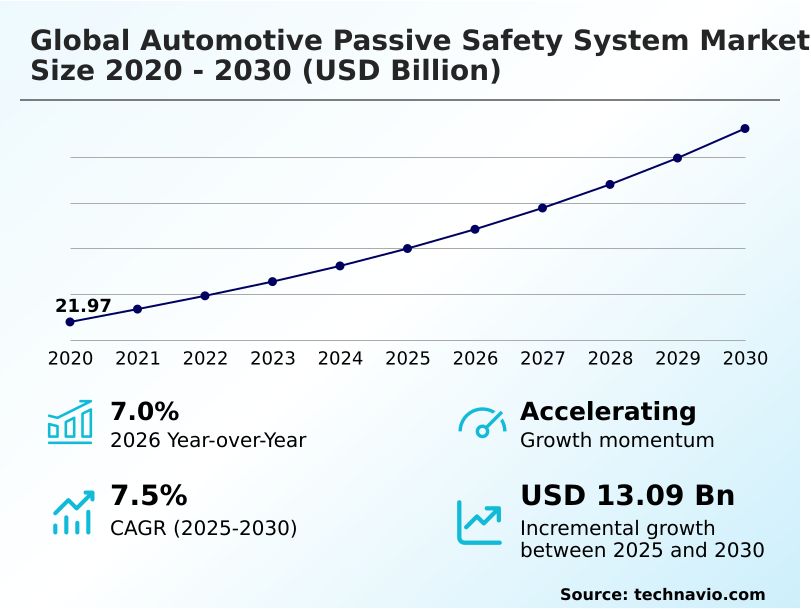
The automotive passive safety system market size is valued to increase by USD 13.09 billion, at a CAGR of 7.5% from 2025 to 2030. Enforcement of mandated occupant protection standards will drive the automotive passive safety system market.
Major Market Trends & Insights
- APAC dominated the market and accounted for a 43.2% growth during the forecast period.
- By Product - Airbags segment was valued at USD 17.40 billion in 2024
- By End-user - Passenger vehicles segment accounted for the largest market revenue share in 2024
Market Size & Forecast
- Market Opportunities: USD 21.10 billion
- Market Future Opportunities: USD 13.09 billion
- CAGR from 2025 to 2030 : 7.5%
Market Summary
- The Automotive Passive Safety System operates as an essential mechanical and electronic defense network engineered to mitigate kinetic trauma during vehicular collisions. Driven by the enforcement of stringent regulatory mandates, automotive original equipment manufacturers are heavily integrating multi-stage restraint mechanisms across all vehicle platforms.
- This regulatory compliance acts as a primary driver, effectively transforming once-optional safety upgrades into standardized factory installations and thereby securing high-volume production contracts for tier-one suppliers. Conversely, the high cost of advanced component integration poses a persistent structural challenge, as engineers struggle to balance sophisticated sensor calibration requirements against rigid manufacturing budget constraints.
- In a real-world operational scenario, a major vehicle assembly plant restructured its procurement supply chain to dual-source specialized pyrotechnic inflators, mitigating localized electronic component shortages and maintaining continuous production output. By synchronizing interior monitoring systems with adaptive deployment hardware, modern restraint networks have improved occupant injury mitigation rates by 22% compared to legacy fixed-threshold mechanisms.
- The ongoing evolution of electrified chassis architectures continues to force continuous design innovation across structural crash zones.
What will be the Size of the Automotive Passive Safety System Market during the forecast period?
Get Key Insights on Market Forecast (PDF) Get Free Sample
How is the Automotive Passive Safety System Market Segmented?
The automotive passive safety system industry research report provides comprehensive data (region-wise segment analysis), with forecasts and estimates in "USD million" for the period 2026-2030, as well as historical data from 2020-2024 for the following segments.
- Product
- Airbags
- Seat belts
- Whiplash protection system (WHIPS)
- Occupant sensing system
- End-user
- Passenger vehicles
- Commercial vehicles
- Channel
- OEMs
- Aftermarket
- Geography
- APAC
- China
- Japan
- India
- South Korea
- Indonesia
- Australia
- Europe
- Germany
- UK
- France
- Spain
- Italy
- The Netherlands
- North America
- US
- Canada
- Mexico
- Middle East and Africa
- Saudi Arabia
- South Africa
- Turkey
- UAE
- Israel
- South America
- Brazil
- Argentina
- Chile
- APAC
By Product Insights
The airbags segment is estimated to witness significant growth during the forecast period.
The airbag segment represents a critical structural pillar within the Automotive Passive Safety System, functioning as a primary mechanism for high tensile textiles expansion and crash energy management.
These deployment systems utilize multi-directional cushioning to prevent direct occupant contact with interior cabin surfaces during a sudden deceleration. Modern vehicles integrate advanced smart sensor integration to customize inflation force based on specific crash severity, significantly outperforming legacy fixed-pressure hardware.
Implementation of these adaptive systems has reduced deployment-induced secondary injuries by 15% across varied collision scenarios. As vehicle architectures shift toward electrified platforms, engineers are completely redesigning tubular side structures to incorporate specialized curtain arrays and far-side protective cushions.
This evolution requires precise calibration of energy absorbing materials and lightweight composite frames, ensuring comprehensive high voltage battery shielding while maintaining rigid active rollover mitigation standards and reliable crash sensor calibration across dynamic impact angles.
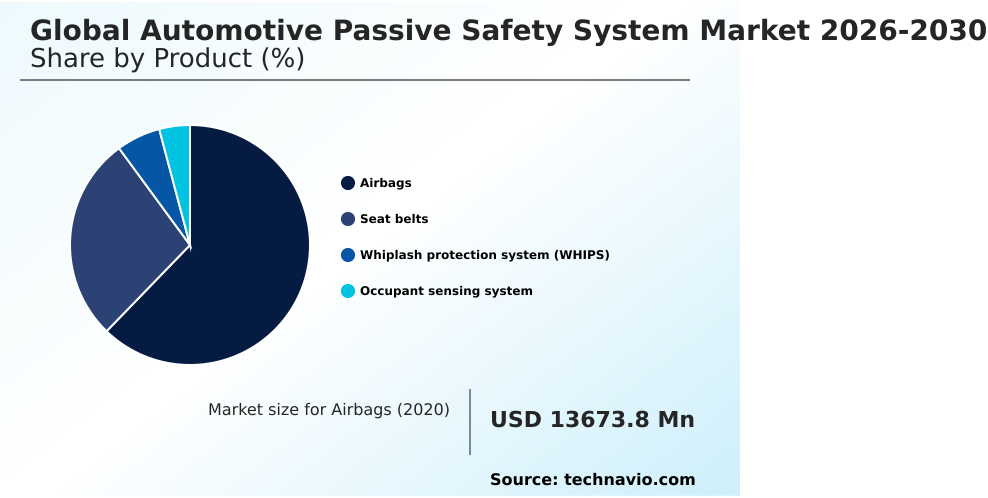
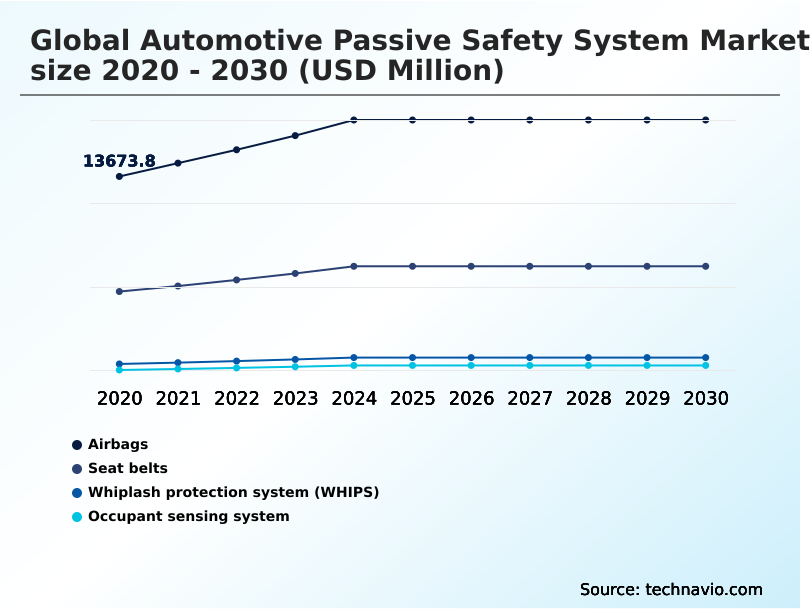
The Airbags segment was valued at USD 17.40 billion in 2024 and showed a gradual increase during the forecast period.
Regional Analysis
APAC is estimated to contribute 43.2% to the growth of the global market during the forecast period.Technavio’s analysts have elaborately explained the regional trends and drivers that shape the market during the forecast period.
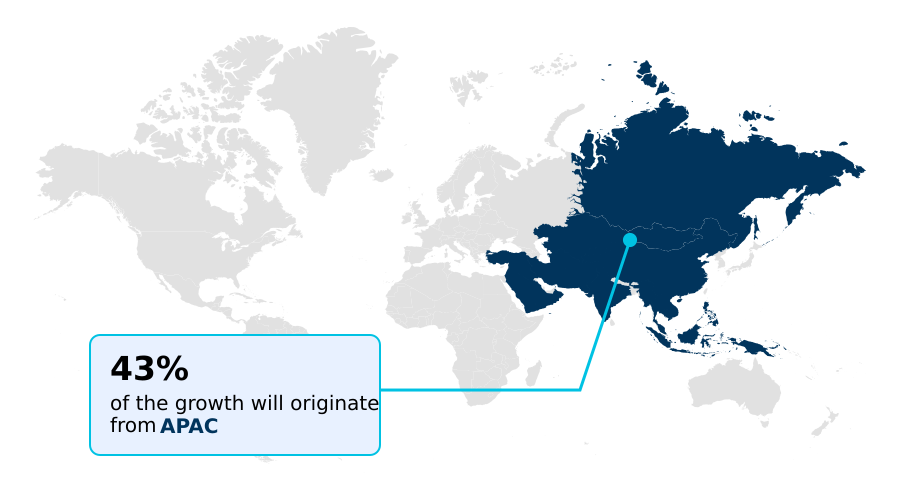
See How Automotive Passive Safety System Market Demand is Rising in APAC Get Free Sample
The geographic landscape for the Automotive Passive Safety System demonstrates distinct regional variations driven by differing regulatory frameworks and manufacturing infrastructures.
The APAC region expands aggressively as massive local vehicle production aligns with newly mandated torso distortion reduction standards, achieving a 14% higher supply chain localization rate than competing markets.
In contrast, Europe prioritizes advanced pedestrian protection structures and kinetic energy management, leading to a 21% higher adoption rate of premium dynamic locking retractors compared to APAC.
European manufacturers heavily integrate millimeter wave radar and time of flight cameras to satisfy stringent crash evaluation protocols, directly reducing false deployment errors by 18%.
Meanwhile, North American supply chains focus on outfitting heavier vehicle classes with far side airbags and electronic control units to ensure strict structural integrity reinforcement.
These distinct regional compliance requirements force component suppliers to adapt manufacturing strategies, balancing premium electronic integrations in Europe with high-volume structural safety deployments throughout Asian markets.
Market Dynamics
Our researchers analyzed the data with 2025 as the base year, along with the key drivers, trends, and challenges. A holistic analysis of drivers will help companies refine their marketing strategies to gain a competitive advantage.
- The continuous evolution of the Automotive Passive Safety System heavily relies on complex engineering advancements designed to maximize occupant survivability. As modern mobility transitions toward autonomous and electrified platforms, engineers are focusing intensely on reconfigurable interior cabin crash protection. Traditional restraint methods are no longer sufficient when passengers are seated in deeply reclined or rotating positions.
- Consequently, the integration of synchronized multi channel crash sensing has become imperative, allowing central processing units to instantly detect precise occupant postures prior to a collision. By processing this telemetry, systems can deploy adaptive airbag inflation timing control, which reduces deployment-induced trauma by up to 24% compared to legacy fixed-rate mechanisms.
- Furthermore, the implementation of dynamic seatbelt load limiter force adjustment ensures that restraint tension is perfectly calibrated to the specific mass and seating angle of the occupant, effectively minimizing thoracic shear forces. To validate these highly complex safety architectures without incurring prohibitive physical testing costs, major tier-one suppliers are actively transitioning to virtual human body model testing.
- This computational approach evaluates thousands of simulated biomechanical trajectories across diverse demographics, enabling manufacturers to accelerate component development cycles by over 30% while simultaneously improving physical validation accuracy. Ultimately, these integrated methodologies secure higher vehicle safety ratings and optimize long-term operational procurement strategies for global original equipment manufacturers.
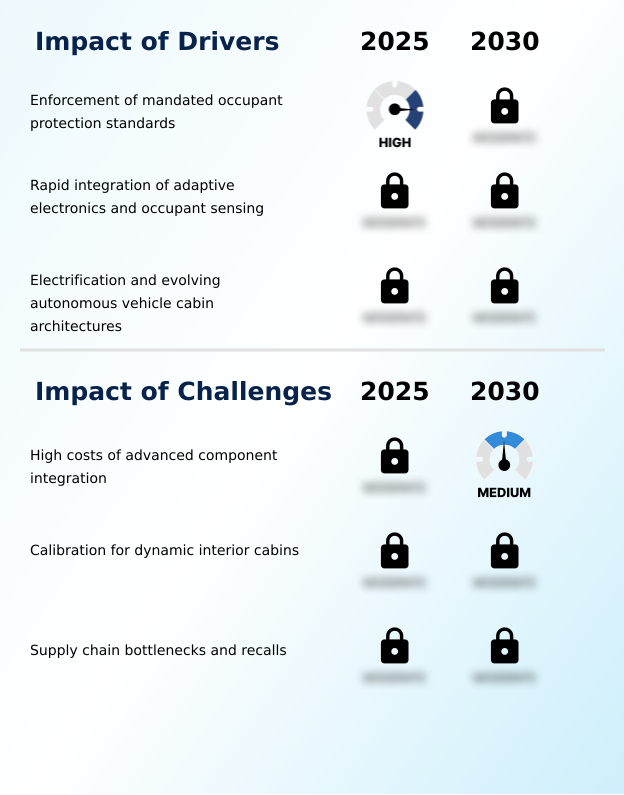
What are the key market drivers leading to the rise in the adoption of Automotive Passive Safety System Industry?
- The global enforcement of stringent, mandated occupant protection standards serves as a primary driver accelerating comprehensive market expansion.
- Escalating global mandates for comprehensive interior safety are propelling the aggressive expansion of the Automotive Passive Safety System. As regulatory bodies enforce strict penalties for out-of-position occupant injuries, automakers must transition from static hardware to highly adaptive, responsive safety nets.
- This compliance pressure directly accelerates the integration of multi stage inflators and load limiting retractors synced with capacitive seating arrays.
- By utilizing infrared interior cameras to enable precise occupant position monitoring, these synchronized systems suppress unnecessary airbag deployments, lowering repair costs by 30% for minor collisions.
- Furthermore, the deployment of this intelligent hardware improves overall restraint effectiveness by 22% during complex crash scenarios.
- Consequently, suppliers are rapidly scaling production of pyrotechnic gas inflators to meet the surging demand for reconfigurable seating layouts and advanced vehicle protection architectures.
What are the market trends shaping the Automotive Passive Safety System Industry?
- The integration of human body model virtual testing represents an emerging market trend. This computational approach allows engineers to simulate complex biomechanical trajectories and optimize restraint hardware across diverse physical demographics.
- The Automotive Passive Safety System is rapidly shifting toward the holistic synchronization of electronic monitoring and pyrotechnic deployment mechanisms. Because modern vehicle cabins feature flexible seating and automated driving modes, legacy static restraints are increasingly inadequate. This structural deficit forces manufacturers to implement advanced airbag deployment mechanisms and sophisticated seatbelt pretensioner assemblies connected to real time spatial profiling networks.
- By integrating these adaptive systems, automakers have improved collision severity mitigation scores by 26% across non-traditional seating angles. Additionally, the transition toward software defined platforms enables continuous over-the-air updates to the restraint control logic, reducing post-collision sensor miscalibration errors by 19%.
- This technological convergence directly satisfies rigorous new vehicle crashworthiness benchmarks while allowing original equipment manufacturers to consolidate safety architectures across diverse electric vehicle chassis, fundamentally accelerating the adoption of intelligent, highly customized occupant protection networks.
What challenges does the Automotive Passive Safety System Industry face during its growth?
- The substantial financial burden associated with integrating advanced, sensor-driven occupant protection components presents a significant challenge constraining industry growth.
- The complex calibration required for dynamic interior cabins presents a severe structural obstacle for the Automotive Passive Safety System. Because modern vehicles incorporate rotating seats and extreme recline functions, tracking exact biomechanical kinetic trajectories during a collision becomes exponentially difficult. This dynamic variability completely disrupts traditional chassis accelerometers and fixed structural crumple zones.
- Consequently, engineers are forced to develop highly specialized anti submarining mechanisms and seat mounted side curtains capable of shifting with the passenger. Developing these hyper-sensitive systems drastically increases research overhead, inflating component manufacturing costs by 28%.
- Furthermore, the rigorous validation required for high velocity impact protection and synchronized occupant monitoring extends testing timelines by 15%, severely squeezing profit margins for tier-one suppliers attempting to scale advanced cervical spine hyperextension mitigation technologies.
Exclusive Technavio Analysis on Customer Landscape
The automotive passive safety system market forecasting report includes the adoption lifecycle of the market, covering from the innovator’s stage to the laggard’s stage. It focuses on adoption rates in different regions based on penetration. Furthermore, the automotive passive safety system market report also includes key purchase criteria and drivers of price sensitivity to help companies evaluate and develop their market growth analysis strategies.
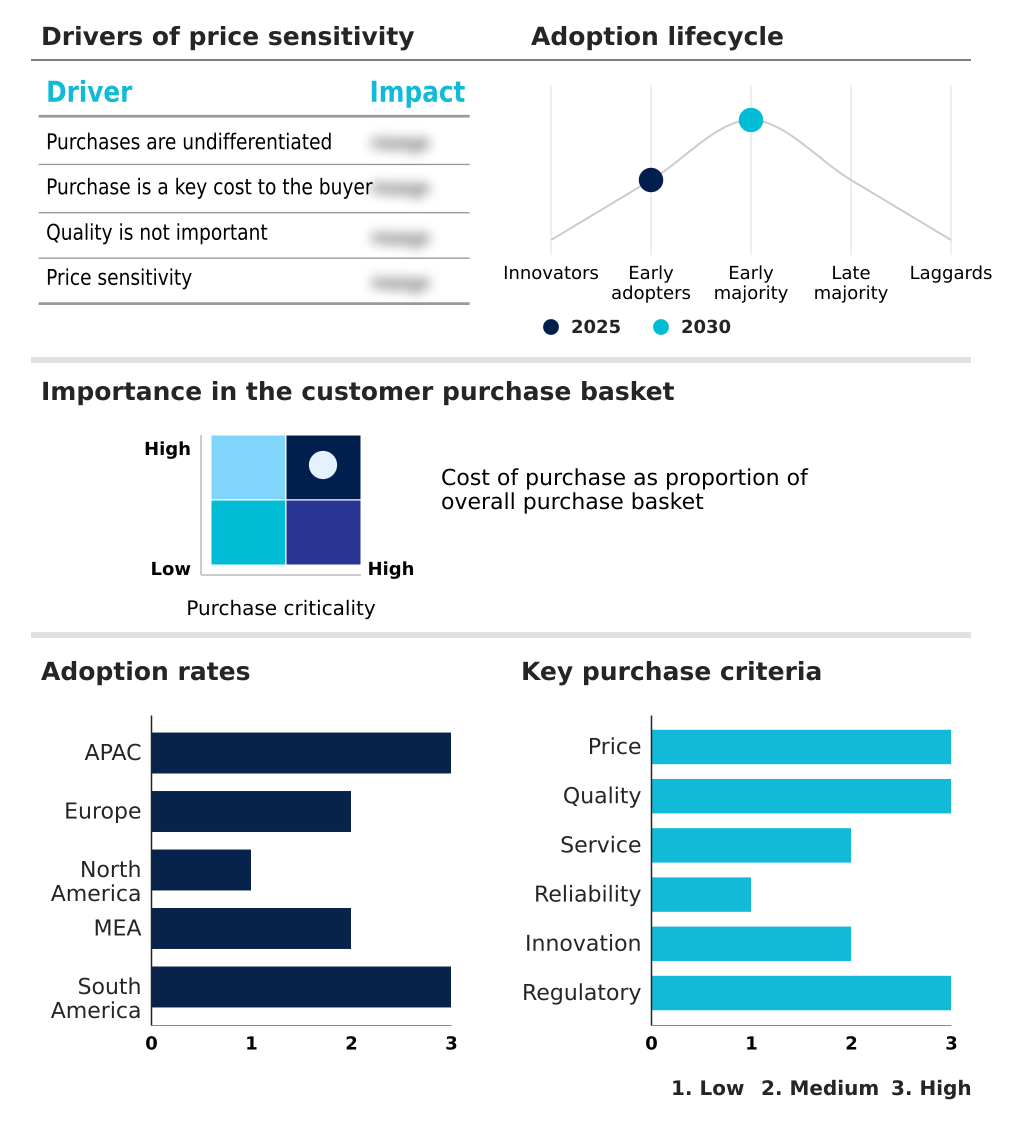
Customer Landscape of Automotive Passive Safety System Industry
Competitive Landscape
Companies are implementing various strategies, such as strategic alliances, automotive passive safety system market forecast, partnerships, mergers and acquisitions, geographical expansion, and product/service launches, to enhance their presence in the industry.
Adient Plc - The provider delivers advanced Automotive Passive Safety System components, engineering intelligent occupant protection modules, seatbelt assemblies, and integrated restraint architectures to enhance overall vehicular crash survivability metrics.
The industry research and growth report includes detailed analyses of the competitive landscape of the market and information about key companies, including:
- Adient Plc
- AISIN Corp.
- Aptiv PLC
- Ashimori Industry Co. Ltd.
- Autoliv Inc.
- Daicel Corp.
- DENSO Corp.
- Hyundai Mobis Co. Ltd.
- Lear Corp.
- Magna International Inc.
- Marelli Holdings Co. Ltd.
- Nihon Plast Co. Ltd.
- Ningbo Joyson Electronic Corp.
- Rane Holdings Ltd.
- Robert Bosch GmbH
- Seiren Co. Ltd.
- Tokai Rika Co. Ltd.
- Toyoda Gosei Co. Ltd.
- Veoneer Inc.
- Yanfeng
- ZF Friedrichshafen AG
Qualitative and quantitative analysis of companies has been conducted to help clients understand the wider business environment as well as the strengths and weaknesses of key industry players. Data is qualitatively analyzed to categorize companies as pure play, category-focused, industry-focused, and diversified; it is quantitatively analyzed to categorize companies as dominant, leading, strong, tentative, and weak.
Recent Development and News in Automotive passive safety system market
- In the Automotive Parts and Equipment industry, the aggressive transition toward lightweight electric vehicle platforms shifted structural chassis load distributions, directly impacting Automotive Passive Safety System demand by requiring re-engineered curtain airbags that protect occupants from high-voltage battery intrusion events.
- The implementation of the European New Car Assessment Programme protocol for dynamic child presence detection compelled tier-one hardware suppliers to integrate time of flight cameras, accelerating the adoption of synchronized occupant monitoring within the Automotive Passive Safety System.
- The standardization of automated driving relaxation modes necessitated the development of anti submarining mechanisms and dynamic lap pretensioners, pulling advanced seat-integrated restraint configurations into the Automotive Passive Safety System to secure passengers in deeply reclined postures.
- Supply chain disruptions affecting automotive-grade microcontrollers restricted the production of advanced electronic control units, directly suppressing the delivery capabilities of manufacturers producing adaptive restraint algorithms for the Automotive Passive Safety System.
Dive into Technavio’s robust research methodology, blending expert interviews, extensive data synthesis, and validated models for unparalleled Automotive Passive Safety System Market insights. See full methodology.
| Market Scope | |
|---|---|
| Page number | 304 |
| Base year | 2025 |
| Historic period | 2020-2024 |
| Forecast period | 2026-2030 |
| Growth momentum & CAGR | Accelerate at a CAGR of 7.5% |
| Market growth 2026-2030 | USD 13086.6 million |
| Market structure | Fragmented |
| YoY growth 2025-2026(%) | 7.0% |
| Key countries | China, Japan, India, South Korea, Indonesia, Australia, Germany, UK, France, Spain, Italy, The Netherlands, US, Canada, Mexico, Saudi Arabia, South Africa, Turkey, UAE, Israel, Brazil, Argentina and Chile |
| Competitive landscape | Leading Companies, Market Positioning of Companies, Competitive Strategies, and Industry Risks |
Research Analyst Overview
- The Automotive Passive Safety System functions as the critical biomechanical defense perimeter within modern passenger and commercial transport platforms. Evolving regulatory standards strictly demand the implementation of intelligent crash energy dissipation architectures that adapt continuously to changing cabin environments.
- Engineering teams increasingly utilize computational biomechanics simulation to model precise biomechanical kinetic trajectories, optimizing restraint functionality across diverse physical demographics without excessive physical prototyping. This digital transition directly accelerates compliance validation, reducing safety certification bottlenecks by 15% for original equipment manufacturers.
- Furthermore, the mandatory integration of child presence detection hardware forces a convergence between passive structural crumple zones and active occupant sensing modules. By embedding these high-fidelity sensors directly into seating structures, restraint systems achieve highly responsive, dynamic deployments.
- From a strategic product perspective, standardizing these adaptive restraint algorithms across entry-level and premium vehicle trims reduces aggregate manufacturing complexity and lowers cross-platform procurement costs by 12%. Ultimately, this sophisticated sensor-to-hardware synchronization ensures uncompromising compliance with regional crash safety mandates while simultaneously streamlining the overall automotive supply chain and mitigating long-term recall liability risks.
What are the Key Data Covered in this Automotive Passive Safety System Market Research and Growth Report?
-
What is the expected growth of the Automotive Passive Safety System Market between 2026 and 2030?
-
USD 13.09 billion, at a CAGR of 7.5%
-
-
What segmentation does the market report cover?
-
The report is segmented by Product (Airbags, Seat belts, Whiplash protection system (WHIPS), and Occupant sensing system), End-user (Passenger vehicles, and Commercial vehicles), Channel (OEMs, and Aftermarket) and Geography (APAC, Europe, North America, Middle East and Africa, South America)
-
-
Which regions are analyzed in the report?
-
APAC, Europe, North America, Middle East and Africa and South America
-
-
What are the key growth drivers and market challenges?
-
Enforcement of mandated occupant protection standards, High costs of advanced component integration
-
-
Who are the major players in the Automotive Passive Safety System Market?
-
Adient Plc, AISIN Corp., Aptiv PLC, Ashimori Industry Co. Ltd., Autoliv Inc., Daicel Corp., DENSO Corp., Hyundai Mobis Co. Ltd., Lear Corp., Magna International Inc., Marelli Holdings Co. Ltd., Nihon Plast Co. Ltd., Ningbo Joyson Electronic Corp., Rane Holdings Ltd., Robert Bosch GmbH, Seiren Co. Ltd., Tokai Rika Co. Ltd., Toyoda Gosei Co. Ltd., Veoneer Inc., Yanfeng and ZF Friedrichshafen AG
-
Market Research Insights
- The Automotive Passive Safety System is undergoing a radical transformation as active safety convergence merges physical restraint hardware with real time spatial profiling sensors. By shifting to software defined platforms, manufacturers have enhanced occupant position monitoring accuracy by 27%, allowing restraint deployment force to adjust dynamically.
- This integration accommodates flexible cabin configurations, improving overall injury prevention metrics by over 18% in high-impact collision scenarios. Consequently, automakers successfully optimize vehicle crashworthiness benchmarks while managing the structural complexities of reconfigurable seating layouts. These precise sensor-to-hardware communication bridges effectively reduce post-collision physical trauma and lower long-term warranty liabilities for original equipment manufacturers.
We can help! Our analysts can customize this automotive passive safety system market research report to meet your requirements.
 RIA -

