


Sensor Fusion Market Size 2024-2028
The sensor fusion market size is forecast to increase by USD 6.46 billion at a CAGR of 20.62% between 2023 and 2028.
- The market is experiencing significant growth, driven by several key factors. One major trend is the decline in sensor prices, making it more economically viable for manufacturers to incorporate multiple sensors In their systems. Another factor fueling market growth is the increasing design complexity of advanced driver-assistance systems (ADAS) and autonomous vehicles, which require the integration of various sensors for improved accuracy and reliability. However, there are challenges that need to be addressed, such as system reliability and uncertainty in user acceptance of autonomous features. As sensors become more sophisticated and data processing becomes more complex, ensuring the accuracy and reliability of sensor data fusion algorithms will be crucial for the success of these systems.
- Additionally, addressing user concerns regarding safety and privacy will be essential for widespread adoption of autonomous vehicles and other advanced applications of sensor fusion technology.
What will be the Size of the Sensor Fusion Market During the Forecast Period?
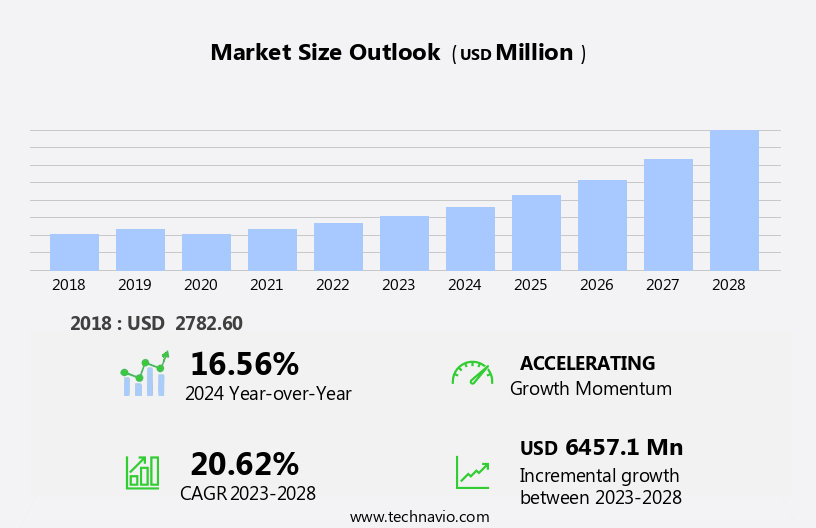
- The market In the United States is experiencing significant growth due to the increasing adoption of advanced technologies in various industries, including autonomous vehicles, robotics, and consumer electronics. Miniaturization and integration of sensors, mobile computing, and 5G technology are key trends driving market expansion. Sensor fusion technology, which combines data from multiple sensors such as 9 axis inertial sensors, cameras, lidar, radar, and GNSS sensors, enhances visual perception capabilities and improves overall system performance. In the automotive sector, sensor fusion systems are being integrated into passenger cars, light commercial vehicles, and heavy commercial vehicles to enable autonomous driving. Smartphone manufacturers are also incorporating sensor fusion technology into their devices to enhance functionality and user experience.
- Integration techniques and algorithms continue to evolve, enabling seamless sensor data processing and analysis.
How is this Sensor Fusion Industry segmented and which is the largest segment?
The sensor fusion industry research report provides comprehensive data (region-wise segment analysis), with forecasts and estimates in "USD million" for the period 2024-2028, as well as historical data from 2018-2022 for the following segments.
- Technology
- MEMS
- Non MEMS
- Geography
- APAC
- China
- Japan
- North America
- US
- Europe
- Germany
- UK
- South America
- Middle East and Africa
- APAC
By Technology Insights
- The mems segment is estimated to witness significant growth during the forecast period.
MEMS technology, which involves the integration of microelectronics and micromachining, is revolutionizing various industries by producing small, efficient sensors. MEMS sensors, a key component of this technology, dominate The market. MEMS sensors combine electrical and mechanical components, fabricated using integrated circuit batch processing technologies. These sensors can sense, control, actuate, and generate outcomes on a micro-scale, with sizes ranging from 20 micrometers to a millimeter. Inertial combo sensors, environment sensors, and multiple sources are integral components of sensor fusion systems. MEMS technology is extensively used in robotics and consumer electronics, including cameras, LiDAR, and radar. Visual perception capabilities and advanced algorithms enhance the functionality of these sensors.
MEMS technology's benefits include improved accuracy, reliability, and cost-effectiveness compared to traditional sensors.
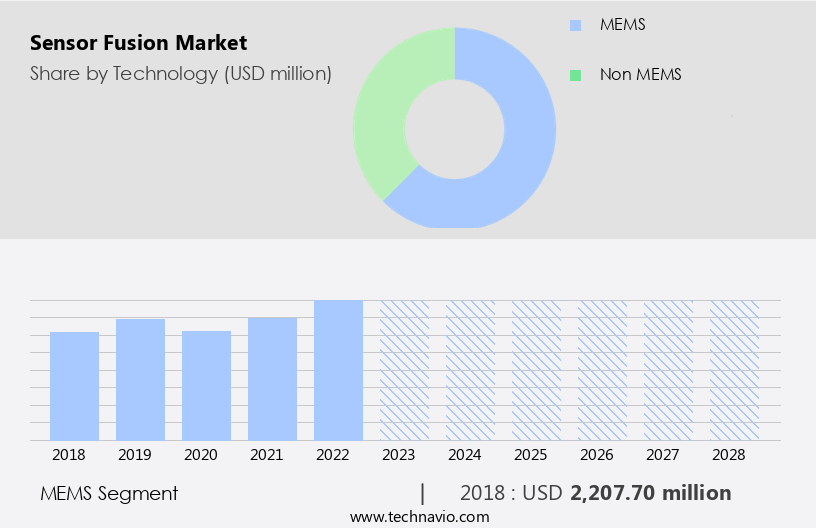
Get a glance at the Sensor Fusion Industry report of share of various segments Request Free Sample
The MEMS segment was valued at USD 2.21 billion in 2018 and showed a gradual increase during the forecast period.
Regional Analysis
- APAC is estimated to contribute 34% to the growth of the global market during the forecast period.
Technavio’s analysts have elaborately explained the regional trends and drivers that shape the market during the forecast period.
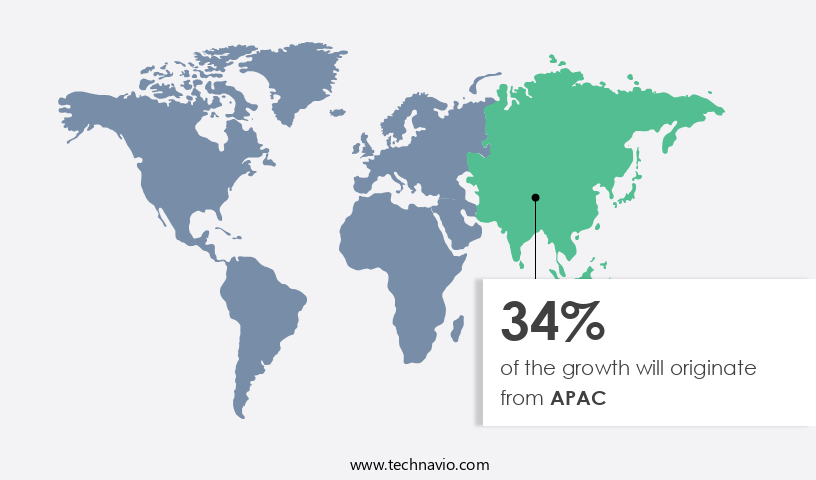
For more insights on the market share of various regions, Request Free Sample
The APAC region holds a significant share In the market, driven by advancements in autonomous vehicles, smart devices, and the semiconductor industry. China is a major contributor, with automakers like GAC Group and connectivity solutions providers leading developments in autonomous vehicle solutions. The region's rapid economic growth, primarily in China, India, Indonesia, and South Korea, has increased consumer purchasing power, leading to a higher demand for advanced automotive technologies. Pedestrian safety, traffic sign recognition, and road marking applications are key areas of focus In the market. Compliance with safety standards is crucial for automakers producing electric and commercial vehicles, making sensor fusion technology increasingly important.
Semiconductor companies play a vital role in providing the necessary components for sensor fusion systems. Despite the advantages, challenges such as ensuring accuracy and reliability in sensor data fusion remain.
Market Dynamics
Our sensor fusion market researchers analyzed the data with 2023 as the base year, along with the key drivers, trends, and challenges. A holistic analysis of drivers will help companies refine their marketing strategies to gain a competitive advantage.
What are the key market drivers leading to the rise in adoption of Sensor Fusion Industry?
Decline in sensor prices is the key driver of the market.
- The market is experiencing significant growth due to the increasing adoption of advanced driver-assistance systems (ADAS) and autonomous vehicles (AVs) in various industries. Miniaturization and integrated sensors are key trends in this market, enabling the development of compact, cost-effective solutions. Mobile computing and 5G technology are also driving the market, enabling real-time data processing and communication between multiple sensors. Sensor fusion technology, which combines data from various sensors such as 9 axis inertial sensors, cameras, ultrasonic sensors, LiDAR, and radar, is a critical component of these systems. Calibration and integration techniques are essential to ensure accurate and reliable data from these sensors.
- Privacy, cybersecurity, and safety concerns are major challenges In the market. companies must address these concerns through robust security protocols and safety standards. The hardware segment, including inertial combo sensors, GNSS sensors, and test systems, is a significant contributor to the market. Consumer electronics, robotics, and commercial vehicles, including passenger cars, light commercial vehicles, and heavy commercial vehicles, are major applications for sensor fusion technology. Autonomous driving features such as adaptive cruise control, lane keeping assist, automatic emergency braking, and traffic flow management are driving the demand for sensor fusion systems. Environment sensors, including cameras, LiDAR, and radar, are essential for AVs to detect obstacles, pedestrians, traffic signs, road markings, and other vehicles.
- Algorithms and integration techniques are critical to processing and interpreting the data from these sensors to enable safe and efficient autonomous driving. The market is expected to continue growing due to the increasing demand for safety and efficiency in transportation. The integration of V2X technology and redundant, complementary, and coordinated sensors will further enhance the capabilities of these systems.
What are the market trends shaping the Sensor Fusion Industry?
Increasing design complexity is the upcoming market trend.
- The market In the US is experiencing significant growth due to the increasing adoption of advanced sensor technologies in various industries, particularly in autonomous vehicles. Integrated sensors, including 9 axis inertial sensors, cameras, LiDAR, Radar, and ultrasonic sensors, are becoming essential components in autonomous vehicles, robotics, and consumer electronics. Sensor fusion technology plays a crucial role in processing data from multiple sources, such as cameras, GNSS sensors, and inertial measurement units, to enhance the vehicle's visual perception capabilities. Autonomous vehicles require redundant, complementary, and coordinated sensors to ensure safety standards are met. These sensors include cameras for object and pedestrian detection, LiDAR for distance measurement, and Radar for obstacle detection.
- Advanced driver assistance systems, such as adaptive cruise control, lane keeping assist, and automatic emergency braking, rely on sensor fusion technology to function effectively. However, the market faces challenges such as privacy concerns, cybersecurity concerns, and safety concerns. companies must address these challenges by implementing robust calibration techniques, integration techniques, and algorithms to ensure data accuracy and security. Moreover, the integration of 5G technology and V2X technology in sensor fusion systems will enable real-time data processing and communication, enhancing the overall performance of autonomous vehicles. The hardware segment, including semiconductors and electric vehicles, is a significant contributor to the market's growth.
- Autonomous driving features, such as parking assistance systems and driver monitoring systems, are also driving the demand for sensor fusion technology. The market for sensor fusion systems is expected to grow significantly In the coming years due to the increasing demand for safety features in passenger vehicles, light commercial vehicles, and heavy commercial vehicles.
What challenges does Sensor Fusion Industry face during the growth?
System reliability and uncertainty in user acceptance of autonomous features is a key challenge affecting the industry growth.
- The market is experiencing significant growth due to the increasing adoption of autonomous vehicles and advanced driver-assistance systems (ADAS) in passenger cars, light commercial vehicles, and heavy commercial vehicles. Miniaturization of integrated sensors, mobile computing, and the integration of multiple sources such as cameras, LiDAR, radar, ultrasonic sensors, and 9 axis inertial sensors, are driving the demand for sensor fusion technology. However, privacy, cybersecurity, and safety concerns persist, necessitating stringent calibration and safety standards. Autonomous vehicles rely on a combination of inertial combo sensors and environment sensors to ensure adaptive cruise control, lane keeping assist, automatic emergency braking, traffic flow, congestion, vehicle speed, fuel consumption, and emissions monitoring.
- Sensor fusion systems enable the coordination of multiple sensors to enhance the visual perception capabilities of AVs, detecting obstacles, pedestrians, traffic signs, and road markings. The hardware segment, including semiconductors, is a significant contributor to the market. Autonomous emergency braking, forward collision warning, traffic jam assist, and redundant, complementary, and coordinated sensors are essential components of these systems. The integration of 5G technology and V2X technology further enhances the functionality of these systems. The safety implications of these technologies are immense, as they can potentially reduce accidents and improve overall road safety. However, the reliability of these systems is a critical concern, as even occasional faults can lead to user rejection and negative impacts on market growth.
- Proper tuning and calibration are essential to minimize false positives and ensure the safe and efficient operation of these systems. In conclusion, the market is poised for growth due to the increasing adoption of advanced driver-assistance systems and autonomous vehicles. However, addressing privacy, cybersecurity, and safety concerns, and ensuring system reliability, are essential to realizing the full potential of these technologies.
Exclusive Customer Landscape
The sensor fusion market forecasting report includes the adoption lifecycle of the market, covering from the innovator’s stage to the laggard’s stage. It focuses on adoption rates in different regions based on penetration. Furthermore, the sensor fusion market report also includes key purchase criteria and drivers of price sensitivity to help companies evaluate and develop their market growth analysis strategies.
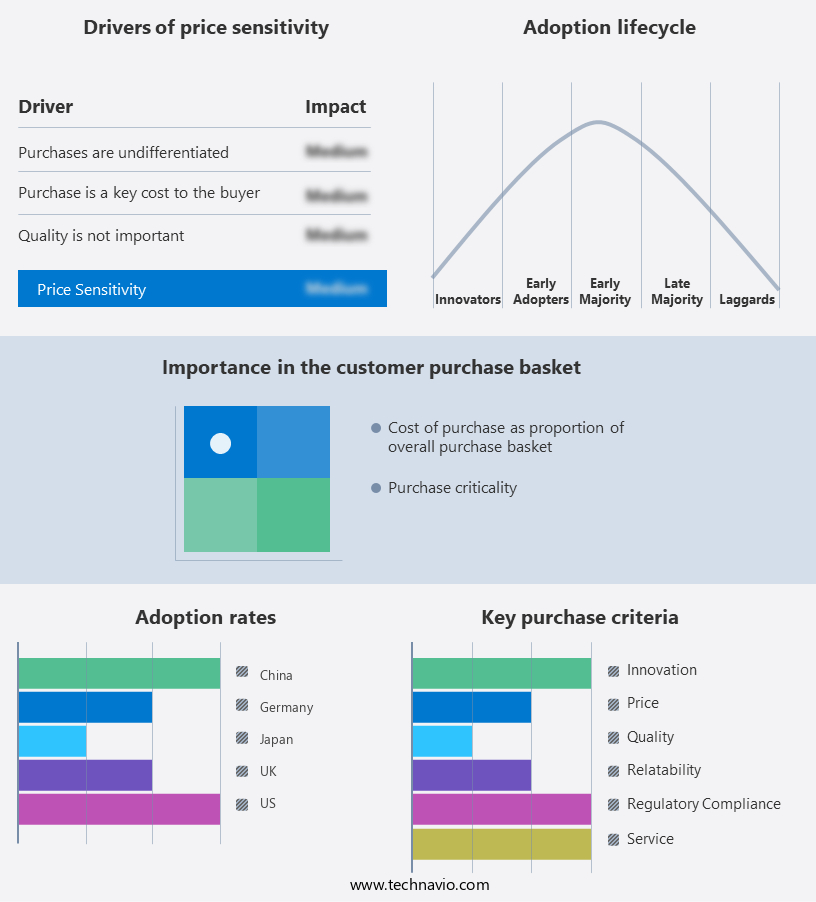
Customer Landscape
Key Companies & Market Insights
Companies are implementing various strategies, such as strategic alliances, sensor fusion market forecast, partnerships, mergers and acquisitions, geographical expansion, and product/service launches, to enhance their presence In the industry.
Analog Devices Inc. - Our company specializes in advanced sensor fusion technology, providing high-resolution, semantic sensor solutions for both dynamic and static objects. This cutting-edge technology is ideal for various applications, including valet parking, Level 2+ driver assistance systems, and highly automated driving. By seamlessly integrating data from multiple sensors, we offer dynamic grid sensor fusion that enhances overall system performance and accuracy.
The industry research and growth report includes detailed analyses of the competitive landscape of the market and information about key companies, including:
- Analog Devices Inc.
- Applied Materials Inc.
- Asahi Kasei Corp.
- ASM International
- BASELABS GmbH
- CEVA Inc.
- Continental AG
- Hitachi Ltd.
- Infineon Technologies AG
- Lam Research Corp.
- LeddarTech Inc.
- MEMSIC Semiconductor Co. Ltd.
- Nikon Corp.
- NXP Semiconductors NV
- Robert Bosch GmbH
- ROHM Co. Ltd.
- Senion AB
- STMicroelectronics International N.V.
- TDK Corp.
- Tokyo Electron Ltd.
Qualitative and quantitative analysis of companies has been conducted to help clients understand the wider business environment as well as the strengths and weaknesses of key industry players. Data is qualitatively analyzed to categorize companies as pure play, category-focused, industry-focused, and diversified; it is quantitatively analyzed to categorize companies as dominant, leading, strong, tentative, and weak.
Research Analyst Overview
Unraveling the Complexities of the market: A Deep Dive into the Intersection of Technology and Mobility Sensor fusion technology, the amalgamation of data from multiple sources to create a more comprehensive and accurate understanding of the environment, has been a topic of significant interest in various industries, particularly In the realm of autonomous vehicles and robotics. This content explores the intricacies of sensor fusion, focusing on the market dynamics and the role it plays in enhancing the functionality of various systems. The integration of sensors in technology has undergone a remarkable transformation, with miniaturization playing a crucial role In the advancement of sensor fusion.
Mobile computing and the advent of integrated sensors have paved the way for the development of sophisticated algorithms and integration techniques that enable the processing of data from multiple sources in real-time. Sensor fusion technology encompasses a diverse range of sensors, including inertial combo sensors, environment sensors, and cameras. Inertial combo sensors, which combine accelerometers, gyroscopes, and magnetometers, provide essential data for motion sensing and navigation. Environment sensors, such as lidar, radar, and ultrasonic sensors, help in detecting obstacles, pedestrians, traffic signs, and road markings. Cameras, on the other hand, offer visual perception capabilities, enabling the recognition of traffic signs, lane markings, and other critical information.
The market is driven by several factors, including the increasing demand for safety features in passenger vehicles, the growing popularity of autonomous driving systems, and the integration of advanced driver assistance systems (ADAS) in commercial vehicles. These systems rely on sensor fusion technology to provide real-time data processing and analysis, enhancing safety, reducing fuel consumption, and improving overall vehicle performance. However, the implementation of sensor fusion technology is not without challenges. Privacy concerns, cybersecurity threats, and safety standards are among the critical issues that need to be addressed. Ensuring the secure and accurate processing of data from multiple sources is essential to maintaining the trust and confidence of consumers.
The market can be segmented into various categories based on the type of sensors used. The hardware segment includes sensors such as 9-axis inertial sensors, gnss sensors, and test systems. These sensors play a vital role In the collection and processing of data, forming the foundation of sensor fusion systems. The integration of sensor fusion technology in robotics and consumer electronics has led to the development of advanced features such as adaptive cruise control, lane keeping assist, automatic emergency braking, and traffic flow management systems. These features help in reducing congestion, improving traffic flow, and enhancing overall safety.
The future of sensor fusion technology lies In the integration of advanced technologies such as 5G and V2X (vehicle-to-everything) technology. These technologies will enable real-time data exchange between vehicles, infrastructure, and other devices, paving the way for more advanced autonomous driving systems and improved traffic management. In conclusion, sensor fusion technology plays a crucial role in enhancing the functionality and safety of various systems, from autonomous vehicles to robotics and consumer electronics. The market dynamics of sensor fusion are driven by the increasing demand for advanced safety features, the integration of autonomous driving systems, and the development of new technologies such as 5G and V2X.
Addressing the challenges of privacy, cybersecurity, and safety standards will be essential to ensuring the widespread adoption of sensor fusion technology.
|
Sensor Fusion Market Scope |
|
|
Report Coverage |
Details |
|
Page number |
143 |
|
Base year |
2023 |
|
Historic period |
2018-2022 |
|
Forecast period |
2024-2028 |
|
Growth momentum & CAGR |
Accelerate at a CAGR of 20.62% |
|
Market growth 2024-2028 |
USD 6457.1 million |
|
Market structure |
Fragmented |
|
YoY growth 2023-2024(%) |
16.56 |
|
Key countries |
US, China, Japan, Germany, and UK |
|
Competitive landscape |
Leading Companies, Market Positioning of Companies, Competitive Strategies, and Industry Risks |
What are the Key Data Covered in this Sensor Fusion Market Research and Growth Report?
- CAGR of the Sensor Fusion industry during the forecast period
- Detailed information on factors that will drive the Sensor Fusion growth and forecasting between 2024 and 2028
- Precise estimation of the size of the market and its contribution of the industry in focus to the parent market
- Accurate predictions about upcoming growth and trends and changes in consumer behaviour
- Growth of the market across APAC, North America, Europe, South America, and Middle East and Africa
- Thorough analysis of the market’s competitive landscape and detailed information about companies
- Comprehensive analysis of factors that will challenge the sensor fusion market growth of industry companies
We can help! Our analysts can customize this sensor fusion market research report to meet your requirements.
 RIA -
RIA - 
