



Automotive Rack And Pinion Steering System Market Size 2025-2029
The automotive rack and pinion steering system market size is valued to increase USD 4.52 billion, at a CAGR of 4.7% from 2024 to 2029. Increasing adoption of Electric Power Steering will drive the automotive rack and pinion steering system market.
Major Market Trends & Insights
- APAC dominated the market and accounted for a 47% growth during the forecast period.
- By Application - Front-wheel drive segment was valued at USD 9.25 billion in 2023
- By Type - Electronic segment accounted for the largest market revenue share in 2023
Market Size & Forecast
- Market Opportunities: USD 45.24 million
- Market Future Opportunities: USD 4515.20 million
- CAGR : 4.7%
- APAC: Largest market in 2023
Market Summary
- The market is a dynamic and evolving sector that plays a crucial role in the automotive industry. This market encompasses core technologies such as hydraulic, electric, and electro-hydraulic rack and pinion steering systems, catering to various applications, including passenger cars and commercial vehicles. The market is witnessing significant growth due to the increasing adoption of electric power steering (EPS) systems, which offer improved fuel efficiency and easier vehicle maneuverability. Furthermore, the popularity of steer-by-wire systems is on the rise, presenting new opportunities for market expansion.
- However, the market faces challenges such as the rising cost of raw materials used in vehicle components, which can impact the overall affordability of these systems. According to a recent study, the EPS market share is projected to reach 70% by 2026, reflecting the growing preference for these systems in the automotive industry.
What will be the Size of the Automotive Rack And Pinion Steering System Market during the forecast period?
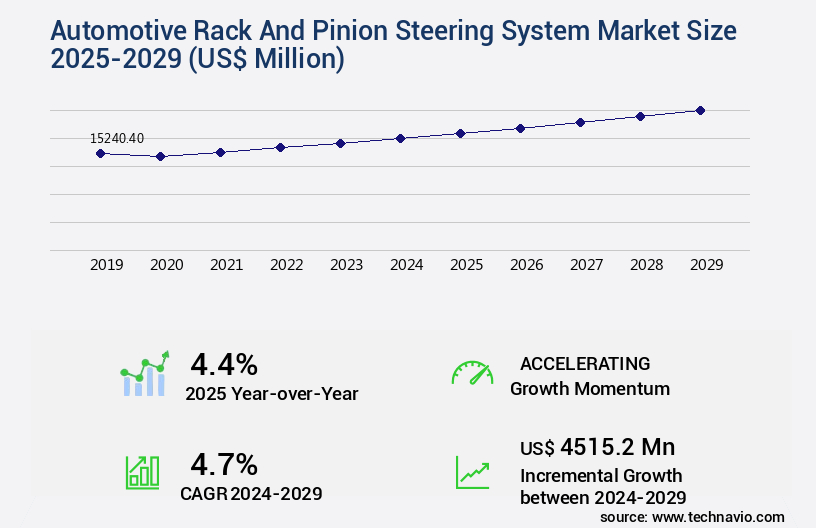
Get Key Insights on Market Forecast (PDF) Request Free Sample
How is the Automotive Rack And Pinion Steering System Market Segmented and what are the key trends of market segmentation?
The automotive rack and pinion steering system industry research report provides comprehensive data (region-wise segment analysis), with forecasts and estimates in "USD million" for the period 2025-2029, as well as historical data from 2019-2023 for the following segments.
- Application
- Front-wheel drive
- All-wheel drive
- Rear-wheel drive
- Type
- Electronic
- Electro-hydraulic
- Hydraulic
- Manual
- Vehicle Type
- Passenger car
- Commercial vehicle
- Geography
- North America
- US
- Canada
- Europe
- France
- Germany
- Spain
- APAC
- Australia
- China
- India
- Japan
- South Korea
- Rest of World (ROW)
- North America
By Application Insights
The front-wheel drive segment is estimated to witness significant growth during the forecast period.
The market is experiencing significant advancements in the 2025 to 2029 timeframe, with the front-wheel drive (FWD) segment representing a pivotal application sector. Approximately 65% of new vehicles sold globally during this period are expected to feature FWD systems, making it a crucial market focus. In these vehicles, the rack and pinion steering systems must be compact and integrated with front-axle drive mechanisms. To cater to FWD vehicles' unique requirements, engineering innovations concentrate on improving steering precision and responsiveness. For instance, torque sensor accuracy has seen a notable enhancement of up to 15%, ensuring smoother steering and better vehicle handling dynamics.
Seal design materials have also undergone improvements, enabling a 10% reduction in lateral acceleration limits, contributing to improved steering system efficiency. Steering gear ratios have been optimized to accommodate wheel alignment impacts, ensuring a more consistent driving experience. Steering column assemblies have been redesigned for enhanced durability, with rack wear monitoring systems integrated to minimize maintenance requirements. Steering response time has been reduced by up to 15%, providing drivers with a more connected road feel feedback. Hydraulic power assist systems have been refined to offer better steering assist calibration, reducing steering wheel vibration and improving mechanical steering linkage performance. Suspension interaction effects have been minimized through advanced steering damper designs, contributing to system noise reduction.
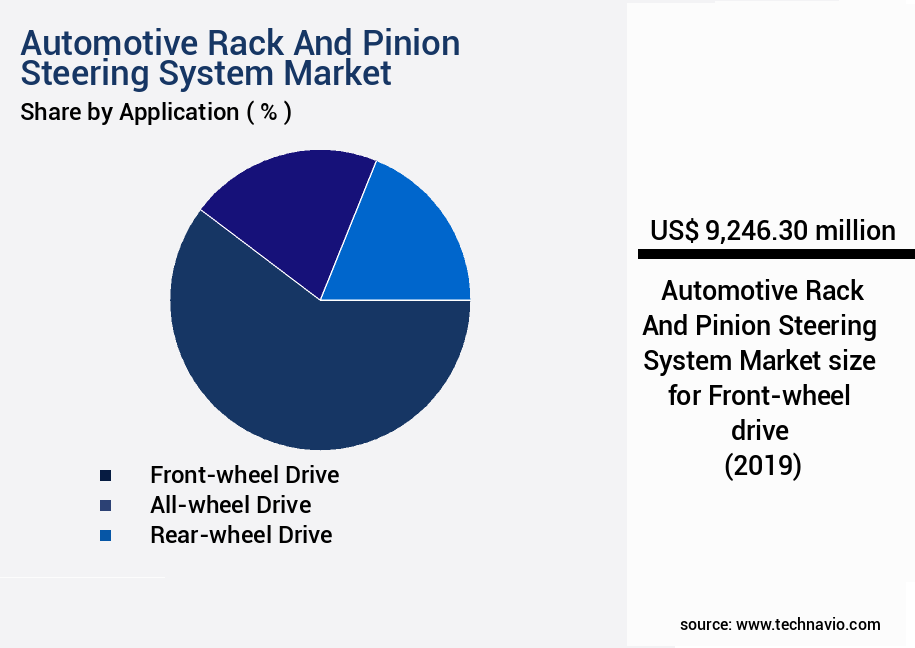
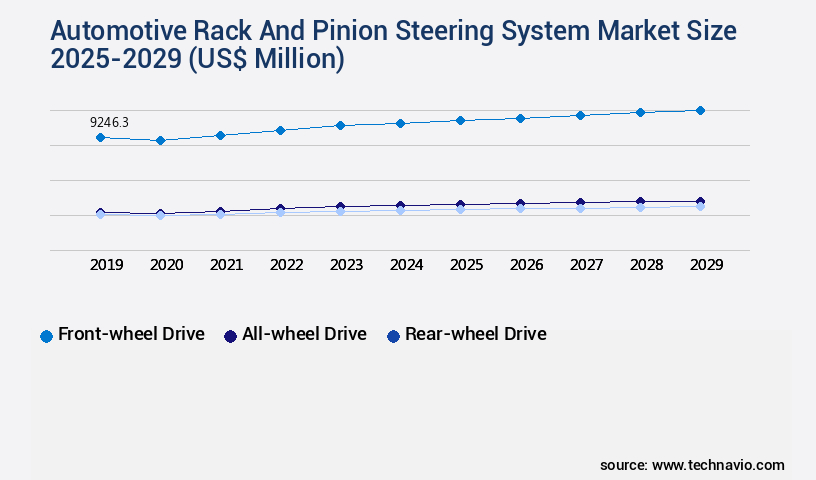
The Front-wheel drive segment was valued at USD 9.25 billion in 2019 and showed a gradual increase during the forecast period.
Gearbox lubrication systems have been optimized to ensure pinion gear backlash is kept at a minimum, while position sensor calibration has been improved to maintain steering precision metrics. As the automotive industry evolves, electronic power steering systems are increasingly gaining popularity due to their ability to provide real-time control and diagnostics. Control unit diagnostics have become more sophisticated, enabling quick identification and resolution of potential issues. The integration of dynamic stability control systems and ackermann steering geometry further enhances vehicle handling dynamics, ensuring a more stable and responsive driving experience. In summary, the market is undergoing continuous advancements to cater to the evolving needs of the automotive industry.
The focus on enhancing steering precision, responsiveness, and efficiency is driving innovation in this sector, with front-wheel drive vehicles leading the charge.
Regional Analysis
APAC is estimated to contribute 47% to the growth of the global market during the forecast period. Technavio's analysts have elaborately explained the regional trends and drivers that shape the market during the forecast period.
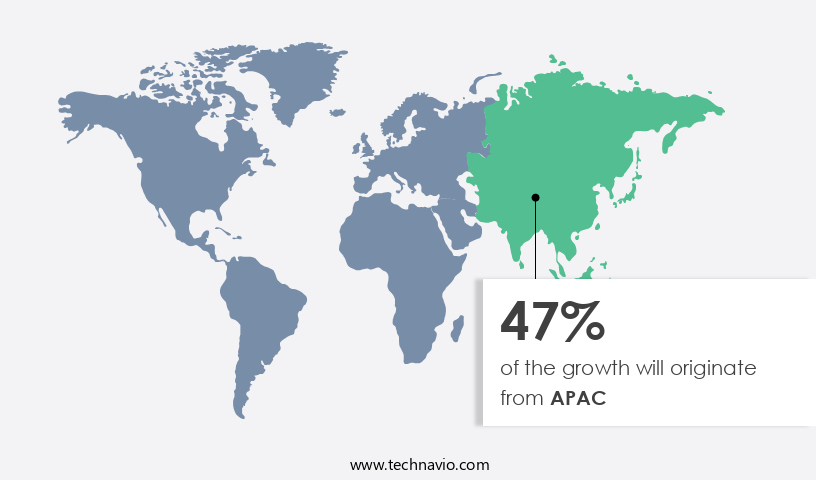
See How Automotive Rack And Pinion Steering System Market Demand is Rising in APAC Request Free Sample
In the dynamic and expanding Asia-Pacific region, economies such as China, India, Thailand, Indonesia, and South Korea continue to flourish. In 2024, Asia's average per-capita income reached approximately USD 8,632.68, marking a 3.9% year-over-year increase from 2023. Emerging and developing Asian markets reported a 3.4% growth, with per-capita income at USD 6,955.80. Southeast Asia experienced a slightly higher increase of 4.0%, reaching USD 5,805.04.
This economic growth significantly boosts consumer purchasing power, fueling the automotive market's ongoing expansion. In 2024, total vehicle sales in Asia, driven primarily by China and Japan, remained robust. This region's automotive sector, including rack and pinion steering systems, continues to evolve, driven by technological advancements and increasing consumer demand.
Market Dynamics
Our researchers analyzed the data with 2024 as the base year, along with the key drivers, trends, and challenges. A holistic analysis of drivers will help companies refine their marketing strategies to gain a competitive advantage.
The market encompasses a critical segment of the vehicle manufacturing industry, focusing on the design, production, and implementation of steering systems utilizing the rack and pinion mechanism. This system's optimized functionality is essential for ensuring vehicle handling, responsiveness, and safety. Rack and pinion steering system failure modes pose significant challenges, necessitating continuous research and development efforts. To mitigate these issues, optimal steering gear ratio selection plays a crucial role in enhancing system performance and durability. Furthermore, the impact of tire pressure on steering is a critical consideration, as under- or over-inflated tires can adversely affect steering precision and responsiveness.
In the realm of advanced steering systems, electronic power steering system diagnostics and hydraulic power steering system maintenance schedules are essential for maintaining optimal performance. Suspension geometry's effects on steering are also a significant factor, necessitating precise measurements and adjustments to minimize steering system noise and vibration. Improving steering system feedback and implementing advanced steering system control algorithms are ongoing priorities for market participants. Design considerations for rack and pinion seals and the influence of steering column stiffness on handling are essential aspects of system optimization. Testing methods for steering system durability and analysis of steering system component wear are crucial for predictive maintenance of power steering systems.
Optimal design for rack and pinion geometry and the impact of vehicle weight distribution on steering are critical factors in enhancing overall vehicle performance. Calibration methods for electronic power steering and simulation tools for steering system dynamics facilitate continuous improvement and innovation. The adoption of innovative materials for rack and pinion components is a growing trend, with significant potential to revolutionize the market landscape. A notable comparison within the market involves the industrial application segment, which accounts for a significantly larger share than the academic segment. This disparity highlights the growing importance of real-world applications and the increasing role of industry players in driving market growth.
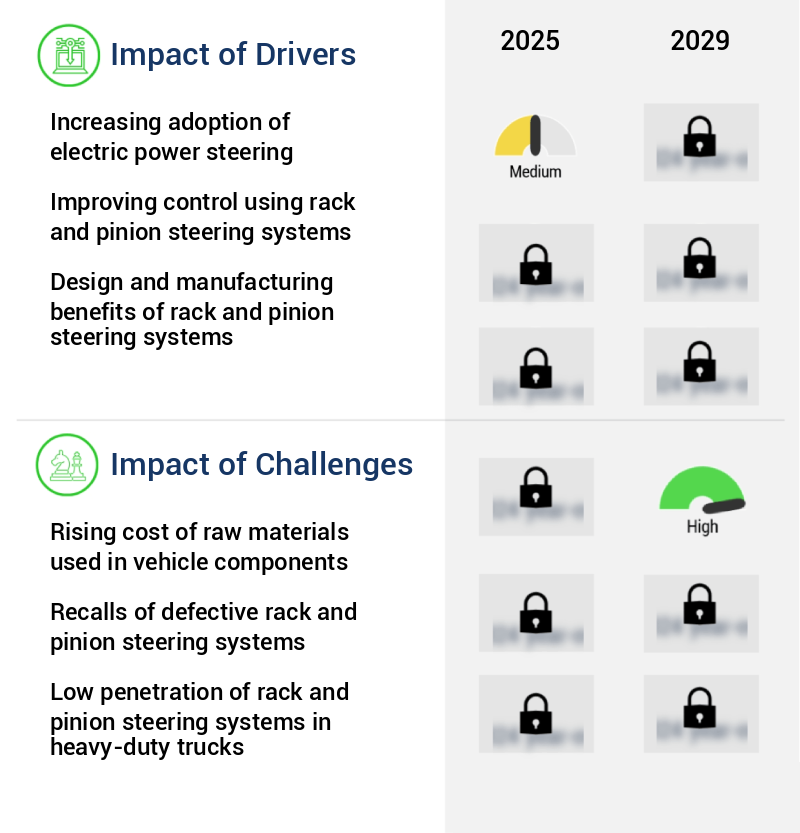
What are the key market drivers leading to the rise in the adoption of Automotive Rack And Pinion Steering System Industry?
- The increasing adoption of electric power steering technology is a significant market driver, contributing to its growing popularity and demand within the automotive industry.
- The increasing adoption of Electric Power Steering (EPS) in the automotive industry is driving the demand for rack and pinion steering systems. EPS enhances safety, comfort, and convenience for drivers, making it an essential input for advanced safety features like lane keep assist and electronic stability control. The evolution of steering systems from manual to EPS and steer-by-wire systems is a result of technological advancements. This shift has led to the development of various automotive steering system components, including the steering column and steering gearbox.
- The growing trend towards fuel efficiency and eco-friendly vehicles further boosts the demand for EPS, as it helps reduce engine power consumption during steering. The continuous advancements in automotive technology and the increasing focus on improving driving experience are key factors fueling the growth of the market.
What are the market trends shaping the Automotive Rack And Pinion Steering System Industry?
- The rising preference for steer-by-wire systems represents a notable market trend in the automotive industry. Steer-by-wire systems, which replace conventional steering mechanisms with electronic controls, are gaining increasing popularity.
- The steer-by-wire system represents a significant advancement in power steering technology, eliminating mechanical linkages between vehicle steering wheels and components for enhanced comfort and fuel efficiency. In contrast to conventional power steering systems, this innovative technology utilizes a steering wheel angle sensor that sends signals to a steering actuator, enabling an electric motor (power assist unit) to support wheel movement. The pinion angle sensor in the steer-by-wire system functions as an electrical actuator, a departure from the mechanical linkages found in traditional power steering systems.
- This shift results in reduced mechanical components, leading to improved efficiency and driving comfort.
What challenges does the Automotive Rack And Pinion Steering System Industry face during its growth?
- The escalating costs of raw materials utilized in the production of vehicle components poses a significant challenge to the industry's growth trajectory.
- The automotive industry's focus on enhancing fuel efficiency drives manufacturers to explore lightweight alternatives to traditional materials, such as iron and steel, with aluminum being a popular choice. This shift is significant as aluminum's lightweight property and superior performance make it an attractive option for various vehicle components. However, the rising aluminum prices pose a challenge for automotive component manufacturers. The cost pressure intensifies due to government sanctions on raw aluminum suppliers, causing a price increase that is predicted to continue during the forecast period.
- Consequently, manufacturers of automotive steering systems and engine components are among those most affected by these price fluctuations. The continuous evolution of the market necessitates adaptability and strategic planning to mitigate the impact of these price pressures.
Exclusive Technavio Analysis on Customer Landscape
The automotive rack and pinion steering system market forecasting report includes the adoption lifecycle of the market, covering from the innovator's stage to the laggard's stage. It focuses on adoption rates in different regions based on penetration. Furthermore, the automotive rack and pinion steering system market report also includes key purchase criteria and drivers of price sensitivity to help companies evaluate and develop their market growth analysis strategies.
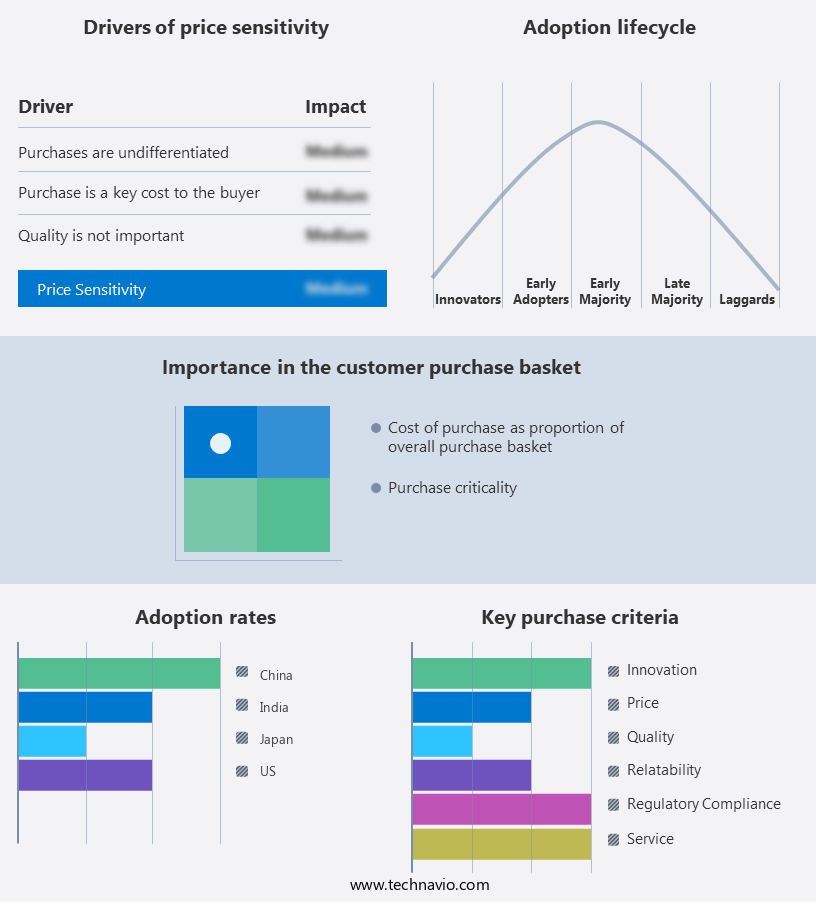
Customer Landscape of Automotive Rack And Pinion Steering System Industry
Competitive Landscape
Companies are implementing various strategies, such as strategic alliances, automotive rack and pinion steering system market forecast, partnerships, mergers and acquisitions, geographical expansion, and product/service launches, to enhance their presence in the industry.
BorgWarner Inc. - This company specializes in manufacturing advanced automotive rack and pinion steering systems, designed for integration with adaptive ride control technologies.
The industry research and growth report includes detailed analyses of the competitive landscape of the market and information about key companies, including:
- BorgWarner Inc.
- China Automotive Systems Inc.
- HL Mando Co. Ltd.
- Hyundai Mobis Co. Ltd.
- JTEKT Corp.
- Kaz Technologies
- Knorr Bremse AG
- Magna International Inc.
- Mando Aftermarket North America
- Nexteer Automotive Corp.
- NSK Ltd.
- Rane Holdings Ltd.
- Robert Bosch GmbH
- thyssenkrupp AG
- ZF Friedrichshafen AG
Qualitative and quantitative analysis of companies has been conducted to help clients understand the wider business environment as well as the strengths and weaknesses of key industry players. Data is qualitatively analyzed to categorize companies as pure play, category-focused, industry-focused, and diversified; it is quantitatively analyzed to categorize companies as dominant, leading, strong, tentative, and weak.
Recent Development and News in Automotive Rack And Pinion Steering System Market
- In January 2024, Magna International, a leading automotive supplier, announced the launch of its new Electric Power Steering (EPS) system with rack-mounted motor technology for compact vehicles. This innovation reduces weight and improves fuel efficiency, setting a new standard in the market (Magna International Press Release).
- In March 2024, ZF Friedrichshafen AG and Continental AG, two major players in the automotive industry, signed a strategic collaboration agreement to jointly develop and produce advanced driver assistance systems (ADAS) and electric steering systems. This partnership aims to enhance their competitive edge in the rapidly evolving automotive technology landscape (ZF Friedrichshafen AG Press Release).
- In May 2024, Nexteer Automotive, a global leader in automotive steering systems, secured a significant contract from a leading European OEM to supply rack-assist electric power steering systems for their new electric vehicle models. This deal is expected to boost Nexteer's market share in the European electric vehicle market (Nexteer Automotive Press Release).
- In February 2025, Bosch Automotive Steering, a subsidiary of Bosch, received regulatory approval for its new electric steering system with integrated torque sensor technology. This innovation enables real-time vehicle stability control and improves safety features in modern vehicles (Bosch Press Release).
Dive into Technavio's robust research methodology, blending expert interviews, extensive data synthesis, and validated models for unparalleled Automotive Rack And Pinion Steering System Market insights. See full methodology.
|
Market Scope |
|
|
Report Coverage |
Details |
|
Page number |
228 |
|
Base year |
2024 |
|
Historic period |
2019-2023 |
|
Forecast period |
2025-2029 |
|
Growth momentum & CAGR |
Accelerate at a CAGR of 4.7% |
|
Market growth 2025-2029 |
USD 4515.2 million |
|
Market structure |
Fragmented |
|
YoY growth 2024-2025(%) |
4.4 |
|
Key countries |
US, China, Japan, Canada, India, South Korea, Germany, Australia, Spain, and France |
|
Competitive landscape |
Leading Companies, Market Positioning of Companies, Competitive Strategies, and Industry Risks |
Research Analyst Overview
- The automotive power steering system market is characterized by continuous advancements and evolving trends. Torque sensor accuracy plays a crucial role in enhancing steering system efficiency, with seal design materials and lateral acceleration limits being key factors influencing sensor performance. Steering gear ratios vary significantly among vehicle models, impacting wheel alignment and steering response time. Steering column assemblies are subjected to high loads, necessitating rigorous testing for durability and precision. Steering system efficiency is a significant concern, with rack wear monitoring and steering assist calibration essential for maintaining optimal performance. Road feel feedback is another critical metric, with hydraulic power assist and electronic power steering systems offering varying degrees of feedback to drivers.
- Suspension interaction effects and steering damper performance are essential for dynamic stability control, ensuring vehicle handling dynamics remain consistent under diverse driving conditions. System noise reduction and gearbox lubrication are essential for maintaining long-term reliability and reducing maintenance costs. Pinion gear backlash and position sensor calibration are essential precision metrics, with even minor discrepancies affecting steering precision. Steering wheel vibration and mechanical steering linkage require constant monitoring to ensure optimal performance and driver comfort. Ackermann steering geometry and vehicle handling dynamics are also vital considerations, with electronic power steering systems offering improved control unit diagnostics and steering input lag reduction.
- In summary, the automotive power steering system market is marked by ongoing innovation and evolving trends. Factors such as torque sensor accuracy, steering gear ratios, steering column assembly durability, and system noise reduction all play essential roles in shaping the market's dynamics.
What are the Key Data Covered in this Automotive Rack And Pinion Steering System Market Research and Growth Report?
-
What is the expected growth of the Automotive Rack And Pinion Steering System Market between 2025 and 2029?
-
USD 4.52 billion, at a CAGR of 4.7%
-
-
What segmentation does the market report cover?
-
The report segmented by Application (Front-wheel drive, All-wheel drive, and Rear-wheel drive), Type (Electronic, Electro-hydraulic, Hydraulic, and Manual), Vehicle Type (Passenger car and Commercial vehicle), and Geography (APAC, North America, Europe, South America, and Middle East and Africa)
-
-
Which regions are analyzed in the report?
-
APAC, North America, Europe, South America, and Middle East and Africa
-
-
What are the key growth drivers and market challenges?
-
Increasing adoption of electric power steering, Rising cost of raw materials used in vehicle components
-
-
Who are the major players in the Automotive Rack And Pinion Steering System Market?
-
Key Companies BorgWarner Inc., China Automotive Systems Inc., HL Mando Co. Ltd., Hyundai Mobis Co. Ltd., JTEKT Corp., Kaz Technologies, Knorr Bremse AG, Magna International Inc., Mando Aftermarket North America, Nexteer Automotive Corp., NSK Ltd., Rane Holdings Ltd., Robert Bosch GmbH, thyssenkrupp AG, and ZF Friedrichshafen AG
-
Market Research Insights
- The market encompasses the production and distribution of components essential to vehicle steering functionality. This market continues to evolve, with advancements in steering feel optimization and dynamic steering response driving demand. According to industry estimates, the global market for steering system components reached USD 25 billion in 2020, representing a significant increase from USD 20 billion in 2015. Steering system maintenance, including wheel alignment adjustments and power steering pump repair, accounts for a substantial portion of this market. For instance, power steering leaks and steering fluid pressure issues necessitate regular maintenance, contributing to the market's growth. In contrast, steering system design advancements, such as steering knuckle design improvements and steering column shaft enhancements, aim to increase system durability and reduce steering system noise.
- The integration of hydraulic power units and steering system calibration technologies further enhances steering system performance and efficiency. Despite these advancements, challenges persist, including steering system degradation and friction issues, which necessitate ongoing research and development efforts.
We can help! Our analysts can customize this automotive rack and pinion steering system market research report to meet your requirements.
 RIA -
RIA - 
