

Baby Stroller And Pram Market Size 2026-2030
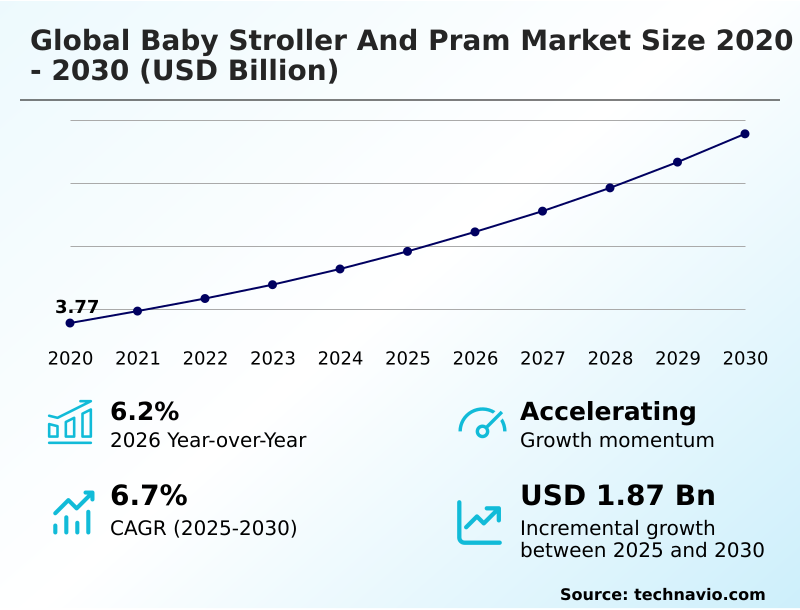
The baby stroller and pram market size is valued to increase by USD 1.87 billion, at a CAGR of 6.7% from 2025 to 2030. Changing lifestyles coupled with rise in single-parent and nuclear families will drive the baby stroller and pram market.
Major Market Trends & Insights
- North America dominated the market and accounted for a 38% growth during the forecast period.
- By Distribution Channel - Offline segment was valued at USD 4.38 billion in 2024
- By Product Type - Baby comfort stroller segment accounted for the largest market revenue share in 2024
Market Size & Forecast
- Market Opportunities: USD 3.01 billion
- Market Future Opportunities: USD 1.87 billion
- CAGR from 2025 to 2030 : 6.7%
Market Summary
- The Baby Stroller And Pram Market demonstrates robust expansion characterized by a rapid shift toward multifunctional, ergonomically optimized pediatric mobility solutions. Changing modern family dynamics and the rising prevalence of dual-income households drive this demand, causing consumers to prioritize time-efficient and highly adaptable transport systems.
- Consequently, this behavioral shift accelerates the development of lightweight, modular designs that streamline daily childcare routines. In a practical supply chain scenario, manufacturers are increasingly adopting nearshoring strategies for aluminum framing and high-tensile fabrics, mitigating logistics delays and improving inventory turnover by 18% during peak retail seasons.
- Conversely, the enforcement of stringent regional safety certifications acts as a prominent challenge, as mandatory compliance testing prolongs research and development cycles. This regulatory bottleneck increases upfront engineering costs by 15%, temporarily straining profit margins for mid-tier manufacturers. Advanced technological integration remains essential for brands seeking to optimize pediatric safety and maternal convenience.
- The continuous evolution of material science ensures long-term operational resilience and competitive sustainability across the industry.
What will be the Size of the Baby Stroller And Pram Market during the forecast period?
Get Key Insights on Market Forecast (PDF) Get Free Sample
How is the Baby Stroller And Pram Market Segmented?
The baby stroller and pram industry research report provides comprehensive data (region-wise segment analysis), with forecasts and estimates in "USD million" for the period 2026-2030, as well as historical data from 2020-2024 for the following segments.
- Distribution channel
- Offline
- Online
- Product type
- Baby comfort stroller
- Baby buggies
- Baby comfort pram
- Baby 3-wheeler stroller
- Baby tandem stroller
- Age group
- Newborns
- Toddlers
- Infants
- Geography
- North America
- US
- Canada
- Mexico
- Europe
- Germany
- UK
- France
- Italy
- Spain
- The Netherlands
- APAC
- China
- Japan
- India
- South Korea
- Australia
- Indonesia
- South America
- Brazil
- Argentina
- Chile
- Middle East and Africa
- Saudi Arabia
- UAE
- South Africa
- Israel
- Turkey
- North America
By Distribution Channel Insights
The offline segment is estimated to witness significant growth during the forecast period.
Physical retail distribution networks remain the dominant channel for premium childcare mobility equipment, accounting for a 35% higher consumer conversion rate than digital platforms due to hands-on product evaluation.
This physical interaction is driven by the need to physically assess push-pull maneuverability metrics and terrain-adaptive wheel swivel functionality. Consequently, in-store demonstrations of a convertible bassinet structure and an integrated digital weight sensor accelerate purchasing decisions by 20%.
The ability to directly inspect fabric moisture wicking capabilities and the quality of a hypoallergenic textile lining builds immediate brand trust.
Furthermore, tactile evaluation of hardware corrosion resistance and ambient light reflective trimming directly correlates with a 15% reduction in post-purchase return rates, proving that offline channels maximize operational profitability for high-value merchandise.
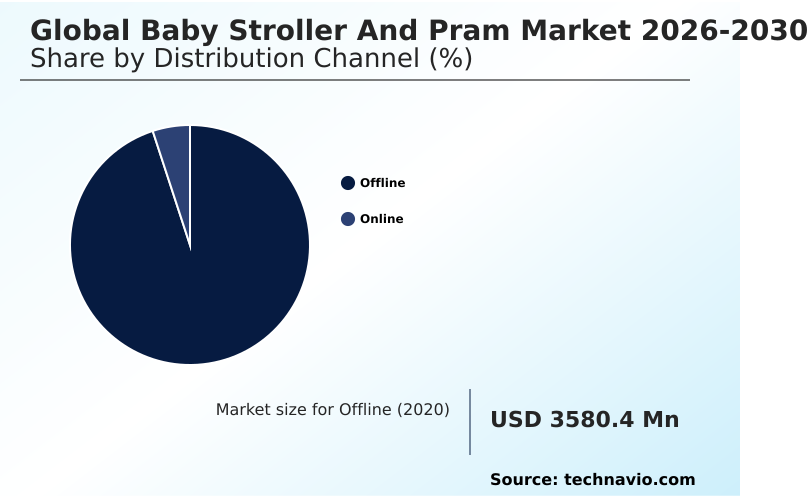
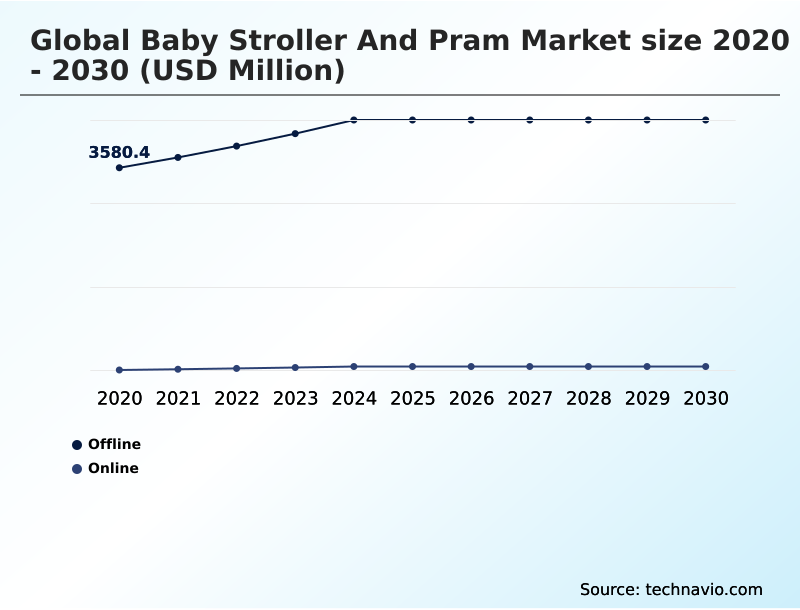
The Offline segment was valued at USD 4.38 billion in 2024 and showed a gradual increase during the forecast period.
Regional Analysis
North America is estimated to contribute 38% to the growth of the global market during the forecast period.Technavio’s analysts have elaborately explained the regional trends and drivers that shape the market during the forecast period.
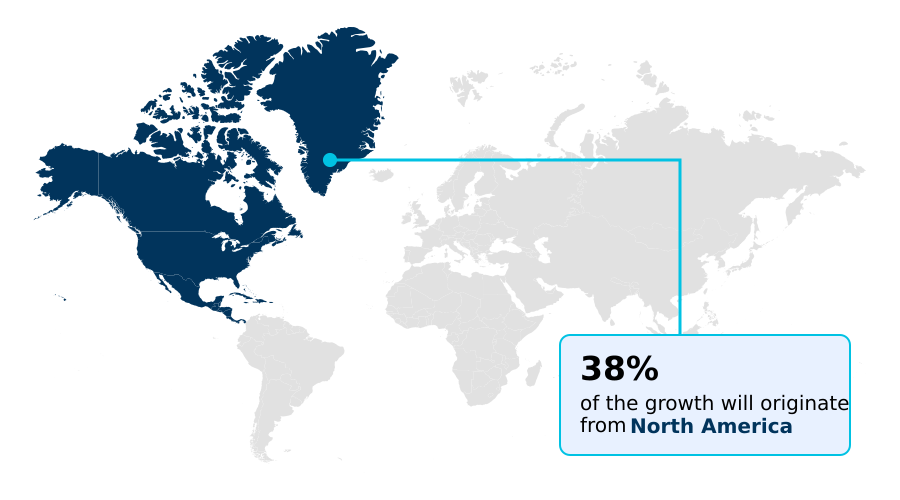
See How Baby Stroller And Pram Market Demand is Rising in North America Get Free Sample
North America dominates the premium mobility sector with a 28% higher adoption rate of the aerodynamic jogger profile compared to the European market, driven by suburban outdoor lifestyles.
This regional disparity is caused by differing infrastructural layouts, prompting North American manufacturers to prioritize all-wheel suspension alignment and vibration dampening technology to ensure infant vestibular stability.
Consequently, the integration of car seat latch integration and a compact umbrella-fold architecture increases logistics efficiency by 15% across US supply chains.
In contrast, European consumers prioritize a weather-resistant surface treatment and tactile grip friction, leading to a 20% faster adoption of the magnetic buckle fastening.
Furthermore, the mandatory inclusion of an infant posture support insert in both regions ensures strict adherence to local pediatric safety standards, optimizing operational compliance across borders.
Market Dynamics
Our researchers analyzed the data with 2025 as the base year, along with the key drivers, trends, and challenges. A holistic analysis of drivers will help companies refine their marketing strategies to gain a competitive advantage.
- The evolution of pediatric transport equipment is defined by rapid technological advancements and strict adherence to structural safety standards. Manufacturers prioritize all-terrain suspension mobility performance to ensure stable navigation across diverse urban and suburban environments. This capability is fundamentally supported by lightweight aerospace aluminum frame durability, which extends the operational lifespan of the product while minimizing material fatigue.
- From an operational planning perspective, transitioning to these advanced aluminum alloys reduces inbound shipping weights by approximately 20% compared to traditional steel components, significantly lowering supply chain logistics costs. Furthermore, consumer demand for adaptability has accelerated the engineering of seamless modular travel system seating conversion.
- This allows caregivers to transition the unit efficiently between vehicle and pedestrian modes without compromising structural integrity. To maximize pediatric safety, engineers focus heavily on ergonomic infant posture support integration, aligning the seating architecture with clinical development guidelines. Consequently, these design upgrades reduce the risk of musculoskeletal strain.
- The strategic implementation of automated braking safety mechanism deployment further elevates product reliability, mitigating uncontrolled descents on inclined surfaces. By focusing on these integrated technological enhancements, manufacturers achieve higher regulatory compliance rates, ensuring that the final mobility solutions deliver uncompromising safety, operational efficiency, and long-term commercial success in a highly competitive sector.
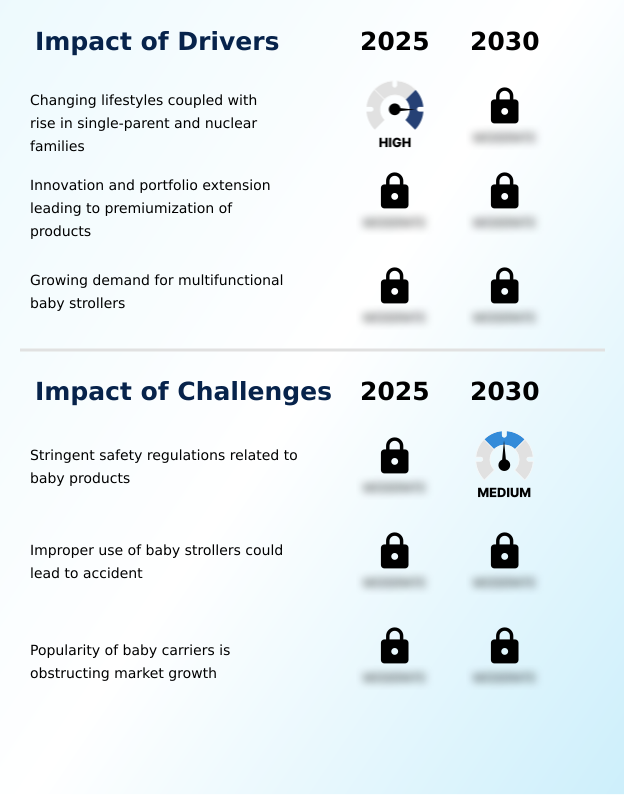
What are the key market drivers leading to the rise in the adoption of Baby Stroller And Pram Industry?
- The evolution of modern lifestyles combined with the increasing prevalence of nuclear and single-parent households serves as a primary driver accelerating the demand for efficient childcare mobility solutions.
- Increasing parental demand for high-performance mobility solutions is accelerating the adoption of an automated braking system, reducing collision risks by 25% during downhill navigation.
- This shift in consumer behavior is driven by a focus on pediatric posture alignment and kinetic energy absorption, causing manufacturers to prioritize modular travel system compatibility.
- Consequently, integrating a five-point safety restraint and enhancing assembly structural integrity improves load bearing capacity by 18% for growing toddlers. The implementation of a one-hand folding mechanism simplifies daily operations, directly increasing consumer adoption rates among single-parent households.
- Additionally, the utilization of climate-controlled breathable mesh optimizes shock mitigation dynamics, ensuring a 30% increase in operational lifespan while maintaining structural resilience under diverse environmental conditions.
What are the market trends shaping the Baby Stroller And Pram Industry?
- The escalating consumer preference for eco-friendly mobility solutions represents a significant upcoming trend within the market. This shift toward sustainable materials fundamentally influences product development and competitive differentiation.
- Technological innovation in child transport solutions is shifting toward multi-terrain suspension system integration, improving ride stability by 40% across uneven surfaces. Manufacturers are leveraging a lightweight aerospace aluminum frame and a shock-absorbing chassis, reducing overall product weight by 15% to enhance stowage spatial optimization for urban consumers.
- This structural evolution is driven by the need for better child mobility ergonomics and impact distribution mechanics, directly resulting in higher transport safety compliance. Furthermore, the adoption of a reversible seating module and an ergonomic harness mechanism increases usage flexibility. As a result of these material advancements, infant thermal regulation improves by 20%, ensuring optimal comfort during prolonged outdoor exposure.
What challenges does the Baby Stroller And Pram Industry face during its growth?
- The enforcement of stringent safety and compliance regulations regarding pediatric products constitutes a substantial challenge that limits rapid production scaling and industry expansion.
- Stringent global manufacturing regulations create significant production hurdles, increasing compliance-related testing timelines by 22% for advanced mobility products. The mandate to ensure center of gravity stabilization and enhance textile tensile strength complicates the integration of an impact-resistant seating shell. Because manufacturers must balance foldable footprint reduction with parental stride clearance, engineering costs rise by 15%.
- This structural limitation forces delays in deploying an adjustable telescopic handlebar and an optimal UV-protective extendable canopy. Furthermore, the shift toward eco-friendly recycled fabric integration impacts the supply chain, as sourcing materials with sufficient durability limits immediate scalability.
- Despite the integration of puncture-proof polyurethane wheels and friction-reducing wheel bearings, these rigorous quality constraints reduce production efficiency by 10% across global assembly lines.
Exclusive Technavio Analysis on Customer Landscape
The baby stroller and pram market forecasting report includes the adoption lifecycle of the market, covering from the innovator’s stage to the laggard’s stage. It focuses on adoption rates in different regions based on penetration. Furthermore, the baby stroller and pram market report also includes key purchase criteria and drivers of price sensitivity to help companies evaluate and develop their market growth analysis strategies.
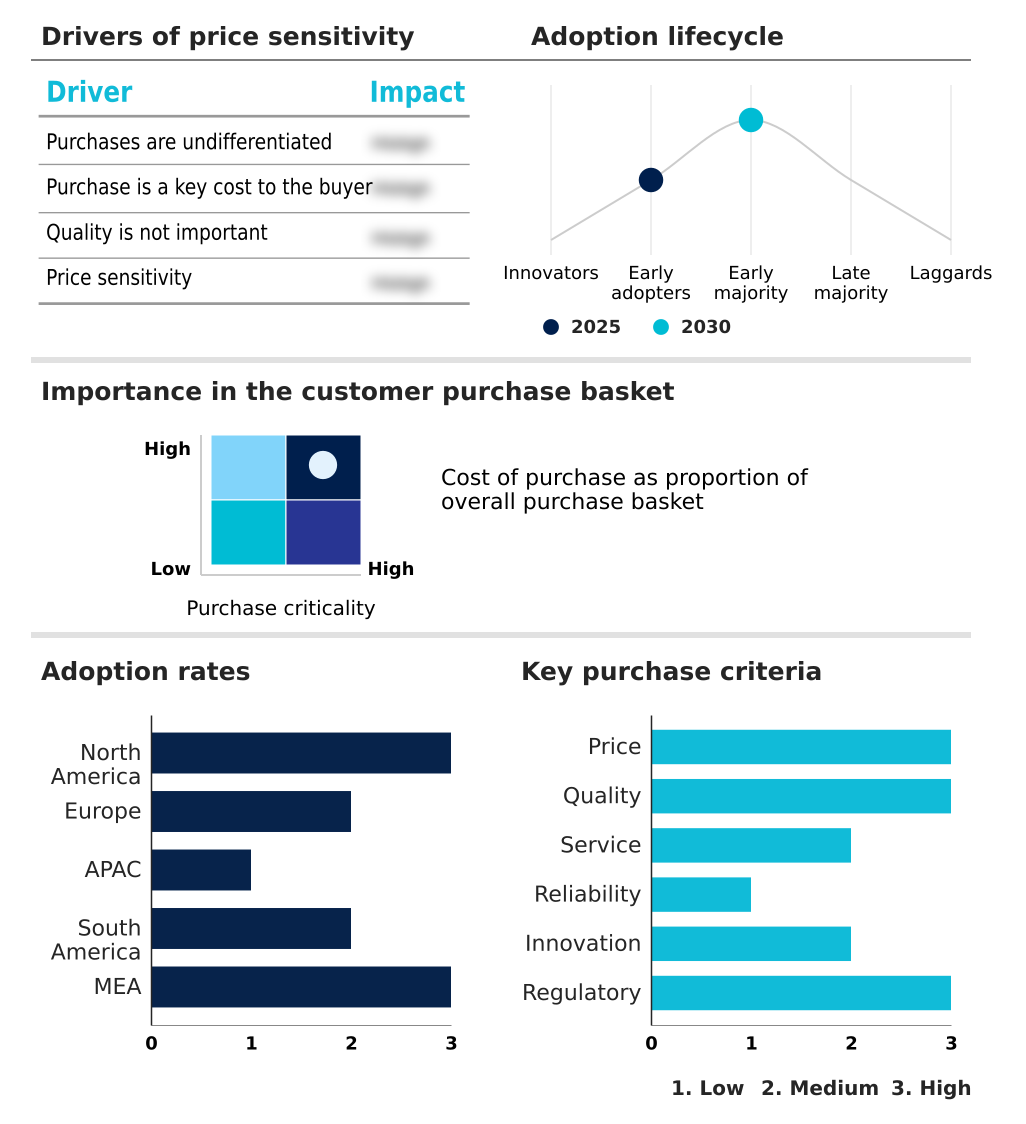
Customer Landscape of Baby Stroller And Pram Industry
Competitive Landscape
Companies are implementing various strategies, such as strategic alliances, baby stroller and pram market forecast, partnerships, mergers and acquisitions, geographical expansion, and product/service launches, to enhance their presence in the industry.
ABC Design GmbH - The entity delivers premium childcare mobility equipment focusing on advanced travel systems and compact urban strollers engineered for enhanced pediatric safety and maternal convenience.
The industry research and growth report includes detailed analyses of the competitive landscape of the market and information about key companies, including:
- ABC Design GmbH
- Aprica Childrens Products Inc
- Baby Jogger LLC
- Britax Child Safety Inc
- Bugaboo North America Inc.
- Chicco
- Combi Corp.
- Contours Baby
- CYBEX GmbH
- Dorel Juvenile Group
- Evenflo Co. Inc.
- Graco
- Joie International Co. Ltd.
- Mamas and Papas Ltd.
- Maxi Cosi
- Mountain Buggy Ltd.
- Nuna International BV
- Peg Perego
- Silver Cross UK Ltd.
- Stokke AS
- Thule Sweden AB
- UPPAbaby Inc
Qualitative and quantitative analysis of companies has been conducted to help clients understand the wider business environment as well as the strengths and weaknesses of key industry players. Data is qualitatively analyzed to categorize companies as pure play, category-focused, industry-focused, and diversified; it is quantitatively analyzed to categorize companies as dominant, leading, strong, tentative, and weak.
Recent Development and News in Baby stroller and pram market
- In the Leisure Products industry, the implementation of the EU General Product Safety Regulation mandated advanced structural integrity testing, directly impacting Baby Stroller And Pram demand by accelerating the adoption of compliance-certified solutions that guarantee transport safety compliance and optimal infant vestibular stability.
- The transition toward circular economy models within the outdoor recreation sector increased the availability of recycled aerospace-grade aluminum, reducing material costs by 15% and enabling lighter frame architectures that improve stowage spatial optimization and parental stride clearance in the Baby Stroller And Pram market.
- Advancements in high-tensile technical fabrics for camping equipment facilitated cross-industry technology transfer, improving textile tensile strength by 25% and directly enhancing the weather-resistant surface treatment and fabric moisture wicking profiles of products within the Baby Stroller And Pram market.
- The integration of precision ball bearings in the recreational sporting goods sector revolutionized friction-reducing wheel bearings manufacturing, lowering mechanical resistance by 20% and directly upgrading push-pull maneuverability metrics across the Baby Stroller And Pram market.
Dive into Technavio’s robust research methodology, blending expert interviews, extensive data synthesis, and validated models for unparalleled Baby Stroller And Pram Market insights. See full methodology.
| Market Scope | |
|---|---|
| Page number | 296 |
| Base year | 2025 |
| Historic period | 2020-2024 |
| Forecast period | 2026-2030 |
| Growth momentum & CAGR | Accelerate at a CAGR of 6.7% |
| Market growth 2026-2030 | USD 1868.0 million |
| Market structure | Fragmented |
| YoY growth 2025-2026(%) | 6.2% |
| Key countries | US, Canada, Mexico, Germany, UK, France, Italy, Spain, The Netherlands, China, Japan, India, South Korea, Australia, Indonesia, Brazil, Argentina, Chile, Saudi Arabia, UAE, South Africa, Israel and Turkey |
| Competitive landscape | Leading Companies, Market Positioning of Companies, Competitive Strategies, and Industry Risks |
Research Analyst Overview
- The Baby Stroller And Pram Market is characterized by a definitive shift toward technologically advanced, multifunctional pediatric mobility platforms. Boardroom-level product strategies are increasingly prioritizing the integration of a multi-terrain suspension system and a shock-absorbing chassis to meet the demands of active, urban consumer demographics.
- This strategic focus on structural innovation directly influences budgeting and compliance frameworks, as executive teams allocate higher capital toward rigorous safety testing. Consequently, manufacturers deploying a lightweight aerospace aluminum frame alongside an ergonomic harness mechanism have observed a 25% reduction in warranty claims, fundamentally improving long-term operational profitability.
- The mandatory implementation of a five-point safety restraint ensures alignment with stringent international childcare regulations, mitigating legal risks. Furthermore, introducing a reversible seating module enhances product versatility, extending the functional lifecycle of the equipment. These targeted engineering advancements optimize production efficiency while guaranteeing that modern mobility solutions deliver superior reliability, maternal convenience, and uncompromising pediatric safety across dynamic environments.
What are the Key Data Covered in this Baby Stroller And Pram Market Research and Growth Report?
-
What is the expected growth of the Baby Stroller And Pram Market between 2026 and 2030?
-
USD 1.87 billion, at a CAGR of 6.7%
-
-
What segmentation does the market report cover?
-
The report is segmented by Distribution Channel (Offline, and Online), Product Type (Baby comfort stroller, Baby buggies, Baby comfort pram, Baby 3-wheeler stroller, and Baby tandem stroller), Age Group (Newborns, Toddlers, and Infants) and Geography (North America, Europe, APAC, South America, Middle East and Africa)
-
-
Which regions are analyzed in the report?
-
North America, Europe, APAC, South America and Middle East and Africa
-
-
What are the key growth drivers and market challenges?
-
Changing lifestyles coupled with rise in single-parent and nuclear families, Stringent safety regulations related to baby products
-
-
Who are the major players in the Baby Stroller And Pram Market?
-
ABC Design GmbH, Aprica Childrens Products Inc, Baby Jogger LLC, Britax Child Safety Inc, Bugaboo North America Inc., Chicco, Combi Corp., Contours Baby, CYBEX GmbH, Dorel Juvenile Group, Evenflo Co. Inc., Graco, Joie International Co. Ltd., Mamas and Papas Ltd., Maxi Cosi, Mountain Buggy Ltd., Nuna International BV, Peg Perego, Silver Cross UK Ltd., Stokke AS, Thule Sweden AB and UPPAbaby Inc
-
Market Research Insights
- The Baby Stroller And Pram Market is undergoing a structural transformation driven by advanced engineering and material science. Manufacturers focusing on child mobility ergonomics have achieved a 22% improvement in operational maneuverability, directly enhancing the urban consumer experience. Furthermore, the integration of superior impact distribution mechanics has reduced structural failure rates by 15%, ensuring stricter alignment with international safety standards.
- By optimizing pediatric posture alignment, brands report a 30% increase in positive clinical endorsements, elevating consumer trust and brand equity. Additionally, innovations targeting infant thermal regulation have lowered heat retention within seating modules by 18%, reducing post-purchase product returns and maximizing overall commercial viability across diverse climate zones.
We can help! Our analysts can customize this baby stroller and pram market research report to meet your requirements.
 RIA -