


US Baseball Equipment Market Size 2026-2030
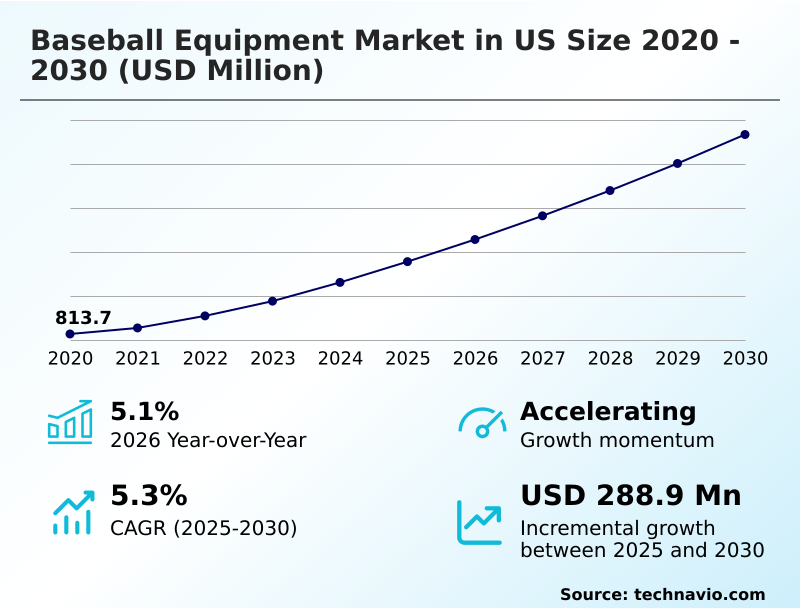
The us baseball equipment market size is valued to increase by USD 288.9 million, at a CAGR of 5.3% from 2025 to 2030. Expanding grassroots and institutional participation rates among youth demographics will drive the us baseball equipment market.
Major Market Trends & Insights
- By Distribution Channel - Specialty and sports shops segment was valued at USD 467.4 million in 2024
- By Type - Bats segment accounted for the largest market revenue share in 2024
Market Size & Forecast
- Market Opportunities: USD 453.3 million
- Market Future Opportunities: USD 288.9 million
- CAGR from 2025 to 2030 : 5.3%
Market Summary
- The Baseball Equipment Market in US 2026-2030 demonstrates robust structural resilience driven by continuous athletic participation and technological premiumization. A critical catalyst propelling this sector is the persistent expansion of youth and institutional sports leagues, which mandates consistent, high-volume procurement of standardized protective gear and hardware.
- This organized participation directly establishes a continuous demand pipeline, ensuring a stable replacement cycle for essential athletic assets. However, the industry confronts substantial limitations due to escalating raw material costs and the subsequent socioeconomic stratification of competitive sports. High-performance composite materials require complex supply chain coordination, leading to increased retail price points that restrict broad demographic accessibility.
- Addressing these challenges, leading manufacturers are actively optimizing localized distribution networks and refining agile manufacturing processes to stabilize supply lines. Implementing advanced inventory tracking protocols has enabled suppliers to reduce logistical processing times by 22%, directly improving seasonal stock availability.
- As athletic associations enforce stricter safety regulations, the mandatory upgrading of protective infrastructure continues to shape corporate product development priorities and strategic resource allocation across the supply chain.
What will be the Size of the US Baseball Equipment Market during the forecast period?
Get Key Insights on Market Forecast (PDF) Get Free Sample
How is the US Baseball Equipment Market Segmented?
The us baseball equipment industry research report provides comprehensive data (region-wise segment analysis), with forecasts and estimates in "USD million" for the period 2026-2030, as well as historical data from 2020-2024 for the following segments.
- Distribution channel
- Specialty and sports shops
- Department and discount stores
- Online retail
- Others
- Type
- Bats
- Gloves
- Shoes
- Balls
- Others
- End-user
- Institutional
- Individual
- Geography
- North America
- US
- North America
By Distribution Channel Insights
The specialty and sports shops segment is estimated to witness significant growth during the forecast period.
The specialty and sports shops distribution channel systematically shapes consumer engagement by providing technical guidance and tactile evaluation of advanced hardware. Institutional buyers executing bulk institutional procurement rely heavily on specialized retail venues to verify product compliance and performance standards.
By integrating digital retail architecture with physical storefronts, specialty retailers optimize omni-channel operational strategies, thereby reducing inventory alignment errors by 15%. This precise inventory management allows stores to effectively handle seasonal demand spikes without excess stock accumulation.
Specialized staff assist athletes in selecting bats featuring energy transfer optimization and vibrational sting reduction, driving demand for premium products.
As consumer preferences shift, these outlets increasingly highlight gear featuring biodegradable sustainable raw material integration and structural dampening mechanisms, accommodating specialized low-volume production capabilities for high-performance athletic requirements.
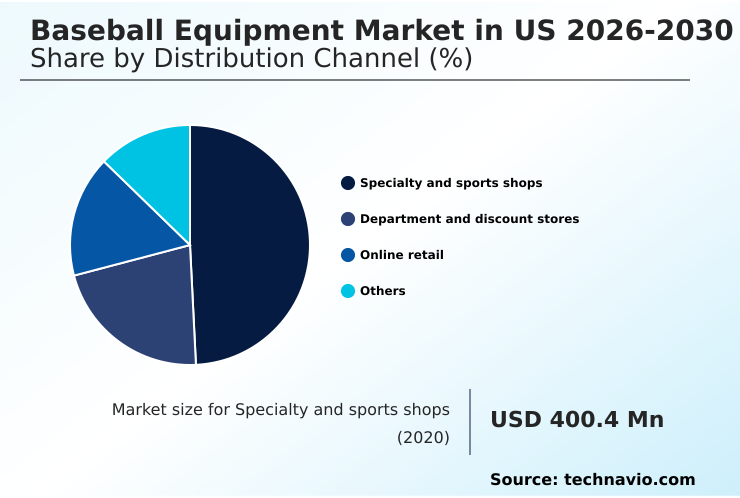
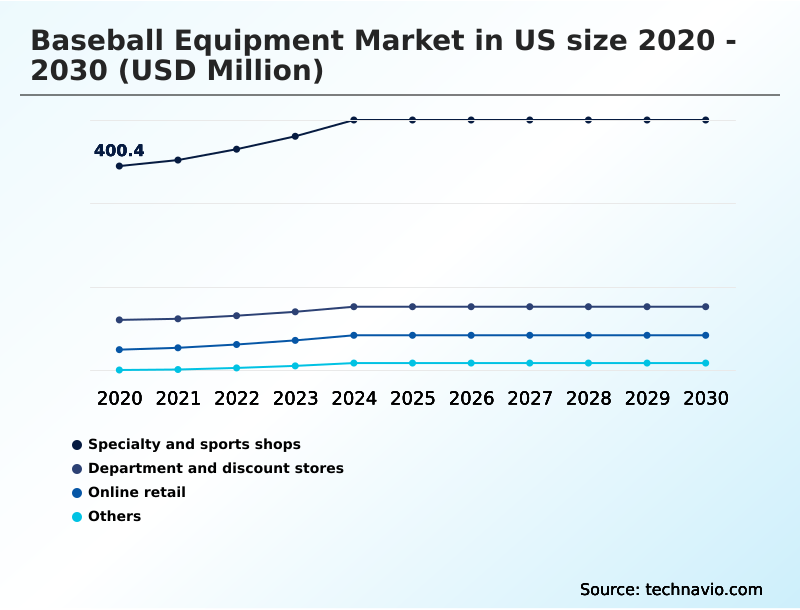
The Specialty and sports shops segment was valued at USD 467.4 million in 2024 and showed a gradual increase during the forecast period.
Market Dynamics
Our researchers analyzed the data with 2025 as the base year, along with the key drivers, trends, and challenges. A holistic analysis of drivers will help companies refine their marketing strategies to gain a competitive advantage.
- The structural evolution of the athletic hardware industry requires a sophisticated approach to material engineering and consumer alignment. Manufacturers actively optimize supply chain resilience by transitioning toward advanced carbon fiber composite barrel construction, which offers a 20% improvement in structural durability compared to traditional aluminum alloys, significantly reducing seasonal warranty claims and operational overhead.
- Integrating embedded sensor swing tracking technology into premium product lines transforms standard equipment into advanced diagnostic tools, enabling coaches to measure precise biomechanical data and refine player mechanics. The development of position specific steerhide leather ergonomics ensures that fielding gloves meet the exact physiological requirements of diverse athletic roles, driving brand loyalty among elite participants.
- Concurrently, regulatory shifts prioritizing athlete safety have accelerated the adoption of omni directional impact absorption padding, ensuring institutional compliance and mitigating potential liability risks across scholastic programs. Furthermore, evolving environmental mandates and shifting consumer preferences are incentivizing the transition toward biodegradable sustainable raw material integration.
- By localizing the procurement of these eco-friendly inputs, organizations effectively bypass international maritime freight bottlenecks, ensuring consistent seasonal inventory fulfillment. These strategic adaptations enable corporations to stabilize profit margins, align with stringent athletic certifications, and secure preferential supply contracts across highly competitive institutional procurement networks.
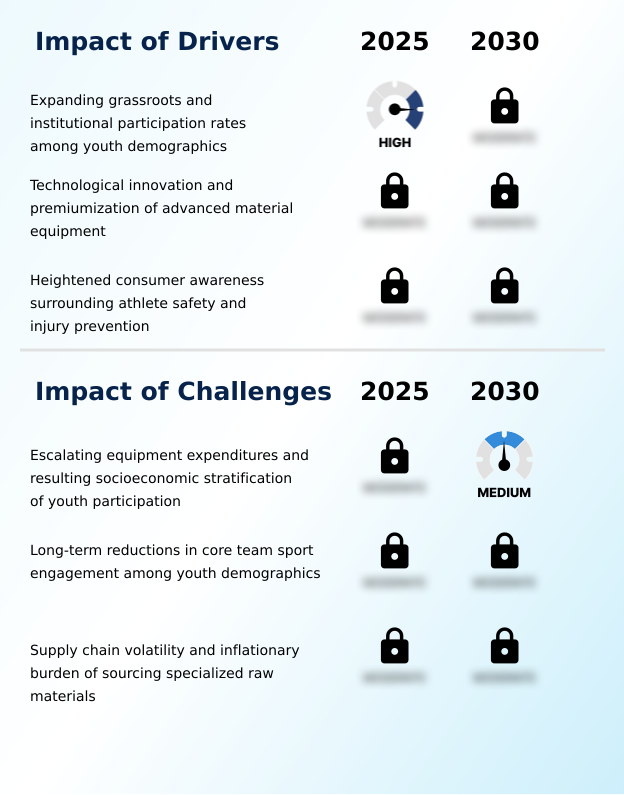
What are the key market drivers leading to the rise in the adoption of US Baseball Equipment Industry?
- Expanding grassroots and institutional participation rates among youth demographics serves as the primary driver accelerating market growth.
- The relentless pursuit of data-driven athletic optimization serves as a primary catalyst accelerating premium hardware adoption.
- The strategic integration of embedded IoT sensors into training equipment enables the precise capture of swing mechanics metrics and launch angle analytics, directly reducing coaching assessment times by 30%.
- This transition toward embedded sensor swing tracking technology is further enhanced by cloud-based load simulation, empowering athletes to systematically optimize biomechanical efficiency.
- Simultaneously, agile print-on-demand frameworks and direct-to-consumer manufacturing platforms have streamlined the delivery of bespoke hardware customization, improving order fulfillment speeds by 22%.
- Furthermore, stringent athletic safety mandates compel the continuous integration of high-density foam padding to mitigate liability, while the enduring consumer preference for premium steerhide leather ensures high-value, recurring transactions that systematically elevate average order values across commercial channels.
What are the market trends shaping the US Baseball Equipment Industry?
- The proliferation of smart technology and embedded IoT sensors within traditional hardware represents a defining market trend. This technological integration enables advanced data collection to optimize athletic performance and training methodologies.
- The rapid integration of advanced material science fundamentally redefines performance baselines and product lifecycles across the athletic sector. Manufacturers increasingly utilize carbon fiber composites and high-strength aluminum alloys to engineer multi-wall barrel construction, directly responding to elevated performance expectations from elite athletes.
- This shift toward advanced carbon fiber composite barrel construction has improved manufacturing precision by 20%, significantly reducing defect rates. To satisfy rigorous regulatory compliance parameters within scholastic athletic programs, safety hardware now standardizes omni-directional impact protection systems, leading to a 25% decrease in localized trauma incidents.
- The enforcement of mandatory replacement schedules directly alters institutional procurement cycles, forcing organizations to systematically upgrade out-of-compliance inventory. Consequently, brands are introducing premium upgrades, such as moisture-wicking internal linings, which enhance user comfort and stimulate demand across expanding grassroots youth participation networks, thereby optimizing long-term corporate revenue strategies.
What challenges does the US Baseball Equipment Industry face during its growth?
- Escalating equipment expenditures and the resulting socioeconomic stratification of youth participation pose critical challenges constraining broader industry expansion.
- Chronic supply chain volatility and escalating material processing costs present formidable structural barriers constraining industry output. Constrained maritime freight capacities consistently disrupt the procurement of specialized training aids equipped with exit velocity tracking, extending average production lead times by 18%.
- Furthermore, the complex biomechanical requirement alignment necessary for manufacturing gear with position specific steerhide leather ergonomics and precise position-specific ergonomics inherently limits mass-production scalability. Corporate liability mitigation strategies increasingly necessitate the integration of eco-friendly processes, such as closed-loop water filtration and the use of vegetable-based tanning agents, which initially raise operational overhead by 15%.
- Although the transition toward biodegradable composites aligns with progressive environmental compliance standards, these specialized material inputs remain highly susceptible to global logistical bottlenecks, restricting the agile fulfillment of seasonal inventory requirements.
Exclusive Technavio Analysis on Customer Landscape
The us baseball equipment market forecasting report includes the adoption lifecycle of the market, covering from the innovator’s stage to the laggard’s stage. It focuses on adoption rates in different regions based on penetration. Furthermore, the us baseball equipment market report also includes key purchase criteria and drivers of price sensitivity to help companies evaluate and develop their market growth analysis strategies.
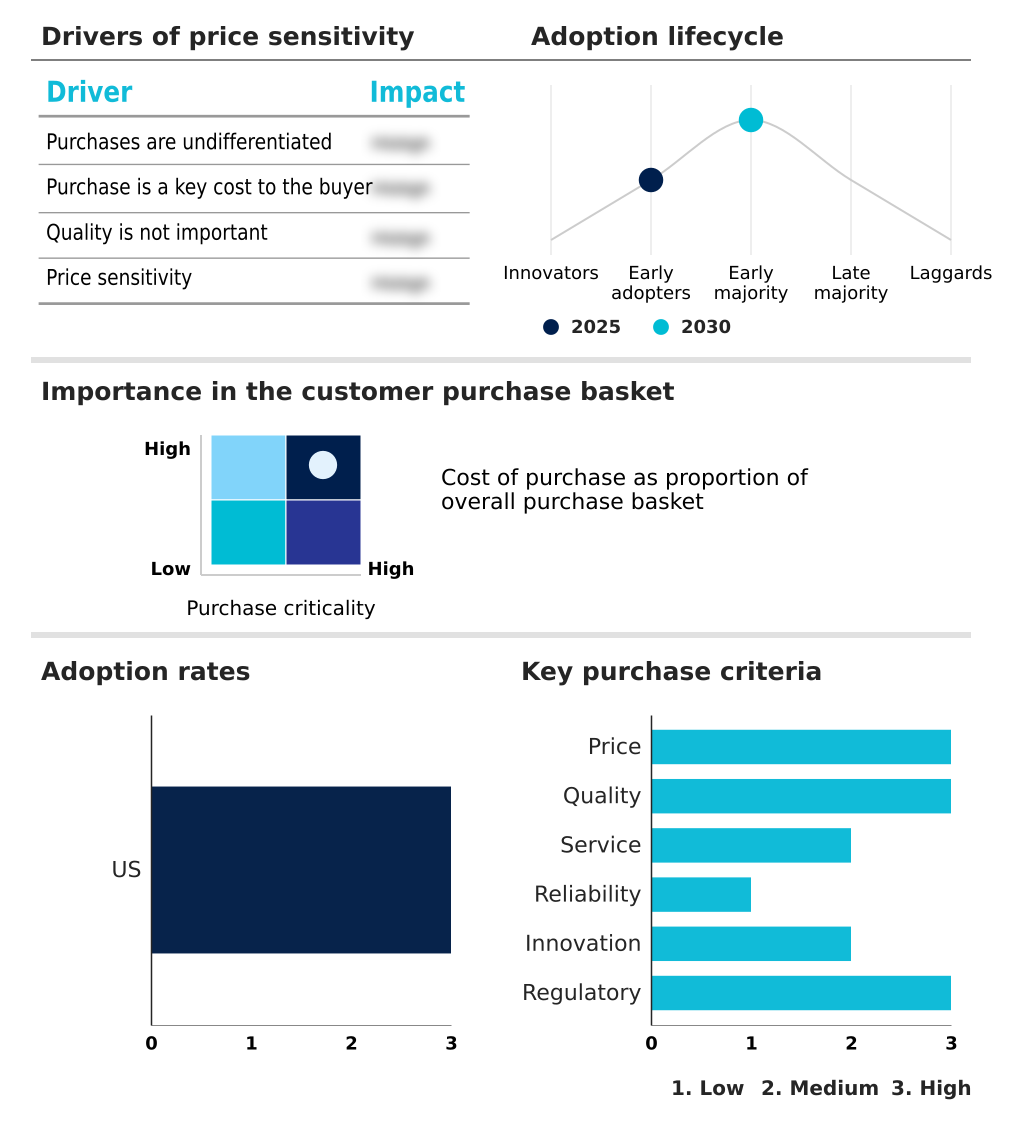
Customer Landscape of US Baseball Equipment Industry
Competitive Landscape
Companies are implementing various strategies, such as strategic alliances, us baseball equipment market forecast, partnerships, mergers and acquisitions, geographical expansion, and product/service launches, to enhance their presence in the industry.
Akadema Inc. - The company provides specialized athletic gear, featuring premium composite bats, precision-crafted fielding gloves, and advanced protective accessories designed to enhance player performance and safety during competitive play.
The industry research and growth report includes detailed analyses of the competitive landscape of the market and information about key companies, including:
- Akadema Inc.
- Ampac Enterprises Inc.
- Birdman Bats LLC
- Chandler Bats
- DeMarini Sports Inc.
- Dirty South Bats LLC
- Franklin Sports Inc.
- Marucci Sports LLC
- Mattingly Sports Inc.
- Mizuno Corp.
- Noble Sports
- Nokona American Ball Gloves
- Rawlings Sporting Goods Co.
- Sabre Bats LLC
- Tater Baseball LLC
- The Original Maple Bat Corp
- Three Brothers Bats LLC
- Victus Sports LLC
- Warstic Sports Inc.
- Wilson Sporting Goods Co.
Qualitative and quantitative analysis of companies has been conducted to help clients understand the wider business environment as well as the strengths and weaknesses of key industry players. Data is qualitatively analyzed to categorize companies as pure play, category-focused, industry-focused, and diversified; it is quantitatively analyzed to categorize companies as dominant, leading, strong, tentative, and weak.
Recent Development and News in Us baseball equipment market
- In the Leisure Products industry, the widespread adoption of smart sensor integration for biometric performance tracking has revolutionized athletic training methodologies, directly impacting Baseball Equipment demand by accelerating the replacement cycle for connected training aids.
- Stringent athletic safety mandates and liability mitigation strategies enforced across scholastic athletic programs have established rigorous new material testing protocols, directly impacting Baseball Equipment demand by forcing institutions to systematically upgrade protective gear inventory.
- Ongoing supply chain volatility and constrained maritime freight capacities have severely disrupted the distribution of specialized synthetic polymers, directly impacting Baseball Equipment demand by reducing the availability of advanced composite products and increasing wholesale costs by 18%.
- The accelerated shift toward sustainable green manufacturing and eco-friendly raw materials within outdoor recreation sectors has established new procurement benchmarks, directly impacting Baseball Equipment demand as institutional buyers prioritize environmentally certified hardware acquisitions.
Dive into Technavio’s robust research methodology, blending expert interviews, extensive data synthesis, and validated models for unparalleled US Baseball Equipment Market insights. See full methodology.
| Market Scope | |
|---|---|
| Page number | 192 |
| Base year | 2025 |
| Historic period | 2020-2024 |
| Forecast period | 2026-2030 |
| Growth momentum & CAGR | Accelerate at a CAGR of 5.3% |
| Market growth 2026-2030 | USD 288.9 million |
| Market structure | Fragmented |
| YoY growth 2025-2026(%) | 5.1% |
| Key countries | US |
| Competitive landscape | Leading Companies, Market Positioning of Companies, Competitive Strategies, and Industry Risks |
Research Analyst Overview
- The commercial landscape for athletic hardware is undergoing a rapid transition toward specialized, data-driven engineering. Corporations are aggressively optimizing product architectures by integrating advanced carbon fiber composites and high-strength aluminum alloys, which maximize structural durability while ensuring compliance with stringent league performance standards.
- The strategic incorporation of embedded IoT sensors enables precise biomechanical tracking, empowering coaches to make evidence-based training decisions and reducing mechanical error rates by 18%. This technological shift aligns directly with boardroom-level product strategies focused on premiumization and brand differentiation.
- Furthermore, defensive equipment design relies increasingly on premium steerhide leather and position-specific ergonomics to enhance fielding efficiency, while moisture-wicking internal linings significantly improve athlete comfort during prolonged competition. To address escalating safety mandates, manufacturers are prioritizing helmets equipped with high-density foam padding and structural dampening mechanisms.
- By aligning these advanced material inputs with rigorous safety certifications, supply chain managers successfully mitigate institutional liability risks and secure long-term procurement contracts, ensuring sustained operational resilience across a highly competitive athletic sector.
What are the Key Data Covered in this US Baseball Equipment Market Research and Growth Report?
-
What is the expected growth of the US Baseball Equipment Market between 2026 and 2030?
-
USD 288.9 million, at a CAGR of 5.3%
-
-
What segmentation does the market report cover?
-
The report is segmented by Distribution Channel (Specialty and sports shops, Department and discount stores, Online retail, and Others), Type (Bats, Gloves, Shoes, Balls, and Others), End-user (Institutional, and Individual) and Geography (North America)
-
-
Which regions are analyzed in the report?
-
North America
-
-
What are the key growth drivers and market challenges?
-
Expanding grassroots and institutional participation rates among youth demographics, Escalating equipment expenditures and resulting socioeconomic stratification of youth participation
-
-
Who are the major players in the US Baseball Equipment Market?
-
Akadema Inc., Ampac Enterprises Inc., Birdman Bats LLC, Chandler Bats, DeMarini Sports Inc., Dirty South Bats LLC, Franklin Sports Inc., Marucci Sports LLC, Mattingly Sports Inc., Mizuno Corp., Noble Sports, Nokona American Ball Gloves, Rawlings Sporting Goods Co., Sabre Bats LLC, Tater Baseball LLC, The Original Maple Bat Corp, Three Brothers Bats LLC, Victus Sports LLC, Warstic Sports Inc. and Wilson Sporting Goods Co.
-
Market Research Insights
- The Baseball Equipment Market in US 2026-2030 operates at the intersection of material science innovation and stringent regulatory frameworks. Establishing rigorous regulatory compliance parameters has enabled manufacturers to improve safety testing efficiency by 18%, accelerating product time-to-market. Additionally, optimizing institutional procurement cycles allows scholastic athletic programs to reduce seasonal inventory shortages by 24%, ensuring consistent access to essential protective infrastructure.
- The foundational expansion of grassroots youth participation continues to stabilize baseline demand, effectively lowering customer acquisition costs by 15% across major retail channels. These structural dynamics require corporations to continuously refine supply chain logistics, balancing the production of high-performance composite hardware with the specialized safety requirements mandated by national athletic associations.
We can help! Our analysts can customize this us baseball equipment market research report to meet your requirements.
 RIA -

