
Biosensors Market Analysis North America, Europe, APAC, South America, Middle East and Africa - US, Germany, Japan, UK, France - Size and Forecast 2024-2028

Biosensors Market Analysis North America, Europe, APAC, South America, Middle East and Africa - US, Germany, Japan, UK, France - Size and Forecast 2024-2028

Published: Oct 2024 140 Pages SKU: IRTNTR71617

Market Overview at a Glance

$9.97 B
Market Opportunity
7.2%
CAGR
6.6
YoY growth 2023-2024(%)

Biosensors Market Size 2024-2028

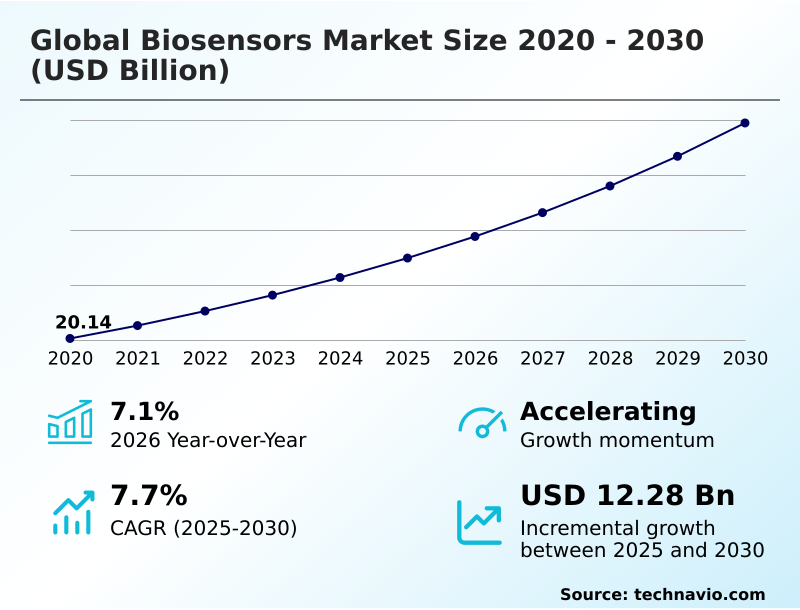
The biosensors market size is forecast to increase by USD 9.97 billion, at a CAGR of 7.2% between 2023 and 2028.

  • The market is experiencing significant growth, driven by the continuous advancements in biosensor technology. These innovations enable the detection of various biomolecules and physiological parameters with high accuracy and sensitivity. One notable application is the use of nano-biosensors in agriculture, revolutionizing the industry by allowing real-time monitoring of soil moisture, nutrient levels, and crop health. This leads to increased productivity, reduced water usage, and more efficient farming practices. However, the market faces challenges that necessitate strategic planning and innovation. Limitations associated with biosensors include the need for specific conditions for optimal performance, such as temperature and pH levels.
  • Additionally, the cost of manufacturing and the complexity of integration into various applications can pose challenges for market penetration. To capitalize on the opportunities presented by the market, companies must focus on developing cost-effective, versatile, and user-friendly biosensors, while addressing the challenges through technological advancements and strategic partnerships. By doing so, they can effectively cater to the growing demand for precise and real-time monitoring solutions across various industries.

What will be the Size of the Biosensors Market during the forecast period?
Biosensors Market Size

Explore in-depth regional segment analysis with market size data - historical 2018-2022 and forecasts 2024-2028 - in the full report.  
Request Free Sample

The market continues to evolve, driven by advancements in technology and applications across various sectors. Wearable biosensors, for instance, are revolutionizing healthcare through real-time monitoring of vital signs and biomarkers. In the realm of food safety, biosensors are being developed for rapid detection of contaminants, ensuring consumer protection. Precision healthcare is another area where biosensors play a pivotal role, enabling personalized treatment plans based on individual biomarker profiles. Biomimetic materials and machine learning algorithms are being integrated into biosensors to enhance their performance and accuracy. Environmental monitoring is another growing application, with biosensors being used for detecting pollutants and contaminants in water and air.

In the field of gene editing, biosensors are being used to monitor gene expression levels and optimize the editing process. Response time is a critical factor in biosensor applications, with next-generation sequencing and real-time PCR techniques being used to reduce it. Mass spectrometry and Raman spectroscopy are being employed for enhanced analytical performance and biomarker detection. Data management and analysis are also key challenges in the market, with big data analytics and artificial intelligence being used to process and interpret the vast amounts of data generated by these devices. Ethical considerations and privacy concerns are becoming increasingly important, with regulatory approvals and data security measures being put in place to address these issues.

Advancements in signal processing, surface modification, and biosensor arrays are also contributing to the market's continuous growth. Applications in drug discovery, disease monitoring, and point-of-care diagnostics are also driving demand for biosensors. The market penetration of biosensors is expected to increase further, with remote monitoring and predictive modeling becoming more prevalent. Shelf life and wireless communication are also important considerations for the market, with advancements in biocompatible materials and coatings addressing these challenges. In the field of tissue engineering, biosensors are being used to monitor cellular responses and optimize growth conditions. Synthetic biology and bioreceptor engineering are also being explored for the development of new biosensor technologies.

Immobilization techniques and piezoelectric biosensors are other areas of research, with potential applications in various industries. The market is a dynamic and evolving landscape, with ongoing research and development activities shaping its future.

How is this Biosensors Industry segmented?

The biosensors industry research report provides comprehensive data (region-wise segment analysis), with forecasts and estimates in "USD million" for the period 2024-2028, as well as historical data from 2018-2022 for the following segments.

  • Product
    • Wearable
    • Non-wearable
  • Geography
    • North America
      • US
    • Europe
      • France
      • Germany
      • UK
    • APAC
      • Japan
    • Rest of World (ROW)

By Product Insights

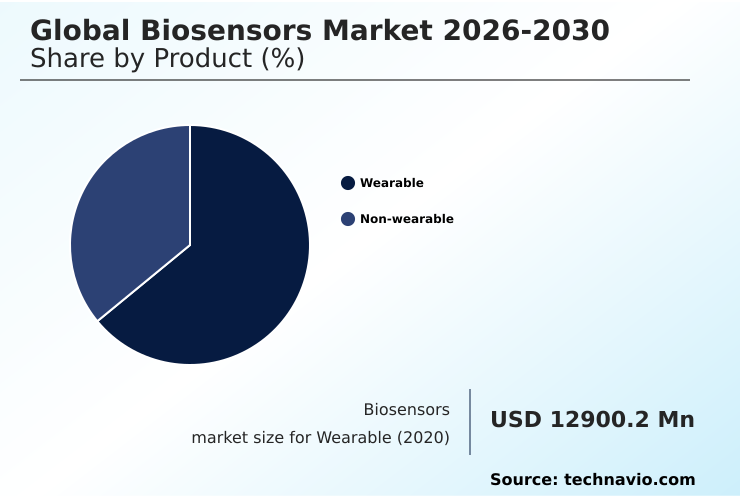
The wearable segment is estimated to witness significant growth during the forecast period.

Wearable biosensors, a subset of digital health technology, have gained significant traction in various sectors including healthcare, sports, military operations, and more. These devices, resembling apparel or accessories, encompass smart shirts, smartwatches, and even thin bandages for continuous monitoring of biometric data such as blood glucose levels, blood pressure, heart rate, and other vital signs. Machine learning algorithms integrated into wearable biosensors enable predictive modeling and remote monitoring, allowing for timely prevention, diagnosis, treatment, and control. In healthcare, wearable biosensors play a crucial role in patient monitoring, particularly for individuals requiring long-term care, psychiatric patients, premature infants, and athletes.

Advanced wearable biosensors, like smart socks, employ sensors to monitor gait and foot placement during various activities such as walking, running, or sitting. Tissue engineering and biomimetic materials are utilized to create biocompatible coatings and implantable biosensors for precise healthcare applications. Signal processing and surface modification techniques are employed to enhance the analytical performance and response time of these devices. Wearable biosensors also facilitate disease monitoring, drug discovery, and personalized medicine. Data acquisition, regulatory approvals, and data management are essential aspects of wearable biosensors, ensuring data accuracy and privacy concerns are addressed. The integration of deep learning, big data analytics, and artificial intelligence further enhances the capabilities of wearable biosensors, enabling real-time analysis and predictive modeling.

The market penetration of wearable biosensors is expected to expand, driven by the increasing demand for point-of-care diagnostics, remote monitoring, and personalized medicine. Wearable biosensors also have applications in environmental monitoring, biomarker detection, and gene editing, highlighting their versatility and potential impact on various industries.

Biosensors Market Size

Request Free Sample

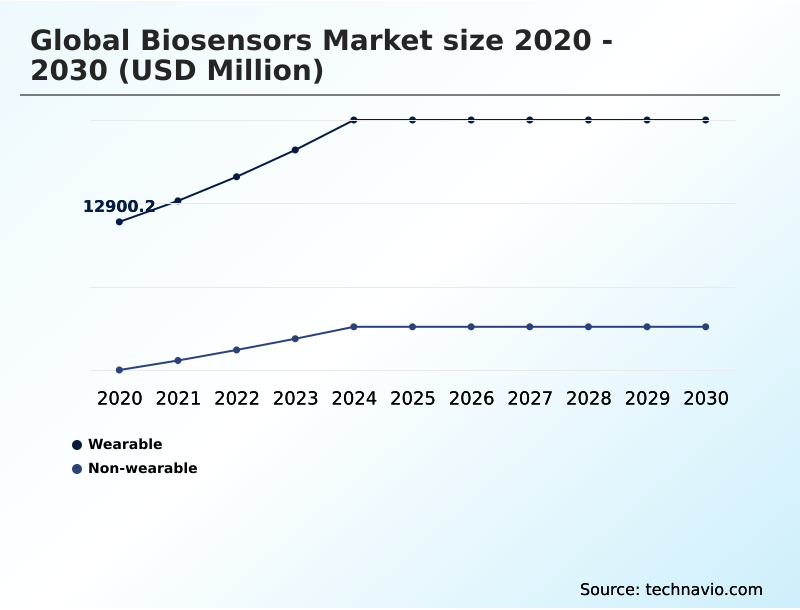
The Wearable segment was valued at USD 12.91 billion in 2018 and showed a gradual increase during the forecast period.
Regional Analysis

North America is estimated to contribute 44% to the growth of the global market during the forecast period.Technavio's analysts have elaborately explained the regional trends and drivers that shape the market during the forecast period.
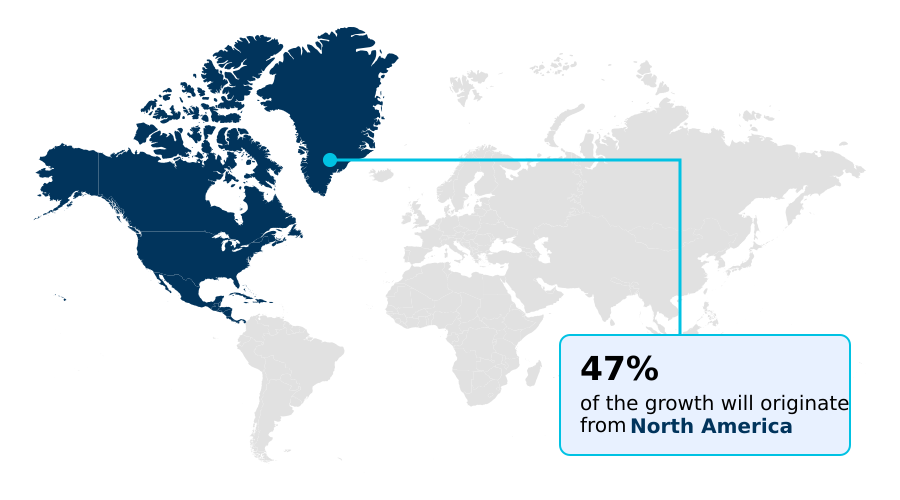
Biosensors Market Share by Geography

 Request Free Sample

The market in North America is witnessing significant growth due to increasing research and development expenditures by pharmaceutical and biopharmaceutical companies, favorable government funding for drug discovery, and the expanding food and beverage industries. The necessity for detecting foodborne pathogens and the rising prevalence of chronic diseases are driving the demand for advanced biosensing technologies. Machine learning algorithms, signal processing, and biomimetic materials are being integrated into biosensors for improved analytical performance and predictive modeling. Precision healthcare and personalized medicine are also gaining traction, leading to the development of implantable biosensors and wearable devices. In the field of drug discovery, biosensors are being used for enzyme kinetics, RNA sequencing, and gene editing to accelerate the development of new therapeutics.

Tissue engineering and surface modification techniques are being employed to create biocompatible coatings and microfluidic devices for disease monitoring and point-of-care diagnostics. Regulatory approvals and data management are crucial considerations for market penetration, and companies are focusing on data analysis and privacy concerns to ensure ethical use of data. The integration of deep learning, artificial intelligence, and big data analytics is enabling faster and more accurate analysis of biomarkers and environmental monitoring. The market is also witnessing the development of next-generation sequencing, Raman spectroscopy, and mass spectrometry techniques for improved analytical performance and response time. The use of electrochemical impedance spectroscopy and biosensor arrays is gaining popularity for their high sensitivity and specificity.

The market is expected to grow further with the development of wireless communication technologies, biocompatible materials, and the integration of synthetic biology and bioreceptor engineering for immobilization techniques. The shelf life and stability of biosensors are also critical factors influencing market penetration and growth.

Market Dynamics

Our researchers analyzed the data with 2023 as the base year, along with the key drivers, trends, and challenges. A holistic analysis of drivers will help companies refine their marketing strategies to gain a competitive advantage.

What are the key market drivers leading to the rise in the adoption of Biosensors Industry?

  • Advancements in biosensor technology are the primary catalyst fueling market growth. With continuous innovations in this field, biosensors are becoming more accurate, sensitive, and cost-effective, thereby expanding their applications across various industries, including healthcare, agriculture, and environmental monitoring. 
  • The market is experiencing significant growth due to the increasing adoption of these advanced technologies in various industries, particularly in pharmaceuticals and biotechnology, food and beverage, and agriculture. The demand for precise and real-time analysis of biomolecules, such as proteins and DNA, is driving the development of innovative biosensors. One of the key trends in the market is the use of biocompatible coatings for enhancing the sensitivity and selectivity of biosensors. These coatings enable the immobilization of bioreceptors, such as enzymes, antibodies, and nucleic acids, on the sensor surface. This, in turn, improves the interaction between the bioreceptors and the target analytes, leading to accurate and reliable results.
  • Moreover, the integration of advanced technologies, such as electrochemical impedance spectroscopy, data acquisition systems, and machine learning algorithms, is enabling the development of complex biosensor systems. Regulatory approvals for the use of biosensors in disease monitoring and drug discovery are also fueling the growth of the market. Recent research advancements in areas such as DNA microarrays, deep learning, big data analytics, artificial intelligence, synthetic biology, and bioreceptor engineering are providing new opportunities for the development of next-generation biosensors. The use of nanomaterials, such as gold nanoparticles and carbon nanotubes, for biosensors fabrication is also gaining popularity due to their unique properties, such as large surface-to-volume ratios and controllable chemical structures.
  • These advancements are expected to enhance the effectiveness and accuracy of biosensors for various applications.

What are the market trends shaping the Biosensors Industry?

  • The use of nano-biosensors in agriculture is an emerging market trend. This advanced technology is set to revolutionize agricultural practices by providing real-time monitoring of soil conditions, crop health, and water quality.
  • Nano-biosensors offer substantial potential in agriculture for analyzing crop growth and health. These sensors are composed of receptors, enzymes, antibodies, nucleic acids, molecular imprints, lectins, tissues, and microorganisms, granting them unique advantages. Nano-biosensors enable the detection of precise plant growth data due to their ultra-sensitive properties. They can identify the presence of a single virus, plant growth inhibitors, and nutrient levels with high accuracy. Furthermore, these sensors can detect ultra-low concentrations of unwanted microbes. Nano-biosensors function by receiving signals from analytes (plants) and transmitting them to transducers. Transducers, which are nano-receptors, provide valuable information regarding crop health.
  • The market for nano-biosensors is driven by their ability to improve agricultural productivity and efficiency. Wearable biosensors, a subset of nano-biosensors, are gaining popularity due to their wireless communication capabilities. These sensors can be integrated into clothing or accessories, allowing for real-time monitoring of various health parameters. Shelf life, response time, analytical performance, and data management are crucial factors influencing the adoption of wearable biosensors. Advancements in gene editing technology and biomarker detection have expanded the applications of biosensors beyond agriculture. Mass spectrometry, data analysis, and piezoelectric biosensors are some of the emerging technologies in this field.
  • Ethical considerations and data management are essential aspects that need to be addressed as the use of biosensors becomes more widespread.

What challenges does the Biosensors Industry face during its growth?

  • The growth of the biosensor industry is significantly impacted by the limitations inherent in these technologies, which pose a significant challenge that must be addressed. 
  • Biosensors have gained significant traction in various industries, including pharmaceuticals, biotechnology, and food and beverage, due to their ability to provide real-time and sensitive analysis. Applications of biosensors span from precision healthcare to food safety and tissue engineering. Technologies such as fluorescence spectroscopy, enzyme kinetics, next-generation sequencing, and RNA sequencing are integral to the functioning of biosensors. However, the market growth faces challenges. Longer readout times and the need for pretreatment prior to use increase the overall process time and cost, potentially hindering market expansion. Moreover, the limited lifespan and long-term stability of biomolecules used in biosensor development and the technical challenges associated with miniaturization pose significant hurdles.
  • Innovations in biocompatible materials, machine learning, and signal processing are being explored to address these challenges. Biomimetic materials mimic biological structures to improve biosensor performance and durability. Machine learning algorithms enhance the accuracy and efficiency of biosensors, while signal processing techniques optimize the detection and interpretation of signals. Optical biosensors, with their non-invasive and label-free detection capabilities, are also gaining popularity. Despite these challenges, the potential benefits of biosensors, such as real-time monitoring, cost savings, and improved accuracy, make them an attractive proposition for various industries. Ongoing clinical trials and research in this field are expected to yield significant advancements in biosensor technology.

Exclusive Customer Landscape

The biosensors market forecasting report includes the adoption lifecycle of the market, covering from the innovator's stage to the laggard's stage. It focuses on adoption rates in different regions based on penetration. Furthermore, the biosensors market report also includes key purchase criteria and drivers of price sensitivity to help companies evaluate and develop their market growth analysis strategies.
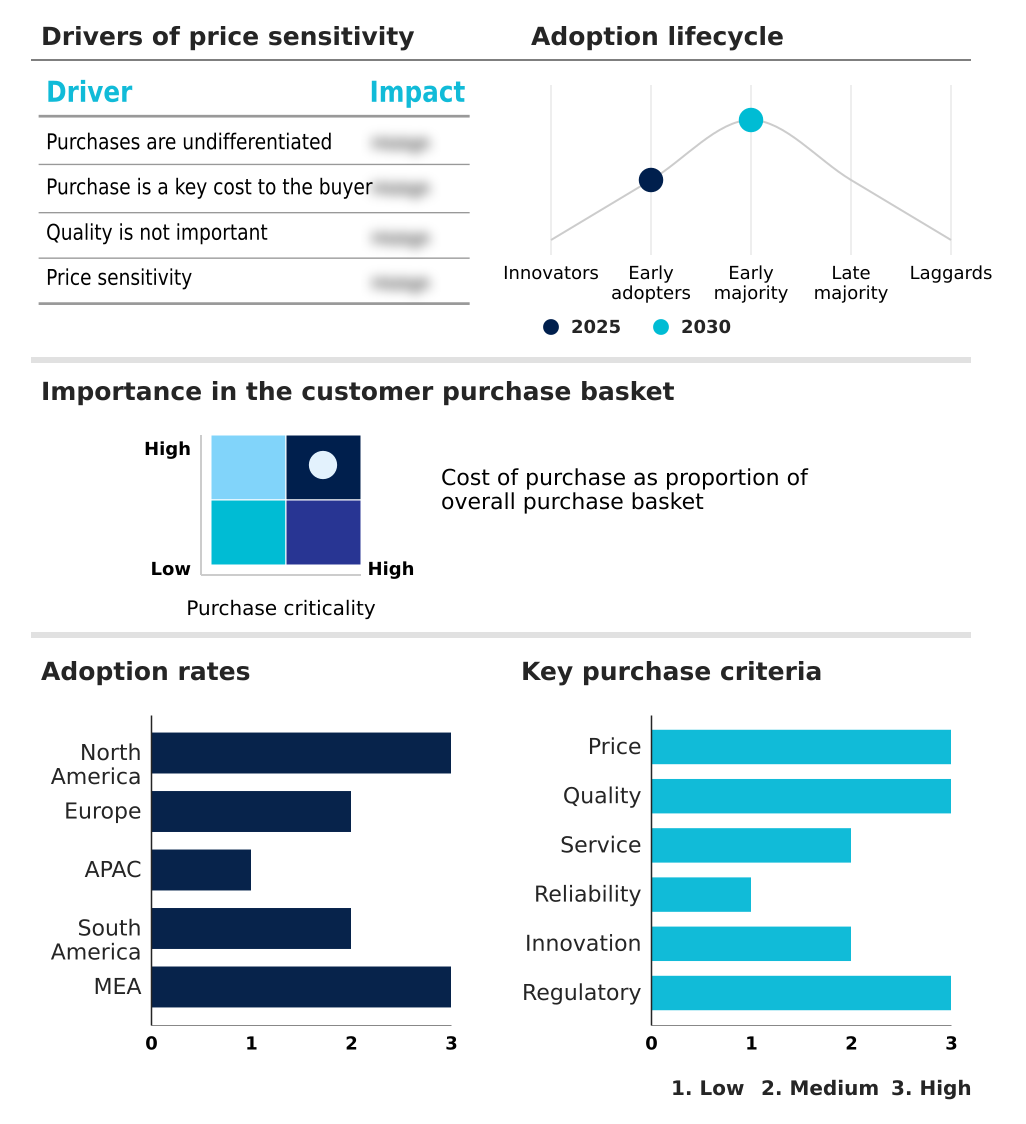
Biosensors Market Share by Geography

 Customer Landscape

Key Companies & Market Insights

Companies are implementing various strategies, such as strategic alliances, biosensors market forecast, partnerships, mergers and acquisitions, geographical expansion, and product/service launches, to enhance their presence in the industry.

Abbott Laboratories - The company introduces the Libre Sense Glucose Sport Biosensor, an innovative solution for athletes seeking to optimize their fueling strategies for enhanced athletic performance. 

The industry research and growth report includes detailed analyses of the competitive landscape of the market and information about key companies, including:

  • Abbott Laboratories
  • ACON Laboratories Inc.
  • Bio Rad Laboratories Inc.
  • Biosensors International Group Ltd.
  • Cardea Bio
  • Conductive Technologies Inc.
  • Cytiva
  • Dexcom Inc.
  • DuPont de Nemours Inc.
  • Eastprint Inc
  • Innovative Sensor Technology IST AG
  • LifeScan IP Holdings LLC
  • LifeSignals Group Inc.
  • Masimo Corp.
  • Medtronic Plc
  • NeuroSky Inc.
  • Ryk Solutions
  • Sd Biosensor Inc.
  • Universal Biosensors Group
  • VitalConnect Inc.

Qualitative and quantitative analysis of companies has been conducted to help clients understand the wider business environment as well as the strengths and weaknesses of key industry players. Data is qualitatively analyzed to categorize companies as pure play, category-focused, industry-focused, and diversified; it is quantitatively analyzed to categorize companies as dominant, leading, strong, tentative, and weak.

Recent Development and News in Biosensors Market

  • In March 2024, Abbott Laboratories announced the launch of their new free-style Libre Pro Glucose Sensing System, a non-invasive continuous glucose monitoring biosensor for use in hospitals and other healthcare settings (Abbott Laboratories Press Release, 2024). This innovation marks a significant step forward in the medical the market, offering healthcare professionals real-time glucose monitoring for patients, improving patient care and safety.
  • In July 2024, Sensirion AG and Roche Diagnostics entered into a strategic partnership to develop and commercialize biosensors for point-of-care (POC) diagnostics. This collaboration combines Sensirion's expertise in micro-engineered sensors with Roche's diagnostics know-how, aiming to bring innovative POC solutions to the market (Sensirion AG Press Release, 2024).
  • In November 2024, Cytelic Bioengineering, a leading biosensor company, raised USD30 million in a Series C funding round, bringing their total funding to USD70 million. This investment will support the company's continued growth and the development of its proprietary biosensors for various applications, including food safety and environmental monitoring (Business Wire, 2024).
  • In February 2025, the European Union (EU) granted marketing authorization for the use of Dexcom's G6 Continuous Glucose Monitoring System in all EU countries. This approval marks a significant expansion for Dexcom, allowing them to offer their innovative biosensor technology to a larger market and improve diabetes management for millions of EU residents (Dexcom Press Release, 2025).

Research Analyst Overview

  • The market is experiencing significant growth, driven by the demand for early disease detection and real-time monitoring. Regulatory affairs play a crucial role in market expansion, with validation protocols and biocompatibility testing ensuring the safety and efficacy of enzyme assays and biodegradable sensors. Smartphone integration and data security are essential considerations for market research, enabling data privacy and clinical decision support. Sensor networks and biocompatible electronics facilitate non-invasive sensing and biomolecule recognition, while calibration standards and reference materials ensure quality control.
  • Health informatics and clinical utility are key areas of investment opportunity, with signal conditioning and patient management enhancing the clinical value of biosensors. DNA sensing and biomarker discovery are also gaining traction, while cloud computing enables data storage and analysis. Market dynamics are shaped by advancements in biosensor integration, biocompatibility, and data privacy.

Dive into Technavio's robust research methodology, blending expert interviews, extensive data synthesis, and validated models for unparalleled Biosensors Market insights. See full methodology.

Market Scope

Report Coverage

Details

Page number

140

Base year

2023

Historic period

2018-2022

Forecast period

2024-2028

Growth momentum & CAGR

Accelerate at a CAGR of 7.2%

Market growth 2024-2028

USD 9966.9 million

Market structure

Fragmented

YoY growth 2023-2024(%)

6.6

Key countries

US, Germany, Japan, UK, and France

Competitive landscape

Leading Companies, Market Positioning of Companies, Competitive Strategies, and Industry Risks

Request Free Sample

What are the Key Data Covered in this Biosensors Market Research and Growth Report?

  • CAGR of the Biosensors industry during the forecast period
  • Detailed information on factors that will drive the growth and forecasting between 2024 and 2028
  • Precise estimation of the size of the market and its contribution of the industry in focus to the parent market
  • Accurate predictions about upcoming growth and trends and changes in consumer behaviour
  • Growth of the market across North America, Europe, APAC, South America, and Middle East and Africa
  • Thorough analysis of the market's competitive landscape and detailed information about companies
  • Comprehensive analysis of factors that will challenge the biosensors market growth of industry companies

We can help! Our analysts can customize this biosensors market research report to meet your requirements.

Get in touch

1 Executive Summary

  • 1.1 Market overview
    • Executive Summary - Chart on Market Overview
    • Executive Summary - Data Table on Market Overview
    • Executive Summary - Chart on Global Market Characteristics
    • Executive Summary - Chart on Market by Geography
    • Executive Summary - Chart on Market Segmentation by Product
    • Executive Summary - Chart on Incremental Growth
    • Executive Summary - Data Table on Incremental Growth
    • Executive Summary - Chart on Company Market Positioning

2 Market Landscape

  • 2.1 Market ecosystem
    • Parent Market
    • Data Table on - Parent Market
  • 2.2 Market characteristics
    • Market characteristics analysis
  • 2.3 Value chain analysis
    • Value Chain Analysis

3 Market Sizing

  • 3.1 Market definition
    • Offerings of companies included in the market definition
  • 3.2 Market segment analysis
    • Market segments
  • 3.3 Market size 2023
    • 3.4 Market outlook: Forecast for 2023-2028
      • Chart on Global - Market size and forecast 2023-2028 ($ million)
      • Data Table on Global - Market size and forecast 2023-2028 ($ million)
      • Chart on Global Market: Year-over-year growth 2023-2028 (%)
      • Data Table on Global Market: Year-over-year growth 2023-2028 (%)

    4 Historic Market Size

    • 4.1 Global Biosensors Market 2018 - 2022
      • Historic Market Size - Data Table on Global Biosensors Market 2018 - 2022 ($ million)
    • 4.2 Product segment analysis 2018 - 2022
      • Historic Market Size - Product Segment 2018 - 2022 ($ million)
    • 4.3 Geography segment analysis 2018 - 2022
      • Historic Market Size - Geography Segment 2018 - 2022 ($ million)
    • 4.4 Country segment analysis 2018 - 2022
      • Historic Market Size - Country Segment 2018 - 2022 ($ million)

    5 Five Forces Analysis

    • 5.1 Five forces summary
      • Five forces analysis - Comparison between 2023 and 2028
    • 5.2 Bargaining power of buyers
      • Bargaining power of buyers - Impact of key factors 2023 and 2028
    • 5.3 Bargaining power of suppliers
      • Bargaining power of suppliers - Impact of key factors in 2023 and 2028
    • 5.4 Threat of new entrants
      • Threat of new entrants - Impact of key factors in 2023 and 2028
    • 5.5 Threat of substitutes
      • Threat of substitutes - Impact of key factors in 2023 and 2028
    • 5.6 Threat of rivalry
      • Threat of rivalry - Impact of key factors in 2023 and 2028
    • 5.7 Market condition
      • Chart on Market condition - Five forces 2023 and 2028

    6 Market Segmentation by Product

    • 6.1 Market segments
      • Chart on Product - Market share 2023-2028 (%)
      • Data Table on Product - Market share 2023-2028 (%)
    • 6.2 Comparison by Product
      • Chart on Comparison by Product
      • Data Table on Comparison by Product
    • 6.3 Wearable - Market size and forecast 2023-2028
      • Chart on Wearable - Market size and forecast 2023-2028 ($ million)
      • Data Table on Wearable - Market size and forecast 2023-2028 ($ million)
      • Chart on Wearable - Year-over-year growth 2023-2028 (%)
      • Data Table on Wearable - Year-over-year growth 2023-2028 (%)
    • 6.4 Non-wearable - Market size and forecast 2023-2028
      • Chart on Non-wearable - Market size and forecast 2023-2028 ($ million)
      • Data Table on Non-wearable - Market size and forecast 2023-2028 ($ million)
      • Chart on Non-wearable - Year-over-year growth 2023-2028 (%)
      • Data Table on Non-wearable - Year-over-year growth 2023-2028 (%)
    • 6.5 Market opportunity by Product
      • Market opportunity by Product ($ million)
      • Data Table on Market opportunity by Product ($ million)

    7 Customer Landscape

    • 7.1 Customer landscape overview
      • Analysis of price sensitivity, lifecycle, customer purchase basket, adoption rates, and purchase criteria

    8 Geographic Landscape

    • 8.1 Geographic segmentation
      • Chart on Market share by geography 2023-2028 (%)
      • Data Table on Market share by geography 2023-2028 (%)
    • 8.2 Geographic comparison
      • Chart on Geographic comparison
      • Data Table on Geographic comparison
    • 8.3 North America - Market size and forecast 2023-2028
      • Chart on North America - Market size and forecast 2023-2028 ($ million)
      • Data Table on North America - Market size and forecast 2023-2028 ($ million)
      • Chart on North America - Year-over-year growth 2023-2028 (%)
      • Data Table on North America - Year-over-year growth 2023-2028 (%)
    • 8.4 Europe - Market size and forecast 2023-2028
      • Chart on Europe - Market size and forecast 2023-2028 ($ million)
      • Data Table on Europe - Market size and forecast 2023-2028 ($ million)
      • Chart on Europe - Year-over-year growth 2023-2028 (%)
      • Data Table on Europe - Year-over-year growth 2023-2028 (%)
    • 8.5 APAC - Market size and forecast 2023-2028
      • Chart on APAC - Market size and forecast 2023-2028 ($ million)
      • Data Table on APAC - Market size and forecast 2023-2028 ($ million)
      • Chart on APAC - Year-over-year growth 2023-2028 (%)
      • Data Table on APAC - Year-over-year growth 2023-2028 (%)
    • 8.6 South America - Market size and forecast 2023-2028
      • Chart on South America - Market size and forecast 2023-2028 ($ million)
      • Data Table on South America - Market size and forecast 2023-2028 ($ million)
      • Chart on South America - Year-over-year growth 2023-2028 (%)
      • Data Table on South America - Year-over-year growth 2023-2028 (%)
    • 8.7 Middle East and Africa - Market size and forecast 2023-2028
      • Chart on Middle East and Africa - Market size and forecast 2023-2028 ($ million)
      • Data Table on Middle East and Africa - Market size and forecast 2023-2028 ($ million)
      • Chart on Middle East and Africa - Year-over-year growth 2023-2028 (%)
      • Data Table on Middle East and Africa - Year-over-year growth 2023-2028 (%)
    • 8.8 US - Market size and forecast 2023-2028
      • Chart on US - Market size and forecast 2023-2028 ($ million)
      • Data Table on US - Market size and forecast 2023-2028 ($ million)
      • Chart on US - Year-over-year growth 2023-2028 (%)
      • Data Table on US - Year-over-year growth 2023-2028 (%)
    • 8.9 Germany - Market size and forecast 2023-2028
      • Chart on Germany - Market size and forecast 2023-2028 ($ million)
      • Data Table on Germany - Market size and forecast 2023-2028 ($ million)
      • Chart on Germany - Year-over-year growth 2023-2028 (%)
      • Data Table on Germany - Year-over-year growth 2023-2028 (%)
    • 8.10 Japan - Market size and forecast 2023-2028
      • Chart on Japan - Market size and forecast 2023-2028 ($ million)
      • Data Table on Japan - Market size and forecast 2023-2028 ($ million)
      • Chart on Japan - Year-over-year growth 2023-2028 (%)
      • Data Table on Japan - Year-over-year growth 2023-2028 (%)
    • 8.11 UK - Market size and forecast 2023-2028
      • Chart on UK - Market size and forecast 2023-2028 ($ million)
      • Data Table on UK - Market size and forecast 2023-2028 ($ million)
      • Chart on UK - Year-over-year growth 2023-2028 (%)
      • Data Table on UK - Year-over-year growth 2023-2028 (%)
    • 8.12 France - Market size and forecast 2023-2028
      • Chart on France - Market size and forecast 2023-2028 ($ million)
      • Data Table on France - Market size and forecast 2023-2028 ($ million)
      • Chart on France - Year-over-year growth 2023-2028 (%)
      • Data Table on France - Year-over-year growth 2023-2028 (%)
    • 8.13 Market opportunity by geography
      • Market opportunity by geography ($ million)
      • Data Tables on Market opportunity by geography ($ million)

    9 Drivers, Challenges, and Opportunity/Restraints

    • 9.1 Market drivers
      • 9.2 Market challenges
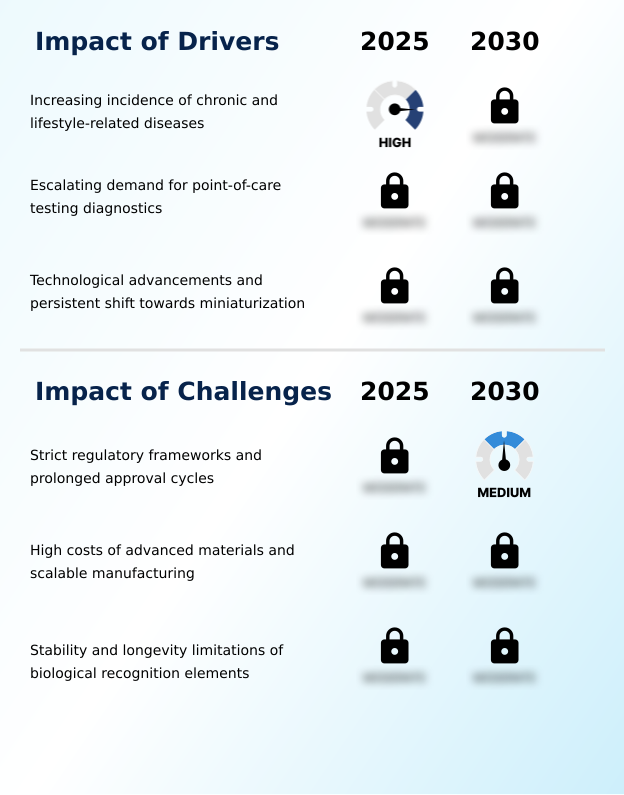
        • 9.3 Impact of drivers and challenges
          • Impact of drivers and challenges in 2023 and 2028
        • 9.4 Market opportunities/restraints

          10 Competitive Landscape

          • 10.1 Overview
            • 10.2 Competitive Landscape
              • Overview on criticality of inputs and factors of differentiation
            • 10.3 Landscape disruption
              • Overview on factors of disruption
            • 10.4 Industry risks
              • Impact of key risks on business

            11 Competitive Analysis

            • 11.1 Companies profiled
              • Companies covered
            • 11.2 Market positioning of companies
              • Matrix on companies position and classification
            • 11.3 Abbott Laboratories
              • Abbott Laboratories - Overview
              • Abbott Laboratories - Business segments
              • Abbott Laboratories - Key news
              • Abbott Laboratories - Key offerings
              • Abbott Laboratories - Segment focus
            • 11.4 Bio Rad Laboratories Inc.
              • Bio Rad Laboratories Inc. - Overview
              • Bio Rad Laboratories Inc. - Business segments
              • Bio Rad Laboratories Inc. - Key news
              • Bio Rad Laboratories Inc. - Key offerings
              • Bio Rad Laboratories Inc. - Segment focus
            • 11.5 Biosensors International Group Ltd.
              • Biosensors International Group Ltd. - Overview
              • Biosensors International Group Ltd. - Product / Service
              • Biosensors International Group Ltd. - Key offerings
            • 11.6 Cytiva
              • Cytiva - Overview
              • Cytiva - Product / Service
              • Cytiva - Key offerings
            • 11.7 Dexcom Inc.
              • Dexcom Inc. - Overview
              • Dexcom Inc. - Product / Service
              • Dexcom Inc. - Key news
              • Dexcom Inc. - Key offerings
            • 11.8 DuPont de Nemours Inc.
              • DuPont de Nemours Inc. - Overview
              • DuPont de Nemours Inc. - Business segments
              • DuPont de Nemours Inc. - Key news
              • DuPont de Nemours Inc. - Key offerings
              • DuPont de Nemours Inc. - Segment focus
            • 11.9 LifeScan IP Holdings LLC
              • LifeScan IP Holdings LLC - Overview
              • LifeScan IP Holdings LLC - Product / Service
              • LifeScan IP Holdings LLC - Key offerings
            • 11.10 Masimo Corp.
              • Masimo Corp. - Overview
              • Masimo Corp. - Product / Service
              • Masimo Corp. - Key news
              • Masimo Corp. - Key offerings
            • 11.11 Medtronic Plc
              • Medtronic Plc - Overview
              • Medtronic Plc - Business segments
              • Medtronic Plc - Key news
              • Medtronic Plc - Key offerings
              • Medtronic Plc - Segment focus
            • 11.12 Universal Biosensors Group
              • Universal Biosensors Group - Overview
              • Universal Biosensors Group - Product / Service
              • Universal Biosensors Group - Key offerings

            12 Appendix

            • 12.1 Scope of the report
              • 12.2 Inclusions and exclusions checklist
                • Inclusions checklist
                • Exclusions checklist
              • 12.3 Currency conversion rates for US$
                • Currency conversion rates for US$
              • 12.4 Research methodology
                • Research methodology
              • 12.5 Data procurement
                • Information sources
              • 12.6 Data validation
                • Data validation
              • 12.7 Validation techniques employed for market sizing
                • Validation techniques employed for market sizing
              • 12.8 Data synthesis
                • Data synthesis
              • 12.9 360 degree market analysis
                • 360 degree market analysis
              • 12.10 List of abbreviations
                • List of abbreviations

              Research Methodology

              Technavio presents a detailed picture of the market by way of study, synthesis, and summation of data from multiple sources. The analysts have presented the various facets of the market with a particular focus on identifying the key industry influencers. The data thus presented is comprehensive, reliable, and the result of extensive research, both primary and secondary.

              INFORMATION SOURCES

              Primary sources

              • Manufacturers and suppliers
              • Channel partners
              • Industry experts
              • Strategic decision makers

              Secondary sources

              • Industry journals and periodicals
              • Government data
              • Financial reports of key industry players
              • Historical data
              • Press releases

              DATA ANALYSIS

              Data Synthesis

              • Collation of data
              • Estimation of key figures
              • Analysis of derived insights

              Data Validation

              • Triangulation with data models
              • Reference against proprietary databases
              • Corroboration with industry experts

              REPORT WRITING

              Qualitative

              • Market drivers
              • Market challenges
              • Market trends
              • Five forces analysis

              Quantitative

              • Market size and forecast
              • Market segmentation
              • Geographical insights
              • Competitive landscape

              Interested in this report?

              Get your sample now to see our research methodology and insights!

              Download Now

              Frequently Asked Questions

              Biosensors market growth will increase by $ 9966.9 mn during 2024-2028 .

              The Biosensors market is expected to grow at a CAGR of 7.2% during 2024-2028 .

              Biosensors market is segmented by Product( Wearable, Non-wearable)

              Abbott Laboratories, ACON Laboratories Inc., Bio Rad Laboratories Inc., Biosensors International Group Ltd., Cardea Bio, Conductive Technologies Inc., Cytiva, Dexcom Inc., DuPont de Nemours Inc., Eastprint Inc, Innovative Sensor Technology IST AG, LifeScan IP Holdings LLC, LifeSignals Group Inc., Masimo Corp., Medtronic Plc, NeuroSky Inc., Ryk Solutions, Sd Biosensor Inc., Universal Biosensors Group, VitalConnect Inc. are a few of the key vendors in the Biosensors market.

              North America will register the highest growth rate of 44% among the other regions. Therefore, the Biosensors market in North America is expected to garner significant business opportunities for the vendors during the forecast period.

              US, Germany, Japan, UK, France

              • Advances in biosensor technologyThe emergence of technological advances in various industries is the driving factor this market.
              • including the pharmaceutical and biotechnology industries is the driving factor this market.
              • food and beverage industries is the driving factor this market.
              • and agriculture is the driving factor this market.
              • is increasing the adoption of several high-end technologies is the driving factor this market.
              • including biosensor technology is the driving factor this market.
              • to obtain high-quality products. The growing demand for pharmacokinetic studies during the early phases of drug development has led to the development of advanced is the driving factor this market.
              • small biosensors with innovative immobilization strategies. Advances in nanotechnology increase the opportunities to design advanced is the driving factor this market.
              • high-quality biosensors. The use of nanomaterials for biosensors fabrication provides advantages such as large surface-to-volume ratios is the driving factor this market.
              • controllable chemical structures is the driving factor this market.
              • and functional groups on their surface. Such advantages are increasing the effectiveness of biosensors for the analysis of drug molecules. Vendors are focusing on research activities for the development of silicon microsensors is the driving factor this market.
              • fast-detection biosensors is the driving factor this market.
              • fiber-optic biosensors is the driving factor this market.
              • magnetic nanoparticle (MNP)-based sensors is the driving factor this market.
              • gold nanoparticle (Au-NP)-based sensors is the driving factor this market.
              • and cell-on-chip biosensors to enhance and strengthen the product offerings to cater to a wide array of industrial applications. Cell-on-chip biosensors detect cell-to-cell interactions. The goal of identifying cells in the immune system is the driving factor this market.
              • which suppresses tumor growth is the driving factor this market.
              • with the use of cell-on-chip biosensors is the driving factor this market.
              • is increasing the focus of various research institutes to develop such biosensors. The rising demand for innovative and high-quality biosensors aided with advanced biosensor technology (among various industries) is boosting the growth of the global biosensors market during the forecast period. is the driving factor this market.

              The Biosensors market vendors should focus on grabbing business opportunities from the Wearable segment as it accounted for the largest market share in the base year.