
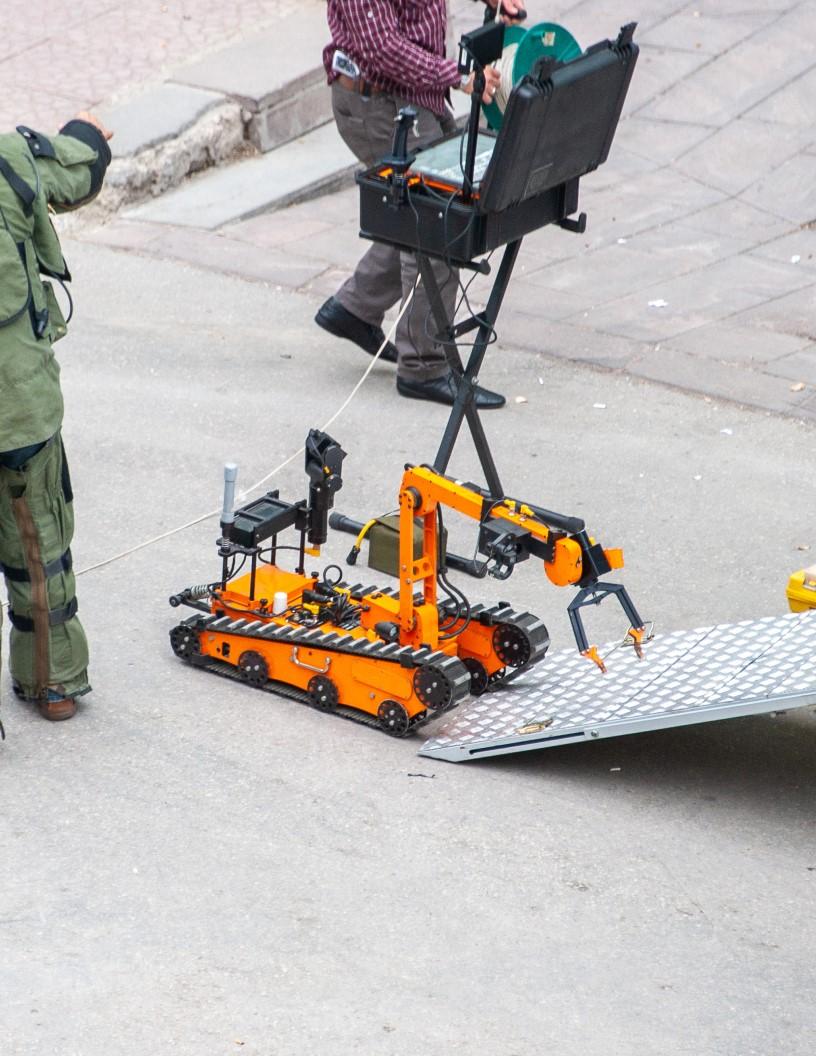

Bomb Disposal Robot Market Analysis North America, Europe, APAC, Middle East and Africa, South America - US, China, Germany, UK, France, Spain, Japan, South Korea, India, Brazil - Size and Forecast 2025-2029

Bomb Disposal Robot Market Analysis North America, Europe, APAC, Middle East and Africa, South America - US, China, Germany, UK, France, Spain, Japan, South Korea, India, Brazil - Size and Forecast 2025-2029

Published: Nov 2024 198 Pages SKU: IRTNTR80391

Market Overview at a Glance

$840.4 Mn
Market Opportunity
7.8%
CAGR
7.3
YoY growth 2024-2025(%)

Bomb Disposal Robot Market Size 2025-2029

The bomb disposal robot market size is forecast to increase by USD 840.4 million, at a CAGR of 7.8% between 2024 and 2029.

  • The market is witnessing significant growth, driven by the increasing collaboration between government agencies and local manufacturers in developing advanced bomb disposal robots. This collaboration is leading to the production of more sophisticated and effective robots, enhancing safety and efficiency in bomb disposal operations. However, the market faces challenges due to the fluctuation in raw material prices, which can impact the cost structure of bomb disposal robot manufacturers. This volatility necessitates strategic sourcing and pricing strategies to mitigate risks and maintain competitiveness. New product launches continue to shape the market landscape, with companies introducing innovative features and functionalities to cater to evolving customer needs and expectations.
  • To capitalize on the market opportunities and navigate challenges effectively, companies must focus on developing cost-effective solutions while ensuring high performance and reliability. Additionally, strategic partnerships, collaborations, and R&D investments can help companies stay ahead of the competition and meet the growing demand for advanced bomb disposal robots.

What will be the Size of the Bomb Disposal Robot Market during the forecast period?
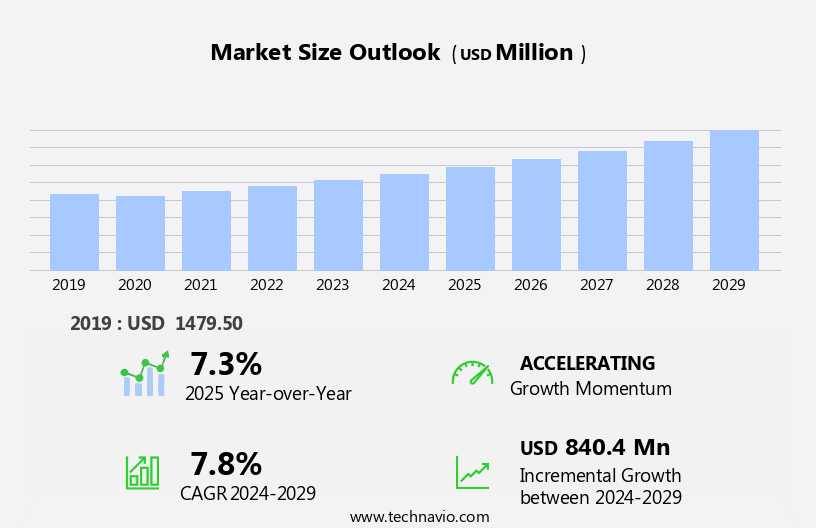
Bomb Disposal Robot Market Size

Explore in-depth regional segment analysis with market size data - historical 2019-2023 and forecasts 2025-2029 - in the full report.  
Request Free Sample

The market is characterized by its continuous evolution, driven by advancements in technology and expanding applications across various sectors. Articulated robots and manipulator arms, equipped with sensor fusion, enable precise manipulation and inspection in hazardous environments. Wheeled robots offer mobility and versatility, while legal frameworks ensure safe and ethical use. Emerging trends include data acquisition and analysis, enabling real-time threat detection and response. Law enforcement agencies and military operations increasingly utilize bomb disposal robots for mine clearance, demolition operations, and emergency response. Industry associations and joint ventures foster collaboration and innovation. Payload delivery and human-machine interface technologies enhance robot capabilities, while disabling devices and x-ray imaging ensure effective threat neutralization.

Industry verticals, including oil and gas, construction, and defense, drive market growth. Challenges and restraints include regulatory bodies, safety regulations, and ethical considerations. Pricing strategies, strategic alliances, and sales channels shape market competition. Future outlook includes advancements in artificial intelligence, machine learning, and software integration, expanding application areas and distribution networks. Market projections indicate significant growth, driven by increasing demand for autonomous navigation, obstacle avoidance, and radiation detection. Market growth is further fueled by global regulations and investment opportunities. Bomb disposal robots find applications in underwater operations, video surveillance, and chemical detection, among others. Operating range, battery life, and certification standards are critical factors influencing market dynamics.

In summary, the market is a dynamic and evolving landscape, shaped by technological advancements, regulatory frameworks, and expanding applications across various industries. Market growth is driven by increasing demand for enhanced capabilities, safety, and efficiency.

How is this Bomb Disposal Robot Industry segmented?

The bomb disposal robot industry research report provides comprehensive data (region-wise segment analysis), with forecasts and estimates in "USD million" for the period 2025-2029, as well as historical data from 2019-2023 for the following segments.

  • Component
    • Hardware
    • Software
  • End-user
    • Military
    • Law enforcement
    • Security agencies
  • Geography
    • North America
      • US
    • Europe
      • France
      • Germany
      • Spain
      • UK
    • APAC
      • China
      • India
      • Japan
      • South Korea
    • South America
      • Brazil
    • Rest of World (ROW)

    By Component Insights

    The hardware segment is estimated to witness significant growth during the forecast period.

    The market is witnessing substantial growth, fueled by technological advancements and heightened defense investments. For instance, in May 2023, Australia's Australian Defence Force (ADF) announced a USD30 million contract with L3Harris for up to 80 advanced bomb disposal robots. These medium and large-sized robots, including the T4 and T7 models, are designed to effectively neutralize improvised explosive devices (IEDs) and enhance route clearance operations. Equipped with sophisticated haptic controllers, these robots enable precise manipulation and operation in diverse environments, ensuring the safety of personnel. The integration of advanced sensors, such as x-ray imaging, computer vision, and thermal imaging, facilitates comprehensive detection and analysis of potential threats.

    Furthermore, autonomous navigation, obstacle avoidance, and disabling devices contribute to the robots' efficiency and adaptability. As industry associations and regulatory bodies continue to establish certification standards and safety regulations, the market is expected to experience continued growth in various industry verticals, including law enforcement, military operations, and hazardous materials handling. Additionally, emerging trends, such as machine learning, artificial intelligence, and software integration, are transforming the market landscape. Despite challenges and restraints, the future outlook for bomb disposal robots remains promising, with market projections indicating significant expansion in the coming years.
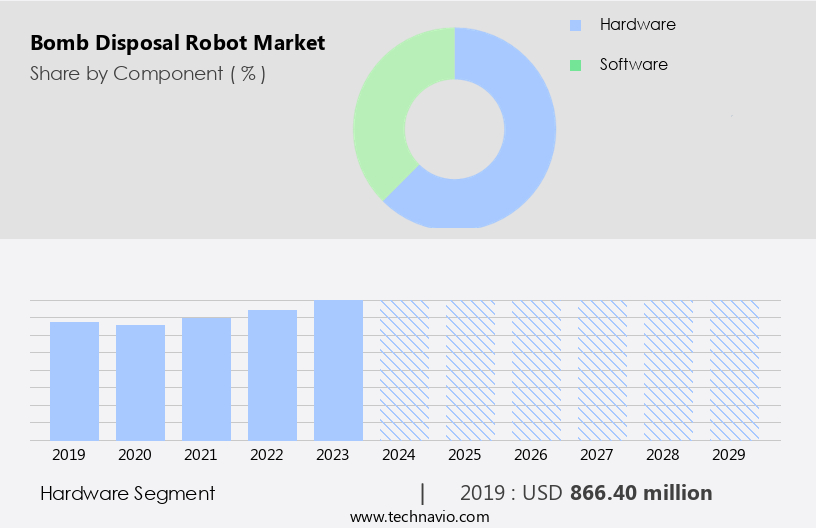
    Bomb Disposal Robot Market Size

    Request Free Sample

    The Hardware segment was valued at USD 866.40 million in 2019 and showed a gradual increase during the forecast period.

    Regional Analysis

    North America is estimated to contribute 43% to the growth of the global market during the forecast period.Technavio’s analysts have elaborately explained the regional trends and drivers that shape the market during the forecast period.
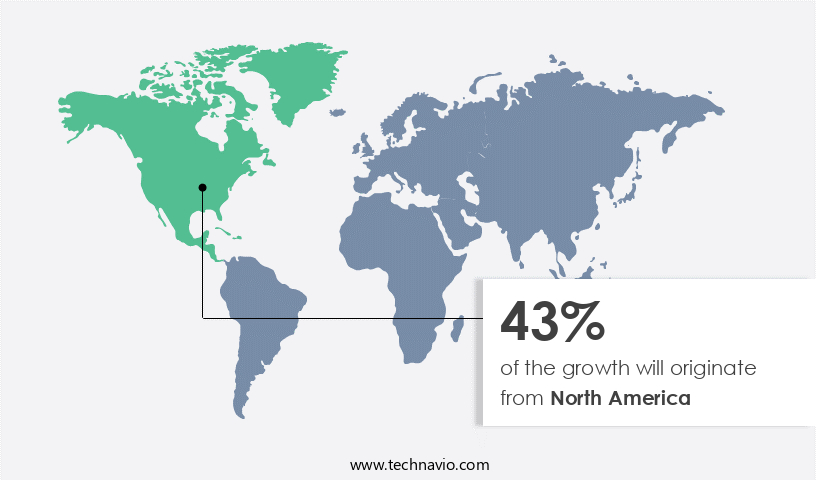
    Bomb Disposal Robot Market Share by Geography

     Request Free Sample

    The market in North America is witnessing substantial expansion, fueled by substantial investments and technological advancements in unmanned ground vehicles (UGVs). A notable trend in this region is the U.S. Navy's continued procurement of additional UGVs, including the MK 2 Man Transportable Robotic System (MTRS) and Talon systems, designed to locate, identify, and neutralize improvised explosive devices (IEDs) and other roadside bomb threats. In March 2024, QinetiQ North America, headquartered in Waltham, secured an USD11 million order for the third option year of production, engineering support, and post-production services for these systems. This contract underscores the U.S.

    Military's commitment to enhancing bomb disposal capabilities, reflecting broader market trends. Sensor fusion, manipulator arms, and autonomous navigation technologies are increasingly integrated into UGVs, enabling them to navigate complex environments, collect data, and make informed decisions. Additionally, emerging trends, such as machine learning and artificial intelligence, are driving innovation in the industry, expanding application areas beyond bomb disposal to include hazardous materials handling, environmental remediation, and mine clearance. The market's growth is further propelled by strategic alliances, distribution networks, and certification standards that ensure safety, reliability, and interoperability. Despite challenges, such as regulatory compliance and ethical considerations, the market's future outlook remains promising, with significant investment opportunities in areas like payload delivery, data security, and software integration.

    Market Dynamics

    Our researchers analyzed the data with 2024 as the base year, along with the key drivers, trends, and challenges. A holistic analysis of drivers will help companies refine their marketing strategies to gain a competitive advantage.

    What are the key market drivers leading to the rise in the adoption of Bomb Disposal Robot Industry?

    • The collaboration between the government and local manufacturers is a crucial factor in driving market growth. This partnership fosters productivity, innovation, and economic development, ultimately contributing to a robust and dynamic industry landscape. 

    • The market is experiencing significant growth due to increasing defense budgets worldwide. In 2023, the U.S. Military allocated approximately USD820 billion, representing about 13.3% of the federal budget, highlighting the priority placed on enhancing national security and defense capabilities. This substantial expenditure is expected to continue, with a requested increase to around USD842.0 billion for 2024, representing a 2.6% rise. Similar trends are observed in other countries, such as India, where defense spending has increased due to geopolitical shifts and economic challenges. The need to modernize military capabilities and address security threats is driving this growth. Bomb disposal robots are essential tools for emergency response teams, enabling them to safely detect and dispose of explosive devices.
    • These robots are equipped with advanced features such as radiation detection, chemical detection, obstacle avoidance, and autonomous navigation, ensuring the safety of personnel in hazardous situations. Market projections indicate continued growth in the market, driven by global regulations and the increasing demand for advanced technology in defense and security applications. The future outlook is promising, with market growth expected to be fueled by advancements in payload capacity, battery life, and autonomous navigation systems. Standards organizations play a crucial role in ensuring the safety and effectiveness of bomb disposal robots. They establish guidelines and certifications for manufacturers, ensuring that these robots meet the highest safety standards.
    • In conclusion, the market is poised for continued growth, driven by increasing defense budgets, the need for advanced technology in emergency response, and global regulations. These robots are essential tools for ensuring public safety and national security, and their use is expected to become even more widespread in the future.

    What are the market trends shaping the Bomb Disposal Robot Industry?

    • The trend in the market is toward new product launches. As a professional, I can provide you with up-to-date information on upcoming product introductions.

    • The market is experiencing notable progress, driven by the development of advanced technologies to improve efficiency and safety. One recent innovation is the SUGV 325 robot introduced by Teledyne FLIR Defense. Weighing around 20 pounds, this portable robot is designed for both reconnaissance and bomb disposal tasks. Its compact design enables easy transportation in a backpack, making it ideal for urban environments. The SUGV 325's modularity and versatility allow it to navigate complex terrains, including stairs and rough surfaces. This robot's introduction marks a significant step forward in the bomb disposal industry, as it integrates advanced sensor fusion, manipulator arms, and articulated robots to enhance capabilities.
    • Additionally, emerging trends include wheeled robots, data acquisition, and human-machine interface for payload delivery. Industry associations play a crucial role in establishing legal frameworks for the use of bomb disposal robots in various industry verticals, including law enforcement and military operations. Joint ventures and collaborations are also on the rise, emphasizing the importance of collaboration and knowledge sharing in this sector. Disabling devices and hazardous materials continue to pose challenges, requiring ongoing research and development to address these needs.

    What challenges does the Bomb Disposal Robot Industry face during its growth?

    • The volatility in raw material prices poses a significant challenge and significantly impacts the growth trajectory of the industry. 

    • The market experiences fluctuations in raw material prices, specifically aluminum and steel, which are integral for constructing the robots' sturdy yet lightweight chassis. From 2015 to 2020, hot-rolled coil (HRC) prices ranged between USD500 and USD1,000 per ton, providing stability. However, this equilibrium was disrupted by global events, causing dramatic price increases. In 2021, HRC peaked at USD1,612 per ton due to supply chain disruptions and heightened demand. Although prices decreased to an average of USD1,015 per ton in 2022 and USD886 per ton in 2023, the market remains concerned about the volatility. Advancements in technology drive the market, with innovations in x-ray imaging, computer vision, training programs, control systems, laser rangefinders, thermal imaging, detonation control, underwater operations, and video surveillance.
    • Ethical considerations and safety regulations are essential factors, ensuring the technology is used responsibly and safely. Micro robots are gaining traction for environmental remediation applications, offering precision and minimizing collateral damage. The sales channels for these robots include government agencies, military organizations, and private security firms.

    Exclusive Customer Landscape

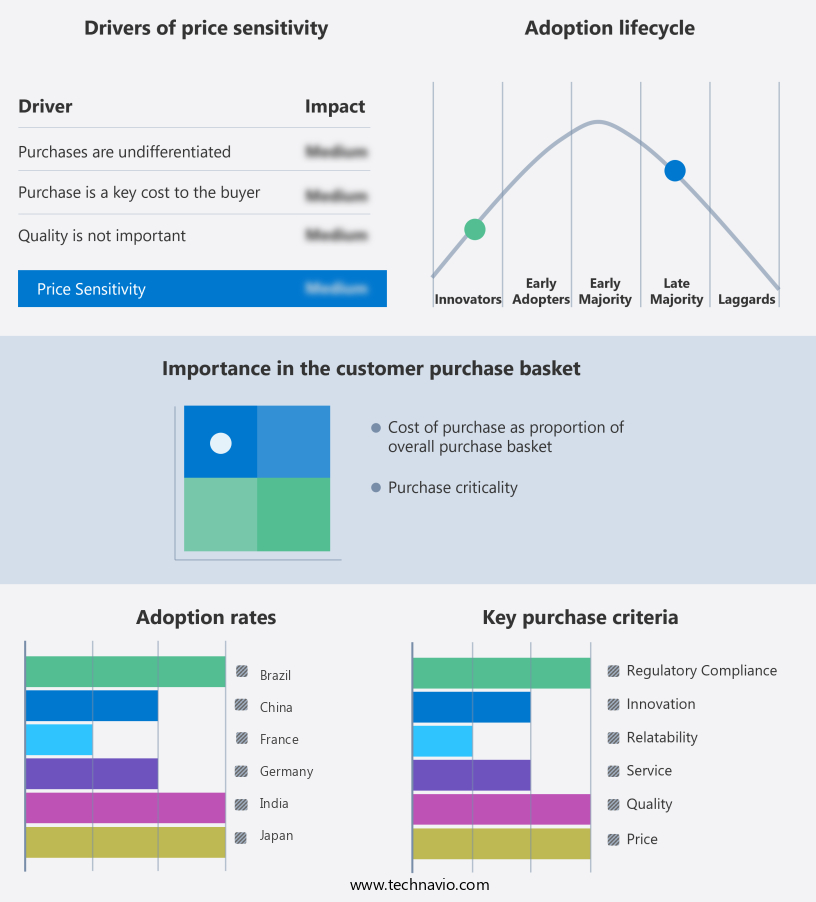
    The bomb disposal robot market forecasting report includes the adoption lifecycle of the market, covering from the innovator’s stage to the laggard’s stage. It focuses on adoption rates in different regions based on penetration. Furthermore, the bomb disposal robot market report also includes key purchase criteria and drivers of price sensitivity to help companies evaluate and develop their market growth analysis strategies.
    Bomb Disposal Robot Market Share by Geography

     Customer Landscape

    Key Companies & Market Insights

    Companies are implementing various strategies, such as strategic alliances, bomb disposal robot market forecast, partnerships, mergers and acquisitions, geographical expansion, and product/service launches, to enhance their presence in the industry.

    ABP Technologies Ltd. - The company specializes in advanced bomb disposal robots, equipped with intricate manipulator arms designed for the safe handling and neutralization of explosive devices. These robots are engineered to enhance search engine visibility while delivering clear and informative insights from a research analyst's perspective. The sophisticated technology allows for precise and controlled disarmament, ensuring public safety and minimizing potential risks. The robots' advanced capabilities enable them to navigate complex environments and effectively manage various types of explosives. With a commitment to innovation and expertise, the company continues to push the boundaries of bomb disposal technology.

    The industry research and growth report includes detailed analyses of the competitive landscape of the market and information about key companies, including:

    • ABP Technologies Ltd.
    • BAE Systems Plc
    • ECA Group
    • ICOR Technology Inc.
    • Irobot Corp.
    • L3Harris Technologies Inc.
    • Lockheed Martin Corp.
    • Med Eng Holdings ULC
    • Nex Robotics Pvt Ltd.
    • QinetiQ Ltd.
    • Reamda Ltd.
    • ReconRobotics Inc.
    • Robo-Team Defense Ltd.
    • Scanna MSC Ltd.
    • Teledyne FLIR LLC

    Qualitative and quantitative analysis of companies has been conducted to help clients understand the wider business environment as well as the strengths and weaknesses of key industry players. Data is qualitatively analyzed to categorize companies as pure play, category-focused, industry-focused, and diversified; it is quantitatively analyzed to categorize companies as dominant, leading, strong, tentative, and weak.

    Recent Development and News in Bomb Disposal Robot Market

    • In February 2024, Clearpath Robotics, a leading robotics company, announced the launch of its new bomb disposal robot, the Dexter 10, designed to navigate complex environments and identify potential threats with advanced sensors (Clearpath Robotics Press Release). In May 2024, Lockheed Martin and Boston Dynamics, two major defense technology companies, entered into a partnership to integrate Boston Dynamics' robots, including the Spot robot, with Lockheed Martin's bomb disposal systems, enhancing the capabilities of bomb disposal teams (Lockheed Martin Press Release).
    • In August 2024, iRobot, a well-known consumer robotics company, secured a significant contract with the U.S. Department of Defense to provide over 1,000 PackBot bomb disposal robots, further solidifying iRobot's presence in the market (iRobot Press Release). In December 2025, the European Union approved the use of bomb disposal robots in civilian areas, marking a significant expansion of the market beyond military applications (European Union Press Release). These developments underscore the growing importance of bomb disposal robots in enhancing safety and efficiency in various sectors, driven by technological advancements and strategic partnerships.

    Research Analyst Overview

    • The market encompasses advanced technologies such as drone detection, multispectral imaging, and non-linear junction detection, catering to the heightened need for public safety and security services. Maintenance procedures are crucial for ensuring optimal performance, with open source platforms facilitating data analysis and mission planning. Government procurement drives market growth, prioritizing high-sensitivity sensors, GPS navigation, and real-time decision making. Operator training and threat assessment are integral components of risk mitigation, while swarm robotics and inertial navigation enhance situational awareness. Ground penetrating radar and trace detection technologies are essential for effective explosive detection.
    • Biometric authentication adds an extra layer of security, addressing cybersecurity threats in the defense industry. Incorporating high-tech features like high-definition cameras and high-resolution displays, these robots offer enhanced capabilities for effective threat assessment and mission execution.

    Dive into Technavio’s robust research methodology, blending expert interviews, extensive data synthesis, and validated models for unparalleled Bomb Disposal Robot Market insights. See full methodology.

    Market Scope

    Report Coverage

    Details

    Page number

    198

    Base year

    2024

    Historic period

    2019-2023

    Forecast period

    2025-2029

    Growth momentum & CAGR

    Accelerate at a CAGR of 7.8%

    Market growth 2025-2029

    USD 840.4 million

    Market structure

    Fragmented

    YoY growth 2024-2025(%)

    7.3

    Key countries

    US, China, Germany, UK, France, Spain, Japan, South Korea, India, and Brazil

    Competitive landscape

    Leading Companies, Market Positioning of Companies, Competitive Strategies, and Industry Risks

    Request Free Sample

    What are the Key Data Covered in this Bomb Disposal Robot Market Research and Growth Report?

    • CAGR of the Bomb Disposal Robot industry during the forecast period
    • Detailed information on factors that will drive the growth and forecasting between 2025 and 2029
    • Precise estimation of the size of the market and its contribution of the industry in focus to the parent market
    • Accurate predictions about upcoming growth and trends and changes in consumer behaviour
    • Growth of the market across North America, Europe, APAC, Middle East and Africa, and South America
    • Thorough analysis of the market’s competitive landscape and detailed information about companies
    • Comprehensive analysis of factors that will challenge the bomb disposal robot market growth of industry companies

    We can help! Our analysts can customize this bomb disposal robot market research report to meet your requirements.

    Get in touch


    1 Executive Summary

    • 1.1 Market overview
      • Executive Summary - Chart on Market Overview
      • Executive Summary - Data Table on Market Overview
      • Executive Summary - Chart on Global Market Characteristics
      • Executive Summary - Chart on Market by Geography
      • Executive Summary - Chart on Market Segmentation by Component
      • Executive Summary - Chart on Market Segmentation by End-user
      • Executive Summary - Chart on Incremental Growth
      • Executive Summary - Data Table on Incremental Growth
      • Executive Summary - Chart on Company Market Positioning

    2 Technavio Analysis

    • 2.1 Analysis of price sensitivity, lifecycle, customer purchase basket, adoption rates, and purchase criteria
      • Analysis of price sensitivity, lifecycle, customer purchase basket, adoption rates, and purchase criteria
    • 2.2 Criticality of inputs and Factors of differentiation
      • Overview on criticality of inputs and factors of differentiation
    • 2.3 Factors of disruption
      • Overview on factors of disruption
    • 2.4 Impact of drivers and challenges
      • Impact of drivers and challenges in 2024 and 2029

    3 Market Landscape

    • 3.1 Market ecosystem
      • Parent Market
      • Data Table on - Parent Market
    • 3.2 Market characteristics
      • Market characteristics analysis
    • 3.3 Value chain analysis
      • Value chain analysis

    4 Market Sizing

    • 4.1 Market definition
      • Offerings of companies included in the market definition
    • 4.2 Market segment analysis
      • Market segments
    • 4.3 Market size 2024
      • 4.4 Market outlook: Forecast for 2024-2029
        • Chart on Global - Market size and forecast 2024-2029 ($ million)
        • Data Table on Global - Market size and forecast 2024-2029 ($ million)
        • Chart on Global Market: Year-over-year growth 2024-2029 (%)
        • Data Table on Global Market: Year-over-year growth 2024-2029 (%)

      5 Historic Market Size

      • 5.1 Global Bomb Disposal Robot Market 2019 - 2023
        • Historic Market Size - Data Table on Global Bomb Disposal Robot Market 2019 - 2023 ($ million)
      • 5.2 Component segment analysis 2019 - 2023
        • Historic Market Size - Component Segment 2019 - 2023 ($ million)
      • 5.3 End-user segment analysis 2019 - 2023
        • Historic Market Size - End-user Segment 2019 - 2023 ($ million)
      • 5.4 Geography segment analysis 2019 - 2023
        • Historic Market Size - Geography Segment 2019 - 2023 ($ million)
      • 5.5 Country segment analysis 2019 - 2023
        • Historic Market Size - Country Segment 2019 - 2023 ($ million)

      6 Qualitative Analysis

      • 6.1 Impact of AI on the global bomb disposal robot market

        7 Five Forces Analysis

        • 7.1 Five forces summary
          • Five forces analysis - Comparison between 2024 and 2029
        • 7.2 Bargaining power of buyers
          • Bargaining power of buyers - Impact of key factors 2024 and 2029
        • 7.3 Bargaining power of suppliers
          • Bargaining power of suppliers - Impact of key factors in 2024 and 2029
        • 7.4 Threat of new entrants
          • Threat of new entrants - Impact of key factors in 2024 and 2029
        • 7.5 Threat of substitutes
          • Threat of substitutes - Impact of key factors in 2024 and 2029
        • 7.6 Threat of rivalry
          • Threat of rivalry - Impact of key factors in 2024 and 2029
        • 7.7 Market condition
          • Chart on Market condition - Five forces 2024 and 2029

        8 Market Segmentation by Component

        • 8.1 Market segments
          • Chart on Component - Market share 2024-2029 (%)
          • Data Table on Component - Market share 2024-2029 (%)
        • 8.2 Comparison by Component
          • Chart on Comparison by Component
          • Data Table on Comparison by Component
        • 8.3 Hardware - Market size and forecast 2024-2029
          • Chart on Hardware - Market size and forecast 2024-2029 ($ million)
          • Data Table on Hardware - Market size and forecast 2024-2029 ($ million)
          • Chart on Hardware - Year-over-year growth 2024-2029 (%)
          • Data Table on Hardware - Year-over-year growth 2024-2029 (%)
        • 8.4 Software - Market size and forecast 2024-2029
          • Chart on Software - Market size and forecast 2024-2029 ($ million)
          • Data Table on Software - Market size and forecast 2024-2029 ($ million)
          • Chart on Software - Year-over-year growth 2024-2029 (%)
          • Data Table on Software - Year-over-year growth 2024-2029 (%)
        • 8.5 Market opportunity by Component
          • Market opportunity by Component ($ million)
          • Data Table on Market opportunity by Component ($ million)

        9 Market Segmentation by End-user

        • 9.1 Market segments
          • Chart on End-user - Market share 2024-2029 (%)
          • Data Table on End-user - Market share 2024-2029 (%)
        • 9.2 Comparison by End-user
          • Chart on Comparison by End-user
          • Data Table on Comparison by End-user
        • 9.3 Military - Market size and forecast 2024-2029
          • Chart on Military - Market size and forecast 2024-2029 ($ million)
          • Data Table on Military - Market size and forecast 2024-2029 ($ million)
          • Chart on Military - Year-over-year growth 2024-2029 (%)
          • Data Table on Military - Year-over-year growth 2024-2029 (%)
        • 9.4 Law enforcement - Market size and forecast 2024-2029
          • Chart on Law enforcement - Market size and forecast 2024-2029 ($ million)
          • Data Table on Law enforcement - Market size and forecast 2024-2029 ($ million)
          • Chart on Law enforcement - Year-over-year growth 2024-2029 (%)
          • Data Table on Law enforcement - Year-over-year growth 2024-2029 (%)
        • 9.5 Security agencies - Market size and forecast 2024-2029
          • Chart on Security agencies - Market size and forecast 2024-2029 ($ million)
          • Data Table on Security agencies - Market size and forecast 2024-2029 ($ million)
          • Chart on Security agencies - Year-over-year growth 2024-2029 (%)
          • Data Table on Security agencies - Year-over-year growth 2024-2029 (%)
        • 9.6 Market opportunity by End-user
          • Market opportunity by End-user ($ million)
          • Data Table on Market opportunity by End-user ($ million)

        10 Customer Landscape

        • 10.1 Customer landscape overview
          • Analysis of price sensitivity, lifecycle, customer purchase basket, adoption rates, and purchase criteria

        11 Geographic Landscape

        • 11.1 Geographic segmentation
          • Chart on Market share by geography 2024-2029 (%)
          • Data Table on Market share by geography 2024-2029 (%)
        • 11.2 Geographic comparison
          • Chart on Geographic comparison
          • Data Table on Geographic comparison
        • 11.3 North America - Market size and forecast 2024-2029
          • Chart on North America - Market size and forecast 2024-2029 ($ million)
          • Data Table on North America - Market size and forecast 2024-2029 ($ million)
          • Chart on North America - Year-over-year growth 2024-2029 (%)
          • Data Table on North America - Year-over-year growth 2024-2029 (%)
        • 11.4 Europe - Market size and forecast 2024-2029
          • Chart on Europe - Market size and forecast 2024-2029 ($ million)
          • Data Table on Europe - Market size and forecast 2024-2029 ($ million)
          • Chart on Europe - Year-over-year growth 2024-2029 (%)
          • Data Table on Europe - Year-over-year growth 2024-2029 (%)
        • 11.5 APAC - Market size and forecast 2024-2029
          • Chart on APAC - Market size and forecast 2024-2029 ($ million)
          • Data Table on APAC - Market size and forecast 2024-2029 ($ million)
          • Chart on APAC - Year-over-year growth 2024-2029 (%)
          • Data Table on APAC - Year-over-year growth 2024-2029 (%)
        • 11.6 Middle East and Africa - Market size and forecast 2024-2029
          • Chart on Middle East and Africa - Market size and forecast 2024-2029 ($ million)
          • Data Table on Middle East and Africa - Market size and forecast 2024-2029 ($ million)
          • Chart on Middle East and Africa - Year-over-year growth 2024-2029 (%)
          • Data Table on Middle East and Africa - Year-over-year growth 2024-2029 (%)
        • 11.7 South America - Market size and forecast 2024-2029
          • Chart on South America - Market size and forecast 2024-2029 ($ million)
          • Data Table on South America - Market size and forecast 2024-2029 ($ million)
          • Chart on South America - Year-over-year growth 2024-2029 (%)
          • Data Table on South America - Year-over-year growth 2024-2029 (%)
        • 11.8 US - Market size and forecast 2024-2029
          • Chart on US - Market size and forecast 2024-2029 ($ million)
          • Data Table on US - Market size and forecast 2024-2029 ($ million)
          • Chart on US - Year-over-year growth 2024-2029 (%)
          • Data Table on US - Year-over-year growth 2024-2029 (%)
        • 11.9 China - Market size and forecast 2024-2029
          • Chart on China - Market size and forecast 2024-2029 ($ million)
          • Data Table on China - Market size and forecast 2024-2029 ($ million)
          • Chart on China - Year-over-year growth 2024-2029 (%)
          • Data Table on China - Year-over-year growth 2024-2029 (%)
        • 11.10 Germany - Market size and forecast 2024-2029
          • Chart on Germany - Market size and forecast 2024-2029 ($ million)
          • Data Table on Germany - Market size and forecast 2024-2029 ($ million)
          • Chart on Germany - Year-over-year growth 2024-2029 (%)
          • Data Table on Germany - Year-over-year growth 2024-2029 (%)
        • 11.11 UK - Market size and forecast 2024-2029
          • Chart on UK - Market size and forecast 2024-2029 ($ million)
          • Data Table on UK - Market size and forecast 2024-2029 ($ million)
          • Chart on UK - Year-over-year growth 2024-2029 (%)
          • Data Table on UK - Year-over-year growth 2024-2029 (%)
        • 11.12 France - Market size and forecast 2024-2029
          • Chart on France - Market size and forecast 2024-2029 ($ million)
          • Data Table on France - Market size and forecast 2024-2029 ($ million)
          • Chart on France - Year-over-year growth 2024-2029 (%)
          • Data Table on France - Year-over-year growth 2024-2029 (%)
        • 11.13 Spain - Market size and forecast 2024-2029
          • Chart on Spain - Market size and forecast 2024-2029 ($ million)
          • Data Table on Spain - Market size and forecast 2024-2029 ($ million)
          • Chart on Spain - Year-over-year growth 2024-2029 (%)
          • Data Table on Spain - Year-over-year growth 2024-2029 (%)
        • 11.14 Japan - Market size and forecast 2024-2029
          • Chart on Japan - Market size and forecast 2024-2029 ($ million)
          • Data Table on Japan - Market size and forecast 2024-2029 ($ million)
          • Chart on Japan - Year-over-year growth 2024-2029 (%)
          • Data Table on Japan - Year-over-year growth 2024-2029 (%)
        • 11.15 South Korea - Market size and forecast 2024-2029
          • Chart on South Korea - Market size and forecast 2024-2029 ($ million)
          • Data Table on South Korea - Market size and forecast 2024-2029 ($ million)
          • Chart on South Korea - Year-over-year growth 2024-2029 (%)
          • Data Table on South Korea - Year-over-year growth 2024-2029 (%)
        • 11.16 India - Market size and forecast 2024-2029
          • Chart on India - Market size and forecast 2024-2029 ($ million)
          • Data Table on India - Market size and forecast 2024-2029 ($ million)
          • Chart on India - Year-over-year growth 2024-2029 (%)
          • Data Table on India - Year-over-year growth 2024-2029 (%)
        • 11.17 Brazil - Market size and forecast 2024-2029
          • Chart on Brazil - Market size and forecast 2024-2029 ($ million)
          • Data Table on Brazil - Market size and forecast 2024-2029 ($ million)
          • Chart on Brazil - Year-over-year growth 2024-2029 (%)
          • Data Table on Brazil - Year-over-year growth 2024-2029 (%)
        • 11.18 Market opportunity by geography
          • Market opportunity by geography ($ million)
          • Data Tables on Market opportunity by geography ($ million)

        12 Drivers, Challenges, and Opportunity/Restraints

        • 12.1 Market drivers
          • 12.2 Market challenges
            • 12.3 Impact of drivers and challenges
              • Impact of drivers and challenges in 2024 and 2029
            • 12.4 Market opportunities/restraints

              13 Competitive Landscape

              • 13.1 Overview
                • 13.2 Competitive Landscape
                  • Overview on criticality of inputs and factors of differentiation
                • 13.3 Landscape disruption
                  • Overview on factors of disruption
                • 13.4 Industry risks
                  • Impact of key risks on business

                14 Competitive Analysis

                • 14.1 Companies profiled
                  • Companies covered
                • 14.2 Company ranking index
                  • Company ranking index
                • 14.3 Market positioning of companies
                  • Matrix on companies position and classification
                • 14.4 ABP Technologies Ltd.
                  • ABP Technologies Ltd. - Overview
                  • ABP Technologies Ltd. - Product / Service
                  • ABP Technologies Ltd. - Key offerings
                  • SWOT
                • 14.5 BAE Systems Plc
                  • BAE Systems Plc - Overview
                  • BAE Systems Plc - Business segments
                  • BAE Systems Plc - Key news
                  • BAE Systems Plc - Key offerings
                  • BAE Systems Plc - Segment focus
                  • SWOT
                • 14.6 ECA Group
                  • ECA Group - Overview
                  • ECA Group - Product / Service
                  • ECA Group - Key offerings
                  • SWOT
                • 14.7 ICOR Technology Inc.
                  • ICOR Technology Inc. - Overview
                  • ICOR Technology Inc. - Product / Service
                  • ICOR Technology Inc. - Key offerings
                  • SWOT
                • 14.8 Irobot Corp.
                  • Irobot Corp. - Overview
                  • Irobot Corp. - Product / Service
                  • Irobot Corp. - Key news
                  • Irobot Corp. - Key offerings
                  • SWOT
                • 14.9 L3Harris Technologies Inc.
                  • L3Harris Technologies Inc. - Overview
                  • L3Harris Technologies Inc. - Business segments
                  • L3Harris Technologies Inc. - Key news
                  • L3Harris Technologies Inc. - Key offerings
                  • L3Harris Technologies Inc. - Segment focus
                  • SWOT
                • 14.10 Lockheed Martin Corp.
                  • Lockheed Martin Corp. - Overview
                  • Lockheed Martin Corp. - Business segments
                  • Lockheed Martin Corp. - Key news
                  • Lockheed Martin Corp. - Key offerings
                  • Lockheed Martin Corp. - Segment focus
                  • SWOT
                • 14.11 Med Eng Holdings ULC
                  • Med Eng Holdings ULC - Overview
                  • Med Eng Holdings ULC - Product / Service
                  • Med Eng Holdings ULC - Key offerings
                  • SWOT
                • 14.12 Nex Robotics Pvt Ltd.
                  • Nex Robotics Pvt Ltd. - Overview
                  • Nex Robotics Pvt Ltd. - Product / Service
                  • Nex Robotics Pvt Ltd. - Key offerings
                  • SWOT
                • 14.13 QinetiQ Ltd.
                  • QinetiQ Ltd. - Overview
                  • QinetiQ Ltd. - Business segments
                  • QinetiQ Ltd. - Key news
                  • QinetiQ Ltd. - Key offerings
                  • QinetiQ Ltd. - Segment focus
                  • SWOT
                • 14.14 Reamda Ltd.
                  • Reamda Ltd. - Overview
                  • Reamda Ltd. - Product / Service
                  • Reamda Ltd. - Key offerings
                  • SWOT
                • 14.15 ReconRobotics Inc.
                  • ReconRobotics Inc. - Overview
                  • ReconRobotics Inc. - Product / Service
                  • ReconRobotics Inc. - Key offerings
                  • SWOT
                • 14.16 Robo-Team Defense Ltd.
                  • Robo-Team Defense Ltd. - Overview
                  • Robo-Team Defense Ltd. - Product / Service
                  • Robo-Team Defense Ltd. - Key offerings
                  • SWOT
                • 14.17 Scanna MSC Ltd.
                  • Scanna MSC Ltd. - Overview
                  • Scanna MSC Ltd. - Product / Service
                  • Scanna MSC Ltd. - Key offerings
                  • SWOT
                • 14.18 Teledyne FLIR LLC
                  • Teledyne FLIR LLC - Overview
                  • Teledyne FLIR LLC - Product / Service
                  • Teledyne FLIR LLC - Key offerings
                  • SWOT

                15 Appendix

                • 15.1 Scope of the report
                  • 15.2 Inclusions and exclusions checklist
                    • Inclusions checklist
                    • Exclusions checklist
                  • 15.3 Currency conversion rates for US$
                    • Currency conversion rates for US$
                  • 15.4 Research methodology
                    • Research methodology
                  • 15.5 Data procurement
                    • Information sources
                  • 15.6 Data validation
                    • Data validation
                  • 15.7 Validation techniques employed for market sizing
                    • Validation techniques employed for market sizing
                  • 15.8 Data synthesis
                    • Data synthesis
                  • 15.9 360 degree market analysis
                    • 360 degree market analysis
                  • 15.10 List of abbreviations
                    • List of abbreviations

                  Research Methodology

                  Technavio presents a detailed picture of the market by way of study, synthesis, and summation of data from multiple sources. The analysts have presented the various facets of the market with a particular focus on identifying the key industry influencers. The data thus presented is comprehensive, reliable, and the result of extensive research, both primary and secondary.

                  INFORMATION SOURCES

                  Primary sources

                  • Manufacturers and suppliers
                  • Channel partners
                  • Industry experts
                  • Strategic decision makers

                  Secondary sources

                  • Industry journals and periodicals
                  • Government data
                  • Financial reports of key industry players
                  • Historical data
                  • Press releases

                  DATA ANALYSIS

                  Data Synthesis

                  • Collation of data
                  • Estimation of key figures
                  • Analysis of derived insights

                  Data Validation

                  • Triangulation with data models
                  • Reference against proprietary databases
                  • Corroboration with industry experts

                  REPORT WRITING

                  Qualitative

                  • Market drivers
                  • Market challenges
                  • Market trends
                  • Five forces analysis

                  Quantitative

                  • Market size and forecast
                  • Market segmentation
                  • Geographical insights
                  • Competitive landscape

                  Interested in this report?

                  Get your sample now to see our research methodology and insights!

                  Download Now

                  Frequently Asked Questions

                  Bomb Disposal Robot market growth will increase by $ 840.4 mn during 2025-2029.

                  The Bomb Disposal Robot market is expected to grow at a CAGR of 7.8% during 2025-2029.

                  Bomb Disposal Robot market is segmented by Component( Hardware, Software) End-user( Military, Law enforcement, Security agencies)

                  ABP Technologies Ltd., BAE Systems Plc, ECA Group, ICOR Technology Inc., Irobot Corp., L3Harris Technologies Inc., Lockheed Martin Corp., Med Eng Holdings ULC, Nex Robotics Pvt Ltd., QinetiQ Ltd., Reamda Ltd., ReconRobotics Inc., Robo-Team Defense Ltd., Scanna MSC Ltd., Teledyne FLIR LLC are a few of the key vendors in the Bomb Disposal Robot market.

                  North America will register the highest growth rate of 43% among the other regions. Therefore, the Bomb Disposal Robot market in North America is expected to garner significant business opportunities for the vendors during the forecast period.

                  US, China, Germany, UK, France, Spain, Japan, South Korea, India, Brazil

                  • Collaboration between government and local manufacturersThe global bomb disposal robot market is significantly driven by rising investments in defense budgets worldwide. In 2023 is the driving factor this market.
                  • the U.S. military allocated approximately $820 billion is the driving factor this market.
                  • representing about 13.3% of the federal budget. This substantial expenditure underscores the priority placed on enhancing national security and defense capabilities. Furthermore is the driving factor this market.
                  • the Department of Defense (DoD) has requested an increase to around  $842.0 billion for 2024 is the driving factor this market.
                  • marking a 2.6% rise. This upward trend in defense spending highlights the ongoing commitment to modernizing military equipment and infrastructure.Similarly is the driving factor this market.
                  • India's defense budget from 2020 to 2024 reflects strategic adjustments in response to geopolitical shifts and economic challenges. The steady increase in defense spending is driven by the need to modernize military capabilities and address border tensions. These investments are crucial for maintaining a robust defense posture and ensuring the safety and security of the nation.The growing defense budgets are a key driver for the bomb disposal robot market is the driving factor this market.
                  • as they enable the procurement of advanced technologies essential for modern warfare. Bomb disposal robots is the driving factor this market.
                  • equipped with cutting-edge sensors and communication systems is the driving factor this market.
                  • play a vital role in neutralizing explosive threats and safeguarding military personnel. The increased funding allows for the development and deployment of these sophisticated robots is the driving factor this market.
                  • enhancing the operational efficiency and effectiveness of bomb disposal units.Overall is the driving factor this market.
                  • the rising investments in defense are expected to propel the growth of the bomb disposal robot market. As countries continue to prioritize national security and modernize their military forces is the driving factor this market.
                  • the demand for advanced bomb disposal solutions will likely see significant growth is the driving factor this market.
                  • driven by the need for enhanced safety and operational capabilities. is the driving factor this market.

                  The Bomb Disposal Robot market vendors should focus on grabbing business opportunities from the Hardware segment as it accounted for the largest market share in the base year.
                  RIA - Research AI Assistant
                  Ask RIA
