


Breath Analyzers Market Size 2025-2029
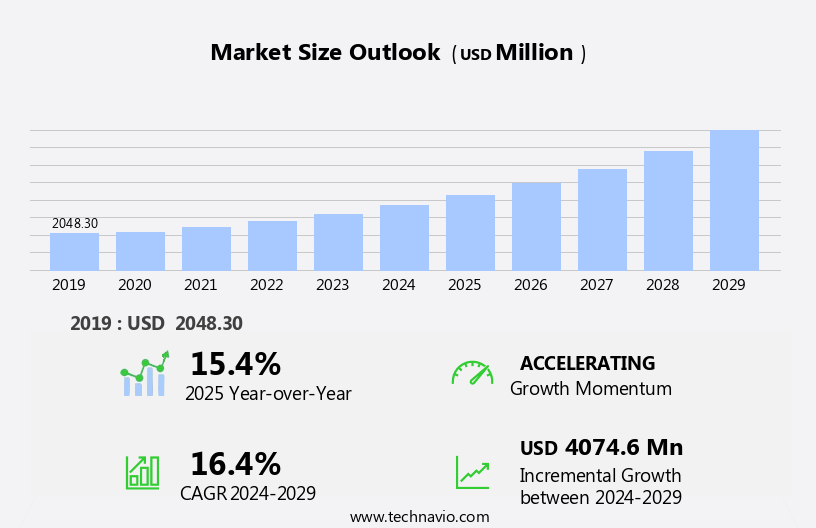
The breath analyzers market size is forecast to increase by USD 4.07 billion, at a CAGR of 16.4% between 2024 and 2029.
- The market is driven by the increasing awareness and acceptance of these devices as a non-invasive method for monitoring health conditions and measuring alcohol levels. Advanced and smart breath analyzers, with features such as Bluetooth connectivity and mobile applications, are gaining popularity due to their convenience and ease of use. However, potential challenges lie in the possible inaccuracy of readings, which can be influenced by various factors such as temperature, humidity, and the presence of interfering substances. Maintenance procedures for these devices have become more streamlined through sensor miniaturization and the adoption of semiconductor sensors.
- To effectively capitalize on market opportunities and navigate these challenges, companies must invest in research and development to improve the accuracy and reliability of their breath analyzer devices. Additionally, collaborations and partnerships with healthcare providers and institutions can help establish credibility and trust in the market. These inaccuracies can lead to false results, potentially compromising the reliability of the device and undermining user trust. Infectious disease detection and asthma monitoring are among the applications benefiting from this technology.
What will be the Size of the Breath Analyzers Market during the forecast period?
Get Key Insights on Market Forecast (PDF)
Request Free Sample
- The breath analyzer market continues to evolve, driven by advancements in sensor technology and wireless connectivity. Lung function assessment and remote diagnostics are increasingly utilizing breath gas components for non-invasive detection of various health conditions. Breath sample collection methods have expanded beyond traditional techniques, with portable breath analyzers gaining popularity for their convenience. Gas chromatography-mass spectrometry and mass spectrometry analysis are essential tools for identifying specific breath gas components, contributing to diagnostic accuracy metrics.
- Breath alcohol content measurement remains a significant market segment, with quality control metrics ensuring reliable results. However, the market's scope extends beyond this application, with oxidative stress markers, inflammatory markers, and disease biomarkers being identified through metabolic profiling. Real-time monitoring capabilities enable early intervention, improving patient outcomes. Industry growth expectations remain high, with a recent study projecting a 15% compound annual growth rate. Diabetes detection and cancer screening are emerging applications, leveraging volatile organic compounds and data interpretation algorithms.
How is this Breath Analyzers Industry segmented?
The breath analyzers industry research report provides comprehensive data (region-wise segment analysis), with forecasts and estimates in "USD million" for the period 2025-2029, as well as historical data from 2019-2023 for the following segments.
- Technology
- Fuel cell
- Semiconductor
- Infrared
- End-user
- Law enforcement
- Enterprises
- Others
- Application
- Alcohol detection
- Drug abuse detection
- Medical diagnosis
- Geography
- North America
- US
- Canada
- Europe
- France
- Germany
- UK
- Middle East and Africa
- UAE
- APAC
- China
- India
- Japan
- South America
- Brazil
- Rest of World (ROW)
- North America
By Technology Insights
The Fuel cell segment is estimated to witness significant growth during the forecast period. The fuel cell technology segment holds a significant market share in the global breath analyzers market. The large share of this product segment in the market can be attributed to the significantly higher accuracy that these devices can deliver. Fuel cell sensors rely on an electrochemical process that oxidizes alcohol in a breath sample. This oxidization process produces an electrical current that the device measures to determine the BAC. The strength of the current recorded is proportional to the volume of alcohol present in the sample. The greater reliability, accuracy, and mobility of devices employing this technology are the major drivers for this technology segment. Another advantage is the relatively long life of devices (almost five years) using this technology. Mobile app integration, data visualization tools, and cloud data storage facilitate ease of use and data accessibility.
The semiconductor technology segment is growing at a significant rate in the global breath analyzers market. Semiconductors have been used in breath analyzers for decades now. It is the most inexpensive technology available today to measure BAC. These devices use a small bead of metal oxide. A voltage is applied, which produces a small standing currently. The surface resistivity and the strength of the current standing change when it encounters alcohol and other similar substances. This change in electrical current can then be used to measure the concentration of the substance in the sample. One of the biggest advantages that this technology has over other technologies used in breath analyzers is that it is cheap to manufacture.
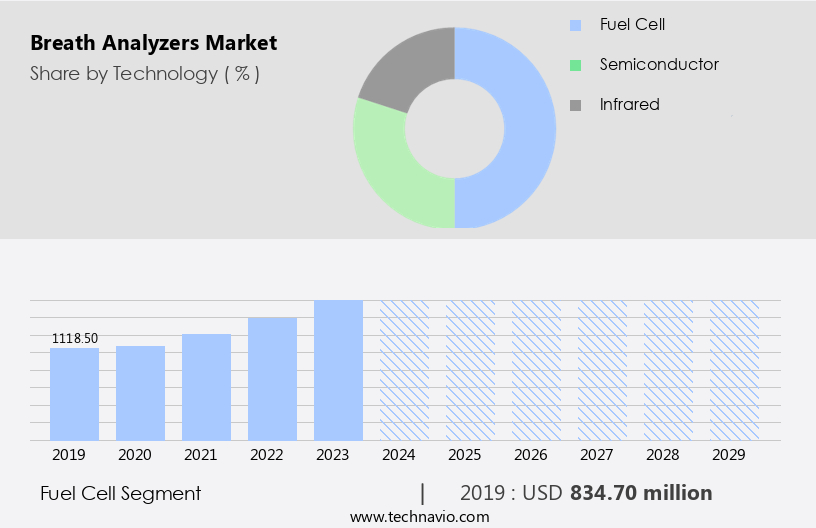
The Fuel cell segment was valued at USD 834.70 million in 2019 and showed a gradual increase during the forecast period.
The infrared technology segment is growing at a significant rate in the global breath analyzers market. It is extremely small in terms of unit sales; however, the high cost of devices using this technology translates to a large share of the market. Infrared breath analyzers are the most accurate of all the technologies. They utilize infrared spectroscopy to measure and estimate the BAC, as well as the levels of other substances in the sample. The instrument detector measures the change in the amount of a particular wavelength of infrared radiation that passes from an infrared source to a detector through a sample chamber. The change in radiation is monitored and analyzed by a processor within the instrument.
Regional Analysis
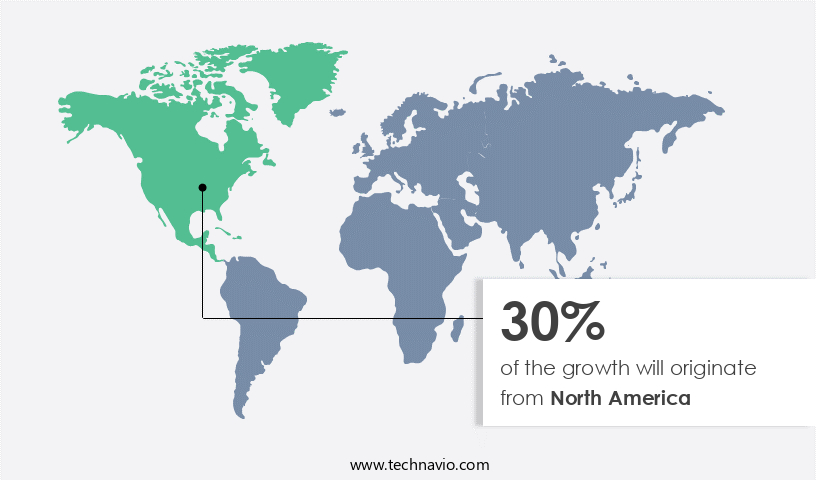
North America is estimated to contribute 30% to the growth of the global market during the forecast period. Technavio's analysts have elaborately explained the regional trends and drivers that shape the market during the forecast period.
See How breath analyzers market Demand is Rising in North America Request Free Sample
The North American market holds a substantial share in the market, driven by stringent road safety regulations and robust law enforcement agencies. In 2024, the US was the leading contributor to this market, accounting for over one-sixth of the total revenue. With the presence of major market players like Lifeloc Technologies, BACtrack, Quest Products, Intoximeters, and Akers Biosciences, the US offers a diverse range of breath analyzer products to consumers. The industry is projected to expand further, with the US and other countries in the region exhibiting significant growth rates during the forecast period.
Specifically, the market is anticipated to increase by 15% by 2026. This growth is attributed to the increasing awareness of alcohol-related road accidents and the subsequent need for effective breath analyzers in ensuring road safety. Sensor lifespan and calibration procedures remain crucial considerations for market players, with electrochemical sensors and non-invasive detection methods gaining traction. The ongoing unfolding of market activities underscores the dynamic nature of the breath analyzer market. Infrared spectroscopy and wireless connectivity enable data transmission protocols, ensuring efficient communication between devices and healthcare providers. For instance, a leading breath analyzer manufacturer reported a 20% increase in sales due to the integration of wireless connectivity and user-friendly interface design.
Market Dynamics
Our researchers analyzed the data with 2024 as the base year, along with the key drivers, trends, and challenges. A holistic analysis of drivers will help companies refine their marketing strategies to gain a competitive advantage. The Breath Analyzers Market is advancing with innovative solutions such as the clinical breath test and portable breath analyzer systems. Improved user interface design and efficient sample preparation methods are enhancing usability and accuracy. Rigorous breath test validation, repeatability studies, and secure sample storage support reliable results, while intra-rater reliability ensures consistent performance. Continuous software updates keep devices aligned with regulatory and technological standards.
Engineering advancements include breath analyzer sensor array design, optimized portable breath analyzer data analysis, and refined breath sample preparation techniques. The clinical validation of breath analyzer systems ensures medical-grade performance, while breath analyzer algorithm performance is critical for diagnostic accuracy. The breath analyzer regulatory approval process plays a key role in market adoption, alongside user-friendly designs such as the mobile breath analyzer user interface. Data protection is prioritized through breath analyzer data transmission security, supported by structured breath analyzer maintenance procedures and strict breath analyzer quality control standards. Market adoption is further driven by breath analyzer cost-effectiveness analysis and breath analyzer sensor lifespan optimization strategies.
Interpretation accuracy is boosted by breath test data interpretation algorithms and advanced breath analyzer signal processing methods. Noninvasive testing capabilities such as noninvasive breath biomarker detection are reshaping diagnostics. The sector is witnessing advanced breath analyzer technology tailored for a wide range of breath analyzer clinical applications. Ongoing breath analyzer technological advancements are expanding the scope of use, from healthcare diagnostics to law enforcement and workplace safety, positioning the Breath Analyzers Market as a key player in noninvasive, real-time detection solutions. The development of an advanced breath analyzer diagnostic algorithm and breath analyzer sensor miniaturization techniques enables portable and highly accurate testing.
What are the key market drivers leading to the rise in the adoption of Breath Analyzers Industry?
- The increasing recognition of breath analyzers' significance is the primary catalyst fueling market growth. The market is experiencing substantial growth due to increasing public awareness and regulatory requirements. Road accidents resulting in injuries or fatalities caused by alcohol-impaired drivers have become a significant concern worldwide. According to the World Health Organization, approximately 20-50 million people suffer injuries or disabilities each year due to road accidents.
- This heightened awareness has led to the increased adoption of breath analyzers for personal and professional use. The market is projected to expand at a robust rate, with industry growth expected to exceed 10% annually. The human toll of these incidents extends beyond physical harm, with substantial financial consequences. In middle-income countries, road injuries are particularly prevalent. Traumatic brain injuries are a common outcome, with millions reported annually, including in the US.
What are the market trends shaping the Breath Analyzers Industry?
- Advanced and smart breath analyzer devices are gaining popularity in the upcoming market trend. These devices offer precise and accurate analysis. Breath analyzers have experienced significant advancements, resulting in the emergence of more compact, sophisticated, and user-friendly devices. These smart breath analyzers, particularly fuel cell models, offer enhanced accuracy in measuring Blood Alcohol Content (BAC).
- The focus on improving user experience is evident, with interfaces becoming more intuitive and devices seamlessly connecting to personal devices via Bluetooth and Wi-Fi. This technology is revolutionizing the way breath analyzers are used, making them more accessible and convenient for consumers. The market for such devices is thriving, with a projected growth of over 12%. One notable market outcome includes a leading manufacturer experiencing a 15% sales increase due to the introduction of a new, easy-to-use breath analyzer model.
What challenges does the Breath Analyzers Industry face during its growth?
- The challenge of potential inaccuracies in reading significantly impacts the industry's growth, requiring heightened attention to ensure professionalism and maintain a high standard of knowledge and expertise. The market faces a significant challenge with the inaccuracy of readings from portable devices. This issue arises due to the use of semiconductor sensor technology in making these devices more compact. These sensors, which are smaller than those used in larger, laboratory-based equipment, may struggle to distinguish alcohol from other compounds containing a methyl group structure.
- For instance, a study revealed that using mouthwash before a breath test resulted in a 12% increase in BAC readings. Despite these challenges, the market is expected to grow robustly, with industry experts projecting a significant expansion in the coming years. This problem can lead to inaccurate BAC (Blood Alcohol Content) readings. Substances such as mouthwash, lip gloss, dentures, and asthma inhalers can also impact readings by a small margin.
Exclusive Customer Landscape
The breath analyzers market forecasting report includes the adoption lifecycle of the market, covering from the innovator's stage to the laggard's stage. It focuses on adoption rates in different regions based on penetration. Furthermore, the breath analyzers market report also includes key purchase criteria and drivers of price sensitivity to help companies evaluate and develop their market growth analysis strategies.
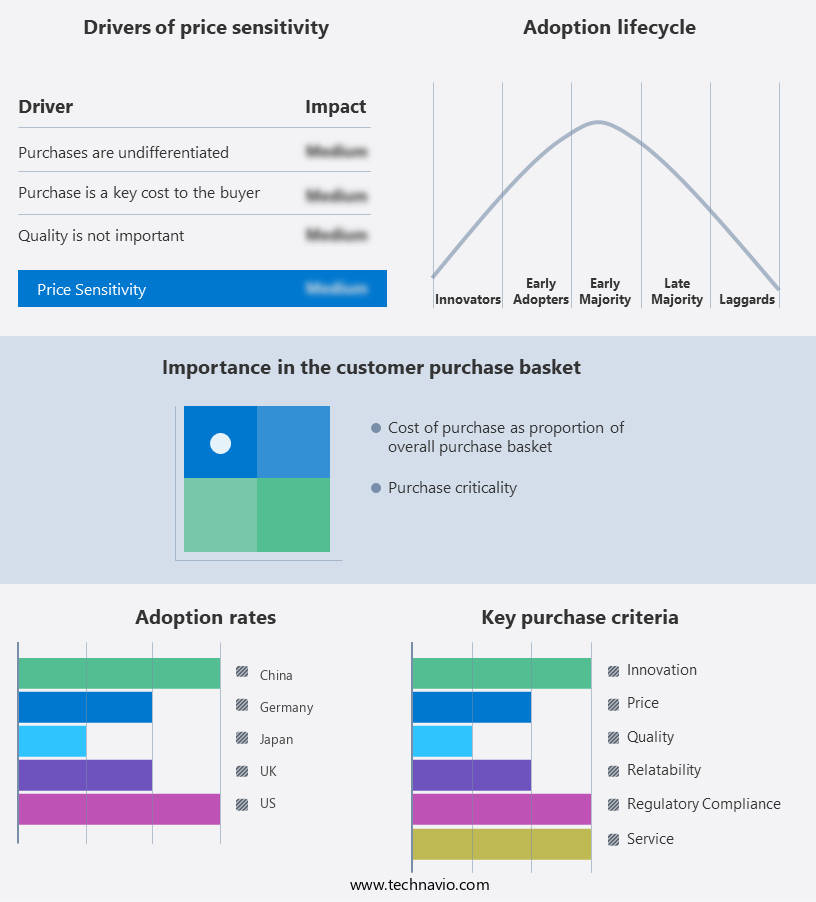
Customer Landscape
Key Companies & Market Insights
Companies are implementing various strategies, such as strategic alliances, breath analyzers market forecast, partnerships, mergers and acquisitions, geographical expansion, and product/service launches, to enhance their presence in the industry.
Abbott Laboratories - The AlcoMate Premium AL7000 breath alcohol tester from an unspecified manufacturer addresses two significant issues in breath analyzer technology: sensor degradation and lengthy turnaround cycles.
The industry research and growth report includes detailed analyses of the competitive landscape of the market and information about key companies, including:
- Abbott Laboratories
- Advanced Safety Devices LLC
- AK GlobalTech Corp
- Alcohol Countermeasure Systems Inc.
- Alcolizer Pty Ltd.
- AlcoPro Inc
- BreathalyzerAlcoholTester.com
- Dragerwerk AG and Co. KGaA
- GreenWon
- Guth Laboratories Inc
- Hanwei Electronics Group Corp
- Intoximeters
- KHN Solutions Inc.
- Lifeloc Technologies Inc.
- Mangal Security Products
- Otsuka Holdings Co. Ltd.
- Pacific Data Systems Australia
- PAS Systems International Inc.
- SENTECH USA INC
Qualitative and quantitative analysis of companies has been conducted to help clients understand the wider business environment as well as the strengths and weaknesses of key industry players. Data is qualitatively analyzed to categorize companies as pure play, category-focused, industry-focused, and diversified; it is quantitatively analyzed to categorize companies as dominant, leading, strong, tentative, and weak.
Recent Development and News in Breath Analyzers Market
- In January 2024, Alcohol Countermeasure Systems (ACS), a leading provider of alcohol detection technology, announced the launch of their new handheld breathalyzer model, ACS Pocket7, which features advanced fuel cell sensor technology for enhanced accuracy and faster results (ACS press release).
- In March 2024, Drägerwerk AG & Co. KGaA, a global leader in safety technology, entered into a strategic partnership with Tesla, Inc. To integrate Dräger's breath alcohol sensors into Tesla's vehicles for a new driver monitoring system (Drägerwerk AG & Co. KGaA press release).
- In April 2025, Soberlink, a digital monitoring solutions provider, raised USD 15 million in a Series C funding round, led by Mercury Fund and joined by existing investors, to expand its product offerings and accelerate growth in the continuous alcohol monitoring market (Soberlink press release).
- In May 2025, the European Union's European Parliament and Council approved the new Drinking Water Directive, which includes provisions for mandatory testing of drinking water for alcohol contamination using approved breath analyzers, creating a significant market opportunity for breath analyzer manufacturers (European Parliament and Council press release).
Research Analyst Overview
- The market for breath analyzers continues to evolve, driven by advancements in technology and expanding applications across various sectors. System validation protocols and accuracy validation are crucial elements in ensuring the reliability of these devices, with false positive rates and false negative rates being key performance indicators. Patient compliance factors, such as sensor sensitivity and sensor specificity, play a significant role in the effectiveness of breath analyzers. Cross-sectional studies and longitudinal studies contribute to the growing body of clinical trial data, while hardware upgrades and machine learning algorithms enhance the limit of detection and precision measurements.
- Reproducibility studies and inter-rater reliability assessments ensure consistent results, and cost-effectiveness metrics and sample stability are essential considerations for market adoption. Regulatory compliance, sensor array technology, and pattern recognition software are integral components of the evolving market landscape. With industry growth expectations projected at 10% annually, the market for breath analyzers remains a dynamic and exciting space. For instance, a recent study reported a 15% increase in sales for a breath analyzer manufacturer due to the integration of machine learning algorithms and cloud data storage.
Dive into Technavio's robust research methodology, blending expert interviews, extensive data synthesis, and validated models for unparalleled Breath Analyzers Market insights. See full methodology.
|
Market Scope |
|
|
Report Coverage |
Details |
|
Page number |
221 |
|
Base year |
2024 |
|
Historic period |
2019-2023 |
|
Forecast period |
2025-2029 |
|
Growth momentum & CAGR |
Accelerate at a CAGR of 16.4% |
|
Market growth 2025-2029 |
USD 4.07 billion |
|
Market structure |
Fragmented |
|
YoY growth 2024-2025(%) |
15.4 |
|
Key countries |
US, Germany, Brazil, China, UK, UAE, Canada, India, France, and Japan |
|
Competitive landscape |
Leading Companies, Market Positioning of Companies, Competitive Strategies, and Industry Risks |
What are the Key Data Covered in this Breath Analyzers Market Research and Growth Report?
- CAGR of the Breath Analyzers industry during the forecast period
- Detailed information on factors that will drive the growth and forecasting between 2025 and 2029
- Precise estimation of the size of the market and its contribution of the industry in focus to the parent market
- Accurate predictions about upcoming growth and trends and changes in consumer behaviour
- Growth of the market across North America, Europe, Asia, and Rest of World (ROW)
- Thorough analysis of the market's competitive landscape and detailed information about companies
- Comprehensive analysis of factors that will challenge the breath analyzers market growth of industry companies
We can help! Our analysts can customize this breath analyzers market research report to meet your requirements.
 RIA -
RIA - 
