



Commercial Vehicle Fleet Management System Market Size 2026-2030
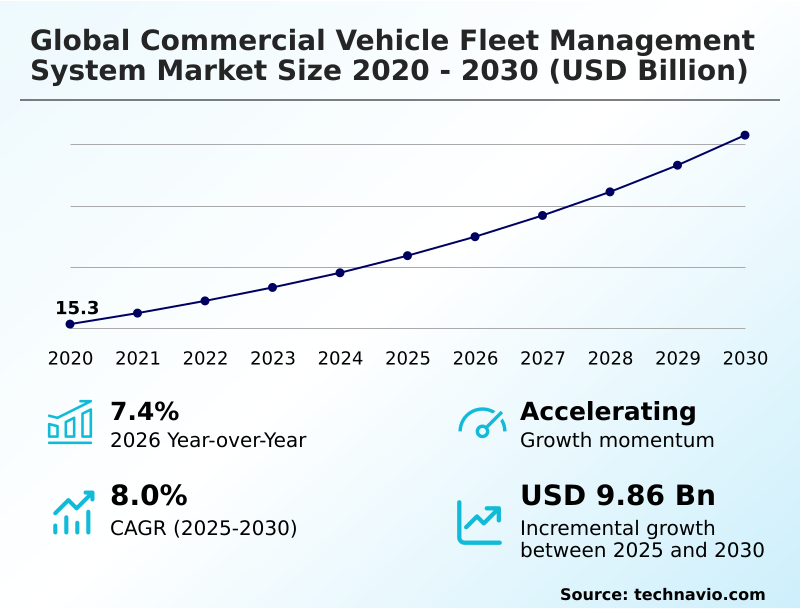
The commercial vehicle fleet management system market size is valued to increase by USD 9.86 billion, at a CAGR of 8% from 2025 to 2030. High-cost pressure on fleet operators will drive the commercial vehicle fleet management system market.
Major Market Trends & Insights
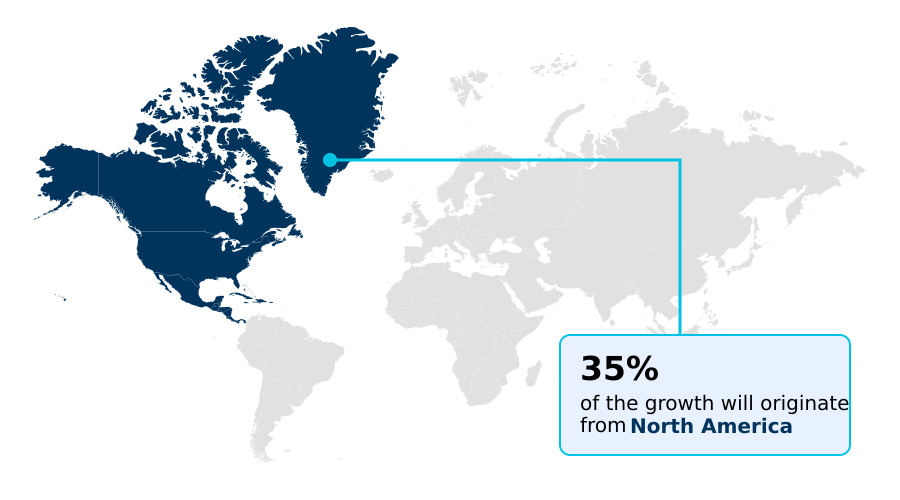
- North America dominated the market and accounted for a 34.7% growth during the forecast period.
- By Product - Third party segment was valued at USD 17.50 billion in 2024
- By Component - Software segment accounted for the largest market revenue share in 2024
Market Size & Forecast
- Market Opportunities: USD 15.46 billion
- Market Future Opportunities: USD 9.86 billion
- CAGR from 2025 to 2030 : 8%
Market Summary
- The commercial vehicle fleet management system market is driven by the imperative for operational efficiency and safety. Integrating technologies such as real-time vehicle tracking and telematics data integration allows businesses to optimize logistics and reduce expenses.
- A key driver is the intense cost pressure on operators, pushing for the adoption of tools for precise fuel consumption analytics and predictive maintenance alerts to minimize vehicle downtime. Trends are moving toward comprehensive platforms offering 360-degree oversight, with a focus on advanced analytics and AI-powered dash cams for driver behavior monitoring.
- For instance, a national logistics company can leverage a cloud-based fleet platform to implement in-cab driver coaching based on driver scoring models, improving safety and reducing insurance premiums. However, challenges such as the high initial cost of aftermarket telematics hardware and ensuring robust data security for sensitive cargo security monitoring remain significant hurdles.
- The evolution of OEM-embedded telematics and IoT sensor integration continues to shape the competitive landscape, offering deeper vehicle diagnostics and enhanced capabilities for cold chain monitoring and ensuring electronic logging device (ELD) compliance.
What will be the Size of the Commercial Vehicle Fleet Management System Market during the forecast period?
Get Key Insights on Market Forecast (PDF) Get Free Sample
How is the Commercial Vehicle Fleet Management System Market Segmented?
The commercial vehicle fleet management system industry research report provides comprehensive data (region-wise segment analysis), with forecasts and estimates in "USD million" for the period 2026-2030, as well as historical data from 2020-2024 for the following segments.
- Product
- Third party
- OEM
- Component
- Software
- Hardware
- Services
- Deployment
- Cloud based
- On premises
- Geography
- North America
- US
- Canada
- Mexico
- APAC
- China
- Japan
- India
- Europe
- Germany
- UK
- France
- South America
- Brazil
- Argentina
- Middle East and Africa
- Saudi Arabia
- UAE
- South Africa
- Rest of World (ROW)
- North America
By Product Insights
The third party segment is estimated to witness significant growth during the forecast period.
The global commercial vehicle fleet management system market 2026-2030 is significantly shaped by third-party providers, which offer platform-agnostic solutions compatible with mixed-vehicle fleets.
These independent vendors deliver flexibility through customizable features such as advanced route optimization algorithms and AI-powered dash cams for driver behavior monitoring.
By focusing solely on telematics data integration and software, they often introduce cutting-edge tools for predictive maintenance alerts and fuel consumption analytics more rapidly than traditional vehicle manufacturers.
This specialization fosters a competitive environment where cloud-based fleet platforms are enhanced to improve asset utilization metrics.
For instance, integration of environmental sensors has been shown to improve cargo condition monitoring precision by over 30%, a critical advantage for logistics firms seeking a single, interoperable source for operational oversight.
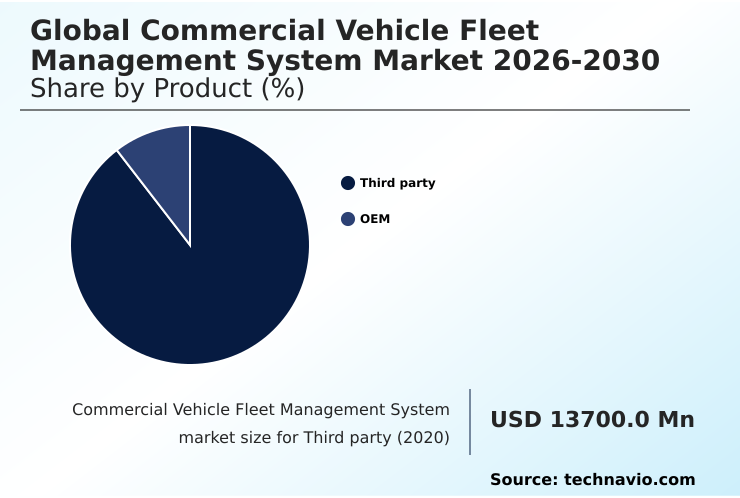
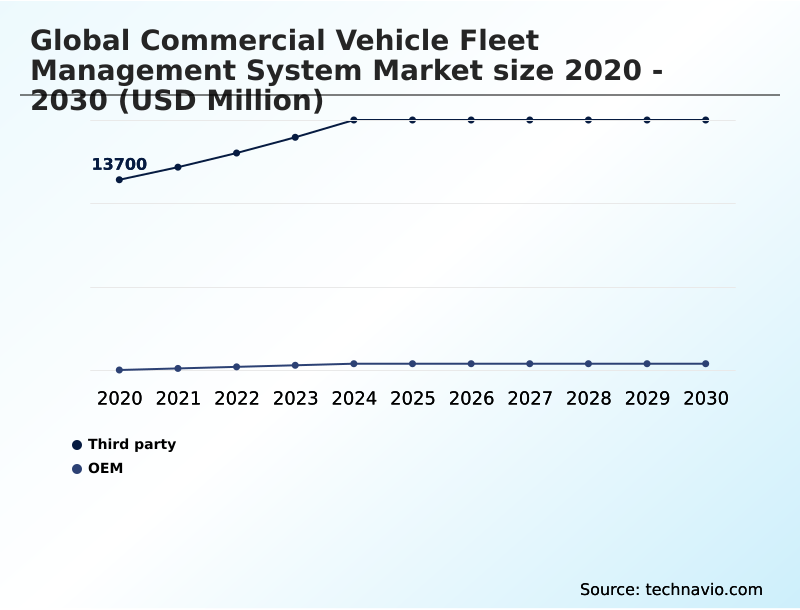
The Third party segment was valued at USD 17.50 billion in 2024 and showed a gradual increase during the forecast period.
Regional Analysis
North America is estimated to contribute 34.7% to the growth of the global market during the forecast period.Technavio’s analysts have elaborately explained the regional trends and drivers that shape the market during the forecast period.
See How Commercial Vehicle Fleet Management System Market Demand is Rising in North America Get Free Sample
The geographic landscape of the global commercial vehicle fleet management system market 2026-2030 is varied, with North America representing a mature market focused on advanced fleet safety analytics and ELD compliance, contributing over 34% of the market's incremental growth.
In contrast, the APAC region is experiencing rapid adoption driven by e-commerce growth and infrastructure development, with a strong focus on real-time vehicle tracking and asset utilization metrics.
European markets prioritize regulatory compliance management and fleet sustainability metrics, pushing for OEM-embedded telematics and solutions that support driver safety programs.
In South America and the Middle East and Africa, the demand is centered on cargo security monitoring and asset tracking and recovery to combat theft and improve supply chain visibility, with satellite-based systems being crucial in areas with limited connectivity, improving asset recovery rates by up to 90%.
Market Dynamics
Our researchers analyzed the data with 2025 as the base year, along with the key drivers, trends, and challenges. A holistic analysis of drivers will help companies refine their marketing strategies to gain a competitive advantage.
- Businesses evaluating fleet management solutions must consider several critical factors to maximize returns. For instance, understanding the benefits of video telematics for fleets is essential for improving driver safety monitoring and reducing liability.
- A key decision point is the OEM vs aftermarket telematics ROI, where factory-installed systems offer deep vehicle diagnostics integration, while aftermarket solutions provide greater flexibility for mixed fleets. Companies seeking to implement predictive maintenance for trucks can leverage telematics data for insurance discounts, as proactive repairs reduce accident frequency.
- Many explore how to reduce fleet fuel costs through route optimization and driver behavior coaching, which are top features of fleet management software. For smaller operations, finding the right fleet management software for small business that balances cost and functionality is paramount. The choice between a cloud-based vs on-premise FMS often hinges on security needs and IT capabilities.
- Moreover, effective vehicle maintenance scheduling automation can decrease unplanned downtime by over 20% compared to manual methods. Integrating TMS with telematics data provides a holistic view, improving last-mile delivery efficiency. As the industry shifts toward greener operations, fleet management for electric commercial vehicles, including battery health and charging logistics, is becoming a important capability.
- Ultimately, using AI in fleet safety management and real-time asset tracking solutions helps in calculating fleet total cost of ownership more accurately and ensuring cold chain logistics monitoring technology maintains product integrity.
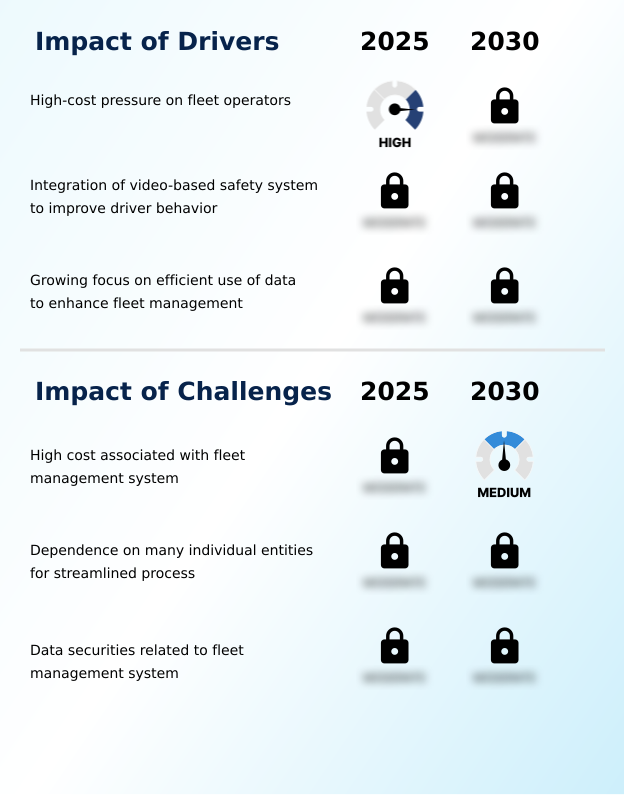
What are the key market drivers leading to the rise in the adoption of Commercial Vehicle Fleet Management System Industry?
- High-cost pressure on fleet operators is a key driver for the market, compelling companies to adopt advanced management technologies to protect profit margins.
- The primary drivers for the global commercial vehicle fleet management system market 2026-2030 revolve around cost reduction, safety enhancement, and data utilization.
- Intense cost pressure compels operators to adopt tools for fuel consumption analytics and route planning and scheduling, which can lower fuel expenses by 10-15%.
- The integration of video telematics solutions, including AI-powered dash cams for driver behavior monitoring, is a powerful catalyst, as it improves driver safety programs and can reduce liability costs by providing clear evidence in incident investigations.
- This technology has been linked to a 60% reduction in critical safety events.
- Additionally, the growing focus on leveraging logistics data analytics transforms operations from reactive to proactive, enabling better vehicle lifecycle management and last-mile delivery optimization through real-time adjustments, ultimately improving customer satisfaction and driver retention strategies.
What are the market trends shaping the Commercial Vehicle Fleet Management System Industry?
- An upcoming market trend is the growing popularity of 360-degree fleet management systems (FMS). These systems provide comprehensive and unified platforms for complete vehicle and driver oversight.
- Key trends in the global commercial vehicle fleet management system market 2026-2030 are driving a shift toward holistic, data-centric operations. The adoption of 360-degree platforms that unify dispatch management software with functions like driver performance scorecards and preventative maintenance scheduling is growing.
- This integration improves fleet operational efficiency by eliminating data silos and can reduce administrative overhead by up to 20%. Another significant development is the collaboration between vehicle manufacturers and technology suppliers for pre-installed, OEM-embedded telematics, which improves data accuracy from vehicle diagnostics codes and reduces TCO.
- Furthermore, the use of advanced analytics on telematics data, including geospatial data analysis, helps reduce risk severity, with some fleets reporting a 15% decrease in accident-related costs after implementation. These trends foster greater supply chain visibility and support new services like insurance telematics data.
What challenges does the Commercial Vehicle Fleet Management System Industry face during its growth?
- The high cost associated with fleet management systems is a key challenge affecting industry growth, particularly for small and medium-sized enterprises.
- Key challenges in the global commercial vehicle fleet management system market 2026-2030 stem from high costs, operational fragmentation, and data security concerns. The initial investment in aftermarket telematics hardware and software subscriptions presents a significant barrier, with total first-year costs sometimes being 50% higher than baseline operational budgets for smaller fleets.
- The dependence on multiple vendors for hardware, software, and connectivity creates integration complexities, leading to system inefficiencies. Most importantly, ensuring the security of connected vehicle data platforms against cyber threats is paramount, as a single breach can compromise sensitive cargo security monitoring and ELD compliance data, potentially resulting in regulatory fines that exceed 4% of annual revenue.
- These factors demand a strategic approach to technology adoption, balancing functionality with robust security and a clear ROI.
Exclusive Technavio Analysis on Customer Landscape
The commercial vehicle fleet management system market forecasting report includes the adoption lifecycle of the market, covering from the innovator’s stage to the laggard’s stage. It focuses on adoption rates in different regions based on penetration. Furthermore, the commercial vehicle fleet management system market report also includes key purchase criteria and drivers of price sensitivity to help companies evaluate and develop their market growth analysis strategies.
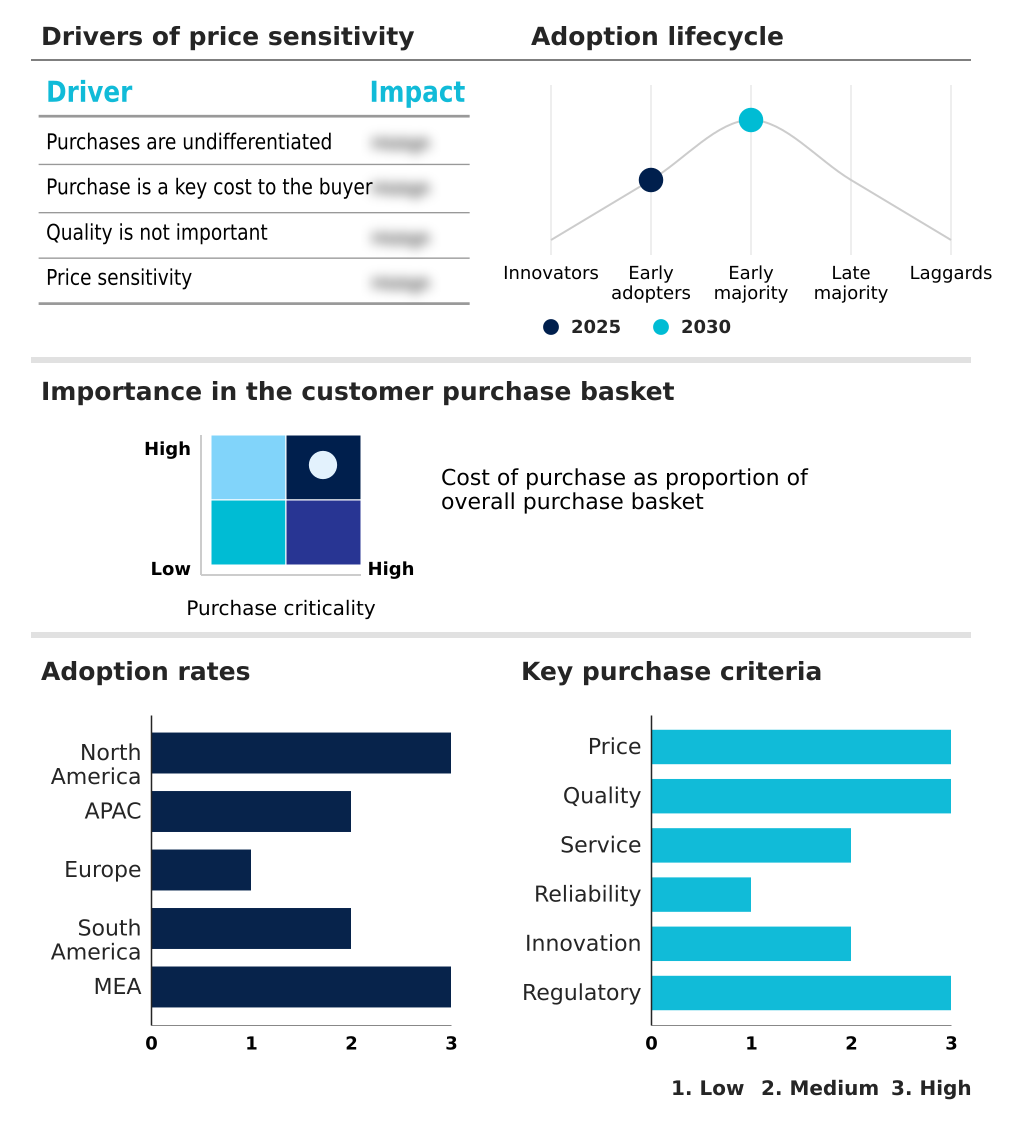
Customer Landscape of Commercial Vehicle Fleet Management System Industry
Competitive Landscape
Companies are implementing various strategies, such as strategic alliances, commercial vehicle fleet management system market forecast, partnerships, mergers and acquisitions, geographical expansion, and product/service launches, to enhance their presence in the industry.
AB Volvo - Key offerings include integrated platforms providing telematics, real-time tracking, safety monitoring, and solutions for optimizing operational efficiency and compliance across commercial fleets.
The industry research and growth report includes detailed analyses of the competitive landscape of the market and information about key companies, including:
- AB Volvo
- Azuga Inc.
- CalAmp Corp.
- Fleet Complete
- Fleetio Inc.
- Fleetx Technologies Pvt. Ltd.
- Geotab Inc.
- Gurtam
- IntelliShift
- Michelin
- Motive Technologies Inc.
- Nauto Inc.
- Navixy
- Omnitracs LLC
- PowerFleet Inc.
- Samsara Inc.
- Spireon LLC
- Teletrac Navman US Ltd.
- Vamosys Systems Pvt. Ltd.
- Zonar Systems Inc.
Qualitative and quantitative analysis of companies has been conducted to help clients understand the wider business environment as well as the strengths and weaknesses of key industry players. Data is qualitatively analyzed to categorize companies as pure play, category-focused, industry-focused, and diversified; it is quantitatively analyzed to categorize companies as dominant, leading, strong, tentative, and weak.
Recent Development and News in Commercial vehicle fleet management system market
- In January, 2025, Samsara announced a major expansion of its asset tracking capabilities by integrating new environmental sensors that allow logistics companies to monitor the real time condition of high value cargo more precisely than ever before.
- In February, 2025, Daimler Truck launched its latest generation of the Detroit Connect platform, which introduced a new suite of predictive safety features designed to automatically intervene during high-risk maneuvers based on real time sensor data.
- In March, 2025, Geotab introduced a revolutionary generative AI tool that allows fleet managers to query their data using natural language, which significantly reduces the time required to generate complex performance reports.
- In April, 2025, Motive unveiled its new AI Omni Camera, which features a dual-core processor capable of identifying unauthorized passengers and cargo shifting while the vehicle is in motion.
Dive into Technavio’s robust research methodology, blending expert interviews, extensive data synthesis, and validated models for unparalleled Commercial Vehicle Fleet Management System Market insights. See full methodology.
| Market Scope | |
|---|---|
| Page number | 291 |
| Base year | 2025 |
| Historic period | 2020-2024 |
| Forecast period | 2026-2030 |
| Growth momentum & CAGR | Accelerate at a CAGR of 8% |
| Market growth 2026-2030 | USD 9857.1 million |
| Market structure | Fragmented |
| YoY growth 2025-2026(%) | 7.4% |
| Key countries | US, Canada, Mexico, China, Japan, India, South Korea, Australia, Indonesia, Germany, UK, France, Italy, Spain, The Netherlands, Brazil, Argentina, Chile, Saudi Arabia, UAE, South Africa, Turkey and Israel |
| Competitive landscape | Leading Companies, Market Positioning of Companies, Competitive Strategies, and Industry Risks |
Research Analyst Overview
- The global commercial vehicle fleet management system market 2026-2030 is evolving beyond simple location tracking into a sophisticated ecosystem for data-driven operational intelligence. The integration of AI-powered dash cams and advanced fleet safety analytics is becoming standard, enabling proactive risk mitigation through driver behavior monitoring and in-cab driver coaching.
- A significant trend influencing boardroom decisions is the shift toward predictive maintenance alerts, which leverage vehicle diagnostics codes to forecast failures before they occur. This capability transforms capital expenditure planning, allowing for more strategic asset lifecycle management. For example, some early adopters have achieved a 30% reduction in unplanned downtime.
- The market's trajectory is also shaped by the need for seamless telematics data integration with other enterprise systems. Solutions now commonly incorporate fuel consumption analytics, route optimization algorithms, geofencing alerts, and tools for ELD compliance.
- The distinction between aftermarket telematics hardware and OEM-embedded telematics is blurring as interoperability improves, with cloud-based fleet platforms, IoT sensor integration, and driver scoring models becoming ubiquitous for enhancing asset utilization metrics and cargo security monitoring, including specialized applications like cold chain monitoring and tire pressure monitoring system (TPMS) integration.
What are the Key Data Covered in this Commercial Vehicle Fleet Management System Market Research and Growth Report?
-
What is the expected growth of the Commercial Vehicle Fleet Management System Market between 2026 and 2030?
-
USD 9.86 billion, at a CAGR of 8%
-
-
What segmentation does the market report cover?
-
The report is segmented by Product (Third party, and OEM), Component (Software, Hardware, and Services), Deployment (Cloud based, and On premises) and Geography (North America, APAC, Europe, South America, Middle East and Africa)
-
-
Which regions are analyzed in the report?
-
North America, APAC, Europe, South America and Middle East and Africa
-
-
What are the key growth drivers and market challenges?
-
High-cost pressure on fleet operators, High cost associated with fleet management system
-
-
Who are the major players in the Commercial Vehicle Fleet Management System Market?
-
AB Volvo, Azuga Inc., CalAmp Corp., Fleet Complete, Fleetio Inc., Fleetx Technologies Pvt. Ltd., Geotab Inc., Gurtam, IntelliShift, Michelin, Motive Technologies Inc., Nauto Inc., Navixy, Omnitracs LLC, PowerFleet Inc., Samsara Inc., Spireon LLC, Teletrac Navman US Ltd., Vamosys Systems Pvt. Ltd. and Zonar Systems Inc.
-
Market Research Insights
- The global commercial vehicle fleet management system market 2026-2030 is defined by a push for data-driven decision-making, where fleet electrification management and vehicle lifecycle management are becoming central to strategic planning. Adopting preventative maintenance scheduling and insurance telematics data allows companies to achieve up to a 25% reduction in unplanned downtime and lower insurance premiums.
- Furthermore, last-mile delivery optimization, supported by sophisticated route planning and scheduling, improves on-time delivery rates by over 15%. Integrating solutions for remote vehicle diagnostics and mobile workforce management enhances supply chain visibility and driver retention strategies, directly impacting profitability.
- Automated compliance reporting ensures adherence to regulations while minimizing administrative overhead, making technology adoption a critical factor for competitive differentiation and achieving significant total cost of ownership (TCO) reduction.
We can help! Our analysts can customize this commercial vehicle fleet management system market research report to meet your requirements.
 RIA -
RIA - 
