



Construction Management Software Market Size 2025-2029
The construction management software market size is forecast to increase by USD 6.66 billion at a CAGR of 9.6% between 2024 and 2029.
- The market is experiencing significant growth due to the increasing demand for large-scale construction projects and the integration of estimation and accounting software for streamlined operations. This trend is particularly prominent in regions with a high concentration of construction activity, such as North America and Asia-Pacific. Field service management and business analytics tools are also key features driving market growth. However, the market faces challenges from open-source construction software platforms, which offer cost-effective alternatives to proprietary solutions. These open-source platforms may lack commercial offerings' advanced features and support, but they are gaining traction among small and medium-sized construction firms. To capitalize on market opportunities, companies should focus on providing value-added services, such as project management consulting and training, to differentiate themselves from competitors.
- Additionally, investing in research and development to enhance construction management software's functionality and user experience will be crucial for long-term success. Furthermore, the Internet of Things (IoT) is transforming the industry by providing real-time data and automating various processes. By staying abreast of market trends and addressing the unique needs of construction firms, companies can navigate challenges and seize opportunities in this dynamic market.
What will be the Size of the Construction Management Software Market during the forecast period?

- The market encompasses a range of platforms designed to streamline and optimize various aspects of construction projects. These solutions cater to diverse sectors, including home builders, remodelers, specialty contractors, and general contractors, among others. Key features include budget management, communication tools, databases, and the ability to replace Excel spreadsheets. Market dynamics are driven by the growing need for efficient project planning, goal setting, and job scheduling. Cloud-based technology, automation, and open-source software are prominent trends, offering advantages such as reduced installation costs and ongoing maintenance requirements.
- Construction professionals increasingly leverage business analytics tools, IoT integration, lean management principles, and project management platforms to enhance productivity and profitability. The market continues to expand, driven by the diverse needs of the construction industry and the ongoing digital transformation.
How is the Construction Management Software Industry segmented?
The industry research report provides comprehensive data (region-wise segment analysis), with forecasts and estimates in "USD million" for the period 2025-2029, as well as historical data from 2019-2023 for the following segments.
- End-user
- Builders and constructors
- Construction managers
- Engineers and architects
- Deployment
- Cloud-based
- On-premises
- Geography
- North America
- US
- Canada
- Europe
- France
- Germany
- Italy
- Spain
- UK
- APAC
- China
- India
- Japan
- Middle East and Africa
- South America
- North America
By End-user Insights
The builders and constructors segment is estimated to witness significant growth during the forecast period.
Construction management software plays a crucial role in optimizing the construction process by facilitating efficient labor management, site event tracking, data capture, and cost control. By implementing this technology, constructors can enhance project profitability and productivity. Construction professionals, including builders, contractors, engineers, architects, and remodelers, rely on construction management software for pre-construction planning, budgeting, and project scheduling. The software also offers features such as real-time collaboration, document management, cost estimation, and resource allocation. Construction management software platforms enable the integration of business analytics tools, IoT, artificial intelligence, machine learning, predictive analytics, and data-driven insights. These advanced technologies offer enhanced project communication, safety and reporting, field service management, and digital transformation.
Furthermore, the software is available as cloud-based technology, making it accessible from anywhere, at any time. Geographical boundaries are no longer a constraint, as the software caters to commercial and residential projects, commercial buildings, sustainable development, and green commercial buildings. The software's ease of use and flexibility make it an essential tool for general contractors, specialty contractors, and sub-contractors. The software's ongoing maintenance requirements and installation costs should be considered, along with the necessary technological expertise.
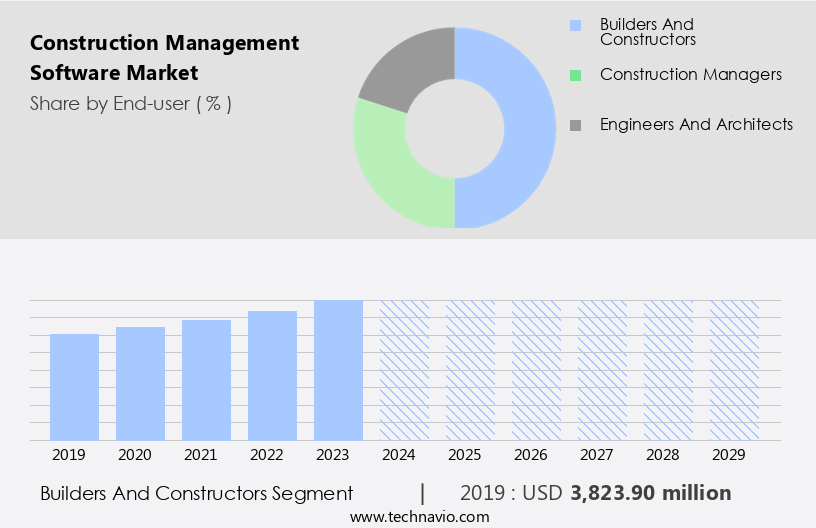
Get a glance at the market report of share of various segments Request Free Sample
The Builders and constructors segment was valued at USD 3.82 billion in 2019 and showed a gradual increase during the forecast period.
Regional Analysis
North America is estimated to contribute 38% to the growth of the global market during the forecast period. Technavio's analysts have elaborately explained the regional trends and drivers that shape the market during the forecast period.

For more insights on the market size of various regions, Request Free Sample
Construction management software is a vital solution for streamlining information technology and services in the North American construction industry, particularly in major projects like the Mexico City New International Airport. The US market, in particular, is a significant revenue generator due to its early adoption of advanced technologies. These software platforms facilitate real-time tracking and monitoring of building and construction development, enhancing project communication, budget management, and documentation management. Construction management software also offers features like cost estimation, project scheduling, resource allocation, and automation.
Additionally, it incorporates data-driven insights through artificial intelligence, machine learning, predictive analytics, and business analytics tools. Mobile applications, green practices, digital transformation, and integration complexities are other essential features. The software caters to various construction professionals, including contractors, engineers, builders, architects, remodelers, and specialty contractors. It applies to commercial and residential projects, commercial buildings, sustainable development, and green commercial buildings. Cloud-based technology, safety and reporting, field service management, and labor contract management are other essential features.
Market Dynamics
Our researchers analyzed the data with 2024 as the base year, along with the key drivers, trends, and challenges. A holistic analysis of drivers will help companies refine their marketing strategies to gain a competitive advantage.
What are the key market drivers leading to the rise in the adoption of Construction Management Software Industry?
- Increasing requirements for large-scale construction management is the key driver of the market. The construction industry's shift towards large-scale projects necessitates the adoption of advanced management solutions. Organizations aim to optimally manage resources for enhanced productivity, leading to a growing demand for construction management software.
- This software streamlines processes by automating services, enabling seamless communication and efficient response to project-related queries. Automation also reduces response time and increases productivity, ensuring effective process management. By implementing construction management software, organizations can improve overall project performance and achieve maximum outputs.
What are the market trends shaping the Construction Management Software Industry?
- Integration of construction management software, estimation, and accounting software is the upcoming market trend. The fusion of accounting and construction management software is gaining traction in the market. This integration streamlines financial management and project control in the construction sector.
- By enabling the automatic exchange of financial data between accounting and construction management systems, it eliminates the need for extensive manual data entry and reduces errors. One significant advantage of this integration is the real-time financial visibility it offers to construction managers. They can monitor project costs, compare budgets to actual performance, and access current financial data, leading to increased efficiency and accuracy.
What challenges does the Construction Management Software Industry face during its growth?
- Challenges from open-source construction software platforms is a key challenge affecting the industry growth. In today's digital business landscape, open-source construction management software has gained significant traction in the global market. Open-source companies offer a multitude of business analytics tools and applications, making them an attractive option for small and emerging enterprises.
- The open-source software's source code availability is a major advantage, as it enhances security by enabling the public to identify and rectify potential defects. This transparency is a significant draw for companies seeking cost-effective solutions without the high purchasing and licensing costs associated with commercial software. Open-source platforms offer a cost-effective and secure alternative, making them an essential consideration for businesses in the construction industry.
Exclusive Customer Landscape
The market forecasting report includes the adoption lifecycle of the market, covering the innovator's stage to the laggard's stage. It focuses on adoption rates in different regions based on penetration. Furthermore, the market report also includes key purchase criteria and drivers of price sensitivity to help companies evaluate and develop their market growth analysis strategies.
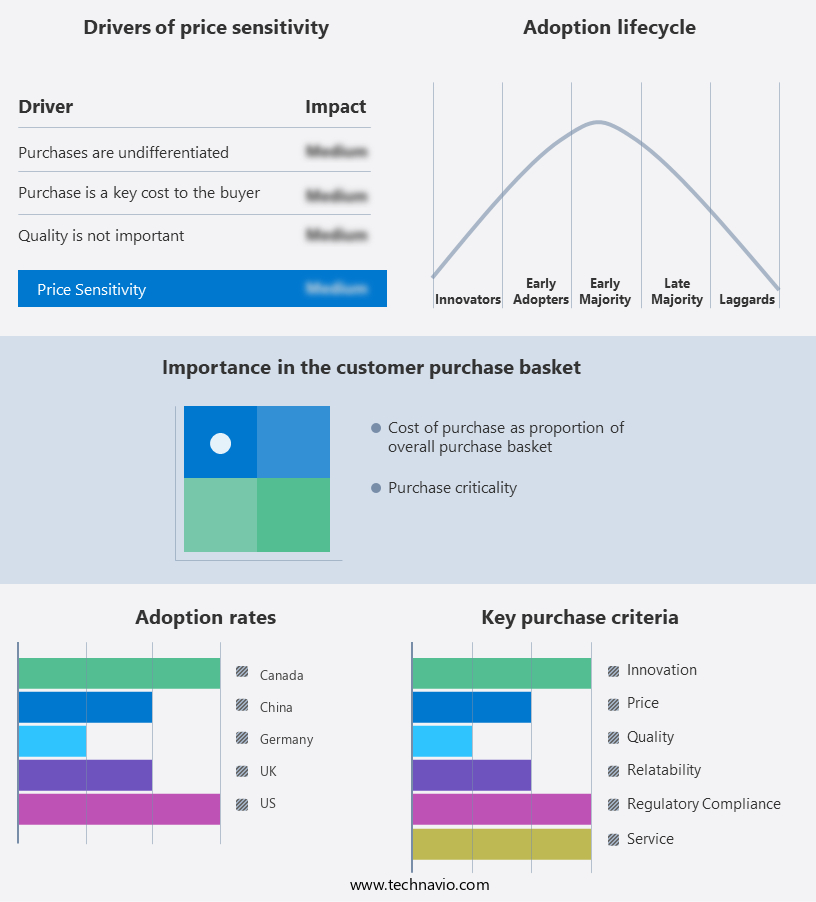
Customer Landscape
Key Companies & Market Insights
Companies are implementing various strategies, such as strategic alliances, market forecast, partnerships, mergers and acquisitions, geographical expansion, and product/service launches, to enhance their presence in the industry.
Autodesk Inc. - The company provides construction management solutions, including Autodesk Construction Cloud, which offers native, actionable, and predictive insights for optimizing construction projects.
The industry research and growth report includes detailed analyses of the competitive landscape of the market and information about key companies, including:
- Autodesk Inc.
- Bentley Systems Inc.
- Buildertrend Solutions Inc.
- Computer Methods International Corp.
- Constellation Software Inc.
- Contractor Foreman
- Hexagon AB
- Hilti AG
- Kiewit Corp.
- Nemetschek SE
- Newforma Inc.
- Odoo SA
- Oracle Corp.
- Penta Technologies Inc.
- Procore Technologies Inc.
- Roper Technologies Inc.
- Sage Group Plc
- Trimble Inc.
Qualitative and quantitative analysis of companies has been conducted to help clients understand the wider business environment as well as the strengths and weaknesses of key industry players. Data is qualitatively analyzed to categorize companies as pure play, category-focused, industry-focused, and diversified; it is quantitatively analyzed to categorize companies as dominant, leading, strong, tentative, and weak.
Research Analyst Overview
Construction management software has become an indispensable tool for the efficient and effective execution of construction projects. These software platforms facilitate various aspects of construction management, from budget management and communication to database management and real-time collaboration. Budget management is a critical function of the software. It allows construction professionals to monitor project expenses, allocate resources, and estimate costs in real-time. Excel spreadsheets, while widely used, have limitations in terms of data access and collaboration. The software offers a more strong solution, enabling real-time collaboration and data access from anywhere. Communication is another essential function of construction management software.
Moreover, with geographical boundaries no longer a barrier, construction teams can collaborate in real-time, ensuring that project goals are met and project communication is streamlined. Artificial intelligence, machine learning, and predictive analytics offer data-driven insights, enabling construction teams to make informed decisions and optimize project outcomes. The installation cost and ongoing maintenance requirements of construction management software are important considerations. Technological expertise is necessary for implementing and integrating these systems. Cloud-based technology offers a cost-effective solution, with minimal installation costs and ongoing maintenance requirements. The software offers various features to facilitate construction project planning, execution, monitoring, and documentation management.
Furthermore, project scheduling, resource allocation, and job scheduling are essential functions that help construction professionals optimize project timelines and ensure that projects are completed on time and within budget. Collaboration tools are an essential component of the software. They enable real-time communication and collaboration between various stakeholders, including engineers, builders, architects, and contractors. Commercial and residential projects, whether they are commercial buildings, sustainable development projects, or green commercial buildings, can benefit from the use of the software. The software offers various features to facilitate safety and reporting, field service management, and labor contract management. Automated systems and open-source software offer cost-effective solutions for construction professionals.
|
Market Scope |
|
|
Report Coverage |
Details |
|
Page number |
204 |
|
Base year |
2024 |
|
Historic period |
2019-2023 |
|
Forecast period |
2025-2029 |
|
Growth momentum & CAGR |
Accelerate at a CAGR of 9.6% |
|
Market growth 2025-2029 |
USD 6.66 billion |
|
Market structure |
Fragmented |
|
YoY growth 2024-2025(%) |
8.6 |
|
Key countries |
US, Germany, China, Canada, UK, France, Italy, Japan, Spain, and India |
|
Competitive landscape |
Leading Companies, Market Positioning of Companies, Competitive Strategies, and Industry Risks |
What are the Key Data Covered in this Market Research and Growth Report?
- CAGR of the industry during the forecast period
- Detailed information on factors that will drive the market growth and forecasting between 2025 and 2029
- Precise estimation of the size of the market and its contribution of the industry in focus to the parent market
- Accurate predictions about upcoming growth and trends and changes in consumer behaviour
- Growth of the market across North America, Europe, APAC, Middle East and Africa, and South America
- Thorough analysis of the market's competitive landscape and detailed information about companies
- Comprehensive analysis of factors that will challenge the market growth of industry companies
We can help! Our analysts can customize this market research report to meet your requirements.
 RIA -
RIA - 
