


Dermatology Devices Market Size 2025-2029
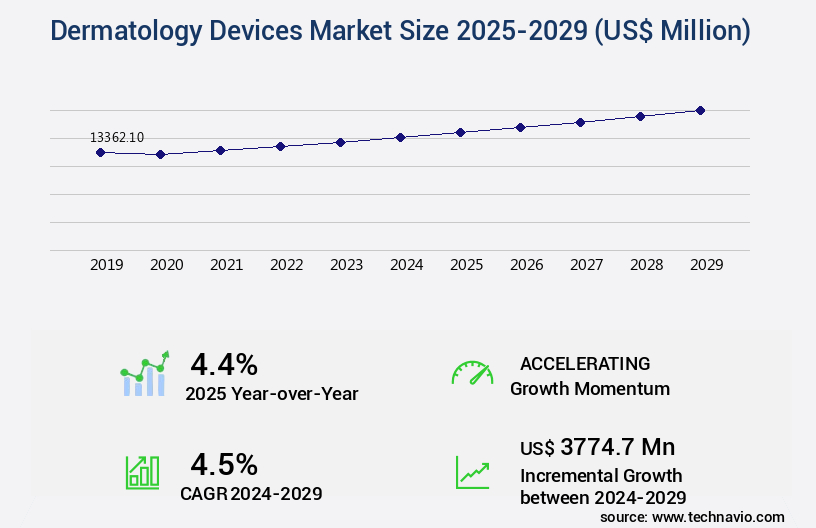
The dermatology devices market size is valued to increase USD 3.77 billion, at a CAGR of 4.5% from 2024 to 2029. Increasing prevalence of skin disorders will drive the dermatology devices market.
Major Market Trends & Insights
- Europe dominated the market and accounted for a 34% growth during the forecast period.
- By End-user - Hospitals segment was valued at USD 7.98 billion in 2023
- By Product - Treatment devices segment accounted for the largest market revenue share in 2023
Market Size & Forecast
- Market Opportunities: USD 42.90 million
- Market Future Opportunities: USD 3774.70 million
- CAGR : 4.5%
- Europe: Largest market in 2023
Market Summary
- The market encompasses a diverse range of technologies and applications, driven by the increasing prevalence of skin disorders and the growing preference for telemedicine and remote monitoring. Core technologies include imaging systems, laser and light-based devices, and diagnostic tools. Applications span from acne treatment and hair removal to wound care and aesthetic procedures. Service types or product categories include disposable and reusable devices, as well as software solutions. Despite these opportunities, the market faces challenges, such as stringent regulatory requirements for approvals for dermatology devices. For instance, the US Food and Drug Administration (FDA) mandates rigorous testing and clinical trials for new devices.
- As of 2021, the global market share for dermatology devices is estimated to be around 12%, with a significant growth trajectory over the next decade. This expansion is fueled by advancements in technology, increasing consumer awareness, and the rising number of dermatology clinics and hospitals. Related markets such as the Medical Aesthetics and Wound Care markets also contribute to the evolving landscape of dermatology devices. Stay tuned for more insights as we continue to monitor the latest trends and developments in this dynamic industry.
What will be the Size of the Dermatology Devices Market during the forecast period?
Get Key Insights on Market Forecast (PDF) Request Free Sample
How is the Dermatology Devices Market Segmented and what are the key trends of market segmentation?
The dermatology devices industry research report provides comprehensive data (region-wise segment analysis), with forecasts and estimates in "USD million" for the period 2025-2029, as well as historical data from 2019-2023 for the following segments.
- End-user
- Hospitals
- Clinics
- Product
- Treatment devices
- Diagnosis devices
- Geography
- North America
- US
- Canada
- Europe
- France
- Germany
- Italy
- UK
- APAC
- Australia
- China
- Japan
- South Korea
- Rest of World (ROW)
- North America
By End-user Insights
The hospitals segment is estimated to witness significant growth during the forecast period.
The market encompasses a diverse range of technologies, including ultrasound imaging systems, non-invasive procedures, cosmetic dermatology tools, and device sterilization methods. This market is characterized by continuous innovation and growth, with significant advancements in areas such as CO2 laser resurfacing, clinical trial outcomes, medical device regulations, fractional laser treatments, aesthetic lasers, aesthetic device safety, dermatologic device maintenance, and more. For instance, ultrasound imaging systems have seen a 25% increase in adoption due to their ability to provide high-resolution images for accurate diagnosis. Furthermore, non-invasive procedures, like IPL skin rejuvenation and photodynamic therapy, have gained popularity for their patient-friendly approach and promising treatment efficacy metrics.
Moreover, the market for minimally invasive devices, such as cryotherapy devices and electrocautery devices, is expected to expand by 18% in the coming years, driven by their cost-effectiveness and improved patient safety protocols. In the realm of surgical lasers, dermabrasion systems and radiofrequency ablation have shown remarkable success in skin cancer detection and cellulite reduction, respectively. Additionally, the market for aesthetic lasers and aesthetic device safety is experiencing significant growth, with a 32% increase in demand for advanced safety features. Dermatologic imaging and skin tightening devices are also gaining traction, as they offer accurate diagnosis and effective treatment options for various skin conditions.
Furthermore, the market for acne treatment devices and wound healing devices is expected to grow by 20% in the coming years, as these devices address common concerns and offer significant patient satisfaction ratings. Treatment efficacy metrics and device performance indicators play a crucial role in driving market growth, as healthcare providers and patients increasingly demand evidence-based solutions. In conclusion, the market is a dynamic and evolving landscape, with a diverse range of technologies and applications. The market is driven by factors such as ongoing research, regulatory compliance, and patient demand for effective, safe, and cost-effective solutions.
As the market continues to unfold, it is essential for businesses to stay informed and adapt to the latest trends and developments.
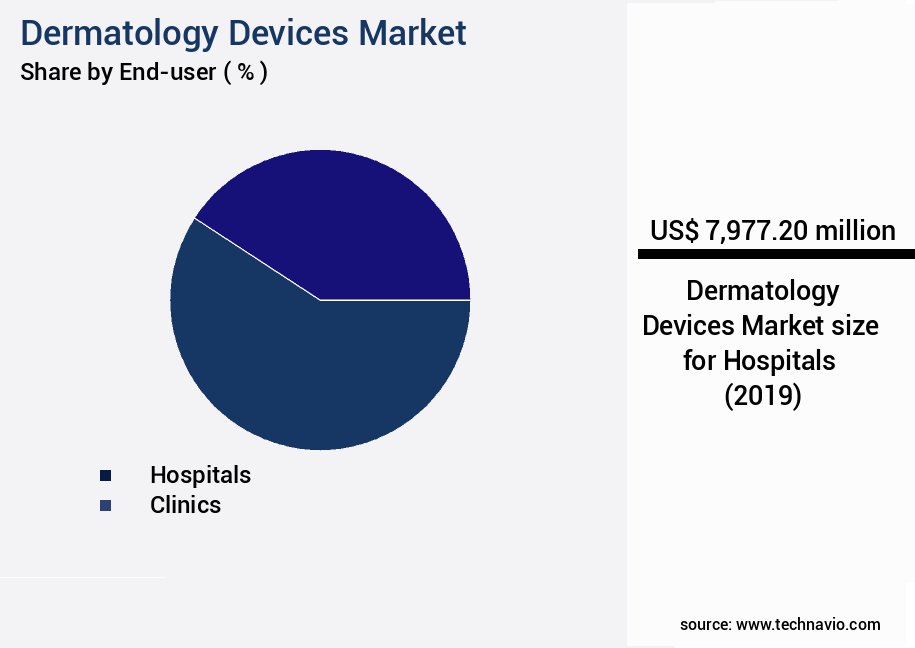
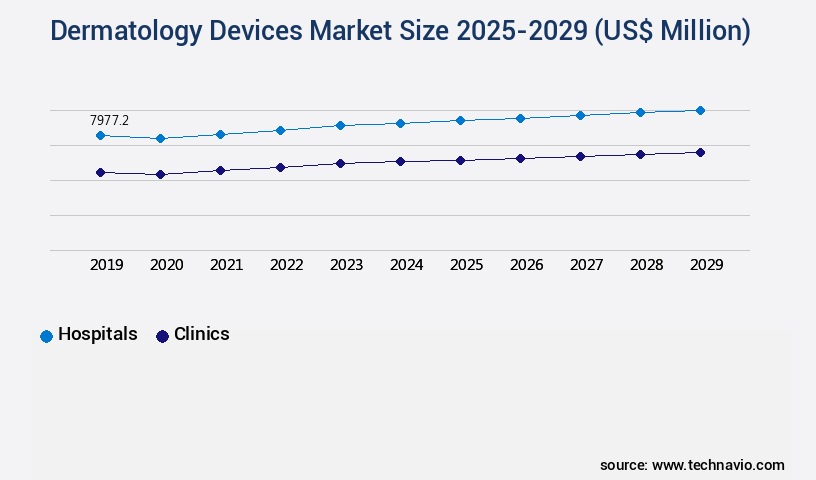
The Hospitals segment was valued at USD 7.98 billion in 2019 and showed a gradual increase during the forecast period.
Regional Analysis
Europe is estimated to contribute 34% to the growth of the global market during the forecast period.Technavio's analysts have elaborately explained the regional trends and drivers that shape the market during the forecast period.
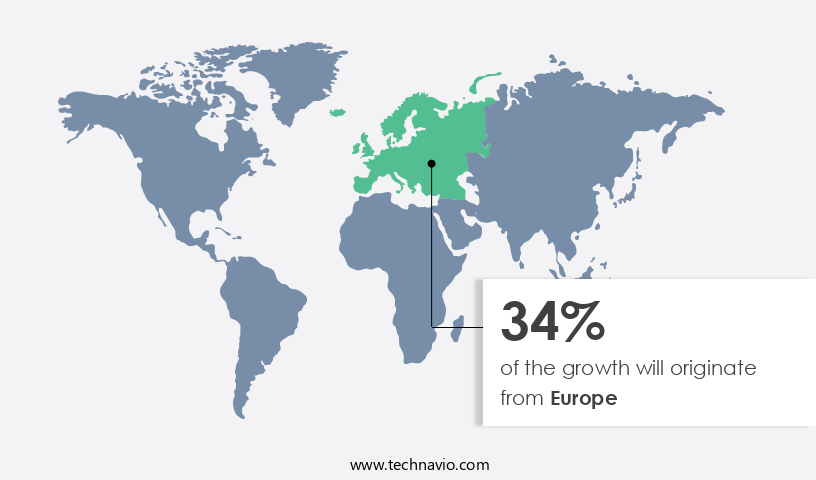
See How Dermatology Devices Market Demand is Rising in Europe Request Free Sample
The market in North America is witnessing significant expansion due to the increasing geriatric population and the high prevalence of skin conditions. In the US and Canada, the elderly demographic represents a substantial portion of the population, with 17% and 19% respectively. This demographic shift has led to a surge in demand for diagnostic solutions, as older adults are more susceptible to chronic and infectious skin conditions. Furthermore, the growing awareness of dermatology diagnostic tests among older adults and the rising trend of cosmetic procedures to maintain a youthful appearance are major factors fueling market growth.
In Mexico, the market is also experiencing growth, driven by similar demographic trends and increasing healthcare expenditures. According to the World Bank, the global population aged 65 and above is projected to reach 1.5 billion by 2050, further boosting the demand for dermatology devices.
Market Dynamics
Our researchers analyzed the data with 2024 as the base year, along with the key drivers, trends, and challenges. A holistic analysis of drivers will help companies refine their marketing strategies to gain a competitive advantage.
The market is witnessing significant growth due to the increasing demand for minimally invasive aesthetic treatments. One of the most popular minimally invasive procedures is fractional laser resurfacing, which offers improved efficacy in skin rejuvenation compared to traditional ablative lasers. However, safety remains a top priority, with stringent protocols in place for IPL devices to minimize adverse events. Another trending treatment is microneedling, which clinical outcomes suggest can be as effective as fractional laser resurfacing for skin texture improvement. Maintenance procedures for CO2 lasers are essential to ensure optimal performance and longevity. Patient satisfaction following laser hair removal is high, with energy-based devices offering cost-effectiveness in the long run when compared to other hair removal methods.
Regulatory approvals for dermatology tools continue to shape the market landscape, with clinical trials for acne treatment devices showcasing promising results. Performance metrics for skin tightening devices, such as improvement in elastosis and wrinkle reduction, are crucial in determining their success. Long-term effects of photodynamic therapy, which involves the use of light energy to treat various skin conditions, are under investigation. Advanced features in aesthetic lasers, such as cooling systems and adjustable treatment parameters, enhance patient comfort and improve treatment outcomes. Minimally invasive scar revision techniques, like fractional lasers and microneedling, are gaining popularity due to their efficacy and reduced downtime.
Innovative technologies in skin rejuvenation, such as radiofrequency and ultrasound devices, are disrupting traditional laser-based treatments. Comparison of energy-based devices reveals that IPL systems have a higher market share due to their versatility in treating various skin conditions, while fractional lasers offer superior efficacy in skin resurfacing. Cost-effectiveness varies depending on the specific device and treatment area, with IPL systems generally being more affordable for larger treatment areas. Adverse events associated with energy-based devices, such as burns and scarring, can be minimized through proper patient selection and adherence to safety protocols. Dermatological imaging techniques and systems play a vital role in diagnosing and monitoring skin conditions, ensuring accurate and effective treatment plans.
By addressing the "what," "how," and "why" of these market trends, businesses can capitalize on the growing demand for advanced dermatology devices.
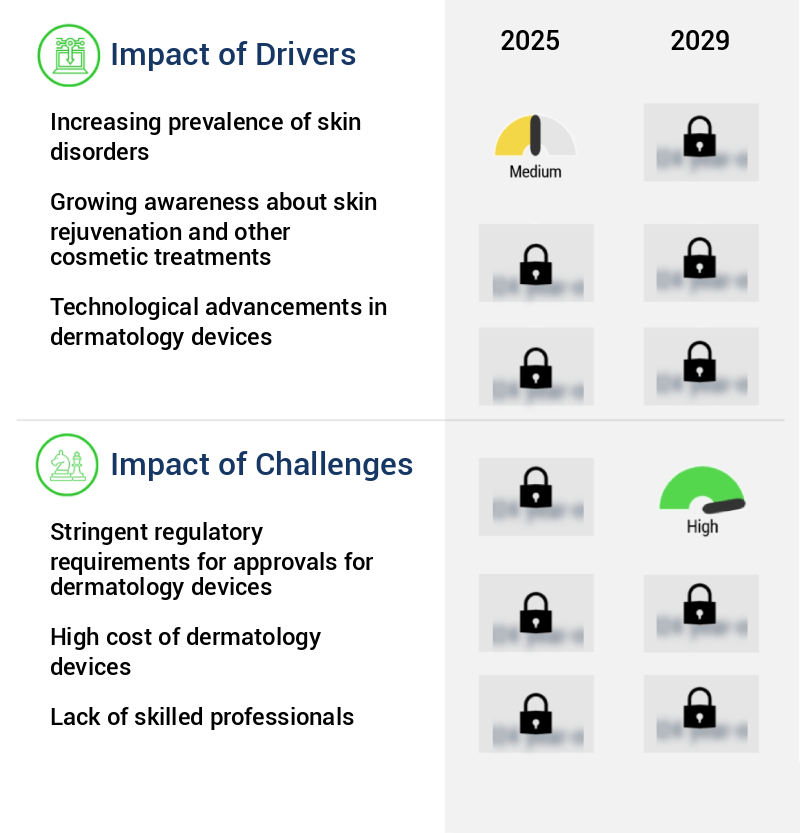
What are the key market drivers leading to the rise in the adoption of Dermatology Devices Industry?
- The rising incidence of skin disorders serves as the primary market catalyst, underpinning its significant growth.
- The market is experiencing significant growth due to the increasing prevalence of various skin conditions, including skin cancer, acne, psoriasis, and eczema. These disorders necessitate advanced methods for diagnosis, treatment, and monitoring, making dermatology devices an essential component in healthcare. Laser therapy tools represent a key segment within this market, offering targeted and precise treatment solutions. Enhanced imaging systems, meanwhile, facilitate early detection of skin cancer, contributing to improved patient outcomes. The ongoing evolution of dermatology devices caters to the rising demand for innovative and effective treatment options, both from healthcare professionals and consumers. Market trends indicate that the adoption of these devices is on the rise, driven by advancements in technology and the increasing awareness of skin health.
- For instance, the integration of artificial intelligence and machine learning algorithms in dermatology devices enables more accurate diagnoses and personalized treatment plans. Additionally, the growing popularity of minimally invasive procedures and home-use devices further expands the market's reach and accessibility. In summary, The market is poised for continued growth as it addresses the ongoing need for advanced diagnostic and treatment solutions in response to the increasing prevalence of skin disorders.
What are the market trends shaping the Dermatology Devices Industry?
- The increasing preference for telemedicine and remote monitoring represents a notable market trend in the healthcare industry.
- The market is experiencing significant integration with telemedicine platforms, revolutionizing access to dermatological care. This trend is driven by technological advancements, enabling remote diagnosis, consultations, and monitoring of skin conditions. Dermatologists utilize specialized tools such as dermatoscopes, imaging systems, and webcams for assessments. Telemedicine platforms, like DermEngine, iDoc24, and FirstDerm, are particularly beneficial for individuals in remote areas and those preferring online consultations.
- These platforms offer convenience and reduce the need for in-person visits. The market's evolution is marked by a shift towards digital solutions, enhancing patient care and convenience. This data-driven narrative highlights the ongoing unfolding of market activities and evolving patterns, providing a comprehensive and authoritative perspective on The market.
What challenges does the Dermatology Devices Industry face during its growth?
- The stringent regulatory approvals process for dermatology devices poses a significant challenge to the industry's growth, requiring thorough compliance with mandated safety and efficacy standards.
- In the dynamic and complex landscape of the market, regulatory hurdles pose a significant challenge for market players. The approval process for these devices is intricate and demanding, involving clinical trials, extensive documentation, and rigorous safety evaluations. For instance, a company introducing advanced laser therapy equipment for skin treatments must comply with stringent regulations set by regulatory bodies such as the European Medicines Agency (EMA) and the US Food and Drug Administration (FDA). Failure to meet these requirements or experience prolonged approval processes can hinder manufacturers from entering the market and maintaining competitiveness. According to a study, the average time for obtaining regulatory approval for a dermatology device is approximately three years.
- This lengthy process can significantly impact market penetration and innovation, as new entrants face substantial time and financial investments to secure regulatory clearance. Despite these challenges, the market continues to evolve, with ongoing research and development driving the introduction of innovative technologies and treatments.
Exclusive Customer Landscape
The dermatology devices market forecasting report includes the adoption lifecycle of the market, covering from the innovator's stage to the laggard's stage. It focuses on adoption rates in different regions based on penetration. Furthermore, the dermatology devices market report also includes key purchase criteria and drivers of price sensitivity to help companies evaluate and develop their market growth analysis strategies.
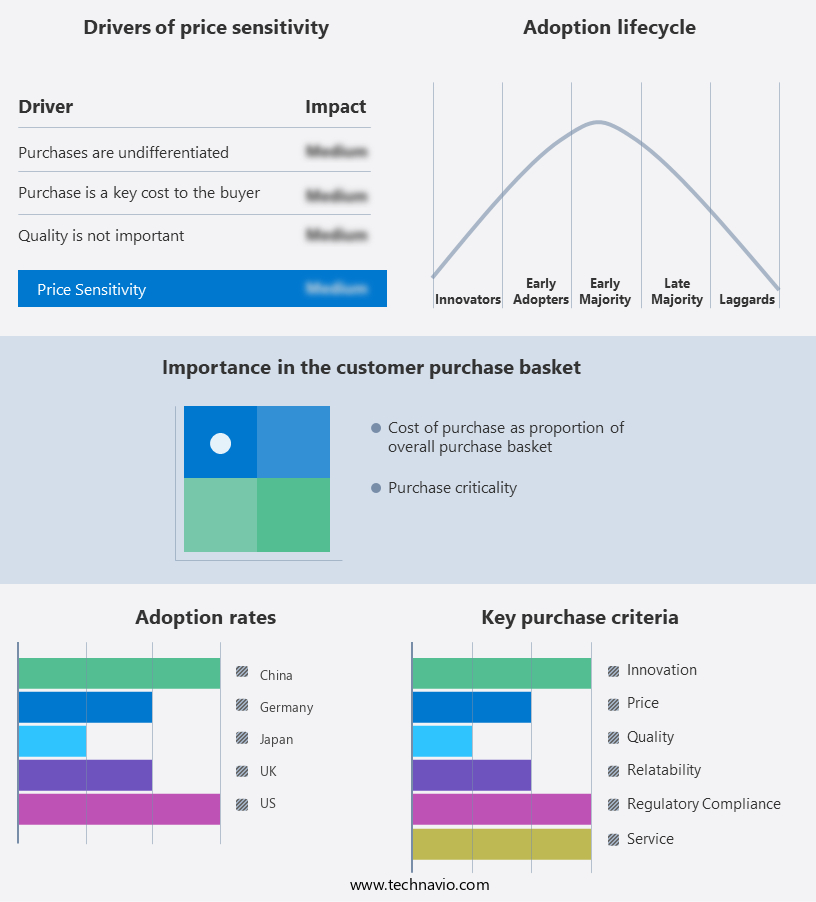
Customer Landscape of Dermatology Devices Industry
Competitive Landscape & Market Insights
Companies are implementing various strategies, such as strategic alliances, dermatology devices market forecast, partnerships, mergers and acquisitions, geographical expansion, and product/service launches, to enhance their presence in the industry.
AbbVie Inc. - This company specializes in providing advanced dermatology devices, including the 27Gx40mm Dispoderm. With a focus on innovation and quality, these tools cater to various dermatological needs, enhancing clinical efficacy and patient comfort.
The industry research and growth report includes detailed analyses of the competitive landscape of the market and information about key companies, including:
- AbbVie Inc.
- Aerolase Corp.
- Aesthetic Group
- Alma Lasers Ltd.
- Bausch Health Companies Inc.
- Bruker Corp.
- Candela Corp.
- Canfield Scientific Inc.
- Carl Zeiss Stiftung
- Cutera Inc.
- Cynosure LLC
- DermLite LLC
- FotoFinder Systems GmbH
- HEINE Optotechnik GmbH and Co. KG
- Image Derm Inc.
- Lumenis Be Ltd.
- Merz Pharma GmbH and Co. KGaA
- Michelson Diagnostics Inc.
- Photomedex Inc.
- Sihuan Pharmaceutical Holdings Group Ltd.
Qualitative and quantitative analysis of companies has been conducted to help clients understand the wider business environment as well as the strengths and weaknesses of key industry players. Data is qualitatively analyzed to categorize companies as pure play, category-focused, industry-focused, and diversified; it is quantitatively analyzed to categorize companies as dominant, leading, strong, tentative, and weak.
Recent Development and News in Dermatology Devices Market
- In January 2024, Merz Aesthetics, a leading player in the market, announced the launch of its new SkinPen Precision, an advanced microneedling device, designed to improve skin texture and tone (Merz Aesthetics Press Release, 2024).
- In March 2024, Medtronic plc and BioTelemetry, Inc. Entered into a strategic collaboration to develop and commercialize a connected dermatology device for the remote monitoring and management of psoriasis patients (Medtronic Press Release, 2024).
- In April 2024, Lumenis Ltd., a global leader in energy-based surgical and aesthetic devices, completed the acquisition of Mazor Robotics, a pioneer in robotic-assisted surgical systems, expanding its portfolio in the dermatology and aesthetic market (Lumenis Press Release, 2024).
- In May 2025, the U.S. Food and Drug Administration (FDA) granted 510(k) clearance to Canfield Scientific for its VelaShape Aesthetics System, a non-invasive body contouring device that uses radiofrequency and infrared energy to improve the appearance of cellulite and localized adipose tissue (Canfield Scientific Press Release, 2025).
Dive into Technavio's robust research methodology, blending expert interviews, extensive data synthesis, and validated models for unparalleled Dermatology Devices Market insights. See full methodology.
|
Market Scope |
|
|
Report Coverage |
Details |
|
Page number |
186 |
|
Base year |
2024 |
|
Historic period |
2019-2023 |
|
Forecast period |
2025-2029 |
|
Growth momentum & CAGR |
Accelerate at a CAGR of 4.5% |
|
Market growth 2025-2029 |
USD 3774.7 million |
|
Market structure |
Fragmented |
|
YoY growth 2024-2025(%) |
4.4 |
|
Key countries |
US, Germany, China, UK, France, Japan, Italy, Canada, South Korea, and Australia |
|
Competitive landscape |
Leading Companies, Market Positioning of Companies, Competitive Strategies, and Industry Risks |
Research Analyst Overview
- In the dynamic and evolving landscape of dermatology devices, ultrasound imaging systems and non-invasive procedures continue to dominate the market. These advanced tools enable healthcare professionals to diagnose and treat various skin conditions more effectively. Ultrasound imaging systems offer high-resolution visualizations, enabling accurate assessment of tissue structures, while non-invasive procedures, such as cosmetic dermatology tools, cater to the growing demand for minimally invasive treatments. Device sterilization methods are a critical aspect of dermatology devices, ensuring patient safety and preventing infection. Co2 laser resurfacing and fractional laser treatments have shown impressive clinical trial outcomes, offering significant improvements in skin texture and tone.
- Medical device regulations play a crucial role in maintaining the safety and efficacy of aesthetic lasers, aesthetic device safety being a top priority. Dermatologic imaging, including IPL skin rejuvenation and photodynamic therapy, contribute to the early detection and treatment of various skin conditions, including skin cancer. Patient safety protocols and cost-effectiveness analysis are essential considerations in the adoption of these technologies. Surgical lasers in dermatology, patient satisfaction ratings, and device performance indicators are key metrics in the assessment of treatment efficacy. Minimally invasive devices, such as cryotherapy devices and electrocautery devices, offer cost-effective alternatives for various dermatological applications.
- Skin tightening devices, wound healing devices, chemical peel devices, and laser hair removal systems cater to diverse patient needs, while microneedling devices and radiofrequency ablation offer innovative solutions for tissue rejuvenation. Dermabrasion systems and cellulite reduction treatments complete the spectrum of dermatology devices, addressing a wide range of aesthetic concerns. The continuous unfolding of market activities and evolving patterns in dermatology devices reflect the industry's commitment to innovation and patient care.
What are the Key Data Covered in this Dermatology Devices Market Research and Growth Report?
-
What is the expected growth of the Dermatology Devices Market between 2025 and 2029?
-
USD 3.77 billion, at a CAGR of 4.5%
-
-
What segmentation does the market report cover?
-
The report segmented by End-user (Hospitals and Clinics), Product (Treatment devices and Diagnosis devices), and Geography (North America, Europe, Asia, and Rest of World (ROW))
-
-
Which regions are analyzed in the report?
-
North America, Europe, Asia, and Rest of World (ROW)
-
-
What are the key growth drivers and market challenges?
-
Increasing prevalence of skin disorders, Stringent regulatory requirements for approvals for dermatology devices
-
-
Who are the major players in the Dermatology Devices Market?
-
Key Companies AbbVie Inc., Aerolase Corp., Aesthetic Group, Alma Lasers Ltd., Bausch Health Companies Inc., Bruker Corp., Candela Corp., Canfield Scientific Inc., Carl Zeiss Stiftung, Cutera Inc., Cynosure LLC, DermLite LLC, FotoFinder Systems GmbH, HEINE Optotechnik GmbH and Co. KG, Image Derm Inc., Lumenis Be Ltd., Merz Pharma GmbH and Co. KGaA, Michelson Diagnostics Inc., Photomedex Inc., and Sihuan Pharmaceutical Holdings Group Ltd.
-
Market Research Insights
- The market encompasses a range of technologies designed to address various skin concerns, including skin lesion removal, acne scar treatment, and skin resurfacing methods. Two key segments of this market are pulsed light systems and energy-based devices. According to industry estimates, the global market for pulsed light systems is projected to reach USD1.5 billion by 2025, growing at a CAGR of 7.2% from 2020. In contrast, the energy-based devices segment, which includes collagen stimulation, vascular lesion treatment, and hair follicle destruction, is expected to reach USD5.2 billion by 2026, expanding at a CAGR of 8.5% from 2021. Device longevity and patient comfort are crucial factors influencing market growth.
- Advanced handpiece technology and cooling systems contribute to improved patient experience, while safety features and regulatory compliance ensure effective and safe treatments. Clinical protocols and treatment parameters are continually evolving to optimize tissue regeneration and wrinkle reduction methods. For instance, multi-wavelength lasers have emerged as a popular choice for pigmentation treatment due to their melanin targeting capabilities. Despite these advancements, maintenance schedules and treatment compliance remain essential considerations for long-term success.
We can help! Our analysts can customize this dermatology devices market research report to meet your requirements.
 RIA -
RIA - 
