


Diaper Rash Cream Market Size 2024-2028
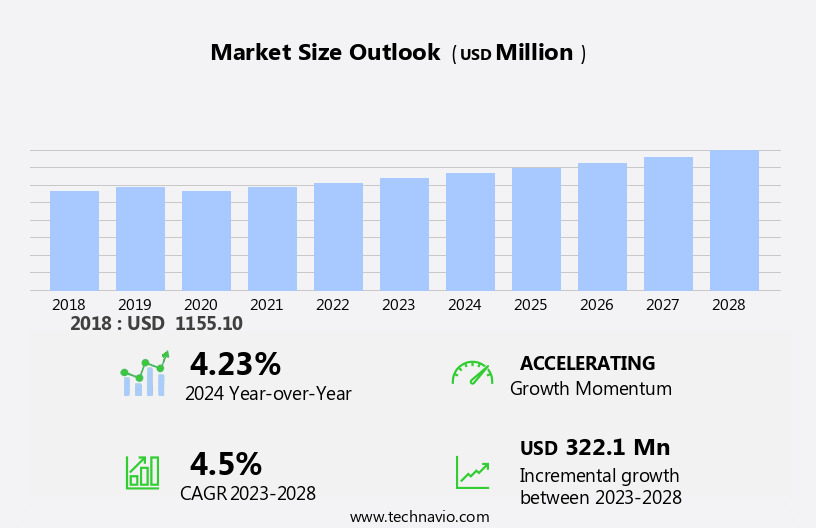
The diaper rash cream market size is forecast to increase by USD 322.1 million at a CAGR of 4.5% between 2023 and 2028.
- The market is experiencing significant growth, driven by the increasing consumer awareness and preference for natural baby products. This trend is particularly prominent in developed economies, where parents are becoming more health-conscious and are seeking out products free from harsh chemicals and fragrances. Additionally, the popularity of e-commerce channels is providing easier access to these products for consumers, driving market expansion. However, the market growth is tempered by the decline in birth rates in developed economies, which may limit the potential customer base.
- Companies in this market can capitalize on these trends by focusing on developing high-quality, natural diaper rash creams and leveraging e-commerce platforms to reach consumers. Navigating regulatory requirements and ensuring product safety and efficacy will be key challenges for market participants. Overall, the market presents a compelling opportunity for companies seeking to cater to health-conscious parents and expand their reach through digital channels.
What will be the Size of the Diaper Rash Cream Market during the forecast period?
- The market caters to the growing demand for effective solutions to address various skin conditions in infants and babies, including diaper rash, diaper dermatitis, and skin irritation. Market dynamics are driven by the increasing frequency of urination and defecation in infants, prolonged wetness, and diaper friction. Innovative product offerings In the market focus on biome enhancing formulations, incorporating prebiotics and probiotics to support the infants' skin microbiome. Neurosensory soothing elements, aromatherapy, and textured, gentle massaging elements provide additional comfort. Advanced technologies, such as smart detection integration with embedded sensors, monitor moisture levels and skin conditions in real-time, ensuring optimal application and preventing severe skin inflammation.
- Biomefriendly formulations, free from harsh chemicals, further cater to the evolving consumer preferences. Overall, the market is poised for growth, addressing the diverse needs of infants and parents while prioritizing skin health and wellbeing.
How is this Diaper Rash Cream Industry segmented?
The diaper rash cream industry research report provides comprehensive data (region-wise segment analysis), with forecasts and estimates in "USD million" for the period 2024-2028, as well as historical data from 2018-2022 for the following segments.
- Distribution Channel
- Offline
- Online
- Geography
- APAC
- China
- India
- Japan
- Europe
- Germany
- North America
- US
- Middle East and Africa
- South America
- APAC
By Distribution Channel Insights
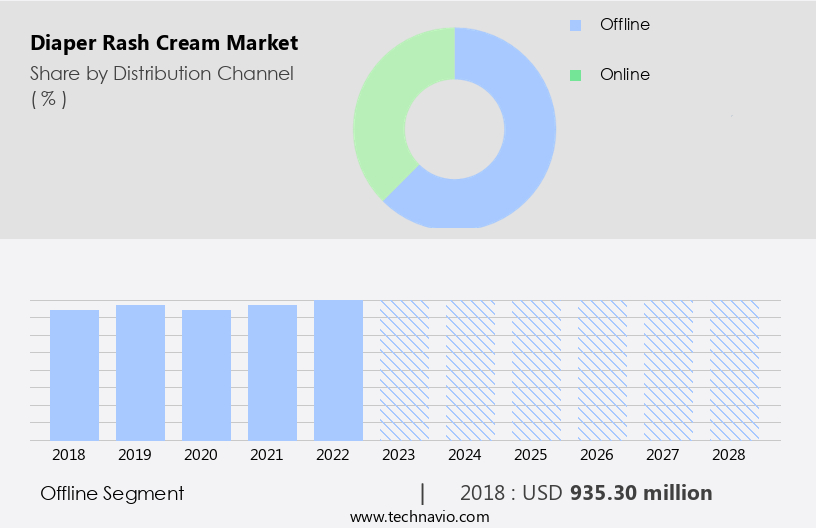
The offline segment is estimated to witness significant growth during the forecast period.
Diaper rash creams are essential personal care products for infants and have gained significant market traction, with the largest market share held by hypermarkets and supermarkets in 2021. The organized retail sector's growth in both developed and developing economies is a primary factor driving the demand for diaper rash creams in this segment. The expansion of the retail industry and the proliferation of retail outlets contribute to increased sales. Superior shopping experiences and discounted prices are additional incentives for customers to purchase these products from supermarkets and hypermarkets. Innovative product development endeavors In the market include biome enhancing formulations, such as prebiotics and probiotics, which support the infants' skin microbiome.
Neurosensory soothing elements, aromatherapy, textured formulations, and gentle massaging elements cater to parents' preferences for a blend of safety and effectiveness. Smart detection integration, embedded sensors, and moisture level monitoring enhance the convenience and efficiency of diaper rash creams. Biomefriendly formulations, smart technologies, and sustainability are essential considerations In the market. Traditional wisdom and futuristic solutions coexist, with indigenous ingredients and leading manufacturers focusing on providing nonprescription items for various skin conditions, such as atopic dermatitis, contact dermatitis, impetigo, psoriasis, allergies, infections, diaper rash, diaper dermatitis, and skin irritation. The e-commerce sector's growth and digital platforms' increasing popularity offer product accessibility to a broader audience.
Cultural preferences and increasing immigration waves contribute to the market's expansion, particularly in developing economies. Parents' concerns about the harmful impact of baby products on their children's health have led to a shift towards natural ingredients and a reduction In the use of parabens, phthalates, silicones, mineral oil, and synthetic additives. Sunflower seed, jojoba, almond, and calendula oils, with their antifungal and antibacterial qualities, are increasingly being used in reconditioning formulations. Leading manufacturers employ promotional campaigns and competitive edge strategies to cater to their existing consumer base and expand their market share. The market's future growth is expected to be influenced by factors such as increasing frequency of urination and defecation, prolonged wetness, severe skin inflammation, and bacterial infection, among others.
Get a glance at the market report of share of various segments Request Free Sample
The Offline segment was valued at USD 935.30 million in 2018 and showed a gradual increase during the forecast period.
Regional Analysis
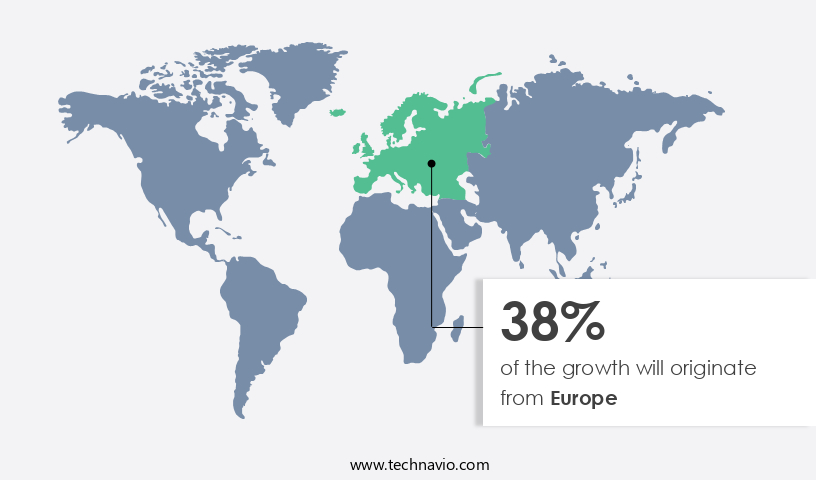
Europe is estimated to contribute 38% to the growth of the global market during the forecast period. Technavio's analysts have elaborately explained the regional trends and drivers that shape the market during the forecast period.
For more insights on the market size of various regions, Request Free Sample
The market in Asia Pacific (APAC) experiences significant growth due to increasing per capita income and rising living standards. The aging population in countries like Japan and Australia fuels demand for adult diapers and associated care products. Higher household income levels and an increasing number of working women contribute to the expansion of the personal care products sector. Adult diapers cater to individuals with incontinence, primarily the elderly population above 65 years. The aging demographic in APAC, particularly in Australia and Japan, has seen considerable growth over the past five years, with government policies limiting family size.
Innovative diaper rash cream formulations incorporate biome enhancing ingredients such as prebiotics and probiotics, supporting the infants' skin microbiome. Neurosensory soothing elements, aromatherapy, textured applications, and gentle massaging elements offer added benefits. Smart detection integration, embedded sensors, and moisture level monitoring enhance product functionality. Skin conditions like atopic dermatitis, contact dermatitis, impetigo, psoriasis, allergies, infections, diaper rash, and diaper dermatitis are addressed through these advanced offerings. Leading manufacturers invest in promotional campaigns, emphasizing safety and nonprescription status, making these products accessible in drugstores, pharmacies, and e-commerce platforms. Biomefriendly formulations, smart technologies, and sustainability initiatives cater to cultural preferences and ecoconsciousness. Traditional wisdom and futuristic solutions blend, providing a protective barrier against diaper rash using ingredients like beeswax, zinc oxide, mineral oil, and skin soothers.
Market Dynamics
Our researchers analyzed the data with 2023 as the base year, along with the key drivers, trends, and challenges. A holistic analysis of drivers will help companies refine their marketing strategies to gain a competitive advantage.
What are the key market drivers leading to the rise In the adoption of Diaper Rash Cream Industry?
- Increasing consumer awareness about natural baby products is the key driver of the market. Parents prioritize their babies' health and wellbeing, particularly concerning the delicate newborn skin, which is susceptible to irritation and rashes. Due to the underdeveloped elimination system of newborns, the continuous use of synthetic baby care products may lead to the accumulation of harmful toxins. To address this concern, parents increasingly prefer natural diaper rash creams. These products contain minimal synthetic additives, colors, perfume, and artificial preservatives.
- They are formulated to soothe the skin, restore skin health, and keep the baby feeling fresh throughout the day. The natural ingredients In these creams provide effective relief while minimizing the risk of adverse reactions. This trend reflects the growing demand for safer and more natural baby care solutions.
What are the market trends shaping the Diaper Rash Cream Industry?
- The increasing popularity of e-commerce channels is the upcoming market trend. The market experiences steady growth due to several factors. With the increasing penetration of the Internet and the availability of smart devices, consumers have greater access to online shopping platforms. Retailers leverage these platforms to expand their reach and customer base, offering convenience and improved security features. Local market players have successfully reached premium customers by making their products available online on a national scale.
- The growth of the market is further fueled by the rising Internet penetration, growing consumer trust in online retailing, and the availability of faster shipping services. The fragmentation of consumer choice also plays a significant role in market expansion.
What challenges does the Diaper Rash Cream Industry face during its growth?
- Decline in birth rates in developed economies is a key challenge affecting the industry growth. The global birth rate has experienced a significant decrease in recent years, according to the Centers for Disease Control and Prevention (CDC). This trend is observed not only in developed countries but also in various parts of the world. One of the primary reasons for this phenomenon is the belief that women with children face limited job prospects or are denied promotions. Consequently, many working women delay or forgo childbirth.
- As women continue to gain social and economic independence in both developed and developing nations, this trend is becoming increasingly prevalent. This demographic shift creates a growing demand for diaper rash cream, as more infants are born later in life. The market for diaper rash cream is poised to grow as a result of this trend, providing opportunities for companies to cater to the needs of this expanding consumer base.
Exclusive Customer Landscape
The diaper rash cream market forecasting report includes the adoption lifecycle of the market, covering from the innovator's stage to the laggard's stage. It focuses on adoption rates in different regions based on penetration. Furthermore, the diaper rash cream market report also includes key purchase criteria and drivers of price sensitivity to help companies evaluate and develop their market growth analysis strategies.
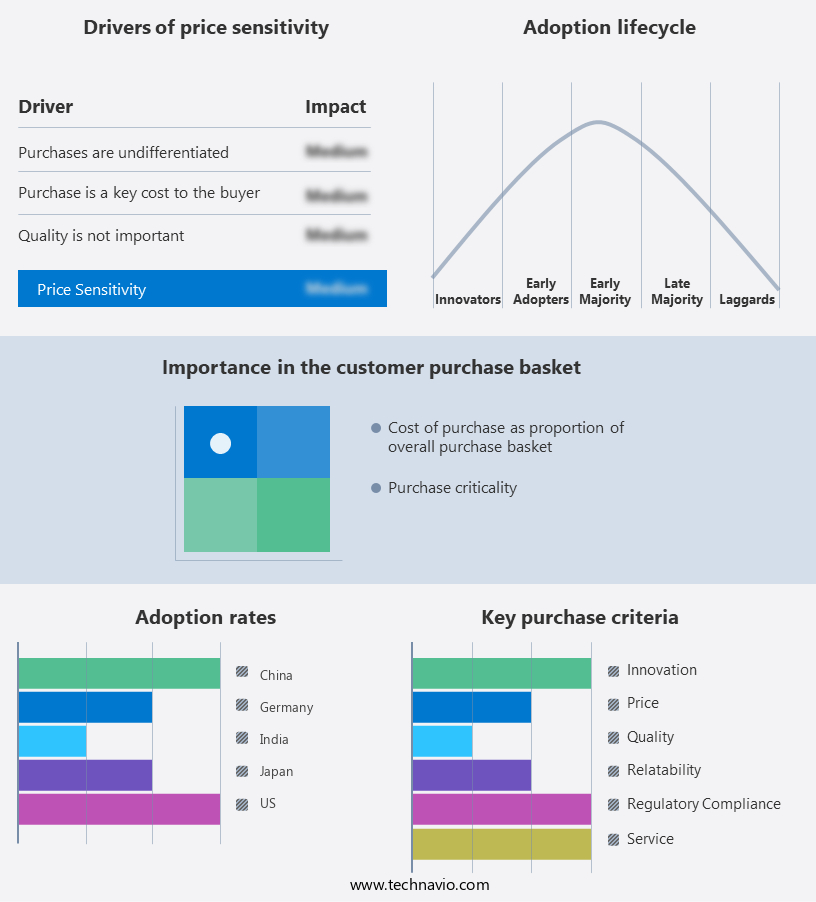
Customer Landscape
Key Companies & Market Insights
Companies are implementing various strategies, such as strategic alliances, diaper rash cream market forecast, partnerships, mergers and acquisitions, geographical expansion, and product/service launches, to enhance their presence In the industry.
The industry research and growth report includes detailed analyses of the competitive landscape of the market and information about key companies, including:
- Artsana Spa
- Bayer AG
- Beiersdorf AG
- Earth Mama Angel Baby LLC
- Galderma SA
- Johnson and Johnson Services Inc.
- Laboratoires Expanscience
- MainPointe Pharmaceuticals LLC.
- Moberg Pharma AB
- Prestige Consumer Healthcare Inc.
- S.C. Johnson and Son Inc.
- Sanofi SA
- Sebapharma GmbH and Co. KG
- Teva Pharmaceutical Industries Ltd.
- The Clorox Co.
- The Himalaya Drug Co.
- Unilever PLC
- W.S. Badger Co.
- Weleda Group
Qualitative and quantitative analysis of companies has been conducted to help clients understand the wider business environment as well as the strengths and weaknesses of key industry players. Data is qualitatively analyzed to categorize companies as pure play, category-focused, industry-focused, and diversified; it is quantitatively analyzed to categorize companies as dominant, leading, strong, tentative, and weak.
Research Analyst Overview
The market caters to the growing demand for effective solutions to protect and soothe infants' delicate skin from various skin conditions. This market encompasses a wide range of offerings, with an emphasis on biome-enhancing formulations that support the health of infants' skin microbiomes. Prebiotics and probiotics are increasingly incorporated into diaper rash creams to promote a healthy skin microbiome. Neurosensory soothing elements, such as aromatherapy, are also integrated to provide a calming experience for infants. Textured formulations and gentle massaging elements offer additional benefits, allowing parents to provide soothing relief while also engaging in bonding activities with their infants. Smart technologies, such as smart detection integration and embedded sensors, are being explored to ensure optimal moisture levels and monitor skin conditions.
These innovations aim to provide parents with real-time information, enabling them to address potential issues before they escalate. Sustainability and eco-consciousness are becoming essential considerations In the market. Manufacturers are focusing on biome friendly formulations and smart technologies to reduce the environmental impact of their products. Traditional wisdom and futuristic solutions are blended to cater to diverse consumer preferences. Safety is a top priority, with nonprescription items dominating the market. These items are readily available at drugstores and pharmacies, ensuring product accessibility for parents. Development endeavors are underway to cater to the adult segment, recognizing the potential for diaper rash in this population.
E-commerce and digital platforms are transforming the way diaper rash creams are marketed and sold. Cultural preferences and the increasing immigration wave are driving demand for diaper rash creams containing indigenous ingredients. The future market is expected to be shaped by atopic dermatitis, contact dermatitis, impetigo, psoriasis, allergies, infections, and other skin conditions that can affect infants. Prolonged wetness, sleeping patterns, frequency of urination, and frequency of defecation are key factors influencing the severity of diaper rash. Severe skin inflammation can result from bacterial infection, diaper friction, and other causes. Parents are increasingly aware of the harmful impact of certain ingredients, such as parabens, phthalates, silicones, petrochemicals, artificial preservatives, and synthetic additives, and are seeking alternatives.
Natural ingredients, such as sunflower seed oil, jojoba oil, almond oil, and calendula oil, are gaining popularity due to their antifungal and antibacterial qualities, as well as their ability to recondition and soothe irritated skin. Leading manufacturers are investing in promotional campaigns and competitive edge through product innovation and strategic partnerships. The market is poised for growth, driven by increasing awareness of infant skin health and the expanding consumer base in developing economies. The market is expected to face challenges related to regulatory compliance and consumer education, but the potential rewards for manufacturers that can effectively address these challenges are significant.
|
Market Scope |
|
|
Report Coverage |
Details |
|
Page number |
146 |
|
Base year |
2023 |
|
Historic period |
2018-2022 |
|
Forecast period |
2024-2028 |
|
Growth momentum & CAGR |
Accelerate at a CAGR of 4.5% |
|
Market growth 2024-2028 |
USD 322.1 million |
|
Market structure |
Fragmented |
|
YoY growth 2023-2024(%) |
4.23 |
|
Key countries |
US, China, Japan, India, and Germany |
|
Competitive landscape |
Leading Companies, Market Positioning of Companies, Competitive Strategies, and Industry Risks |
What are the Key Data Covered in this Diaper Rash Cream Market Research and Growth Report?
- CAGR of the Diaper Rash Cream industry during the forecast period
- Detailed information on factors that will drive the growth and forecasting between 2024 and 2028
- Precise estimation of the size of the market and its contribution of the industry in focus to the parent market
- Accurate predictions about upcoming growth and trends and changes in consumer behaviour
- Growth of the market across APAC, Europe, North America, Middle East and Africa, and South America
- Thorough analysis of the market's competitive landscape and detailed information about companies
- Comprehensive analysis of factors that will challenge the diaper rash cream market growth of industry companies
We can help! Our analysts can customize this diaper rash cream market research report to meet your requirements.
 RIA -
RIA - 
