


Diesel Locomotives Market Size 2026-2030
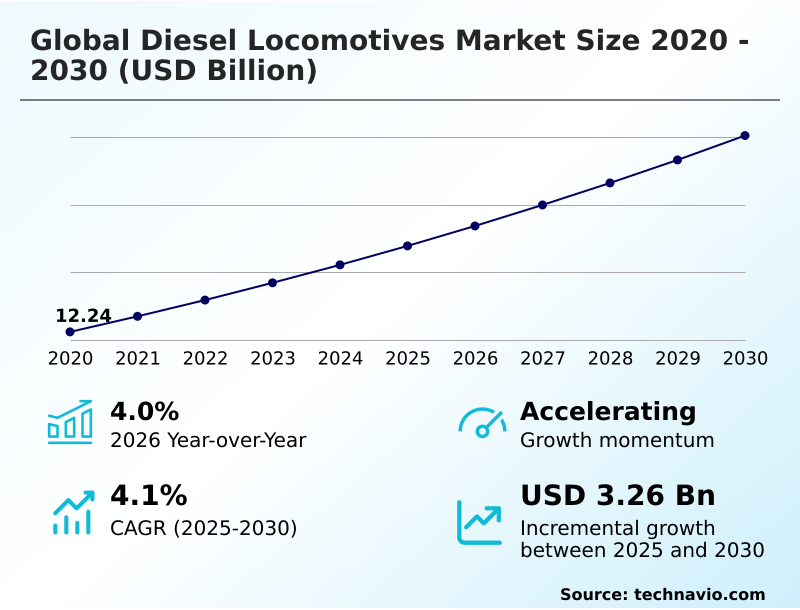
The diesel locomotives market size is valued to increase by USD 3.26 billion, at a CAGR of 4.1% from 2025 to 2030. Fleet modernization and environmental regulations will drive the diesel locomotives market.
Major Market Trends & Insights
- APAC dominated the market and accounted for a 44.8% growth during the forecast period.
- By Application - Freight transport segment was valued at USD 8.67 billion in 2024
- By Type - Diesel electric locomotives segment accounted for the largest market revenue share in 2024
Market Size & Forecast
- Market Opportunities: USD 5.80 billion
- Market Future Opportunities: USD 3.26 billion
- CAGR from 2025 to 2030 : 4.1%
Market Summary
- The diesel locomotives market is defined by a consistent demand for powerful and reliable traction, particularly for heavy-haul freight across non-electrified territories. Market dynamics are increasingly shaped by the dual pressures of operational efficiency and environmental stewardship.
- A key driver is the modernization of aging fleets with high-horsepower locomotives that meet stringent emission standards, offering superior fuel economy and reduced maintenance requirements. Concurrently, a significant trend involves the integration of predictive maintenance technologies and advanced diagnostic sensors, transforming locomotives into mobile data centers.
- For instance, a major freight operator can leverage machine learning algorithms to analyze real-time engine performance metrics, anticipating component failures and scheduling repairs preemptively, which reduces costly trackside breakdowns by over 20%. While the push toward electrification presents a long-term challenge, the industry is adapting through innovations like hybrid-diesel propulsion and the adoption of alternative fuel blends.
- This ensures diesel technology remains a vital and evolving component of the global logistics backbone, especially in regions where geography and infrastructure costs make full electrification unfeasible.
What will be the Size of the Diesel Locomotives Market during the forecast period?
Get Key Insights on Market Forecast (PDF) Request Free Sample
How is the Diesel Locomotives Market Segmented?
The diesel locomotives industry research report provides comprehensive data (region-wise segment analysis), with forecasts and estimates in "USD million" for the period 2026-2030, as well as historical data from 2020-2024 for the following segments.
- Application
- Freight transport
- Passenger transport
- Others
- Type
- Diesel electric locomotives
- Diesel hydraulic locomotives
- Hybrid diesel locomotives
- Diesel mechanical locomotives
- Power output
- High power
- Medium power
- Low power
- Geography
- APAC
- China
- India
- Australia
- North America
- US
- Canada
- Mexico
- Europe
- Germany
- France
- UK
- South America
- Brazil
- Argentina
- Colombia
- Middle East and Africa
- South Africa
- Saudi Arabia
- UAE
- Rest of World (ROW)
- APAC
By Application Insights
The freight transport segment is estimated to witness significant growth during the forecast period.
The freight transport segment remains the cornerstone of the market, driven by the necessities of global supply chain integration and intermodal logistics efficiency. This sector relies on high-horsepower locomotives for heavy-haul freight transport, connecting industrial hubs across cross-continental trade corridors.
Ensuring high operational availability is critical, with digital fleet management and automated throttle controls being key enablers. Modernization efforts focused on sustainable rail transport have improved efficiency by up to 12% on key routes.
As industrial shunting locomotives and final mile rail logistics become more sophisticated, the emphasis on seamless cross-border rail connectivity continues to shape investment in new technologies, ensuring the consistent and efficient movement of goods across extensive networks.
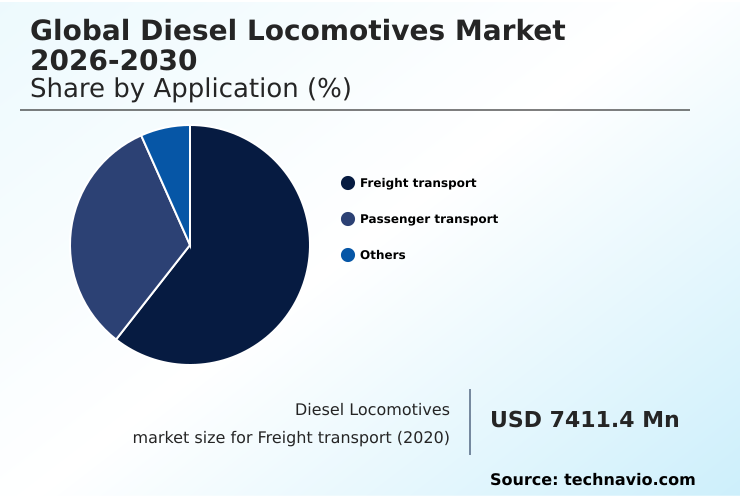
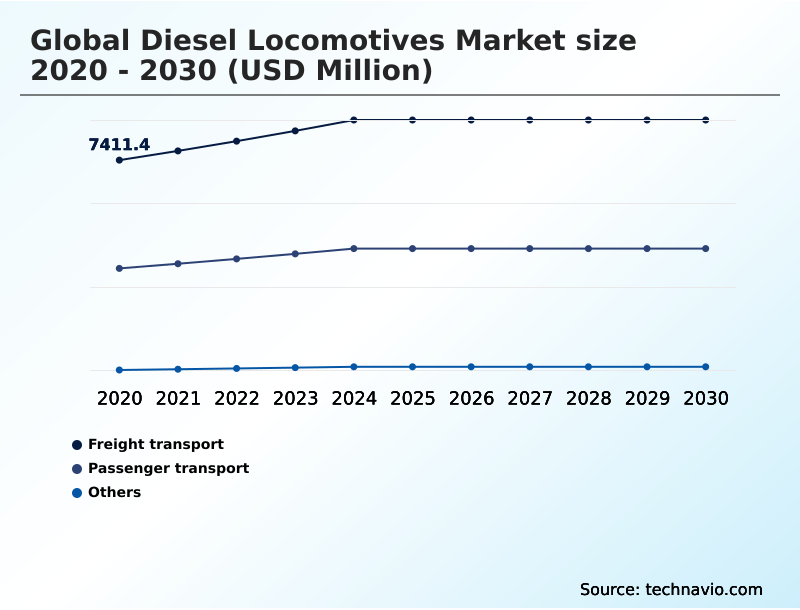
The Freight transport segment was valued at USD 8.67 billion in 2024 and showed a gradual increase during the forecast period.
Regional Analysis
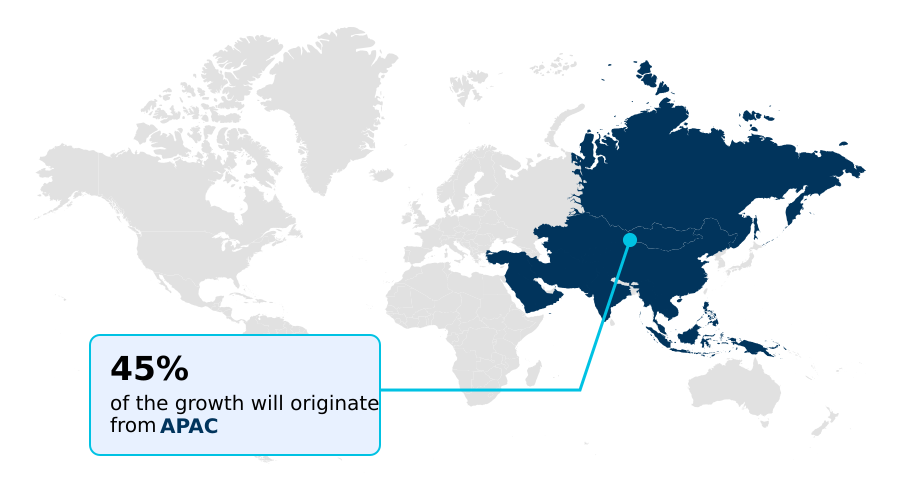
APAC is estimated to contribute 44.8% to the growth of the global market during the forecast period.Technavio’s analysts have elaborately explained the regional trends and drivers that shape the market during the forecast period.
See How Diesel Locomotives Market Demand is Rising in APAC Request Free Sample
Geographic dynamics are primarily shaped by infrastructure development in APAC and modernization cycles in North America.
APAC is set to contribute over 44% of incremental growth, significantly outpacing North America's 28% share, driven by investments in non-electrified rail networks to support industrial and resource-based expansion.
In these regions, dual-mode propulsion architectures and the use of alternative fuel blends like hydrotreated vegetable oil (HVO) are gaining traction to enhance rail network resilience. The market also sees continued demand for specialized maintenance-of-way vehicles.
Innovations in traction motors and hydraulic transmission systems are crucial for performance in diverse terrains, while modular engine compartments facilitate easier servicing.
The deployment of autonomous rail operations and remote sensing navigation is improving safety and efficiency, particularly on long-haul routes connecting remote production sites to ports.
Market Dynamics
Our researchers analyzed the data with 2025 as the base year, along with the key drivers, trends, and challenges. A holistic analysis of drivers will help companies refine their marketing strategies to gain a competitive advantage.
- The future of diesel locomotives in APAC and other developing regions hinges on a strategic balance between power, efficiency, and sustainability. Key considerations include the benefits of diesel electric locomotive modernization, which extend beyond simple fuel savings to enhanced operational reliability.
- Comparing tier 4 diesel locomotive emissions with older models reveals significant reductions in NOx and particulate matter, aligning with global environmental goals. The practical application of diesel locomotive predictive maintenance software benefits operators by minimizing unplanned downtime, a critical factor in competitive freight markets.
- A thorough cost analysis of hybrid diesel locomotives shows their viability in reducing operational expenses in urban and shunting environments. While the challenges of rail electrification vs diesel are significant, especially concerning upfront capital investment, efforts are focused on improving diesel locomotive fuel efficiency through advanced engine management.
- Using hydrotreated vegetable oil in locomotives and understanding the sustainable fuel impact on diesel engines are key steps toward greener logistics. The impact of digitalization on freight railways is transformative, enabling better asset management. Diesel locomotives for heavy haul mining remain indispensable, while dual mode locomotives in european networks offer operational flexibility.
- The focus is on upgrading older diesel locomotive fleets with new technologies. Diesel hydraulic locomotive performance characteristics make them suitable for specific applications, while managing operational costs of diesel fleets is a constant priority.
- The role of diesel locomotives in intermodal transport is central to supply chain efficiency, with advancements in diesel locomotive automation and safety systems and remote monitoring for diesel locomotive fleets enhancing performance. Adherence to regulatory compliance for diesel locomotive exports and implementing diesel locomotive noise reduction technologies are crucial for market access.
What are the key market drivers leading to the rise in the adoption of Diesel Locomotives Industry?
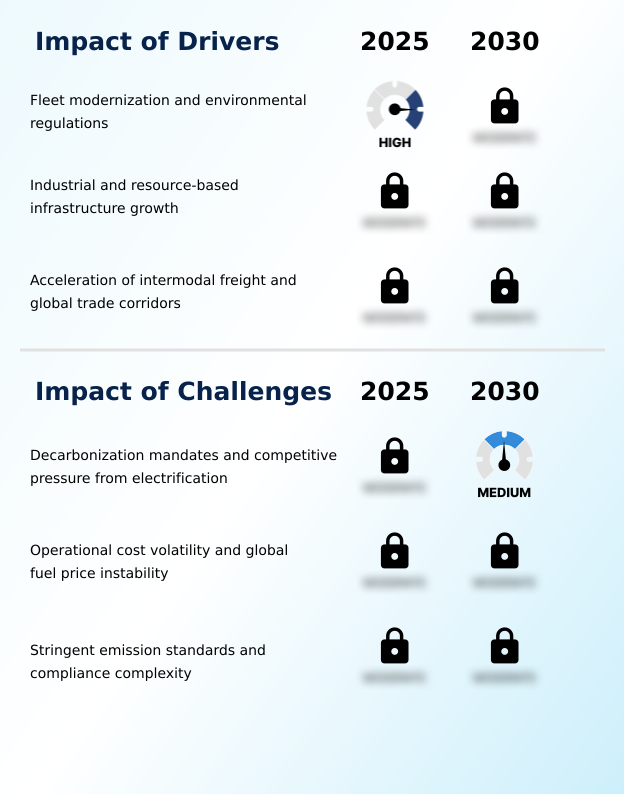
- Fleet modernization initiatives, driven by stringent environmental regulations, serve as a key driver for market growth.
- Fleet modernization, driven by stringent environmental regulatory compliance, is a primary market catalyst.
- Rail operators are investing heavily in new and remanufactured locomotives that meet Tier 4 emission standards through technologies like selective catalytic reduction (SCR) and exhaust gas recirculation (EGR).
- This modernization is essential for heavy-haul mining transport and operations in high-ambient temperature conditions, where high-tractive effort is paramount. The expansion of rail infrastructure investment, particularly in emerging economies, fuels demand for robust diesel-electric transmission systems.
- In many regions, domestic manufacturing initiatives are being prioritized to build locomotives capable of operating on diverse infrastructure, including narrow-gauge track operations.
- These initiatives are critical for enhancing logistical efficiency and supporting the growth of industrial and resource-based sectors, ensuring that modern diesel technology remains central to economic development.
What are the market trends shaping the Diesel Locomotives Industry?
- The integration of advanced digitalization and predictive analytics is emerging as a significant market trend. This development is reshaping fleet management and operational efficiency.
- A significant market trend is the integration of advanced digitalization and predictive analytics, which transforms fleet management and operational efficiency. The use of advanced diagnostic sensors allows for the real-time collection of thousands of engine performance metrics, including fuel flow rates and engine temperature monitoring.
- This data feeds into machine learning algorithms that drive predictive maintenance technologies, enabling maintenance teams to preemptively address potential failures based on subtle vibration patterns, reducing unplanned downtime by up to 25%. Advanced trip optimizer software further enhances efficiency, resulting in documented reductions in emissions.
- The adoption of comprehensive digital rail management systems is becoming standard, shifting fleet management from a reactive to a proactive model and optimizing locomotive asset allocation to lower the total cost of ownership.
What challenges does the Diesel Locomotives Industry face during its growth?
- Decarbonization mandates and rising competitive pressure from electrification present a key challenge to the industry's growth trajectory.
- The market faces considerable headwinds from aggressive decarbonization of the rail sector and the rising viability of zero-emission locomotive alternatives. The push toward electrification, with expanding electric catenary lines, directly challenges the long-term role of diesel-only assets. This trend is compelling operators to explore hybrid-diesel propulsion and battery storage systems, especially for shunting operations and services in environmentally sensitive areas.
- These hybrid systems, which recover energy through dynamic braking, help in greening the supply chain but add complexity and upfront cost. Additionally, operational cost volatility, driven by fuel price instability, remains a persistent issue.
- The need to meet increasingly stringent emission standards further complicates design and manufacturing, impacting the power-to-weight ratio and forcing continuous investment to maintain compliance across fleets with varying axle load limits.
Exclusive Technavio Analysis on Customer Landscape
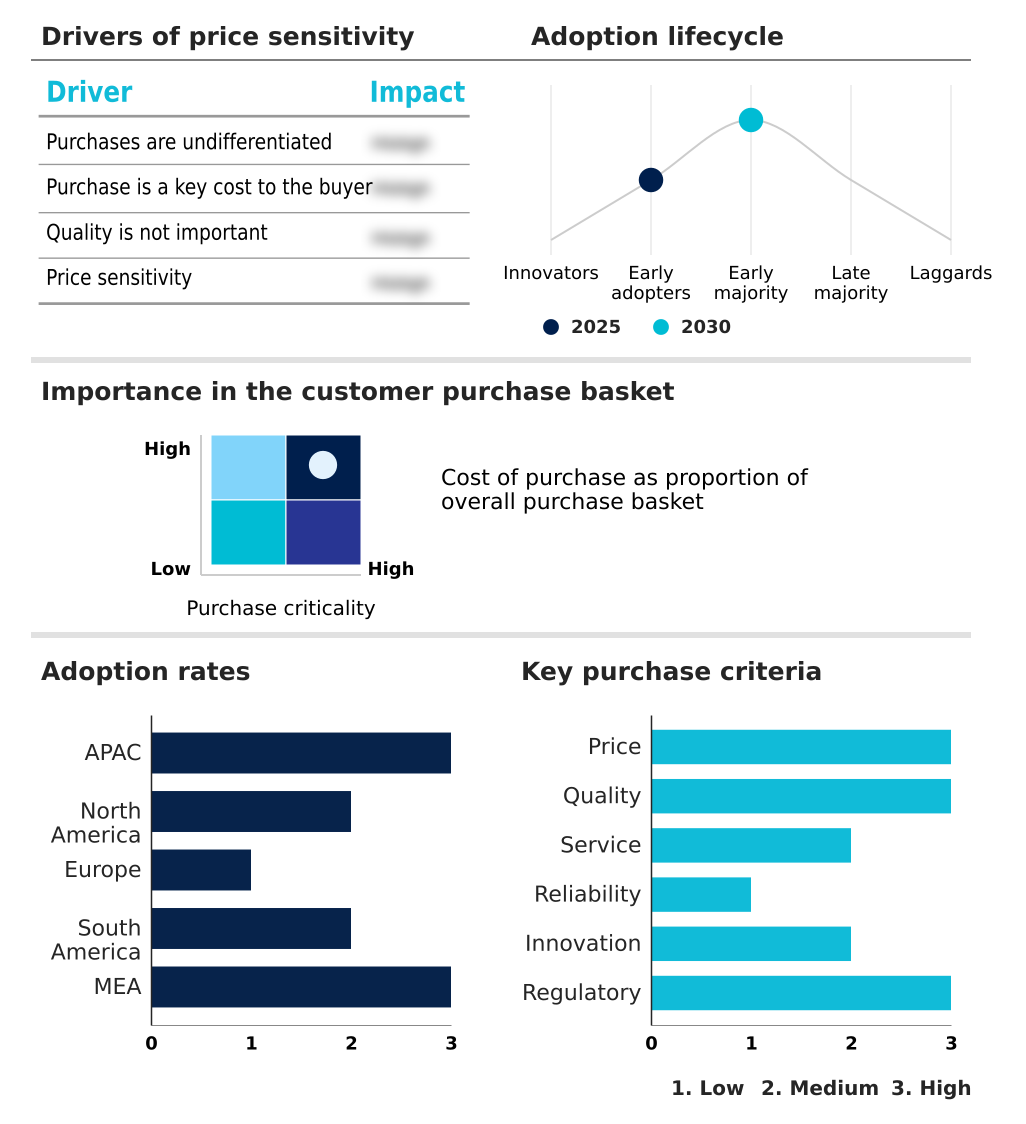
The diesel locomotives market forecasting report includes the adoption lifecycle of the market, covering from the innovator’s stage to the laggard’s stage. It focuses on adoption rates in different regions based on penetration. Furthermore, the diesel locomotives market report also includes key purchase criteria and drivers of price sensitivity to help companies evaluate and develop their market growth analysis strategies.
Customer Landscape of Diesel Locomotives Industry
Competitive Landscape
Companies are implementing various strategies, such as strategic alliances, diesel locomotives market forecast, partnerships, mergers and acquisitions, geographical expansion, and product/service launches, to enhance their presence in the industry.
ALSTOM SA - Analysis indicates a focus on providing advanced diesel and hybrid locomotive solutions engineered for modern railway operations and diverse transit needs.
The industry research and growth report includes detailed analyses of the competitive landscape of the market and information about key companies, including:
- ALSTOM SA
- Brookville Equipment Corp.
- CAF Group
- Caterpillar Inc.
- Clayton Equipment Ltd.
- CRRC Corp. Ltd.
- Downer EDI Ltd.
- Hitachi Rail
- Kawasaki Heavy Industries Ltd.
- Knoxville Locomotive Works Inc.
- National Railway Equipment Co
- Republic Locomotive
- Siemens AG
- Sinara Group
- Stadler Rail Ag
- Toshiba Corp.
- Tractive Power Corp.
- Wabtec Corp.
- Zephir
Qualitative and quantitative analysis of companies has been conducted to help clients understand the wider business environment as well as the strengths and weaknesses of key industry players. Data is qualitatively analyzed to categorize companies as pure play, category-focused, industry-focused, and diversified; it is quantitatively analyzed to categorize companies as dominant, leading, strong, tentative, and weak.
Recent Development and News in Diesel locomotives market
- In May 2025, Wabtec Corporation finalized a strategic agreement to supply a fleet of modernized diesel locomotives equipped with advanced trip optimizer software to a major freight operator in Australia, aiming to increase hauling capacity and reduce the carbon footprint.
- In July 2025, Siemens Mobility commenced revenue-generating service trials of a new dual-mode locomotive in Germany, designed to bridge the operational gap between electrified mainlines and regional branch lines that rely on diesel power.
- In April 2025, CSX Transportation initiated a program to modernize its locomotive fleet by integrating high-efficiency engine components and advanced software, aiming to reduce the carbon intensity of its freight operations across the Eastern United States.
- In October 2025, the Brazil-based logistics operator VLI announced a comprehensive pilot project to evaluate the long-term impact of using a twenty percent biodiesel blend in a fleet of heavy-haul diesel locomotives within agricultural corridors.
Dive into Technavio’s robust research methodology, blending expert interviews, extensive data synthesis, and validated models for unparalleled Diesel Locomotives Market insights. See full methodology.
| Market Scope | |
|---|---|
| Page number | 304 |
| Base year | 2025 |
| Historic period | 2020-2024 |
| Forecast period | 2026-2030 |
| Growth momentum & CAGR | Accelerate at a CAGR of 4.1% |
| Market growth 2026-2030 | USD 3257.9 million |
| Market structure | Fragmented |
| YoY growth 2025-2026(%) | 4.0% |
| Key countries | China, India, Australia, Japan, South Korea, Indonesia, US, Canada, Mexico, Germany, France, Russia, UK, Italy, Spain, Brazil, Argentina, Colombia, South Africa, Saudi Arabia, Egypt, UAE and Turkey |
| Competitive landscape | Leading Companies, Market Positioning of Companies, Competitive Strategies, and Industry Risks |
Research Analyst Overview
- The market is undergoing a significant transformation, balancing the established necessity of high-tractive effort with a strategic pivot toward sustainability and digitalization. Core technologies like diesel-electric transmission and advanced traction motors continue to dominate heavy-haul freight transport.
- However, the landscape is being reshaped by the mandatory adoption of Tier 4 emission standards, which require complex selective catalytic reduction (SCR) and exhaust gas recirculation (EGR) systems. This has spurred innovation in high-horsepower locomotives and extensive locomotive remanufacturing programs.
- The integration of predictive maintenance technologies, utilizing advanced diagnostic sensors and machine learning algorithms to analyze engine performance metrics, has become a boardroom-level focus, with deployments achieving up to a 15% reduction in maintenance-related downtime. Concurrently, the industry is exploring hybrid-diesel propulsion and dual-mode propulsion architectures, which incorporate battery storage systems and allow for operation under electric catenary lines.
- These advancements, along with the testing of alternative fuel blends like hydrotreated vegetable oil (HVO), are critical for extending the viability of diesel power in an evolving regulatory environment.
What are the Key Data Covered in this Diesel Locomotives Market Research and Growth Report?
-
What is the expected growth of the Diesel Locomotives Market between 2026 and 2030?
-
USD 3.26 billion, at a CAGR of 4.1%
-
-
What segmentation does the market report cover?
-
The report is segmented by Application (Freight transport, Passenger transport, and Others), Type (Diesel electric locomotives, Diesel hydraulic locomotives, Hybrid diesel locomotives, and Diesel mechanical locomotives), Power Output (High power, Medium power, and Low power) and Geography (APAC, North America, Europe, South America, Middle East and Africa)
-
-
Which regions are analyzed in the report?
-
APAC, North America, Europe, South America and Middle East and Africa
-
-
What are the key growth drivers and market challenges?
-
Fleet modernization and environmental regulations, Decarbonization mandates and competitive pressure from electrification
-
-
Who are the major players in the Diesel Locomotives Market?
-
ALSTOM SA, Brookville Equipment Corp., CAF Group, Caterpillar Inc., Clayton Equipment Ltd., CRRC Corp. Ltd., Downer EDI Ltd., Hitachi Rail, Kawasaki Heavy Industries Ltd., Knoxville Locomotive Works Inc., National Railway Equipment Co, Republic Locomotive, Siemens AG, Sinara Group, Stadler Rail Ag, Toshiba Corp., Tractive Power Corp., Wabtec Corp. and Zephir
-
Market Research Insights
- The market is characterized by a strategic push toward modernization and efficiency, with operational enhancements delivering tangible business outcomes. The adoption of advanced software and digital management systems has enabled a 15% improvement in fuel efficiency on select routes, directly impacting operational costs.
- Furthermore, the integration of predictive analytics for maintenance scheduling has reduced unplanned downtime by over 20%, enhancing fleet reliability and asset utilization. These advancements are critical as operators navigate volatile fuel prices and stringent environmental mandates.
- Investment in modern locomotive technologies and service agreements is proving essential for maintaining a competitive edge in the global supply chain, where reliability and cost-effectiveness are paramount.
We can help! Our analysts can customize this diesel locomotives market research report to meet your requirements.
 RIA -
RIA - 
