


Digital Camera Market Size 2026-2030
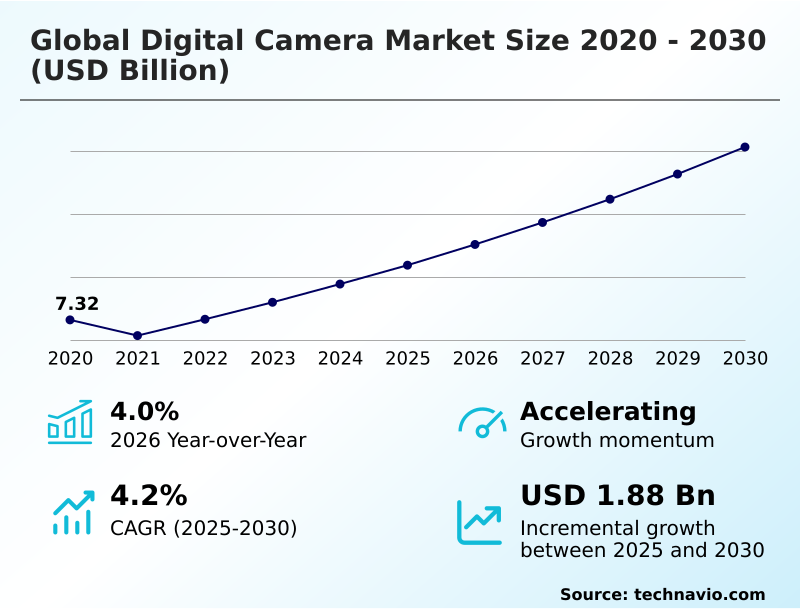
The digital camera market size is valued to increase by USD 1.88 billion, at a CAGR of 4.2% from 2025 to 2030. Continuous technological innovation in mirrorless and hybrid camera systems will drive the digital camera market.
Major Market Trends & Insights
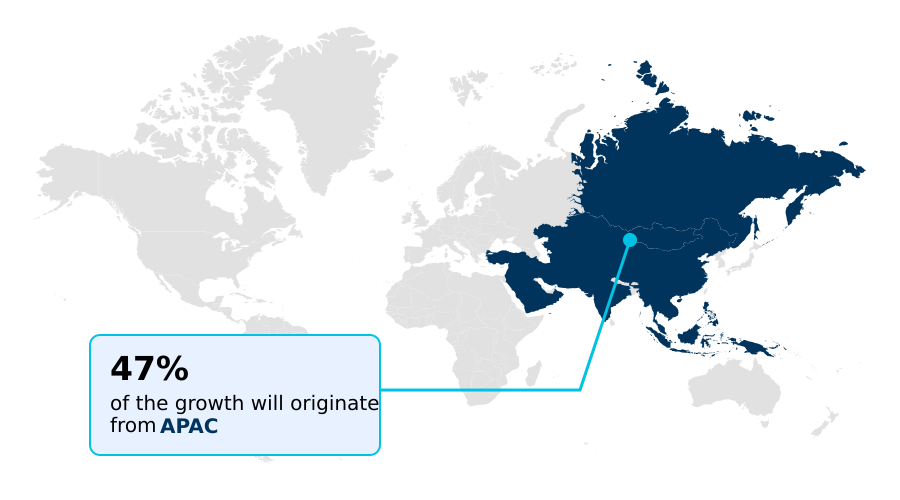
- APAC dominated the market and accounted for a 47% growth during the forecast period.
- By Type - Digital single-lens reflex (DSLR) cameras segment was valued at USD 3.11 billion in 2024
- By Distribution Channel - Offline segment accounted for the largest market revenue share in 2024
Market Size & Forecast
- Market Opportunities: USD 2.75 billion
- Market Future Opportunities: USD 1.88 billion
- CAGR from 2025 to 2030 : 4.2%
Market Summary
- The digital camera market is undergoing a strategic reorientation, pivoting from mass-market volume towards specialized, high-value segments where innovation is the primary catalyst. This shift is driven by the need to create a clear performance gap over smartphone cameras. Key advancements in mirrorless interchangeable-lens camera technology, including sophisticated on-sensor autofocus and in-body image stabilization, are central to this strategy.
- The integration of computational photography and AI-driven subject tracking has revolutionized usability, especially for the burgeoning prosumer economy. For instance, a solo content creator's workflow is significantly optimized by a hybrid shooter camera that combines high-resolution video recording with live-streaming functionality, features that justify the investment over a mobile device.
- However, the industry's focus on the high-end professional market and niche photographic genres underscores the challenge of competing for the entry-level user. The emphasis is now on providing specialized tools that deliver superior production value and manual control, securing a dedicated, albeit smaller, customer base that values creative flexibility and ergonomic design above all else.
What will be the Size of the Digital Camera Market during the forecast period?
Get Key Insights on Market Forecast (PDF) Get Free Sample
How is the Digital Camera Market Segmented?
The digital camera industry research report provides comprehensive data (region-wise segment analysis), with forecasts and estimates in "USD million" for the period 2026-2030, as well as historical data from 2020-2024 for the following segments.
- Type
- Digital single-lens reflex (DSLR) cameras
- Compact digital cameras
- Mirrorless interchangeable lens cameras
- Bridge compact digital cameras
- Distribution channel
- Offline
- Online
- End-user
- Pro photographers
- Hobbyists
- Prosumers
- Geography
- APAC
- Japan
- China
- South Korea
- North America
- US
- Canada
- Mexico
- Europe
- Germany
- UK
- France
- Middle East and Africa
- UAE
- South Africa
- Saudi Arabia
- South America
- Brazil
- Argentina
- Rest of World (ROW)
- APAC
By Type Insights
The digital single-lens reflex (dslr) cameras segment is estimated to witness significant growth during the forecast period.
The Digital single-lens reflex (DSLR) cameras segment represents a mature technology category now in a managed decline as the industry pivots.
This legacy system's market is defined by its existing user base and the continued sale of current stock rather than new innovation, with R&D investment having shifted almost entirely to the mirrorless interchangeable-lens camera.
Consequently, new DSLR product launches have decreased by over 90%. The value proposition has transitioned from cutting-edge performance to reliability, offering great value for photographers whose needs do not require the latest on-sensor autofocus or a hybrid content creation engine.
This strategic shift ensures stability for the current brand ecosystem while confirming the technology's chapter of innovation is closed, now serving a niche photographic genre.
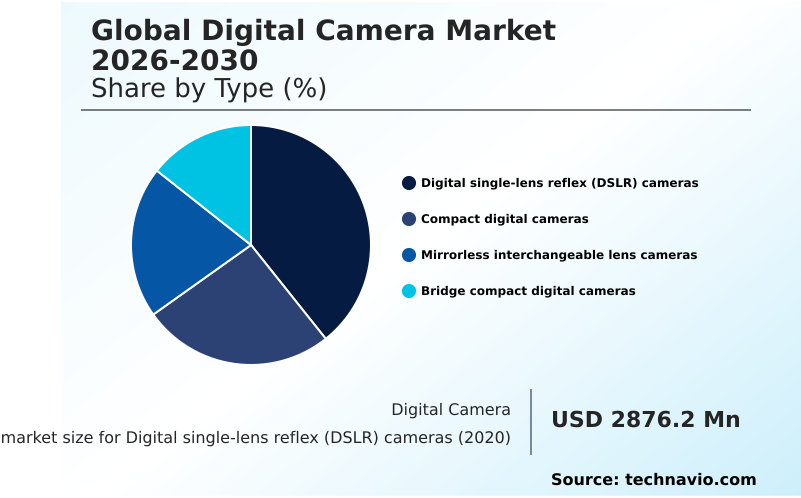
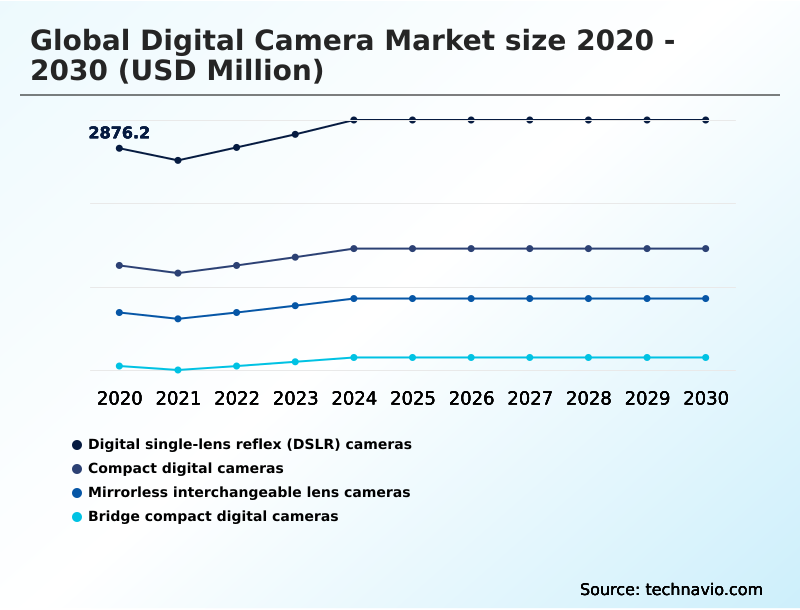
The Digital single-lens reflex (DSLR) cameras segment was valued at USD 3.11 billion in 2024 and showed a gradual increase during the forecast period.
Regional Analysis
APAC is estimated to contribute 47% to the growth of the global market during the forecast period.Technavio’s analysts have elaborately explained the regional trends and drivers that shape the market during the forecast period.
See How Digital Camera Market Demand is Rising in APAC Get Free Sample
The geographic landscape of the digital camera market is led by the APAC region, which is projected to contribute nearly 47% of incremental growth, expanding at a rate 1.7 percentage points higher than North America.
This growth is driven by a surge in demand for cameras supporting professional filmmaking and travel photography, where a high-quality full-frame CMOS sensor is crucial.
In contrast, mature markets in North America and Europe focus on the high-end professional market, valuing specialized equipment like a medium format mirrorless camera for fine art photographers.
The demand for specific hardware like a telephoto lens is strong in regions with popular wildlife photography and sports photography scenes.
This regional specialization impacts global supply chains, where optimized logistics have reduced distribution costs by up to 15% in high-growth areas, ensuring equipment for astrophotography and other niche genres reaches its target audience efficiently.
Market Dynamics
Our researchers analyzed the data with 2025 as the base year, along with the key drivers, trends, and challenges. A holistic analysis of drivers will help companies refine their marketing strategies to gain a competitive advantage.
- The modern photographer's journey often begins with the DSLR vs mirrorless camera for video debate, a choice that significantly impacts their creative potential. For those gravitating towards specialized fields, the question becomes more specific, such as finding the best camera for wildlife photography, which necessitates investing in a powerful telephoto lens for bird photography.
- This specialization influences manufacturing forecasts; for example, demand for cameras tailored for a high-resolution video recording workflow has grown twice as fast as for still-only models, directly impacting inventory planning. Others might be choosing a lens for astrophotography, where sensor performance and manual controls for creative photography are paramount.
- Understanding electronic viewfinder benefits is key for users transitioning to newer systems, as it fundamentally alters the shooting experience. The benefits of in-body image stabilization are now a core expectation, especially for a hybrid camera for photo and video. For professionals, the importance of a weather-sealed camera body and the ergonomics of professional camera bodies cannot be overstated.
- This trend toward specialization is also seen in the prosumer market, where understanding how to choose a vlogging camera or streamlining the content creator workflow is a primary concern. The premium compact camera vs smartphone argument continues to drive innovation at the entry point, while many enthusiasts are now focused on upgrading from a DSLR to a mirrorless system.
What are the key market drivers leading to the rise in the adoption of Digital Camera Industry?
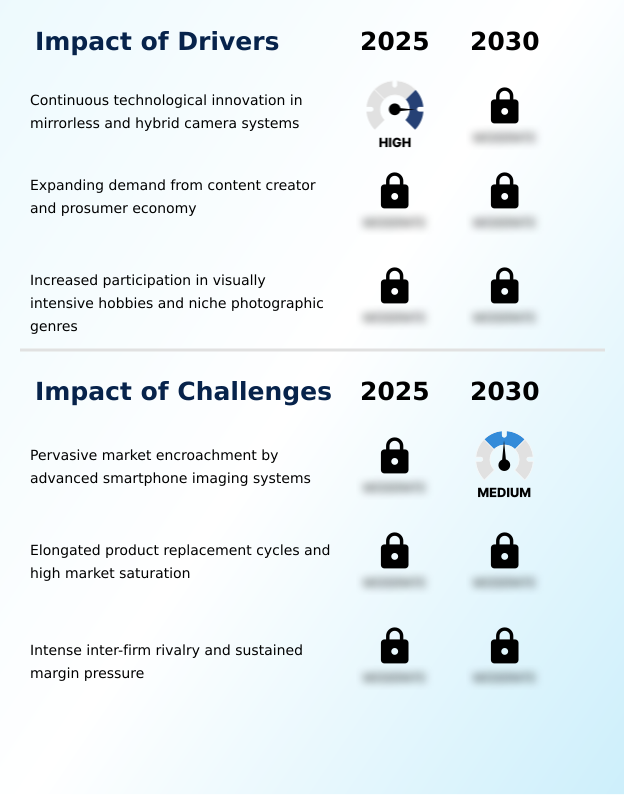
- Continuous technological innovation, particularly in the development of mirrorless and hybrid camera systems, is a primary driver for the market.
- Technological innovation is a primary driver, particularly with the transition to mirrorless systems and the rise of the creator economy. Advanced features like a sophisticated digital signal processor (DSP) and phase-detection autofocus are becoming standard.
- For instance, AI-driven subject tracking improves capture success rates in dynamic situations like sports photography by up to 40%, a compelling reason for upgrades.
- The demand for hybrid shooter capabilities has influenced over 80% of new product designs, integrating vlogger-friendly features.
- This focus on the prosumer caters to those engaged in wildlife photography and other visually intensive hobbies, where super-telephoto focal lengths and high performance are essential.
- The market is effectively cultivating a customer base that values the superior performance and ergonomic design of dedicated camera systems for their content creation workflow.
What are the market trends shaping the Digital Camera Industry?
- A dominant trend is reshaping the market through pronounced polarization of product offerings and consumer demand. This bifurcation has hollowed out the mid-range segment, creating two distinct poles: a high-margin professional tier and a contracted entry-level segment.
- A dominant trend reshaping the industry is market polarization, which has hollowed out the mid-range segment, seeing a 70% contraction in unit sales as flagship smartphones meet casual needs. This bifurcation has forced manufacturers to focus on two distinct poles: a high-margin segment for professionals and a contracted entry-level segment.
- The high-end professional market demands features that smartphones cannot replicate, such as a superior optical image stabilization and the creative flexibility of an interchangeable lens system. Consequently, flagship models with advanced features now command an average selling price 50% higher than five years ago.
- This strategy relies on cultivating a robust brand ecosystem to justify a high-consideration purchase and retain users who value a superior production value and the what-you-see-is-what-you-get experience of advanced viewfinders.
What challenges does the Digital Camera Industry face during its growth?
- The pervasive market encroachment by advanced smartphone imaging systems presents a formidable and defining challenge to the industry.
- The market's most formidable challenge is the encroachment of advanced smartphone imaging, which has absorbed over 90% of the casual photography market, rendering the traditional premium compact camera a niche product. This forces a strategic retreat to smaller, more demanding segments.
- A second critical challenge is the elongation of product replacement cycles, which have extended to nearly 5 years for a typical entry-level interchangeable lens camera, a 25% increase from the previous decade. This is exacerbated by the high cost of a complete system upgrade.
- This dynamic compels manufacturers to provide undeniable incentives for reinvestment, such as revolutionary raw video recording capabilities or a tangible leap in sensor performance, to persuade users to abandon still-functional equipment with professional support programs.
Exclusive Technavio Analysis on Customer Landscape
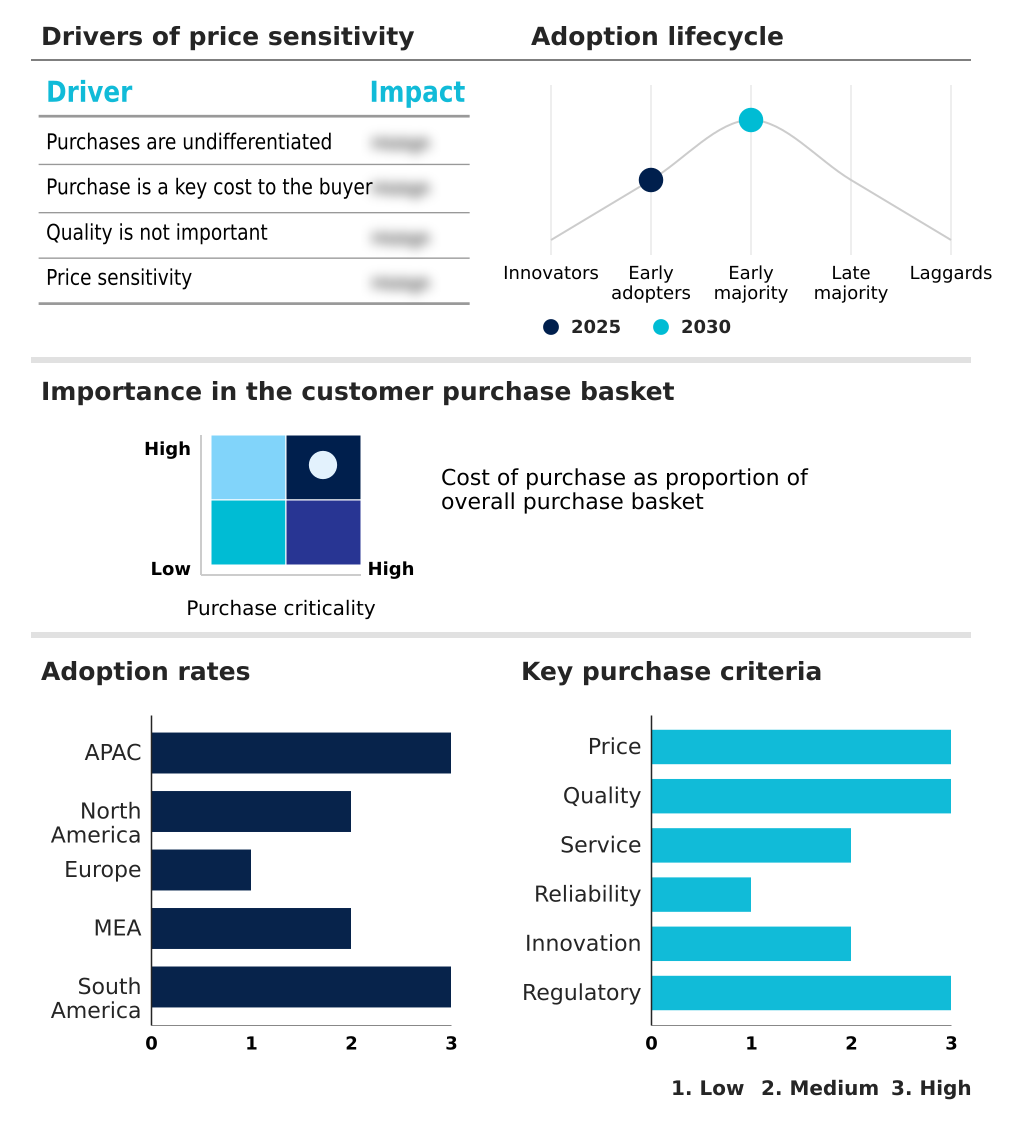
The digital camera market forecasting report includes the adoption lifecycle of the market, covering from the innovator’s stage to the laggard’s stage. It focuses on adoption rates in different regions based on penetration. Furthermore, the digital camera market report also includes key purchase criteria and drivers of price sensitivity to help companies evaluate and develop their market growth analysis strategies.
Customer Landscape of Digital Camera Industry
Competitive Landscape
Companies are implementing various strategies, such as strategic alliances, digital camera market forecast, partnerships, mergers and acquisitions, geographical expansion, and product/service launches, to enhance their presence in the industry.
ARRI AG - Key offerings include a comprehensive portfolio of imaging solutions, from established DSLR technologies to advanced mirrorless systems catering to diverse photographic and cinematographic applications.
The industry research and growth report includes detailed analyses of the competitive landscape of the market and information about key companies, including:
- ARRI AG
- Blackmagic Design Pty. Ltd.
- Canon Inc.
- Eastman Kodak Co.
- FUJIFILM Holdings Corp.
- GoPro Inc.
- Kenko Tokina Co. Ltd
- Leica Camera AG
- Nikon Corp.
- OM Digital Solutions Inc.
- Panasonic Holdings Corp.
- Phase One AS
- RED Digital Cinema LLC
- Ricoh Co. Ltd.
- Vivitar
- SIGMA CORP
- Sony Group Corp.
- SZ DJI Technology Co. Ltd.
- Victor Hasselblad AB
Qualitative and quantitative analysis of companies has been conducted to help clients understand the wider business environment as well as the strengths and weaknesses of key industry players. Data is qualitatively analyzed to categorize companies as pure play, category-focused, industry-focused, and diversified; it is quantitatively analyzed to categorize companies as dominant, leading, strong, tentative, and weak.
Recent Development and News in Digital camera market
- In August 2024, Sony Electronics announced its plan to introduce two new 4K handheld camcorders, the NXCAM HXR-NX800 and the XDCAM PXW-Z200, designed for professional videographers and content creators.
- In August 2024, Panasonic released the Lumix FZ80D, a minor refresh of a 2017 bridge camera model, primarily updating it with a USB-C port to comply with regulatory directives.
- In January 2025, Leica Camera AG introduced the SL3-S mirrorless camera, a product designed to cater specifically to professionals requiring exceptional low-light performance and speed.
- In March 2025, Hasselblad announced a strategic technology partnership with Adobe Inc. to integrate Adobe's computational photography and AI-powered editing algorithms directly into its next generation of medium-format cameras.
Dive into Technavio’s robust research methodology, blending expert interviews, extensive data synthesis, and validated models for unparalleled Digital Camera Market insights. See full methodology.
| Market Scope | |
|---|---|
| Page number | 302 |
| Base year | 2025 |
| Historic period | 2020-2024 |
| Forecast period | 2026-2030 |
| Growth momentum & CAGR | Accelerate at a CAGR of 4.2% |
| Market growth 2026-2030 | USD 1879.6 million |
| Market structure | Fragmented |
| YoY growth 2025-2026(%) | 4.0% |
| Key countries | Japan, China, South Korea, India, Australia, Indonesia, US, Canada, Mexico, Germany, UK, France, Italy, The Netherlands, Spain, UAE, South Africa, Saudi Arabia, Turkey, Israel, Brazil, Argentina and Chile |
| Competitive landscape | Leading Companies, Market Positioning of Companies, Competitive Strategies, and Industry Risks |
Research Analyst Overview
- The digital camera market is characterized by a relentless technological arms race, forcing a strategic pivot toward specialized, high-value segments. The industry's vitality is now driven by the performance gap created through innovations like the mirrorless interchangeable-lens camera, which enables superior on-sensor autofocus and a responsive electronic viewfinder.
- Competition is fierce to integrate features such as advanced in-body image stabilization, AI-driven subject tracking, and computational photography to automate complex tasks. The convergence of stills and video has produced the hybrid content creation engine, demanding high-resolution video recording with advanced video codecs and logarithmic gamma profile options.
- While the full-frame CMOS sensor remains a benchmark, specialized sensors like the APS-C sensor and even the niche Foveon-sensor have dedicated followings. Demand for certain specialized models has outstripped supply, with wait times for sought-after Micro Four Thirds models extending over six months, a 300% increase compared to typical product launch cycles.
- This highlights the market's shift toward serving professionals who require features like dual card slots, raw video recording, and access to medium format mirrorless cameras, moving far beyond the capabilities of older charge-coupled device (CCD) sensor technology.
What are the Key Data Covered in this Digital Camera Market Research and Growth Report?
-
What is the expected growth of the Digital Camera Market between 2026 and 2030?
-
USD 1.88 billion, at a CAGR of 4.2%
-
-
What segmentation does the market report cover?
-
The report is segmented by Type (Digital single-lens reflex (DSLR) cameras, Compact digital cameras, Mirrorless interchangeable lens cameras, and Bridge compact digital cameras), Distribution Channel (Offline, and Online), End-user (Pro photographers, Hobbyists, and Prosumers) and Geography (APAC, North America, Europe, Middle East and Africa, South America)
-
-
Which regions are analyzed in the report?
-
APAC, North America, Europe, Middle East and Africa and South America
-
-
What are the key growth drivers and market challenges?
-
Continuous technological innovation in mirrorless and hybrid camera systems, Pervasive market encroachment by advanced smartphone imaging systems
-
-
Who are the major players in the Digital Camera Market?
-
ARRI AG, Blackmagic Design Pty. Ltd., Canon Inc., Eastman Kodak Co., FUJIFILM Holdings Corp., GoPro Inc., Kenko Tokina Co. Ltd, Leica Camera AG, Nikon Corp., OM Digital Solutions Inc., Panasonic Holdings Corp., Phase One AS, RED Digital Cinema LLC, Ricoh Co. Ltd., Vivitar, SIGMA CORP, Sony Group Corp., SZ DJI Technology Co. Ltd. and Victor Hasselblad AB
-
Market Research Insights
- The market's dynamics are increasingly dictated by the prosumer economy, which has shifted development priorities. Hybrid shooter models tailored for the creator economy now account for over 60% of R&D focus in the interchangeable lens system segment.
- This response to the demand for superior production value has been critical, as features facilitating a streamlined content creation workflow can reduce post-production time by up to 40% for independent creators. The vlogging camera sub-segment, emphasizing live-streaming functionality and user-friendly interfaces, has seen a 25% year-over-year growth in demand.
- Consequently, manufacturers are cultivating a brand ecosystem that extends beyond the camera to include accessories and professional support programs, fostering loyalty in a high-consideration purchase environment where a hands-on customer experience remains influential.
We can help! Our analysts can customize this digital camera market research report to meet your requirements.
 RIA -
RIA - 
