
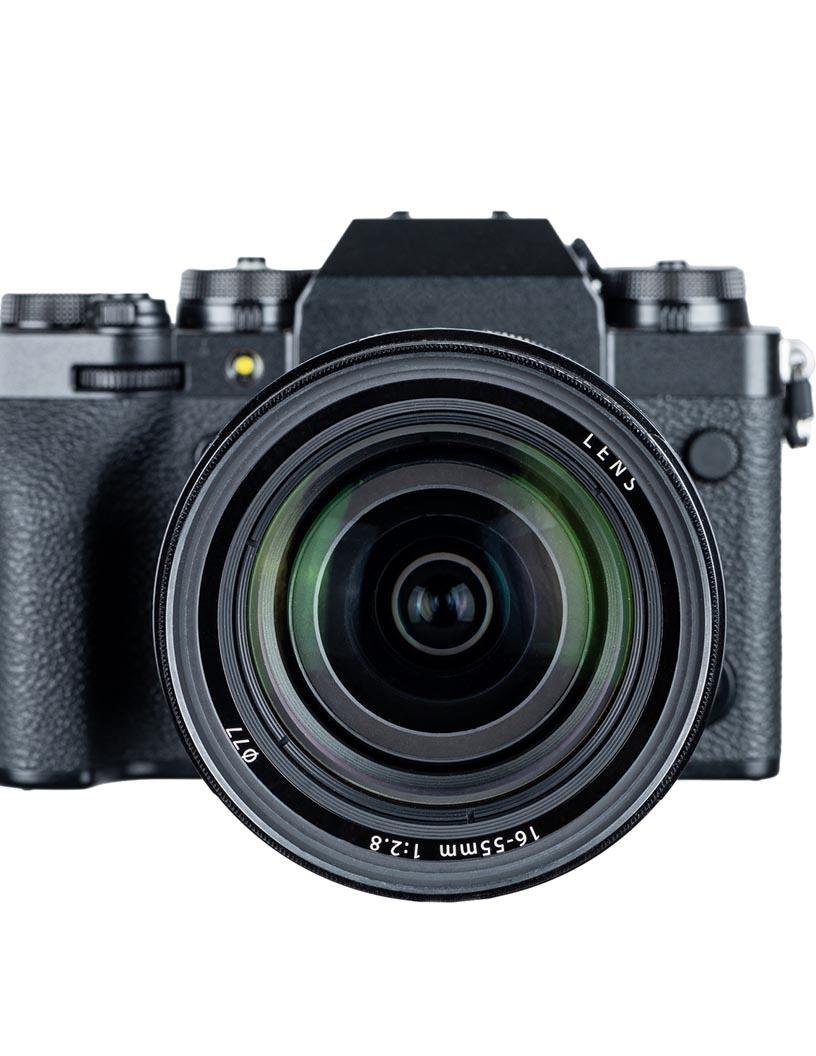


Mirrorless Camera Market Size 2025-2029
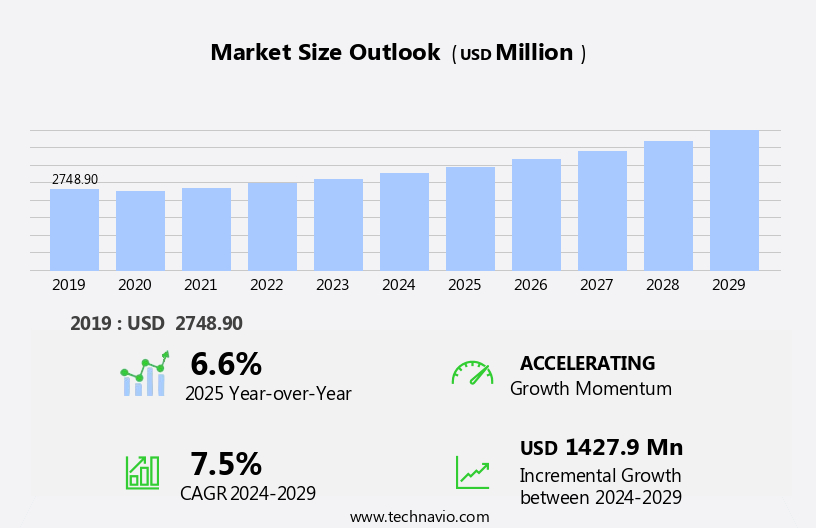
The mirrorless camera market size is forecast to increase by USD 1.43 billion at a CAGR of 7.5% between 2024 and 2029.
- The market is experiencing significant growth, driven by several key trends. New product launches in this segment continue to fuel market expansion, as manufacturers introduce innovative features and advanced technologies. Additionally, the increasing popularity of online retail sales is boosting market growth, as consumers turn to e-commerce platforms for convenience and competitive pricing. Furthermore, the proliferation of smartphones with high-quality cameras is influencing the market, as consumers seek more advanced imaging capabilities. Despite these growth factors, challenges persist, including intense competition and price pressures, which require market players to differentiate themselves through product innovation and strategic pricing. Overall, the market is poised for continued growth, driven by these trends and the evolving needs of consumers.
What will be the Size of the Mirrorless Camera Market During the Forecast Period?
- The market has experienced significant growth in recent years, surpassing DSLR camera sales due to its compact size, improved image quality, and advanced features. Mirrorless cameras utilize electronic viewfinders, providing real-time image previews and enabling features such as burst shooting and high-resolution sensors for exceptional image quality. The rise of social media platforms and vloggers has fueled demand for mirrorless cameras as versatile tools for content creation, particularly in the video domain. The smartphone industry's increasing camera capabilities have intensified competition, pushing mirrorless camera manufacturers to innovate. Autofocus systems have advanced with hybrid autofocus technology and AI capabilities, enhancing focus accuracy and speed. In parallel, the Pro AV Market has also seen a rise in demand for high-quality mirrorless cameras, as they are increasingly integrated into professional audio-visual setups for their exceptional video capture and versatility.
- Mirrorless camera products cater to various applications, from travel cameras to full-frame sensors, accommodating diverse photographic needs. Connectivity features, such as Wi-Fi and Bluetooth, enable seamless integration with digital media platforms. Mirrorless lenses and optical assemblies continue to evolve, offering a wide range of focal lengths and image customization options. Overall, the market is poised for continued growth, driven by technological advancements and evolving consumer preferences.
How is this Mirrorless Camera Industry segmented and which is the largest segment?
The mirrorless camera industry research report provides comprehensive data (region-wise segment analysis), with forecasts and estimates in "USD billion" for the period 2025-2029, as well as historical data from 2019-2023 for the following segments.
- Type
- Interchangeable lens
- Fixed lens
- Distribution Channel
- Offline
- Online
- Geography
- APAC
- China
- India
- Japan
- South Korea
- Europe
- Germany
- UK
- North America
- Canada
- US
- South America
- Brazil
- Middle East and Africa
- APAC
By Type Insights
- The interchangeable lens segment is estimated to witness significant growth during the forecast period.
Mirrorless interchangeable lens cameras, also known as compact system cameras, offer DSLR-quality images in a more compact design. These cameras, which lack optical viewfinders and utilize LCD screens or electronic viewfinders, support interchangeable lenses and have larger image sensors than compact cameras. Popular models provide features including minimum focusing distances, image-resolving capability, and the ability to create an out-of-focus background. Additionally, mirrorless cameras offer cinematic features, remote control capabilities, and full-frame image sensors. These cameras cater to photographers seeking DSLR-quality images in a more portable package.
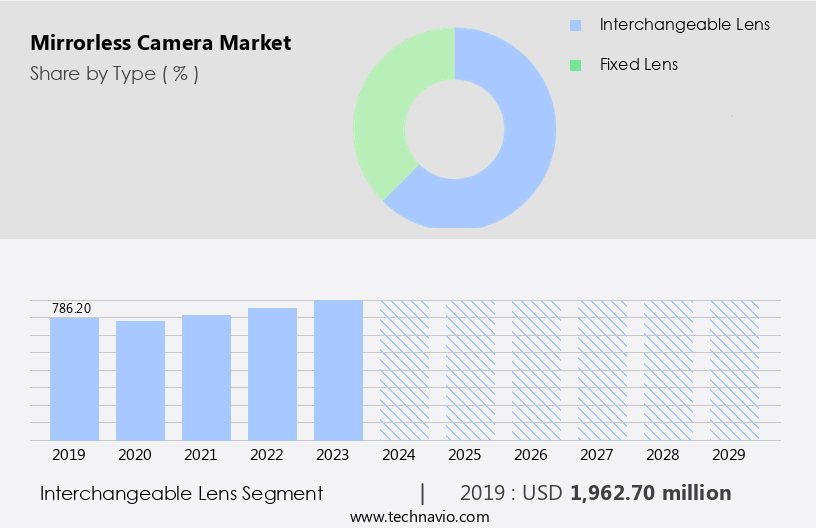
Get a glance at the Mirrorless Camera Industry report of share of various segments Request Free Sample
The interchangeable lens segment was valued at USD 1.96 billion in 2019 and showed a gradual increase during the forecast period.
Regional Analysis
- APAC is estimated to contribute 50% to the growth of the global market during the forecast period.
Technavio's analysts have elaborately explained the regional trends and drivers that shape the market during the forecast period.
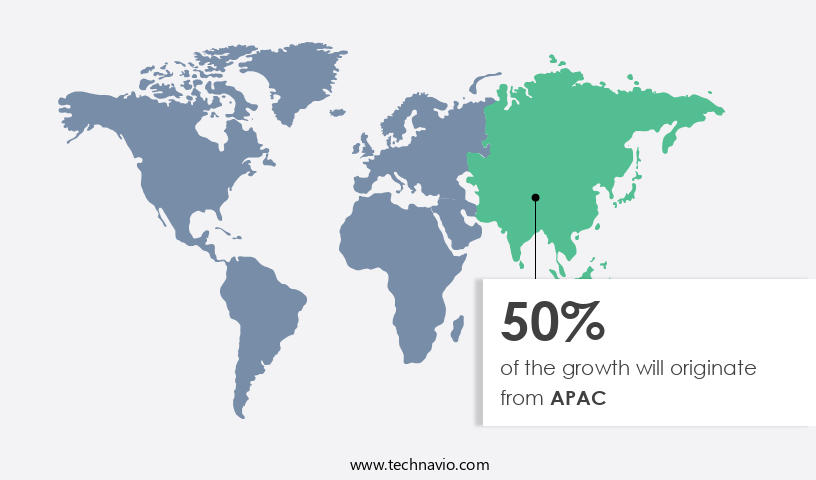
For more insights on the market share of various regions, Request Free Sample
The market in APAC held the largest revenue share in 2024, driven by strong manufacturing activities and significant mirrorless camera shipments. This trend is anticipated to continue, with the region's market growth rate outpacing other regions during the forecast period. However, the Chinese market is projected to experience a notable increase in mirrorless camera shipments. The entry of global brands, such as Canon and Nikon, into the APAC market will further fuel market expansion. Nevertheless, the smartphone industry poses a considerable challenge to the market in APAC, as high-end smartphone cameras continue to improve. Vloggers and social media platforms have also contributed to the growing popularity of mirrorless cameras, offering a more compact and versatile alternative to DSLR cameras with electronic viewfinders.
Market Dynamics
Our mirrorless camera market researchers analyzed the data with 2024 as the base year, along with the key drivers, trends, and challenges. A holistic analysis of drivers will help companies refine their marketing strategies to gain a competitive advantage.
What are the key market drivers leading to the rise in the adoption of the Mirrorless Camera Industry?
New product launches in mirrorless cameras is the key driver of the market.
- Mirrorless cameras have gained significant traction in the digital camera market, with numerous new product launches by both regional and international players fueling its growth. These innovative devices offer features such as electronic viewfinders, high-resolution sensors, and advanced autofocus systems, making them popular among vloggers, filmmakers, and photographers. The market is driven by the integration of computational photography technologies, AI capabilities, and scene detection, providing shooting assistance and improving image quality. Social media platforms and the smartphone industry have influenced consumer preferences towards mirrorless cameras, with the demand for high-quality content on these platforms increasing. The market is further driven by the availability of connectivity features such as Bluetooth and Wi-Fi, enabling remote control and easy sharing of images and videos.
- Manufacturers continue to improve mirrorless camera products with full-frame sensors, hybrid autofocus, and cinematic features, catering to the diverse needs of consumers. Weather-resistant mirrorless lenses, prime lenses, and zoom lenses with minimum focusing distances and high image-resolving capability are also gaining popularity. The market is expected to grow further, with increasing disposable income, customer lifestyles, and urbanization driving demand. The market dynamics are influenced by factors such as image quality, sensor size, processors, and the availability of multiple lenses. Overall, the market is an evolving space, with continuous innovation and advancements in photographic technology.
What are the market trends shaping the Mirrorless Camera Industry?
Growing online retail sales is the upcoming trend in the market.
- Mirrorless cameras have gained significant traction in the digital camera market, with global shipments exhibiting a steady increase. This trend is driven by several factors, including advanced autofocus systems, high-resolution sensors, and processors that deliver superior image quality. The integration of electronic viewfinders and connectivity features, such as Bluetooth and Wi-Fi, has also made mirrorless cameras an attractive option for vloggers and content creators. Moreover, the market is not limited to still photography. With cinematic features and full-frame sensors, these cameras are increasingly being used by filmmakers for short films, ads, and marketing videos. The availability of mirrorless lenses with various focal lengths, including prime and zoom lenses, cater to diverse shooting requirements.
- The market is further fueled by the growing disposable income and changing customer lifestyles, particularly in urban areas. Social media platforms have also played a pivotal role in popularizing mirrorless cameras, with many influencers and vloggers showcasing their gear improvements and shooting assistance features. Manufacturers are continually innovating, integrating computational photography technologies, AI capabilities, and scene detection to enhance the user experience. Weather-resistant mirrorless cameras with minimum focusing distances and high image-resolving capability are becoming increasingly popular among photographers.
What challenges does the Mirrorless Camera Industry face during its growth?
The proliferation of smartphones is a key challenge affecting the industry's growth.
- Mirrorless cameras represent a significant segment of the digital camera market, offering advanced photographic technology with features such as electronic viewfinders, high-resolution sensors, and AI capabilities. These cameras cater to various user groups, including vloggers, travel photographers, and filmmakers, who require superior image quality and cinematic features. Mirrorless cameras have gained popularity due to their hybrid autofocus systems, which combine phase and contrast detection, enabling faster and more accurate focusing. Additionally, mirrorless cameras offer interchangeable lenses, including prime and zoom lenses, and weather-resistant designs, making them suitable for various shooting conditions. The market is driven by several factors, including increasing disposable income and evolving customer lifestyles, urbanization, and the need for gear improvements.
- Connectivity features, such as Bluetooth and Wi-Fi, enable easy sharing of content on social media platforms, making mirrorless cameras an attractive option for content creators. The market is also influenced by the smartphone industry, with high-end smartphones offering advanced camera features, posing a challenge to mirrorless cameras. However, mirrorless cameras offer superior image quality, burst shooting capabilities, and interchangeable lenses, making them a preferred choice for photographers and videographers. The market is expected to grow, driven by the increasing adoption of computational photography technologies, such as scene detection and shooting assistance, and the integration of artificial intelligence capabilities. The market is also expected to benefit from the increasing demand for full-frame sensors and the availability of full-frame mirrorless cameras from major players.
Exclusive Customer Landscape
The mirrorless camera market forecasting report includes the adoption lifecycle of the market, covering from the innovator's stage to the laggard's stage. It focuses on adoption rates in different regions based on penetration. Furthermore, the market report also includes key purchase criteria and drivers of price sensitivity to help companies evaluate and develop their market growth analysis strategies.
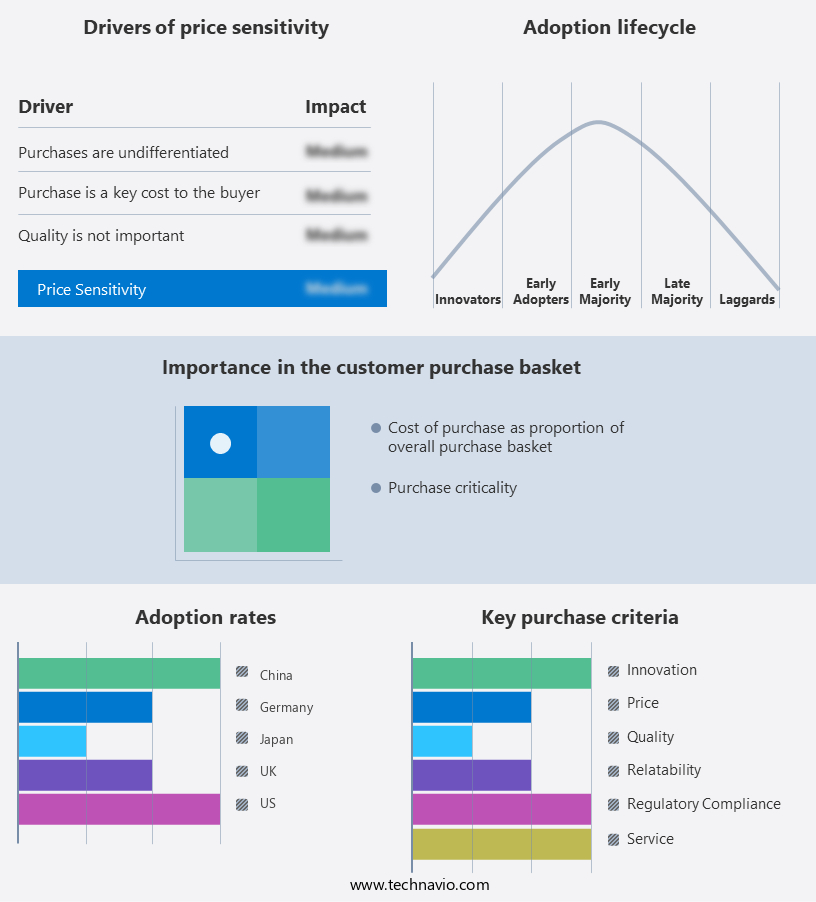
Customer Landscape
Key Companies & Market Insights
Companies are implementing various strategies, such as strategic alliances, market forecast, partnerships, mergers and acquisitions, geographical expansion, and product/service launches, to enhance their presence in the industry.
Canon Inc. - The company provides a range of mirrorless cameras that include the advanced EOS R6 Mark II, the versatile EOS M50 Mark II, the compact EOS M200, the entry-level EOS R100, and the high-performance EOS R5 and EOS R8 models.
The mirrorless camera industry research and growth report includes detailed analyses of the competitive landscape of the market and information about key companies, including:
- Carl Zeiss AG
- Eastman Kodak Co.
- FUJIFILM Holdings Corp.
- Leica Camera AG
- Nikon Corp.
- Olympus Corp.
- Panasonic Holdings Corp.
- Phase One AS
- Samsung Electronics Co. Ltd.
- SIGMA Corp.
- Sony Group Corp.
- SZ DJI Technology Co. Ltd.
Qualitative and quantitative analysis of companies has been conducted to help clients understand the wider business environment as well as the strengths and weaknesses of key industry players. Data is qualitatively analyzed to categorize companies as pure play, category-focused, industry-focused, and diversified; it is quantitatively analyzed to categorize companies as dominant, leading, strong, tentative, and weak.
Research Analyst Overview
Mirrorless cameras have revolutionized the digital photography landscape with their compact design and advanced features. These innovative devices offer an electronic viewfinder (EVF) in place of the traditional optical viewfinder found in DSLR cameras. This shift in technology provides numerous benefits, making mirrorless cameras an attractive option for both amateur and professional photographers. The market has experienced significant growth due to the increasing demand for high-quality, portable imaging solutions. The technological advancements in sensors, processors, and autofocus systems have enabled mirrorless cameras to deliver superior image quality, even in low-light conditions. Moreover, the ability to shoot high-resolution images at a rapid pace and record video makes these cameras versatile tools for content creation.
Moreover, one of the most significant advantages of mirrorless cameras is their connectivity features. Bluetooth and Wi-Fi capabilities allow users to easily transfer images and videos to various digital media platforms, including social media, for instant sharing. This functionality caters to the growing community of vloggers and influencers who rely on their cameras to document their lives and create engaging content. Another factor driving the popularity of mirrorless cameras is the integration of computational photography technologies and artificial intelligence. Scene detection and shooting assistance features help users capture optimal images, while hybrid autofocus systems ensure sharp focus, even with moving subjects.
Furthermore, interchangeable lenses offer flexibility, enabling photographers to adapt to various shooting scenarios. The market caters to diverse customer lifestyles and disposable income levels. Travel photographers appreciate the compact size and lightweight design, while filmmakers and short filmmakers benefit from the cinematic features and full-frame sensors. The availability of mid-telephoto prime lenses and zoom lenses, as well as weather-resistant models, further expands the market's appeal. The market's growth is not limited to still photography. The devices' high-resolution sensors and advanced video capabilities have made them a popular choice for content creators in various industries, including advertising and marketing. The integration of remote control functionality allows for more efficient and precise shooting, further enhancing their appeal.
|
Mirrorless Camera Market Scope |
|
|
Report Coverage |
Details |
|
Page number |
196 |
|
Base year |
2024 |
|
Historic period |
2019-2023 |
|
Forecast period |
2025-2029 |
|
Growth momentum & CAGR |
Accelerate at a CAGR of 7.5% |
|
Market Growth 2025-2029 |
USD 1.43 billion |
|
Market structure |
Concentrated |
|
YoY growth 2024-2025(%) |
6.6 |
|
Key countries |
China, US, Japan, South Korea, Germany, India, Brazil, Australia, Canada, and UK |
|
Competitive landscape |
Leading Companies, Market Positioning of Companies, Competitive Strategies, and Industry Risks |
What are the Key Data Covered in this Market Research and Growth Report?
- CAGR of the Mirrorless Camera industry during the forecast period
- Detailed information on factors that will drive the market growth and forecasting between 2025 and 2029
- Precise estimation of the size of the market and its contribution of the industry in focus to the parent market
- Accurate predictions about upcoming market growth and trends and changes in consumer behaviour
- Growth of the market across APAC, Europe, North America, South America, and Middle East and Africa
- Thorough analysis of the market's competitive landscape and detailed information about companies
- Comprehensive analysis of factors that will challenge the growth of industry companies
We can help! Our analysts can customize this market research report to meet your requirements. Get in touch
 RIA -
RIA - 
