


Digital Transformation In Retail Sector Market Size 2025-2029
The digital transformation in retail sector market size is forecast to increase by USD 305.2 billion, at a CAGR of 17.6% between 2024 and 2029.
- In the retail sector, digital transformation is a key driver for enhancing operational efficiency and staying competitive. The sector's increasing adoption of technology partnerships underscores this trend, as retailers seek to leverage advanced technologies to streamline processes, improve customer experience, and gain insights from data. However, this shift towards digitalization also presents challenges. Retailers often lack the in-house capabilities and expertise required to implement and manage complex digital technologies effectively.
- This skills gap can hinder progress and limit the full potential of digital initiatives. As retailers navigate this landscape, prioritizing strategic partnerships, investing in talent development, and embracing a culture of innovation will be essential for success.
What will be the Size of the Digital Transformation In Retail Sector Market during the forecast period?
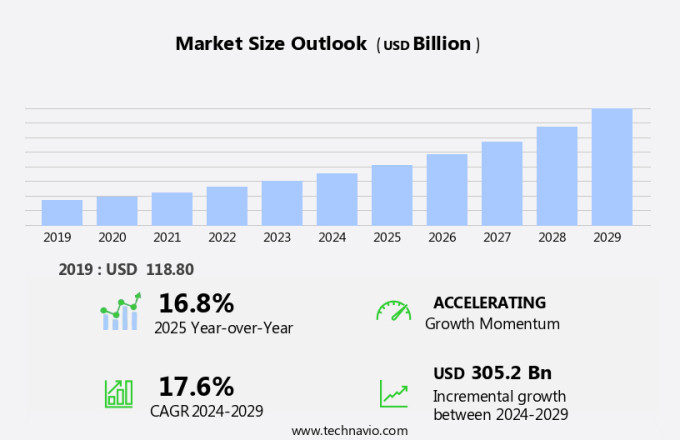
Explore in-depth regional segment analysis with market size data - historical 2019-2023 and forecasts 2025-2029 - in the full report.
Request Free Sample
The retail sector continues to undergo digital transformation, with market dynamics evolving at an unprecedented pace. Augmented reality (AR) and virtual reality (VR) technologies are reshaping customer experiences, enabling immersive product visualization and virtual try-ons. Blockchain technology is streamlining supply chain operations, ensuring transparency and security. Mobile app development is a key focus, with retailers optimizing delivery through predictive analytics and delivery optimization. Machine learning (ML) and artificial intelligence (AI) are powering personalized shopping experiences, from customer segmentation and journey mapping to voice commerce and content marketing. In-store analytics, user experience (UX), and user interface (UI) design are essential components of omnichannel retail strategies, ensuring seamless integration of online and offline channels.
Cloud computing and business intelligence are driving data-driven decision making, while point-of-sale systems and pay-per-click (PPC) advertising are optimized for efficiency. Emerging trends include the integration of smart shelves, digital signage, and social media marketing into retail strategies. Sustainability initiatives are gaining traction, with e-commerce platforms adopting green practices and implementing circular economy models. Subscription models and customer feedback are transforming customer loyalty programs, while employee training and agile development are essential for staying competitive. The retail landscape is constantly shifting, with disruptive technologies like AR, ML, and cloud computing shaping the future of retail. Data privacy remains a critical concern, with retailers implementing robust security measures to protect customer information.
The digital transformation in retail is an ongoing process, with retailers continually adapting to meet evolving customer demands and market trends.
How is this Digital Transformation In Retail Sector Industry segmented?
The digital transformation in retail sector industry research report provides comprehensive data (region-wise segment analysis), with forecasts and estimates in "USD billion" for the period 2025-2029, as well as historical data from 2019-2023 for the following segments.
- Technology
- IoT
- Cloud computing
- Big data
- AI
- AR/VR
- Product
- Consumer electronics
- Media and entertainment
- Apparel
- Food and beverage
- Others
- Geography
- North America
- US
- Canada
- Europe
- France
- Germany
- Italy
- Spain
- UK
- APAC
- China
- India
- Japan
- Rest of World (ROW)
- North America
By Technology Insights
The iot segment is estimated to witness significant growth during the forecast period.
In the retail sector, digital transformation is driving innovation through various technologies, including augmented reality (AR), blockchain, mobile app development, and more. AR is enhancing the shopping experience by providing immersive product visualization, while blockchain technology ensures secure and transparent financial transactions. Mobile apps enable seamless delivery optimization and customer loyalty programs, boosting financial performance. Machine learning (ML) and artificial intelligence (AI) power predictive analytics, in-store analytics, and inventory management software, improving operational efficiency. RFID technology and IoT-enabled smart shelves enable real-time inventory tracking and automated reordering. Emerging trends like cloud computing, mobile commerce, and omnichannel retail are disrupting traditional business models.
Customer experience is at the forefront, with personalized shopping experiences, digital signage, and customer service chatbots enhancing engagement. Data privacy is a priority, with big data analytics and data-driven decision making ensuring customer trust. Sustainability initiatives are also gaining importance, with e-commerce platforms adopting green practices. Emerging technologies like voice commerce, virtual reality (VR), and supply chain optimization are shaping the future of retail. Last-mile delivery, retail analytics, and subscription models are optimizing operations and reducing costs. Customer feedback, employee training, and agile development are essential for continuous improvement. Content marketing, point-of-sale systems, pay-per-click (PPC) advertising, and social media marketing are effective marketing strategies.
Overall, digital transformation is revolutionizing the retail sector, with technology-driven innovations enhancing the customer experience and improving operational efficiency.
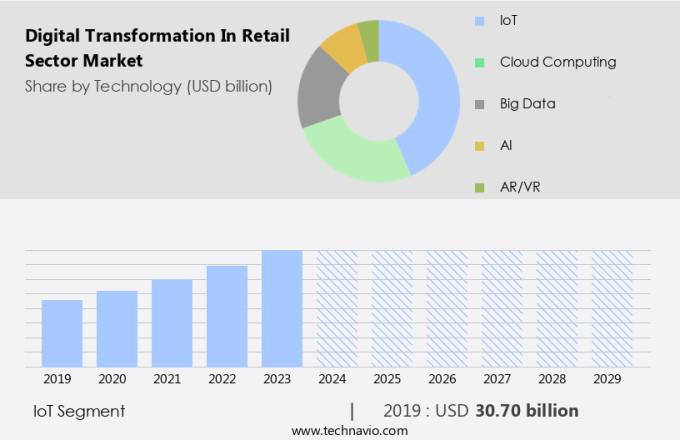
The IoT segment was valued at USD 30.70 billion in 2019 and showed a gradual increase during the forecast period.
Regional Analysis
North America is estimated to contribute 34% to the growth of the global market during the forecast period.Technavio’s analysts have elaborately explained the regional trends and drivers that shape the market during the forecast period.

The digital transformation market in North America's retail sector is experiencing significant growth, driven by the adoption of advanced technologies such as cloud computing, big data analytics, machine learning, artificial intelligence, and the Internet of Things. Retailers are leveraging these technologies to optimize business processes, enhance customer experiences, and make data-driven decisions. For instance, the use of predictive analytics and customer segmentation enables personalized shopping experiences, while inventory management software and RFID technology ensure efficient stock control. Moreover, emerging trends like augmented reality, virtual reality, and voice commerce are reshaping the retail landscape. Mobile app development and mobile commerce are becoming essential channels for retailers to engage with customers and expand their reach.
Delivery optimization and last-mile delivery solutions are also gaining popularity to meet the growing demand for convenience and speed. Customer loyalty programs, digital signage, customer service chatbots, and email marketing are some other digital initiatives that retailers are adopting to enhance customer engagement and retention. Sustainability initiatives and supply chain optimization are also critical areas of focus for retailers to reduce costs and improve operational efficiency. Furthermore, disruptive technologies like blockchain and supply chain optimization are transforming the retail industry by providing transparency, security, and traceability in the supply chain. Agile development and employee training are essential to keep up with the rapidly evolving technological landscape.
Retailers are also investing in business intelligence and data privacy to make informed decisions and protect customer data. Omnichannel retailing and content marketing are becoming essential strategies for retailers to engage with customers across multiple touchpoints and channels. In conclusion, the digital transformation in the retail sector in North America is driven by the adoption of advanced technologies, changing customer preferences, and the need to stay competitive. Retailers are leveraging these trends to optimize business processes, enhance customer experiences, and make data-driven decisions. The future of retail is digital, and retailers who embrace technology and innovation will thrive in this dynamic market.
Market Dynamics
Our researchers analyzed the data with 2024 as the base year, along with the key drivers, trends, and challenges. A holistic analysis of drivers will help companies refine their marketing strategies to gain a competitive advantage.
What are the key market drivers leading to the rise in the adoption of Digital Transformation In Retail Sector Industry?
- The retail sector's growing requirement to boost operational efficiency serves as the primary market driver.
- Retailers are focusing on optimizing operational efficiency to enhance financial performance. Inefficiencies in retail operations, such as stockouts and high employee turnover, can negatively impact the bottom line. To address these challenges, retailers are leveraging advanced technologies to streamline their business functions. Augmented Reality (AR) is being used to enhance the shopping experience by allowing customers to visualize products in real-time before making a purchase. AR can also be used for inventory management, improving accuracy and reducing stockouts. Blockchain technology is being adopted for supply chain management, ensuring transparency and security in the delivery of goods.
- Mobile app development is a key area of focus for retailers, enabling them to offer personalized shopping experiences, real-time inventory updates, and contactless payments. Predictive analytics and machine learning (ML) are being used to gain insights into customer behavior and preferences, enabling retailers to offer targeted promotions and improve customer loyalty. In-store analytics and inventory management software, along with RFID technology, help retailers optimize stock levels and reduce shrinkage. Delivery optimization is another area of focus, with retailers using AI and ML to optimize delivery routes and reduce delivery times. Overall, the implementation of these technologies is helping retailers increase operational efficiency and profitability.
What are the market trends shaping the Digital Transformation In Retail Sector Industry?
- The retail industry is witnessing an increasing trend towards forming technology partnerships. This strategic move is essential for businesses seeking to remain competitive in today's market.
- The retail sector is undergoing a digital transformation, driven by emerging trends such as user experience (UX), big data analytics, and mobile commerce. Retailers are prioritizing UX and user interface (UI) design to enhance customer experience, while leveraging cloud computing for scalability and cost savings. Big data analytics enables personalized shopping experiences and market research, allowing retailers to gain valuable insights into consumer behavior. Disruptive technologies like AI and digital signage are also gaining traction, enhancing the overall shopping experience. However, data privacy concerns remain a significant challenge, necessitating robust security measures. Retailers are partnering with technology providers to stay competitive, gaining access to advanced technical expertise and innovative solutions.
- For instance, Mondelez International's strategic partnership with Amazon Web Services (AWS) in December 2024, aimed at enhancing digital innovation and achieving greater security, agility, and reliability for its operations. The retail landscape is continually evolving, and retailers must adapt to these changes to meet evolving customer expectations and remain competitive.
What challenges does the Digital Transformation In Retail Sector Industry face during its growth?
- The absence of in-house digital technology capabilities and expertise is a significant challenge impeding industry growth.
- Retailers are increasingly embracing digital transformation to enhance customer experiences and drive business growth. Advanced technologies such as customer service chatbots, email marketing, sustainability initiatives, e-commerce platforms, and omnichannel retail are becoming essential components of retail strategies. Customer segmentation and journey mapping help businesses understand their customers better, enabling personalized interactions and targeted marketing. Voice commerce and point-of-sale systems streamline transactions, while content marketing and pay-per-click advertising boost brand visibility. However, implementing these technologies requires specialized skills and expertise. Retailers need professionals with a deep understanding of new technologies and the ability to analyze unstructured data.
- They must also have the skills to identify relevant data, implement advanced statistics, and develop new coding techniques to meet evolving business needs. Building a dedicated team with these skills and investing in specialized infrastructure and high processing power is crucial for successful data analysis. By focusing on these digital initiatives, retailers can create immersive, harmonious shopping experiences that prioritize customer needs and preferences.
Exclusive Customer Landscape
The digital transformation in retail sector market forecasting report includes the adoption lifecycle of the market, covering from the innovator’s stage to the laggard’s stage. It focuses on adoption rates in different regions based on penetration. Furthermore, the digital transformation in retail sector market report also includes key purchase criteria and drivers of price sensitivity to help companies evaluate and develop their market growth analysis strategies.

Customer Landscape
Key Companies & Market Insights
Companies are implementing various strategies, such as strategic alliances, digital transformation in retail sector market forecast, partnerships, mergers and acquisitions, geographical expansion, and product/service launches, to enhance their presence in the industry.
Accenture PLC - In the retail sector, digital transformation is a crucial driver of business success. Accenture's real-time data and analytics platform is a key tool for enhancing customer experience and optimizing supply chain operations. By leveraging advanced analytics, retailers can gain valuable insights into consumer behavior and market trends, enabling them to make data-driven decisions and deliver personalized experiences. Additionally, real-time supply chain visibility allows for efficient inventory management and quick response to market fluctuations. With Accenture's digital solutions, retailers can stay competitive and adapt to the ever-evolving market landscape.
The industry research and growth report includes detailed analyses of the competitive landscape of the market and information about key companies, including:
- Accenture PLC
- Alibaba Group Holding Ltd.
- Alphabet Inc.
- Amazon.com Inc.
- Capgemini Services SAS
- Carmatec IT Solutions Pvt. Ltd.
- DXC Technology Co.
- H2O.ai Inc.
- Infosys Ltd.
- Intel Corp.
- International Business Machines Corp.
- Microsoft Corp.
- N-iX
- Oracle Corp.
- Salesforce Inc.
- SAP SE
- Siemens AG
- Tata Consultancy Services Ltd.
- TIBCO Software Inc.
- UST Inc.
Qualitative and quantitative analysis of companies has been conducted to help clients understand the wider business environment as well as the strengths and weaknesses of key industry players. Data is qualitatively analyzed to categorize companies as pure play, category-focused, industry-focused, and diversified; it is quantitatively analyzed to categorize companies as dominant, leading, strong, tentative, and weak.
Recent Development and News in Digital Transformation In Retail Sector Market
- In January 2024, Walmart announced the acquisition of Zeke, a tech startup specializing in computer vision and machine learning, to enhance its in-store inventory management and shopping experience. This strategic move aimed to strengthen Walmart's digital transformation efforts and better compete with e-commerce giants like Amazon (Reuters, 2024).
- In March 2024, Amazon and Microsoft formed a strategic partnership to accelerate Amazon's digital transformation journey. Microsoft would provide Amazon with its Azure cloud services, enabling Amazon to scale its e-commerce, advertising, and AWS businesses more efficiently (Bloomberg, 2024).
- In April 2025, IKEA launched its new mobile app, integrating augmented reality (AR) technology. This innovation allowed customers to virtually place furniture in their homes before purchasing, enhancing the shopping experience and increasing customer engagement (IKEA Press Release, 2025).
- In May 2025, Target completed a USD750 million investment in its digital capabilities, including its e-commerce platform and digital fulfillment network. This significant investment aimed to improve Target's online sales and overall digital transformation strategy (Target Press Release, 2025).
Research Analyst Overview
- In the retail sector, digital transformation is revolutionizing business operations and customer experiences. Marketing automation and A/B testing optimize campaigns, while real-time inventory tracking and automated order fulfillment enhance efficiency. Customer service metrics are analyzed in data warehouses, and conversion rate optimization is a priority. Flexible work arrangements and business process automation boost employee engagement. Cloud-based infrastructure ensures data security and enables social media integration, online reviews management, and personalized product recommendations. Agile methodology and facial recognition technology streamline processes, and circular economy principles promote sustainable practices.
- Diversity and inclusion initiatives, voice search optimization, and circular economy principles are key trends. Digital wallets and near-field communication simplify transactions, and fraud detection safeguards against losses. Location-based marketing and remote work capabilities expand reach, and biometric authentication ensures security. Overall, retailers embracing these digital advancements gain a competitive edge.
Dive into Technavio’s robust research methodology, blending expert interviews, extensive data synthesis, and validated models for unparalleled Digital Transformation In Retail Sector Market insights. See full methodology.
|
Market Scope |
|
|
Report Coverage |
Details |
|
Page number |
226 |
|
Base year |
2024 |
|
Historic period |
2019-2023 |
|
Forecast period |
2025-2029 |
|
Growth momentum & CAGR |
Accelerate at a CAGR of 17.6% |
|
Market growth 2025-2029 |
USD 305.2 billion |
|
Market structure |
Fragmented |
|
YoY growth 2024-2025(%) |
16.8 |
|
Key countries |
US, China, UK, Germany, Japan, Canada, France, India, Italy, and Spain |
|
Competitive landscape |
Leading Companies, Market Positioning of Companies, Competitive Strategies, and Industry Risks |
What are the Key Data Covered in this Digital Transformation In Retail Sector Market Research and Growth Report?
- CAGR of the Digital Transformation In Retail Sector industry during the forecast period
- Detailed information on factors that will drive the growth and forecasting between 2025 and 2029
- Precise estimation of the size of the market and its contribution of the industry in focus to the parent market
- Accurate predictions about upcoming growth and trends and changes in consumer behaviour
- Growth of the market across North America, Europe, APAC, Middle East and Africa, and South America
- Thorough analysis of the market’s competitive landscape and detailed information about companies
- Comprehensive analysis of factors that will challenge the digital transformation in retail sector market growth of industry companies
We can help! Our analysts can customize this digital transformation in retail sector market research report to meet your requirements.