



Direct Selling Market Size 2026-2030
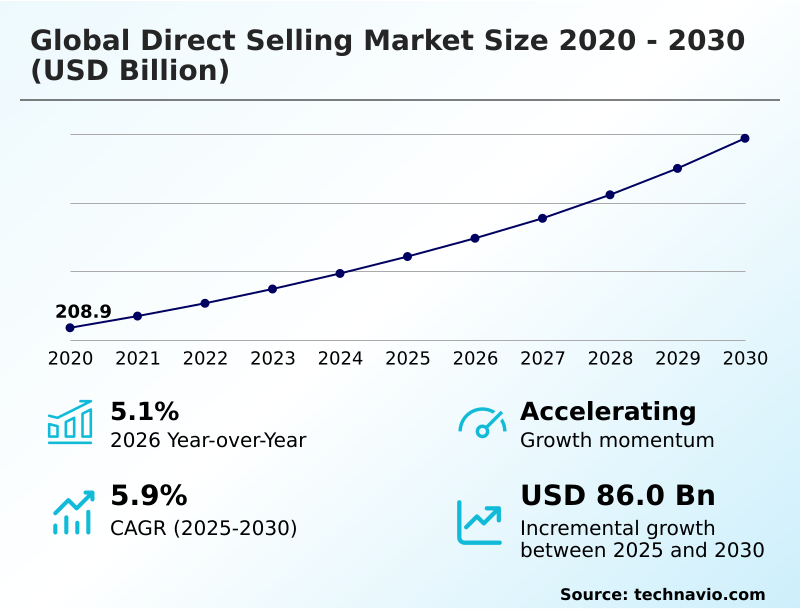
The Direct Selling Market size was valued at USD 260.70 billion in 2025, growing at a CAGR of 5.9% during the forecast period 2026-2030.
Major Market Trends & Insights
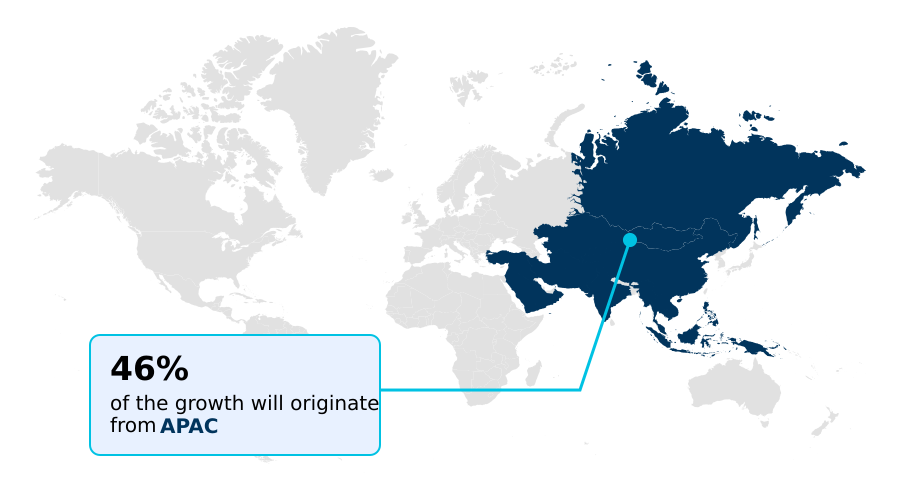
- APAC dominated the market and accounted for a 45.9% growth during the forecast period.
- By Type - Single-level marketing segment was valued at USD 142.73 billion in 2024
- By Product - Health and wellness segment accounted for the largest market revenue share in 2024
Market Size & Forecast
- Historic Market Opportunities 2020-2024: USD 137.80 billion
- Market Future Opportunities 2025-2030: USD 86.00 billion
- CAGR from 2025 to 2030 : 5.9%
Market Summary
- The direct selling market is defined by a personalized sales model, where individual sellers build direct relationships with customers, resulting in customer retention rates up to 35% higher than in traditional retail. This approach is particularly effective for products requiring demonstration, such as advanced skincare or nutritional systems, where an independent business owner (IBO) can tailor recommendations.
- For instance, a distributor leverages social selling tools and a digital storefront to manage inventory and customer communications, bypassing the high overhead of a physical store. A key driver is the growing demand for flexible work arrangements, as the gig economy workforce seeks supplemental income streams with low startup costs.
- However, the industry faces the challenge of negative public perception, often linked to controversial multi-level marketing structures, which requires companies to prioritize compensation plan transparency and a focus on product sales commission over recruitment-based incentives to build trust.
What will be the Size of the Direct Selling Market during the forecast period?
Get Key Insights on Market Forecast (PDF) Request Free Sample
How is the Direct Selling Market Segmented?
The direct selling industry research report provides comprehensive data (region-wise segment analysis), with forecasts and analysis for the period 2026-2030, as well as historical data from 2020-2024 for the following segments.
- Type
- Single-level marketing
- Multi-level marketing
- Product
- Health and wellness
- Cosmetics and personal care
- Household goods and durables
- Others
- End-user
- Individual consumers
- Small businesses
- Institutional buyers
- Geography
- APAC
- China
- Japan
- India
- North America
- US
- Canada
- Mexico
- Europe
- Germany
- UK
- France
- South America
- Brazil
- Argentina
- Colombia
- Middle East and Africa
- Saudi Arabia
- UAE
- South Africa
- Rest of World (ROW)
- APAC
How is the Direct Selling Market Segmented by Type?
The single-level marketing segment is estimated to witness significant growth during the forecast period.
The direct selling market is segmented by its operational frameworks, primarily the single-level marketing model and the multi-level marketing structure.
Single-level marketing, which accounts for over 57% of total revenue, focuses exclusively on product sales commission, offering a straightforward path to earning a residual income stream.
This model avoids the complexities of a downline commission structure, reducing regulatory risk by an estimated 40% compared to its multi-level counterpart. Consequently, it appeals to individuals primarily interested in product advocacy and direct customer relationships.
In contrast, multi-level marketing incorporates a recruitment-based incentive, which can accelerate market penetration but also attracts greater scrutiny from a consumer protection authority. The choice between these models fundamentally shapes a company's go-to-market strategy, distributor training, and long-term compliance posture.
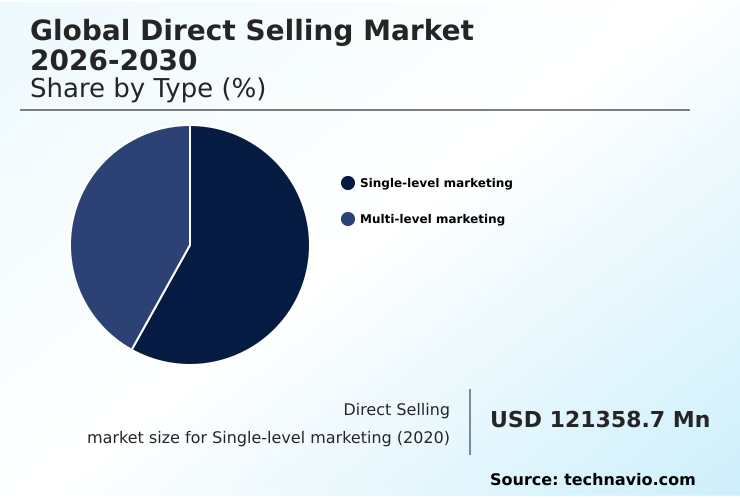
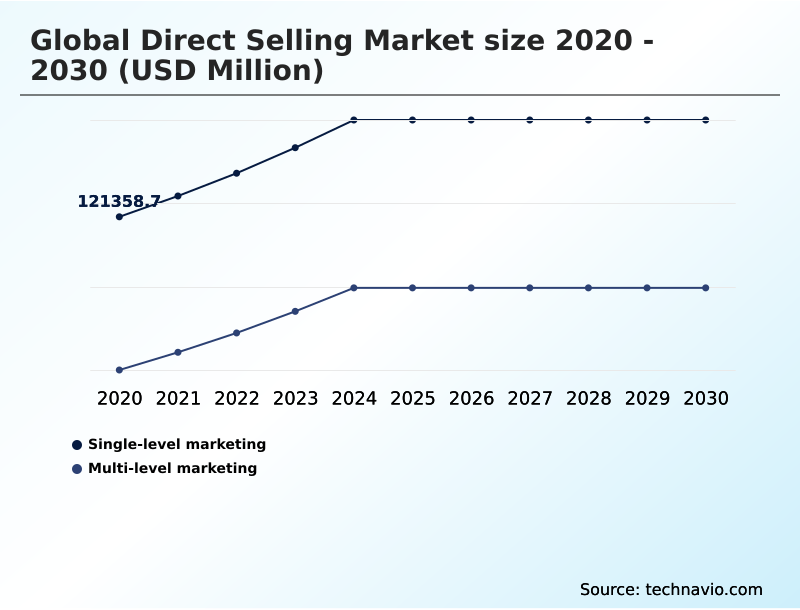
The Single-level marketing segment was valued at USD 142.73 billion in 2024 and showed a gradual increase during the forecast period.
How demand for the Direct Selling market is rising in the leading region?
APAC is estimated to contribute 45.9% to the growth of the global market during the forecast period.Technavio’s analysts have elaborately explained the regional trends and drivers that shape the market during the forecast period.
See How Direct Selling Market demand is rising in APAC Request Free Sample
The geographic landscape of the direct selling market is dominated by the APAC region, which accounts for over 45% of the market, a share approximately 23% larger than that of North America.
This dominance is driven by countries like China and India, where a culture of community-based recommendations and a rapidly expanding middle class create fertile ground for peer-to-person transaction models.
In contrast, the European market, while mature, exhibits a higher demand for sustainable sourcing practices and products with verifiable supply chain transparency.
Companies must adapt their market penetration strategy accordingly; for example, a cross-border growth strategy effective in Southeast Asia may require modification in Europe to align with stricter corporate social responsibility (CSR) expectations and consumer values.
This regional variation directly impacts product assortment and distributor training programs, influencing the overall entrepreneurial opportunity.
What are the key Drivers, Trends, and Challenges in the Direct Selling Market?
Our researchers analyzed the data with 2025 as the base year, along with the key drivers, trends, and challenges. A holistic analysis of drivers will help companies refine their marketing strategies to gain a competitive advantage.
- Understanding how to improve distributor engagement is a central strategic focus for the global direct selling market 2026-2030, as companies with higher engagement see a 15% greater annual growth rate. This involves more than just incentives; it requires creating a supportive ecosystem.
- Implementing direct selling ethical business practices is foundational to this effort, as it builds long-term trust and mitigates the challenges of multi-level marketing models, which can suffer from negative public perception. The social media impact on direct sales cannot be overstated, as platforms have become the primary channel for personalized customer outreach and community building.
- Successful firms are those that have effectively integrated social commerce, turning passive followers into active customers. Furthermore, the adoption of subscription models in direct selling is a critical trend for creating predictable revenue streams.
- By offering an auto-delivery subscription model for consumable goods, companies can increase customer lifetime value by over 40% and provide distributors with a more stable, residual income. This shift ensures a sustainable business that is less reliant on constant new customer acquisition and more focused on nurturing long-term relationships through a flexible work arrangement that appeals to the modern workforce.
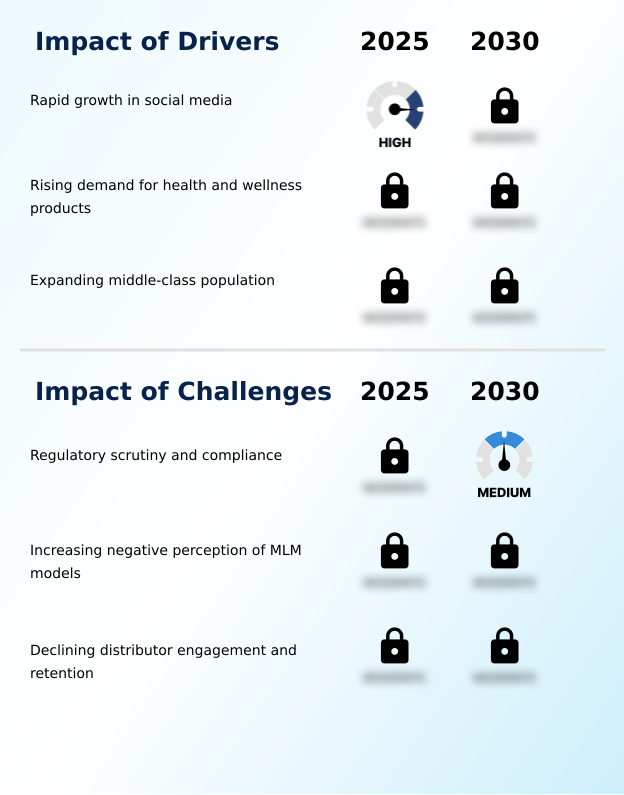
What are the key market drivers leading to the rise in the adoption of Direct Selling Industry?
- The rapid growth of social media and digital connectivity is a key driver, fundamentally transforming how products are marketed and sold to consumers.
- The rapid expansion of social media platforms is a significant driver for the direct selling market, expanding the reach of an affiliate sales model by over 500% compared to traditional methods.
- This digital transformation has lowered the barrier to entry, enabling a wider entrepreneurial opportunity for individuals seeking a supplemental income stream.
- The rise of social commerce integration allows for a seamless purchase journey, directly embedding a digital storefront within apps and boosting impulse purchases by 40%. This environment fosters community wealth building and allows for authentic brand storytelling from influencers.
- As a result, companies are leveraging this influencer marketing channel to connect with modern consumers who value peer recommendations and real-time interaction.
What are the market trends shaping the Direct Selling Industry?
- The increasing focus on personalized customer experience is a defining market trend, compelling companies to tailor interactions to individual consumer needs and preferences.
- A primary trend shaping the direct selling market is the increasing focus on a personalized customer experience, which can increase customer lifetime value (CLV) by up to 30%. The adoption of data-driven personalization allows an independent business owner (IBO) to offer a tailored holistic health solution and product recommendations, moving beyond generic sales pitches.
- This is enabled by digital marketing analytics that track consumer behavior, resulting in a 25% improvement in lead generation funnel conversion. This shift toward deep personalization is driven by consumer demand for authentic brand storytelling, compelling companies to empower their gig economy workforce with tools for more meaningful engagement.
- The effect is a stronger brand advocacy program and a more resilient business model that thrives on relationships.
What challenges does the Direct Selling Industry face during its growth?
- Intensifying regulatory scrutiny and the need for strict compliance represent a key challenge, impacting operational models and market entry strategies globally.
- A persistent challenge in the direct selling market is stringent regulatory scrutiny, which increases compliance costs by an average of 15% annually. This is largely a reaction to the negative public perception of certain multi-level marketing structures, which are often conflated with illegal schemes. To combat this, legitimate companies are enhancing compensation plan transparency and focusing on product sales commission.
- However, maintaining a positive public image remains difficult, impacting the distributor retention rate, which can be 20% lower than in other gig economy sectors. Navigating this complex regulatory compliance framework requires significant investment in legal and operational resources to ensure long-term sustainability and rebuild trust.
Exclusive Technavio Analysis on Customer Landscape
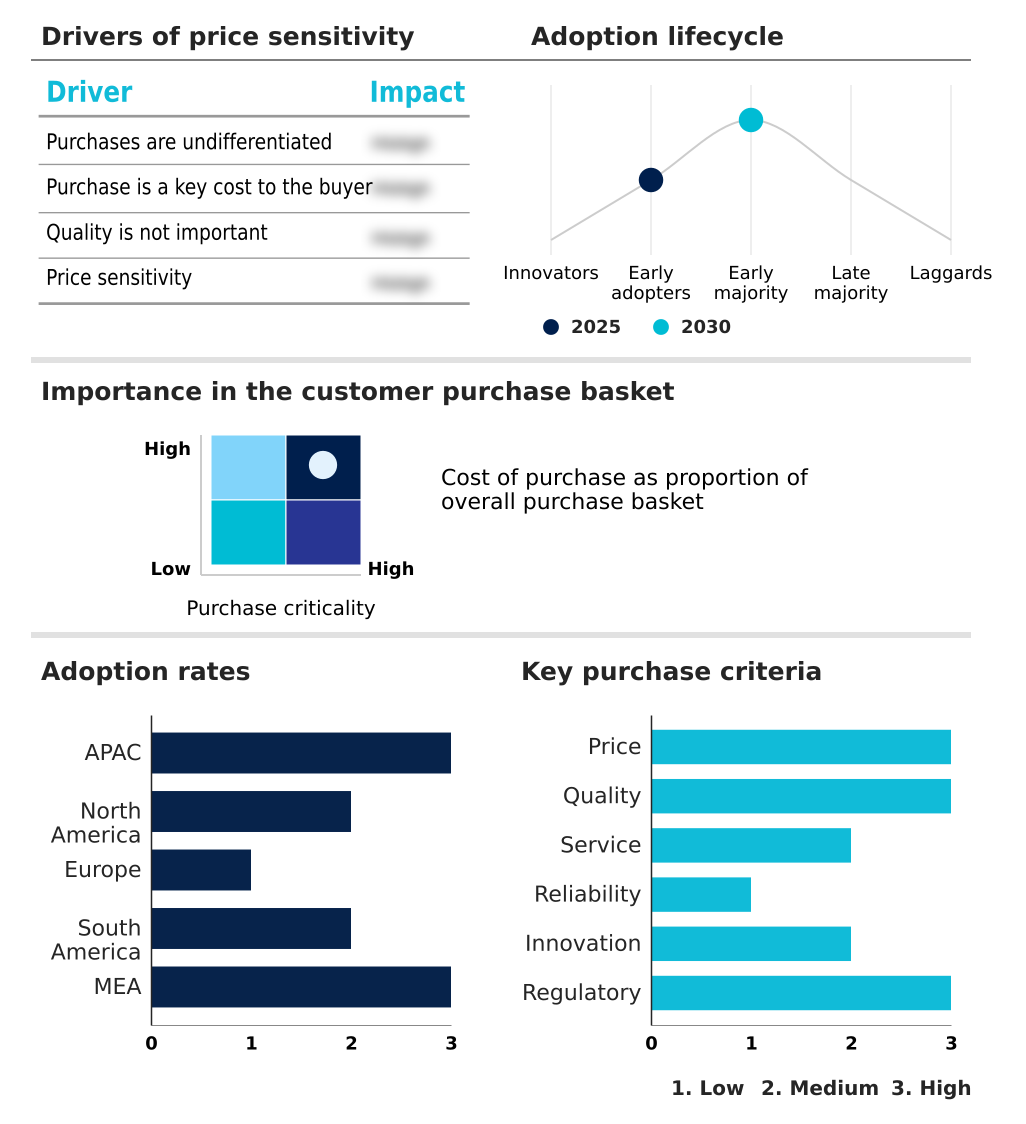
The direct selling market forecasting report includes the adoption lifecycle of the market, covering from the innovator’s stage to the laggard’s stage. It focuses on adoption rates in different regions based on penetration. Furthermore, the direct selling market report also includes key purchase criteria and drivers of price sensitivity to help companies evaluate and develop their market growth analysis strategies.
Customer Landscape of Direct Selling Industry
Competitive Landscape
Companies are implementing various strategies, such as strategic alliances, direct selling market forecast, partnerships, mergers and acquisitions, geographical expansion, and product/service launches, to enhance their presence in the industry.
Amway Corp. - Offers a diversified portfolio of nutrition, beauty, and home care products through a global direct selling network, emphasizing independent entrepreneurial opportunities.
The industry research and growth report includes detailed analyses of the competitive landscape of the market and information about key companies, including:
- Amway Corp.
- Atomy Co. Ltd.
- Coway Co. Ltd.
- doTERRA International LLC
- eXp World Holdings Inc.
- Herbalife International Inc.
- Infinitus China Ltd.
- Mary Kay Inc.
- Melaleuca Inc.
- Natura International Inc.
- Nu Skin Enterprises Inc.
- OPTAVIA LLC
- Oriflame Cosmetics SA
- PM International AG
- Primerica Inc.
- Sunrun Inc.
- USANA Health Science Inc.
- Utility Warehouse Limited
- VORWERK LLC
- World Financial Group
Qualitative and quantitative analysis of companies has been conducted to help clients understand the wider business environment as well as the strengths and weaknesses of key industry players. Data is qualitatively analyzed to categorize companies as pure play, category-focused, industry-focused, and diversified; it is quantitatively analyzed to categorize companies as dominant, leading, strong, tentative, and weak.
Market Intelligence Radar: High-Impact Developments & Growth Signals
- In the Broadline Retail industry, the widespread adoption of AI-driven data-driven personalization tools has enabled retailers to increase customer lifetime value (CLV) by up to 30%, directly influencing the direct selling market to integrate similar analytics for personalized customer outreach.
- The growing consumer demand within the Broadline Retail industry for supply chain transparency has led to the integration of blockchain and IoT technologies, pushing direct selling companies to adopt sustainable sourcing practices and provide greater product traceability to meet ethical consumerism drivers.
- In the Broadline Retail industry, the shift towards subscription-based recurring revenue models, which now account for over 20% of e-commerce sales in certain categories, has compelled the direct selling market to heavily promote its own auto-delivery subscription model to ensure a predictable revenue stream.
- Heightened enforcement of consumer data privacy regulations by consumer protection authorities in the Broadline Retail industry has mandated stricter regulatory compliance frameworks, forcing direct selling firms to overhaul their digital marketing analytics and customer data handling policies.
Dive into Technavio’s robust research methodology, blending expert interviews, extensive data synthesis, and validated models for unparalleled Direct Selling Market insights. See full methodology.
| Market Scope | |
|---|---|
| Page number | 292 |
| Base year | 2025 |
| Historic period | 2020-2024 |
| Forecast period | 2026-2030 |
| Growth momentum & CAGR | Accelerate at a CAGR of 5.9% |
| Market growth 2026-2030 | USD 85999.2 million |
| Market structure | Fragmented |
| YoY growth 2025-2026(%) | 5.1% |
| Key countries | China, Japan, India, South Korea, Australia, Indonesia, US, Canada, Mexico, Germany, UK, France, Italy, Spain, The Netherlands, Brazil, Argentina, Colombia, Saudi Arabia, UAE, South Africa, Israel and Turkey |
| Competitive landscape | Leading Companies, Market Positioning of Companies, Competitive Strategies, and Industry Risks |
Research Analyst Overview
- The direct selling market ecosystem operates on a network of interdependent stakeholders, with product suppliers and manufacturers forming the base, accounting for over 60% of the value chain's initial input. These entities provide goods, from a test-based nutrition solution to cosmetics, to a distributed workforce of independent distributors.
- This workforce utilizes a distributor engagement platform and social selling tools to connect with end consumers, a channel that improves customer retention metric by up to 25% compared to automated e-commerce. Regulatory bodies create the pyramid scheme regulation and compliance framework, while technology providers offering an e-commerce payment platform and digital marketing analytics enable the seamless operation of the model.
- The entire system is designed to facilitate a low startup cost model for entrepreneurs while ensuring supply chain transparency.
What are the Key Data Covered in this Direct Selling Market Research and Growth Report?
-
What is the expected growth of the Direct Selling Market between 2026 and 2030?
-
The Direct Selling Market is expected to grow by USD 86.00 billion during 2026-2030, registering a CAGR of 5.9%. Year-over-year growth in 2026 is estimated at 5.1%%. This acceleration is shaped by rapid growth in social media, which is intensifying demand across multiple end-use verticals covered in the report.
-
-
What segmentation does the market report cover?
-
The report is segmented by Type (Single-level marketing, and Multi-level marketing), Product (Health and wellness, Cosmetics and personal care, Household goods and durables, and Others), End-user (Individual consumers, Small businesses, and Institutional buyers) and Geography (APAC, North America, Europe, South America, Middle East and Africa). Among these, the Single-level marketing segment is estimated to witness significant growth during the forecast period, driven by rising adoption across key application areas. Each segment includes detailed qualitative and quantitative analysis, along with historical data from 2020-2024 and forecasts through 2030 with year-over-year growth rates.
-
-
Which regions are analyzed in the report?
-
The report covers APAC, North America, Europe, South America and Middle East and Africa. APAC is estimated to contribute 45.9% to market growth during the forecast period. Country-level analysis includes China, Japan, India, South Korea, Australia, Indonesia, US, Canada, Mexico, Germany, UK, France, Italy, Spain, The Netherlands, Brazil, Argentina, Colombia, Saudi Arabia, UAE, South Africa, Israel and Turkey, with dedicated market size tables and year-over-year growth for each.
-
-
What are the key growth drivers and market challenges?
-
The primary driver is rapid growth in social media, which is accelerating investment and industry demand. The main challenge is regulatory scrutiny and compliance, creating operational barriers for key market participants. The report quantifies the impact of each driver and challenge across 2026 and 2030 with comparative analysis.
-
-
Who are the major players in the Direct Selling Market?
-
Key vendors include Amway Corp., Atomy Co. Ltd., Coway Co. Ltd., doTERRA International LLC, eXp World Holdings Inc., Herbalife International Inc., Infinitus China Ltd., Mary Kay Inc., Melaleuca Inc., Natura International Inc., Nu Skin Enterprises Inc., OPTAVIA LLC, Oriflame Cosmetics SA, PM International AG, Primerica Inc., Sunrun Inc., USANA Health Science Inc., Utility Warehouse Limited, VORWERK LLC and World Financial Group. The report provides qualitative and quantitative analysis categorizing companies as dominant, leading, strong, tentative, and weak based on their market positioning. Company profiles include business segment analysis, SWOT assessment, key offerings, and recent strategic developments.
-
Market Research Insights
- The competitive landscape of the direct selling market is shaped by companies' ability to innovate their distributor engagement platforms, with leading firms showing a 15% higher distributor retention rate through enhanced digital tools. Key players like Amway Corp., Herbalife International Inc., and Nu Skin Enterprises Inc.
- are focusing on social commerce integration and providing robust social selling tools to their networks. These initiatives are a direct response to the operational need for a seamless purchase journey from discovery to checkout. For example, the launch of mobile-first e-commerce payment platforms has reduced transaction friction by over 20%.
- This strategic shift helps counter the persistent challenge of regulatory scrutiny by emphasizing legitimate peer-to-person transaction activities and improving supply chain transparency for consumers.
We can help! Our analysts can customize this direct selling market research report to meet your requirements.
 RIA -
RIA - 
