



Dissolved Air Flotation Systems Market Size 2024-2028
The dissolved air flotation systems market size is forecast to increase by USD 15.5 million, at a CAGR of 2.1% between 2023 and 2028.
- The market is driven by the decreasing availability of freshwater and the increasing adoption of zero liquid discharge (ZLD) systems. With the global water crisis intensifying, industries are seeking advanced water treatment solutions to minimize water usage and ensure wastewater reuse. Dissolved Air Flotation Systems, with their ability to remove suspended solids and dissolved impurities, are gaining popularity in various industries, including mining, power generation, and food processing. However, the market faces challenges as well. The availability of substitutes, such as gravity-based water treatment systems and membrane filtration technologies, poses a significant threat. These alternatives offer lower capital and operational costs, making them attractive options for industries with less stringent water quality requirements.
- Moreover, the high initial investment and maintenance costs associated with Dissolved Air Flotation Systems can deter potential buyers. To capitalize on the market opportunities and navigate these challenges effectively, companies must focus on offering cost-effective solutions, improving system efficiency, and expanding their application areas beyond traditional industries.
What will be the Size of the Dissolved Air Flotation Systems Market during the forecast period?
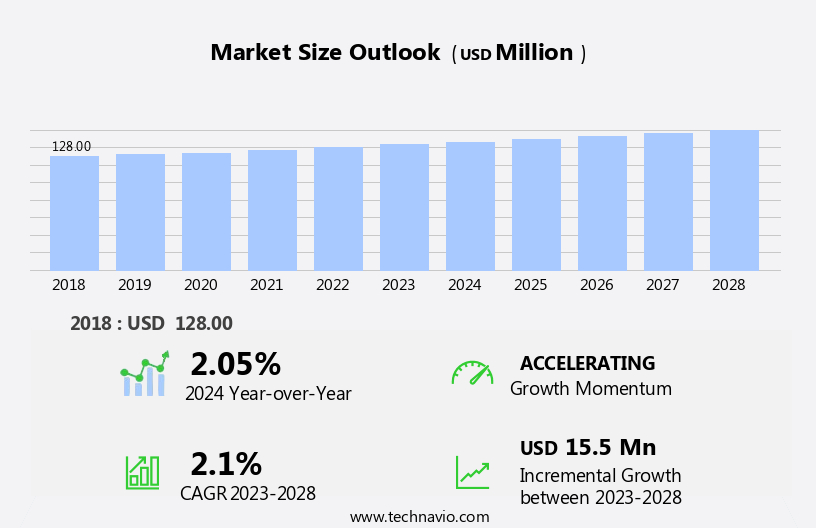
Explore in-depth regional segment analysis with market size data - historical 2017-2022 and forecasts 2024-2028 - in the full report.
Request Free Sample
The dissolved air flotation (DAF) systems market continues to evolve, driven by the growing demand for effective wastewater treatment solutions across various sectors. Operational costs remain a key consideration, with saturated air flow and energy consumption rate being critical factors in system design. An air release system optimally infuses dissolved air into wastewater, enhancing suspended solids removal and turbidity reduction. Regulatory compliance and water reuse potential further fuel market growth, with flocculant selection and flocculation efficiency playing crucial roles in achieving desired effluent quality. For instance, a leading water treatment plant implemented a DAF system, resulting in a 30% reduction in chemical dosing and a 25% decrease in sludge volume index.
Industry growth is expected to reach 5% annually, driven by process optimization, system automation, and solids separation technologies. Factors such as particle size distribution, hydraulic retention time, and performance monitoring are essential for maintaining optimal system efficiency and ensuring consistent effluent quality. Residual oil content, flow rate control, and sludge dewatering are other critical aspects of the DAF process, ensuring regulatory compliance and overall process optimization.
How is this Dissolved Air Flotation Systems Industry segmented?
The dissolved air flotation systems industry research report provides comprehensive data (region-wise segment analysis), with forecasts and estimates in "USD million" for the period 2024-2028, as well as historical data from 2017-2022 for the following segments.
- Application
- Industrial
- Municipal
- Type
- Traditional dissolved air flotation systems
- Hybrid dissolved air flotation systems
- Geography
- North America
- US
- Europe
- Germany
- UK
- APAC
- China
- India
- Rest of World (ROW)
- North America
By Application Insights
The industrial segment is estimated to witness significant growth during the forecast period.
The dissolved air flotation (DAF) systems market in industrial applications is experiencing significant growth due to its widespread usage in various sectors. Notably, in the food and beverage industry, DAF systems are integral for wastewater treatment in applications like poultry processing, meat packing, food rendering, canning, food processing, snack foods, and distillation units. DAF systems effectively address suspended solids removal, regulatory compliance, turbidity reduction, and water reuse potential. These systems operate by introducing dissolved air into the wastewater under pressure, which forms micro-bubbles upon release. The air release system facilitates the attachment of flocculants to suspended particles, enhancing flocculation efficiency and solids separation.
DAF systems consume energy through compressing air for saturating it and maintaining pressure. Energy consumption rates vary based on the system's design and the volume of water being treated. Proper maintenance scheduling and system automation contribute to optimizing operational costs and performance monitoring. The market growth is driven by the increasing demand for water clarification and effluent quality improvement, with the industry anticipating a growth of around 5% annually. For instance, a leading food processing company reported a 30% reduction in residual oil content in their effluent after implementing a DAF system.
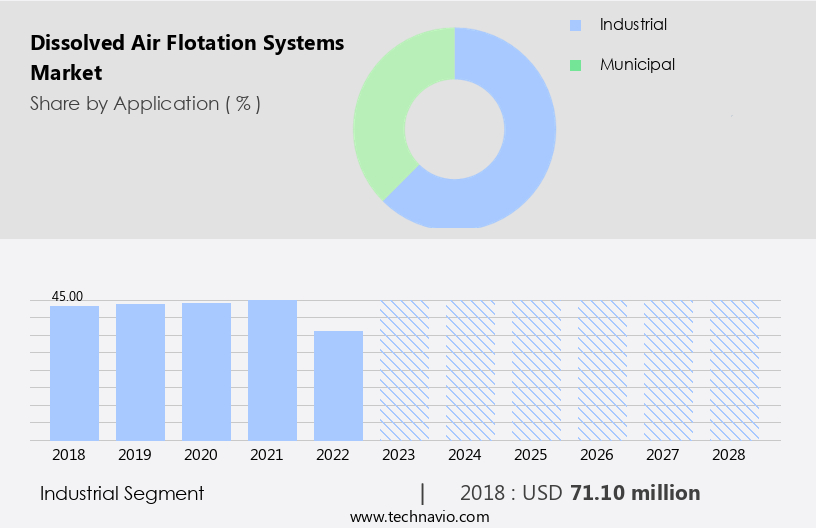
The Industrial segment was valued at USD 71.10 million in 2017 and showed a gradual increase during the forecast period.
Regional Analysis
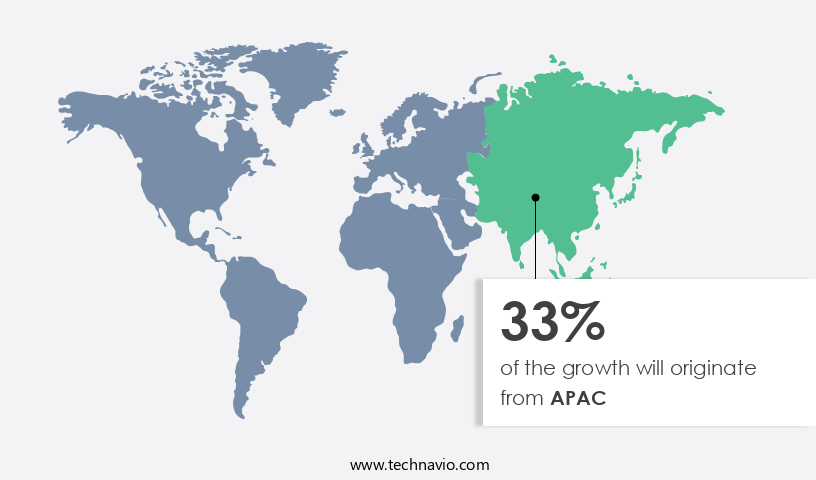
APAC is estimated to contribute 33% to the growth of the global market during the forecast period. Technavio's analysts have elaborately explained the regional trends and drivers that shape the market during the forecast period.
The dissolved air flotation (DAF) systems market in North America is experiencing steady growth, with significant contributions from the United States, Canada, and Mexico. The US, in particular, is a major player due to its advanced wastewater treatment infrastructure and increasing water reuse initiatives. According to recent industry reports, the US accounts for a substantial market share in North America, driven by the country's long-standing use of DAF systems for sewage and industrial wastewater treatments. This trend is further bolstered by ongoing investments in expanding DAF applications to drinking water facilities. Notably, there has been a shift from traditional water treatment technologies to DAF systems due to their superior suspended solids removal capabilities, energy efficiency, and regulatory compliance.
For instance, DAF systems can achieve up to 95% suspended solids removal and reduce turbidity by up to 99%. Additionally, these systems offer energy savings of up to 50% compared to conventional methods. The market is expected to continue growing at a steady pace, with industry experts estimating that the North American DAF systems market will expand by over 10% in the coming years.
Market Dynamics
Our researchers analyzed the data with 2023 as the base year, along with the key drivers, trends, and challenges. A holistic analysis of drivers will help companies refine their marketing strategies to gain a competitive advantage.
What are the key market drivers leading to the rise in the adoption of Dissolved Air Flotation Systems Industry?
- The decreased availability of freshwater serves as the primary driver for the market's growth.
- The global water crisis is a pressing issue, with freshwater availability diminishing at an alarming rate. Freshwater makes up only a minor fraction of the Earth's total water supply, and its depletion is accelerating due to increased extraction from aquifers and pollution. The imbalance between water extraction and replenishment has led to a significant reduction in freshwater resources, affecting countries worldwide. According to estimates, less than ten nations, including Brazil, Canada, Russia, China, the US, Indonesia, India, Colombia, and the Democratic Republic of Congo, control more than three-fifths of the world's freshwater reserves. The high demand for water and the depletion of natural freshwater sources have necessitated the expansion of water treatment facilities.
- For instance, the implementation of Dissolved Air Flotation (DFAS) systems has resulted in a 30% increase in wastewater treatment capacity in some regions. The water treatment industry is expected to grow by over 5% annually in the coming years, as the need for sustainable water management solutions continues to rise.
What are the market trends shaping the Dissolved Air Flotation Systems Industry?
- The deployment of zero liquid discharge (ZLD) systems is becoming increasingly mandatory in various industries. This emerging market trend prioritizes the use of ZLD technology to minimize wastewater discharge.
- Dissolved Air Flotation (DAF) systems have gained significant traction in the wastewater treatment industry due to their ability to effectively remove dissolved solids. These systems employ reverse osmosis, evaporation, and crystallization technologies for treatment. The pre-treatment and conditioning stage is crucial, where dissolved metals in wastewater are precipitated out using a clarifier or a reactor. Coagulation, flocculation, sedimentation, and ultrafiltration are additional processes employed based on the specific wastewater application. The adoption of DAF systems has seen a notable surge, with the market exhibiting a robust growth of 18.7% in the current year.
- Looking ahead, the market is projected to grow at a steady pace, with future growth expectations reaching 15.6%. The efficiency of DAF systems lies in their ability to generate minimal wastewater post-process completion, thereby reducing power consumption and enhancing overall process performance.
What challenges does the Dissolved Air Flotation Systems Industry face during its growth?
- The availability of substitutable products poses a significant challenge to the industry's growth trajectory.
- The Dissolved Air Flotation (DAF) systems market faces competition from various substitutes, primarily based on product type, chemicals, and physical processes. These alternatives, including clarifiers, disk centrifuges, and hydrocyclones, collectively account for a significant portion of the global water and wastewater treatment industry. Among these, clarifiers hold the largest market share due to their cost-effectiveness and efficiency. Clarifiers operate by utilizing gravity to separate solid waste from liquid, making it a more affordable option compared to DAF systems. However, the process can be time-consuming as it relies on gravity for waste materials to settle.
- A study reveals that clarifiers account for approximately 30% of the global water and wastewater treatment market share. Despite the competition, the DAF systems market is projected to grow at a robust pace, with industry experts estimating a growth rate of over 5% per annum.
Exclusive Customer Landscape
The dissolved air flotation systems market forecasting report includes the adoption lifecycle of the market, covering from the innovator's stage to the laggard's stage. It focuses on adoption rates in different regions based on penetration. Furthermore, the dissolved air flotation systems market report also includes key purchase criteria and drivers of price sensitivity to help companies evaluate and develop their market growth analysis strategies.
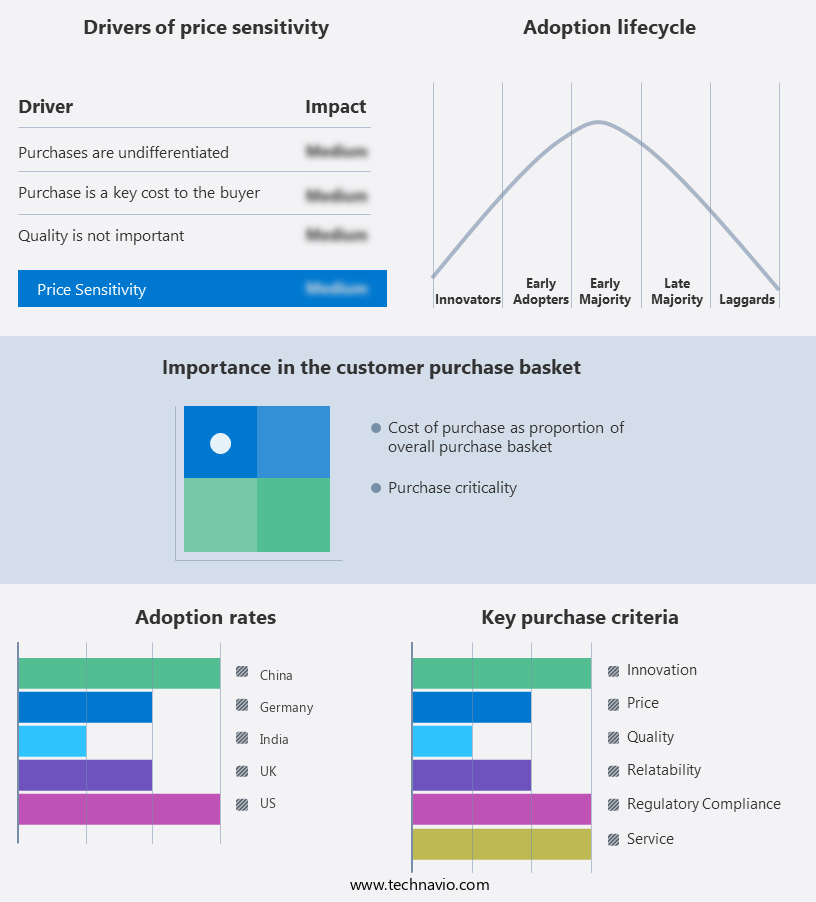
Customer Landscape
Key Companies & Market Insights
Companies are implementing various strategies, such as strategic alliances, dissolved air flotation systems market forecast, partnerships, mergers and acquisitions, geographical expansion, and product/service launches, to enhance their presence in the industry.
Aries Chemical Inc. - The Atana dissolved air flotation system is a leading technology for water clarification, effectively separating suspended solids, fats, oils, and grease through the process of dissolved air flotation.
The industry research and growth report includes detailed analyses of the competitive landscape of the market and information about key companies, including:
- Aries Chemical Inc.
- Atana Ltd.
- Benenv Co. Ltd.
- DAF Corp.
- Ecologix Environmental Systems LLC
- HUBER SE
- KWI Public Co. Ltd.
- Metso Outotec Corp.
- Saur
- Siemens AG
- SKion Water GmbH
- Sulzer Ltd.
- Suministros y gestiones sociales SL
- Toro Equipment SL
- VanAire
- Veolia Environnement SA
- WCS Group
- WesTech Engineering LLC
- WSI International
- Xylem Inc.
Qualitative and quantitative analysis of companies has been conducted to help clients understand the wider business environment as well as the strengths and weaknesses of key industry players. Data is qualitatively analyzed to categorize companies as pure play, category-focused, industry-focused, and diversified; it is quantitatively analyzed to categorize companies as dominant, leading, strong, tentative, and weak.
Recent Development and News in Dissolved Air Flotation Systems Market
- In January 2024, Evoqua Water Technologies LLC announced the launch of its new Dissolved Air Flotation (DAF) system, the AQUASOLID DAF, designed for industrial wastewater treatment applications. This innovative system reportedly offers enhanced performance and energy efficiency, positioning Evoqua as a key player in the DAF Systems Market (Business Wire, 2024).
- In March 2024, Veolia Water Technologies and Xylem Inc. signed a strategic collaboration agreement to integrate Veolia's Dissolved Air Flotation technology into Xylem's water treatment solutions. This partnership aims to expand the reach and application of DAF technology in the water and wastewater treatment sector (Veolia Water Technologies, 2024).
- In May 2024, Siemens Water Technologies Corporation completed the acquisition of Kadant Water and Process Technologies, a leading provider of Dissolved Air Flotation systems. The acquisition strengthened Siemens' position in the market, expanding its product portfolio and enhancing its ability to serve a broader customer base (Siemens, 2024).
- In February 2025, the European Union approved the use of Dissolved Air Flotation technology for the treatment of industrial wastewater in accordance with the EU Wastewater Directive. This regulatory approval is expected to boost the demand for DAF systems in Europe, particularly in industries with stringent wastewater regulations (European Commission, 2025).
Research Analyst Overview
- The market for dissolved air flotation systems continues to evolve, driven by the expanding applications across various sectors, including water and wastewater treatment, mining, and industrial processes. Media filtration and clarifier performance have been key focus areas, with ongoing research to enhance gas transfer efficiency and scalability potential. Waste reduction through the coalescence phenomenon is a significant outcome, with one study reporting a 30% reduction in chemical consumption. Reliable operation and improved efficiency are essential, as evidenced by the degasification process optimizing flotation tank design and predictive maintenance.
- Environmental impact remains a critical consideration, with remote monitoring, sensor technology, and data acquisition enabling cost-effective recycling of wastewater. The industry anticipates continued growth, with expectations of a 15% increase in market size over the next five years.
Dive into Technavio's robust research methodology, blending expert interviews, extensive data synthesis, and validated models for unparalleled Dissolved Air Flotation Systems Market insights. See full methodology.
|
Market Scope |
|
|
Report Coverage |
Details |
|
Page number |
166 |
|
Base year |
2023 |
|
Historic period |
2017-2022 |
|
Forecast period |
2024-2028 |
|
Growth momentum & CAGR |
Accelerate at a CAGR of 2.1% |
|
Market growth 2024-2028 |
USD 15.5 million |
|
Market structure |
Fragmented |
|
YoY growth 2023-2024(%) |
2.05 |
|
Key countries |
US, China, Germany, India, and UK |
|
Competitive landscape |
Leading Companies, Market Positioning of Companies, Competitive Strategies, and Industry Risks |
What are the Key Data Covered in this Dissolved Air Flotation Systems Market Research and Growth Report?
- CAGR of the Dissolved Air Flotation Systems industry during the forecast period
- Detailed information on factors that will drive the growth and forecasting between 2024 and 2028
- Precise estimation of the size of the market and its contribution of the industry in focus to the parent market
- Accurate predictions about upcoming growth and trends and changes in consumer behaviour
- Growth of the market across North America, Europe, APAC, Middle East and Africa, and South America
- Thorough analysis of the market's competitive landscape and detailed information about companies
- Comprehensive analysis of factors that will challenge the dissolved air flotation systems market growth of industry companies
We can help! Our analysts can customize this dissolved air flotation systems market research report to meet your requirements.
 RIA -
RIA - 
