



Document Outsourcing Market Size 2026-2030
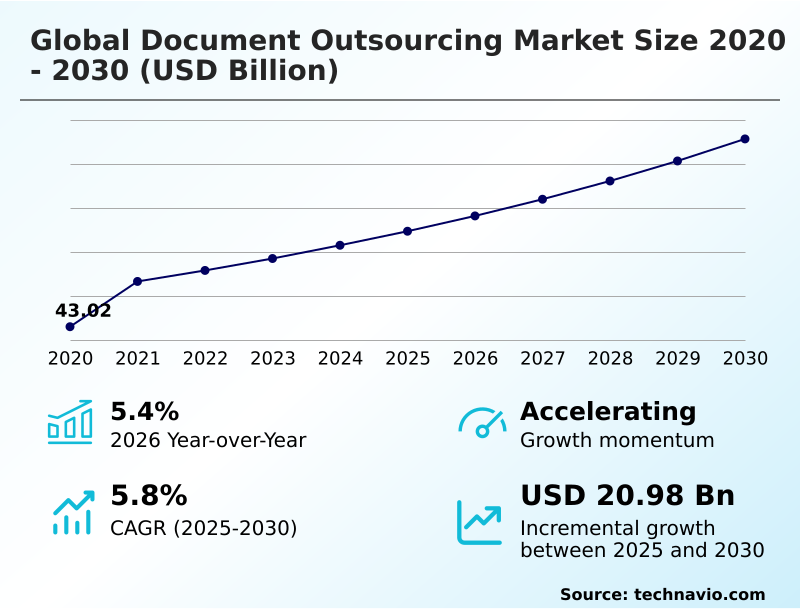
The Document Outsourcing Market size was valued at USD 64.72 billion in 2025, growing at a CAGR of 5.8% during the forecast period 2026-2030.
Major Market Trends & Insights
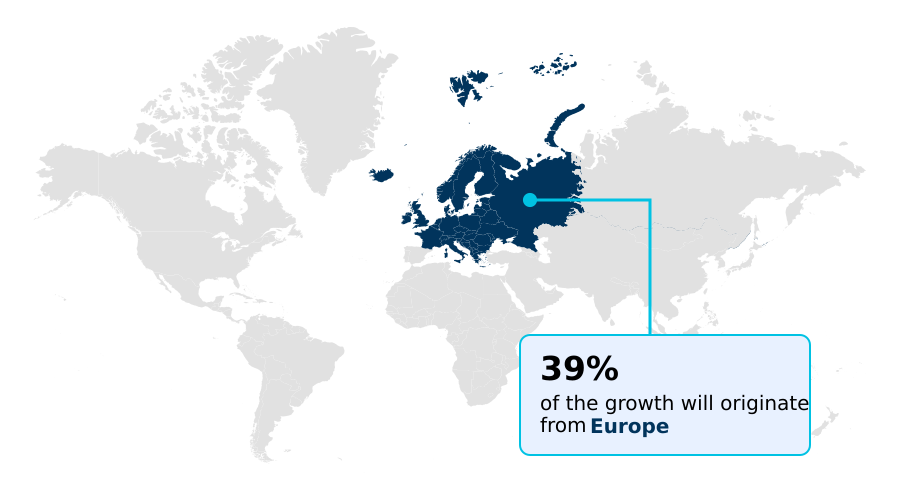
- Europe dominated the market and accounted for a 38.8% growth during the forecast period.
- By Service - Onsite contracted segment was valued at USD 33.91 billion in 2024
- By End-user - Large companies segment accounted for the largest market revenue share in 2024
Market Size & Forecast
- Historic Market Opportunities 2020-2024: USD 42.67 billion
- Market Future Opportunities 2025-2030: USD 20.98 billion
- CAGR from 2025 to 2030 : 5.8%
Market Summary
- The document outsourcing market is defined by a strategic shift from simple digitization to intelligent, end-to-end workflow automation, with over 75% of new contracts including AI-based data extraction. This transition allows enterprises to achieve up to a 40% reduction in manual data entry errors.
- For example, a global logistics firm can use intelligent document processing to automatically extract and verify information from thousands of daily shipping manifests, integrating the data directly into its ERP system without human intervention. The primary market driver is the need for enhanced operational efficiency and compliance in data-intensive industries.
- However, a significant challenge is the high cost and complexity of integrating advanced AI tools with legacy IT infrastructure, which can hinder adoption for small and medium-sized enterprises. This dynamic requires providers to offer scalable, cloud-based solutions that lower the barrier to entry.
What will be the Size of the Document Outsourcing Market during the forecast period?
Get Key Insights on Market Forecast (PDF) Request Free Sample
How is the Document Outsourcing Market Segmented?
The document outsourcing industry research report provides comprehensive data (region-wise segment analysis), with forecasts and analysis for the period 2026-2030, as well as historical data from 2020-2024 for the following segments.
- Service
- Onsite contracted
- Statement printing
- DPO
- End-user
- Large companies
- Small and medium companies
- Application
- Healthcare
- IT
- Retail
- Media
- Others
- Geography
- North America
- US
- Canada
- Mexico
- Europe
- Germany
- UK
- France
- APAC
- China
- India
- Japan
- South America
- Brazil
- Argentina
- Middle East and Africa
- Saudi Arabia
- UAE
- South Africa
- Rest of World (ROW)
- North America
How is the Document Outsourcing Market Segmented by Service?
The onsite contracted segment is estimated to witness significant growth during the forecast period.
The document outsourcing market is segmented by service, where solutions for end-to-end document lifecycle management are becoming predominant.
The onsite contracted segment, comprising over 55% of the market, leverages optical character recognition (OCR) for high-volume data capture, improving processing speeds by 30% over offsite alternatives.
This model facilitates enhanced security through sovereign cloud management, addressing client needs for hybrid data residency models. In contrast, statement printing and DPO segments focus on data extraction and validation within specialized cloud-native document platforms.
These services increasingly incorporate multi-factor authentication protocol to secure variable data printing and e-invoicing workflows, providing a foundation for end-to-end decision automation.
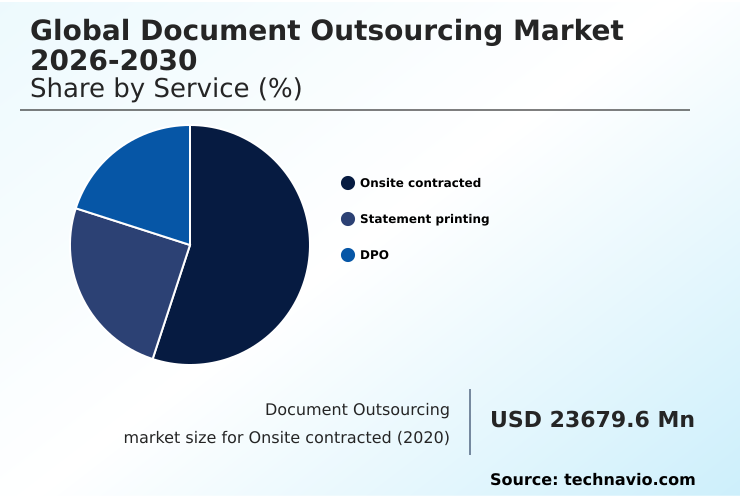
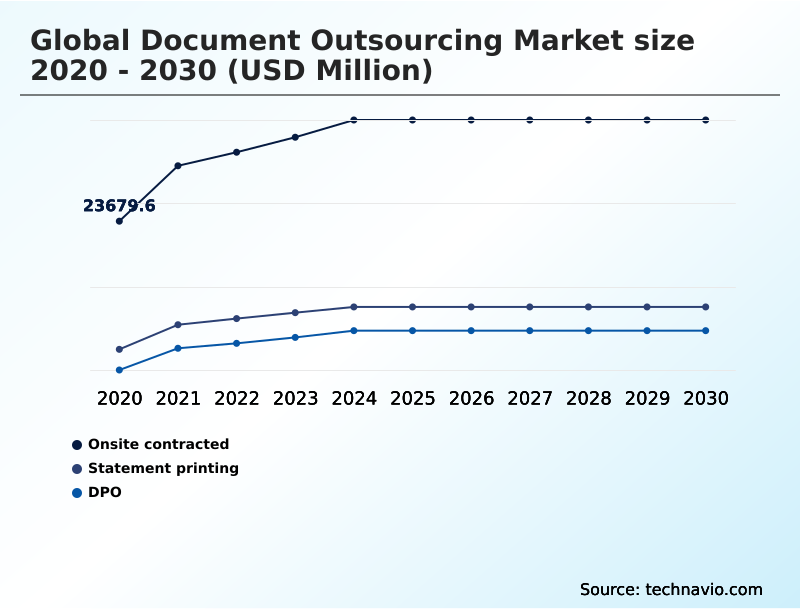
The Onsite contracted segment was valued at USD 33.91 billion in 2024 and showed a gradual increase during the forecast period.
How demand for the Document Outsourcing market is rising in the leading region?
Europe is estimated to contribute 38.8% to the growth of the global market during the forecast period.Technavio’s analysts have elaborately explained the regional trends and drivers that shape the market during the forecast period.
See How Document Outsourcing Market demand is rising in Europe Request Free Sample
The geographic landscape is marked by divergent adoption rates, with North America leading in managed print services (MPS) and robotic process automation (RPA) due to mature infrastructure.
The region accounts for over 33% of global spending, with the US alone contributing more than Germany and the UK combined.
In contrast, the APAC region, growing at a CAGR of 6.7%, focuses on large-scale document digitization projects and secure document archiving to support its manufacturing and financial sectors.
This has led to a demand for localized service delivery and digital mailroom automation.
European firms prioritize process mining and discovery to optimize existing systems and ensure compliance with strict data laws, leading to a 15% greater investment in secure records management and digital asset management solutions compared to South America.
What are the key Drivers, Trends, and Challenges in the Document Outsourcing Market?
Our researchers analyzed the data with 2025 as the base year, along with the key drivers, trends, and challenges. A holistic analysis of drivers will help companies refine their marketing strategies to gain a competitive advantage.
- Understanding the benefits of outsourcing document management is crucial for modern enterprises seeking operational efficiency and cost control. When comparing document outsourcing vendor capabilities, organizations find that specialized providers offer advanced security protocols essential for secure document processing for financial services, a sector where data integrity is paramount.
- Implementing intelligent document automation workflows can reduce manual processing errors by over 95%, directly impacting the bottom line. The cost of document scanning and indexing, once a significant capital expenditure, has decreased by nearly 40% with the advent of scalable, cloud-based services. This makes comprehensive digital transformation accessible even to medium-sized businesses.
- For regulated industries, document outsourcing for healthcare compliance is not just a strategic choice but a necessity. It ensures that patient records are managed in accordance with stringent legal standards, mitigating the risk of costly penalties. The shift to outsourced models allows internal IT teams to focus on core business functions rather than routine administrative tasks, boosting overall productivity.
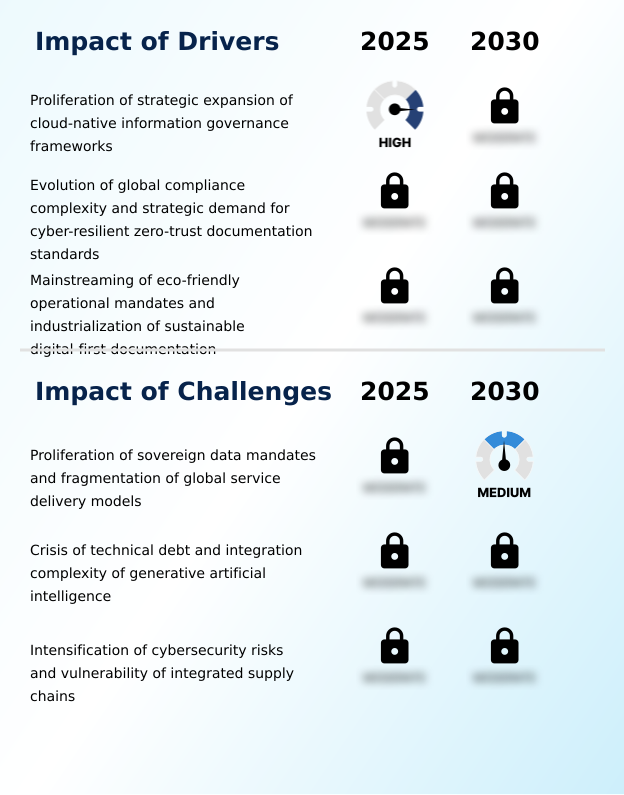
What are the key market drivers leading to the rise in the adoption of Document Outsourcing Industry?
- The strategic expansion of cloud-native information governance frameworks is a key driver, enabling scalable, secure, and accessible document management for increasingly distributed workforces.
- A primary driver is the enterprise-wide adoption of comprehensive information governance framework policies, which has seen a 60% increase in implementations over the last two years.
- These frameworks necessitate automated workflow integration and robust records management compliance to adhere to evolving data laws.
- The push for paperless office initiatives, part of broader digital transformation services, fuels demand for platforms offering digital signature integration and advanced enterprise content management (ECM).
- Furthermore, regulatory compliance automation is critical, as the need for AI-enhanced cyberattack mitigation and tools for unstructured data analytics has made secure, auditable document handling a non-negotiable business requirement, reducing compliance-related penalties by up to 50%.
What are the market trends shaping the Document Outsourcing Industry?
- The proliferation of sovereign cloud-native management and the adoption of hybrid data residency architectures is a primary market trend. This shift is driven by organizations seeking to comply with stringent data privacy regulations while maintaining a unified global document strategy.
- The adoption of hyper-automation deployment is a defining trend, with intelligent document processing (IDP) solutions now achieving over 95% accuracy in data extraction, a 20% improvement over legacy systems. This allows for the integration of decision intelligence systems directly into business process outsourcing (BPO) workflows.
- The market is also moving toward sustainable digital circularity, where providers offer a carbon-neutral information lifecycle, reducing the environmental impact of data storage by up to 30%. This involves advanced document composition software for efficient multi-channel communication and the integration of generative AI to automate complex e-invoicing and billing cycles, fundamentally changing how enterprises manage information.
What challenges does the Document Outsourcing Industry face during its growth?
- The proliferation of sovereign data mandates presents a significant challenge, leading to the fragmentation of global service delivery models and increased operational complexity.
- A significant challenge is the technical debt from legacy IT system modernization projects, which increases the cost of implementing a zero-trust security architecture by an estimated 35%. This complexity hinders the adoption of cyber-resilient documentation and a blockchain-verified audit trail for services like onsite contracted services and statement printing.
- Providers also face hurdles with integrated supply chain security, where vulnerabilities in third-party software can compromise entire platforms. Consequently, firms offering print management solutions must invest heavily in technical debt reduction and fortify their infrastructure, as failing to do so exposes clients to significant operational and financial risk, with breach recovery costs being 25% higher for non-compliant systems.
Exclusive Technavio Analysis on Customer Landscape
The document outsourcing market forecasting report includes the adoption lifecycle of the market, covering from the innovator’s stage to the laggard’s stage. It focuses on adoption rates in different regions based on penetration. Furthermore, the document outsourcing market report also includes key purchase criteria and drivers of price sensitivity to help companies evaluate and develop their market growth analysis strategies.
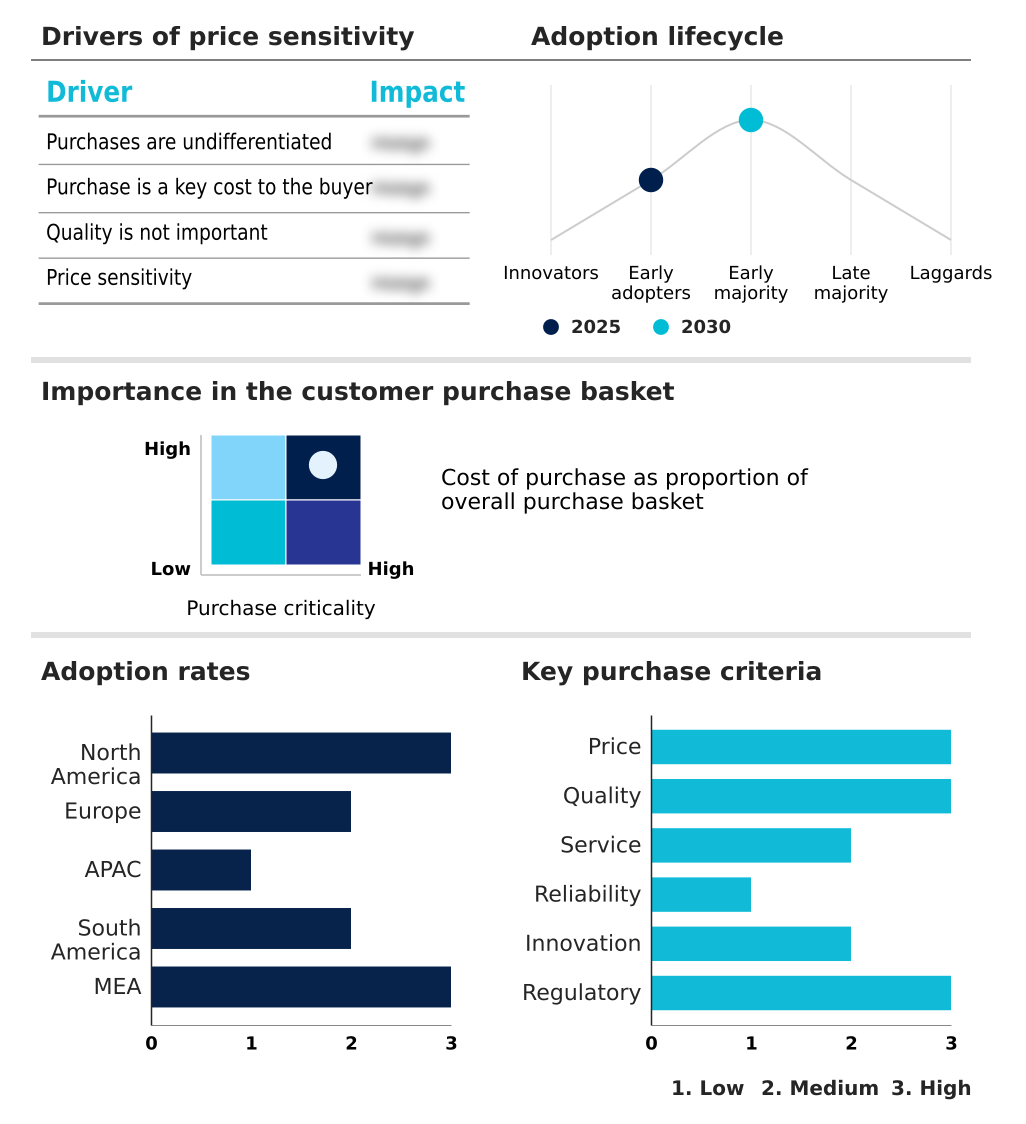
Customer Landscape of Document Outsourcing Industry
Competitive Landscape
Companies are implementing various strategies, such as strategic alliances, document outsourcing market forecast, partnerships, mergers and acquisitions, geographical expansion, and product/service launches, to enhance their presence in the industry.
ABBYY - Specializes in intelligent document automation and OCR processing to convert unstructured content into structured, actionable business data.
The industry research and growth report includes detailed analyses of the competitive landscape of the market and information about key companies, including:
- ABBYY
- Accenture Plc
- Adreno Technologies Pvt. Ltd.
- Canon Inc.
- Compart AG
- Conduent Inc.
- FUJIFILM Holdings Corp.
- HP Inc.
- Imaging Business Machines LLC
- Invensis Technologies Pvt. Ltd.
- Iron Mountain Inc.
- Konica Minolta Inc.
- Pitney Bowes Inc.
- Ricoh Co. Ltd.
- Seiko Epson Corp.
- Sharp Corp.
- Siemens AG
- Symcor Inc.
- Williams Lea Ltd.
- Xerox Holdings Corp.
Qualitative and quantitative analysis of companies has been conducted to help clients understand the wider business environment as well as the strengths and weaknesses of key industry players. Data is qualitatively analyzed to categorize companies as pure play, category-focused, industry-focused, and diversified; it is quantitatively analyzed to categorize companies as dominant, leading, strong, tentative, and weak.
Market Intelligence Radar: High-Impact Developments & Growth Signals
- In the Data Processing and Outsourced Services industry, the enforcement of stringent data residency and sovereignty laws, such as GDPR, has mandated that providers adopt localized service delivery models, directly impacting the document outsourcing market by compelling investments in regional data centers and hybrid data residency models to ensure compliance.
- The mainstreaming of hyper-automation deployment within BPO has shifted client expectations, pressuring document outsourcing providers to integrate AI-driven intelligent document processing and decision intelligence systems, transitioning services from simple data entry to providing end-to-end decision automation.
- Growing enterprise focus on ESG goals has created demand for sustainable digital circularity in outsourced services, requiring document outsourcing vendors to offer carbon-neutral information lifecycle management and comprehensive paperless office initiatives, which has become a key procurement differentiator.
- Widespread adoption of hybrid work models has increased demand for decentralized administrative support, driving the need for cloud-native document platforms and secure records management accessible from any location, accelerating the market for digital mailroom automation and services that support remote collaboration.
Dive into Technavio’s robust research methodology, blending expert interviews, extensive data synthesis, and validated models for unparalleled Document Outsourcing Market insights. See full methodology.
| Market Scope | |
|---|---|
| Page number | 311 |
| Base year | 2025 |
| Historic period | 2020-2024 |
| Forecast period | 2026-2030 |
| Growth momentum & CAGR | Accelerate at a CAGR of 5.8% |
| Market growth 2026-2030 | USD 20975.4 million |
| Market structure | Fragmented |
| YoY growth 2025-2026(%) | 5.4% |
| Key countries | US, Canada, Mexico, Germany, UK, France, Italy, Spain, The Netherlands, China, India, Japan, South Korea, Australia, Indonesia, Brazil, Argentina, Chile, Saudi Arabia, UAE, South Africa, Israel and Turkey |
| Competitive landscape | Leading Companies, Market Positioning of Companies, Competitive Strategies, and Industry Risks |
Research Analyst Overview
- The document outsourcing market ecosystem operates with hyperscale cloud providers and specialized AI developers supplying foundational technology, which service providers use to build their platforms. With the onsite contracted segment accounting for over 55% of the market, providers like large system integrators and specialized BPO firms deliver solutions directly to end-users in sectors such as healthcare and finance.
- These solutions, ranging from digital mailroom automation to secure document archiving, reduce document processing times by an average of 40%. Regulatory bodies enforce data privacy and residency standards like GDPR, influencing the architecture of these services. Distribution is increasingly direct or through strategic partnerships, bypassing traditional channels.
- The entire value chain is supported by continuous R&D in AI and machine learning, ensuring that providers can meet the escalating demands for intelligent automation and data security.
What are the Key Data Covered in this Document Outsourcing Market Research and Growth Report?
-
What is the expected growth of the Document Outsourcing Market between 2026 and 2030?
-
The Document Outsourcing Market is expected to grow by USD 20.98 billion during 2026-2030, registering a CAGR of 5.8%. Year-over-year growth in 2026 is estimated at 5.4%%. This acceleration is shaped by proliferation of strategic expansion of cloud-native information governance frameworks, which is intensifying demand across multiple end-use verticals covered in the report.
-
-
What segmentation does the market report cover?
-
The report is segmented by Service (Onsite contracted, Statement printing, and DPO), End-user (Large companies, and Small and medium companies), Application (Healthcare, IT, Retail, Media, and Others) and Geography (North America, Europe, APAC, South America, Middle East and Africa). Among these, the Onsite contracted segment is estimated to witness significant growth during the forecast period, driven by rising adoption across key application areas. Each segment includes detailed qualitative and quantitative analysis, along with historical data from 2020-2024 and forecasts through 2030 with year-over-year growth rates.
-
-
Which regions are analyzed in the report?
-
The report covers North America, Europe, APAC, South America and Middle East and Africa. Europe is estimated to contribute 38.8% to market growth during the forecast period. Country-level analysis includes US, Canada, Mexico, Germany, UK, France, Italy, Spain, The Netherlands, China, India, Japan, South Korea, Australia, Indonesia, Brazil, Argentina, Chile, Saudi Arabia, UAE, South Africa, Israel and Turkey, with dedicated market size tables and year-over-year growth for each.
-
-
What are the key growth drivers and market challenges?
-
The primary driver is proliferation of strategic expansion of cloud-native information governance frameworks, which is accelerating investment and industry demand. The main challenge is proliferation of sovereign data mandates and fragmentation of global service delivery models, creating operational barriers for key market participants. The report quantifies the impact of each driver and challenge across 2026 and 2030 with comparative analysis.
-
-
Who are the major players in the Document Outsourcing Market?
-
Key vendors include ABBYY, Accenture Plc, Adreno Technologies Pvt. Ltd., Canon Inc., Compart AG, Conduent Inc., FUJIFILM Holdings Corp., HP Inc., Imaging Business Machines LLC, Invensis Technologies Pvt. Ltd., Iron Mountain Inc., Konica Minolta Inc., Pitney Bowes Inc., Ricoh Co. Ltd., Seiko Epson Corp., Sharp Corp., Siemens AG, Symcor Inc., Williams Lea Ltd. and Xerox Holdings Corp.. The report provides qualitative and quantitative analysis categorizing companies as dominant, leading, strong, tentative, and weak based on their market positioning. Company profiles include business segment analysis, SWOT assessment, key offerings, and recent strategic developments.
-
Market Research Insights
- The competitive landscape is intensely focused on intelligent automation, with the top 10 vendors commanding over 60% of the market share through integrated digital platforms. Key players are shifting from hardware-centric models to service-led digital transformation. For instance, Ricoh expanded its process automation capabilities by acquiring ValueTech, enhancing its ability to serve regulated industries in Latin America.
- Similarly, HP has integrated Microsoft Copilot into its print devices, enabling autonomous document summarization and organization as part of its managed services, a move that improves workflow efficiency by up to 25%. These developments are a direct response to enterprise demand for unified ecosystems that embed security and AI into daily operations.
- The primary challenge remains integrating these advanced solutions with legacy enterprise systems, forcing vendors to prioritize workflow interoperability and modular, scalable architectures to maintain market relevance.
We can help! Our analysts can customize this document outsourcing market research report to meet your requirements.
 RIA -
RIA - 
