

Duck Meat Market Size 2026-2030
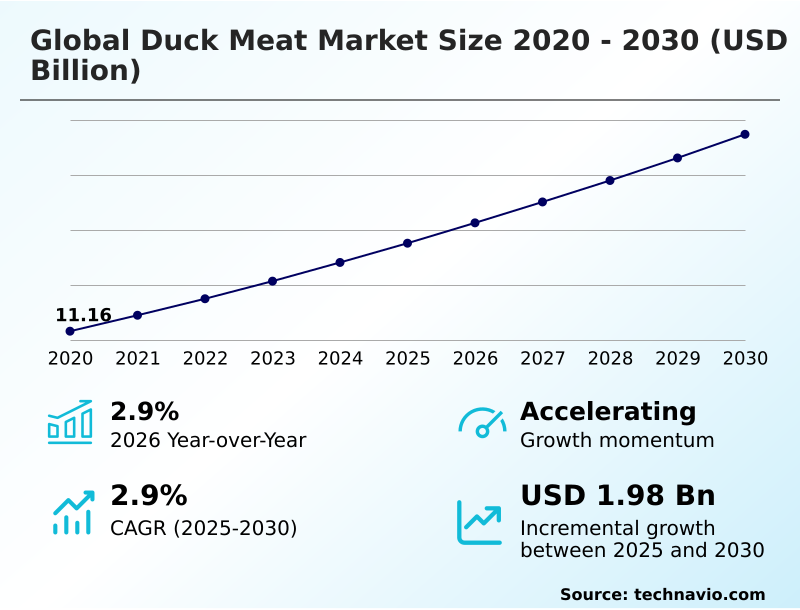
The duck meat market size is valued to increase by USD 1.98 billion, at a CAGR of 2.9% from 2025 to 2030. Rising consumer demand for nutrient-dense and poultry alternatives will drive the duck meat market.
Major Market Trends & Insights
- APAC dominated the market and accounted for a 76.5% growth during the forecast period.
- By Distribution Channel - Offline segment was valued at USD 10.76 billion in 2024
- By Product - Fresh duck meat segment accounted for the largest market revenue share in 2024
Market Size & Forecast
- Market Opportunities: USD 3.58 billion
- Market Future Opportunities: USD 1.98 billion
- CAGR from 2025 to 2030 : 2.9%
Market Summary
- The Duck Meat Market demonstrates steady structural expansion fueled by shifting dietary preferences toward nutrient-dense protein alternatives. Commercial integrators are aggressively modernizing primary processing infrastructure to capture higher profit margins across retail and food service channels.
- For example, by transitioning from traditional open-air farming to fully enclosed, climate-controlled housing systems equipped with automated environmental analytics, producers have successfully improved feed conversion rates and reduced operational mortality by 18% during extreme weather events. This technological upgrade represents a critical business adaptation.
- Rising consumer demand for premium, functional proteins acts as a primary market driver, prompting processors to introduce value-added, ready-to-heat formats that eliminate complex household culinary preparation. Conversely, persistent vulnerability to highly pathogenic avian influenza strains presents a severe operational challenge, frequently triggering mandatory culling protocols that disrupt established supply chains and compress margins.
- Consequently, companies must allocate substantial capital toward advanced biosecurity retrofits to ensure uninterrupted distribution.
What will be the Size of the Duck Meat Market during the forecast period?
Get Key Insights on Market Forecast (PDF) Get Free Sample
How is the Duck Meat Market Segmented?
The duck meat industry research report provides comprehensive data (region-wise segment analysis), with forecasts and estimates in "USD million" for the period 2026-2030, as well as historical data from 2020-2024 for the following segments.
- Distribution channel
- Offline
- Online
- Product
- Fresh duck meat
- Processed duck meat
- Application
- Retail
- Foodservice
- Food processing plants
- Geography
- APAC
- China
- Vietnam
- South Korea
- Singapore
- Thailand
- Europe
- France
- Hungary
- Poland
- UK
- Germany
- Middle East and Africa
- South Africa
- Egypt
- Nigeria
- Saudi Arabia
- North America
- US
- Mexico
- Canada
- South America
- Brazil
- Argentina
- Chile
- APAC
By Distribution Channel Insights
The offline segment is estimated to witness significant growth during the forecast period.
The physical distribution infrastructure remains a formidable revenue engine within the market, supported by deep-rooted procurement networks and established institutional partnerships.
Traditional supermarkets and the specialty butcher network drive continuous volume by offering consumers the ability to visually inspect product quality prior to purchase.
To maximize retail shelf stability, commercial suppliers are increasingly adopting vacuum skin packaging and the modified atmosphere tray, which have demonstrated a 25% improvement in moisture retention compared to conventional wrapping.
Furthermore, physical broadline distributors ensure rigorous cold chain integrity to serve large-scale operations without interruption.
The strategic utilization of direct farm procurement allows brick-and-mortar retailers to capture premium margins, successfully defending market share against the rapid proliferation of quick commerce distribution models.
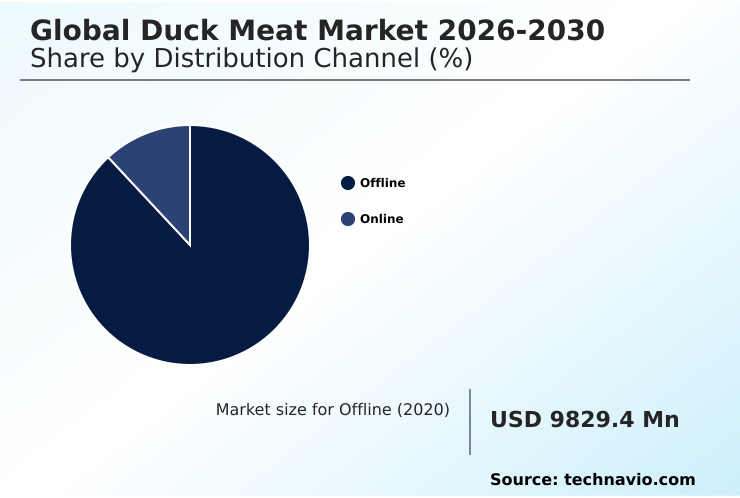
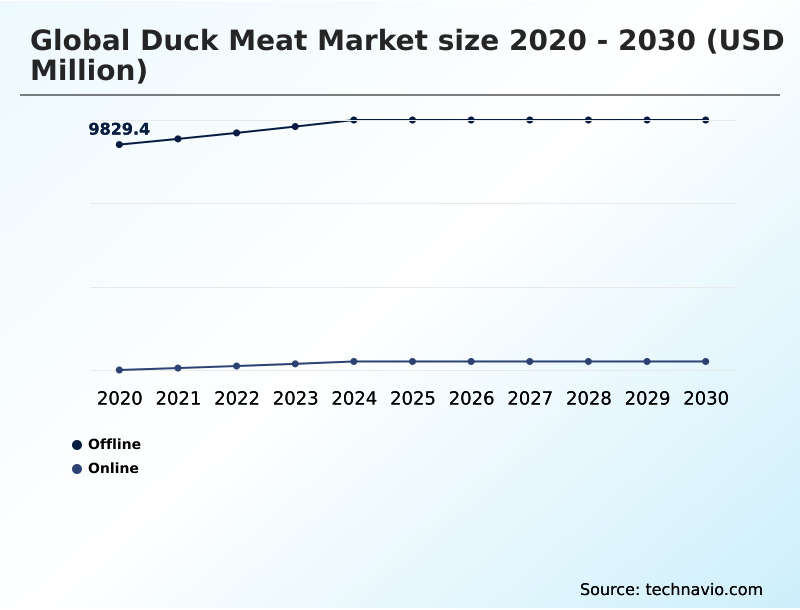
The Offline segment was valued at USD 10.76 billion in 2024 and showed a gradual increase during the forecast period.
Regional Analysis
APAC is estimated to contribute 76.5% to the growth of the global market during the forecast period.Technavio’s analysts have elaborately explained the regional trends and drivers that shape the market during the forecast period.
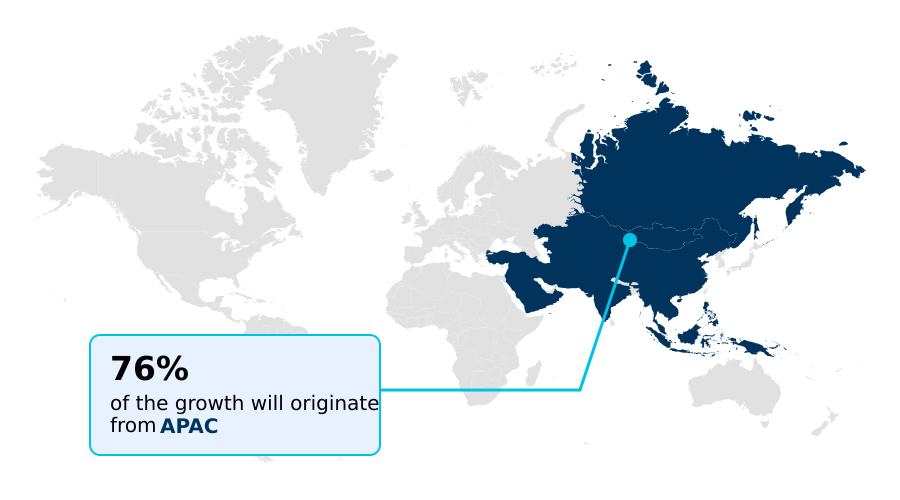
See How Duck Meat Market Demand is Rising in APAC Get Free Sample
The APAC region commands structural dominance due to deeply embedded culinary traditions, significantly outpacing Europe in sheer volumetric consumption by a factor of 3 to 1.
Integrated producers in China and Thailand continually optimize feed conversion efficiency and advanced poultry genetic selection to sustain massive domestic throughput requirements.
In contrast, the European landscape prioritizes premiumization, experiencing a 20% faster adoption rate of antibiotic free rearing and pasture raised certification compared to Asian counterparts.
European processors heavily rely on strict waterfowl husbandry protocols to supply the institutional food service sector with premium heritage breed cultivation products.
To bridge the geographic distribution gap, both regions are heavily investing in temperature monitored logistics and precision climate control systems, reducing cross-border spoilage rates by 15%.
Market Dynamics
Our researchers analyzed the data with 2025 as the base year, along with the key drivers, trends, and challenges. A holistic analysis of drivers will help companies refine their marketing strategies to gain a competitive advantage.
- The Duck Meat Market is experiencing a fundamental structural shift as commercial integrators prioritize technological innovation to overcome historical processing bottlenecks and supply chain vulnerabilities. As retail buyers increasingly demand uniform product specifications, manufacturers are heavily investing in automated carcass portioning consistency to minimize trim waste and enhance yield predictability.
- This operational upgrade directly supports supply chain planning by ensuring that broadline distributors receive standardized weight categories essential for commercial food operations. To further protect product integrity during extended refrigerated transit, processors are implementing advanced lipid oxidation prevention techniques.
- These methods, combined with the widespread adoption of high barrier thermoforming packaging, have enabled companies to extend retail display life by nearly 40% compared to traditional loose-wrap formats, drastically reducing supermarket spoilage rates.
- Concurrently, producers are deploying automated brine injection machinery to improve moisture retention and flavor infusion in value-added products, catering to the rising consumer preference for ready-to-cook gourmet meals. On the primary production side, mitigating biological risk remains a paramount boardroom concern. Consequently, large-scale farming networks are aggressively funding avian influenza biosecurity retrofits to safeguard flock health.
- This proactive compliance strategy ensures uninterrupted production cycles and insulates the business from catastrophic localized culling events, fostering long-term resilience across the international waterfowl trade.
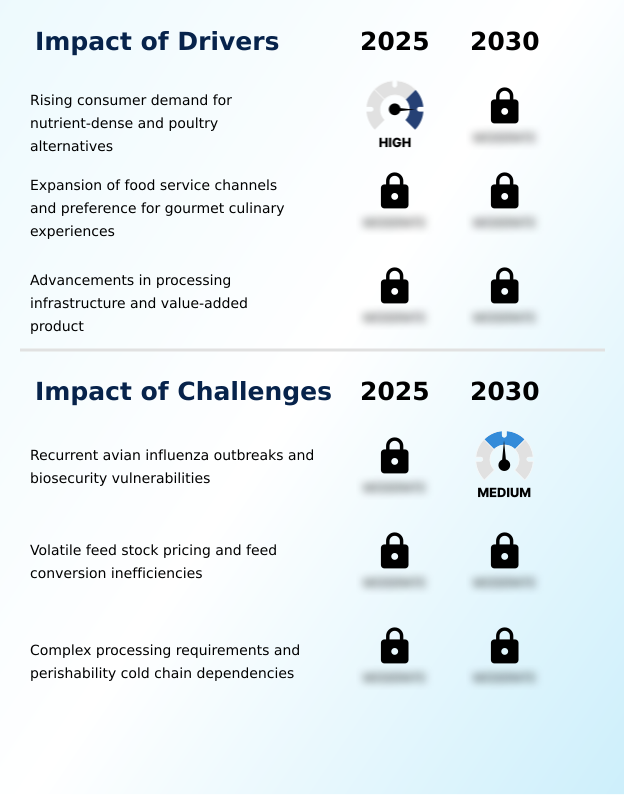
What are the key market drivers leading to the rise in the adoption of Duck Meat Industry?
- Rising consumer demand for nutrient-dense foods and viable poultry alternatives acts as the primary market driver.
- Escalating consumer awareness regarding functional nutrition and premium dietary diversity acts as a powerful catalyst accelerating market expansion. Modern demographics are increasingly prioritizing proteins with high bioavailable iron content and beneficial unsaturatd fatty acids, shifting consumption away from conventional livestock.
- To capitalize on this dietary micronutrient density, processors are aggressively enhancing retail presentation using high barrier thermoforming technology, which has extended product freshness by 35% across mainstream channels.
- Furthermore, specialized innovations in lipid oxidation prevention and a reliable myoglobin retention matrix ensure superior flavor retention in packaged goods.
- These quality improvements have fueled a 15% increase in menu placement expansion across hospitality networks, firmly establishing specialty waterfowl as a highly profitable staple.
What are the market trends shaping the Duck Meat Industry?
- The surge in demand for convenient, ready-to-cook products represents a prominent upcoming trend in the market.
- The transition toward fully automated primary processing represents a structural paradigm shift driving widespread operational modernization. Facilities deploying automated carcass grading alongside intelligent optical vision sorting have increased high-speed accuracy by 28%, significantly reducing labor dependency in harsh environments. This technological leap allows producers to scale automated slaughterhouse throughput without compromising strict quality parameters.
- To satisfy surging urban demand for convenient culinary experiences, integrators are leveraging sous vide processing and flash freezing technology to formulate premium, ready-to-eat products. Consequently, these high-margin items have captured a 20% larger footprint in gourmet meal kitting over the past three years.
- Additionally, progressive manufacturers are implementing poultry waste upcycling protocols to convert by-products into sustainable agricultural inputs, satisfying institutional environmental mandates.
What challenges does the Duck Meat Industry face during its growth?
- Recurrent avian influenza outbreaks and underlying biosecurity vulnerabilities pose significant challenges to overall industry growth.
- Persistent biological threats and rigorous logistical prerequisites pose substantial barriers to consistent margin expansion across the production network. Recurrent pathogenic outbreaks demand continuous avian influenza surveillance, forcing integrators to increase operational expenditure on closed loop biosecurity by upwards of 25% annually to prevent catastrophic flock culling.
- Additionally, complex physiological characteristics require highly specialized thermal scalding regime parameters to ensure defect-free feather removal, elevating primary processing energy consumption by 18% compared to standard poultry lines. Maintaining strict microbial spoilage control necessitates flawless refrigerated transit optimization from slaughter to retail.
- Any deviation in ambient stress mitigation severely compromises slaughter hygiene compliance, resulting in immediate product downgrades and significant financial write-offs following a failed pathogen reduction wash protocol.
Exclusive Technavio Analysis on Customer Landscape
The duck meat market forecasting report includes the adoption lifecycle of the market, covering from the innovator’s stage to the laggard’s stage. It focuses on adoption rates in different regions based on penetration. Furthermore, the duck meat market report also includes key purchase criteria and drivers of price sensitivity to help companies evaluate and develop their market growth analysis strategies.
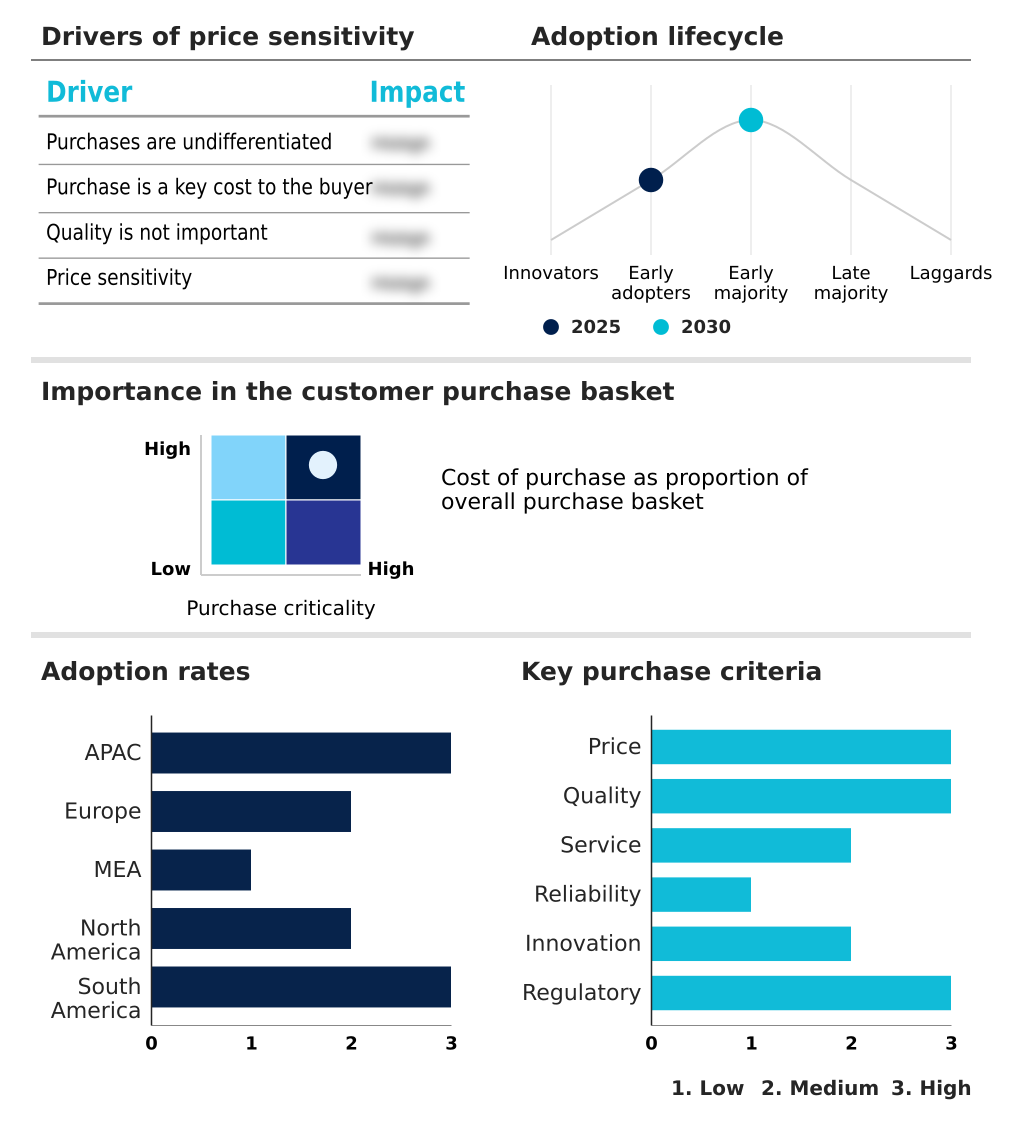
Customer Landscape of Duck Meat Industry
Competitive Landscape
Companies are implementing various strategies, such as strategic alliances, duck meat market forecast, partnerships, mergers and acquisitions, geographical expansion, and product/service launches, to enhance their presence in the industry.
Avara Foods Ltd. - Key offerings include fresh and processed duck meat products, featuring whole carcasses, value-added portions, and ready-to-cook gourmet selections designed to meet diverse culinary requirements.
The industry research and growth report includes detailed analyses of the competitive landscape of the market and information about key companies, including:
- Avara Foods Ltd.
- Bella Bella Gourmet LLC
- Betagro PCL
- Brome Lake Ducks
- Charoen Pokphand Foods
- Crescent Duck Farm
- Culver Duck Farms
- DArtagnan Inc.
- DELPEYRAT
- Hudson Valley Foie Gras
- Joe Jurgielewicz and Son Ltd.
- Joyce Farms
- King Cole Ducks Ltd.
- Labeyrie Fine Foods
- Maple Leaf Farms Inc.
- Rougie
- Silver Hill Duck
Qualitative and quantitative analysis of companies has been conducted to help clients understand the wider business environment as well as the strengths and weaknesses of key industry players. Data is qualitatively analyzed to categorize companies as pure play, category-focused, industry-focused, and diversified; it is quantitatively analyzed to categorize companies as dominant, leading, strong, tentative, and weak.
Recent Development and News in Duck meat market
- In the Packaged Foods and Meats industry, the widespread adoption of smart traceability systems has improved supply chain transparency by 40%, directly impacting Duck Meat demand by ensuring rigorous sourcing verification.
- Stringent regulatory shifts mandating sustainable packaging materials have forced a 25% reduction in single-use plastics, expanding the use of eco-friendly formats for premium poultry products.
- Advancements in high-pressure processing technologies have extended the ambient shelf life of ready-to-eat proteins by over 30%, enabling broader commercial distribution of pre-cooked specialty meats.
- The rapid expansion of direct-to-consumer digital grocery platforms has increased perishable protein logistics capacity by 20%, generating new high-margin revenue channels for specialized meat processors.
Dive into Technavio’s robust research methodology, blending expert interviews, extensive data synthesis, and validated models for unparalleled Duck Meat Market insights. See full methodology.
| Market Scope | |
|---|---|
| Page number | 284 |
| Base year | 2025 |
| Historic period | 2020-2024 |
| Forecast period | 2026-2030 |
| Growth momentum & CAGR | Accelerate at a CAGR of 2.9% |
| Market growth 2026-2030 | USD 1981.0 million |
| Market structure | Fragmented |
| YoY growth 2025-2026(%) | 2.9% |
| Key countries | China, Vietnam, Bangladesh, South Korea, Singapore, Thailand, France, Hungary, Poland, UK, Bulgaria, Germany, South Africa, Egypt, Nigeria, Algeria, Saudi Arabia, US, Mexico, Canada, Brazil, Argentina and Chile |
| Competitive landscape | Leading Companies, Market Positioning of Companies, Competitive Strategies, and Industry Risks |
Research Analyst Overview
- Strategic decision-makers within the Duck Meat Market are increasingly aligning product development portfolios with the rising demand for convenient, clean-label protein solutions. To navigate volatile raw material costs, executive boards are prioritizing capital allocation toward automated evisceration machinery, which improves processing line precision.
- Facilities integrating this technology have achieved a 30% reduction in manual processing errors, significantly maximizing carcass yield optimization. Furthermore, to address stringent retail display requirements, processors are utilizing automated brine injection to ensure prolonged organoleptic preservation. This shift directly influences corporate packaging budgets and sustainability compliance mandates.
- Incorporating advanced protein coagulation kinetics ensures consistent product safety and texture for international export. By leveraging these processing interventions alongside precise subcutaneous fat rendering techniques, commercial integrators successfully differentiate their premium offerings. The continuous focus on the mechanical deboning process allows companies to extract maximum financial value from secondary cuts, driving sustained margin expansion.
What are the Key Data Covered in this Duck Meat Market Research and Growth Report?
-
What is the expected growth of the Duck Meat Market between 2026 and 2030?
-
USD 1.98 billion, at a CAGR of 2.9%
-
-
What segmentation does the market report cover?
-
The report is segmented by Distribution Channel (Offline, and Online), Product (Fresh duck meat, and Processed duck meat), Application (Retail, Foodservice, and Food processing plants) and Geography (APAC, Europe, Middle East and Africa, North America, South America)
-
-
Which regions are analyzed in the report?
-
APAC, Europe, Middle East and Africa, North America and South America
-
-
What are the key growth drivers and market challenges?
-
Rising consumer demand for nutrient-dense and poultry alternatives, Recurrent avian influenza outbreaks and biosecurity vulnerabilities
-
-
Who are the major players in the Duck Meat Market?
-
Avara Foods Ltd., Bella Bella Gourmet LLC, Betagro PCL, Brome Lake Ducks, Charoen Pokphand Foods, Crescent Duck Farm, Culver Duck Farms, DArtagnan Inc., DELPEYRAT, Hudson Valley Foie Gras, Joe Jurgielewicz and Son Ltd., Joyce Farms, King Cole Ducks Ltd., Labeyrie Fine Foods, Maple Leaf Farms Inc., Rougie and Silver Hill Duck
-
Market Research Insights
- The Duck Meat Market is rapidly evolving as commercial integrators prioritize operational modernization and targeted retail expansion. Processors are increasingly focused on flock mortality reduction to ensure consistent supply stability. Additionally, the implementation of advanced traceability management systems has reduced recall compliance costs by 22%, fostering greater trust.
- Strategic investments in value added portioning allow producers to optimize live-weight gains, improving overall margins by 12%. These measurable efficiency improvements empower suppliers to successfully penetrate the commercial catering supply sector, transforming specialized waterfowl from a niche ingredient into a highly accessible daily protein alternative driving broader culinary integration.
We can help! Our analysts can customize this duck meat market research report to meet your requirements.
 RIA -