



Energy Management Systems Market Size 2025-2029
The energy management systems (EMS) market size is forecast to increase by USD 51.64 billion, at a CAGR of 15.4% between 2024 and 2029.
- The market is experiencing significant growth due to the escalating demand for energy-efficient solutions in various industries and households. This trend is driven by increasing awareness of energy conservation and the need to reduce operational costs. Furthermore, advancements in technology have led to the development of more sophisticated EMS, enabling better energy management and optimization. Big data and wireless communication are transforming EMS, enabling real-time data acquisition, process optimization, and machine learning.
- Companies seeking to capitalize on this market's opportunities must focus on offering cost-effective solutions while ensuring the latest technological advancements. Navigating this market requires a strategic approach, with a strong focus on innovation and cost optimization to meet the evolving needs of energy-conscious consumers and businesses. However, the high initial costs for installing and implementing these systems remain a considerable challenge for market adoption. Renewable energy integration, including wind power systems and solar power systems, necessitates advanced energy modeling and simulation software.
What will be the Size of the Energy Management Systems (EMS) Market during the forecast period?
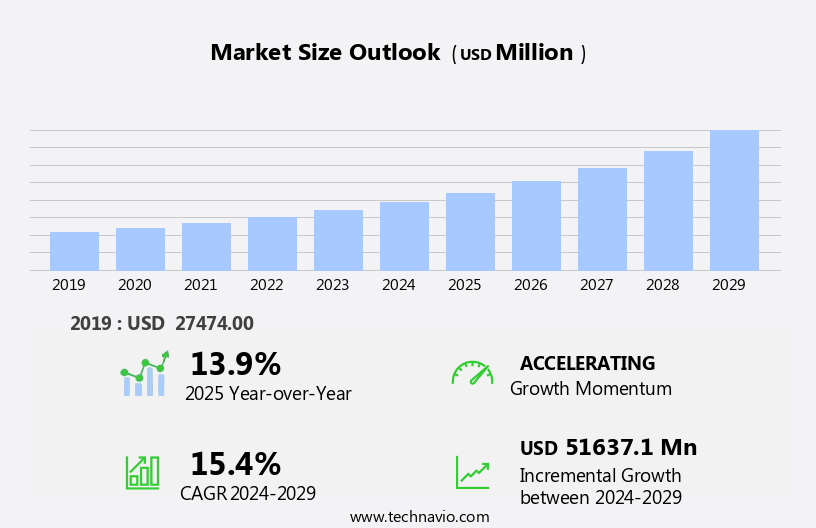
Explore in-depth regional segment analysis with market size data - historical 2019-2023 and forecasts 2025-2029 - in the full report.
Request Free Sample
The market continues to evolve, driven by the growing need for efficient energy use and regulatory compliance across various sectors. Energy performance contracts, fault detection, and smart meters are integral components of EMS, enabling real-time monitoring and optimization of energy consumption. HVAC control systems, powered by cloud computing and machine learning, ensure optimal performance and reduce energy waste. Risk management, power system simulation, and renewable energy integration are essential for grid modernization and sustainability reporting. Capacity planning and carbon footprint reduction are key concerns for utility companies, driving the adoption of demand response programs and energy efficiency audits.
IoT sensors, energy modeling, and load forecasting facilitate peak demand reduction and energy trading. SCADA systems, utility management software, and power quality monitoring ensure grid stability and transmission automation. Energy procurement, solar power optimization, and power converters are crucial for effective energy portfolio management. The integration of wind energy and the evolution of distribution automation continue to shape the EMS landscape. The market's continuous dynamism underscores the importance of data analytics and energy consulting in optimizing energy use and reducing costs. The ongoing adoption of advanced technologies, such as smart grids and peak demand reduction strategies, underscores the market's potential for growth and innovation.
How is this Energy Management Systems (EMS) Industry segmented?
The energy management systems (EMS) industry research report provides comprehensive data (region-wise segment analysis), with forecasts and estimates in "USD million" for the period 2025-2029, as well as historical data from 2019-2023 for the following segments.
- Deployment
- On-premises
- Cloud-based
- End-user
- Manufacturing
- Power and energy
- Telecom and IT
- Residential and commercial
- Others
- Solution
- Industrial energy management
- Utility energy management
- Building energy management
- Enterprise carbon and energy management
- Home energy management
- Component
- Hardware
- Software
- Services
- Geography
- North America
- US
- Canada
- Europe
- France
- Germany
- Italy
- Spain
- UK
- APAC
- China
- India
- Japan
- Rest of World (ROW)
- North America
By Deployment Insights
The On-premises segment is estimated to witness significant growth during the forecast period. The on-premises segment of the global energy management systems (EMS) market is experiencing significant growth in recent years. This trend can be attributed to the rising demand for effective energy management solutions across several industries, including manufacturing, healthcare, retail, and others. On-premises energy management systems offer several benefits over cloud-based solutions, especially when it comes to data security and privacy. One significant advantage of on-premises energy management systems is control. Companies that operate on-premises systems have complete control over their data. This means they are better equipped to address data breaches and other security threats. Renewable energy integration, including wind power systems and solar power systems, necessitates advanced energy modeling and simulation software.
Similarly, on-premises systems allow them to customize their energy management protocols, which is not possible with cloud-based solutions. This helps companies optimize their energy consumption profile and fine-tune their operations. Furthermore, on-premises energy management systems offer a higher level of reliability. Since these systems are hosted locally, they are not affected by internet outages or slow connectivity. This ensures uninterrupted monitoring of energy usage, which is crucial in mission-critical applications like hospitals and data centers. Additionally, on-premises systems often have better integration with legacy systems and other mission-critical applications, which include communication services (mobile devices, telecommunication systems), online banking systems, and railway/aircraft/traffic operating and control systems. This makes it easier to monitor energy usage and streamline operations.
For example, Siemens AG (Siemens) offers a desigo insight platform. This platform offers real-time energy monitoring, automated reporting, and energy analysis tools. It has a user-friendly interface that allows easy configuration of alarm systems and event management. Similarly, Honeywell International Inc. (Honeywell) offers enterprise buildings integrator (EBI), which is another popular on-premises energy management solution that allows users to monitor, manage, and control their energy consumption. Thus, the above-mentioned factors are expected to increase the demand for energy management systems in the on-premises segment, which will fuel the growth of the global energy management systems (EMS) market during the forecast period.
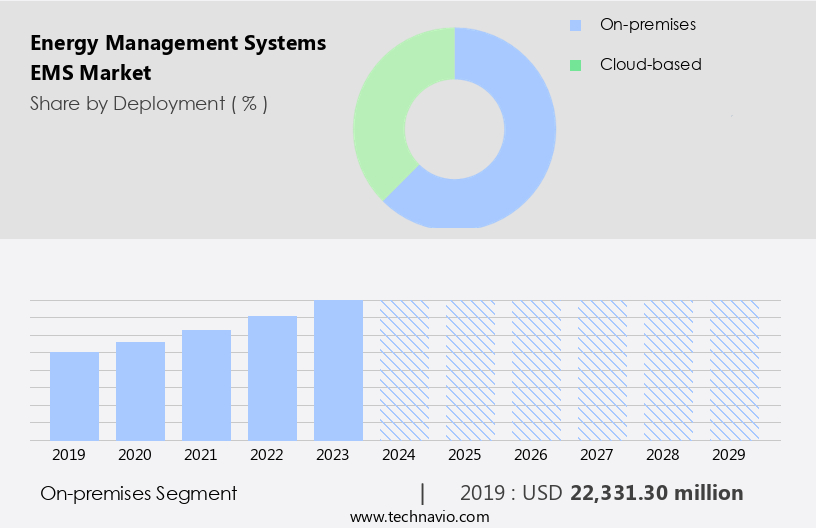
The On-premises segment was valued at USD 22.33 billion in 2019 and showed a gradual increase during the forecast period.
Regional Analysis
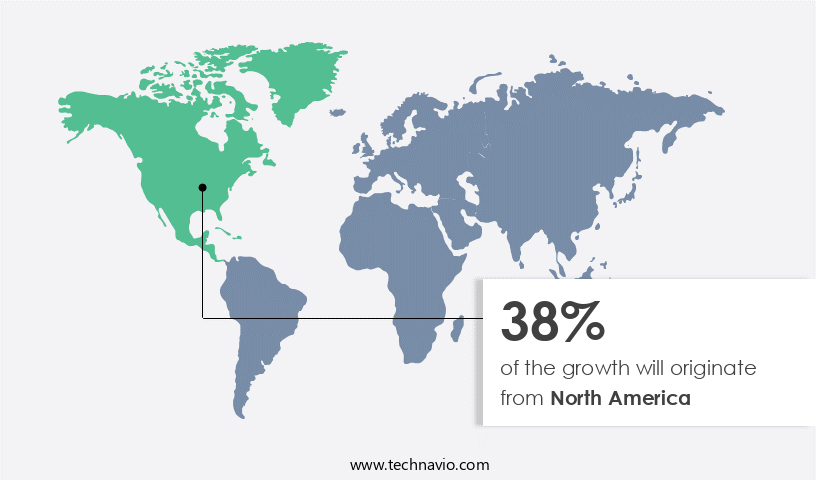
North America is estimated to contribute 38% to the growth of the global market during the forecast period.Technavio's analysts have elaborately explained the regional trends and drivers that shape the market during the forecast period.
In North America, the market is experiencing significant growth due to increasing demands for energy efficiency and sustainability. Driven by regulatory compliance and carbon footprint reduction objectives, industries and households are adopting advanced EMS technologies. Renewable portfolio standards and capacity planning are key factors propelling the market. Machine learning and data analytics are integral to EMS, enabling predictive energy modeling, load forecasting, and peak demand reduction. Grid modernization and transmission automation are crucial for grid stability and renewable energy integration. Substation automation and distribution automation optimize power system performance and improve grid reliability. Energy procurement, trading, and demand response programs facilitate energy market participation and cost savings.
SCADA systems, HVAC control systems, and smart meters enable real-time monitoring and energy conservation measures. Solar power optimization, wind energy integration, and fault detection further enhance system efficiency. Cloud computing and IoT sensors facilitate data visualization and risk management. Overall, the North American EMS market is evolving to address energy scarcity, environmental concerns, and cost-effective energy management. A key driver is the push to reduce carbon emissions, with governments implementing regulations such as the US Environmental Protection Agency's Clean Power Plan, which aims to cut carbon emissions from power generation by 32% by 2030.
Market Dynamics
Our researchers analyzed the data with 2024 as the base year, along with the key drivers, trends, and challenges. A holistic analysis of drivers will help companies refine their marketing strategies to gain a competitive advantage.
What are the key market drivers leading to the rise in the adoption of Energy Management Systems (EMS) Industry?
- The rise in demand for energy-efficient solutions, driven by industries and households, serves as the primary market catalyst. The market is witnessing significant growth due to the increasing emphasis on energy efficiency and sustainability. This trend is driven by the rising awareness among industries and households to reduce energy consumption and contribute to a greener environment. One of the key areas of focus is the integration of renewable energy sources, such as wind and solar power, into the grid. This requires advanced distribution and transmission automation systems to ensure grid stability and optimize power quality. Utility management software, power converters, and data visualization tools are essential components of EMS, enabling peak demand reduction and real-time monitoring and analysis.
- Energy consulting services also play a crucial role in optimizing energy usage and identifying cost-saving opportunities. For instance, Honeywell International Inc.'s Advance Control for Buildings is a building energy management system that uses existing wiring to automate operations and improve energy efficiency. It incorporates machine learning and automation and includes built-in cybersecurity. Overall, the EMS market is poised for continued growth as businesses and consumers seek to minimize energy waste and promote sustainable practices.
What are the market trends shaping the Energy Management Systems (EMS) Industry?
- The trend in the energy management market is being shaped by advancements in technology. Energy management systems are experiencing significant innovation. EMS have evolved significantly due to technological advancements, particularly the Internet of Things (IoT) and Artificial Intelligence (AI). These technologies have enabled the creation of more sophisticated and accessible energy management solutions for various industries and consumers. One notable application of these technologies is in the development of smart buildings. IoT sensors can be integrated into building systems to monitor energy consumption, lighting, and temperature, and adjust them automatically based on occupancy and time of day. This leads to reduced energy waste and substantial savings on energy bills. Another area where AI and IoT have made a significant impact is in power grid management.
- Energy Performance Contracts (EPCs) have become increasingly popular, allowing organizations to invest in energy efficiency improvements with guaranteed savings. Fault detection systems help identify and resolve issues in HVAC control systems, while power system simulation and real-time monitoring enable better risk management. Smart meters and smart grid technologies facilitate the integration of renewable energy sources, enhancing energy efficiency and sustainability. Energy efficiency audits provide valuable insights into energy usage patterns and offer recommendations for improvement. Cloud computing enables remote access and analysis of energy data, making energy management more efficient and cost-effective.
What challenges does the Energy Management Systems (EMS) Industry face during its growth?
- The high initial costs associated with installing and implementing energy management systems pose a significant challenge to the industry's growth. This financial hurdle deters many organizations from adopting these systems, despite their long-term energy savings and operational efficiencies. Energy management systems play a pivotal role in optimizing energy usage and ensuring regulatory compliance in today's business landscape. EMS market dynamics are driven by various factors, including grid modernization, renewable portfolio standards, and capacity planning. These systems enable data analytics, enabling businesses to gain insights into energy consumption patterns, identify inefficiencies, and make informed decisions. Machine learning algorithms and advanced analytics can further enhance the capabilities of EMS, providing predictive maintenance and real-time energy optimization.
- Regulatory compliance is a significant concern for businesses, and EMS help streamline the process by automating reporting and record-keeping. The implementation of EMS can be costly, with expenses varying based on the size of the facility, level of integration, and type of systems required. Hardware components, such as sensors and meters, can range from USD10,000 to USD100,000. Software and personnel costs add to the overall investment. Despite the initial costs, the long-term benefits of EMS, including energy savings, improved operational efficiency, and regulatory compliance, make it a worthwhile investment for businesses. Lighting control systems and power electronics are integral components of EMS, contributing to energy savings and carbon footprint reduction. Substation automation and load shedding are other essential features, ensuring grid stability and reducing energy wastage during peak demand.
Exclusive Customer Landscape
The energy management systems (EMS) market forecasting report includes the adoption lifecycle of the market, covering from the innovator's stage to the laggard's stage. It focuses on adoption rates in different regions based on penetration. Furthermore, the energy management systems (EMS) market report also includes key purchase criteria and drivers of price sensitivity to help companies evaluate and develop their market growth analysis strategies.
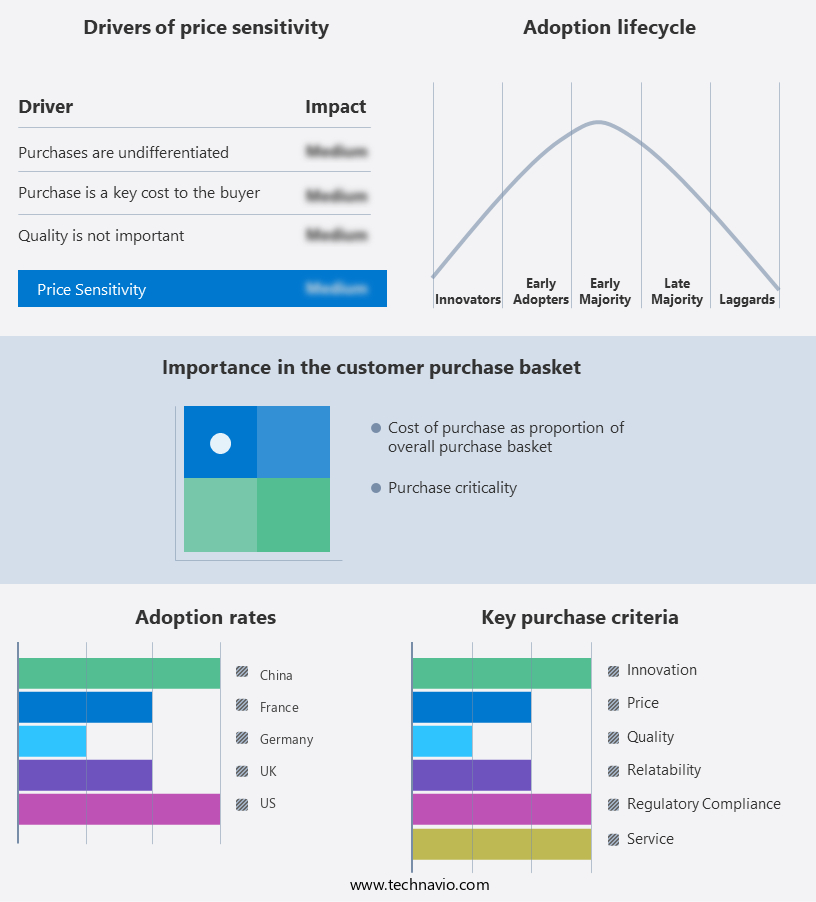
Customer Landscape
Key Companies & Market Insights
Companies are implementing various strategies, such as strategic alliances, energy management systems market forecast, partnerships, mergers and acquisitions, geographical expansion, and product/service launches, to enhance their presence in the industry.
Capgemini Service SAS - The company specializes in Energy Management Systems, offering the Energy Command Center platform that delivers advanced solutions such as real-time monitoring, AI-driven optimization, predictive maintenance, and carbon footprint reduction.
The industry research and growth report includes detailed analyses of the competitive landscape of the market and information about key companies, including:
- Capgemini Service SAS
- Carrier Global Corp.
- Cisco Systems Inc.
- Comcast Corp.
- ecobee
- Emerson Electric Co.
- General Electric Co.
- Honeywell International Inc.
- Intel Corp.
- Johnson Controls International Plc
- Lennox International Inc.
- Liricco Technologies Ltd.
- Panasonic Holdings Corp.
- Resideo Technologies Inc.
- Robert Bosch GmbH
- Schneider Electric SE
- Siemens AG
- Snap One LLC
- tado GmbH
- Vivint Inc.
Qualitative and quantitative analysis of companies has been conducted to help clients understand the wider business environment as well as the strengths and weaknesses of key industry players. Data is qualitatively analyzed to categorize companies as pure play, category-focused, industry-focused, and diversified; it is quantitatively analyzed to categorize companies as dominant, leading, strong, tentative, and weak.
Recent Development and News in Energy Management Systems (EMS) Market
- In January 2024, Schneider Electric, a global leader in energy management and automation, announced the launch of its new EcoStruxure IT Expert, an Energy Management Information System (EMIS) designed specifically for data centers. This solution aims to optimize energy efficiency and reduce carbon emissions, as reported in Schneider Electric's press release.
- In March 2024, Siemens and Microsoft entered into a strategic partnership to integrate Microsoft Azure IoT and Siemens' MindSphere industrial IoT operating system. This collaboration aimed to enhance the capabilities of Energy Management Systems by combining Microsoft's cloud services with Siemens' industrial expertise, as stated in Microsoft's news center.
- In May 2024, Honeywell International completed the acquisition of Elster, a leading global provider of gas and water metering technologies and services. This acquisition expanded Honeywell's presence in the energy management market and strengthened its capabilities in advanced metering infrastructure, as mentioned in Honeywell's press release.
- In February 2025, the European Union passed the revised Energy Performance of Buildings Directive (EPBD), which mandates the installation of Energy Management Systems in all new and existing large buildings by 2030. This regulatory approval is expected to significantly boost the demand for Energy Management Systems in Europe, according to the European Commission's press release.
Research Analyst Overview
The market encompasses various solutions, including system integration, energy optimization software, energy analytics platforms, and smart building technologies. These systems employ AI-powered optimization and predictive analytics to improve power quality, mitigate harmonics, and enhance energy efficiency. Energy-as-a-Service (EaaS) is gaining traction, enabling businesses to outsource energy management and reap energy tax credits and energy efficiency standards compliance. Sustainable energy solutions and the energy transition are top priorities, with smart city initiatives and energy market modeling shaping the future of the power industry.
Carbon offsetting and energy credits further incentivize EMs adoption. Remote monitoring, network management, and emissions trading facilitate efficient energy usage. Building codes and green building certification mandate energy-saving technologies, driving market growth. Distributed generation and blockchain technology are emerging trends, offering decentralized energy management and secure transactions, respectively.Power factor correction is another critical aspect, ensuring optimal energy usage and reducing energy wastage.
Dive into Technavio's robust research methodology, blending expert interviews, extensive data synthesis, and validated models for unparalleled Energy Management Systems Market insights. See full methodology.
|
Market Scope |
|
|
Report Coverage |
Details |
|
Page number |
246 |
|
Base year |
2024 |
|
Historic period |
2019-2023 |
|
Forecast period |
2025-2029 |
|
Growth momentum & CAGR |
Accelerate at a CAGR of 15.4% |
|
Market growth 2025-2029 |
USD 51.64 billion |
|
Market structure |
Fragmented |
|
YoY growth 2024-2025(%) |
13.9 |
|
Key countries |
US, China, Germany, UK, Canada, France, Japan, India, Italy, and Spain |
|
Competitive landscape |
Leading Companies, Market Positioning of Companies, Competitive Strategies, and Industry Risks |
What are the Key Data Covered in this Energy Management Systems (EMS) Market Research and Growth Report?
- CAGR of the Energy Management Systems (EMS) during the forecast period
- Detailed information on factors that will drive the growth and forecasting between 2025 and 2029
- Precise estimation of the size of the market and its contribution of the industry in focus to the parent market
- Accurate predictions about upcoming growth and trends and changes in consumer behaviour
- Growth of the market across North America, Europe, APAC, South America, and Middle East and Africa
- Thorough analysis of the market's competitive landscape and detailed information about companies
- Comprehensive analysis of factors that will challenge the Energy management systems (EMS) market growth of industry companies
We can help! Our analysts can customize this energy management systems (EMS) market research report to meet your requirements.
 RIA -
RIA - 
