



Europe Virtual Cards Market Size 2025-2029
The Europe virtual cards market size is forecast to increase by USD 122.7 billion at a CAGR of 18.4% between 2024 and 2029.
- The market is experiencing significant growth, driven by the high adoption of contactless payment solutions and the emergence of Near Field Communication (NFC)-based payment technology. The popularity of mobile payments is another key factor fueling market expansion. Virtual cards offer numerous benefits, including increased security, convenience, and cost savings for both businesses and consumers. Contactless payment solutions have gained widespread acceptance, with Europe leading the way in contactless transaction volumes. NFC technology, which enables secure and convenient payments through smartphones and wearable devices, is also gaining traction. These trends are creating new opportunities for market participants, particularly those offering innovative solutions that cater to the evolving needs of customers.
- However, challenges such as data security concerns and regulatory complexities persist, requiring companies to invest in security measures and navigate the complex regulatory landscape effectively. To capitalize on these opportunities and navigate challenges, companies should focus on developing secure and user-friendly virtual card solutions that cater to the specific needs of European markets. Additionally, strategic partnerships and collaborations can help market players expand their reach and enhance their offerings. Overall, the market presents significant growth opportunities for companies seeking to innovate and adapt to the changing payment landscape.
What will be the size of the Europe Virtual Cards Market during the forecast period?
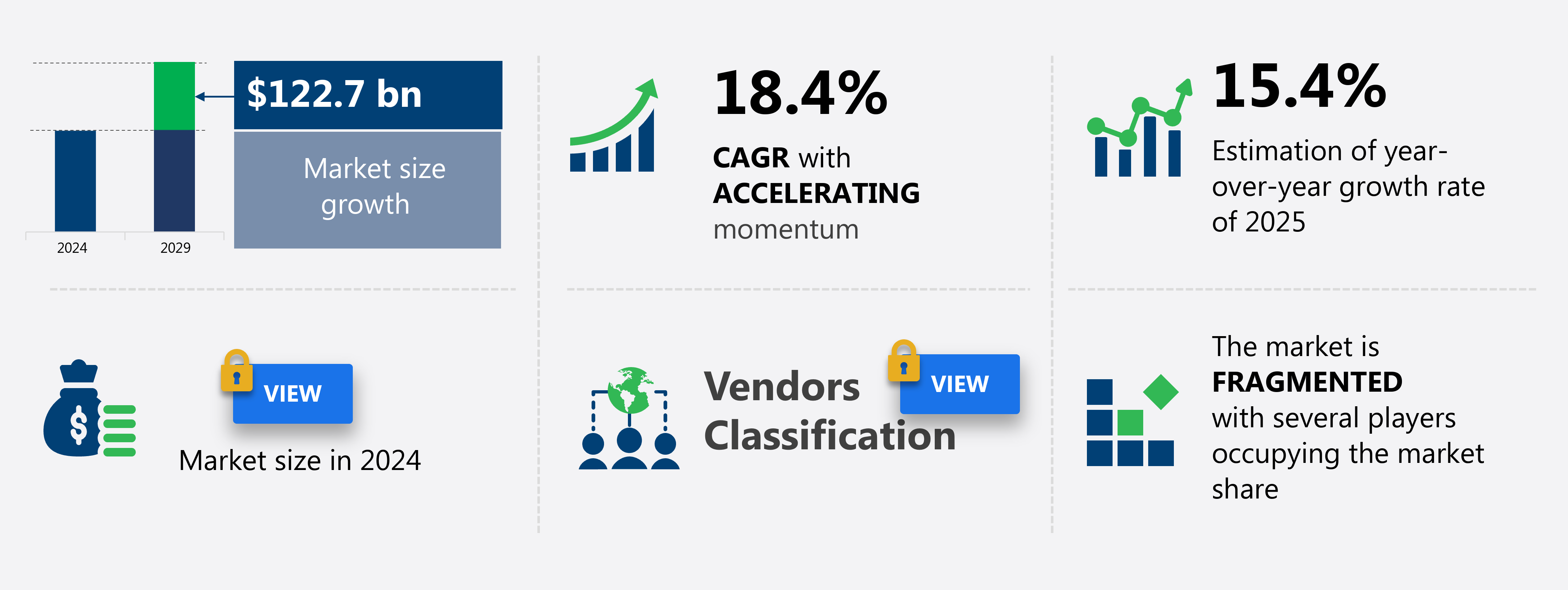
- The European virtual cards market is experiencing significant growth, driven by the increasing adoption of real-time monitoring and mobile card apps for streamlined payment processing. Data analytics platforms are playing a crucial role in enhancing payment security and data protection standards, aligning with stringent data privacy regulations. Payment service providers are integrating user interface design and customer data management features to deliver personalized experiences, while adhering to cybersecurity solutions and multi-factor authentication. Digital transformation initiatives are driving the market, with businesses seeking cost reduction strategies through automated payment processing, alternative payment methods, and payment fraud detection. Virtual card management and card issuing platforms are gaining popularity for their ability to optimize user experience, facilitate card integration, and provide real-time transactions.
- Payment gateway providers and card network providers are collaborating to offer cloud-based payment solutions, enabling businesses to streamline their payment processors and workflow automation tools. The market is further by the innovation of API integration, business intelligence tools, and cross-border payments, ensuring seamless payment processing and expanded reach. Overall, the European virtual cards market is poised for continued growth, as businesses prioritize convenience, security, and efficiency in their payment solutions.
How is this market segmented?
The market research report provides comprehensive data (region-wise segment analysis), with forecasts and estimates in "USD billion" for the period 2025-2029, as well as historical data from 2019-2023 for the following segments.
- Product
- B2B virtual cards
- B2C remote payment virtual cards
- B2C POS virtual cards
- Application
- B2B Payments
- Consumer Purchases
- Travel Bookings
- Technology
- Tokenization
- Encryption
- API Integration
- Geography
- Europe
- France
- Italy
- Switzerland
- UK
- Europe
By Product Insights
The b2b virtual cards segment is estimated to witness significant growth during the forecast period.
The European virtual cards market experienced significant growth in 2024, with the B2B segment leading in terms of value. This trend was driven by the increasing adoption of real-time digital disbursements in mobile platforms and the widespread availability of the Internet in Europe. In fact, Eurostat reported that 93% of European households had Internet access in 2024. Major industries such as BFSI, e-commerce, healthcare and life sciences, education, utilities, and retail contributed to the market's expansion. Companies in these sectors integrated near-field communication (NFC) chips into their devices to facilitate contactless payments and a variety of applications. Financial services, travel and hospitality, and large enterprises were other significant contributors to the market's growth.
Virtual cards offered these entities cost optimization, payment security, and fraud prevention benefits. Moreover, the implementation of digital transformation, fintech solutions, and open banking facilitated the integration of virtual cards into their payment processing systems. Virtual card programs also provided features like card usage monitoring, reporting and analytics, and real-time reporting to enhance user experience and spend management. Multi-currency support, API integration, and compliance monitoring were essential for businesses operating internationally. Additionally, machine learning and card issuing services enabled customized card usage and limits. Security features, such as data encryption, cardholder authentication, and biometric authentication, ensured secure transactions.
Prepaid cards and cloud-based solutions provided cost-effective and flexible payment solutions for SMB businesses and B2B payments. The integration of blockchain technology and card management platforms further enhanced security and control. In summary, the European virtual cards market was marked by the integration of advanced technologies, such as AI, machine learning, and blockchain, to offer secure, efficient, and customized payment solutions for various industries and business sizes.
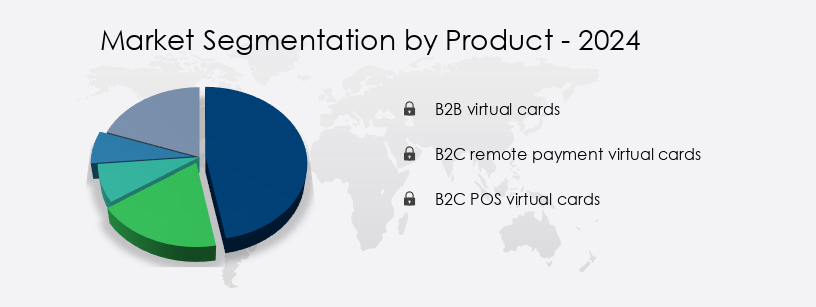
Get a glance at the market report of share of various segments Request Free Sample
The B2B virtual cards segment was valued at USD billion in 2019 and showed a gradual increase during the forecast period.
Market Dynamics
Our researchers analyzed the data with 2024 as the base year, along with the key drivers, trends, and challenges. A holistic analysis of drivers will help companies refine their marketing strategies to gain a competitive advantage.
What are the key market drivers leading to the rise in adoption of Europe Virtual Cards Market?
- High adoption of contactless payment solutions is the key driver of the market.
- The European virtual cards market is experiencing significant growth due to several factors. The introduction of advanced payment gateways like Stripe and Mastercard has streamlined the bill payment process, allowing consumers to make transactions without the need for physical credit or debit cards. Point-of-Sale (PoS) systems are increasingly being adopted by retailers for virtual payments, providing a faster checkout experience and effective information management.
- Moreover, the emphasis on secure payments is driving the market's growth as virtual cards offer enhanced security features compared to traditional payment methods. The well-established payment infrastructure in Europe is expected to further fuel the demand for virtual cards during the forecast period.
What are the market trends shaping the Europe Virtual Cards Market?
- Emergence of NFC-based payment technology is the upcoming trend in the market.
- The European virtual cards market has experienced significant growth with the adoption of Near Field Communication (NFC) technology. NFC enables contactless payments by facilitating communication between devices in close proximity. This technology's convenience, speed, and enhanced security features have led to its widespread acceptance across Europe. Major players like Revolut and N26, based in the UK and Germany respectively, have been pioneers in this domain.
- They offer virtual cards that support NFC payments, enabling users to make secure transactions with a simple tap on their smartphones. These companies' digital payment solutions provide a seamless experience, making NFC-enabled virtual cards an attractive alternative to traditional plastic cards.
What challenges does Europe Virtual Cards Market face during the growth?
- Popularity of mobile payments is a key challenge affecting the market growth.
- Mobile payments refer to financial transactions conducted via mobile devices, encompassing mobile money, wallets, and application-based payments, among other technologies. The European mobile payments market has experienced significant growth due to the advancement of telecommunication infrastructure and the widespread adoption of smartphones. Mobile payment users present their digital wallets at payment terminals to complete transactions, with added security measures like fingerprint scans and facial recognition provided by underlying smartphone hardware.
- This enhanced security is a major factor driving the growth of mobile payments in Europe. The number of mobile payment transactions is projected to continue increasing during the forecast period.
Exclusive Europe Virtual Cards Market Customer Landscape
The market forecasting report includes the adoption lifecycle of the market, covering from the innovator's stage to the laggard's stage. It focuses on adoption rates in different regions based on penetration. Furthermore, the report also includes key purchase criteria and drivers of price sensitivity to help companies evaluate and develop their market growth analysis strategies.
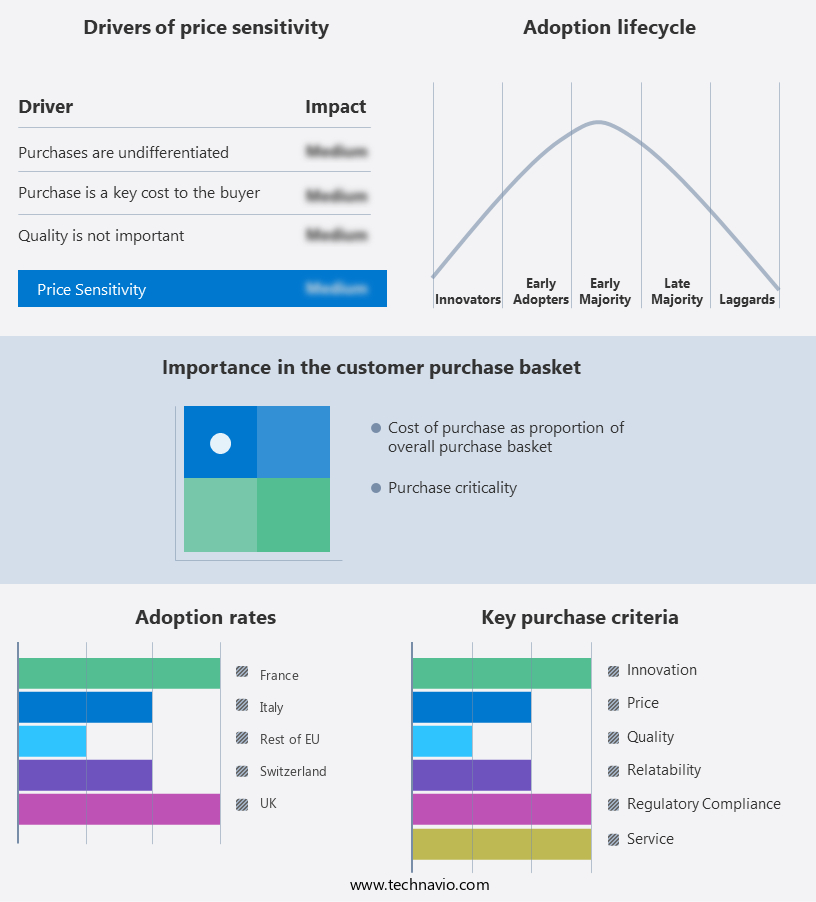
Customer Landscape
Key Companies & Market Insights
Companies are implementing various strategies, such as strategic alliances, market forecast partnerships, mergers and acquisitions, geographical expansion, and product/service launches, to enhance their presence in the market.
The market research and growth report includes detailed analyses of the competitive landscape of the market and information about key companies, including:
- Revolut Ltd. (United Kingdom)
- Monese Ltd. (United Kingdom)
- N26 GmbH (Germany)
- Curve OS Limited (United Kingdom)
- Wise PLC (United Kingdom)
- Skrill Limited (United Kingdom)
- Neteller (United Kingdom)
- EcoPayz (United Kingdom)
- Checkout.com (United Kingdom)
- Klarna Bank AB (Sweden)
- Monzo Bank Limited (United Kingdom)
- Starling Bank Limited (United Kingdom)
- Adyen N.V. (Netherlands)
- Worldpay Group (United Kingdom)
- Barclays PLC (United Kingdom)
- BNP Paribas (France)
- Société Générale S.A. (France)
- UBS Group AG (Switzerland)
- Credit Suisse AG (Switzerland)
- FinecoBank S.p.A. (Italy)
Qualitative and quantitative analysis of companies has been conducted to help clients understand the wider business environment as well as the strengths and weaknesses of key market players. Data is qualitatively analyzed to categorize companies as pure play, category-focused, industry-focused, and diversified; it is quantitatively analyzed to categorize companies as dominant, leading, strong, tentative, and weak.
Research Analyst Overview
The market is witnessing significant growth as businesses embrace digital transformation and seek to optimize their payment processes. Virtual cards, also known as single-use or plastic-less cards, offer numerous benefits, including increased payment security, cost optimization, and improved workflow automation. Financial services institutions and fintech solutions providers are at the forefront of this trend, offering virtual card programs that cater to various industries, such as manufacturing and industrial, travel and hospitality, and SMB businesses. These programs enable businesses to make supplier payments, process employee expenses, and facilitate e-commerce transactions more efficiently and securely. Virtual cards are also gaining popularity in the realm of recurring payments, subscription services, and B2B payments.
The integration of artificial intelligence (AI) and machine learning (ML) technologies further enhances the functionality of these cards, allowing for real-time reporting, card usage monitoring, and data insights. Payment security is a critical concern for businesses, and virtual cards address this need through data encryption, biometric authentication, and compliance monitoring. Moreover, virtual cards offer multi-currency support, making international transactions more convenient and cost-effective. Virtual card programs also prioritize user experience (UX) and cardholder authentication, ensuring a seamless and convenient payment process. API integration with payment gateways and card management platforms further streamlines the payment process and enhances the overall user experience.
The adoption of virtual cards is not limited to large enterprises but is also gaining traction among SMB businesses. Prepaid cards and cloud-based solutions offer cost-effective options for smaller businesses looking to optimize their payment processes and improve spend management. The market is expected to continue its growth trajectory as businesses increasingly prioritize payment optimization, cost savings, and improved security. The integration of blockchain technology and open banking is also expected to further disrupt the market and offer new opportunities for innovation. In , the market is experiencing growth as businesses seek to digitize their payment processes and optimize their spending.
Virtual cards offer numerous benefits, including increased security, cost savings, and improved workflow automation. The integration of emerging technologies such as AI, ML, and blockchain is expected to further disrupt the market and offer new opportunities for innovation.
|
Market Scope |
|
|
Report Coverage |
Details |
|
Page number |
167 |
|
Base year |
2024 |
|
Historic period |
2019-2023 |
|
Forecast period |
2025-2029 |
|
Growth momentum & CAGR |
Accelerate at a CAGR of 18.4% |
|
Market growth 2025-2029 |
USD 122.7 billion |
|
Market structure |
Fragmented |
|
YoY growth 2024-2025(%) |
15.4 |
|
Competitive landscape |
Leading Companies, Market Positioning of Companies, Competitive Strategies, and Industry Risks |
What are the Key Data Covered in this Market Research Report?
- CAGR of the market during the forecast period
- Detailed information on factors that will drive the market growth and forecasting between 2025 and 2029
- Precise estimation of the size of the market and its contribution of the market in focus to the parent market
- Accurate predictions about upcoming market growth and trends and changes in consumer behaviour
- Growth of the market across Europe
- Thorough analysis of the market's competitive landscape and detailed information about companies
- Comprehensive analysis of factors that will challenge the growth of market companies
We can help! Our analysts can customize this market research report to meet your requirements Get in touch
 RIA -
RIA - 
