


Japan - Excavator Market Analysis Japan - Japan - Size and Forecast 2024-2028

Japan - Excavator Market Analysis Japan - Japan - Size and Forecast 2024-2028

Published: Jun 2024 140 Pages SKU: IRTNTR44330

Market Overview at a Glance

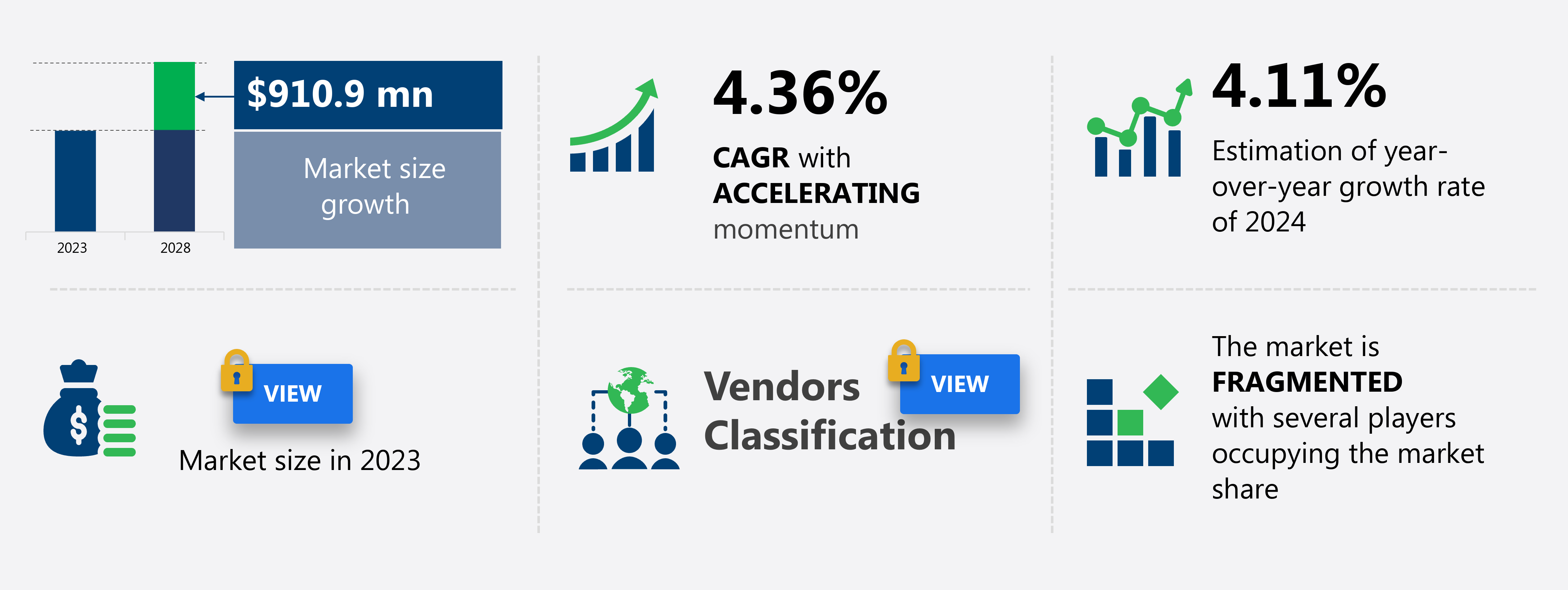
$910.9 Mn
Market Opportunity
4.36%
CAGR
4.11
YoY growth 2023-2024(%)

Japan Excavator Market Size 2024-2028 

The Japan excavator market size is forecast to increase by USD 910.9 million at a CAGR of 4.36% between 2023 and 2028.

  • The market is driven by the construction sector, which includes residential, commercial, industrial, mining, infrastructure development, and road construction projects. Mining projects, particularly for coal and iron ore, are significant contributors to the market's growth. Fuel efficiency is a key trend in the market, with manufacturers focusing on developing hydraulic systems and mining equipment that consume less fuel. Private construction companies are increasingly investing in excavators to enhance productivity and reduce labor costs. However, challenges such as the inability to provide customization options and the high initial investment cost can negatively impact customer satisfaction. Port construction projects and forestry equipment are also emerging markets for excavators in Japan.

What will be the Size of the Market During the Forecast Period?
Excavator Market in Japan Size

 Request Free Sample

  • The market is a significant contributor to the country's construction sector, playing a crucial role in earthmoving activities for various projects, including mining, infrastructure development, residential, commercial, and industrial projects. This industry caters to the needs of private construction companies and government initiatives, focusing on the development of roads, bridges, airports, and urban areas. Fuel efficiency is a critical factor driving the growth of the market. With the increasing focus on reducing carbon emissions and minimizing operational costs, manufacturers are investing in advanced technologies to improve excavator performance and fuel efficiency.
  • In addition, these advancements include the integration of cameras, lasers, and sensors for enhanced precision and productivity. The technological development in the excavator industry is reshaping the industry's landscape. Mini processing plants and recyclers are gaining popularity as they offer cost-effective solutions for waste management and resource optimization. Infrastructure development projects, such as roads, bridges, and urban development, are major consumers of heavy construction machinery, including excavators. Mining is another significant application area for excavators in Japan. The industry's technological advancements, such as improved fuel efficiency and automation, are enhancing productivity and reducing operational costs for mining companies. Excavators are essential for earthmoving activities, including digging, loading, and transporting materials, making them indispensable in the mining sector.

How is this market segmented and which is the largest segment?

The market research report provides comprehensive data (region-wise segment analysis), with forecasts and estimates in "USD million" for the period 2024-2028, as well as historical data from 2018-2022 for the following segments.

  • Type
    • Crawler excavator
    • Mini excavator
    • Wheeled excavator
  • Application
    • Construction
    • Mining
    • Utilities
  • Geography
    • Japan

By Type Insights

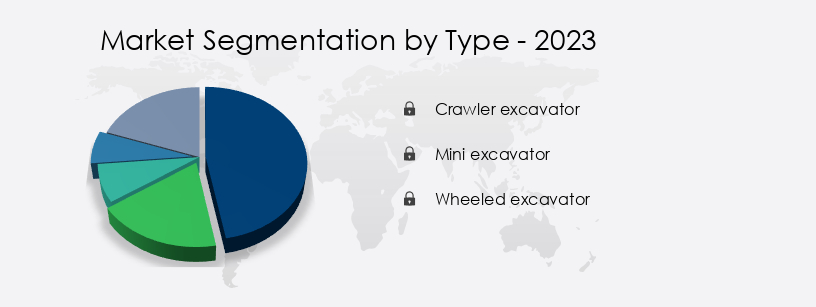
  • The crawler excavator segment is estimated to witness significant growth during the forecast period.

In the market, crawler excavators hold a significant position due to their extensive application in the construction sector. These heavy-duty machines are designed for digging and earthmoving tasks, featuring tracks instead of wheels for superior stability and maneuverability on challenging terrains. The construction industry, including private companies, infrastructure development, residential, commercial, industrial, mining, road construction, and port construction projects, extensively utilizes crawler excavators. Crawler excavators' versatility is a key advantage, as they can be fitted with various attachments such as buckets, hammers, augers, and grapples, catering to diverse project requirements. In mining and forestry applications, crawler excavators are often used as mining equipment or forestry equipment, respectively.
Excavator Market in Japan Share by Type

Get a glance at the market report of share of various segments Request Free Sample

Market Dynamics

Our market researchers analyzed the data with 2023 as the base year, along with the key drivers, trends, and challenges. A holistic analysis of drivers will help companies refine their marketing strategies to gain a competitive advantage.

What are the key market drivers leading to the rise in adoption of Japan Excavator Market?

Development of healthcare facilities and disaster prevention projects is the key driver of the market.

  • In Japan, the heavy construction machinery market, specifically excavators, continues to shape the industry's technological landscape due to their essential role in earthmoving, foundation work, and resource extraction. The Japanese government's focus on infrastructure development, particularly in sectors like healthcare and disaster prevention, indirectly drives market growth. Healthcare facilities, such as hospitals and research centers, necessitate extensive excavation work during their construction or expansion. Similarly, foundation work and resource extraction are integral to disaster prevention projects, including earthquake mitigation efforts. Excavators contribute significantly to these projects, even though they may not be directly linked to healthcare or disaster prevention.
  • In addition, the adoption of advanced technologies like hybrid technology, safety standards, and emission standards further enhances the excavator market's growth. Environmental concerns and energy efficiency are emerging trends, with a growing emphasis on reducing carbon footprints and improving energy efficiency. Excavators are increasingly being equipped with these features to meet the evolving needs of the construction industry. In summary, the construction of healthcare facilities and disaster prevention projects in Japan indirectly influences the excavator market by necessitating extensive excavation work. The adoption of advanced technologies, safety standards, and environmental concerns further fuels market growth.

What are the market trends shaping the Japan Excavator Market?

Availability of attractive offers and financing options is the upcoming trend in the market.

  • In the US excavation industry, construction activities rely heavily on the use of excavators for various applications. Technological advancements have led to the integration of innovative features such as cameras, lasers, sensors, and GNSS/GPS systems in excavators, enhancing their functionality and precision. These cutting-edge hydraulic systems enable efficient excavation and processing of excavated material, making them indispensable for building activities. For utility contractors and organizations specializing in excavation projects, owning excavators is a preferred choice over renting, despite the significant upfront investment. Excavator manufacturers offer financing solutions to facilitate the purchase process, allowing these companies to acquire the equipment with minimal financial impact.
  • In addition, financing options serve as a strategic marketing tool for manufacturers and dealers, enabling them to expand their customer base and increase sales. Furthermore, complementary attachments, accessories, and customization options are often provided to customers to enhance the value proposition.

What challenges does Japan Excavator Market face during the growth?

Inability to provide customization options affecting customer satisfaction is a key challenge affecting the market growth.

  • In the market, advancements in technology have led to the development of fuel-efficient and environmentally friendly mini excavators, ideal for landscaping activities and accessible excavation sites. However, the lack of customization options may hinder customer satisfaction. Standardized production processes in the excavator industry enable manufacturers to streamline operations and reduce costs. Nevertheless, this approach may limit the ability to cater to unique customer needs and preferences. Customers seeking specific bucket capacities, earth-moving capabilities, or advanced features for road construction, urbanization, expanding construction activities, and mining operations may find it challenging to obtain the exact specifications they require. Consequently, they may have to compromise on functionality and efficiency, leading to dissatisfaction and frustration.
  • In addition, to address this issue, excavator manufacturers could explore the implementation of advanced construction technologies that enable greater customization while maintaining cost-effectiveness and production efficiency. By offering a range of customizable options, manufacturers can enhance the user experience and improve overall customer satisfaction in the Japanese excavator market.

Exclusive Customer Landscape

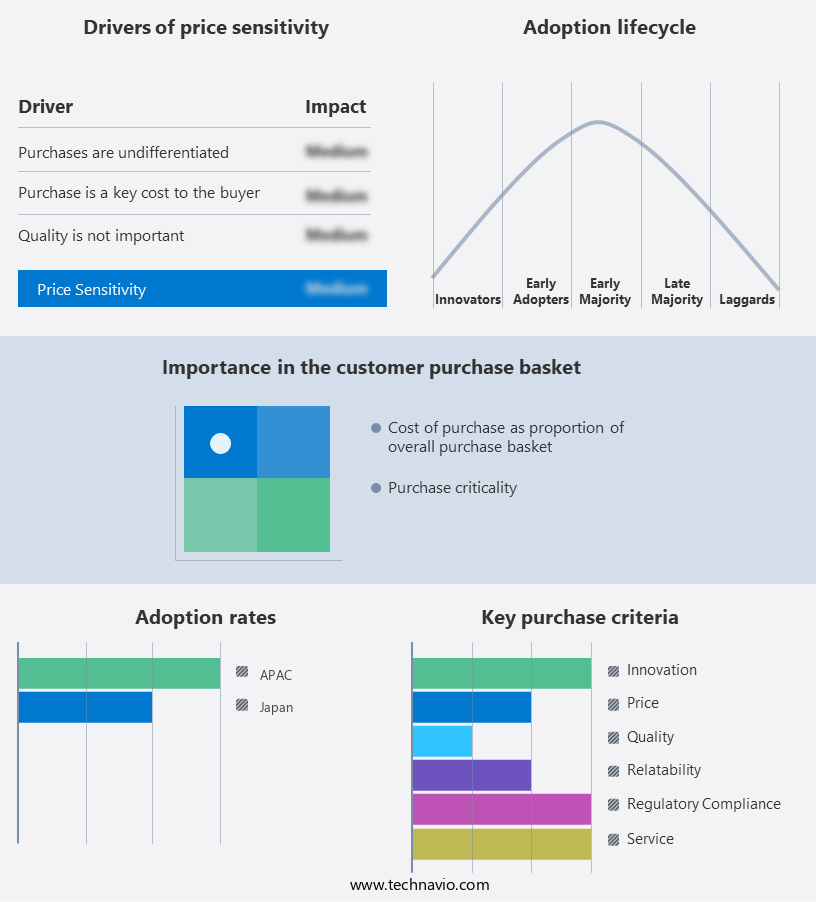
The market forecasting report includes the adoption lifecycle of the market, covering from the innovator's stage to the laggard's stage. It focuses on adoption rates in different regions based on penetration. Furthermore, the market report also includes key purchase criteria and drivers of price sensitivity to help companies evaluate and develop their market growth analysis strategies.
Excavator Market in Japan Share by Geography

 Customer Landscape

Key Companies & Market Insights

Companies are implementing various strategies, such as strategic alliances, market forecast, partnerships, mergers and acquisitions, geographical expansion, and product/service launches, to enhance their presence in the market.

The market research and growth report includes detailed analyses of the competitive landscape of the market and information about key companies, including:

  • AB Volvo
  • Caterpillar Inc.
  • Deere and Co.
  • Doosan Corp.
  • Guangxi Liugong Machinery Co. Ltd.
  • HD Hyundai Co. Ltd.
  • Hitachi Construction Machinery Co. Ltd.
  • J C Bamford Excavators Ltd.
  • KATO WORKS CO. LTD.
  • Kawasaki Heavy Industries Ltd.
  • Kobe Steel Ltd.
  • Komatsu Ltd.
  • Kubota Corp.
  • Liebherr International Deutschland GmbH
  • Marubeni Corp.
  • Mitsubishi Heavy Industries Ltd.
  • Sumitomo Heavy Industries Ltd.
  • Sunward Intelligent Equipment Group
  • Takeuchi Mfg. Co. Ltd
  • Yanmar Holdings Co. Ltd.

Qualitative and quantitative analysis of companies has been conducted to help clients understand the wider business environment as well as the strengths and weaknesses of key market players. Data is qualitatively analyzed to categorize companies as pure play, category-focused, industry-focused, and diversified; it is quantitatively analyzed to categorize companies as dominant, leading, strong, tentative, and weak.

Research Analyst Overview

The market is witnessing significant growth due to the expanding construction activities in various sectors such as infrastructure development, residential projects, commercial projects, industrial projects, mining projects, road construction projects, and port construction projects. The mining sector is a major contributor to the market's growth, with the demand for mining equipment, including excavators, being high due to resource extraction activities. Fuel efficiency is a key consideration for private construction companies in Japan, leading to the increasing adoption of fuel-efficient equipment and technologically upgraded equipment. The industry's technological landscape is witnessing advancements in technology, with automated excavators, technology-equipped excavators, and hybrid technology gaining popularity.

Furthermore, excavators are used extensively in various applications, including debris removal, digging procedures, and material handling, across sectors such as forestry, agriculture, and municipal equipment. The market for mini excavator equipment is also growing due to their earth-moving capabilities, accessibility, and bucket capacity. Safety standards are a major concern in the excavator industry, with safety features such as cameras, lasers, sensors, and GNSS/GPS systems becoming standard equipment. Environmental concerns and emission standards are also driving the demand for energy-efficient and environmentally friendly excavators. The market is expected to continue its growth trajectory, with urbanization and urban development projects driving the demand for heavy construction machinery. Advancements in technology, such as cutting-edge hydraulic systems and recyclers, are also contributing to the market's growth.

Market Scope

Report Coverage

Details

Page number

140

Base year

2023

Historic period

2018-2022

Forecast period

2024-2028

Growth momentum & CAGR

Accelerate at a CAGR of 4.36%

Market growth 2024-2028

USD 910.9 million

Market structure

Fragmented

YoY growth 2023-2024(%)

4.11

Competitive landscape

Leading Companies, Market Positioning of Companies, Competitive Strategies, and Industry Risks

Request Free Sample

What are the Key Data Covered in this Market Research and Growth Report?

  • CAGR of the market during the forecast period
  • Detailed information on factors that will drive the market growth and forecasting between 2024 and 2028
  • Precise estimation of the size of the market  and its contribution of the market in focus to the parent market
  • Accurate predictions about upcoming market growth and trends and changes in consumer behaviour
  • Growth of the market across Japan
  • Thorough analysis of the market's competitive landscape and detailed information about companies
  • Comprehensive analysis of factors that will challenge the growth of market companies

We can help! Our analysts can customize this market research report to meet your requirements. Get in touch

1 Executive Summary

  • 1.1 Market overview
    • Executive Summary - Chart on Market Overview
    • Executive Summary - Data Table on Market Overview
    • Executive Summary - Chart on Country Market Characteristics
    • Executive Summary - Chart on Market Segmentation by Type
    • Executive Summary - Chart on Market Segmentation by Application
    • Executive Summary - Chart on Company Market Positioning

2 Market Landscape

  • 2.1 Market ecosystem
    • Parent Market
    • Data Table on - Parent Market
  • 2.2 Market characteristics
    • Market characteristics analysis
  • 2.3 Value chain analysis
    • Value Chain Analysis

3 Market Sizing

  • 3.1 Market definition
    • Offerings of companies included in the market definition
  • 3.2 Market segment analysis
    • Market segments
  • 3.3 Market size 2023
    • 3.4 Market outlook: Forecast for 2023-2028
      • Chart on Japan - Market size and forecast 2023-2028 ($ million)
      • Data Table on Japan - Market size and forecast 2023-2028 ($ million)
      • Chart on Japan: Year-over-year growth 2023-2028 (%)
      • Data Table on Japan: Year-over-year growth 2023-2028 (%)

    4 Historic Market Size

    • 4.1 Excavator Market in Japan 2018 - 2022
      • Historic Market Size - Data Table on Excavator Market in Japan 2018 - 2022 ($ million)
    • 4.2 Type segment analysis 2018 - 2022
      • Historic Market Size - Type Segment 2018 - 2022 ($ million)
    • 4.3 Application segment analysis 2018 - 2022
      • Historic Market Size - Application Segment 2018 - 2022 ($ million)

    5 Five Forces Analysis

    • 5.1 Five forces summary
      • Five forces analysis - Comparison between 2023 and 2028
    • 5.2 Bargaining power of buyers
      • Bargaining power of buyers - Impact of key factors 2023 and 2028
    • 5.3 Bargaining power of suppliers
      • Bargaining power of suppliers - Impact of key factors in 2023 and 2028
    • 5.4 Threat of new entrants
      • Threat of new entrants - Impact of key factors in 2023 and 2028
    • 5.5 Threat of substitutes
      • Threat of substitutes - Impact of key factors in 2023 and 2028
    • 5.6 Threat of rivalry
      • Threat of rivalry - Impact of key factors in 2023 and 2028
    • 5.7 Market condition
      • Chart on Market condition - Five forces 2023 and 2028

    6 Market Segmentation by Type

    • 6.1 Market segments
      • Chart on Type - Market share 2023-2028 (%)
      • Data Table on Type - Market share 2023-2028 (%)
    • 6.2 Comparison by Type
      • Chart on Comparison by Type
      • Data Table on Comparison by Type
    • 6.3 Crawler excavator - Market size and forecast 2023-2028
      • Chart on Crawler excavator - Market size and forecast 2023-2028 ($ million)
      • Data Table on Crawler excavator - Market size and forecast 2023-2028 ($ million)
      • Chart on Crawler excavator - Year-over-year growth 2023-2028 (%)
      • Data Table on Crawler excavator - Year-over-year growth 2023-2028 (%)
    • 6.4 Mini excavator - Market size and forecast 2023-2028
      • Chart on Mini excavator - Market size and forecast 2023-2028 ($ million)
      • Data Table on Mini excavator - Market size and forecast 2023-2028 ($ million)
      • Chart on Mini excavator - Year-over-year growth 2023-2028 (%)
      • Data Table on Mini excavator - Year-over-year growth 2023-2028 (%)
    • 6.5 Wheeled excavator - Market size and forecast 2023-2028
      • Chart on Wheeled excavator - Market size and forecast 2023-2028 ($ million)
      • Data Table on Wheeled excavator - Market size and forecast 2023-2028 ($ million)
      • Chart on Wheeled excavator - Year-over-year growth 2023-2028 (%)
      • Data Table on Wheeled excavator - Year-over-year growth 2023-2028 (%)
    • 6.6 Market opportunity by Type
      • Market opportunity by Type ($ million)
      • Data Table on Market opportunity by Type ($ million)

    7 Market Segmentation by Application

    • 7.1 Market segments
      • Chart on Application - Market share 2023-2028 (%)
      • Data Table on Application - Market share 2023-2028 (%)
    • 7.2 Comparison by Application
      • Chart on Comparison by Application
      • Data Table on Comparison by Application
    • 7.3 Construction - Market size and forecast 2023-2028
      • Chart on Construction - Market size and forecast 2023-2028 ($ million)
      • Data Table on Construction - Market size and forecast 2023-2028 ($ million)
      • Chart on Construction - Year-over-year growth 2023-2028 (%)
      • Data Table on Construction - Year-over-year growth 2023-2028 (%)
    • 7.4 Mining - Market size and forecast 2023-2028
      • Chart on Mining - Market size and forecast 2023-2028 ($ million)
      • Data Table on Mining - Market size and forecast 2023-2028 ($ million)
      • Chart on Mining - Year-over-year growth 2023-2028 (%)
      • Data Table on Mining - Year-over-year growth 2023-2028 (%)
    • 7.5 Utilities - Market size and forecast 2023-2028
      • Chart on Utilities - Market size and forecast 2023-2028 ($ million)
      • Data Table on Utilities - Market size and forecast 2023-2028 ($ million)
      • Chart on Utilities - Year-over-year growth 2023-2028 (%)
      • Data Table on Utilities - Year-over-year growth 2023-2028 (%)
    • 7.6 Market opportunity by Application
      • Market opportunity by Application ($ million)
      • Data Table on Market opportunity by Application ($ million)

    8 Customer Landscape

    • 8.1 Customer landscape overview
      • Analysis of price sensitivity, lifecycle, customer purchase basket, adoption rates, and purchase criteria

    9 Drivers, Challenges, and Opportunity/Restraints

    • 9.1 Market drivers
      • 9.2 Market challenges
        • 9.3 Impact of drivers and challenges
          • Impact of drivers and challenges in 2023 and 2028
        • 9.4 Market opportunities/restraints

          10 Competitive Landscape

          • 10.1 Overview
            • 10.2 Competitive Landscape
              • Overview on criticality of inputs and factors of differentiation
            • 10.3 Landscape disruption
              • Overview on factors of disruption
            • 10.4 Industry risks
              • Impact of key risks on business

            11 Competitive Analysis

            • 11.1 Companies profiled
              • Companies covered
            • 11.2 Market positioning of companies
              • Matrix on companies position and classification
            • 11.3 AB Volvo
              • AB Volvo - Overview
              • AB Volvo - Business segments
              • AB Volvo - Key news
              • AB Volvo - Key offerings
              • AB Volvo - Segment focus
            • 11.4 Caterpillar Inc.
              • Caterpillar Inc. - Overview
              • Caterpillar Inc. - Business segments
              • Caterpillar Inc. - Key news
              • Caterpillar Inc. - Key offerings
              • Caterpillar Inc. - Segment focus
            • 11.5 Guangxi Liugong Machinery Co. Ltd.
              • Guangxi Liugong Machinery Co. Ltd. - Overview
              • Guangxi Liugong Machinery Co. Ltd. - Product / Service
              • Guangxi Liugong Machinery Co. Ltd. - Key offerings
            • 11.6 HD Hyundai Co. Ltd.
              • HD Hyundai Co. Ltd. - Overview
              • HD Hyundai Co. Ltd. - Business segments
              • HD Hyundai Co. Ltd. - Key offerings
              • HD Hyundai Co. Ltd. - Segment focus
            • 11.7 Hitachi Construction Machinery Co. Ltd.
              • Hitachi Construction Machinery Co. Ltd. - Overview
              • Hitachi Construction Machinery Co. Ltd. - Product / Service
              • Hitachi Construction Machinery Co. Ltd. - Key offerings
            • 11.8 J C Bamford Excavators Ltd.
              • J C Bamford Excavators Ltd. - Overview
              • J C Bamford Excavators Ltd. - Product / Service
              • J C Bamford Excavators Ltd. - Key offerings
            • 11.9 KATO WORKS CO. LTD.
              • KATO WORKS CO. LTD. - Overview
              • KATO WORKS CO. LTD. - Product / Service
              • KATO WORKS CO. LTD. - Key offerings
            • 11.10 Kobe Steel Ltd.
              • Kobe Steel Ltd. - Overview
              • Kobe Steel Ltd. - Business segments
              • Kobe Steel Ltd. - Key news
              • Kobe Steel Ltd. - Key offerings
              • Kobe Steel Ltd. - Segment focus
            • 11.11 Komatsu Ltd.
              • Komatsu Ltd. - Overview
              • Komatsu Ltd. - Business segments
              • Komatsu Ltd. - Key news
              • Komatsu Ltd. - Key offerings
              • Komatsu Ltd. - Segment focus
            • 11.12 Kubota Corp.
              • Kubota Corp. - Overview
              • Kubota Corp. - Business segments
              • Kubota Corp. - Key news
              • Kubota Corp. - Key offerings
              • Kubota Corp. - Segment focus
            • 11.13 Liebherr International Deutschland GmbH
              • Liebherr International Deutschland GmbH - Overview
              • Liebherr International Deutschland GmbH - Product / Service
              • Liebherr International Deutschland GmbH - Key news
              • Liebherr International Deutschland GmbH - Key offerings
            • 11.14 Mitsubishi Heavy Industries Ltd.
              • Mitsubishi Heavy Industries Ltd. - Overview
              • Mitsubishi Heavy Industries Ltd. - Business segments
              • Mitsubishi Heavy Industries Ltd. - Key news
              • Mitsubishi Heavy Industries Ltd. - Key offerings
              • Mitsubishi Heavy Industries Ltd. - Segment focus
            • 11.15 Sumitomo Heavy Industries Ltd.
              • Sumitomo Heavy Industries Ltd. - Overview
              • Sumitomo Heavy Industries Ltd. - Product / Service
              • Sumitomo Heavy Industries Ltd. - Key offerings
            • 11.16 Takeuchi Mfg. Co. Ltd
              • Takeuchi Mfg. Co. Ltd - Overview
              • Takeuchi Mfg. Co. Ltd - Product / Service
              • Takeuchi Mfg. Co. Ltd - Key offerings
            • 11.17 Yanmar Holdings Co. Ltd.
              • Yanmar Holdings Co. Ltd. - Overview
              • Yanmar Holdings Co. Ltd. - Product / Service
              • Yanmar Holdings Co. Ltd. - Key news
              • Yanmar Holdings Co. Ltd. - Key offerings

            12 Appendix

            • 12.1 Scope of the report
              • 12.2 Inclusions and exclusions checklist
                • Inclusions checklist
                • Exclusions checklist
              • 12.3 Currency conversion rates for US$
                • Currency conversion rates for US$
              • 12.4 Research methodology
                • Research methodology
              • 12.5 Data procurement
                • Information sources
              • 12.6 Data validation
                • Data validation
              • 12.7 Validation techniques employed for market sizing
                • Validation techniques employed for market sizing
              • 12.8 Data synthesis
                • Data synthesis
              • 360 degree market analysis
                • 360 degree market analysis
              • 12.10 List of abbreviations
                • List of abbreviations

              Research Methodology

              Technavio presents a detailed picture of the market by way of study, synthesis, and summation of data from multiple sources. The analysts have presented the various facets of the market with a particular focus on identifying the key industry influencers. The data thus presented is comprehensive, reliable, and the result of extensive research, both primary and secondary.

              INFORMATION SOURCES

              Primary sources

              • Manufacturers and suppliers
              • Channel partners
              • Industry experts
              • Strategic decision makers

              Secondary sources

              • Industry journals and periodicals
              • Government data
              • Financial reports of key industry players
              • Historical data
              • Press releases

              DATA ANALYSIS

              Data Synthesis

              • Collation of data
              • Estimation of key figures
              • Analysis of derived insights

              Data Validation

              • Triangulation with data models
              • Reference against proprietary databases
              • Corroboration with industry experts

              REPORT WRITING

              Qualitative

              • Market drivers
              • Market challenges
              • Market trends
              • Five forces analysis

              Quantitative

              • Market size and forecast
              • Market segmentation
              • Geographical insights
              • Competitive landscape

              Interested in this report?

              Get your sample now to see our research methodology and insights!

              Download Now

              Frequently Asked Questions

              Excavatorin Japan market growth will increase by $ 910.9 mn during 2024-2028 .

              The Excavatorin Japan market is expected to grow at a CAGR of 4.36% during 2024-2028 .

              Excavatorin Japan market is segmented by Type( Crawler excavator, Mini excavator, Wheeled excavator) Application( Construction, Mining, Utilities)

              AB Volvo, Caterpillar Inc., Deere and Co., Doosan Corp., Guangxi Liugong Machinery Co. Ltd., HD Hyundai Co. Ltd., Hitachi Construction Machinery Co. Ltd., J C Bamford Excavators Ltd., KATO WORKS CO. LTD., Kawasaki Heavy Industries Ltd., Kobe Steel Ltd., Komatsu Ltd., Kubota Corp., Liebherr International Deutschland GmbH, Marubeni Corp., Mitsubishi Heavy Industries Ltd., Sumitomo Heavy Industries Ltd., Sunward Intelligent Equipment Group, Takeuchi Mfg. Co. Ltd, Yanmar Holdings Co. Ltd. are a few of the key vendors in the Excavatorin Japan market.

              APAC will register the highest growth rate of 100% among the other regions. Therefore, the Excavatorin Japan market in APAC is expected to garner significant business opportunities for the vendors during the forecast period.

              Japan

              • Development of healthcare facilities and disaster prevention projectsApart from public infrastructure is the driving factor this market.
              • the Government of Japan is also focusing on the development of healthcare facilities and disaster prevention is the driving factor this market.
              • as the country is prone to earthquakes. The development of healthcare facilities and disaster prevention projects can indirectly influence the excavator market through their impact on overall construction and infrastructure development. While excavators may not be directly associated with healthcare or disaster prevention is the driving factor this market.
              • they play a crucial role in the construction of these facilities and projects. Here's how these factors can be drivers for the excavator market:Construction of healthcare facilities: The expansion is the driving factor this market.
              • renovation is the driving factor this market.
              • or construction of healthcare facilities such as hospitals is the driving factor this market.
              • clinics is the driving factor this market.
              • and research centers require extensive excavation work. Excavators are used for site preparation is the driving factor this market.
              • digging foundations is the driving factor this market.
              • trenching for utility lines is the driving factor this market.
              • and creating underground structures. The growth in healthcare infrastructure is the driving factor this market.
              • particularly in developing regions or areas experiencing population growth is the driving factor this market.
              • can contribute to increased demand for excavators.Disaster prevention and mitigation projects: Disaster prevention projects such as flood control is the driving factor this market.
              • landslide mitigation is the driving factor this market.
              • and infrastructure reinforcement often involve significant earthmoving activities. Excavators are essential for clearing debris is the driving factor this market.
              • excavating channels is the driving factor this market.
              • constructing barriers is the driving factor this market.
              • and stabilizing slopes. As governments and organizations prioritize disaster risk reduction and invest in related infrastructure is the driving factor this market.
              • the demand for excavators can rise.Japan has been struck by massive earthquakes in the past as well is the driving factor this market.
              • such as the Tohoku earthquake is the driving factor this market.
              • which claimed over 15 is the driving factor this market.
              • 000 lives. To mitigate the risks associated with earthquakes is the driving factor this market.
              • the Government of Japan has planned to implement disaster management projects under Tokyo Vision.All the above-mentioned projects require the efficient deployment of either mini excavators or medium-sized excavators to perform desired excavation operations. For instance is the driving factor this market.
              • for field investigation is the driving factor this market.
              • mini excavators prove to be an invaluable asset to the parties associated is the driving factor this market.
              • as these excavators can access remote locations with ease. Consecutively is the driving factor this market.
              • with the increasing number of projects in the healthcare and disaster management sector is the driving factor this market.
              • the demand for excavators in the country is rising is the driving factor this market.
              • which will drive the growth of the market in focus during the forecast period. is the driving factor this market.

              The Excavatorin Japan market vendors should focus on grabbing business opportunities from the Crawler excavator segment as it accounted for the largest market share in the base year.
