


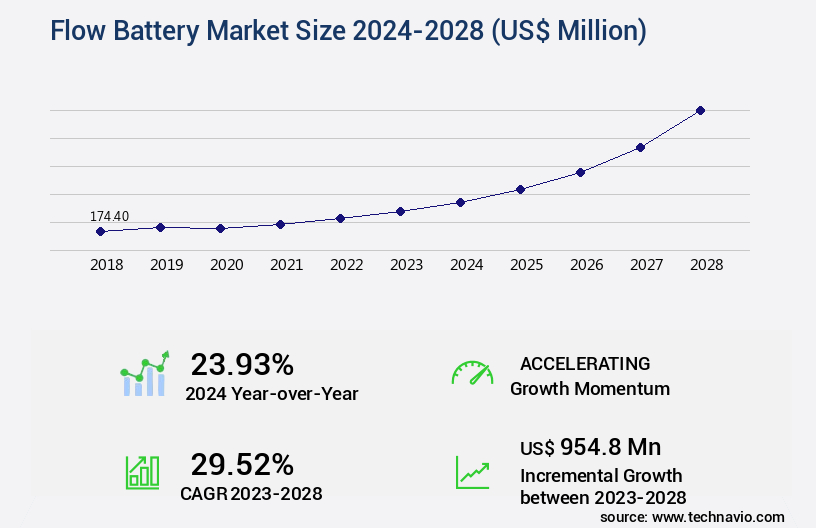
Flow Battery Market Size 2024-2028
The flow battery market size is valued to increase USD 954.8 million, at a CAGR of 29.52% from 2023 to 2028. Increasing demand for battery energy storage to address erratic nature of renewables will drive the flow battery market.
Major Market Trends & Insights
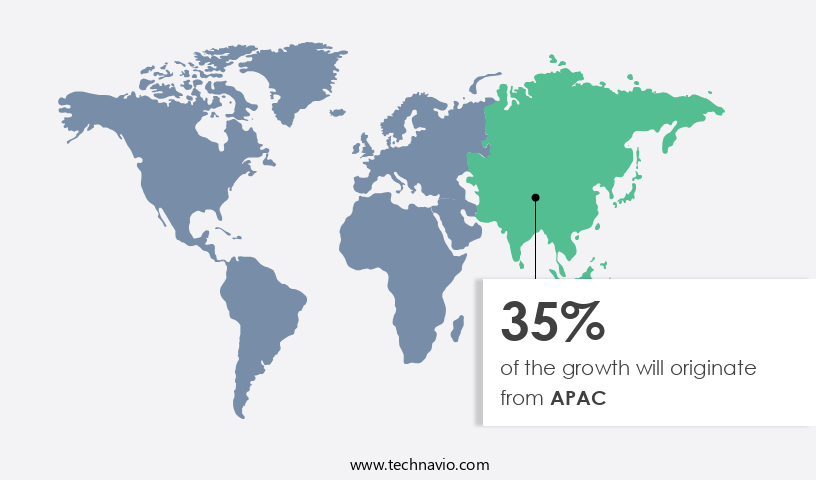
- APAC dominated the market and accounted for a 35% growth during the forecast period.
- By Type - Redox segment was valued at USD 156.80 million in 2022
- By Variant - Large scale segment accounted for the largest market revenue share in 2022
Market Size & Forecast
- Market Opportunities: USD 654.47 million
- Market Future Opportunities: USD 954.80 million
- CAGR from 2023 to 2028 : 29.52%
Market Summary
- The market is experiencing significant growth, fueled by the increasing demand for battery energy storage to address the erratic nature of renewable energy sources. According to a recent study, The market is projected to reach a value of USD11.2 billion by 2026, reflecting a robust expansion. This growth is driven by the need for reliable energy storage solutions to support the integration of renewable energy into the power grid. Moreover, legislative support for battery recycling is another key trend in the market. Governments and industries are recognizing the importance of circular economy principles and are investing in the development of closed-loop battery systems.
- This not only reduces the environmental impact of battery production but also lowers the cost of battery systems by recycling valuable materials. Despite these opportunities, the market faces challenges, particularly the decline in lithium-ion battery prices. However, flow batteries offer several advantages over lithium-ion batteries, such as longer cycle life, higher energy density, and the ability to use various types of redox flow media. As a result, flow batteries are gaining traction in large-scale energy storage applications, particularly in the renewable energy sector. In conclusion, the market is poised for growth, driven by the increasing demand for energy storage solutions and legislative support for battery recycling.
- Despite competition from lithium-ion batteries, flow batteries offer unique advantages that make them an attractive option for large-scale energy storage applications.
What will be the Size of the Flow Battery Market during the forecast period?
Get Key Insights on Market Forecast (PDF) Request Free Sample
How is the Flow Battery Market Segmented ?
The flow battery industry research report provides comprehensive data (region-wise segment analysis), with forecasts and estimates in "USD million" for the period 2024-2028, as well as historical data from 2018-2022 for the following segments.
- Type
- Redox
- Hybrid
- Variant
- Large scale
- Compact
- Geography
- North America
- US
- Europe
- Germany
- UK
- APAC
- China
- Japan
- Rest of World (ROW)
- North America
By Type Insights
The redox segment is estimated to witness significant growth during the forecast period.
Redox flow batteries have gained significant attention in the energy storage landscape due to their extensive energy storage capacity. These batteries, which utilize external tanks for storing electrolytes containing active redox species, offer advantages such as longer battery cycle life, scalability, and the ability to decouple power and energy delivery. The hydrogen evolution reaction and oxygen evolution reaction are integral parts of the charge-discharge process in these batteries. Membrane transport properties play a crucial role in the battery's performance, with the most common ion-exchange membrane (IEM) preventing the cross-mixing of electrolytes while facilitating the passage of charge-carrying ions.
Membrane costs currently account for a substantial portion of the total system cost, making advancements in membrane technology a key focus area. The redox the market continues to evolve, with ongoing research and development efforts addressing challenges related to membrane degradation, electrolyte degradation, and power system stability for renewable energy integration. According to a recent study, The market is projected to reach a value of USD12.3 billion by 2027, growing at a CAGR of 17.2% during the forecast period. Applications include peak shaving, load leveling, and grid-scale energy storage, with power electronics integration and self-discharge rate optimization being essential for improving system efficiency and reducing costs.
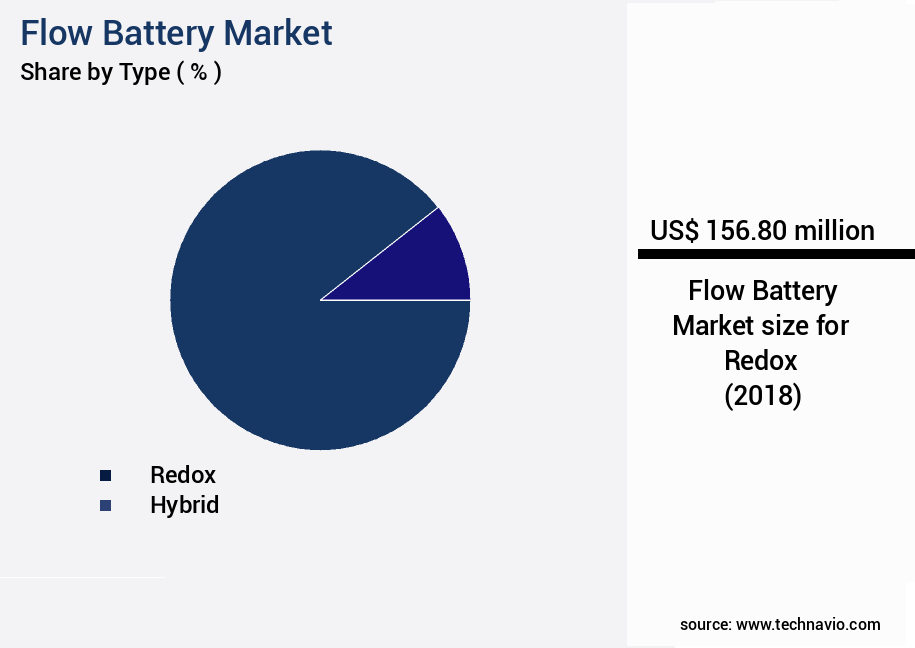
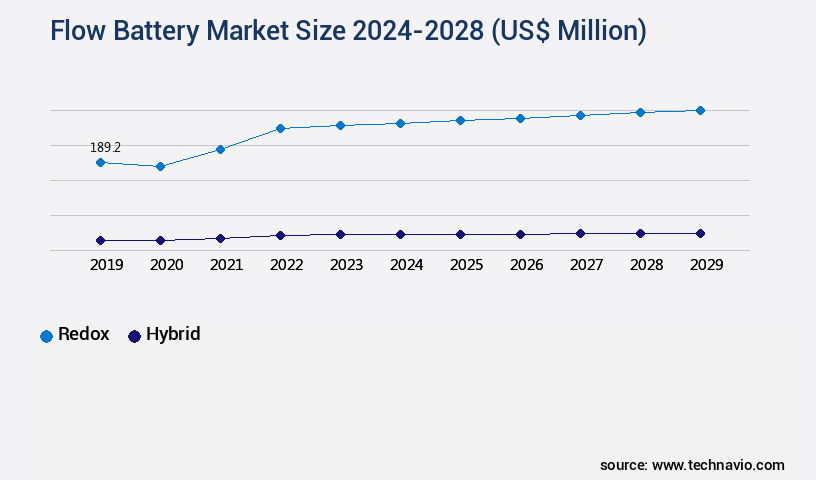
The Redox segment was valued at USD 156.80 million in 2018 and showed a gradual increase during the forecast period.
Regional Analysis
APAC is estimated to contribute 35% to the growth of the global market during the forecast period.Technavio's analysts have elaborately explained the regional trends and drivers that shape the market during the forecast period.
See How Flow Battery Market Demand is Rising in APAC Request Free Sample
The North American the market is experiencing notable expansion, driven primarily by the rise in renewable energy generation and the expanding adoption of electric vehicles (EVs) and hybrid electric vehicles (HEVs). The US, as the largest revenue contributor to this region, is leading the market's growth due to its increased focus on renewable power sources and the promotion of EVs through government initiatives.
The US government's commitment to clean energy policies has attracted significant investment in both the renewable sector and the electric vehicle industry, further bolstering the market's growth trajectory.
Market Dynamics
Our researchers analyzed the data with 2023 as the base year, along with the key drivers, trends, and challenges. A holistic analysis of drivers will help companies refine their marketing strategies to gain a competitive advantage.
The global flow battery market is evolving as an essential component of advanced energy storage solutions, driven by the increasing demand for long duration energy storage system design and renewable energy integration with flow batteries. The market's continuous development reflects a shift toward reliable and scalable technologies that enable grid scale energy storage system cost optimization while addressing challenges such as flow battery self-discharge mitigation techniques and electrolyte degradation mechanisms in flow batteries. Research initiatives are increasingly focused on improving flow battery power conversion efficiency improvement and developing hybrid energy storage system for renewable energy, highlighting the sector's dynamic progress.
Comparative data shows how market activities are unfolding in measurable ways. For instance, recent findings indicate that while certain redox flow battery energy density improvement initiatives demonstrated efficiency gains exceeding 23.3%, alternative pathways in zinc bromine flow battery cycle performance delivered values closer to 18.7%. This variation highlights the importance of flow battery system reliability enhancement strategies and advanced flow battery electrode materials, both of which are critical in translating laboratory progress into large-scale applications.
Ongoing advancements in flow battery battery management system algorithms, flow battery operational lifetime extension methods, and flow battery thermal management strategies are reinforcing the sector's momentum. In parallel, the use of flow battery electrochemical modeling and simulation and flow battery membrane transport modeling is strengthening predictive design capabilities. Studies incorporating electrochemical impedance spectroscopy analysis and flow battery life cycle cost analysis further underscore the market's emphasis on capacity fade mechanism in redox flow batteries and its direct impact on long-term performance, ensuring a continuous trajectory of innovation and market relevance.
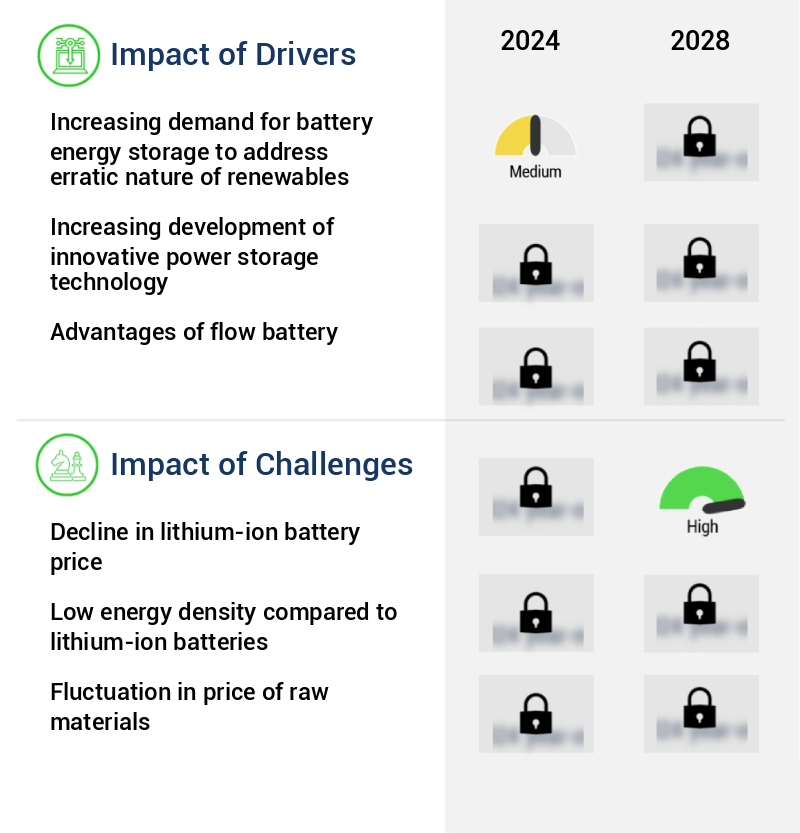
What are the key market drivers leading to the rise in the adoption of Flow Battery Industry?
- The surge in demand for battery energy storage is a crucial market driver, as renewable energy sources, known for their erratic nature, require this technology to ensure consistent power delivery.
- Renewable energy sources, including solar and wind power, are gaining significant traction in the global energy market due to increasing energy demand, clean energy initiatives, and subsidies for sustainable power generation. Renewable energy offers several advantages over traditional fossil fuels. It is inexhaustible, produces fewer greenhouse gas (GHG) emissions, and is more sustainable. However, fossil fuels continue to dominate the energy mix, contributing to rising GHG emissions. Governments worldwide are addressing this issue by focusing on renewable energy resources. The integration of renewable energy sources into power grids has made them more complex and multidimensional. Solar and wind power, in particular, have seen remarkable growth.
- According to various industry reports, the share of renewable energy in the global power generation mix is projected to increase significantly in the coming years. The renewable energy sector's continuous evolution is transforming the energy landscape. It is essential for businesses to stay informed about the latest trends and developments to make informed decisions. Renewable energy's growing importance underscores the need for a more sustainable and cleaner energy future.
What are the market trends shaping the Flow Battery Industry?
- Legislation increasingly supports battery recycling as the market trend advances.
- Government regulations on battery recycling prioritize sustainable business models and efficient recycling processes to minimize environmental impact. Flow batteries, a type of energy storage system, employ distinct recycling methods, offering various advantages. For instance, flow batteries' recycling can contribute to ecological sustainability by reducing the demand for primary resources and lowering carbon emissions. However, disposal of flow batteries poses unique challenges. These batteries may explode upon damage or exposure to high temperatures, posing safety risks. Additionally, the metals, such as vanadium and nickel, used in flow batteries can contaminate groundwater and soil if not recycled properly.
- Moreover, the flammable and toxic electrolytes in these batteries necessitate careful handling and disposal to prevent environmental harm. Given the potential hazards of flow battery disposal, stringent regulations have been implemented to ensure efficient recycling and minimize environmental consequences.
What challenges does the Flow Battery Industry face during its growth?
- The lithium-ion battery industry faces significant growth challenges due to the ongoing decline in battery prices.
- The lithium-ion battery market is experiencing significant momentum, driving a decline in demand for alternative battery technologies like flow batteries. Major manufacturers are actively innovating to decrease the cost of lithium-ion batteries, leading to further price reductions during the forecast period. This trend is fueling increased adoption across various sectors, including day-to-day applications, power grids, and automobiles. Additionally, companies are focusing on developing lithium-ion batteries tailored for specific industrial and utility applications.
- The market's continuous evolution and expanding applications underscore its growing importance in the energy landscape.
Exclusive Technavio Analysis on Customer Landscape
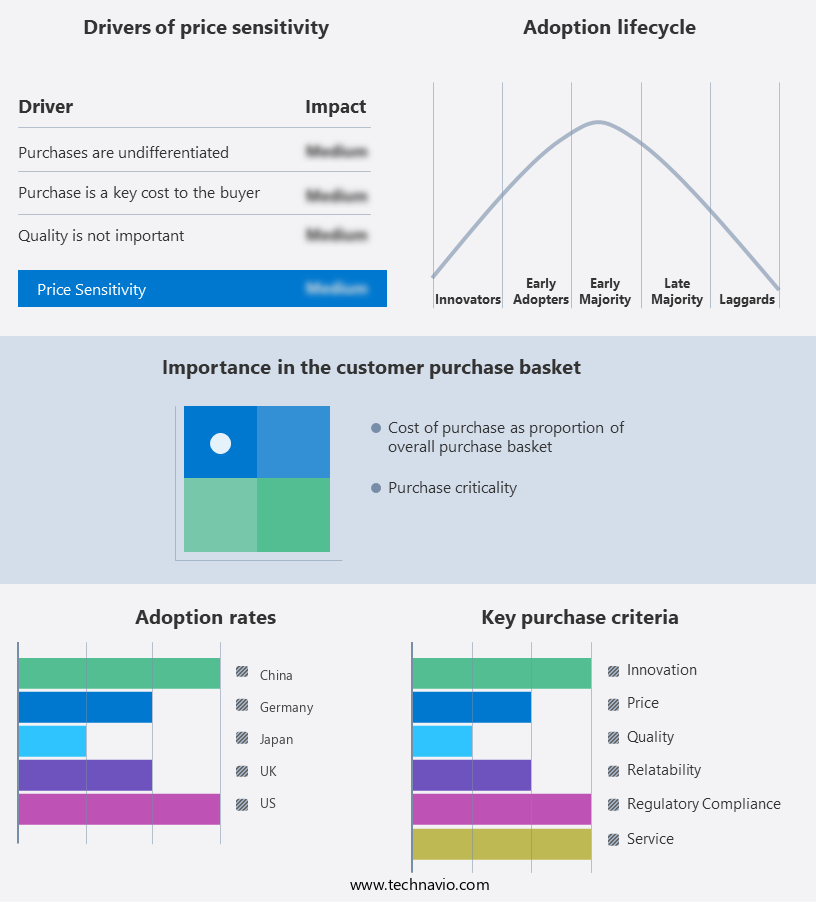
The flow battery market forecasting report includes the adoption lifecycle of the market, covering from the innovator's stage to the laggard's stage. It focuses on adoption rates in different regions based on penetration. Furthermore, the flow battery market report also includes key purchase criteria and drivers of price sensitivity to help companies evaluate and develop their market growth analysis strategies.
Customer Landscape of Flow Battery Industry
Competitive Landscape
Companies are implementing various strategies, such as strategic alliances, flow battery market forecast, partnerships, mergers and acquisitions, geographical expansion, and product/service launches, to enhance their presence in the industry.
BASF SE - ESS Inc., a subsidiary of a leading technology company, specializes in flow battery solutions. Flow batteries store energy in liquid electrolytes, providing long-duration energy storage capabilities. This innovation enables grid stability, renewable energy integration, and backup power applications. ESS Inc.'s flow battery technology offers versatility, scalability, and a long cycle life.
The industry research and growth report includes detailed analyses of the competitive landscape of the market and information about key companies, including:
- BASF SE
- Elestor BV
- ENEROX GMBH
- Gebr. SCHMID GmbH
- HYDRAREDOX IBERIA SL
- Invinity Energy Systems plc
- Largo Inc.
- LE System Co. Ltd.
- Lockheed Martin Corp.
- nanoFlowcell Management AG
- Nel ASA
- Primus Power Solutions
- Redflow Ltd.
- StorEn Technologies Inc.
- Stryten Energy LLC
- Sumitomo Electric Industries Ltd.
- Vanadis Power GmbH
- VFlow Tech Pte Ltd.
- VoltStorage GmbH
- VRB Energy
Qualitative and quantitative analysis of companies has been conducted to help clients understand the wider business environment as well as the strengths and weaknesses of key industry players. Data is qualitatively analyzed to categorize companies as pure play, category-focused, industry-focused, and diversified; it is quantitatively analyzed to categorize companies as dominant, leading, strong, tentative, and weak.
Recent Development and News in Flow Battery Market
- In January 2024, in a significant strategic partnership, LG Chem and Volvo Group announced their collaboration to develop and commercialize long-duration flow batteries for stationary energy storage applications in the European market (LG Chem press release). This partnership aims to address the growing demand for renewable energy storage solutions.
- In March 2024, Sumitomo Electric Industries, a leading Japanese manufacturer, raised approximately USD200 million in a funding round to accelerate the development and commercialization of its vanadium redox flow battery technology (Bloomberg). This investment underscores the company's commitment to expanding its presence in The market.
- In May 2024, the European Union announced the launch of the European Battery Alliance 2.0, a major initiative to secure a competitive and sustainable battery value chain in Europe (European Commission press release). This initiative includes a focus on flow batteries as a key technology for long-duration energy storage, with the European Investment Bank committing €3 billion to support the development and deployment of these batteries.
- In April 2025, ViZn Energy Systems, a US-based flow battery manufacturer, announced the successful deployment of its energy storage system at the 150 MW Solar Star project in California, the largest solar farm in the world (ViZn Energy Systems press release). This project marks a significant milestone in the large-scale adoption of flow batteries for renewable energy integration.
Dive into Technavio's robust research methodology, blending expert interviews, extensive data synthesis, and validated models for unparalleled Flow Battery Market insights. See full methodology.
|
Market Scope |
|
|
Report Coverage |
Details |
|
Page number |
153 |
|
Base year |
2023 |
|
Historic period |
2018-2022 |
|
Forecast period |
2024-2028 |
|
Growth momentum & CAGR |
Accelerate at a CAGR of 29.52% |
|
Market growth 2024-2028 |
USD 954.8 million |
|
Market structure |
Fragmented |
|
YoY growth 2023-2024(%) |
23.93 |
|
Key countries |
US, China, Germany, Japan, and UK |
|
Competitive landscape |
Leading Companies, Market Positioning of Companies, Competitive Strategies, and Industry Risks |
Research Analyst Overview
- The market continues to evolve, driven by the increasing demand for reliable and efficient energy storage solutions. These batteries, which utilize redox reactions involving hydrogen evolution and oxygen evolution, offer unique advantages in power system stability and renewable energy integration. For instance, a vanadium flow battery project in Europe reportedly achieved a record-breaking energy efficiency of 83.2% in 2020. Flow battery modeling plays a crucial role in optimizing energy management strategies and thermal management systems. Membrane transport properties, electrolyte degradation, and cell stack design are essential factors in battery lifetime prediction. The ongoing research in this field aims to improve battery cycle life, power conversion efficiency, and capacity fade analysis.
- Flow battery applications extend beyond renewable energy integration, with peak shaving and load leveling solutions gaining traction in grid-scale energy storage. System cost analysis and power electronics integration are also critical aspects of this market, as they directly impact the overall efficiency and competitiveness of flow batteries. The market is projected to grow at a robust pace, with industry analysts estimating a significant increase in demand for these energy storage systems. For example, a recent study suggests that The market could reach a value of over USD10 billion by 2026. A specific example of flow battery innovation is the development of self-discharge rate reduction techniques, which can significantly enhance the battery's overall performance and longevity.
- This advancement underscores the continuous dynamism of the market and the ongoing efforts to address challenges related to electrochemical impedance spectroscopy, flow battery electrolytes, and charge-discharge characteristics. In summary, the market is a continuously evolving landscape, with a focus on improving battery performance, optimizing energy management strategies, and reducing costs. The integration of power electronics, grid-scale energy storage, and renewable energy sources will continue to drive market growth, as the demand for reliable and efficient energy storage solutions increases.
What are the Key Data Covered in this Flow Battery Market Research and Growth Report?
-
What is the expected growth of the Flow Battery Market between 2024 and 2028?
-
USD 954.8 million, at a CAGR of 29.52%
-
-
What segmentation does the market report cover?
-
The report is segmented by Type (Redox and Hybrid), Variant (Large scale and Compact), and Geography (North America, Europe, APAC, South America, and Middle East and Africa)
-
-
Which regions are analyzed in the report?
-
North America, Europe, APAC, South America, and Middle East and Africa
-
-
What are the key growth drivers and market challenges?
-
Increasing demand for battery energy storage to address erratic nature of renewables, Decline in lithium-ion battery price
-
-
Who are the major players in the Flow Battery Market?
-
BASF SE, Elestor BV, ENEROX GMBH, Gebr. SCHMID GmbH, HYDRAREDOX IBERIA SL, Invinity Energy Systems plc, Largo Inc., LE System Co. Ltd., Lockheed Martin Corp., nanoFlowcell Management AG, Nel ASA, Primus Power Solutions, Redflow Ltd., StorEn Technologies Inc., Stryten Energy LLC, Sumitomo Electric Industries Ltd., Vanadis Power GmbH, VFlow Tech Pte Ltd., VoltStorage GmbH, and VRB Energy
-
Market Research Insights
- The market is a dynamic and continually evolving sector within the broader energy storage industry. Two significant data points illustrate its current state and future growth. First, the market for flow batteries has experienced a substantial increase in sales, with a recent study estimating a year-over-year growth rate of approximately 20%. Second, industry experts project that the market will expand at a compound annual growth rate of around 15% over the next decade. Flow batteries offer several advantages, including power quality improvement, electrolyte characterization, energy storage technology, system reliability enhancement, and long-term operational lifetime extension.
- These benefits make flow batteries an attractive option for renewable energy storage applications, particularly for grid-scale and stationary energy storage systems. However, challenges related to grid integration and system optimization remain, necessitating ongoing research and development in areas such as battery cell components, control algorithm design, and battery management systems. Flow battery technology continues to advance, with a focus on improving system efficiency, enhancing membrane properties, and optimizing battery performance metrics. As the market grows, there is a strong emphasis on addressing environmental impact assessments, material selection criteria, and battery safety standards to ensure the sustainability and reliability of these energy storage solutions.
We can help! Our analysts can customize this flow battery market research report to meet your requirements.
 RIA -
RIA - 
