


Fruits And Vegetables Coatings Market Size 2025-2029
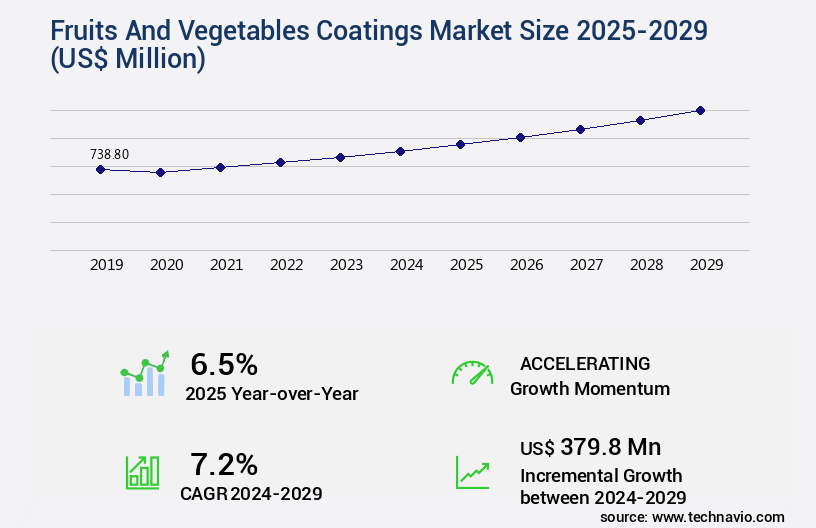
The fruits and vegetables coatings market size is valued to increase USD 379.8 million, at a CAGR of 7.2% from 2024 to 2029. Benefits offered by fruits and vegetables coatings will drive the fruits and vegetables coatings market.
Major Market Trends & Insights
- APAC dominated the market and accounted for a 49% growth during the forecast period.
- By Type - Hydrocolloids segment was valued at USD 260.90 million in 2023
- By Product - Fruits coatings segment accounted for the largest market revenue share in 2023
Market Size & Forecast
- Market Opportunities: USD 74.42 million
- Market Future Opportunities: USD 379.80 million
- CAGR from 2024 to 2029 : 7.2%
Market Summary
- Fruits and vegetables coatings have emerged as a significant innovation in the food industry, offering enhanced preservation, protection, and textural benefits. These coatings, which can be derived from natural sources like chitosan, carnauba wax, and cellulose, have gained traction due to the growing demand for fresh produce that retains its quality and freshness for extended periods. The market for fruits and vegetables coatings is expected to reach substantial value by 2025, driven by increasing consumer preference for convenient, healthy, and high-quality food options. The coatings not only extend the shelf life of fruits and vegetables but also improve their appearance, texture, and taste.
- Moreover, they offer protection against physical damage during transportation and storage, ensuring a consistent consumer experience. The market's growth is fueled by several factors, including advancements in coating technologies, rising demand for minimally processed foods, and increasing consumer awareness about food safety and health. Additionally, the ongoing trend towards sustainable agriculture and the development of eco-friendly coatings are expected to create new opportunities for market participants. Despite these opportunities, challenges remain, including the high cost of some coating materials and consumer resistance to processed foods. Market players must address these challenges by focusing on cost reduction through innovation, improving the affordability and accessibility of their products, and educating consumers about the benefits of fruits and vegetables coatings.
- In conclusion, the market is poised for significant growth, driven by increasing demand for fresh, healthy, and convenient food options. Market participants must continue to innovate and address challenges to capitalize on this opportunity and meet the evolving needs of consumers.
What will be the Size of the Fruits And Vegetables Coatings Market during the forecast period?
Get Key Insights on Market Forecast (PDF) Request Free Sample
How is the Fruits And Vegetables Coatings Market Segmented ?
The fruits and vegetables coatings industry research report provides comprehensive data (region-wise segment analysis), with forecasts and estimates in "USD million" for the period 2025-2029, as well as historical data from 2019-2023 for the following segments.
- Type
- Hydrocolloids
- Lipids
- Composites
- Product
- Fruits coatings
- Vegetables coatings
- End-user
- Food processing companies
- Post-harvest handlers
- Retailers
- Exporters and importers
- Farmers
- Geography
- North America
- US
- Canada
- Europe
- France
- Germany
- Italy
- UK
- Middle East and Africa
- Egypt
- KSA
- Oman
- UAE
- APAC
- China
- India
- Japan
- South America
- Argentina
- Brazil
- Rest of World (ROW)
- North America
By Type Insights
The hydrocolloids segment is estimated to witness significant growth during the forecast period.
The market is witnessing significant growth due to the increasing demand for extended shelf life, improved quality retention, and reduced waste in the food industry. Hydrocolloid coatings, derived from natural sources, are gaining popularity for their ability to enhance food freshness and preserve nutritional value. These coatings, which include biopolymer and lipid-based varieties, offer functional properties such as gas permeability testing, microbial growth inhibition, and sensory evaluation methods. Research and development efforts are focused on optimizing coating thickness control, application techniques, and supply chain integration. For instance, chitosan-based coatings have shown promise in reducing weight loss and improving mechanical strength.
UV protective coatings are another area of interest for freshness preservation and maintaining food safety regulations. The market for fruits and vegetables coatings is expected to reach a CAGR of 7% during the forecast period. This growth is driven by the adoption of sustainable packaging solutions, cost-effectiveness analysis, and consumer acceptance testing. Ongoing research aims to improve coating adhesion, oxygen permeability reduction, and antimicrobial properties. Ultimately, these advancements will lead to improved product quality, reduced waste, and enhanced consumer satisfaction.
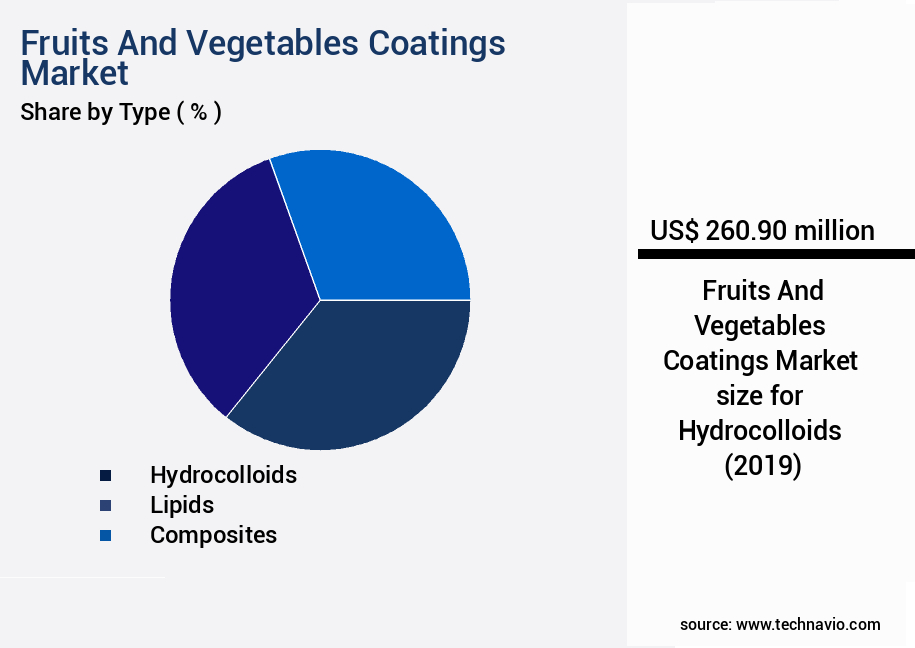
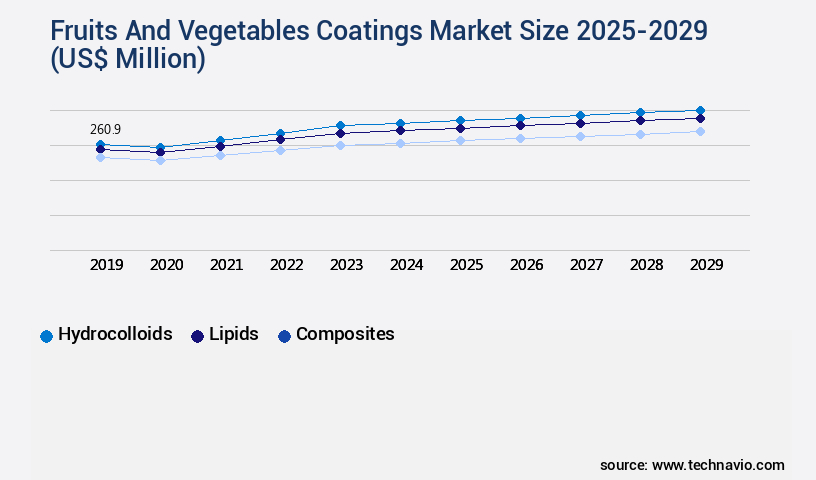
The Hydrocolloids segment was valued at USD 260.90 million in 2019 and showed a gradual increase during the forecast period.
Regional Analysis
APAC is estimated to contribute 49% to the growth of the global market during the forecast period.Technavio’s analysts have elaborately explained the regional trends and drivers that shape the market during the forecast period.
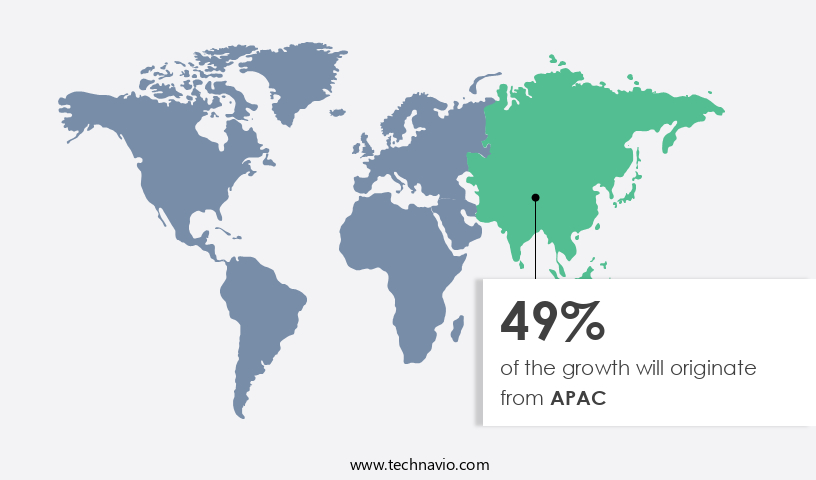
See How Fruits And Vegetables Coatings Market Demand is Rising in APAC Request Free Sample
In the Asia Pacific region, China, India, and Australia rank among the top producers of fruits and vegetables. Notably, Australia employs carnauba wax and shellac as approved food additives by the Food Standards Australia and New Zealand (FSANZ). The market in this region is witnessing significant growth due to substantial post-harvest losses. For instance, in India, states like West Bengal, Gujarat, Bihar, and Uttar Pradesh experience considerable losses in fruits and vegetables production owing to insufficient storage and processing facilities.
The adoption of fruits and vegetables coatings is increasing as a solution to mitigate these losses and extend the shelf life of these perishable commodities.
Market Dynamics
Our researchers analyzed the data with 2024 as the base year, along with the key drivers, trends, and challenges. A holistic analysis of drivers will help companies refine their marketing strategies to gain a competitive advantage.
The market is experiencing significant growth due to the increasing demand for extended shelf-life and improved quality of produce. Edible coatings play a crucial role in this regard, as they offer various benefits such as inhibition of microbial growth, enhancement of fruit quality, and extension of shelf-life. Chitosan coatings, derived from chitin, have gained popularity due to their antimicrobial properties and minimal impact on fruit quality. Protein-based coatings, on the other hand, are effective in enhancing the shelf-life of fruits and vegetables by forming a protective barrier against oxygen and moisture. Wax coatings continue to be widely used in the market due to their excellent barrier properties and easy application methods, which include dipping, spraying, and brushing. However, lipid-based coatings offer superior water vapor transmission rates and gas permeability, making them an attractive alternative for certain applications. Polysaccharide coatings, such as starch and pectin, are effective in regulating fruit respiration and maintaining mechanical strength during postharvest handling. Edible coatings also play a crucial role in packaging integration, ensuring consumer acceptance through improved sensory qualities and preservation of produce. Coating adhesion is a critical factor in produce preservation, and various techniques, such as spray coating and dip coating, are used to optimize uniformity and ensure effective microbial growth inhibition. Gas permeability testing methods, including oxygen transmission rate and water vapor transmission rate, are essential in evaluating the functional properties of edible coatings in food systems. In conclusion, the market is driven by the need for improved produce quality, extended shelf-life, and consumer acceptance. Edible coatings offer various benefits, including microbial growth inhibition, enhanced fruit quality, and shelf-life extension. The choice of coating material and application method depends on the specific requirements of the produce and the desired functional properties.
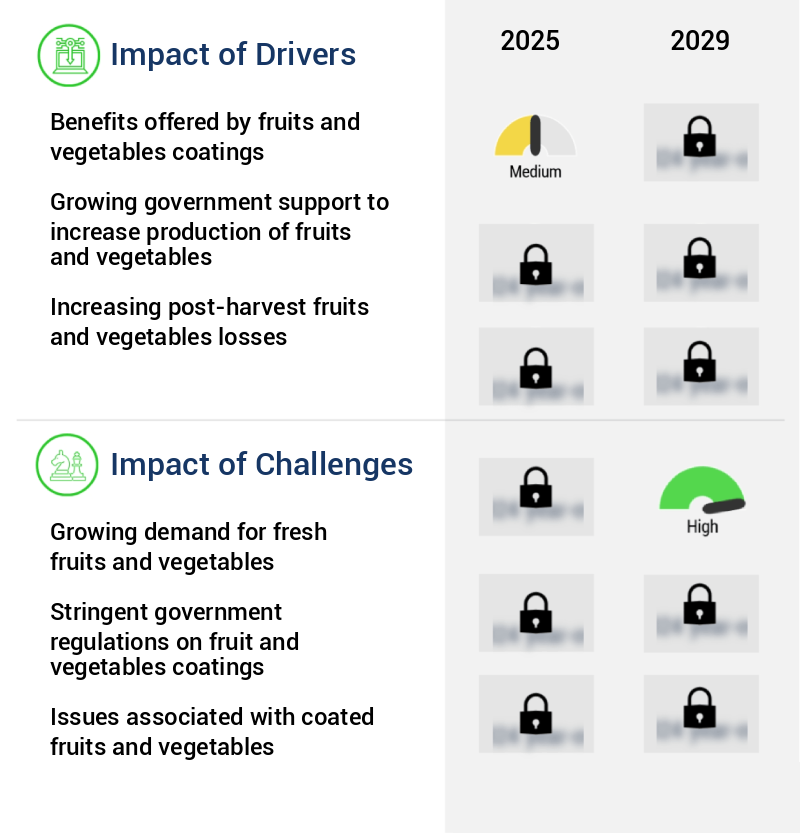
What are the key market drivers leading to the rise in the adoption of Fruits And Vegetables Coatings Industry?
- The primary factor driving the market is the benefits derived from coatings applied to fruits and vegetables. These coatings enhance the produce's preservation, freshness, and shelf life, making them an essential addition for both producers and consumers.
- Fruits and vegetables are indispensable components of a balanced diet due to their rich nutritional value, including minerals, vitamins, dietary fibers, antioxidants, and bioflavonoids. However, their perishability poses challenges, as they are susceptible to degradation during pre- and post-harvesting stages and transportation. Degradation can occur due to microorganisms, insects, and contamination, leading to deterioration and reduced quality. These issues necessitate effective preservation methods to maintain the freshness and nutritional value of fruits and vegetables. The demand for these preservation techniques is continually increasing, as consumers prioritize freshness and quality.
- The ongoing market activities reflect this trend, with innovations focusing on extending the shelf life, minimizing waste, and ensuring food safety. The dynamic nature of the market underscores the importance of staying informed about the latest advancements and applications across various sectors.
What are the market trends shaping the Fruits And Vegetables Coatings Industry?
- The trend in the market involves innovations in coatings for fruits and vegetables. A significant development in food technology is the application of advanced coatings to fruits and vegetables.
- Preserving fruits and vegetables is a crucial aspect for growers to enhance profitability and minimize spoilage. Innovative post-harvest preservation solutions, such as fruit and vegetable coatings, are gaining traction in the industry. For example, Apeel Technology Inc. Introduced plant-derived coatings in 2024, which are derived from lipids and glycerolipids found naturally in peels, seeds, and pulp. These coatings form a natural barrier that inhibits water loss and oxidation, thereby extending freshness significantly. AgroFresh Solutions Inc. Also expanded its post-harvest technology portfolio by launching Teycer Originals, a line of advanced edible coatings, in the second quarter of 2024.
- These coatings offer protection against ethylene gas, a natural plant hormone that accelerates ripening and spoilage. The continuous evolution of these preservation solutions underscores the dynamic nature of the market and its applications across various sectors.
What challenges does the Fruits And Vegetables Coatings Industry face during its growth?
- The increasing demand for fresh fruits and vegetables poses a significant challenge to the industry, necessitating heightened production and supply efforts to meet consumer needs and foster industry growth.
- The European market for vegetable coatings experiences contrasting trends as the demand for organic and ready-to-eat (RTE) fresh produce gains momentum in countries like Portugal and Spain. Organic farming practices eschew coatings, aligning with consumer preferences for unaltered produce. Consequently, the shift toward organic and RTE vegetables is anticipated to diminish the demand for vegetable coatings. This dynamic market scenario underscores the evolving consumer preferences and the need for farmers and farming companies to adapt to the changing landscape.
Exclusive Technavio Analysis on Customer Landscape
The fruits and vegetables coatings market forecasting report includes the adoption lifecycle of the market, covering from the innovator’s stage to the laggard’s stage. It focuses on adoption rates in different regions based on penetration. Furthermore, the fruits and vegetables coatings market report also includes key purchase criteria and drivers of price sensitivity to help companies evaluate and develop their market growth analysis strategies.
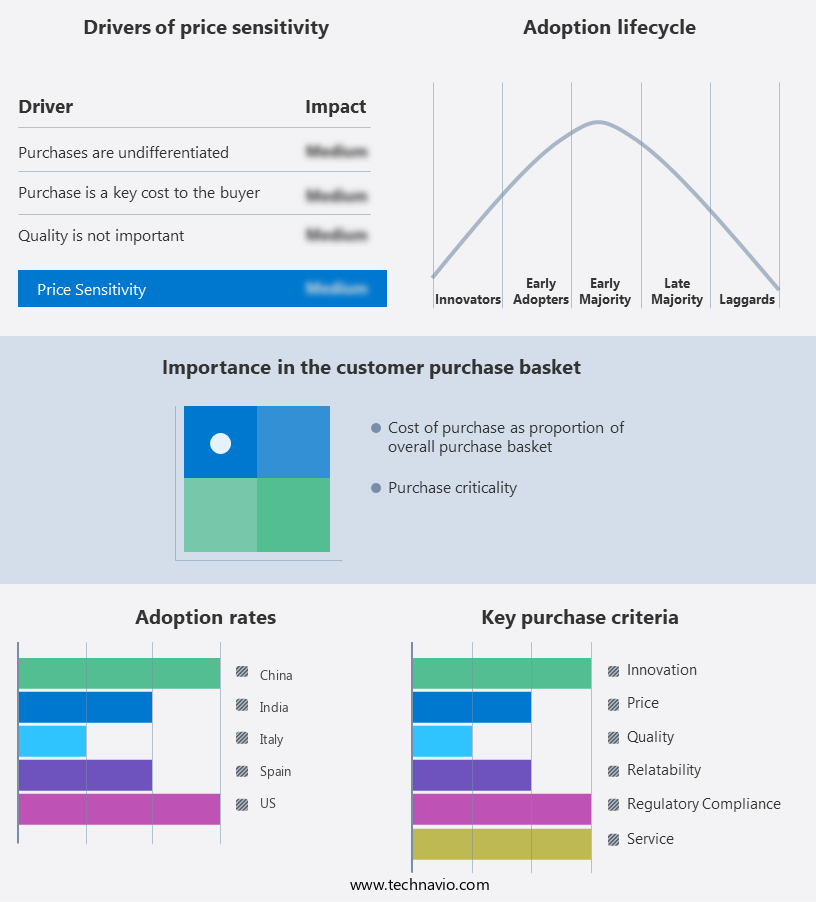
Customer Landscape of Fruits And Vegetables Coatings Industry
Competitive Landscape
Companies are implementing various strategies, such as strategic alliances, fruits and vegetables coatings market forecast, partnerships, mergers and acquisitions, geographical expansion, and product/service launches, to enhance their presence in the industry.
Aadhya Technology - The edible coatings market includes offerings of shellac and dewaxed bleached shellac powder from various industry players. Shellac, a natural resin, is utilized as a coating for fruits and vegetables due to its protective and preservative properties. Dewaxed bleached shellac powder enhances the appearance and shelf life of food products. This segment's growth is driven by consumer demand for extended product freshness and improved food safety.
The industry research and growth report includes detailed analyses of the competitive landscape of the market and information about key companies, including:
- Aadhya Technology
- AgroFresh Solutions Inc.
- Akorn Technology
- Apeel Technology Inc.
- Citracote Pty Ltd.
- Colin Campbell Chemicals Pty Ltd.
- D. Manoharlal Shellac Pvt. Ltd.
- Flo Enterprises LLC
- Fomesa Fruitech SLU
- Handary SA
- hazel technologies
- John Bean Technologies Corp.
- Michelman Inc.
- Nipro Life Sciences
- Pace International LLC
- Productos Citrosol SA
- RPM International Inc.
- Sanifruit
- Sufresca
- UPL Ltd.
Qualitative and quantitative analysis of companies has been conducted to help clients understand the wider business environment as well as the strengths and weaknesses of key industry players. Data is qualitatively analyzed to categorize companies as pure play, category-focused, industry-focused, and diversified; it is quantitatively analyzed to categorize companies as dominant, leading, strong, tentative, and weak.
Recent Development and News in Fruits And Vegetables Coatings Market
- In January 2024, DuPont Nutrition & Biosciences, a leading global food ingredients manufacturer, launched a new line of edible plant coatings called "Savitex Fruit & Vegetable Coatings." These coatings are designed to enhance the appearance, texture, and shelf life of fruits and vegetables (DuPont Press Release, 2024).
- In March 2024, Danisco A/S, a Danish food ingredients company, announced a strategic partnership with a leading Chinese fruit processing company to develop and commercialize fruit coatings using Danisco's proprietary technology. The partnership aims to cater to the growing demand for high-quality, long-lasting fruits in the Chinese market (Danisco Press Release, 2024).
- In May 2024, Dow Inc., a leading chemical company, completed the acquisition of BioAmber Inc., a biotechnology company specializing in producing bio-based succinic acid. This acquisition is expected to enable Dow to develop and commercialize new bio-based coatings for fruits and vegetables, expanding its offerings in the market (Dow Inc. Press Release, 2024).
- In April 2025, the European Commission approved the use of a new natural fruit and vegetable coating derived from red seaweed. The coating, developed by a European biotech company, is expected to replace synthetic coatings and reduce the use of pesticides, making fruits and vegetables healthier and more sustainable (European Commission Press Release, 2025).
Dive into Technavio’s robust research methodology, blending expert interviews, extensive data synthesis, and validated models for unparalleled Fruits And Vegetables Coatings Market insights. See full methodology.
|
Market Scope |
|
|
Report Coverage |
Details |
|
Page number |
224 |
|
Base year |
2024 |
|
Historic period |
2019-2023 |
|
Forecast period |
2025-2029 |
|
Growth momentum & CAGR |
Accelerate at a CAGR of 7.2% |
|
Market growth 2025-2029 |
USD 379.8 million |
|
Market structure |
Fragmented |
|
YoY growth 2024-2025(%) |
6.5 |
|
Key countries |
US, Canada, Germany, UK, Italy, France, China, India, Japan, Brazil, Egypt, UAE, Oman, Argentina, KSA, UAE, Brazil, and Rest of World (ROW) |
|
Competitive landscape |
Leading Companies, Market Positioning of Companies, Competitive Strategies, and Industry Risks |
Research Analyst Overview
- The fruits and vegetables coating market continues to evolve, driven by advancements in biopolymer and lipid-based coatings. These coatings offer enhanced functional properties, such as gas permeability testing, microbial growth inhibition, and sensory evaluation methods, leading to improved freshness preservation and shelf life extension. The cost-effectiveness analysis of these coatings, coupled with the growing demand for sustainable packaging, has fueled market growth. For instance, the use of edible coatings films in strawberries resulted in a 25% reduction in weight loss during storage. Industry growth is expected to reach double-digit percentages, with ongoing research focusing on enhancing the mechanical strength and nutritional value retention of coated produce.
- Application techniques, such as dip coating and spray coating methods, are being optimized for postharvest handling, ensuring consistent coating thickness control and adhesion. Additionally, the integration of UV protective coatings and oxygen permeability reduction technologies is gaining traction in the market. Food safety regulations continue to shape the market, with a focus on quality retention methods and waste reduction strategies. Polysaccharide and protein-based coatings are increasingly popular due to their ability to provide moisture barrier properties and antimicrobial properties, respectively. The ongoing development of chitosan-based coatings and wax coatings application techniques further broadens the application scope of these coatings.
- In the realm of consumer acceptance testing, the market is witnessing a shift towards understanding the impact of coating properties on overall product quality and appeal. Coating thickness control and water vapor transmission rate are critical factors influencing consumer perception and acceptance. The market is also exploring packaging integration strategies to streamline supply chain optimization and reduce production costs. Overall, the fruits and vegetables coating market is a dynamic and evolving landscape, with ongoing research and development efforts aimed at enhancing the functional, sensory, and economic benefits of these coatings.
What are the Key Data Covered in this Fruits And Vegetables Coatings Market Research and Growth Report?
-
What is the expected growth of the Fruits And Vegetables Coatings Market between 2025 and 2029?
-
USD 379.8 million, at a CAGR of 7.2%
-
-
What segmentation does the market report cover?
-
The report is segmented by Type (Hydrocolloids, Lipids, and Composites), Product (Fruits coatings and Vegetables coatings), End-user (Food processing companies, Post-harvest handlers, Retailers, Exporters and importers, and Farmers), and Geography (APAC, Europe, North America, Middle East and Africa, and South America)
-
-
Which regions are analyzed in the report?
-
APAC, Europe, North America, Middle East and Africa, and South America
-
-
What are the key growth drivers and market challenges?
-
Benefits offered by fruits and vegetables coatings, Growing demand for fresh fruits and vegetables
-
-
Who are the major players in the Fruits And Vegetables Coatings Market?
-
Aadhya Technology, AgroFresh Solutions Inc., Akorn Technology, Apeel Technology Inc., Citracote Pty Ltd., Colin Campbell Chemicals Pty Ltd., D. Manoharlal Shellac Pvt. Ltd., Flo Enterprises LLC, Fomesa Fruitech SLU, Handary SA, hazel technologies, John Bean Technologies Corp., Michelman Inc., Nipro Life Sciences, Pace International LLC, Productos Citrosol SA, RPM International Inc., Sanifruit, Sufresca, and UPL Ltd.
-
Market Research Insights
- The market for fruit and vegetable coatings continues to evolve, with a focus on enhancing the shelf life and preserving the quality of perishable produce. Two significant aspects of this industry are the reduction of spoilage and the optimization of storage conditions. For instance, the implementation of controlled atmosphere storage and surface modification techniques can extend the shelf life of fruits and vegetables by up to 50%. Furthermore, the industry anticipates a growth of approximately 5% annually over the next decade, driven by advancements in film deposition methods and the increasing demand for sustainable packaging solutions using renewable resources. These developments contribute to the continuous improvement of coating technologies, ensuring the safe and efficient transportation and preservation of fresh produce.
We can help! Our analysts can customize this fruits and vegetables coatings market research report to meet your requirements.
 RIA -
RIA - 
