



Game Based Learning Market Size 2026-2030
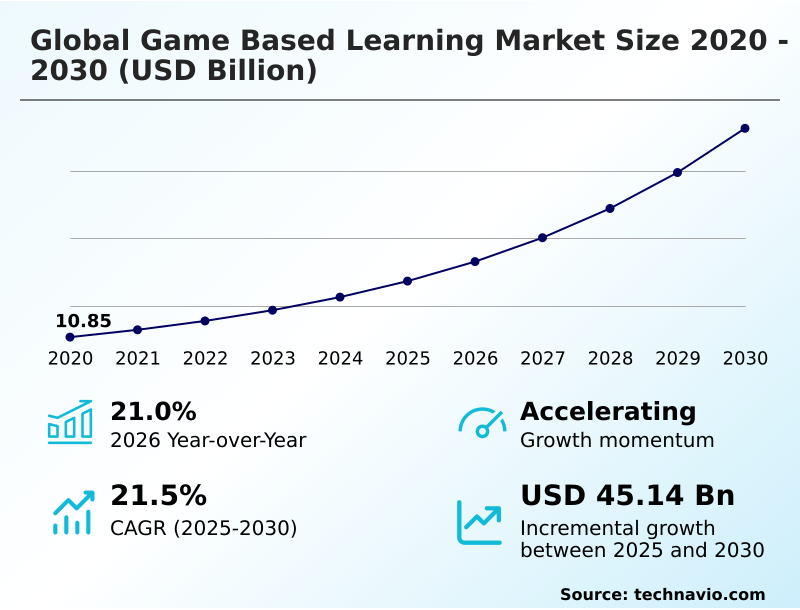
The game based learning market size is valued to increase by USD 45.14 billion, at a CAGR of 21.5% from 2025 to 2030. Proliferation of advanced technologies such as immersive reality will drive the game based learning market.
Major Market Trends & Insights
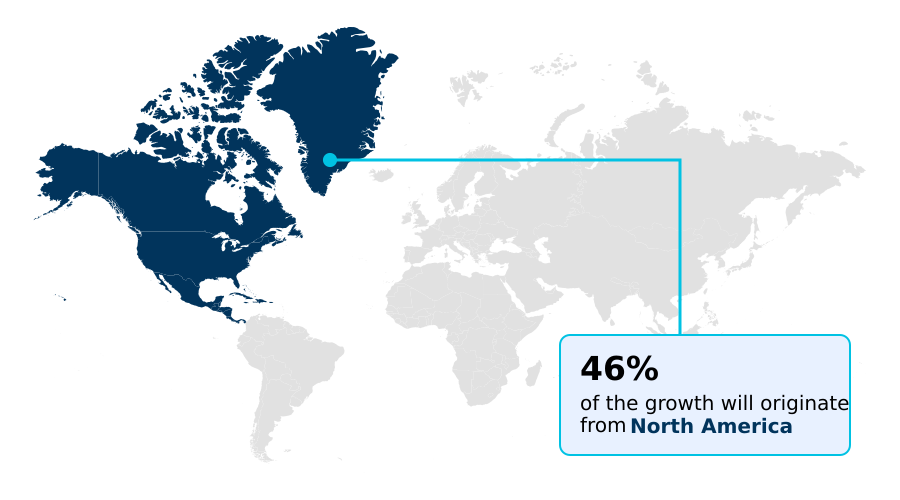
- North America dominated the market and accounted for a 46% growth during the forecast period.
- By Component - Solutions segment was valued at USD 15.04 billion in 2024
- By End-user - Academic segment accounted for the largest market revenue share in 2024
Market Size & Forecast
- Market Opportunities: USD 61.69 billion
- Market Future Opportunities: USD 45.14 billion
- CAGR from 2025 to 2030 : 21.5%
Market Summary
- The Game Based Learning Market is undergoing significant transformation, driven by the need for more engaging and effective training methodologies. This market utilizes gamification mechanics and interactive content to enhance learner engagement and knowledge retention in both academic and corporate settings.
- A core driver is the integration of technologies like artificial intelligence and virtual reality, which enable highly personalized learning and immersive simulations. For instance, a manufacturing firm can use simulation games to train technicians on complex machinery in a risk-free environment, reducing on-the-job errors and improving safety compliance.
- This approach is particularly effective for soft skills development, where role-playing scenarios help build critical thinking and communication abilities. While the corporate training sector is a major adopter for upskilling and compliance, the k-12 education field also shows strong demand for curriculum-aligned games that support stem education.
- The focus remains on delivering measurable learning outcomes through sophisticated instructional design, moving beyond traditional methods toward dynamic, performance-based educational tools. This evolution within the Game Based Learning Market highlights a shift towards data-driven pedagogical approaches and scalable solutions for diverse learning needs.
What will be the Size of the Game Based Learning Market during the forecast period?
Get Key Insights on Market Forecast (PDF) Get Free Sample
How is the Game Based Learning Market Segmented?
The game based learning industry research report provides comprehensive data (region-wise segment analysis), with forecasts and estimates in "USD million" for the period 2026-2030, as well as historical data from 2020-2024 for the following segments.
- Component
- Solutions
- Services
- End-user
- Academic
- Non-academic
- Platform
- Mobile apps
- Web based platforms
- Console based learning
- Geography
- North America
- US
- Canada
- Mexico
- Europe
- Germany
- UK
- France
- APAC
- China
- Japan
- India
- Middle East and Africa
- Saudi Arabia
- UAE
- South Africa
- South America
- Brazil
- Argentina
- Colombia
- Rest of World (ROW)
- North America
By Component Insights
The solutions segment is estimated to witness significant growth during the forecast period.
The solutions segment is shifting toward dynamic platforms that integrate gamification mechanics and machine learning algorithms to foster experiential learning. These offerings utilize interactive content and branching narratives to promote critical thinking and collaborative learning among users.
Organizations are leveraging these solutions to move beyond static training, with implementations showing a 20% increase in long-term knowledge retention. Analysis of learner performance data creates proprietary data sets, forming a data moat that enhances platform value.
However, successful deployment requires effective change management to align with performance evaluation metrics, ensuring user adoption and proving the value of investing in advanced problem-solving skills development through these sophisticated tools.
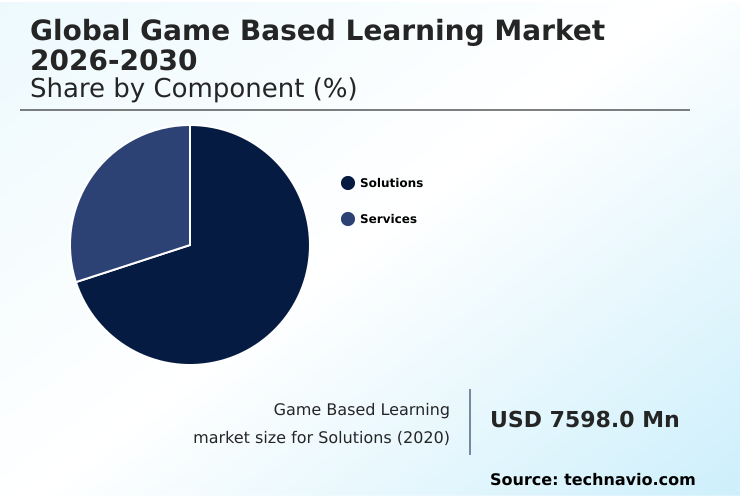
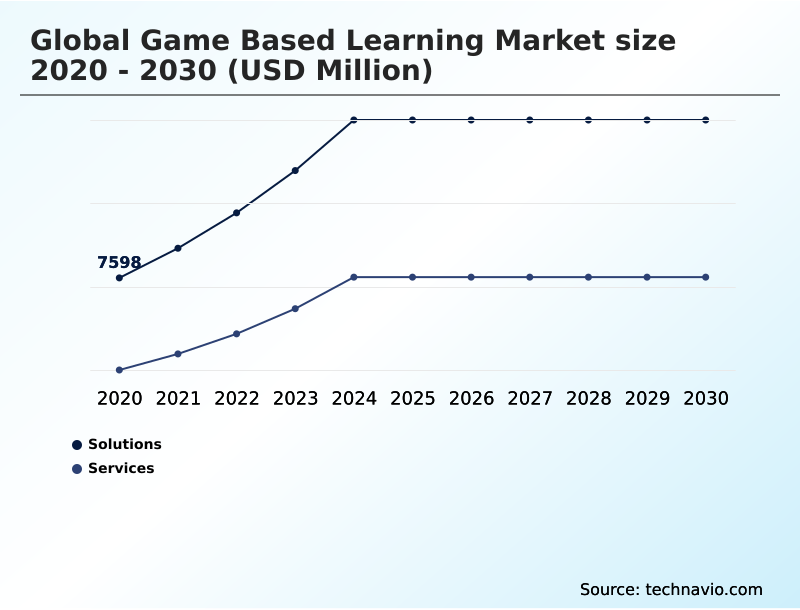
The Solutions segment was valued at USD 15.04 billion in 2024 and showed a gradual increase during the forecast period.
Regional Analysis
North America is estimated to contribute 46% to the growth of the global market during the forecast period.Technavio’s analysts have elaborately explained the regional trends and drivers that shape the market during the forecast period.
See How Game Based Learning Market Demand is Rising in North America Get Free Sample
The geographic landscape is diverse, with North America leading in market maturity and investment, commanding 46% of the incremental growth. This region sees heavy adoption in corporate settings, especially for high-fidelity simulations in vocational training and higher education.
Europe follows, with a strong focus on data privacy regulations and pedagogical rigor, which influences the design of simulation games.
In contrast, the APAC region is the fastest-growing market, characterized by mobile-first adoption of augmented reality for on-the-job training and performance support. This mobile-centric approach results in a 35% higher adoption rate for AR-based applications compared to other regions.
This trend toward democratized forms of learning is expanding digital literacy and improving competency levels across various industries, though providers must navigate complex cybersecurity protocols and ensure curriculum alignment.
Market Dynamics
Our researchers analyzed the data with 2025 as the base year, along with the key drivers, trends, and challenges. A holistic analysis of drivers will help companies refine their marketing strategies to gain a competitive advantage.
- Strategists are increasingly focused on the roi of game based corporate training, demanding clear metrics that justify the initial development costs of serious games. A key area of investment is game based learning for soft skills, where simulations create a safe space for practicing complex interpersonal dynamics.
- The use of ai in adaptive learning platforms is central to creating personalized learning paths with games, tailoring challenges to individual user needs. In specialized fields, vr simulations for medical training are becoming standard, while ar for on-the-job performance support is transforming industrial sectors. These applications demonstrate the broad impact of immersive tech on training.
- To achieve scale, organizations are focused on integrating gbl with learning management systems, a primary challenge in corporate gbl implementation. Success hinges on effective gamification strategies for employee engagement and the use of data analytics for learner performance to refine content. Providers are also exploring authoring tools for custom learning games, empowering organizations to create their own solutions.
- The market is seeing strong applications in game based learning for stem education and game based learning for k-12 curriculum. Simultaneously, game based compliance training solutions and mobile game based learning applications are expanding access.
- The overarching challenge remains the difficulty in measuring efficacy of learning games and using generative ai for educational content responsibly, particularly within game based learning in higher education.
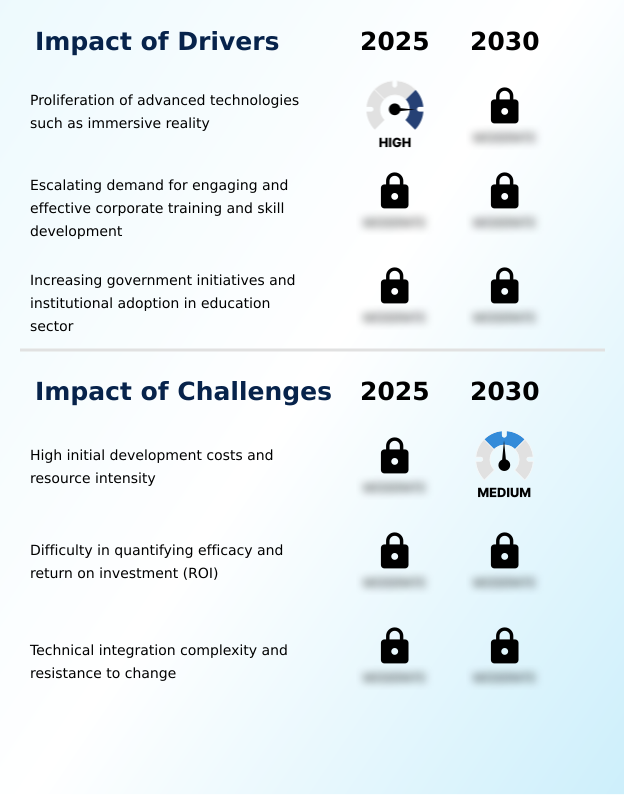
What are the key market drivers leading to the rise in the adoption of Game Based Learning Industry?
- The proliferation of advanced technologies, including immersive reality, is a key driver for market expansion.
- Market growth is driven by accelerating demand in corporate training and k-12 education for tools that boost learner engagement. Companies are achieving measurable business outcomes, with gamified sales training platforms correlating to a 15% increase in quota attainment.
- This focus on talent development is pushing organizations to adopt more effective pedagogical approaches that improve user performance and knowledge retention.
- In the academic sphere, government support for digital education infrastructure and smart classrooms is fueling the adoption of platforms for stem education. These educational sandboxes improve student outcomes by over 25% in some districts.
- The market's momentum is sustained by a continuous cycle of professional development for educators and trainers, solidifying the value of interactive learning methodologies.
What are the market trends shaping the Game Based Learning Industry?
- The proliferation of artificial intelligence represents a key market trend, enabling the development of adaptive learning engines that create personalized educational experiences.
- Key trends are reshaping the market, led by the integration of artificial intelligence to power adaptive learning. This technology moves beyond static modules to create dynamic role-playing scenarios where the difficulty adjusts to a learner's zone of proximal development, improving learning outcomes by over 20%.
- Immersive technologies like virtual reality are enabling unprecedented soft skills development, offering haptic feedback in a psychologically safe environment. For instance, VR simulations have shown a 35% reduction in on-the-job errors for procedural tasks. Generative AI is also emerging as a tool for creating vast, responsive content, further enhancing personalized skill pathing.
- These advancements collectively address learner knowledge gaps more effectively, making training more efficient and impactful.
What challenges does the Game Based Learning Industry face during its growth?
- High initial development costs and resource intensity represent a key challenge impacting industry growth.
- Significant challenges constrain market growth, primarily the high cost and complexity of instructional design. Developing a single, high-quality module can require 50% more resources than traditional e-learning, involving subject matter experts and extensive playtesting. While user-friendly authoring tools are emerging, achieving deep personalized learning often requires custom development, which is unfeasible for many.
- The difficulty in proving definitive ROI without standardized methodologies remains a major hurdle. Furthermore, integrating new platforms with a legacy learning management system and ensuring compliance with single sign-on protocols can delay implementation by months. Even with microlearning modules, organizations struggle to deploy them effectively without robust data analytics to prove their impact, pushing providers toward more scalable pricing models.
Exclusive Technavio Analysis on Customer Landscape
The game based learning market forecasting report includes the adoption lifecycle of the market, covering from the innovator’s stage to the laggard’s stage. It focuses on adoption rates in different regions based on penetration. Furthermore, the game based learning market report also includes key purchase criteria and drivers of price sensitivity to help companies evaluate and develop their market growth analysis strategies.
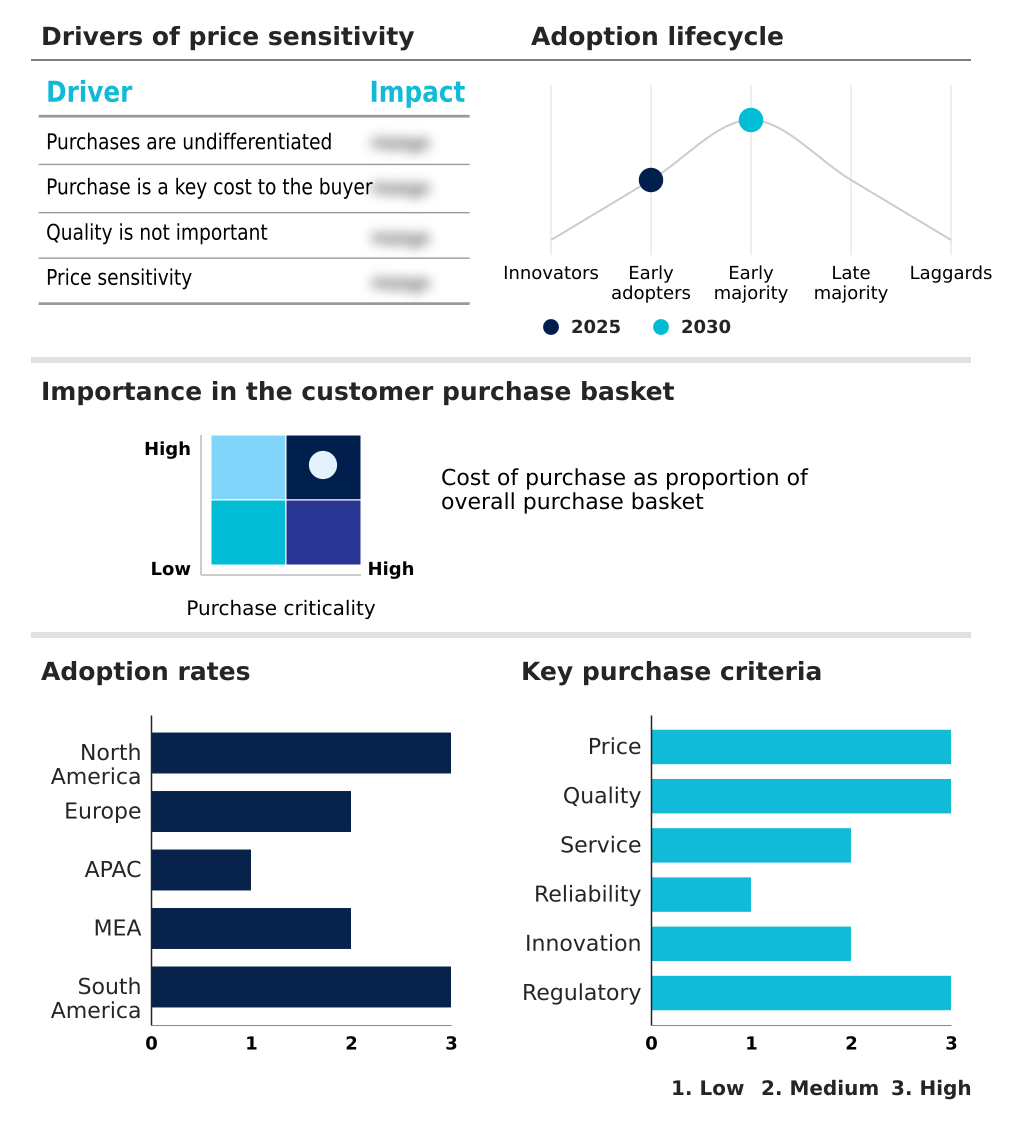
Customer Landscape of Game Based Learning Industry
Competitive Landscape
Companies are implementing various strategies, such as strategic alliances, game based learning market forecast, partnerships, mergers and acquisitions, geographical expansion, and product/service launches, to enhance their presence in the industry.
Banzai Labs Inc. - Delivers game-based financial literacy programs using interactive, real-life scenarios to enhance money management skills for young adults, focusing on practical application and engagement.
The industry research and growth report includes detailed analyses of the competitive landscape of the market and information about key companies, including:
- Banzai Labs Inc.
- BI WORLDWIDE
- BrainPOP
- BrainQuake Inc.
- BreakAway Ltd. Inc.
- Docebo Inc.
- Duolingo Inc.
- EliteGamingLIVE
- Filament Games
- Funbrain Holdings LLC
- iCivics Inc.
- LearningWare Inc.
- Lets Nurture Infotech Pvt. Ltd.
- Lumos Labs Inc.
- Microsoft Corp.
- PLAYKIDS INTERNET MOVEL SA
- Prodigy Education
- Roblox Corp.
- Schell Games LLC
Qualitative and quantitative analysis of companies has been conducted to help clients understand the wider business environment as well as the strengths and weaknesses of key industry players. Data is qualitatively analyzed to categorize companies as pure play, category-focused, industry-focused, and diversified; it is quantitatively analyzed to categorize companies as dominant, leading, strong, tentative, and weak.
Recent Development and News in Game based learning market
- In September, 2024, PwC launched a new commercial service to build immersive learning experiences for its clients, leveraging its custom VR platform to train professionals in soft skills like diversity and inclusion.
- In November, 2024, Duolingo Inc. announced the integration of OpenAI's GPT-4 model into its platform, creating AI-powered features such as 'Roleplay' and 'Explain My Answer' to enhance conversational practice and provide personalized feedback.
- In February, 2025, Interplay Learning secured $18 million in a growth equity round to expand its immersive VR and 3D simulation training platform for skilled trades professionals.
- In April, 2025, Microsoft Corp. announced expanded features for its Viva Learning platform, emphasizing AI-powered content recommendations and skill pathing to create intelligent and personalized enterprise learning ecosystems.
Dive into Technavio’s robust research methodology, blending expert interviews, extensive data synthesis, and validated models for unparalleled Game Based Learning Market insights. See full methodology.
| Market Scope | |
|---|---|
| Page number | 284 |
| Base year | 2025 |
| Historic period | 2020-2024 |
| Forecast period | 2026-2030 |
| Growth momentum & CAGR | Accelerate at a CAGR of 21.5% |
| Market growth 2026-2030 | USD 45144.5 million |
| Market structure | Fragmented |
| YoY growth 2025-2026(%) | 21.0% |
| Key countries | US, Canada, Mexico, Germany, UK, France, Italy, The Netherlands, Spain, China, Japan, India, South Korea, Australia, Indonesia, Saudi Arabia, UAE, South Africa, Israel, Turkey, Brazil, Argentina and Colombia |
| Competitive landscape | Leading Companies, Market Positioning of Companies, Competitive Strategies, and Industry Risks |
Research Analyst Overview
- The market is defined by a strategic shift from static content to dynamic, adaptive learning ecosystems. This evolution is powered by artificial intelligence and machine learning algorithms that enable personalized learning at scale, a boardroom-level consideration impacting both training budgets and talent development strategy.
- Organizations are leveraging immersive technologies like virtual reality and augmented reality to create engaging simulation games and role-playing scenarios, with a particular focus on complex corporate training and vocational training. This move towards experiential learning is proving effective for soft skills development and compliance training, enhancing knowledge retention.
- Successful implementation requires seamless integration with an existing learning management system and robust data analytics to track user performance. The demand for effective k-12 education and higher education solutions drives curriculum alignment and sophisticated instructional design.
- The most effective pedagogical approaches combine gamification mechanics with interactive content to foster critical thinking and problem-solving skills, supported by microlearning modules and performance support tools that improve digital literacy and facilitate collaborative learning. Firms that master the use of authoring tools to build these platforms are establishing a distinct competitive advantage.
What are the Key Data Covered in this Game Based Learning Market Research and Growth Report?
-
What is the expected growth of the Game Based Learning Market between 2026 and 2030?
-
USD 45.14 billion, at a CAGR of 21.5%
-
-
What segmentation does the market report cover?
-
The report is segmented by Component (Solutions, and Services), End-user (Academic, and Non-academic), Platform (Mobile apps, Web based platforms, and Console based learning.) and Geography (North America, Europe, APAC, Middle East and Africa, South America)
-
-
Which regions are analyzed in the report?
-
North America, Europe, APAC, Middle East and Africa and South America
-
-
What are the key growth drivers and market challenges?
-
Proliferation of advanced technologies such as immersive reality, High initial development costs and resource intensity
-
-
Who are the major players in the Game Based Learning Market?
-
Banzai Labs Inc., BI WORLDWIDE, BrainPOP, BrainQuake Inc., BreakAway Ltd. Inc., Docebo Inc., Duolingo Inc., EliteGamingLIVE, Filament Games, Funbrain Holdings LLC, iCivics Inc., LearningWare Inc., Lets Nurture Infotech Pvt. Ltd., Lumos Labs Inc., Microsoft Corp., PLAYKIDS INTERNET MOVEL SA, Prodigy Education, Roblox Corp. and Schell Games LLC
-
Market Research Insights
- Market dynamics are shaped by a demand for tangible, measurable business outcomes from training investments. The use of high-fidelity simulations and sophisticated branching narratives has been shown to improve competency levels by over 30% compared to traditional methods. Organizations leverage these platforms to create a psychologically safe environment for practice, addressing knowledge gaps within a structured framework.
- As a result, onboarding time for new employees can be reduced by as much as 15%. The application of standardized methodologies for assessing learning outcomes is becoming critical for justifying expenditures. Furthermore, the ability to build a proprietary data moat from learner performance data gives established platforms a significant competitive edge, making talent development more efficient and effective.
We can help! Our analysts can customize this game based learning market research report to meet your requirements.
 RIA -
RIA - 
