
US GIS In Utility Industry Market Size 2025-2029
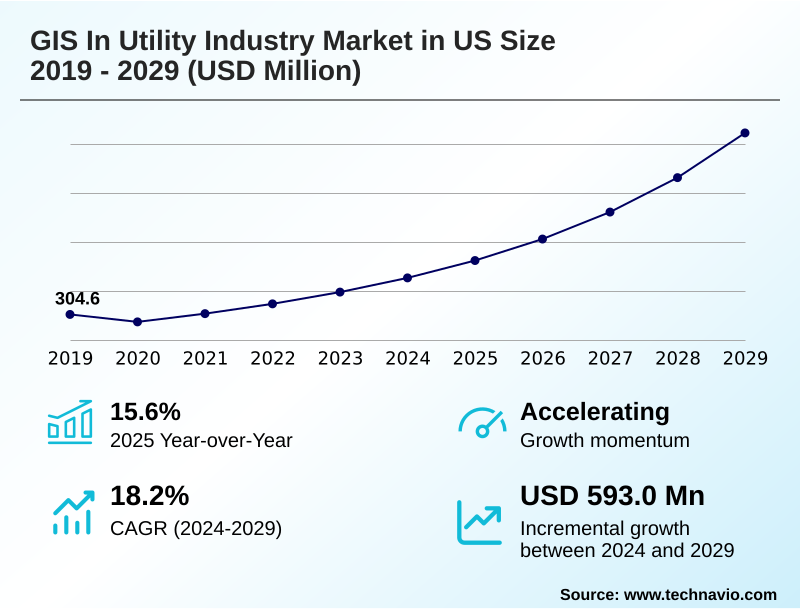
The US gis in utility industry market size is forecast to increase by USD 593.0 million at a CAGR of 18.2% between 2024 and 2029.
A critical driver for the gis in utility industry is the urgent need to modernize aging infrastructure. A substantial portion of energy and water networks has surpassed its operational lifespan, creating significant risks to reliability and increasing costs. Geographic information system technology provides an indispensable platform for addressing these issues, serving as a core component of strategic asset management and operational intelligence. Utilities are creating comprehensive, geospatially accurate digital inventories of all assets, from utility poles to subterranean pipes, which is fundamental for implementing sophisticated predictive maintenance programs. The integration of AI and machine learning with foundational GISs is a primary trend, shifting the technology from a passive system of record to an active, intelligent platform for proactive operational management. This fusion unlocks deeper insights from vast spatial and temporal datasets, addressing pressures to enhance grid reliability and optimize expenditures.The core value of this technological evolution lies in transforming reactive maintenance cycles into predictive ones through advanced geographic information system analytics market applications. By analyzing historical outage data, weather patterns, and asset conditions, AI algorithms can forecast potential failure points, allowing for the strategic allocation of resources to address vulnerabilities before they escalate. However, a formidable challenge confronting the market is the immense complexity associated with data integration and system interoperability. Utilities have historically operated in functional silos, leading to a proliferation of disparate IT and OT systems, many of which are legacy platforms not designed for seamless communication. Consolidating varied datasets from these sources into a single, cohesive, and authoritative GIS platform to create a single source of truth is fraught with technical and organizational hurdles, including issues with data formats, accuracy standards, and the absence of enterprise-wide data governance.
What will be the size of the US GIS In Utility Industry Market during the forecast period?
Explore in-depth regional segment analysis with market size data - historical 2019 - 2023 and forecasts 2025-2029 - in the full report.
Request Free Sample
Market activities are shaped by an ongoing push toward digital transformation, where gis in utility industry serves as a foundational technology. The development of advanced analytical capabilities is a constant focus, with organizations seeking to leverage geospatial data analysis for more effective strategic planning and operational control. The evolution of smart grid technologies and the need for more sophisticated management of distributed energy resources are continually influencing platform requirements. This includes the need for better network asset management and integration with systems like enterprise asset management and supervisory control data acquisition. The utility monitoring system landscape is also in flux, with new sensor technologies providing richer data streams.The applications of geographic information system analytics market tools are expanding beyond traditional mapping, touching on everything from pipeline integrity management to broadband deployment mapping. There is a persistent effort to refine methods for field data collection and remote asset inspection, using technologies like high-resolution aerial imagery. These patterns reflect a dynamic interplay between technological capability and operational necessity, as utilities adapt to new regulatory demands and customer expectations. The focus is shifting toward creating a unified, real-time view of the entire network, supported by robust data governance and interoperability protocols.
How is this market segmented?
The market research report provides comprehensive data (region-wise segment analysis), with forecasts and estimates in "USD million" for the period 2025-2029, as well as historical data from 2019 - 2023 for the following segments.
- Product
- Deployment
- Product type
- Electric power utilities
- Water and wastewater utilities
- Gas utilities
- Telecommunication utilities
- Type
- Investor-owned
- Public-owned
- Cooperatives
- Geography
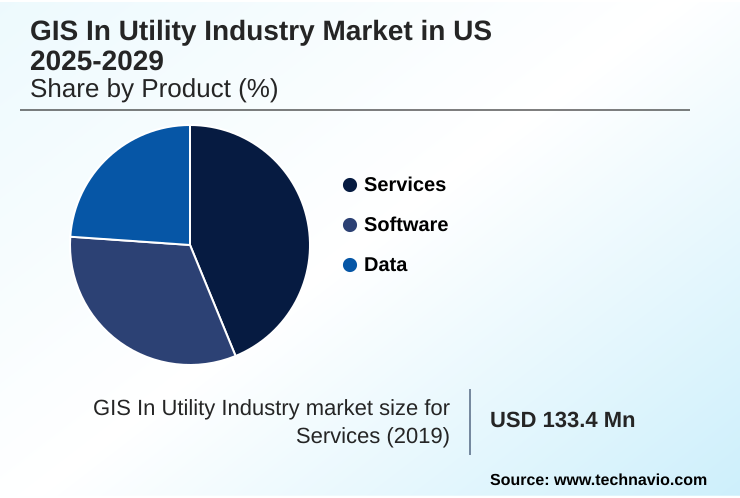
By Product Insights
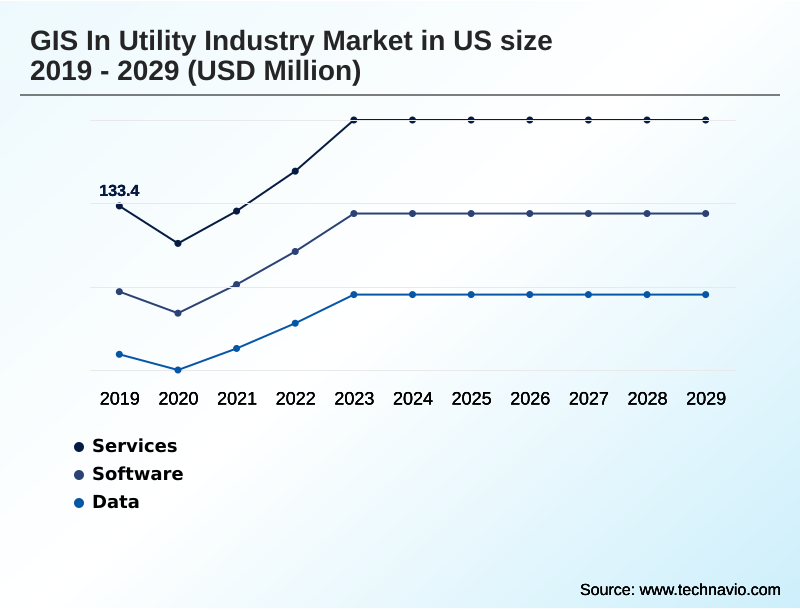
The services segment is estimated to witness significant growth during the forecast period.
The services segment is essential for the successful deployment and operation of GIS technology within a utility's complex environment. It encompasses the specialized human expertise needed for consulting, implementation, data services, and managed services. These professional services guide utilities through strategic planning, system architecture design, and project management. A key focus is on integrating the GIS platform with other critical enterprise systems, such as asset and work management, to ensure a seamless flow of information across the organization.
Data services form a critical component, involving the conversion, migration, and quality assurance of geospatial information to create an authoritative system of record. More than half of all large-scale GIS projects report data conversion as their most resource-intensive phase. Furthermore, a growing trend within this segment is the adoption of managed services. Many utilities now outsource the administration, maintenance, and support of their GIS environment to third-party providers, allowing them to focus on leveraging geospatial insights rather than managing the underlying technology and infrastructure.

Request Free Sample
The Services segment was valued at USD 133.40 million in 2019 and showed a gradual increase during the forecast period.
Market Dynamics
Our researchers analyzed the data with 2024 as the base year, along with the key drivers, trends, and challenges. A holistic analysis of drivers will help companies refine their marketing strategies to gain a competitive advantage.
The US utility industry is increasingly leveraging a geospatial platform for strategic asset management to address the critical need for modernizing aging utility infrastructure. This digital transformation is driven by the cloud platform adoption for asset management and the powerful GIS integration with operational technology (OT) systems, which provides real time situational awareness for grid operators. Advanced applications like a digital twin for utility network visualization are becoming essential. Furthermore, the use of AI and machine learning for predictive analytics is revolutionizing operations, from proactive vegetation encroachment management to enhancing grid resilience to extreme weather. This reliance on geospatial data for grid modernization is fundamental for managing distributed energy resource (DER) integration and optimizing electric vehicle (EV) charging station placement, ensuring a future-ready network.Despite these advancements, significant hurdles remain. Utilities face major data integration and system interoperability challenges and must address workforce skill gaps in geospatial science. The crucial task of cybersecurity for critical infrastructure protection cannot be overstated. A primary barrier is the high initial investment cost justification, though this is being partially offset by programs providing federal funding for infrastructure renewal. This funding supports key initiatives such as lead service line replacement programs and efforts under the Broadband Equity, Access, and Deployment (BEAD) Program. Concurrently, utilities must navigate strict regulatory compliance for pipeline safety, demonstrating a comprehensive approach to both modernization and security across all critical infrastructure.

What are the key market drivers leading to the rise in the adoption of US GIS In Utility Industry Industry?
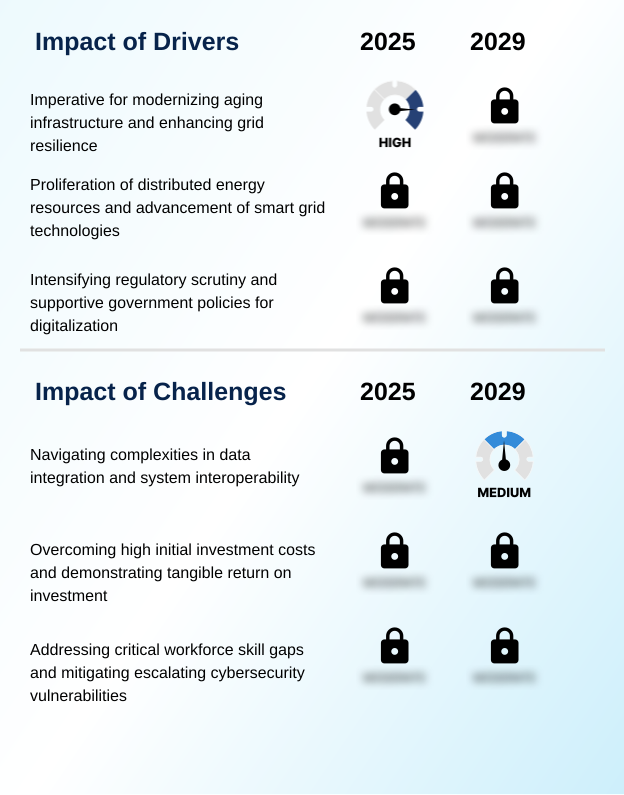
- The critical need to modernize aging utility infrastructure and bolster grid resilience is a primary driver for the market.
The critical need to modernize aging infrastructure is a key factor. Utilities are using GIS to create a comprehensive digital asset inventory, enabling predictive maintenance models that analyze asset health and forecast potential failures. This data-driven approach replaces reactive maintenance with proactive strategies, extending asset life and improving service reliability. The increasing frequency of extreme weather events has made grid resilience a paramount concern. About 65% of utilities report using geospatial data for vulnerability assessments and hardening projects, directly influencing the demand for advanced GIS capabilities to support these initiatives. This transforms GIS into a non-negotiable technology for modern utility operations and strategic asset management.The transformation of the energy landscape toward a decentralized, bidirectional grid is another major influence. The rapid proliferation of distributed energy resources, including solar panels, battery storage, and electric vehicles, presents significant operational challenges. GIS provides the essential spatial context required to manage this complexity, from siting new renewable facilities to developing hosting capacity maps that show where the grid can accommodate new interconnections. The growth of electric vehicles also tasks utilities with planning a vast public charging infrastructure, using GIS to determine optimal placement based on traffic, demographics, and local grid capacity. The rollout of smart grid technologies further enhances this with granular consumption data.
What are the market trends shaping the US GIS In Utility Industry Industry?
- The integration of artificial intelligence and machine learning technologies to enable advanced predictive analytics is a primary upcoming market trend.
A primary trend is the integration of AI and machine learning with foundational GIS platforms. This marks a shift from GIS as a passive record system to an intelligent platform for predictive analytics and proactive operational management. The fusion of AI and GIS unlocks deeper insights from spatial and temporal datasets. Utilities are using high-resolution imagery and machine learning models on their GIS platforms for vegetation encroachment detection. Over 70% of large utilities are piloting or implementing AI for predictive maintenance. This proactive stance, powered by geoAI, enhances resilience against storm damage and wildfires and is vital for applications within the gas utilities market.The accelerated migration of GIS infrastructures to cloud gis platforms and the development of digital twins is another major trend. This shift is driven by the need for greater scalability, accessibility, and collaboration. A cloud-native GIS provides a single source of truth accessible to office and field personnel, streamlining workflows. Building on this is the rise of the digital twin, a dynamic virtual representation of the utility network. A digital twin integrates GIS data with real-time operational data from SCADA systems and IoT sensors from the utility monitoring system, creating a powerful analytical tool for simulating events and optimizing performance.
What challenges does the US GIS In Utility Industry Industry face during its growth?
- The significant complexities involved in data integration and achieving interoperability between disparate legacy and modern systems present a formidable challenge.
A formidable challenge is the complexity of data integration and system interoperability. Utilities often operate with numerous disparate IT and OT systems, including outage management systems and enterprise asset management platforms, many of which are legacy and do not communicate seamlessly. Consolidating varied datasets from these siloed sources into a single, cohesive GIS platform is fraught with technical hurdles. Data exists in multiple formats with varying standards for accuracy and completeness, necessitating costly data remediation efforts. The absence of enterprise-wide data governance standards exacerbates this issue, leading to data redundancy and undermining the value of an enterprise GIS.High initial capital expenditure for implementing or upgrading an enterprise GIS, coupled with the difficulty of demonstrating a quantifiable return on investment, is another significant challenge. The total cost extends beyond software licenses to include hardware, data conversion, custom development, and training. For many utilities, especially smaller municipal organizations where GIS implementation can account for up to 15% of the annual IT budget, this financial barrier can be prohibitive. Compounding this is the difficulty of justifying the investment to stakeholders and regulatory commissions, as translating qualitative benefits like improved situational awareness into concrete financial metrics for rate recovery is a persistent hurdle.
Exclusive Customer Landscape
The US gis in utility industry market forecasting report includes the adoption lifecycle of the market, covering from the innovator’s stage to the laggard’s stage. It focuses on adoption rates in different regions based on penetration. Furthermore, the US gis in utility industry market report also includes key purchase criteria and drivers of price sensitivity to help companies evaluate and develop their market growth analysis strategies.
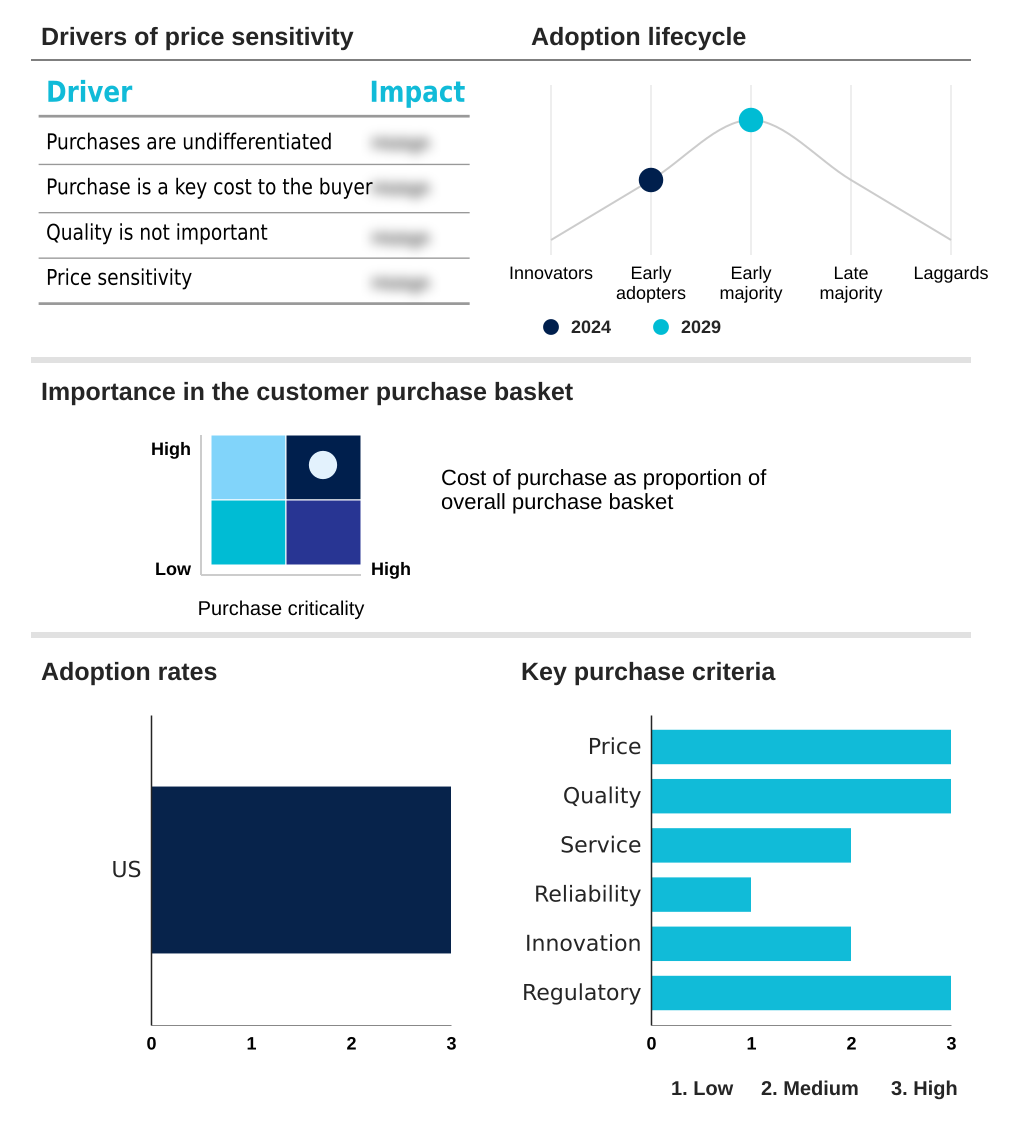
Customer Landscape
Key Companies & Market Insights
Companies are implementing various strategies, such as strategic alliances, US gis in utility industry market forecast, partnerships, mergers and acquisitions, geographical expansion, and product/service launches, to enhance their presence in the industry.
Autodesk Inc. - The company provides integrated computer-aided design and building information modeling software solutions that support geographic information systems for comprehensive utility network design, infrastructure planning, and asset documentation.
The industry research and growth report includes detailed analyses of the competitive landscape of the market and information about key companies, including:
- Autodesk Inc.
- Avineon Inc.
- Bentley Systems Inc.
- Blue Marble Geographics
- Caliper Corp.
- Eagle View Technologies Inc.
- Esri Global Inc.
- General Electric Co.
- GeoSpatial Innovations Inc.
- Hexagon AB
- Intermap Technologies Corp.
- IQGeo Group plc
- Mapbox Inc.
- Maxar Technologies Inc.
- NV5 Global Inc.
- Precisely
- Satellogic SA
- Schneider Electric SE
- Trimble Inc.
- VertiGIS Ltd.
Qualitative and quantitative analysis of companies has been conducted to help clients understand the wider business environment as well as the strengths and weaknesses of key industry players. Data is qualitatively analyzed to categorize companies as pure play, category-focused, industry-focused, and diversified; it is quantitatively analyzed to categorize companies as dominant, leading, strong, tentative, and weak.
Recent Development and News in Us Gis In Utility Industry Market
In June 2024, Bentley Systems Inc. launched new applications within its OpenUtilities platform to accelerate grid modernization and support the creation of infrastructure digital twins.In June 2024, Hexagon AB showcased new reality capture and digital twin solutions aimed at improving infrastructure lifecycle management for utilities.In May 2024, IQGeo Group plc announced a major contract renewal and expansion with a top 10 US cable operator for its Network Manager Telecom software.In March 2024, Esri Global Inc. announced new capabilities in its ArcGIS platform, including advanced AI tools and reality mapping to create digital twins for critical infrastructure operators.
Research Analyst Overview
The gis in utility industry market in us is evolving through the sophisticated application of geospatial data management and advanced utility network modeling. Utilities are moving beyond a basic digital asset inventory towards a comprehensive asset management platform that serves as a central operational intelligence system. This shift facilitates predictive maintenance models and proactive grid resilience planning, superseding traditional condition based maintenance. The integration of smart grid technologies, including advanced metering infrastructure and the creation of hosting capacity maps for distributed energy resources, is critical. Furthermore, geospatial data analysis now underpins everything from hydraulic modeling analysis to strategic broadband deployment mapping and 5G network planning as part of a holistic enterprise asset management strategy.Operational efficiency is advancing through enhanced geospatial data integration across systems, where a modern outage management system links with the customer information system. Real time grid operations leverage data from supervisory control data acquisition (SCADA) for immediate spatial risk assessment and critical infrastructure protection. Activities such as vegetation encroachment detection, pipeline integrity management, and lead service line identification are supported by geospatial consulting services. The use of high resolution aerial imagery enables remote asset inspection and right of way monitoring, streamlining field data collection and ensuring accurate as built documentation. This detailed network asset management supports complex initiatives like distribution network redesign and fiber optic route optimization. Industry analyses suggest the adoption of these systems is on a trajectory to increase by over 14% in the coming period.
Dive into Technavio’s robust research methodology, blending expert interviews, extensive data synthesis, and validated models for unparalleled US GIS In Utility Industry Market insights. See full methodology.
|
Market Scope
|
|
Report Coverage
|
Details
|
|
Page number
|
209
|
|
Base year
|
2024
|
|
Historic period
|
2019 - 2023 |
|
Forecast period
|
2025-2029
|
|
Growth momentum & CAGR
|
Accelerating at a CAGR of 18.2%
|
|
Market growth 2024-2029
|
USD 593.0 million
|
|
Market structure
|
Fragmented
|
|
YoY growth 2024-2029(%)
|
15.6%
|
|
Key countries
|
US
|
|
Competitive landscape
|
Leading Companies, Market Positioning of Companies, Competitive Strategies, and Industry Risks
|
Request Free Sample
What are the Key Data Covered in this US GIS In Utility Industry Market Research and Growth Report?
- CAGR of the US GIS In Utility Industry industry during the forecast period
- Detailed information on factors that will drive the growth and forecasting between 2024 and 2029
- Precise estimation of the size of the market and its contribution of the industry in focus to the parent market
- Accurate predictions about upcoming growth and trends and changes in consumer behaviour
- Growth of the market across North America
- Thorough analysis of the market’s competitive landscape and detailed information about companies
- Comprehensive analysis of factors that will challenge the US gis in utility industry market growth of industry companies
We can help! Our analysts can customize this US gis in utility industry market research report to meet your requirements.
Get in touch
1 Executive Summary
- 1 Executive Summary
- 1.1 Market overview
- Executive Summary - Chart on Market Overview
- Executive Summary - Data Table on Market Overview
- Executive Summary - Chart on Country Market Characteristics
- Executive Summary - Chart on Market Segmentation by Product
- Executive Summary - Chart on Market Segmentation by Deployment
- Executive Summary - Chart on Market Segmentation by Product Type
- Executive Summary - Chart on Market Segmentation by Type
- Executive Summary - Chart on Company Market Positioning
2 Technavio Analysis
- 2 Technavio Analysis
- 2.1 Analysis of price sensitivity, lifecycle, customer purchase basket, adoption rates, and purchase criteria
- Analysis of price sensitivity, lifecycle, customer purchase basket, adoption rates, and purchase criteria
- 2.2 Criticality of inputs and Factors of differentiation
- Overview on criticality of inputs and factors of differentiation
- 2.3 Factors of disruption
- Overview on factors of disruption
- 2.4 Impact of drivers and challenges
- Impact of drivers and challenges in 2024 and 2029
3 Market Landscape
- 3 Market Landscape
- 3.1 Market ecosystem
- Chart on Parent Market
- Data Table on - Parent Market
- 3.2 Market characteristics
- Chart on Market characteristics analysis
- 3.3 Value chain analysis
- Chart on Value chain analysis
4 Market Sizing
- 4 Market Sizing
- 4.1 Market definition
- Data Table on Offerings of companies included in the market definition
- 4.2 Market segment analysis
- 4.3 Market size 2024
- 4.4 Market outlook: Forecast for 2024-2029
- Chart on US - Market size and forecast 2024-2029 ($ billion)
- Data Table on US - Market size and forecast 2024-2029 ($ billion)
- Chart on US: Year-over-year growth 2024-2029 (%)
- Data Table on US: Year-over-year growth 2024-2029 (%)
5 Historic Market Size
- 5 Historic Market Size
- 5.1 GIS In Utility Industry Market in US 2019 - 2023
- Historic Market Size - Data Table on GIS In Utility Industry Market in US 2019 - 2023 ($ billion)
- 5.2 Product segment analysis 2019 - 2023
- Historic Market Size - Product Segment 2019 - 2023 ($ billion)
- 5.3 Deployment segment analysis 2019 - 2023
- Historic Market Size - Deployment Segment 2019 - 2023 ($ billion)
- 5.4 Product Type segment analysis 2019 - 2023
- Historic Market Size - Product Type Segment 2019 - 2023 ($ billion)
- 5.5 Type segment analysis 2019 - 2023
- Historic Market Size - Type Segment 2019 - 2023 ($ billion)
6 Qualitative Analysis
- 6 Qualitative Analysis
- 6.1 Impact of AI on the GIS in Utility Industry Market in US
- 6.2 Impact of Tariff war on the GIS in Utility Industry Market in US
7 Five Forces Analysis
- 7 Five Forces Analysis
- 7.1 Five forces summary
- Five forces analysis - Comparison between 2024 and 2029
- 7.2 Bargaining power of buyers
- Bargaining power of buyers - Impact of key factors 2024 and 2029
- 7.3 Bargaining power of suppliers
- Bargaining power of suppliers - Impact of key factors in 2024 and 2029
- 7.4 Threat of new entrants
- Threat of new entrants - Impact of key factors in 2024 and 2029
- 7.5 Threat of substitutes
- Threat of substitutes - Impact of key factors in 2024 and 2029
- 7.6 Threat of rivalry
- Threat of rivalry - Impact of key factors in 2024 and 2029
- 7.7 Market condition
- Chart on Market condition - Five forces 2024 and 2029
8 Market Segmentation by Product
- 8 Market Segmentation by Product
- 8.1 Market segments
- Chart on Product - Market share 2024-2029 (%)
- Data Table on Product - Market share 2024-2029 (%)
- 8.2 Comparison by Product
- Chart on Comparison by Product
- Data Table on Comparison by Product
- 8.3 Services - Market size and forecast 2024-2029
- Chart on Services - Market size and forecast 2024-2029 ($ billion)
- Data Table on Services - Market size and forecast 2024-2029 ($ billion)
- Chart on Services - Year-over-year growth 2024-2029 (%)
- Data Table on Services - Year-over-year growth 2024-2029 (%)
- 8.4 Software - Market size and forecast 2024-2029
- Chart on Software - Market size and forecast 2024-2029 ($ billion)
- Data Table on Software - Market size and forecast 2024-2029 ($ billion)
- Chart on Software - Year-over-year growth 2024-2029 (%)
- Data Table on Software - Year-over-year growth 2024-2029 (%)
- 8.5 Data - Market size and forecast 2024-2029
- Chart on Data - Market size and forecast 2024-2029 ($ billion)
- Data Table on Data - Market size and forecast 2024-2029 ($ billion)
- Chart on Data - Year-over-year growth 2024-2029 (%)
- Data Table on Data - Year-over-year growth 2024-2029 (%)
- 8.6 Market opportunity by Product
- Market opportunity by Product ($ billion)
- Data Table on Market opportunity by Product ($ billion)
9 Market Segmentation by Deployment
- 9 Market Segmentation by Deployment
- 9.1 Market segments
- Chart on Deployment - Market share 2024-2029 (%)
- Data Table on Deployment - Market share 2024-2029 (%)
- 9.2 Comparison by Deployment
- Chart on Comparison by Deployment
- Data Table on Comparison by Deployment
- 9.3 On-premises - Market size and forecast 2024-2029
- Chart on On-premises - Market size and forecast 2024-2029 ($ billion)
- Data Table on On-premises - Market size and forecast 2024-2029 ($ billion)
- Chart on On-premises - Year-over-year growth 2024-2029 (%)
- Data Table on On-premises - Year-over-year growth 2024-2029 (%)
- 9.4 Cloud - Market size and forecast 2024-2029
- Chart on Cloud - Market size and forecast 2024-2029 ($ billion)
- Data Table on Cloud - Market size and forecast 2024-2029 ($ billion)
- Chart on Cloud - Year-over-year growth 2024-2029 (%)
- Data Table on Cloud - Year-over-year growth 2024-2029 (%)
- 9.5 Market opportunity by Deployment
- Market opportunity by Deployment ($ billion)
- Data Table on Market opportunity by Deployment ($ billion)
10 Market Segmentation by Product Type
- 10 Market Segmentation by Product Type
- 10.1 Market segments
- Chart on Product Type - Market share 2024-2029 (%)
- Data Table on Product Type - Market share 2024-2029 (%)
- 10.2 Comparison by Product Type
- Chart on Comparison by Product Type
- Data Table on Comparison by Product Type
- 10.3 Electric power utilities - Market size and forecast 2024-2029
- Chart on Electric power utilities - Market size and forecast 2024-2029 ($ billion)
- Data Table on Electric power utilities - Market size and forecast 2024-2029 ($ billion)
- Chart on Electric power utilities - Year-over-year growth 2024-2029 (%)
- Data Table on Electric power utilities - Year-over-year growth 2024-2029 (%)
- 10.4 Water and wastewater utilities - Market size and forecast 2024-2029
- Chart on Water and wastewater utilities - Market size and forecast 2024-2029 ($ billion)
- Data Table on Water and wastewater utilities - Market size and forecast 2024-2029 ($ billion)
- Chart on Water and wastewater utilities - Year-over-year growth 2024-2029 (%)
- Data Table on Water and wastewater utilities - Year-over-year growth 2024-2029 (%)
- 10.5 Gas utilities - Market size and forecast 2024-2029
- Chart on Gas utilities - Market size and forecast 2024-2029 ($ billion)
- Data Table on Gas utilities - Market size and forecast 2024-2029 ($ billion)
- Chart on Gas utilities - Year-over-year growth 2024-2029 (%)
- Data Table on Gas utilities - Year-over-year growth 2024-2029 (%)
- 10.6 Telecommunication utilities - Market size and forecast 2024-2029
- Chart on Telecommunication utilities - Market size and forecast 2024-2029 ($ billion)
- Data Table on Telecommunication utilities - Market size and forecast 2024-2029 ($ billion)
- Chart on Telecommunication utilities - Year-over-year growth 2024-2029 (%)
- Data Table on Telecommunication utilities - Year-over-year growth 2024-2029 (%)
- 10.7 Market opportunity by Product Type
- Market opportunity by Product Type ($ billion)
- Data Table on Market opportunity by Product Type ($ billion)
11 Market Segmentation by Type
- 11 Market Segmentation by Type
- 11.1 Market segments
- Chart on Type - Market share 2024-2029 (%)
- Data Table on Type - Market share 2024-2029 (%)
- 11.2 Comparison by Type
- Chart on Comparison by Type
- Data Table on Comparison by Type
- 11.3 Investor-owned - Market size and forecast 2024-2029
- Chart on Investor-owned - Market size and forecast 2024-2029 ($ billion)
- Data Table on Investor-owned - Market size and forecast 2024-2029 ($ billion)
- Chart on Investor-owned - Year-over-year growth 2024-2029 (%)
- Data Table on Investor-owned - Year-over-year growth 2024-2029 (%)
- 11.4 Public-owned - Market size and forecast 2024-2029
- Chart on Public-owned - Market size and forecast 2024-2029 ($ billion)
- Data Table on Public-owned - Market size and forecast 2024-2029 ($ billion)
- Chart on Public-owned - Year-over-year growth 2024-2029 (%)
- Data Table on Public-owned - Year-over-year growth 2024-2029 (%)
- 11.5 Cooperatives - Market size and forecast 2024-2029
- Chart on Cooperatives - Market size and forecast 2024-2029 ($ billion)
- Data Table on Cooperatives - Market size and forecast 2024-2029 ($ billion)
- Chart on Cooperatives - Year-over-year growth 2024-2029 (%)
- Data Table on Cooperatives - Year-over-year growth 2024-2029 (%)
- 11.6 Market opportunity by Type
- Market opportunity by Type ($ billion)
- Data Table on Market opportunity by Type ($ billion)
12 Customer Landscape
- 12 Customer Landscape
- 12.1 Customer landscape overview
- Analysis of price sensitivity, lifecycle, customer purchase basket, adoption rates, and purchase criteria
13 Drivers, Challenges, and Opportunity
- 13 Drivers, Challenges, and Opportunity
- 13.1 Market drivers
- Imperative for modernizing aging infrastructure and enhancing grid resilience
- Proliferation of distributed energy resources and advancement of smart grid technologies
- Intensifying regulatory scrutiny and supportive government policies for digitalization
- 13.2 Market challenges
- Navigating complexities in data integration and system interoperability
- Overcoming high initial investment costs and demonstrating tangible return on investment
- Addressing critical workforce skill gaps and mitigating escalating cybersecurity vulnerabilities
- 13.3 Impact of drivers and challenges
- Impact of drivers and challenges in 2024 and 2029
- 13.4 Market opportunities
- Integration of AI and ML for predictive analytics
- Adoption of cloud platforms and digital twins for asset management
- Emphasis on geospatial data for grid modernization and DER integration
14 Competitive Landscape
- 14 Competitive Landscape
- 14.1 Overview
- 14.2 Competitive Landscape
- Overview on criticality of inputs and factors of differentiation
- 14.3 Landscape disruption
- Overview on factors of disruption
- 14.4 Industry risks
- Impact of key risks on business
15 Competitive Analysis
- 15 Competitive Analysis
- 15.1 Companies profiled
- 15.2 Company ranking index
- 15.3 Market positioning of companies
- Matrix on companies position and classification
- 15.4 Autodesk Inc.
- Autodesk Inc. - Overview
- Autodesk Inc. - Business segments
- Autodesk Inc. - Key news
- Autodesk Inc. - Key offerings
- Autodesk Inc. - Segment focus
- SWOT
- 15.5 Avineon Inc.
- Avineon Inc. - Overview
- Avineon Inc. - Product / Service
- Avineon Inc. - Key offerings
- SWOT
- 15.6 Bentley Systems Inc.
- Bentley Systems Inc. - Overview
- Bentley Systems Inc. - Business segments
- Bentley Systems Inc. - Key news
- Bentley Systems Inc. - Key offerings
- Bentley Systems Inc. - Segment focus
- SWOT
- 15.7 Blue Marble Geographics
- Blue Marble Geographics - Overview
- Blue Marble Geographics - Product / Service
- Blue Marble Geographics - Key offerings
- SWOT
- 15.8 Caliper Corp.
- Caliper Corp. - Overview
- Caliper Corp. - Product / Service
- Caliper Corp. - Key offerings
- SWOT
- 15.9 Eagle View Technologies Inc.
- Eagle View Technologies Inc. - Overview
- Eagle View Technologies Inc. - Product / Service
- Eagle View Technologies Inc. - Key offerings
- SWOT
- 15.10 Esri Global Inc.
- Esri Global Inc. - Overview
- Esri Global Inc. - Product / Service
- Esri Global Inc. - Key offerings
- SWOT
- 15.11 General Electric Co.
- General Electric Co. - Overview
- General Electric Co. - Business segments
- General Electric Co. - Key news
- General Electric Co. - Key offerings
- General Electric Co. - Segment focus
- SWOT
- 15.12 Hexagon AB
- Hexagon AB - Overview
- Hexagon AB - Business segments
- Hexagon AB - Key news
- Hexagon AB - Key offerings
- Hexagon AB - Segment focus
- SWOT
- 15.13 Mapbox Inc.
- Mapbox Inc. - Overview
- Mapbox Inc. - Product / Service
- Mapbox Inc. - Key offerings
- SWOT
- 15.14 Maxar Technologies Inc.
- Maxar Technologies Inc. - Overview
- Maxar Technologies Inc. - Product / Service
- Maxar Technologies Inc. - Key news
- Maxar Technologies Inc. - Key offerings
- SWOT
- 15.15 NV5 Global Inc.
- NV5 Global Inc. - Overview
- NV5 Global Inc. - Business segments
- NV5 Global Inc. - Key offerings
- NV5 Global Inc. - Segment focus
- SWOT
- 15.16 Precisely
- Precisely - Overview
- Precisely - Product / Service
- Precisely - Key offerings
- SWOT
- 15.17 Trimble Inc.
- Trimble Inc. - Overview
- Trimble Inc. - Business segments
- Trimble Inc. - Key news
- Trimble Inc. - Key offerings
- Trimble Inc. - Segment focus
- SWOT
- 15.18 VertiGIS Ltd.
- VertiGIS Ltd. - Overview
- VertiGIS Ltd. - Product / Service
- VertiGIS Ltd. - Key offerings
- SWOT
16 Appendix
- 16 Appendix
- 16.1 Scope of the report
- Market definition
- Objectives
- Notes and caveats
- 16.2 Inclusions and exclusions checklist
- Inclusions checklist
- Exclusions checklist
- 16.3 Currency conversion rates for US$
- Currency conversion rates for US$
- 16.4 Research methodology
- 16.5 Data procurement
- 16.6 Data validation
- 16.7 Validation techniques employed for market sizing
- Validation techniques employed for market sizing
- 16.8 Data synthesis
- 16.9 360 degree market analysis
- 360 degree market analysis
- 16.10 List of abbreviations
Research Framework
Technavio presents a detailed picture of the market by way of study, synthesis, and summation of data from multiple sources. The analysts have presented the various facets of the market with a particular focus on identifying the key industry influencers. The data thus presented is comprehensive, reliable, and the result of extensive research, both primary and secondary.
INFORMATION SOURCES
Primary sources
- Manufacturers and suppliers
- Channel partners
- Industry experts
- Strategic decision makers
Secondary sources
- Industry journals and periodicals
- Government data
- Financial reports of key industry players
- Historical data
- Press releases

DATA ANALYSIS
Data Synthesis
- Collation of data
- Estimation of key figures
- Analysis of derived insights
Data Validation
- Triangulation with data models
- Reference against proprietary databases
- Corroboration with industry experts

REPORT WRITING
Qualitative
- Market drivers
- Market challenges
- Market trends
- Five forces analysis
Quantitative
- Market size and forecast
- Market segmentation
- Geographical insights
- Competitive landscape