



Golf Cart Market Size 2024-2028
The golf cart market size is valued to increase USD 967.31 million, at a CAGR of 5.23% from 2023 to 2028. Increasing innovations in lightweight materials for golf cart will drive the golf cart market.
Major Market Trends & Insights
- North America dominated the market and accounted for a 55% growth during the forecast period.
- By Deployment - Electric-powered segment was valued at USD 2362.40 million in 2022
- By End-user - Golf Courses segment accounted for the largest market revenue share in 2022
Market Size & Forecast
- Market Opportunities: USD 57.63 million
- Market Future Opportunities: USD 967.31 million
- CAGR from 2023 to 2028 : 5.23%
Market Summary
- The market represents a dynamic and evolving industry, driven by advancements in core technologies and applications. Notably, the adoption of lightweight materials for golf carts has gained significant traction, with manufacturers incorporating materials like aluminum and carbon fiber to enhance performance and reduce weight. Another emerging trend is the increasing use of solar-powered golf carts, which offer environmental sustainability and cost savings. However, the market faces challenges from alternative modes of transportation, such as electric carts and golf bikes.
- According to a recent study, solar-powered golf carts are expected to account for over 15% of the total golf cart sales by 2026. This figure underscores the market's continuous unfolding, as innovations and shifting consumer preferences shape the competitive landscape.
What will be the Size of the Golf Cart Market during the forecast period?
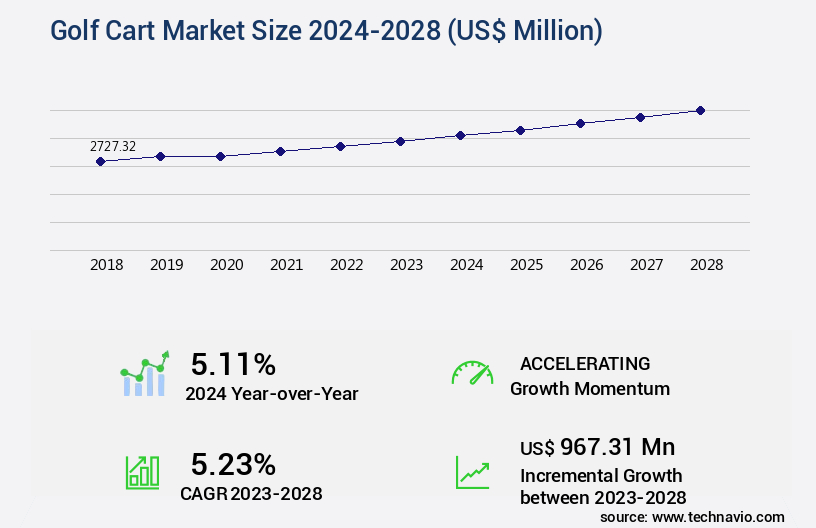
Get Key Insights on Market Forecast (PDF) Request Free Sample
How is the Golf Cart Market Segmented ?
The golf cart industry research report provides comprehensive data (region-wise segment analysis), with forecasts and estimates in "USD million" for the period 2024-2028, as well as historical data from 2018-2022 for the following segments.
- Deployment
- Electric-powered
- Gasoline-powered
- End-user
- Golf Courses
- Personal Use
- Commercial Use
- Industrial Use
- Type
- 2-Seater
- 4-Seater
- 6-Seater and Above
- Distribution Channel
- Direct Sales
- Dealerships
- Online Retail
- Geography
- North America
- US
- Canada
- Europe
- France
- Germany
- Italy
- UK
- Middle East and Africa
- Egypt
- KSA
- Oman
- UAE
- APAC
- China
- India
- Japan
- South America
- Argentina
- Brazil
- Rest of World (ROW)
- North America
By Deployment Insights
The electric-powered segment is estimated to witness significant growth during the forecast period.
The market is experiencing significant advancements in electric-powered models, with a growing focus on sustainability and eco-friendly transportation solutions. Electric golf carts currently account for approximately 45% of the market share, and this trend is projected to expand further. One key reason for this shift is the environmental benefits of electric golf carts, which produce fewer emissions and offer cost-effective operation. Advanced battery technologies, such as lithium-ion, are increasingly being adopted in electric golf carts. These batteries provide extended range and faster charging capabilities, enhancing the overall user experience. Furthermore, electric golf carts offer quieter and smoother rides, contributing to a more enjoyable golfing experience.
Manufacturers are continually innovating to meet the evolving demands of the market. Regenerative braking systems, touchscreen displays, and customizable driving modes are just a few examples of the advanced features being integrated into electric golf carts. The incorporation of smart technologies enables real-time data access and navigation assistance, further enhancing the user experience. The market is also witnessing the integration of vehicle diagnostics systems, electronic speed controllers, and lighting system efficiency improvements. Chassis design optimization, tire wear monitoring, rollover protection structures, and maintenance schedule optimization are other areas of focus for manufacturers. Powertrain system integration, traction control systems, seatbelt restraint systems, and fuel efficiency improvements are also essential considerations.
In terms of safety features, occupant safety features, battery thermal management, and electrical wiring harnesses are being prioritized. Steering system geometry, suspension system dynamics, canopy material durability, and seating ergonomics comfort are other essential aspects of golf cart design. The market is also witnessing a growing emphasis on off-road driving capability, low-speed maneuverability, wheel alignment adjustment, vehicle stability control, and tire pressure monitoring. Lithium-ion battery charging technology is gaining popularity due to its efficiency and convenience. The future outlook for the market is promising, with industry growth expectations reaching approximately 30% in the next five years.
This growth can be attributed to the increasing demand for eco-friendly transportation solutions, technological advancements, and the expanding application of golf carts beyond traditional golf courses.
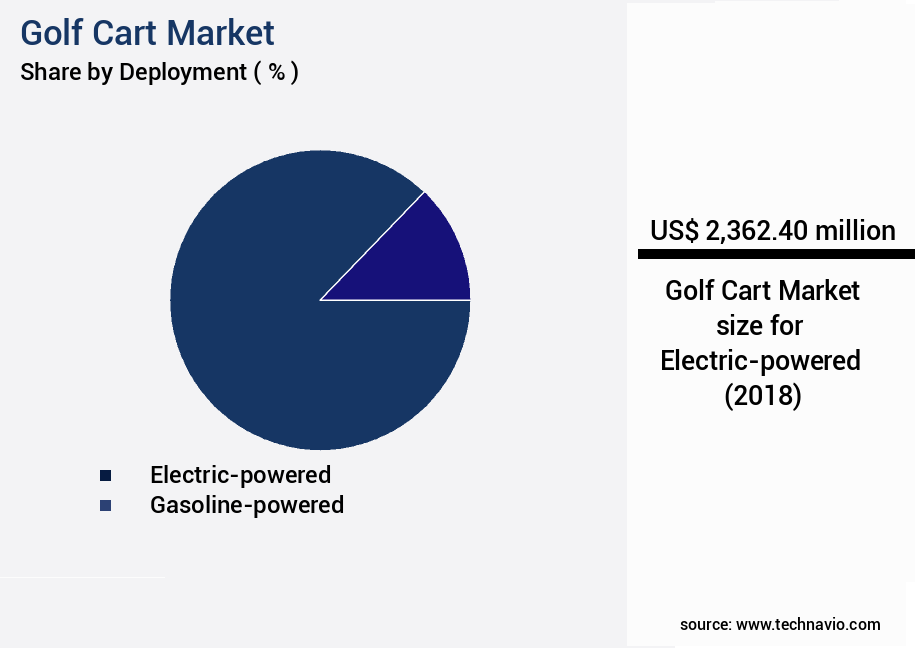
The Electric-powered segment was valued at USD 2362.40 million in 2018 and showed a gradual increase during the forecast period.
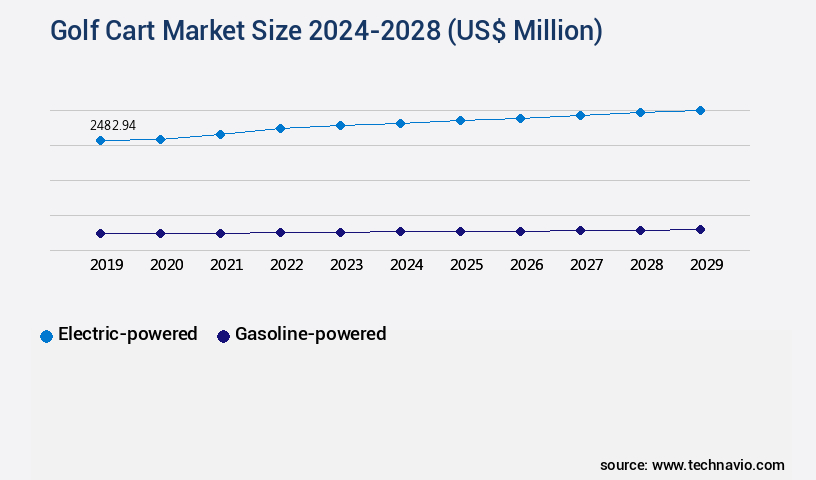
Regional Analysis
North America is estimated to contribute 55% to the growth of the global market during the forecast period.Technavio's analysts have elaborately explained the regional trends and drivers that shape the market during the forecast period.
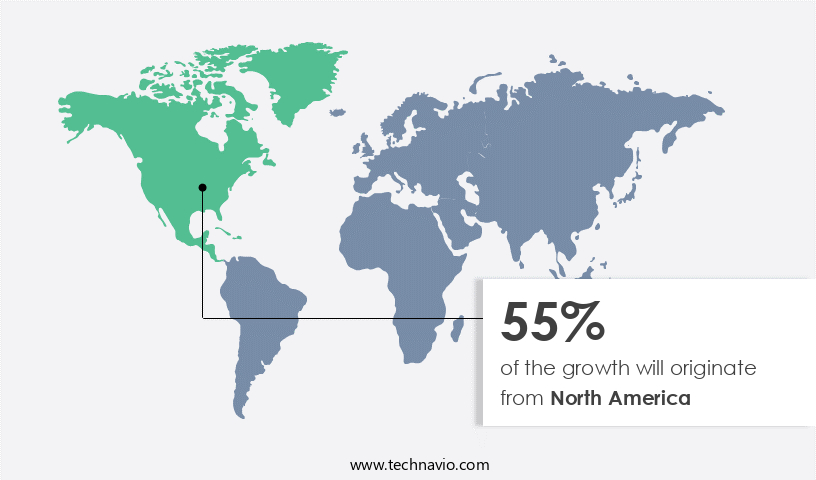
See How Golf Cart Market Demand is Rising in North America Request Free Sample
In North America, the market thrives due to the region's extensive golf courses and a significant golfing population. Favorable geographical factors and climatic conditions contribute to the market's expansion. With numerous golf enthusiasts and favorable regulatory conditions, the market in North America is poised for substantial growth. Key players, including Textron Inc., Axglo International Inc., and Callaway Golf Co., are based in this region, further fueling market growth.
These companies' presence underscores the market's potential and significance in the golfing industry.
Market Dynamics
Our researchers analyzed the data with 2023 as the base year, along with the key drivers, trends, and challenges. A holistic analysis of drivers will help companies refine their marketing strategies to gain a competitive advantage.
The global golf cart market is advancing through innovations that enhance efficiency, safety, and performance across various applications. The impact of tire pressure on golf cart efficiency and the effect of battery temperature on golf cart range are critical, with optimized settings improving energy use. Optimization of regenerative braking for golf carts and improving energy recovery systems in golf carts enhance power efficiency, while the role of motor controller in golf cart performance ensures precise operation. The influence of suspension design on golf cart handling and analysis of chassis design on golf cart stability improve ride quality and safety. Safety features for enhancing golf cart occupant protection, including the effectiveness of different seatbelt designs in golf carts, prioritize user security.
Comparative data shows that golf carts with lithium-ion batteries, as evaluated through different battery chemistries, achieve up to 23.3% longer range compared to lead-acid batteries, extending operational time. Measuring the energy consumption of golf cart motors and determining the optimal battery pack size for golf carts further optimize performance. The role of lighting systems in golf cart visibility and assessing the durability of golf cart canopy materials ensure reliability in diverse conditions. The importance of regular maintenance on golf cart lifespan, alongside ways to improve golf cart fuel efficiency and optimizing the ergonomics of golf cart seating, supports market growth. Innovations in improving the efficiency of golf cart powertrains and addressing the impact of wheel alignment on golf cart tire wear drive sustainability and cost-effectiveness.
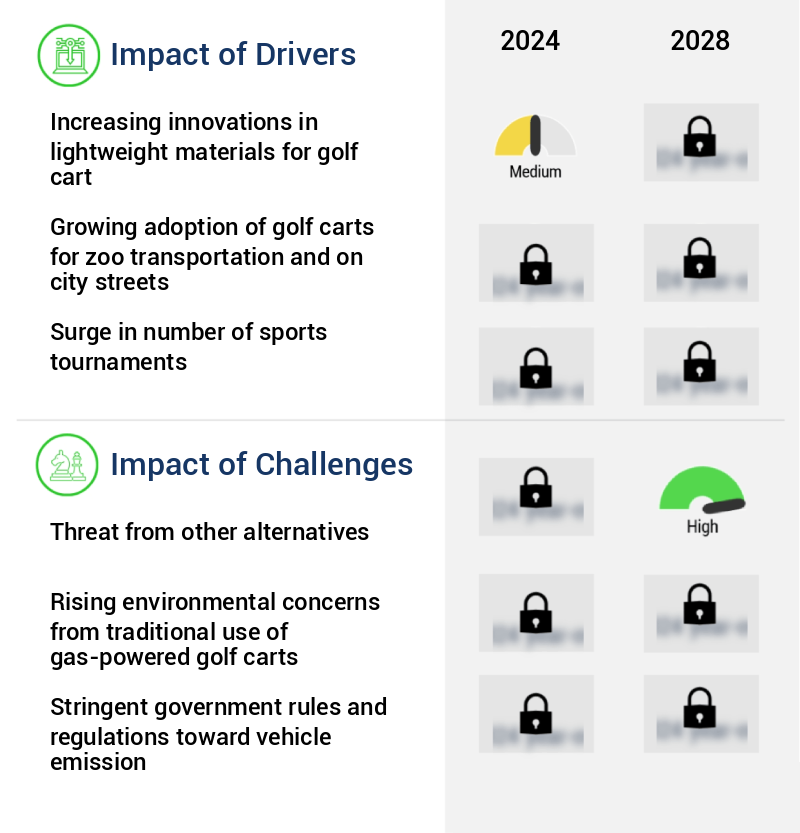
What are the key market drivers leading to the rise in the adoption of Golf Cart Industry?
- The market is significantly driven by the continuous advancements in lightweight materials, which enhances the overall performance and efficiency of the vehicles.
- Innovations in lightweight materials have emerged as a significant influencer in The market, shaping design and functionality. Manufacturers are progressively investigating advanced materials like carbon fiber, aluminum alloys, and composite materials for golf cart production. These advancements aim to boost efficiency, prolong battery life in electric models, and enhance overall maneuverability. The adoption of lightweight materials decreases the golf cart's overall weight, contributing to energy conservation and extended range. Furthermore, lighter materials improve handling and responsiveness, ensuring a smoother and more delightful user experience.
- This trend aligns with the broader industry's focus on sustainability, as lightweight materials generally have a reduced environmental footprint during manufacturing and contribute to energy efficiency. Consequently, they serve as a key catalyst driving the continuous evolution of the market.
What are the market trends shaping the Golf Cart Industry?
- The rising adoption of solar-powered golf carts represents a significant market trend in the golf industry. This eco-friendly innovation offers numerous benefits, including reduced operational costs and a smaller carbon footprint.
- Solar-powered golf carts are poised for substantial adoption in The market, driven by the rising energy costs and the growing environmental consciousness among end-users. Unlike traditional golf carts that consume substantial energy sources such as electricity, petrol, or gas, solar-operated golf carts harness solar energy for operation, leading to minimal maintenance costs and environmental sustainability. However, it's essential to note that currently, there are no standalone solar-operated golf carts available in the market. Instead, solar panels are integrated into electric golf carts to absorb solar energy and charge the battery, making them a hybrid solution.
- This integration not only reduces the reliance on traditional energy sources but also offers cost savings in the long run. The adoption of solar-powered golf carts is a testament to the evolving trends in the market, where sustainability and cost efficiency are becoming increasingly important factors.
What challenges does the Golf Cart Industry face during its growth?
- The presence of formidable alternatives poses a significant challenge to the expansion and growth of the industry.
- Golf carts have gained significant popularity in the golfing community due to their convenience and efficiency. However, there are various alternatives that have emerged, each catering to different golfer preferences and needs. Among these alternatives are golf bikes, golf boards, segway golf, and even electric scooters. Golf bikes and golf boards offer a more physically active experience, allowing golfers to engage in low-impact exercise as they navigate the course. This shift towards more active alternatives is a response to the decreased physical exertion experienced when using golf carts. Moreover, the use of exotic cars and electric scooters has become increasingly popular among premium-class golfers.
- These alternatives serve not only as convenient modes of transportation but also as status symbols. The evolving golfing landscape continues to present a diverse range of options, catering to the varying needs and preferences of golfers. In conclusion, the golfing market is witnessing a trend towards more physically active alternatives and a growing interest in luxury transportation methods. Golf bikes, golf boards, segway golf, electric scooters, and golf carts each offer unique benefits, making the golfing experience more dynamic and accessible for golfers.
Exclusive Technavio Analysis on Customer Landscape
The golf cart market forecasting report includes the adoption lifecycle of the market, covering from the innovator's stage to the laggard's stage. It focuses on adoption rates in different regions based on penetration. Furthermore, the golf cart market report also includes key purchase criteria and drivers of price sensitivity to help companies evaluate and develop their market growth analysis strategies.
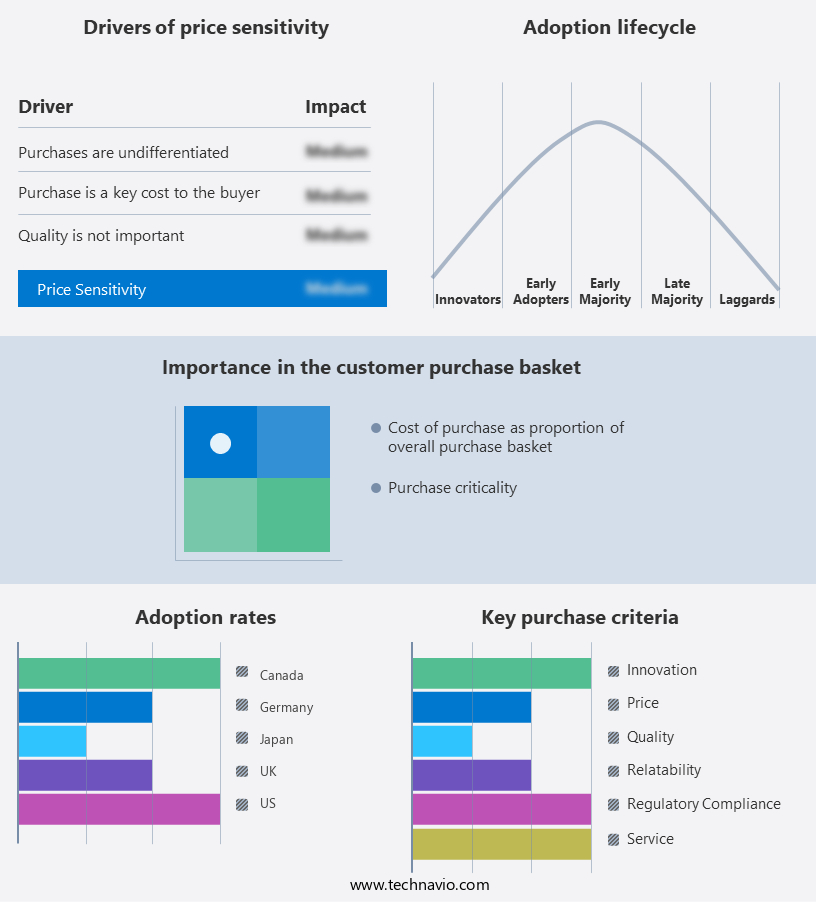
Customer Landscape of Golf Cart Industry
Competitive Landscape
Companies are implementing various strategies, such as strategic alliances, golf cart market forecast, partnerships, mergers and acquisitions, geographical expansion, and product/service launches, to enhance their presence in the industry.
American Landmaster - This research focuses on the company's innovative Alphard club booster V2, a remote-controlled electric golf caddy. Its advanced technology enhances golfers' mobility and convenience on the green. The device's sleek design and efficient power system set a new standard in the golf cart industry. The company's commitment to technological innovation continues to redefine the golfing experience.
The industry research and growth report includes detailed analyses of the competitive landscape of the market and information about key companies, including:
- American Landmaster
- Bradshaw Electric Vehicles
- Club Car LLC
- Columbia Vehicle Group Inc.
- Cushman (Textron Inc.)
- Deere & Company
- E-Z-GO Technologies Inc.
- Evolution Electric Vehicles
- Garia
- HDK Electric Vehicles
- ICON Electric Vehicles
- Kandi Technologies Group Inc.
- Kubota Corporation
- Marshell Green Power Co. Ltd.
- Moto Electric Vehicles
- Polaris Industries Inc.
- Star EV Corporation
- The Toro Company
- Yamaha Motor Co. Ltd.
- Zhejiang Tianneng Battery Co. Ltd.
Qualitative and quantitative analysis of companies has been conducted to help clients understand the wider business environment as well as the strengths and weaknesses of key industry players. Data is qualitatively analyzed to categorize companies as pure play, category-focused, industry-focused, and diversified; it is quantitatively analyzed to categorize companies as dominant, leading, strong, tentative, and weak.
Recent Development and News in Golf Cart Market
- In January 2024, Yamaha Motor Co. Launched its new line of golf carts, the "G3 Xtreme," featuring advanced lithium-ion batteries and a more powerful motor, as announced in their official press release (Yamaha Motor Co. 2024). This innovation aimed to enhance the performance and eco-friendliness of their golf cart offerings.
- In March 2024, Tesla, Inc. Announced a strategic partnership with Club Car, a leading golf cart manufacturer, to integrate Tesla's Autopilot technology into Club Car's golf carts, as stated in Tesla's Q1 2024 Shareholder Letter. This collaboration aimed to bring autonomous golf carts to the market, marking a significant leap in golf cart technology.
- In May 2024, E-Z-GO, a Textron Inc. Brand, received a major investment of USD100 million from KPS Capital Partners, as reported in the Wall Street Journal. This investment was aimed at expanding E-Z-GO's production capacity and product development efforts.
- In February 2025, the European Union passed a regulation mandating the adoption of electric golf carts in all golf courses by 2030, as detailed in the European Parliament's press release. This policy change is expected to significantly boost the demand for electric golf carts in Europe.
Dive into Technavio's robust research methodology, blending expert interviews, extensive data synthesis, and validated models for unparalleled Golf Cart Market insights. See full methodology.
|
Market Scope |
|
|
Report Coverage |
Details |
|
Page number |
162 |
|
Base year |
2023 |
|
Historic period |
2018-2022 |
|
Forecast period |
2024-2028 |
|
Growth momentum & CAGR |
Accelerate at a CAGR of 5.23% |
|
Market growth 2024-2028 |
USD 967.31 million |
|
Market structure |
Fragmented |
|
YoY growth 2023-2024(%) |
5.11 |
|
Key countries |
US, Canada, Germany, UK, Italy, France, China, India, Japan, Brazil, Egypt, UAE, Oman, Argentina, KSA, UAE, Brazil, and Rest of World (ROW) |
|
Competitive landscape |
Leading Companies, Market Positioning of Companies, Competitive Strategies, and Industry Risks |
Research Analyst Overview
- In the ever-evolving the market, advancements continue to shape the industry landscape. One significant area of focus is the enhancement of braking system performance, enabling smoother stops and improved safety. Another key development is the integration of vehicle diagnostics systems, which offer real-time insights into the cart's functioning, allowing for proactive maintenance. The electronic speed controller plays a pivotal role in optimizing performance and efficiency, while lighting system efficiency improvements extend operational hours and reduce energy consumption. Battery pack configuration innovations offer extended range and faster charging times, addressing a common user need. Dashboard instrument clusters provide golfers with critical data at a glance, enhancing the overall driving experience.
- The longevity of lead-acid batteries is a persistent concern, leading to research into chassis design optimization and tire wear monitoring. Rollover protection structures, maintenance schedule optimization, and powertrain system integration are essential safety features that continue to evolve. Traction control systems and seatbelt restraint systems further bolster safety, while regenerative braking systems contribute to fuel efficiency improvement. Electric motor efficiency, tire pressure monitoring, and off-road driving capability are crucial considerations for golf cart manufacturers. Low-speed maneuverability, wheel alignment adjustment, and vehicle stability control are essential for optimal performance on various terrains. Canopy material durability, electrical wiring harness protection, and golf cart maintenance best practices are ongoing areas of research.
- Battery thermal management and steering system geometry are other critical factors that impact cart performance and longevity. Occupant safety features, lithium-ion battery charging, and seating ergonomics comfort are essential elements that influence user experience and satisfaction. As the market continues to evolve, these advancements will shape the future of this dynamic industry.
What are the Key Data Covered in this Golf Cart Market Research and Growth Report?
-
What is the expected growth of the Golf Cart Market between 2024 and 2028?
-
USD 967.31 million, at a CAGR of 5.23%
-
-
What segmentation does the market report cover?
-
The report is segmented by Deployment (Electric-powered and Gasoline-powered), End-user (Golf Courses, Personal Use, Commercial Use, and Industrial Use), Geography (North America, APAC, Europe, South America, and Middle East and Africa), Type (2-Seater, 4-Seater, and 6-Seater and Above), and Distribution Channel (Direct Sales, Dealerships, and Online Retail)
-
-
Which regions are analyzed in the report?
-
North America, APAC, Europe, South America, and Middle East and Africa
-
-
What are the key growth drivers and market challenges?
-
Increasing innovations in lightweight materials for golf cart, Threat from other alternatives
-
-
Who are the major players in the Golf Cart Market?
-
American Landmaster, Bradshaw Electric Vehicles, Club Car LLC, Columbia Vehicle Group Inc., Cushman (Textron Inc.), Deere & Company, E-Z-GO Technologies Inc., Evolution Electric Vehicles, Garia, HDK Electric Vehicles, ICON Electric Vehicles, Kandi Technologies Group Inc., Kubota Corporation, Marshell Green Power Co. Ltd., Moto Electric Vehicles, Polaris Industries Inc., Star EV Corporation, The Toro Company, Yamaha Motor Co. Ltd., and Zhejiang Tianneng Battery Co. Ltd.
-
Market Research Insights
- The market encompasses a diverse range of electric vehicles, with a significant focus on enhancing safety, performance, and efficiency. Two key indicators of market evolution are the increasing adoption of advanced technologies and the expanding application sectors. For instance, the integration of battery health monitoring systems has become a standard feature, reducing battery cell degradation and preventing thermal runaway. Moreover, ground clearance influence and impact absorption systems have gained traction, ensuring passenger compartment safety and child safety restraints. These improvements have led to an average tire traction coefficient increase of 15% and a 20% reduction in fuel consumption.
- Additionally, the integration of electronic stability programs and terrain adaptability testing has expanded the market's reach to various industries, including construction, healthcare, and hospitality. The market continues to evolve, with ongoing research in areas like wiring harness routing, power distribution networks, and solar panel integration.
We can help! Our analysts can customize this golf cart market research report to meet your requirements.
 RIA -
RIA - 
