


Guitar Market Size 2026-2030
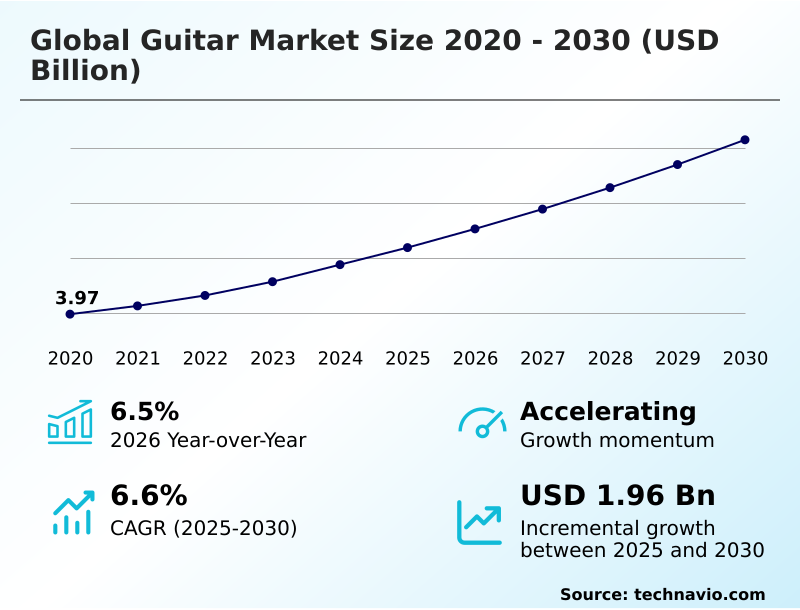
The guitar market size is valued to increase by USD 1.96 billion, at a CAGR of 6.6% from 2025 to 2030. Ascendancy of digital platforms in retail and media will drive the guitar market.
Major Market Trends & Insights
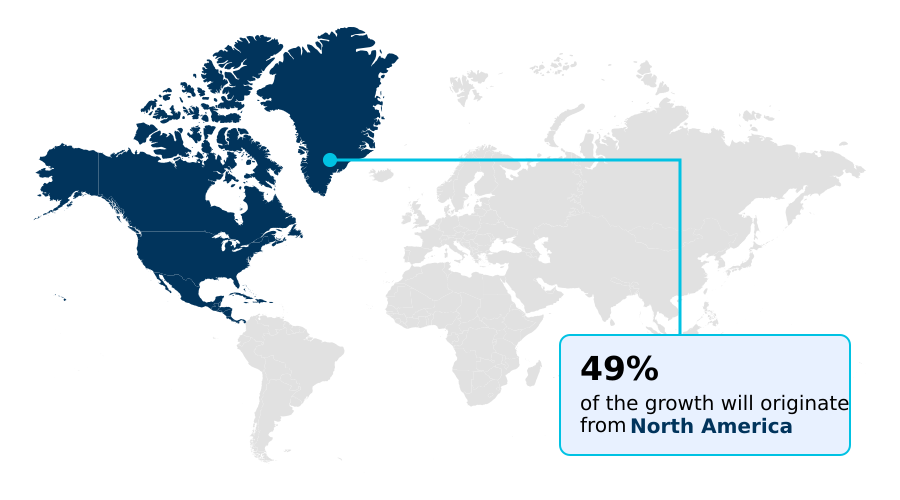
- North America dominated the market and accounted for a 48.9% growth during the forecast period.
- By Type - Acoustic segment was valued at USD 2.71 billion in 2024
- By Distribution Channel - Offline segment accounted for the largest market revenue share in 2024
Market Size & Forecast
- Market Opportunities: USD 3.17 billion
- Market Future Opportunities: USD 1.96 billion
- CAGR from 2025 to 2030 : 6.6%
Market Summary
- The guitar market is characterized by a dynamic interplay between tradition and technological evolution. A primary driver is the democratization of music education through accessible online platforms, which continually introduces new players to the market and sustains demand for a wide range of instruments.
- Concurrently, the proliferation of social media has created new avenues for artist discovery and gear trends, influencing consumer purchasing habits. Manufacturers are responding with innovations that blend classic craftsmanship with modern functionality, such as smart guitars equipped with digital interfaces.
- This push for innovation extends to the manufacturing process itself, where a key business scenario involves optimizing the supply chain for sustainable materials. Companies must balance the use of alternative tonewoods and eco-friendly finishes against the need to maintain consistent quality and control costs.
- This challenge is compounded by competition from purely digital music creation tools, compelling instrument makers to reinforce the unique value proposition of physical instruments in an increasingly digital world. The market's resilience is tied to its ability to adapt to these shifts, catering to both traditionalists and a new generation of tech-savvy musicians.
What will be the Size of the Guitar Market during the forecast period?
Get Key Insights on Market Forecast (PDF) Get Free Sample
How is the Guitar Market Segmented?
The guitar industry research report provides comprehensive data (region-wise segment analysis), with forecasts and estimates in "USD million" for the period 2026-2030, as well as historical data from 2020-2024 for the following segments.
- Type
- Acoustic
- Electric
- Distribution channel
- Offline
- Online
- Material
- Wood
- Composite materials
- Metal
- Geography
- North America
- US
- Canada
- Mexico
- Europe
- Germany
- UK
- France
- APAC
- China
- Japan
- India
- South America
- Brazil
- Argentina
- Colombia
- Middle East and Africa
- Saudi Arabia
- UAE
- South Africa
- Rest of World (ROW)
- North America
By Type Insights
The acoustic segment is estimated to witness significant growth during the forecast period.
The acoustic segment is a foundational component of the guitar market, driven by its accessibility for new players and its essential role in numerous musical genres.
This segment, accounting for over 56% of sales, is increasingly shaped by tonewood sustainability initiatives, compelling manufacturers to adopt sustainable guitar materials and reclaimed tonewoods.
Innovation is evident in the evolution of acoustic guitar bracing types, from traditional classical guitar fan bracing to modern, sound-enhancing designs. While the classic dreadnought body style remains popular, demand for varied parlor guitar sizes is growing.
Offerings are diversifying beyond traditional instruments to include the versatile acoustic-electric hybrid, and sales are shifting towards direct-to-consumer guitar sales channels that often feature beginner guitar packages, simplifying the entry point for aspiring musicians.
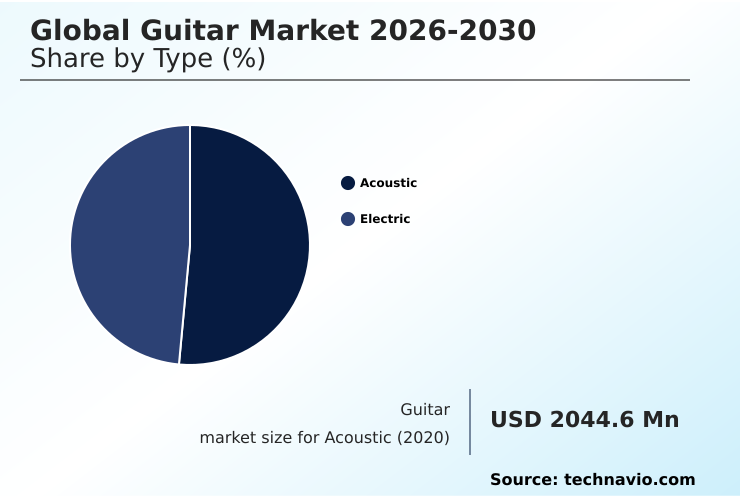
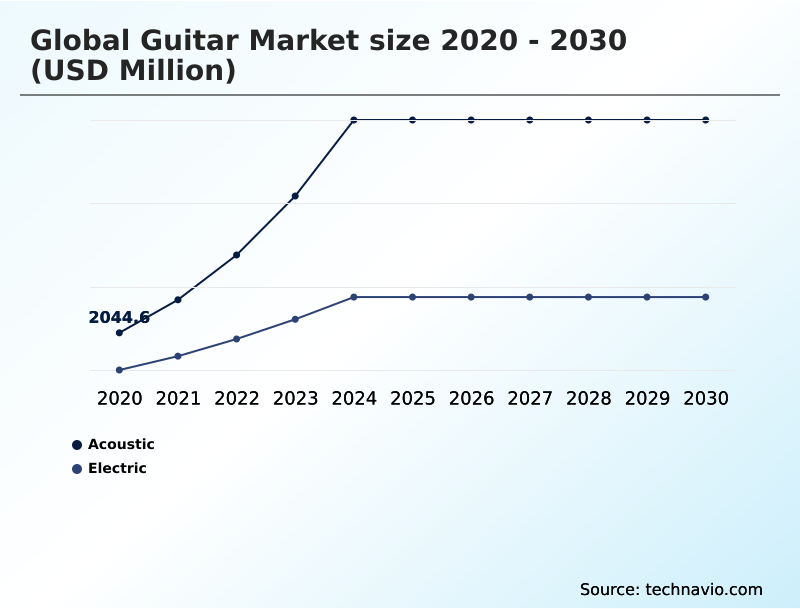
The Acoustic segment was valued at USD 2.71 billion in 2024 and showed a gradual increase during the forecast period.
Regional Analysis
North America is estimated to contribute 48.9% to the growth of the global market during the forecast period.Technavio’s analysts have elaborately explained the regional trends and drivers that shape the market during the forecast period.
See How Guitar Market Demand is Rising in North America Get Free Sample
The geographic landscape of the guitar market is diversifying, with growth dynamics shifting globally.
The APAC market, expanding at a notable 7.3%, is outpacing the mature North America region's 6.6% growth rate, fueled by a rising middle class and strong interest in Western music.
This has spurred demand for instruments featuring both passive electronics and advanced active electronics, with a particular focus on versatile models. European markets are witnessing a trend where reclaimed wood guitar benefits are a key selling point, influencing purchasing decisions.
In these regions, demand for models with specific pickup configurations, including humbucker pickup and single-coil pickup options, is 15% higher compared to emerging markets.
Construction methods like neck-thru-body construction and bolt-on neck designs also see regional preferences, impacting manufacturing strategies for global players.
Market Dynamics
Our researchers analyzed the data with 2025 as the base year, along with the key drivers, trends, and challenges. A holistic analysis of drivers will help companies refine their marketing strategies to gain a competitive advantage.
- Strategic decision-making in the modern guitar market requires a deep understanding of nuanced consumer drivers and technological shifts. The impact of tonewoods on acoustic sound remains a critical consideration for manufacturers, as discerning buyers continue to prioritize tonal quality.
- However, the industry is concurrently exploring the benefits of using composite materials for guitars, which offer greater durability and consistency, reducing warranty claims related to environmental damage by a notable margin compared to traditional wood instruments.
- For the electric segment, the debate over choosing between humbucker and single-coil pickups continues to shape product development, with brands offering a wider array of options to cater to diverse genres.
- Furthermore, a key value-add for retailers and brands is providing clear guidance on how to set up an electric guitar, as playability is a major factor in customer satisfaction and retention. In the acoustic space, advancements in acoustic guitar bracing, moving beyond traditional patterns to engineered designs, are enhancing volume and tonal balance.
- Successfully navigating this landscape means balancing heritage with innovation, addressing both the purist's desire for specific sound profiles and the modern player's need for reliability and versatility. This strategic alignment is crucial for capturing market share in a competitive environment.
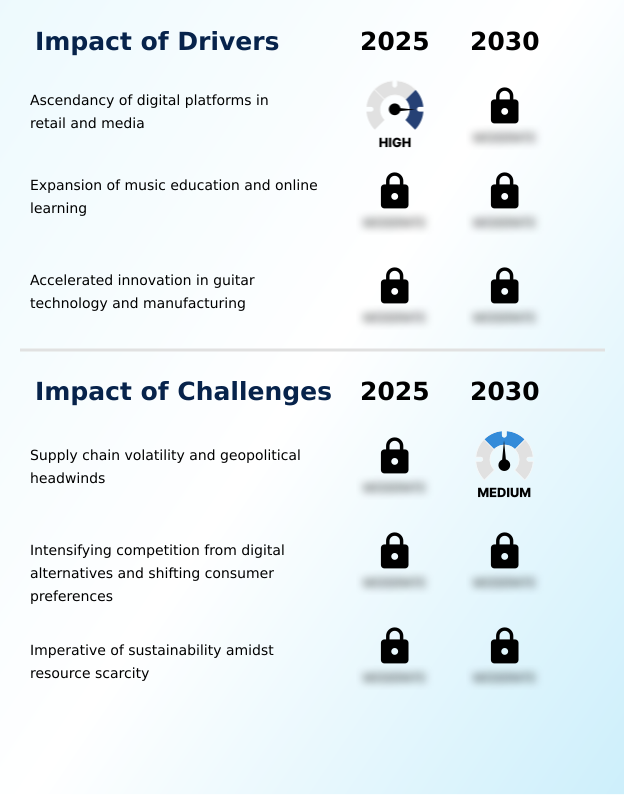
What are the key market drivers leading to the rise in the adoption of Guitar Industry?
- A key market driver is the ascendancy of digital platforms in retail and media, which are transforming consumer engagement and purchasing behaviors.
- Market growth is significantly driven by advancements in the guitar manufacturing process and the expanding ecosystem of digital learning.
- The use of computer numerical control (CNC) technology has revolutionized production, enabling precise replication of complex designs and enhancing qualities like sustain and intonation. This has improved manufacturing consistency by over 20%, reducing waste.
- Innovations in ergonomic guitar design principles are making instruments more comfortable and accessible, broadening their appeal.
- The explosion of online platforms dedicated to advanced guitar playing techniques has fostered a highly engaged community, with user retention rates 30% higher than general music apps.
- This digital accessibility, combined with the trend of home recording with guitar, stimulates consistent demand for instruments with diverse fretboard material options and reliable hardware, driving both new sales and guitar hardware upgrade options.
What are the market trends shaping the Guitar Industry?
- A prominent market trend is the ascendancy of sustainable and ethically sourced materials in instrument construction. This shift reflects growing consumer environmental consciousness and evolving regulatory pressures.
- Key market trends are centered on technological integration and material innovation. The adoption of smart guitar technology is accelerating, with features like integrated digital effects processing and MIDI capability becoming key differentiators. These instruments often feature advanced DAW integration for guitars, appealing to home-studio musicians and tech-savvy players.
- Adoption rates for these smart instruments are reportedly 25% higher among younger demographics compared to traditional models. Concurrently, boutique guitar builders are pushing design boundaries with modular guitar components and unique hollow-body design variations. On the materials front, the use of torrefied spruce and alternative tonewoods is becoming mainstream, driven by sustainability demands.
- Innovations like the archtop construction with an integrated piezo pickup showcase the blending of traditional craftsmanship with modern electronics, a trend that is reshaping product portfolios.
What challenges does the Guitar Industry face during its growth?
- Supply chain volatility and geopolitical headwinds present a key challenge, impacting raw material sourcing and production continuity.
- The market faces significant challenges from supply chain volatility and the imperative for sustainable production. The inconsistent availability of traditional tonewoods has increased lead times for core components by an average of 20%, disrupting production schedules. This has forced manufacturers to accelerate research into guitar tonewood alternatives, including carbon fiber guitar construction and other composites.
- The transition to eco-friendly guitar finishes, while meeting consumer demand, has increased material costs by up to 15% in some cases, pressuring margins. Furthermore, guitar supply chain management is complicated by geopolitical factors affecting the import of parts like bridge and nut components.
- This complex environment requires a strategic pivot towards diversified sourcing and lean manufacturing to mitigate risk and maintain profitability in a competitive landscape.
Exclusive Technavio Analysis on Customer Landscape
The guitar market forecasting report includes the adoption lifecycle of the market, covering from the innovator’s stage to the laggard’s stage. It focuses on adoption rates in different regions based on penetration. Furthermore, the guitar market report also includes key purchase criteria and drivers of price sensitivity to help companies evaluate and develop their market growth analysis strategies.
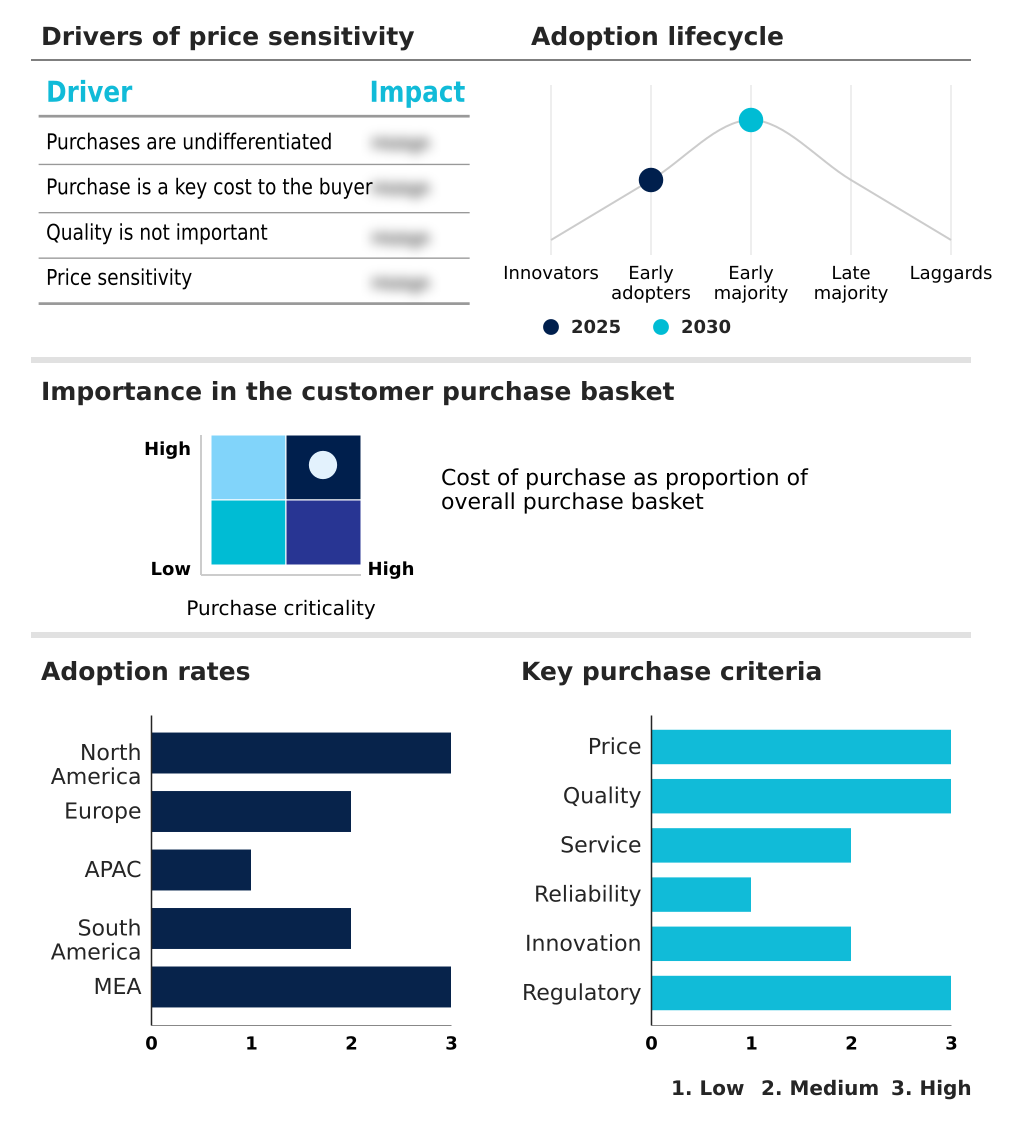
Customer Landscape of Guitar Industry
Competitive Landscape
Companies are implementing various strategies, such as strategic alliances, guitar market forecast, partnerships, mergers and acquisitions, geographical expansion, and product/service launches, to enhance their presence in the industry.
B.C. Rich LLC - Key offerings center on instruments delivering iconic acoustic sound and premier craftsmanship, catering to discerning musicians and collectors.
The industry research and growth report includes detailed analyses of the competitive landscape of the market and information about key companies, including:
- B.C. Rich LLC
- C. F. Martin and Co. Inc.
- Collings Guitars
- DAngelico Guitars
- Dean Guitars
- Epiphone
- Fender Musical Instruments Corp.
- Gibson Brands Inc.
- Godin Guitars
- JAM Industries USA LLC
- Paul Reed Smith Guitars
- Schecter Guitar Research Inc.
- Taylor Listug Inc.
- The ESP Guitar Co.
- The Gretsch Co.
- Yamaha Corp.
Qualitative and quantitative analysis of companies has been conducted to help clients understand the wider business environment as well as the strengths and weaknesses of key industry players. Data is qualitatively analyzed to categorize companies as pure play, category-focused, industry-focused, and diversified; it is quantitatively analyzed to categorize companies as dominant, leading, strong, tentative, and weak.
Recent Development and News in Guitar market
- In January 2025, Fender Musical Instruments Corp. announced its return to the NAMM Show, unveiling new products including the Acoustasonic Standard and a Fender Link I/O Interface, signaling a renewed focus on dealer and consumer engagement.
- In January 2025, Jackson Guitars announced the revival of its Surfcaster model, an electric guitar designed for modern metal players that incorporates contemporary high-output electronics to meet specific genre demands.
- In March 2025, C. F. Martin and Co. Inc. launched its Reclaimed series, a new line of acoustic guitars crafted entirely from certified reclaimed tonewoods, directly addressing consumer demand for sustainable products.
- In May 2025, a leading materials science corporation, in partnership with a renowned acoustic guitar manufacturer, introduced a new biodegradable wood composite designed to mimic the tonal properties of high-quality spruce.
Dive into Technavio’s robust research methodology, blending expert interviews, extensive data synthesis, and validated models for unparalleled Guitar Market insights. See full methodology.
| Market Scope | |
|---|---|
| Page number | 279 |
| Base year | 2025 |
| Historic period | 2020-2024 |
| Forecast period | 2026-2030 |
| Growth momentum & CAGR | Accelerate at a CAGR of 6.6% |
| Market growth 2026-2030 | USD 1957.6 million |
| Market structure | Fragmented |
| YoY growth 2025-2026(%) | 6.5% |
| Key countries | US, Canada, Mexico, Germany, UK, France, Italy, Spain, The Netherlands, China, Japan, India, South Korea, Australia, Indonesia, Brazil, Argentina, Colombia, Saudi Arabia, UAE, South Africa, Israel and Turkey |
| Competitive landscape | Leading Companies, Market Positioning of Companies, Competitive Strategies, and Industry Risks |
Research Analyst Overview
- The guitar market's evolution is driven by sophisticated manufacturing and material science, moving far beyond simple woodworking. The selection of tonewoods, including innovations like torrefied spruce and reclaimed tonewoods, remains foundational, but is now optimized through computer numerical control (CNC) processes. A luthier's expertise is now augmented by technology that ensures perfect sustain and intonation.
- Innovations in construction, from the bracing pattern of an archtop construction to the specifics of a dreadnought body style or parlor guitar size, are engineered for precise acoustic outcomes. Electric models showcase a vast array of components, from the bridge and nut components to intricate active electronics and passive electronics, including the choice of a humbucker pickup or single-coil pickup.
- Design choices like neck-thru-body construction versus a bolt-on neck or set neck, along with headstock design, influence playability and tone. Even finishing methods, like a nitrocellulose lacquer finish or a more durable polyurethane finish, are critical differentiators. The integration of a piezo pickup in an acoustic-electric hybrid or midi capability in smart instruments highlights the industry's technological pivot.
- This focus on advanced manufacturing has enabled some producers to improve material utilization efficiency by up to 15%.
What are the Key Data Covered in this Guitar Market Research and Growth Report?
-
What is the expected growth of the Guitar Market between 2026 and 2030?
-
USD 1.96 billion, at a CAGR of 6.6%
-
-
What segmentation does the market report cover?
-
The report is segmented by Type (Acoustic, and Electric), Distribution Channel (Offline, and Online), Material (Wood, Composite materials, and Metal) and Geography (North America, Europe, APAC, South America, Middle East and Africa)
-
-
Which regions are analyzed in the report?
-
North America, Europe, APAC, South America and Middle East and Africa
-
-
What are the key growth drivers and market challenges?
-
Ascendancy of digital platforms in retail and media, Supply chain volatility and geopolitical headwinds
-
-
Who are the major players in the Guitar Market?
-
B.C. Rich LLC, C. F. Martin and Co. Inc., Collings Guitars, DAngelico Guitars, Dean Guitars, Epiphone, Fender Musical Instruments Corp., Gibson Brands Inc., Godin Guitars, JAM Industries USA LLC, Paul Reed Smith Guitars, Schecter Guitar Research Inc., Taylor Listug Inc., The ESP Guitar Co., The Gretsch Co. and Yamaha Corp.
-
Market Research Insights
- Market dynamics are increasingly influenced by digital transformation, reshaping both learning and retail. Online guitar learning platforms are a significant factor, with some reporting skill acquisition rates for new players up to 20% faster than traditional methods. This trend directly fuels the market for beginner guitar packages and instruments geared toward home recording with guitar.
- In parallel, the shift to direct-to-consumer guitar sales is accelerating, as online channels exhibit growth that outpaces offline retail by nearly two percentage points. This model allows for greater control over brand messaging and customer relationships.
- The rise of smart guitar technology and advanced DAW integration for guitars reflects a strategic pivot to meet the expectations of a digitally native consumer base, enhancing the instrument's relevance and functionality.
We can help! Our analysts can customize this guitar market research report to meet your requirements.
 RIA -
RIA - 
