



Hall Effect Current Sensor Market Size 2024-2028
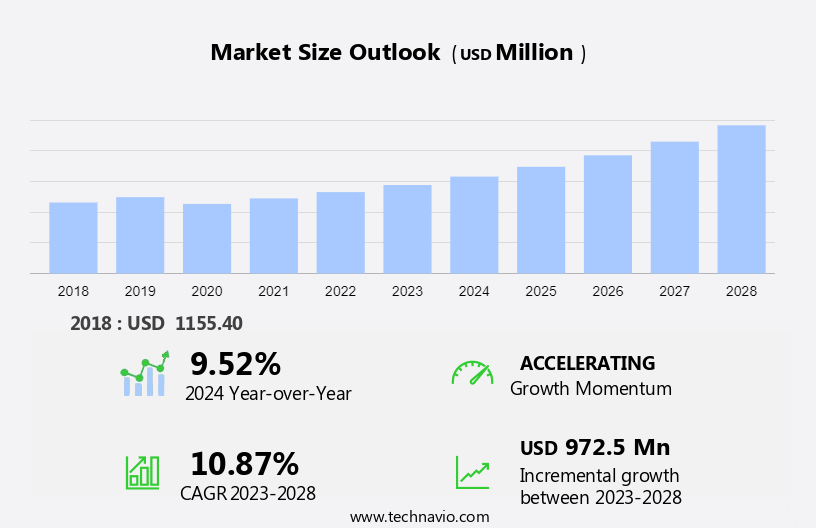
The hall effect current sensor market size is forecast to increase by USD 972.5 million at a CAGR of 10.87% between 2023 and 2028. The market is experiencing significant growth due to several key drivers. First, the increasing demand for mobile communication and the need for higher transmission bandwidths in MMWave wireless devices are fueling the adoption of these sensors. Third-party companies are also entering the market, offering competitive solutions to consumer electronics manufacturers and aerospace and defense industries. Additionally, the advancements in BiCMOS technology have led to improved size and cost-effectiveness of Hall effect current sensors, making them an attractive option for various applications. However, challenges such as inconsistency in the strength of magnetic fields can impact the accuracy and reliability of these sensors.
The market is expanding as industries seek precise and efficient solutions for current measurement. Hall-effect magnetic field sensors, based on the Hall-effect principle, are widely used for direct differential sensing in applications such as gas monitoring, power systems, and automotive electronics. Loop Hall-effect current sensors are popular for their ability to measure high currents without direct electrical contact. These sensors often integrate with monolithic microwave integrated circuits (MMICs) and are paired with components like bipolar junction transistors (BJTs), complementary metal-oxide semiconductors (CMOS), and shunt resistors for improved performance. Analog to digital (A/D) converters, microcontrollers, and microprocessors are commonly used for signal processing and data interpretation in these systems. Third-party companies are driving innovation in this market, providing diverse solutions for accurate current sensing across various industries.
Market Segmentation
The market research report provides comprehensive data (region-wise segment analysis), with forecasts and estimates in "USD million" for the period 2024-2028, as well as historical data from 2018-2022 for the following segments.
- Type
- Open loop current sensors
- Close loop current sensors
- Technology
- BiCMOS
- CMOS
- Geography
- North America
- US
- APAC
- China
- Japan
- South Korea
- Europe
- Germany
- South America
- Middle East and Africa
- North America
By Type Insights
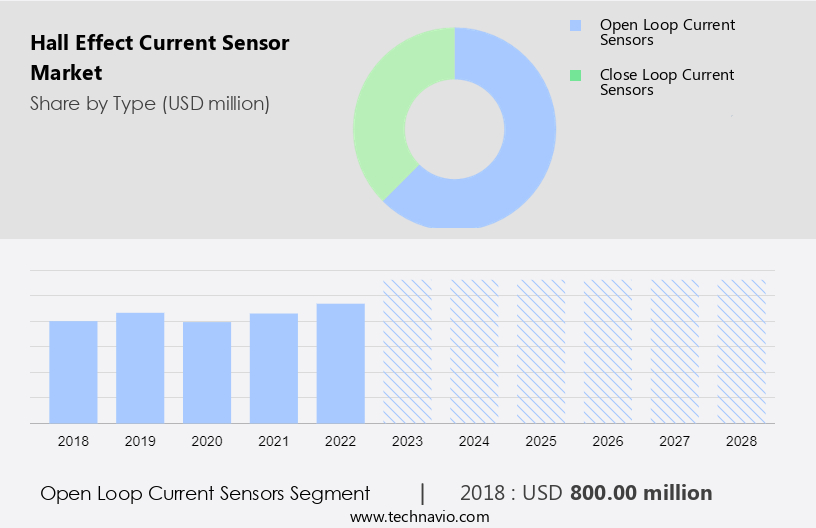
The open loop current sensors segment is estimated to witness significant growth during the forecast period. In the realm of current sensing technology, Hall effect sensors play a pivotal role in measuring the magnetic fields generated by electric currents. These sensors are integral components in various applications, including solar inverters, solar panel tracking systems, motor current sensing, robots, machinery, conveyor belts, and escalators. A Hall effect sensor functions by passing a conductor through a magnetic sensor, generating a magnetic field due to the current flow. The magnetic field is then measured by a Hall effect sensor installed in the core's air gap. The sensor produces a voltage output that is inversely proportional to the input current and the core magnetic field.
Subsequently, a signal conditioning circuitry processes the sensor's output signal to enhance its accuracy and reliability. This circuitry may comprise a simple amplifier stage or a more intricate design aimed at eliminating the Hall device's drift error. Hall effect current sensors have gained significant traction in diverse industries due to their ability to provide precise current measurements in harsh environments.
Get a glance at the market share of various segments Request Free Sample
The open loop current sensors segment accounted for USD 800.00 million in 2018 and showed a gradual increase during the forecast period.
Regional Insights
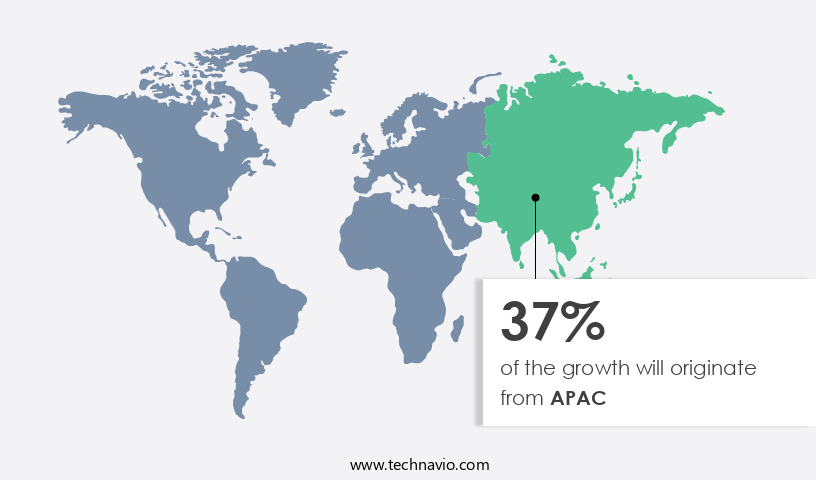
APAC is estimated to contribute 37% to the growth of the global market during the forecast period. Technavio's analysts have elaborately explained the regional trends and drivers that shape the market during the forecast period.
For more insights on the market share of various regions Request Free Sample
The market in North America is predominantly driven by various sectors including Power Management, Industrial Automation, Consumer Electronics, Telecommunication, Utilities, Medical, and Railways. Among these, the US holds a significant market share due to the increasing demand for energy-efficient solutions and advanced technologies. However, some industries have been relocating their manufacturing bases outside the US to minimize production costs. Despite this trend, the market in North America is anticipated to expand due to the rising adoption of these sensors in various applications. For instance, the automotive industry in the US is utilizing Hall Effect current sensors to ensure passenger safety and improve vehicle performance.
Furthermore, the escalating usage of these sensors in data processing peripherals is expected to fuel market growth. Another significant factor contributing to the growth of the market in North America is the burgeoning medical devices sector. The increasing demand for portable medical devices and advanced healthcare equipment is driving the need for precise current measurement, which is being met by Hall Effect current sensors. Overall, the market in North America is poised for steady growth during the forecast period.
Our researchers analyzed the data with 2023 as the base year, along with the key drivers, trends, and challenges. A holistic analysis of drivers will help companies refine their marketing strategies to gain a competitive advantage.
Market Driver
Inconsistency in strength of magnetic fields is the key driver of the market. In the dynamic realm of technology, the demand for sensors continues to escalate, particularly in sectors such as Aerospace and Defense, Radar, Communication, and Electronic warfare systems. These industries rely heavily on sensors for critical applications, including space applications and the integration of 5G Technology and the frequency spectrum. Hall effect current sensors have emerged as a preferred choice due to their contactless and wear-free measurement capabilities for mechanical quantities such as angle of rotation and angular speed. The automotive industry is another significant market for hall effect current sensors, with over 35 application areas identified within the vehicle body (cabin).
These sensors are instrumental in enhancing vehicle safety, handling, stability, performance, comfort, and convenience. Hall effect magnetic sensors, along with micro switches, reed switches, and potentiometers, are the primary sensors utilized in this context. The powertrain and body components of vehicles offer the most significant potential for the implementation of hall effect current sensors. In summary, the demand for hall effect current sensors is on the rise in various industries, including Aerospace and Defense, Automotive, and Telecommunications, due to their contactless measurement capabilities, strongness, and cost-effectiveness. These sensors are crucial for applications requiring precise measurement of mechanical quantities and are increasingly being integrated into modern technologies such as 5G and space applications.
Market Trends
Improved size and cost-effectiveness of hall effect current sensors is the upcoming trend in the market. The integration of advanced technologies, such as CMOS technology and bipolar junction transistors, in the manufacturing process of hall effect current sensors has led to their widespread adoption in various industries. These sensors, which utilize the Hall effect principle to measure magnetic fields, have gained popularity due to their high-performance and cost-effective nature. The use of complementary metal-oxide semiconductors (CMOS) and bipolar junction transistors (BJT) in their fabrication has enabled the production of large quantities of sensors for applications in industrial motors, mid-level automotive segments, and low-cost consumer electronics. Compared to other competitive technologies, such as reed switches and micro switches, hall effect current sensors offer several advantages.
They require minimal implementation and maintenance costs, making them an attractive option for manufacturers. Additionally, the microfabrication of the magnetic material in these sensors reduces the overall manufacturing cost. Furthermore, the integration of microprocessors and microcontrollers into hall effect current sensors has led to a significant reduction in the size of magnetic field sensing systems. This advancement is expected to further boost the demand for these sensors in various industries.
Market Challenge
Increasing chainsaws kickbacks accidents is a key challenge affecting the market growth. Hall effect current sensors are essential components in various industries, including mobile communication, consumer electronics, aerospace and defense, and MMWave wireless devices. These sensors detect magnetic fields to produce output signals, making them indispensable in devices that require precise current measurement. However, their proximity to external magnetic fields may lead to inconsistent readings. In the context of mobile communication and consumer electronics, hall effect current sensors play a crucial role in ensuring efficient power management and enhancing transmission bandwidths. Third-party companies provide these sensors to OEMs to integrate into their devices. In the aerospace and defense sector, hall effect sensors are used in various applications, such as motor control systems and current measurement in electric motors.
BiCMOS technology is commonly used in manufacturing hall effect sensors due to its advantages in power consumption and cost-effectiveness. The sensors' design allows them to detect magnetic fields on their front side, which corresponds to the sensor's opposite side having a visible north pole. Misalignment of magnets on rotors can result in incorrect readings, as the sensor may not detect the magnetic field if the north pole is not facing the sensor's front side. However, their proximity to external magnetic fields may lead to inconsistent readings, emphasizing the importance of proper sensor alignment.
Exclusive Customer Landscape
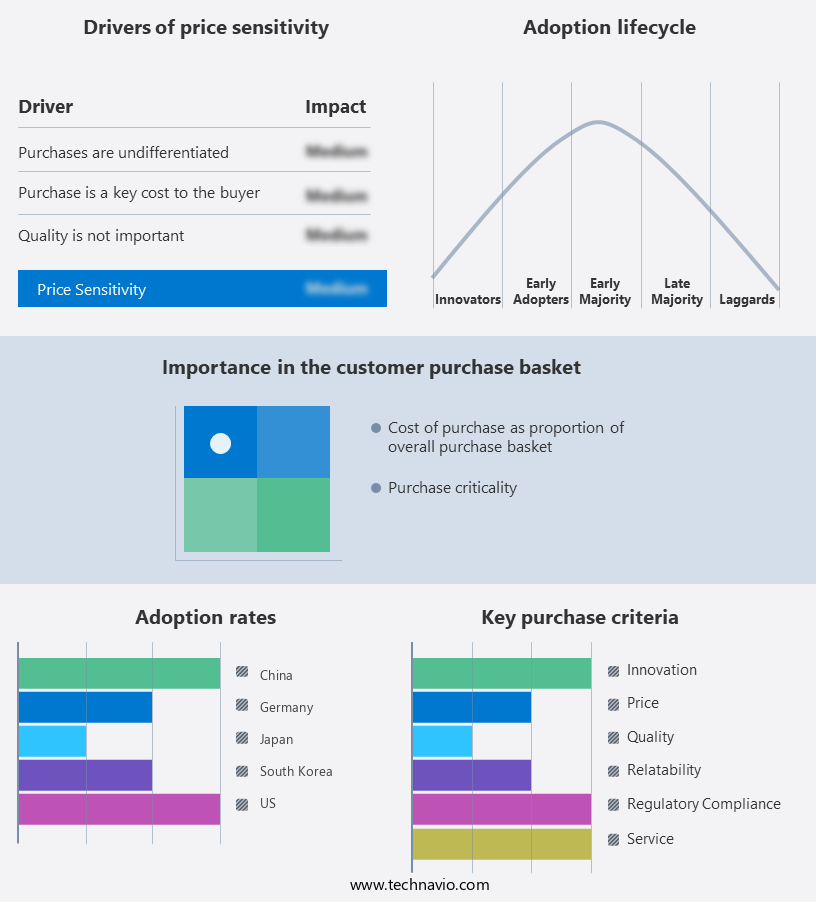
The market forecasting report includes the adoption lifecycle of the market, covering from the innovator's stage to the laggard's stage. It focuses on adoption rates in different regions based on penetration. Furthermore, the report also includes key purchase criteria and drivers of price sensitivity to help companies evaluate and develop their market growth analysis strategies.
Customer Landscape
Key Companies & Market Insights
Companies are implementing various strategies, such as strategic alliances, partnerships, mergers and acquisitions, geographical expansion, and product/service launches, to enhance their presence in the market.
- ACEINNA Inc.: The company offers hall effect current sensors such as 3.3V Current Sensors, 5V Current Sensors.
The market research and growth report includes detailed analyses of the competitive landscape of the market and information about key companies, including:
- ABB Ltd.
- Allegro MicroSystems Inc.
- Asahi Kasei Microdevices Corp.
- Broadcom Inc.
- Honeywell International Inc.
- Infineon Technologies AG
- Kohshin Electric Corp.
- LEM Holding SA
- Measurlogic Inc.
- Melexis NV
- Neilsen Kuljian Inc.
- STMicroelectronics International N.V.
- Tamura Corp
- TDK Corp.
- Texas Instruments Inc.
- VACUUMSCHMELZE GmbH and Co. KG
- Yageo Corp.
Qualitative and quantitative analysis of companies has been conducted to help clients understand the wider business environment as well as the strengths and weaknesses of key market players. Data is qualitatively analyzed to categorize companies as pure play, category-focused, industry-focused, and diversified; it is quantitatively analyzed to categorize companies as dominant, leading, strong, tentative, and weak.
Research Analyst Overview
The market is witnessing significant growth due to its increasing application in various industries. Solar inverters and solar panel tracking systems are major consumers of Hall effect sensors, as they require accurate current measurement for optimal system performances. The principle of the Hall effect is widely used in motor current sensing applications, including robots, machinery, conveyor belts, escalators, and moving cranes. Industrial automation sectors such as broadcast original equipment manufacturers (OEMs), power monitoring, robotics, battery systems, and smart electronic devices are also adopting Hall effect sensors for power management and industrial automation. The aerospace and defense industry uses these sensors in applications like radar, communication, electronic warfare systems, and space applications.
Additionally, hall effect sensors are essential in 5G technology, mobile communication, and transmission bandwidths due to their high efficiency and ability to measure both voltage and current. Third-party companies are integrating these sensors into mmwave wireless devices and consumer electronics, including hybrid vehicles (HEVs) and electric vehicles (EVs). The Hall effect sensor market is driven by the increasing demand for high-performance sensors in various applications. The use of advanced technologies like bicmos technology, CMOS technology, and microprocessors in Hall effect sensors is enhancing their functionality and accuracy. The magnetic field-based sensing principle of Hall effect sensors is making them an ideal choice for current measurement applications in various industries.
|
Market Scope |
|
|
Report Coverage |
Details |
|
Page number |
162 |
|
Base year |
2023 |
|
Historic period |
2018-2022 |
|
Forecast period |
2024-2028 |
|
Growth momentum & CAGR |
Accelerate at a CAGR of 10.87% |
|
Market growth 2024-2028 |
USD 972.5 million |
|
Market structure |
Fragmented |
|
YoY growth 2023-2024(%) |
9.52 |
|
Regional analysis |
North America, APAC, Europe, South America, and Middle East and Africa |
|
Performing market contribution |
APAC at 37% |
|
Key countries |
US, China, Germany, Japan, and South Korea |
|
Competitive landscape |
Leading Companies, Market Positioning of Companies, Competitive Strategies, and Industry Risks |
|
Key companies profiled |
ABB Ltd., ACEINNA Inc., Allegro MicroSystems Inc., Asahi Kasei Microdevices Corp., Broadcom Inc., Honeywell International Inc., Infineon Technologies AG, Kohshin Electric Corp., LEM Holding SA, Measurlogic Inc., Melexis NV, Neilsen Kuljian Inc., STMicroelectronics International N.V., Tamura Corp, TDK Corp., Texas Instruments Inc., VACUUMSCHMELZE GmbH and Co. KG, and Yageo Corp. |
|
Market dynamics |
Parent market analysis, market growth inducers and obstacles, market forecast, fast-growing and slow-growing segment analysis, COVID-19 impact and recovery analysis and future consumer dynamics, market condition analysis for the forecast period |
|
Customization purview |
If our market report has not included the data that you are looking for, you can reach out to our analysts and get segments customized. |
What are the Key Data Covered in this Market Research and Growth Report?
- CAGR of the market during the forecast period
- Detailed information on factors that will drive the market growth and forecasting between 2024 and 2028
- Precise estimation of the size of the market and its contribution of the market in focus to the parent market
- Accurate predictions about upcoming market growth and trends and changes in consumer behaviour
- Growth of the market across North America, APAC, Europe, South America, and Middle East and Africa
- Thorough analysis of the market's competitive landscape and detailed information about companies
- Comprehensive analysis of factors that will challenge the growth of market companies
We can help! Our analysts can customize this market research report to meet your requirements. Get in touch
 RIA -
RIA - 
